Best Cruise Ship Cabins for Seasickness: Where to Book
For someone worried about seasickness, start with a cabin near the middle of the ship on a lower passenger deck.
\n\n
Then check for a quiet ceiling and an easy route to a place where you can see the horizon.
Prioritize that location over a high forward suite, a huge aft balcony, or a guarantee fare with an unknown assignment.
Cabin location is only one part of the plan, so I’d pair this guide with my seasickness cruise guide before sailing. That covers preparation, symptom management, and when the cabin choice matters less than the rest of your motion-sickness strategy.
The cabin choices to make first
- My starting point: Lower and midship, with a manageable walk to an elevator or sheltered viewing area.
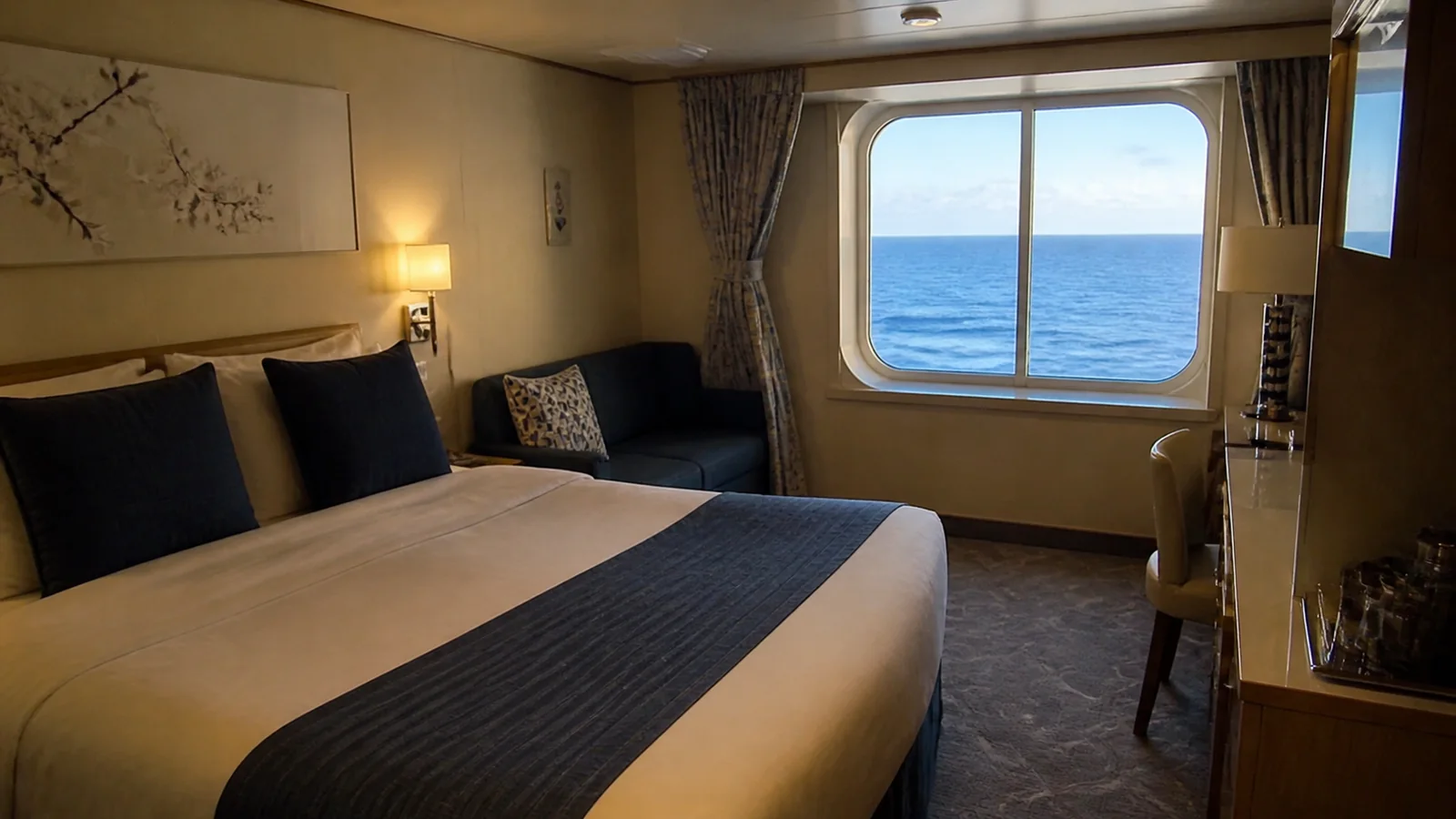
- If a window matters: An oceanview with a usable outward view, even if it means choosing one deck higher.
- If private outdoor access matters: A lower midship balcony, after checking the actual deck plan and price.
- What I’d question: High cabins at either end of the ship, particularly when motion already affects other forms of travel.
- What I’d avoid promising: Any cabin, ship size, itinerary, or season that supposedly guarantees no seasickness.
Once you narrow the location, compare whether an oceanview or balcony actually improves your comfort, and check upper versus lower decks alongside forward versus aft. Those three choices matter more to me than paying for a more prestigious cabin label.
Why lower and midship is a useful starting point
A ship can pitch forward and backward, roll from side to side, and move vertically with the water. The farther a room is from the relevant center of rotation, the larger some of those movements can feel.
That is why I’d begin near the ship’s middle and avoid unnecessary height. It is a practical way to reduce exposure, not a claim that all movement disappears on a particular deck.
The CDC’s motion-sickness guidance explains that symptoms involve a mismatch between sensory information and the movement the brain expects. Cabin choice is only one part of handling that problem.
Not attach a universal winning deck number to every cruise ship. Deck 6 on one ship can be a low accommodation deck, while another ship organizes its rooms and public spaces very differently.
Nor would I pay extra for the exact mathematical center if an almost-central room has a much better bathroom, quieter ceiling, or accessible route. Small differences on a booking map should not outweigh a clear practical need.
Forward, aft, port, and starboard are not equivalent decisions
Forward cabins can offer appealing views, but I’d be cautious about the pitching sensation near the bow. A high forward position combines two things I’d usually avoid when motion is my first concern.
Aft cabins can also experience noticeable movement, despite their popularity for wake views. Choose one because I value that view and accept the tradeoff, not because it is marketed as premium accommodation.
Port versus starboard is a weaker booking tool for seasickness. Weather and the ship’s heading change, so I’d not claim that one side stays protected from movement throughout the voyage.
Facing forward in a car is not a reason to insist on a forward-facing cruise cabin. Where the room sits within the ship matters more to my booking decision than the direction its window faces.
Treat bed orientation as a personal preference if someone already knows what feels comfortable. Not promise that sleeping with your feet in a particular direction prevents symptoms.
If two cabins are otherwise similar, I’d select the lower, more central one. If the only central room is directly over a nightclub, I’d keep comparing rather than declare it the automatic winner.
A balcony is convenient, but it is not a cure
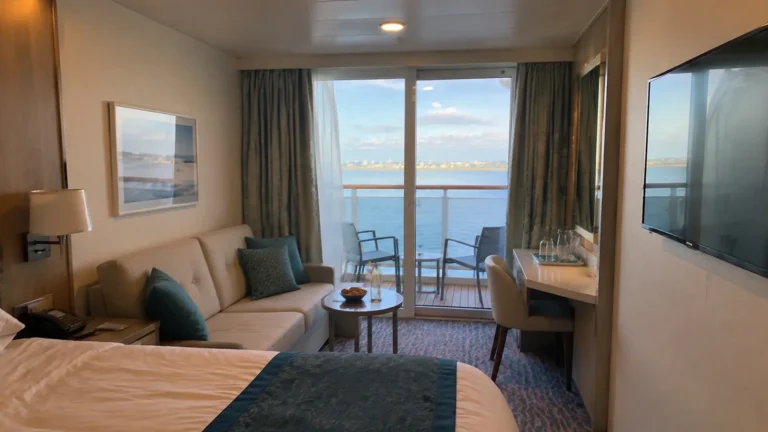
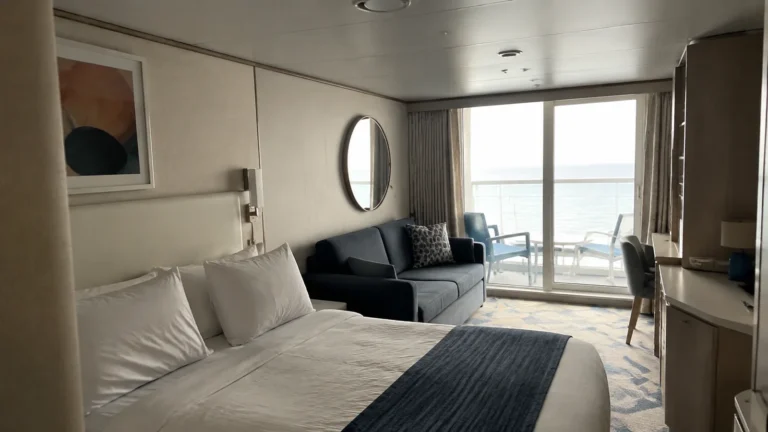
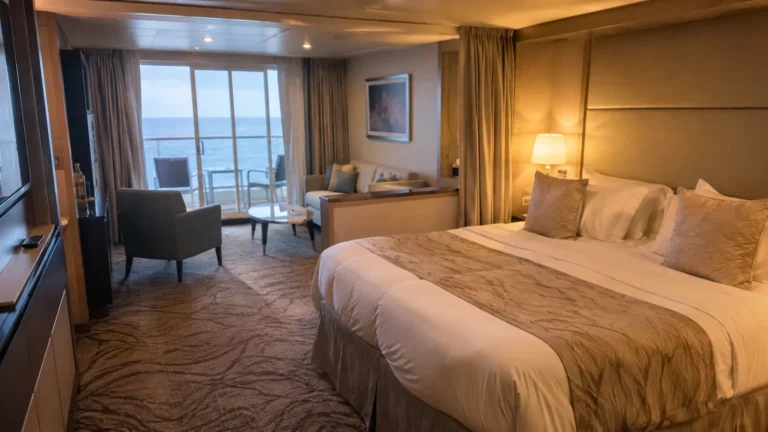
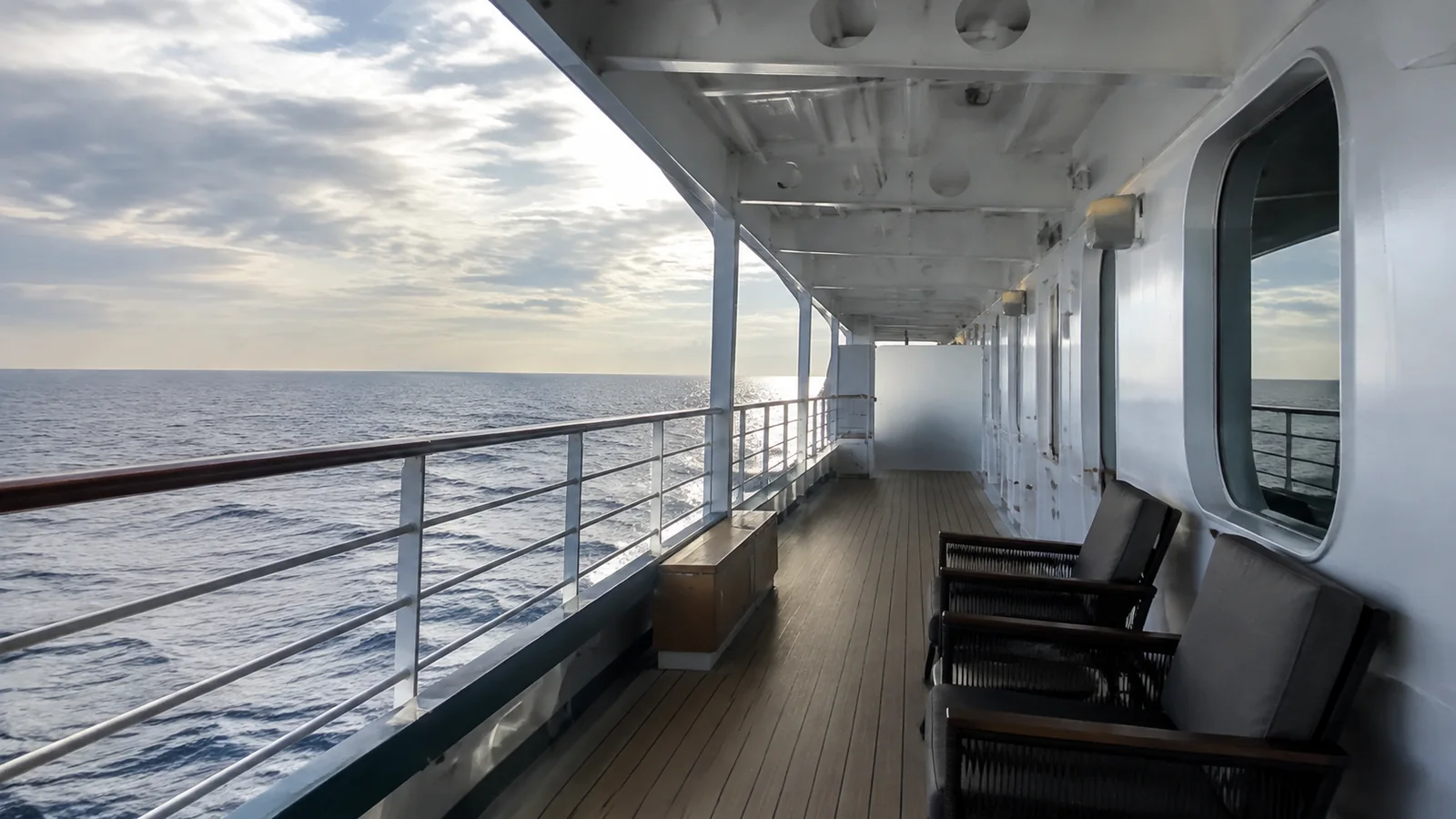
A balcony gives you quick access to an outdoor view without traveling through the ship. That can be appealing if you dislike enclosed spaces or prefer to sit outside when conditions permit.
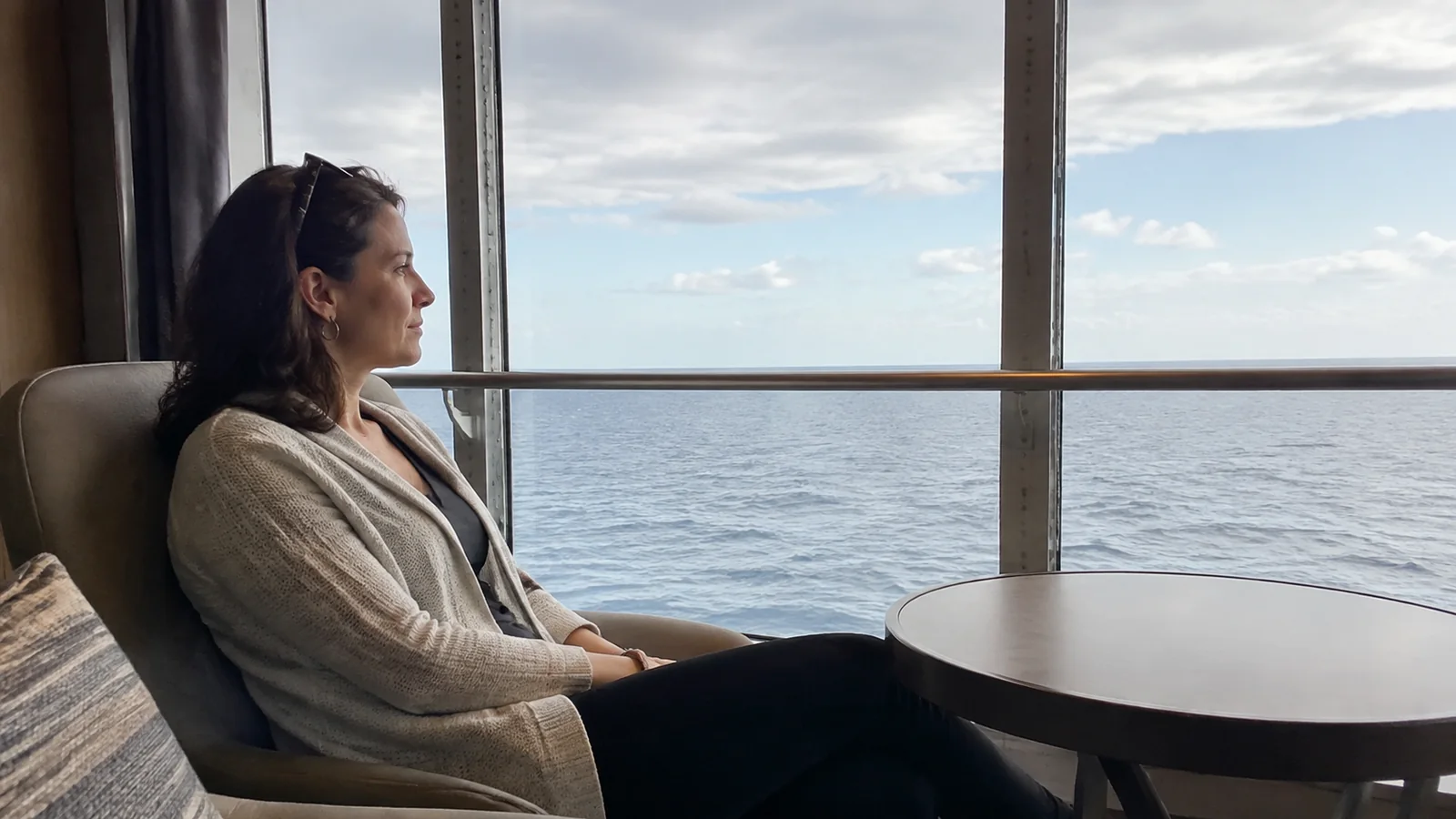
The important visual reference is the distant horizon, not simply the presence of a sliding door. Check whether the seated view is useful rather than assume every balcony provides an equally clear outlook.
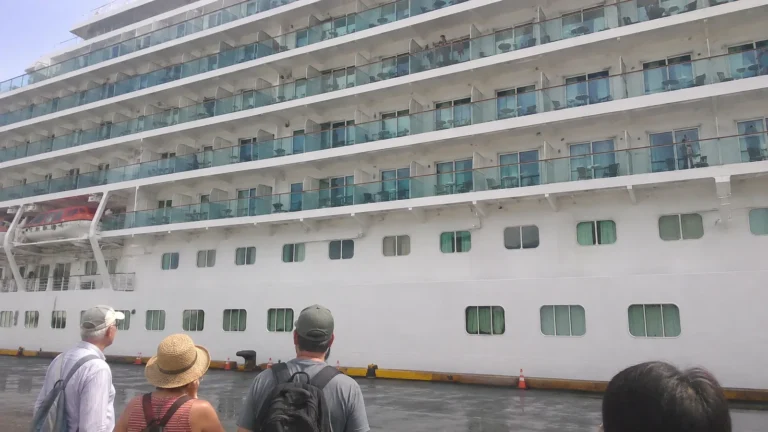
A lifeboat, solid railing, or deep structural obstruction may change that view. Request a room-specific photograph when the balcony is central to my comfort plan.
Not trade a well-placed lower oceanview for a high forward balcony solely because someone said fresh air prevents seasickness. The upgrade changes both the room’s location and the access it offers, and those need separate consideration.
Bad weather can also limit balcony use. A cabin should still be acceptable if the outside area is too windy or the crew restricts access.
For many travelers, my compromise would be a lower midship balcony with a nearby indoor alternative. Pay only what that convenience is worth to me rather than treat it as necessary medical equipment.
An oceanview can be the sensible middle option
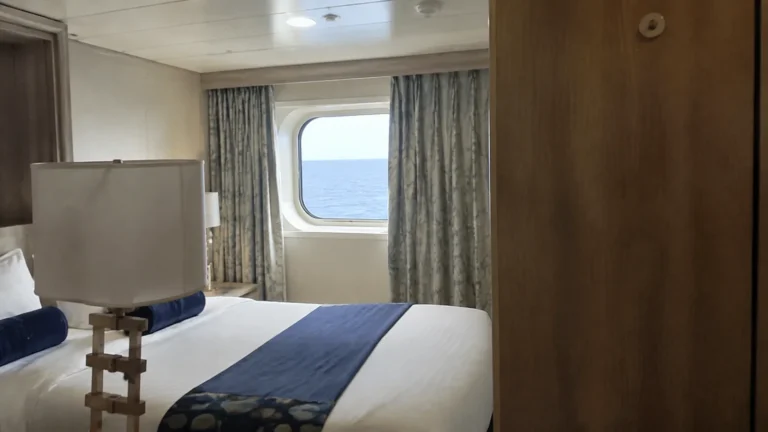
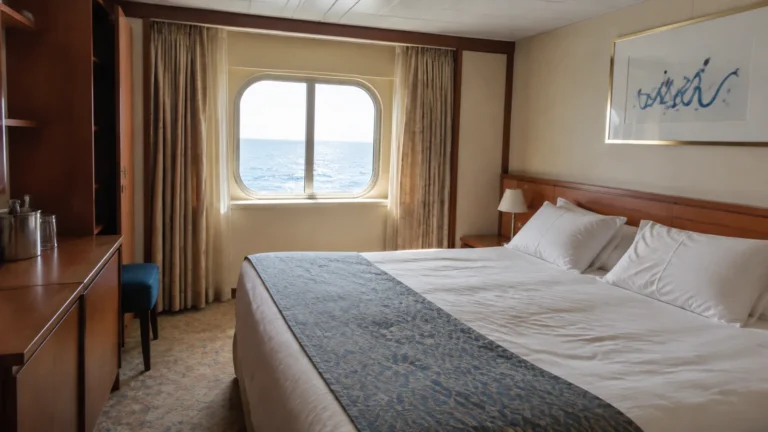
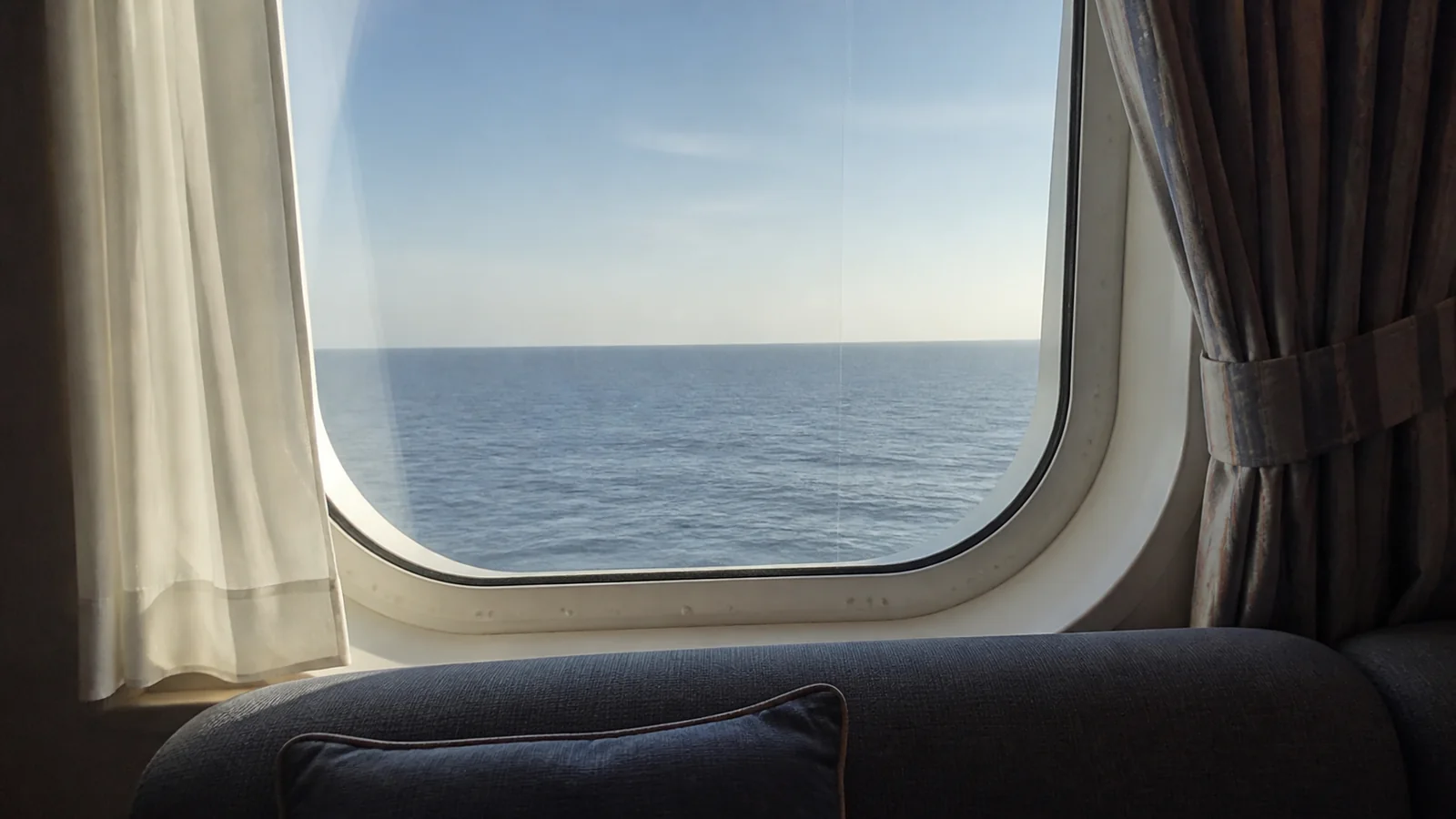
An oceanview provides daylight and a sense of the outside conditions, usually at a lower fare than a comparable balcony. Its usefulness depends on the actual window and what is visible through it.
Some oceanviews have small portholes, while others have larger picture windows. A window that is awkward to see through from the bed may be less useful than its category name suggests.
Verify whether the view is blocked and whether the glass faces the sea or a public walkway. The general cruise cabins-to-avoid guide explains why those distinctions matter beyond motion concerns.
An inside cabin is still an option if you prefer darkness for sleep and can easily reach a comfortable public area. Not assume it causes seasickness simply because it has no window.
However, someone who already knows enclosed spaces make nausea feel worse may value daylight enough to pay for an oceanview. That is a useful personal observation, unlike a blanket rule that every motion-sensitive traveler needs a balcony.
Check the ceiling before calling a low cabin ideal
Lower passenger decks often sit close to the ship’s main entertainment and dining levels. A favorable motion position can still put your bed above a theater, below a galley, or beside a busy public entrance.
Inspect the decks above and below using the actual ship outline. Matching cabin numbers vertically is unreliable because the decks can have different layouts and numbering patterns.
My cruise floor-plan guide walks through that process. Aim for passenger cabins above and below when available, while checking nearby laundry rooms and service doors.
A quiet room also gives you somewhere to rest without adding avoidable disruption. Take a slightly less central room with a good ceiling over an exact-midship room under a late venue.
Not automatically reject elevators. A short route to a sheltered lounge can be more useful than a distant cabin chosen to avoid a gathering area you may never hear.
For a traveler using a mobility aid, accessibility remains the first requirement. Not recommend a lower category that loses necessary bathroom features or makes movement around the ship difficult.
Separate seasickness from vibration and other symptoms
Vibration during docking is not the same sensation as rolling in open water. A complaint about an aft room shaking briefly at arrival does not establish that it is the worst cabin for seasickness all day.
Look for repeated, specific reports when evaluating a particular room. The sailing conditions and timing of the disturbance matter more than an isolated statement that a cabin felt rough.
Headache, dizziness, and vomiting can have causes other than motion sickness. If symptoms are severe, unusual, or persistent, I’d contact the ship’s medical team rather than assume a cabin move is the answer.
The CDC’s traveler advice includes practical measures such as resting, viewing the horizon, staying hydrated, and avoiding activities that worsen symptoms. Discuss suitable prevention with a clinician or pharmacist before travel, especially for children or anyone taking other medicines.
Not experiment with a new medication for the first time while planning to drive to the port. Product instructions, side effects, and individual health conditions matter, so this cabin guide does not substitute for personal medical advice.
The route matters, but forecasts have limits
A sheltered itinerary can still include exposed crossings. Read the route map rather than assume that an Alaska, Caribbean, or Mediterranean label describes every day’s water conditions.
Long sea passages give you fewer opportunities to spend the day ashore. If I were uncertain about cruising, I’d consider a manageable first itinerary before paying for a longer voyage with several consecutive sea days.
Larger ships and stabilizers do not eliminate all movement. Compare a ship’s available lower central cabins and comfortable indoor spaces rather than rely on size alone.
A forecast close to sailing can help you prepare, but it cannot justify a promise made months earlier about the calmest cabin. Make a robust booking choice that remains acceptable if conditions change.
For the rest of the preparation, my seasickness on a cruise article puts cabin selection in context. Have a plan before departure instead of trying to solve everything once I feel unwell.
How to compare two real cabin options
Suppose the choice is a lower central oceanview or an upper-deck forward balcony for a hypothetical $500 more. If motion is my leading concern, I’d choose the oceanview and identify the nearest sheltered viewing area.
If the comparison is a central inside and an equally well-placed oceanview for $100 more for the entire trip, I’d lean toward the oceanview. That modest difference buys daylight without sacrificing location.
A central room under a music venue requires a different calculation. First look one accommodation deck higher or just outside the venue footprint instead of accepting nighttime noise to preserve the word midship.
The UC Davis explanation of motion sickness also discusses visual references and avoiding upper boat levels. Use those principles to compare the actual options rather than search for a mythical perfect room.
My five-minute booking check
- Locate the lowest practical passenger decks, then identify rooms near the middle of the ship.
- Compare the public spaces immediately above and below each candidate.
- Check the real window or balcony view and any access restrictions.
- Find an easy route to sheltered seating with an outward view.
- Verify the bathroom, beds, and accessible features before changing categories.
- Choose a numbered cabin if an unknown assignment could undermine the reason for booking.
Questions to answer before choosing
Can a guarantee fare put me far forward?
It can if that location falls within the fare’s assignable accommodation. Select my own room when lower midship positioning is a firm requirement.
Is the lowest available cabin always best?
No, because noise, access, and the actual view also matter. Choose the lowest practical room that meets the rest of my needs.
Will a suite help more than a normal room?
Extra space does not change the sea conditions. Compare the suite’s position with an ordinary cabin before paying for features unrelated to motion comfort.
Where to book
Choose a lower midship cabin with a quiet ceiling and an easy route to a sheltered outward view. An oceanview would be my practical starting category, with a balcony upgrade only if its location stays favorable and I value the private outdoor access.