Norwegian Prima Cabins to Avoid: Rooms & Better Picks
Norwegian Prima can tempt me with a beautiful balcony and a very persuasive suite photo, but I want to know exactly what comes with the room number.
These are the view restrictions, missing features and public-space neighbors I would sort out before letting the upgrade excitement make the decision.
Norwegian Prima cabins I would compare first
- 9900, 10300, 10900, 11300 and 11900: balcony examples carrying partial-view notes, not an automatic bargain for someone booking mainly for the scenery.
- 10216, 10302, 10902, 11302, 11902, 13210, 14192, 15198 and 15798: additional balconies whose partial-view notes deserve attention.
- Haven suites 10352 and 10952: room-specific outdoor hot-tub exceptions to settle before booking for that feature.
- Haven suites 12322 and 12926: bedroom and bathtub exceptions that matter more than the suite name when separation is essential.
- 16150 and 16152, compared with 16750 and 16752: opposite-side Deck 16 examples below Surfside Café and Palomar respectively, with different restaurant surroundings overhead.
- 15144 and 15146: port-side Deck 15 examples beside the Splash Academy area, convenient for family routines but worth comparing with a purely residential corridor.
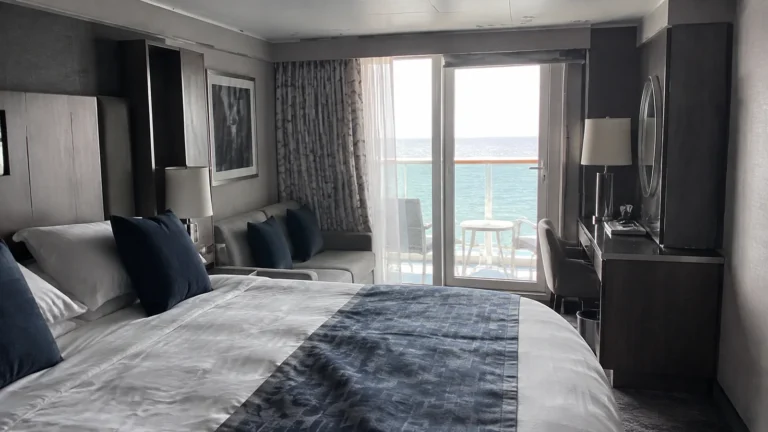
For a straightforward balcony choice, I would start midship on Deck 11 or 12, outside marked view restrictions and with cabins above and below. A fixed layout exception and a possibility of venue noise are different reasons to reconsider a room.
Keep the official Prima plans and the exact category description together when comparing offers.
Partial-view balconies: choose the number before the fare
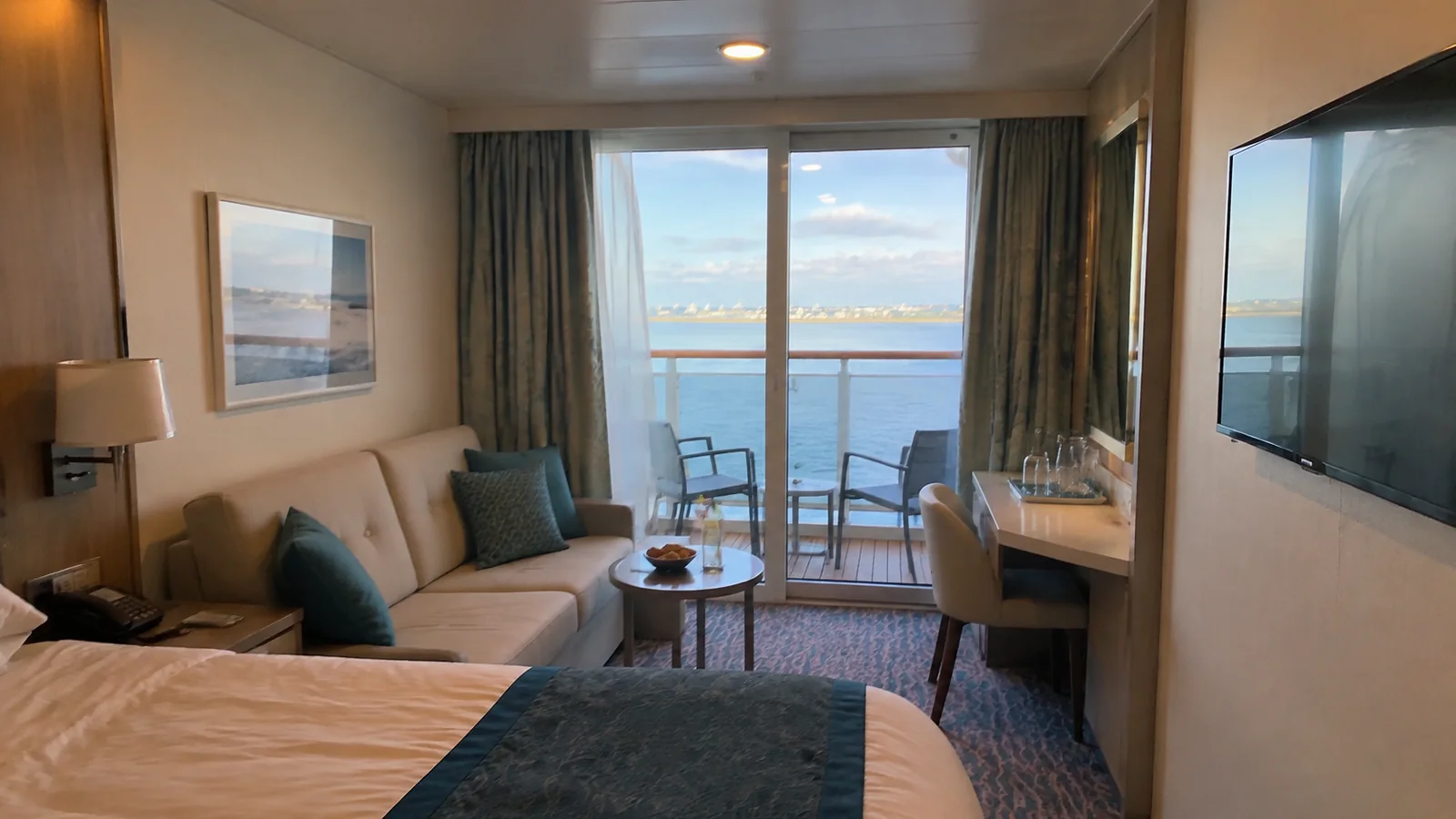
Prima’s dry slides run down the sides of the ship, and balcony geometry changes around those structures. Norwegian’s explicit obstruction notes are more useful than assuming every room sold as a balcony has the same clear outlook.
I would remove the flagged numbers above from my shortlist if watching the ocean from my balcony were a major reason for booking. I would then compare an unflagged room several positions away, checking its actual view instead of assuming the next door solves everything.
A partial obstruction is not the same as having no ocean view. The practical question is whether the structure interferes with the direction you will look most often, particularly from a seated position.
Ask for a recent photograph taken from that exact balcony, with the camera facing outward and sideways. A wide exterior ship photograph can reveal the slide position, but it cannot tell you how intrusive the view feels from a chair.
Some accessible balcony layouts are also flagged for partial views. If you need that layout, I would compare other suitable accessible rooms with Norwegian before trading away essential bathroom or doorway features.
The Haven has several unusually important exceptions
Prima’s suite names do not tell the whole story: suites 10352 and 10952 lack the outdoor hot tub shown in some imagery for their category. I would book them for the aft space and Haven access only after accepting that omission.
Suites 12322 and 12926 do not have a separate bedroom or bathtub. For parents hoping to put a child to bed behind a door, or two adults keeping very different sleep schedules, the bedroom exception matters much more than a premium label.
Norwegian also identifies partial views for Haven accommodations 12300 and 12900, plus Family Villas 13300, 13900, 14300, 14900, 15300 and 15900. I would compare the price with an unflagged suite of the appropriate layout before paying for the category’s best-looking promotional image.
The better alternative depends on the missing feature: a confirmed hot-tub suite, an explicitly separate-bedroom layout, or an unflagged balcony. I would have the booking agent describe that feature against the selected cabin number in writing.
Do not confuse a regular suite with The Haven, either. Compare the actual inclusions on the Norwegian Prima ship and accommodation page before treating a suite upgrade as access to the private Haven facilities.
Deck 9: Ocean Boulevard changes the balcony experience
Deck 8 is Prima’s wraparound Ocean Boulevard, with outdoor dining, lounging areas and the Infinity Beach pools. Deck 9 balconies above these areas sit much closer to public activity than a balcony several decks higher.
I would look especially carefully at the sections over the outdoor seating for Onda, Los Lobos, The Local and the aft Indulge area. The concern is conversations, furniture movement and downward sightlines onto an occupied deck, rather than proof that every room becomes noisy indoors.
Near Infinity Beach, a balcony may overlook loungers and pool users instead of an uninterrupted drop to the water. Someone who loves people-watching may enjoy that setting; I would move to Deck 11 or 12 for a more private-feeling outlook.
Moving one deck up creates extra separation, but it does not erase a projecting public deck below. Compare the balcony’s angle and neighboring structures as well as its height.
The forward part of Deck 9 needs a separate check because the Prima Theater & Club occupies the decks below. For an early bedtime, I would favor the middle residential stretches beyond that venue’s footprint.
Deck 16: check the actual room under Deck 17
16150 and 16152 on the port side need a comparison with Surfside Café overhead, while 16750 and 16752 on the starboard side sit beneath the Palomar area. I would treat these as restaurant-service and furniture-movement considerations, rather than describe every room in the same part of Deck 16 as directly beneath a swimming pool.
I would skip direct overlap with poolside chair areas and restaurant working routes if light sleep is already a concern. Furniture handling, setup and cleanup are plausible sources of impact sound even when the public venue is not playing music.
Do not condemn all of Deck 16: forward rooms also relate to the Observation Lounge and Galaxy Pavilion footprint, while aft locations sit close to Haven facilities. Identify the actual overhead space instead of reading only the largest label on the plan.
My easier alternative is a comparable balcony on Deck 12, 13 or 14, after checking slide obstructions. That keeps the cabin away from the immediate underside of the main activity deck without giving up a balcony.
15144 and 15146 are port-side Deck 15 examples beside the Splash Academy area, where the appeal is a short family route rather than a hallway used only by cabin neighbors. For a couple prioritizing quiet breaks, I would compare a residential stretch farther from the club approach; for parents making repeated pickup trips, the convenience may be worth keeping.
Deck 5 oceanviews: low does not automatically mean quiet
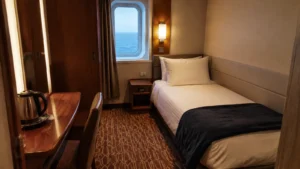
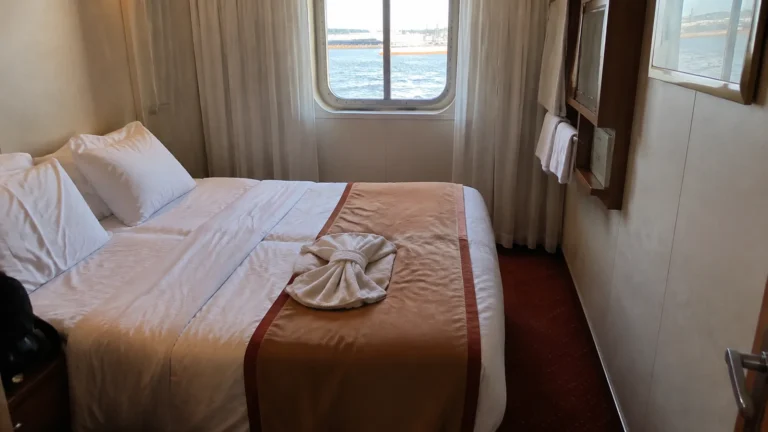
Deck 5 offers lower accommodation beneath Deck 6’s entertainment, casino and dining spaces. Its forward rooms sit in the area beneath the theater, while other sections align with the casino and restaurants farther aft.
I would not choose a low oceanview solely because a lower deck sounds restful. Overlay the room with Deck 6 and distinguish a venue edge from its busiest seating, performance or service area.
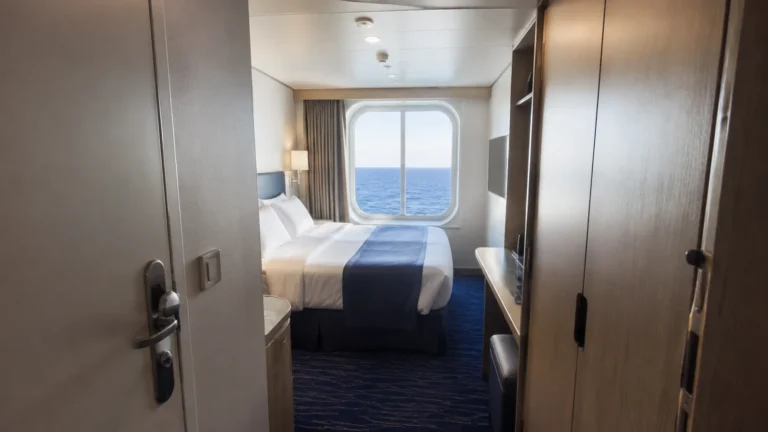
For someone who mainly wants daylight at an affordable price, a carefully selected oceanview can still work. If sleeping early is the priority and the available oceanviews sit under active space, I would compare a midship interior on a residential deck instead.
The three-deck method for reading cruise floor plans is particularly helpful here. Align elevator shafts and the ship’s outline, because labels and differently scaled images can make a room seem under the wrong venue.
Forward balconies and aft suites need different compromises
Prima’s forward-facing suites buy a dramatic approach view, but the bow is an exposed location. Norwegian notes wind-related balcony access restrictions for its forward-facing suite offering, so I would confirm the terms before paying for outdoor use throughout a sea day.
I would choose a side-facing midship balcony if I wanted a more predictable place to sit outside. A forward suite makes more sense when the interior layout and port views are the main attraction.
Aft-facing rooms and Haven suites deliver a wake view and access to Prima’s aft suite neighborhood. They also put you farther from the forward theater, observation spaces and fitness area.
Motion-sensitive travelers should favor the middle rather than either extreme. Aft maneuvering can involve intermittent machinery or thruster vibration, but the plan cannot establish constant vibration inside a particular suite.
I would choose the lower-middle residential decks and review the practical preparation in my cruise seasickness guide. A high-priced aft room does not become a smoother location because it includes a butler.
Studio rooms, connecting doors and elevator access
Prima has a dedicated Studio offering for solo travelers as well as other solo categories. I would compare the exact bed, floor area, daylight and lounge access before choosing the cheapest single-occupancy rate.
A compact Studio can be excellent if the cabin is mainly for sleeping. I would pay for an oceanview or balcony if I expected to spend substantial quiet time in the room and would miss natural light.
When two otherwise equal cabins are available, I generally choose the non-connecting one unless I need the connecting door. That removes one possible sound path without pretending connecting rooms are inevitably noisy.
I actually like a room a short turn from an elevator bank on a ship this long. I would avoid a door directly facing the lobby if people gathering outside would bother me, rather than reject every cabin nearby.
For a mobility requirement, use Norwegian’s accessibility team to confirm the room, equipment arrangements and daily routes. Convenient elevator access should carry more weight than a theoretical hallway-noise concern.
When Prima’s guarantee fare is the wrong saving
Norwegian’s BX and MX guarantee descriptions allow the cruise line to assign the room and warn that balcony views can be obstructed. That is an awkward gamble if the very locations you want to avoid are eligible under the fare.
I would pay to choose a cabin when a clear balcony, separate bedroom, short accessible route or specific noise separation is essential. A guarantee is reasonable only when you would willingly keep any room meeting the actual booked terms.
Compare the complete trip difference, not just a tempting nightly number. My broader cabin booking red flags explain why losing control of the location can outweigh a modest discount.
Your five-minute Norwegian Prima booking check
- Locate the exact number and read every official exception attached to its category.
- Check Deck 8 below a Deck 9 balcony and Deck 17 above a Deck 16 room.
- Inspect dry-slide structures, connecting symbols and public entrances beside the room.
- Confirm the bedroom arrangement, hot tub and Haven access if buying a suite.
- Compare the same category on Deck 11 or 12, away from flagged views.
- Save the chosen number and written features before paying.
Questions I would settle before booking
Is a Club Balcony Suite part of The Haven?
Do not assume so from the word “suite.” Confirm the booked category’s benefits; I would purchase Club Balcony for its actual room features rather than expect the Haven restaurant, lounge or pool.
Are all rooms near the slides obstructed?
No, and I would not invent an entire affected cabin range. Start with Norwegian’s specific notes, then inspect an exact balcony photo if the structure is nearby.

What would I book for the lowest-risk first Prima cruise?
I would choose a non-connecting, unflagged side-facing balcony in the middle of Deck 11 or 12, with ordinary cabins above and below and a short walk around a corner to the elevators. I would spend the difference on controlling that location before upgrading to a more complicated suite.