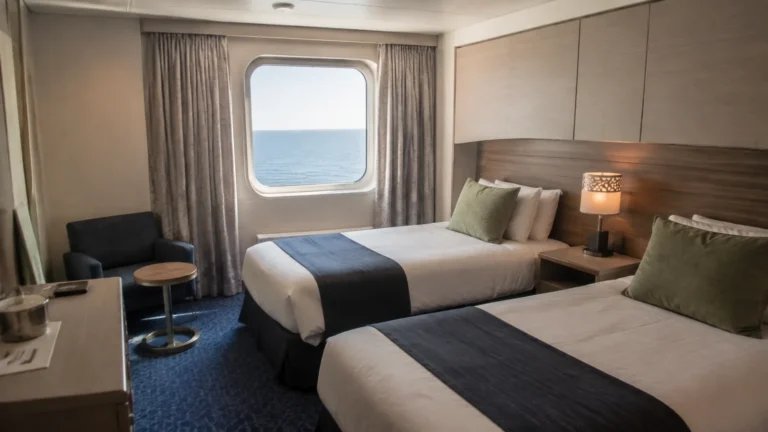
How to Read Cruise Ship Floor Plans and Choose a Better Cabin
A cruise deck plan can save you from a cabin that fights your sleep, mobility, or view. The trick is reading it as a three-dimensional building, not a colorful map of one floor.
Use the Official Plan for Your Exact Sailing
Start on the cruise line’s website, choose the exact ship, and look for a plan that covers your sailing date. Refits can add venues, rename rooms, change categories, or redraw public spaces even when the ship name stays the same.
Royal Caribbean’s official deck-plan directory, for example, routes travelers to each ship and displays applicable date ranges on individual plans. If two date ranges appear, use the one containing your departure date.
Do not substitute a sister ship simply because it shares a class. Similar ships can have different restaurants, cabin conversions, suite areas, and deck numbering.
Save or screenshot the legend and three relevant decks before comparing prices. Booking engines can time out, and a cabin number without its surrounding plan tells you very little.
The Eight-Step Cabin Screening Method
1. Confirm the Cabin Number and Category
Search the exact room number on the official plan, then match its color or shading to the legend. Record both the marketing name and category code because “balcony” may cover several locations, view types, and benefit packages.
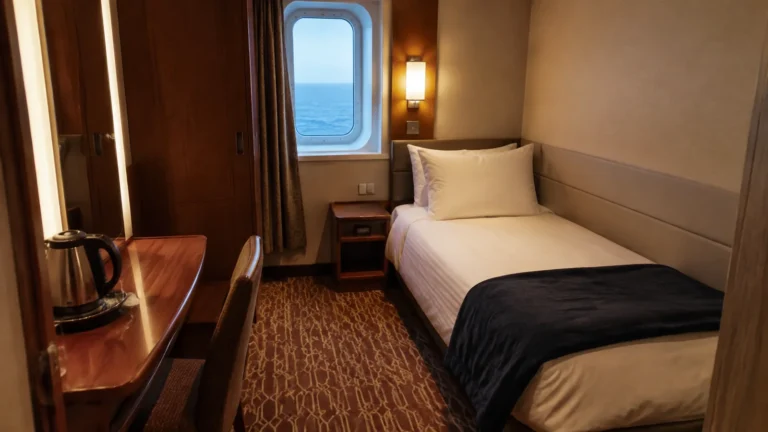
Also verify occupancy. A room approved for four guests may use a sofa bed or upper berths, while a room in the same broad category may sleep only two.
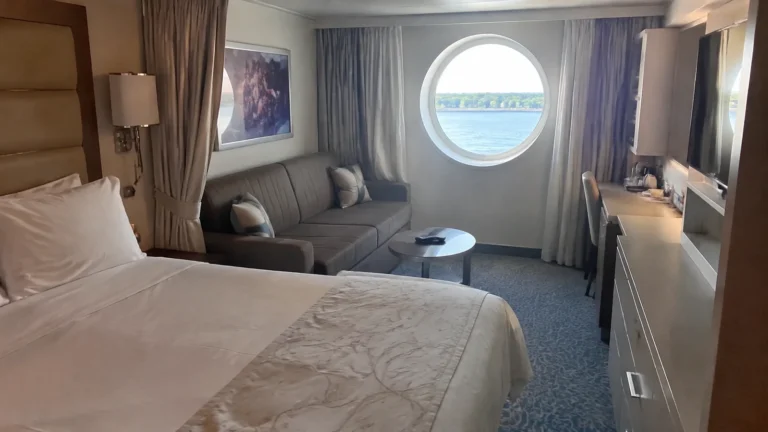
Norwegian’s Norwegian Escape deck plans show how one cabin family can span multiple category codes, decks, locations, and size ranges. That is a useful reminder that a representative photo does not prove the exact geometry of your room.
2. Read Every Symbol in the Legend
Symbols may identify connecting doors, sofa beds, pull-down berths, restricted views, accessible layouts, or cabins with special configurations. Never guess what a triangle, dot, square, or arrow means because each cruise line creates its own legend.
A connecting symbol proves that a door exists, not that you will hear your neighbors. It is a conditional sound and privacy concern, especially for light sleepers, rather than evidence that the room is bad.
An accessibility symbol indicates a room designed for a genuine access need. Do not book one merely to gain space if you do not need its features, and understand that roll-in showers, lower fixtures, and open floor area can change the layout.
3. Check the Deck Above
Move one deck up and place your cabin beneath the correct footprint. Pools, buffet seating, galleys, gyms, sports courts, kids’ clubs, theaters, and night venues can create possible sound at different hours.
Trace boundaries carefully rather than condemning an entire deck. A room under carpeted restaurant seating has a different risk from one under a galley work zone, and a room under the pool itself differs from one under a chair-storage area.
White or unlabeled space is not proof of silence. It can contain technical equipment, storage, crew access, ventilation, or a structural void that the passenger plan simply does not explain.
4. Check the Deck Below
Noise and vibration do not only come from above. A lounge stage, theater, nightclub, galley, tender platform, or machinery-related area below can matter to a traveler who sleeps early or wakes easily.
Look at the venue’s full footprint, not only its printed name. The label may sit in the center while speakers, service doors, or backstage operations extend toward nearby cabins.
5. Scan the Same Deck
Now inspect what shares your hallway. Elevators, stairs, laundry rooms, public restrooms, crew doors, ice or utility closets, and entrances to popular venues can increase foot traffic or operational sound.
Near an elevator is not the same as beside an elevator lobby. A cabin 30 to 60 feet away can deliver a wonderfully short walk without placing its door in the center of the gathering area.
Likewise, the blank area beside a room is not automatically a closet. If the official key does not identify it, describe the adjacency as unknown and ask the cruise line or a qualified travel advisor.
6. Judge Motion by Position
Travelers sensitive to motion usually do best lower and closer to the ship’s middle, where movement is generally less pronounced. Higher decks and the far forward or aft ends can feel more movement when seas build.
This is a tendency, not a promise of smooth water. Itinerary, wind, swell direction, speed, and individual sensitivity matter more than any claim that one room is “seasickness-proof.”
A forward cabin may still be worth it for its price, quiet corridor, or view. The plan should expose the tradeoff, not make the decision for you.
7. Trace Your Daily Routes
Mark the elevators or stairs you would use for breakfast, dining, the pool, kids’ spaces, and the gangway. On a large ship, a cabin that shortens your most frequent route can be more valuable than one that looks ideal in isolation.
Families may prioritize the kids’ club and buffet, while a traveler with limited stamina may value an elevator bank and a dining room on the same half of the ship. A quiet-seeking couple may happily walk farther to avoid a public-space entrance.
Do not count only decks. Check whether a stair or elevator bank actually reaches the venue, since some routes end, split, or require crossing a busy public area.
8. Verify the View and Balcony Structure
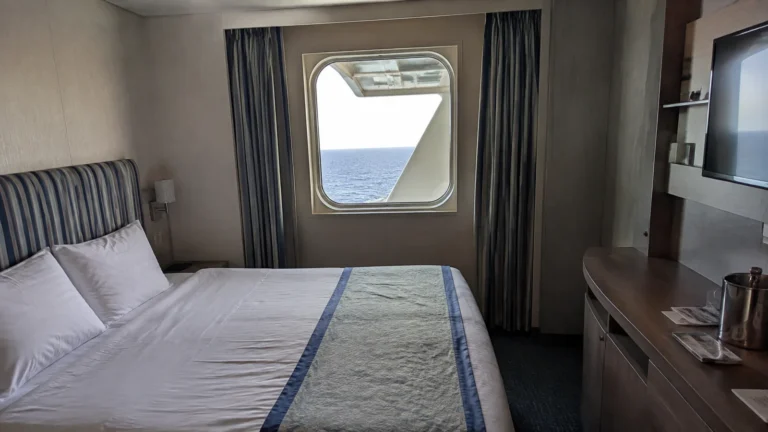
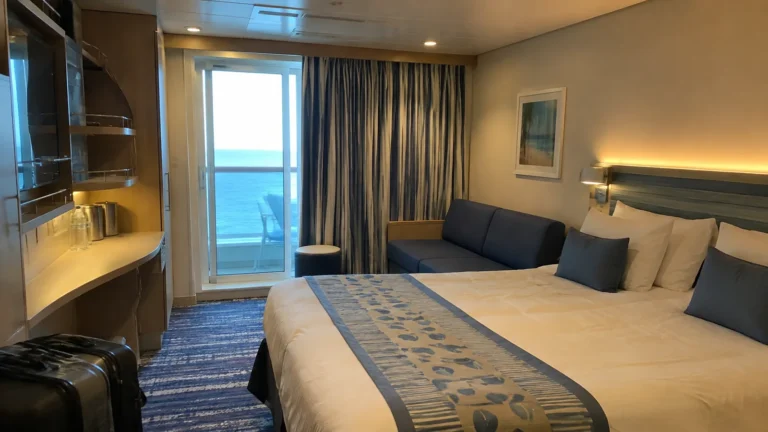
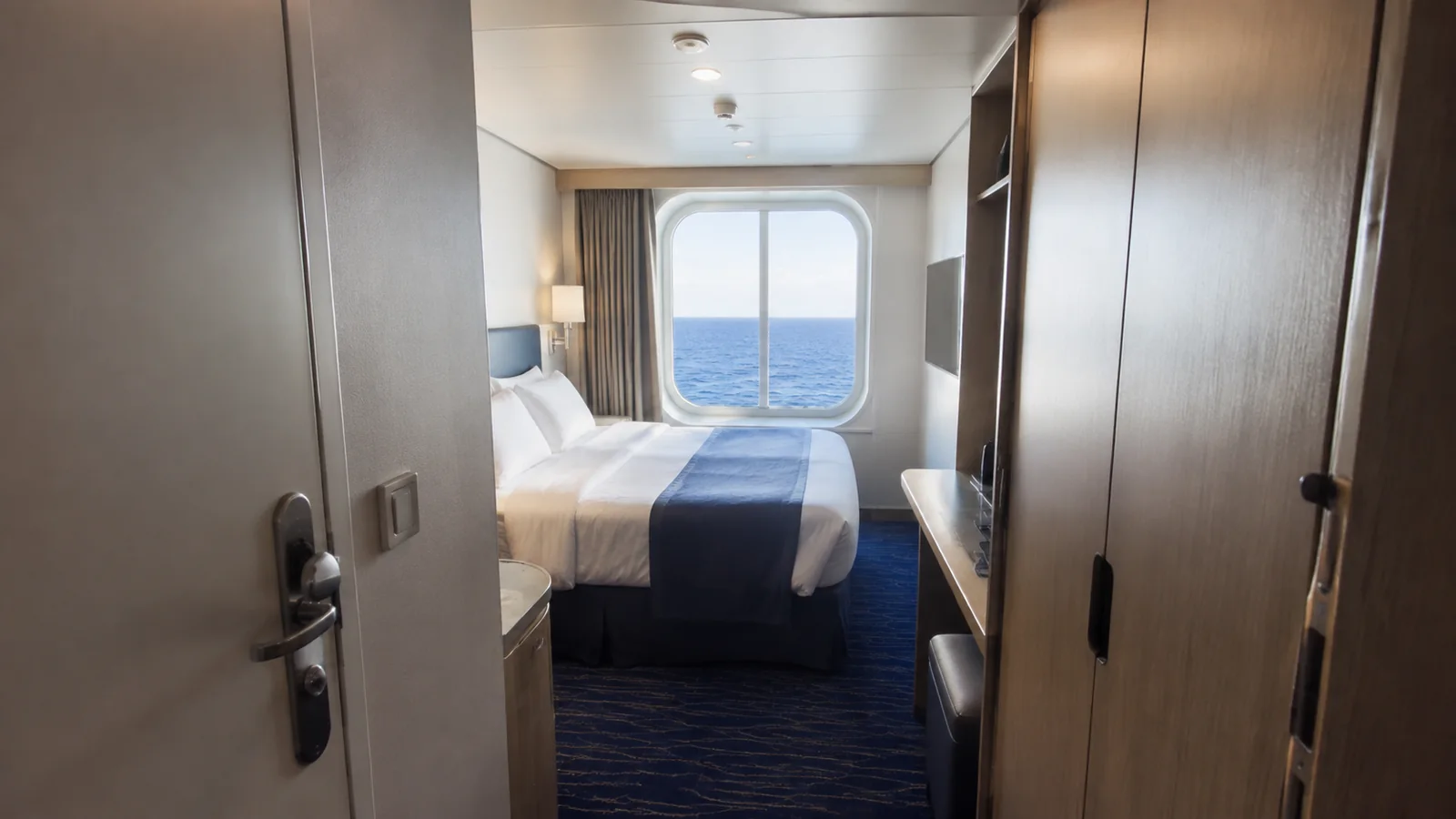
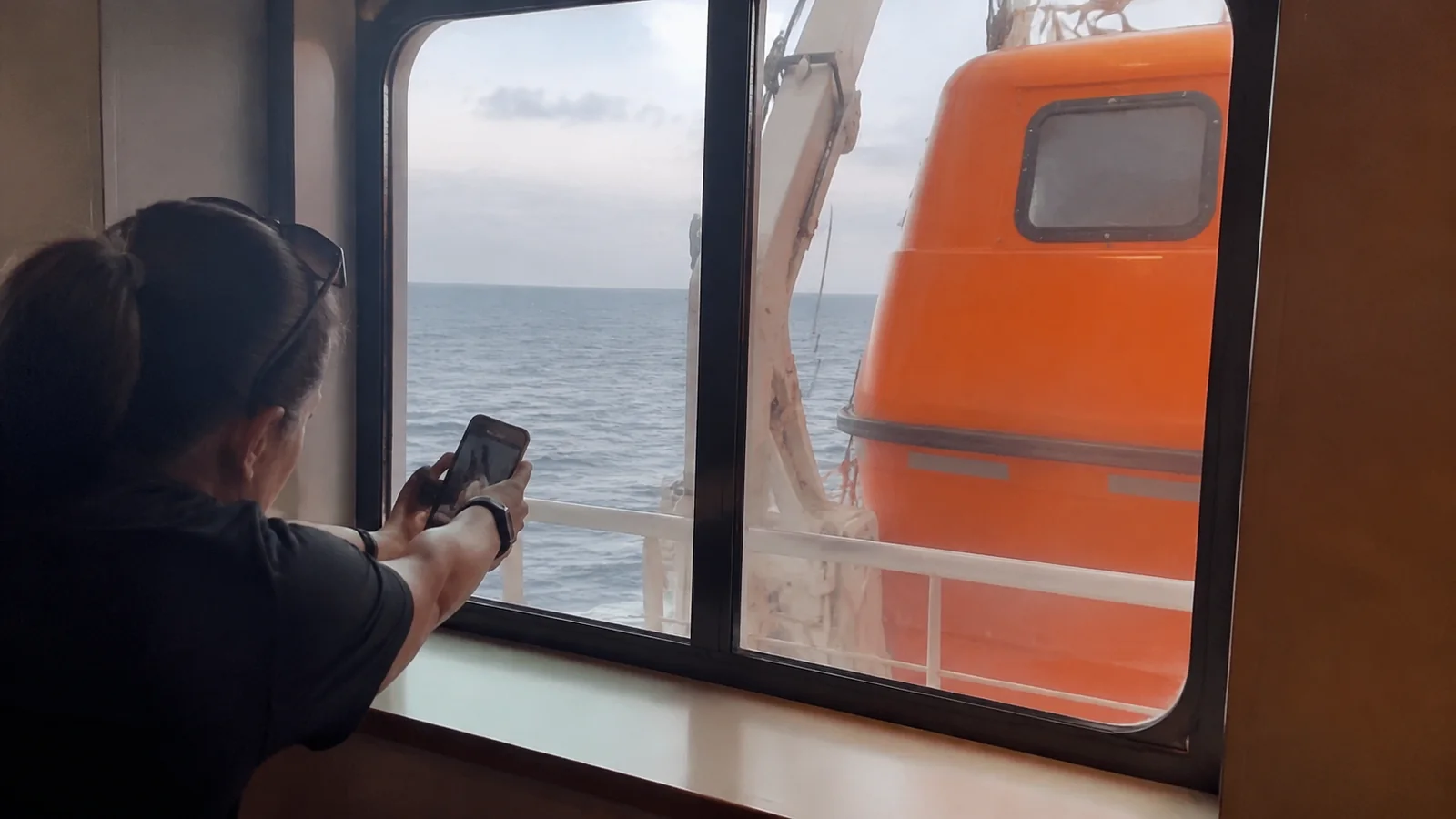
For an ocean-view or balcony cabin, look for lifeboats, tender boats, promenade roofs, structural supports, solid railings, angled balconies, and public decks outside. “Obstructed” can mean a minor view interruption or a large object directly in front of the window.
The plan may flag an obstruction without showing its exact height from the bed or chair. Ask for a room-specific description when the open view is central to the purchase.
Interior-facing balconies need another kind of screening. Check privacy, public activity, sightlines, and whether the room overlooks a neighborhood rather than the ocean.
A Five-Minute Shortlist Workflow
When several cabins cost the same, do not study the whole ship. Apply one repeatable filter to each candidate and eliminate only the rooms that conflict with your priorities.
- Write your three nonnegotiables, such as low motion, no connecting door, and a shower-friendly accessible layout.
- Find the exact room on the dated official plan and decode every symbol.
- Screenshot the deck above, the cabin deck, and the deck below.
- Mark public-space edges, elevator lobbies, stairs, service gaps, and possible obstructions.
- Trace two daily routes and compare the remaining rooms by price.
If two choices survive, pick the one surrounded vertically and horizontally by ordinary cabins unless another benefit matters more. This “cabin sandwich” is not silent by guarantee, but it removes several obvious public-space adjacencies.
How Official Plans Differ by Cruise Line
Royal Caribbean
Royal Caribbean’s individual ship pages can show sail-date ranges, deck selectors, venues, and room search. The Star of the Seas plan, for example, displays the applicable 2026-to-2027 sailing period at the time of this check.
On ships with interior neighborhoods, first decide whether “balcony” means ocean-facing or neighborhood-facing. Then check what public space sits across, below, and within the sightline.
Carnival
Carnival ship pages provide interactive deck information and downloadable plans. The Carnival Freedom ship page is a current example of a ship-specific source that links its plan and cabin information.
Use the Carnival legend to distinguish cabin features and view types, then compare the Lido, theater, atrium, and dining footprints against the room. Do not carry a cabin-number warning from one Carnival ship onto another.
Norwegian Cruise Line
NCL’s pages combine deck maps with category, capacity, and approximate size information. Size ranges deserve attention because two cabins sold under a similar name can still differ in floor area or balcony size.
Special complexes such as The Haven or Studio areas may include access benefits beyond the physical room. Compare the total category package before paying more for a location that you selected only from the map.
What a Deck Plan Can Prove
A plan can prove structural adjacency, approximate position, deck, category color, mapped symbols, and the location of labeled public venues. It can often show whether a room is forward, midship, aft, connecting, or near a major circulation point.
That evidence supports careful wording: “directly below the pool area” or “beside the forward stair lobby.” It does not support “you will hear chairs every morning” unless reliable room-specific evidence confirms the experience.
What a Deck Plan Cannot Prove
- How much sound enters a particular cabin
- Whether neighbors will be quiet
- The exact view around every lifeboat or support
- Odors, temperatures, or vibration on a future sailing
- Which unlabeled white spaces contain active equipment
- Whether weather will create noticeable motion
Guest reports can fill some gaps, but dates and cabin numbers matter. A review before a refit, under an older venue, or from a similarly numbered room is not room-specific evidence.
Floor-Plan Red Flags by Traveler Type
For Light Sleepers
Screen out direct overlap with late-night venues, stages, galleys, pool-deck work areas, and busy public entrances. Favor non-connecting rooms within a stretch of cabins above and below.
For Motion-Sensitive Travelers
Start lower and in the middle third, then confirm the itinerary and discuss prevention options with a medical professional. Do not trade a manageable location for a guarantee fare that leaves the room assignment to the cruise line.
For Families
Check legal occupancy, bed configuration, connecting symbols, and the route to kids’ spaces. Two adjacent cabins are not connecting unless the plan or cruise line explicitly says they are.
For Limited Mobility
Trace an accessible path to elevators, dining, muster station, and the gangway level, and ask about door widths and bathroom configuration. Preserve designated accessible cabins for travelers who need their features.
For View-First Travelers
Check obstruction notes, balcony direction, promenade sightlines, and railing type before paying a premium. A larger balcony may come with less privacy, more wind, or a partially blocked outward view.

Guarantee Cabins Change the Equation
A guarantee rate lets the cruise line assign the specific room within the booked terms. The discount can be worthwhile if you truly accept any compliant location, including a connecting room, distant corridor, or mapped obstruction where the category permits it.
Do not book a guarantee and assume an agent can move you later. Inventory, fare rules, repricing, and assignment timing can make changes unavailable or expensive.
If sleep, mobility, or a clear view is a nonnegotiable, pay for control over the cabin number. The savings disappear quickly when the assigned location undermines the trip.
Questions to Ask Before Paying
- Does this exact plan cover my sailing date?
- What does every symbol attached to the room mean?
- What is directly above, below, beside, and across the hall?
- Is the view officially classified as obstructed or limited?
- Is the room connecting, accessible, or a special configuration?
- What beds will be used at my party’s occupancy?
- Can the cruise line change my cabin under this fare?
For a worked ship-specific example, the approach used for Norwegian Joy cabin locations separates proven deck-plan facts from possible experience. The same discipline appears in these Wonder of the Seas cabin choices.
Do One Final Check Before Sailing
Reopen the official plan after final payment and again before online check-in. Confirm that the room number, category, bed request, and accessibility arrangements still match the reservation.
Then save the cabin location offline and note the nearest forward or aft elevator bank. Pair that screenshot with the practical items in this cruise essentials checklist so embarkation day starts with less searching.
The Best Cruise Floor Plan Is the One You Can Explain
A good cabin choice is not the room that an internet list calls perfect. It is the room whose position, symbols, vertical neighbors, routes, and tradeoffs match the way you travel.
Use the dated official plan, inspect three decks, and separate structure from speculation. Five careful minutes before payment can protect far more vacation value than hours spent chasing a supposedly lucky cabin number.