Carnival Magic Rooms to Avoid: Exact Cabins and Better Picks
No Carnival Magic cabin is universally bad, but several rooms carry a tradeoff you should know before paying. The strongest warnings come directly from Carnival’s deck plan: six named obstructions, Deck 6 cabins over entertainment, Deck 2 rooms under the galley, and Deck 9 cabins under Lido activity.
The short list
- Avoid for a guaranteed clear view: 1440, 1459, 2448, 2473, 9205, and 9206
- Check carefully for late-night sound: Deck 6 cabins over the Showtime Theater, Ocean Plaza, Vibe Dance Club, and Spotlight Lounge
- Check carefully for early or late service sound: Deck 2 cabins beneath the large Deck 3 galley
- Avoid for quiet overhead surroundings: Deck 9 cabins beneath pools, Lido Marketplace, and aft food venues
- Avoid when motion sensitive: the highest forward cabins and far-aft cabins
- Check the symbol before booking: connecting cabins, accessible layouts, and rooms with upper beds
“Check carefully” is deliberate language. A deck plan verifies what sits above or below a room, but it cannot prove that every guest will hear the venue on every sailing.
How this guide separates fact from possibility
Carnival’s official plan was updated in May 2026 and shows every cabin, public room, category, connection symbol, and named obstruction. It does not publish sound measurements or promise that a cabin over a club will be noisy.
Each recommendation therefore has two layers. Structural facts come from the official Carnival Magic deck plan, while sound and motion concerns are conditional planning judgments based on that location.
Carnival Magic is 1,004 feet long and carries 3,690 guests at double occupancy. On a ship that size, “forward,” “midship,” and “aft” have practical consequences for walking distance and movement.
The six officially obstructed rooms
Carnival specifically identifies cabins 1440, 1459, 2448, 2473, 9205, and 9206 as having obstructed views. This is the highest-confidence warning in the guide because the cruise line names the exact rooms.
Cabins 1440 and 1459
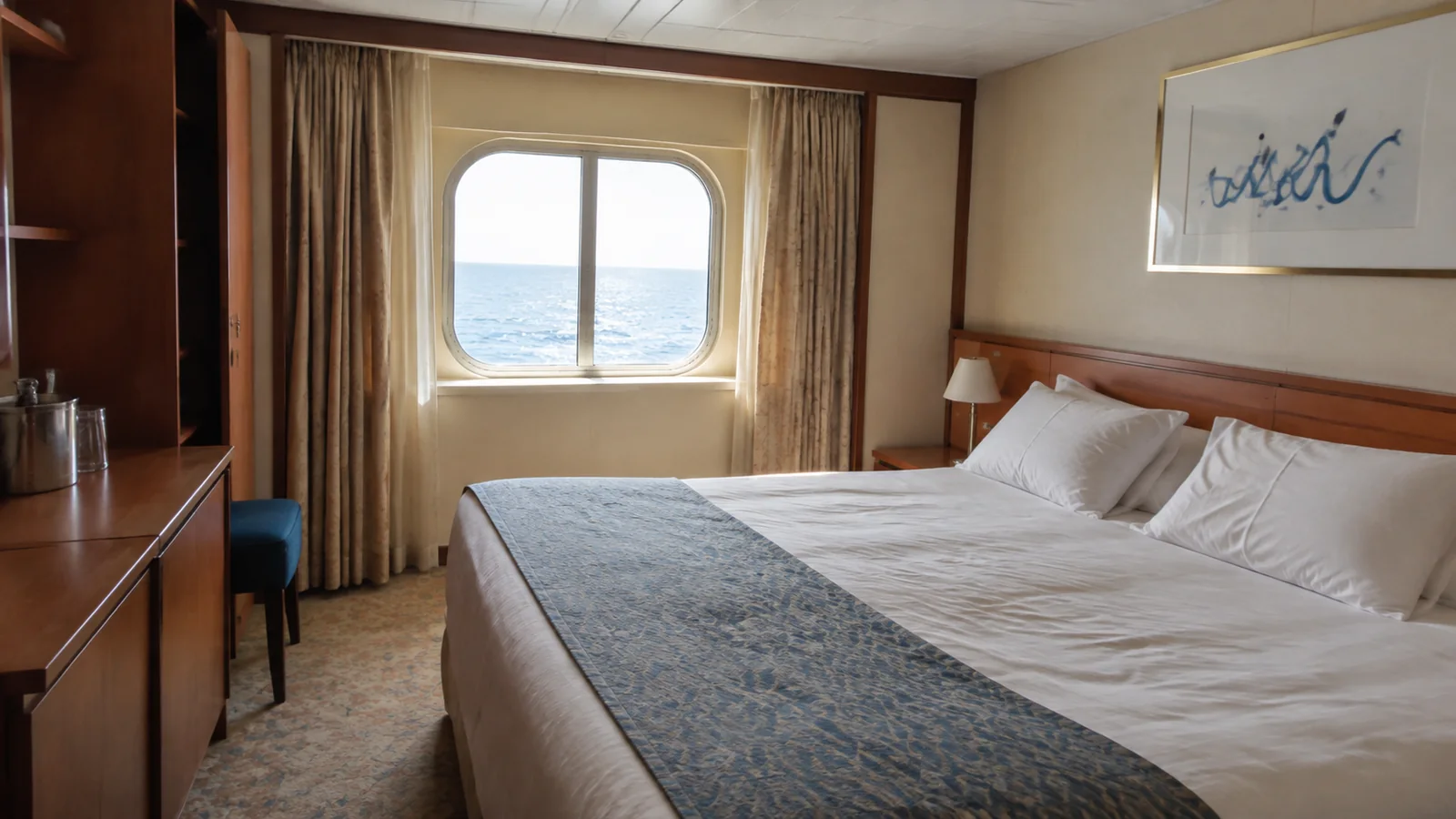
These Deluxe Ocean View rooms sit far aft on Deck 1. Book them only if the cabin size, occupancy, location, and fare matter more than receiving a clean picture-window view.
Nearby 1438 and 1457 are not on Carnival’s obstruction list, but verify category and bed capacity before switching. Moving one door can solve the view label while changing the room’s occupancy or fare.
Cabins 2448 and 2473
These Deck 2 Deluxe Ocean View rooms are also officially obstructed and sit near the stern. Their location adds a second conditional issue because parts of this aft Deck 2 zone lie below galley and dining support space.
Do not move blindly to 2446 or 2471 just because neither is on the obstruction list. Those neighbors improve the official view label, but they remain in the same general under-galley and far-aft environment.
A more meaningful alternative is a non-obstructed Deluxe Ocean View farther forward on Deck 1 or Deck 2, after checking the exact symbol and category. That trades the aft position for more walking but separates two concerns instead of only one.
Cabins 9205 and 9206
These forward Deck 9 Junior Suites are the two officially obstructed suites. The word “suite” does not cancel the obstruction, and a higher price does not turn the sightline into an open panorama.
They also occupy a high, forward position, which can feel more active in rough water than a lower midship room. Travelers buying a suite for view and motion comfort should compare Deck 7 Ocean Suites in the 7230 through 7279 area, then confirm the specific cabin configuration.
The Deck 7 suggestion is not identical inventory: an Ocean Suite and a Junior Suite can differ in price, space, and layout. Its advantage is structural, with guest cabins on the decks immediately above and below much of that zone.
Deck 6 cabins over the Showtime Theater
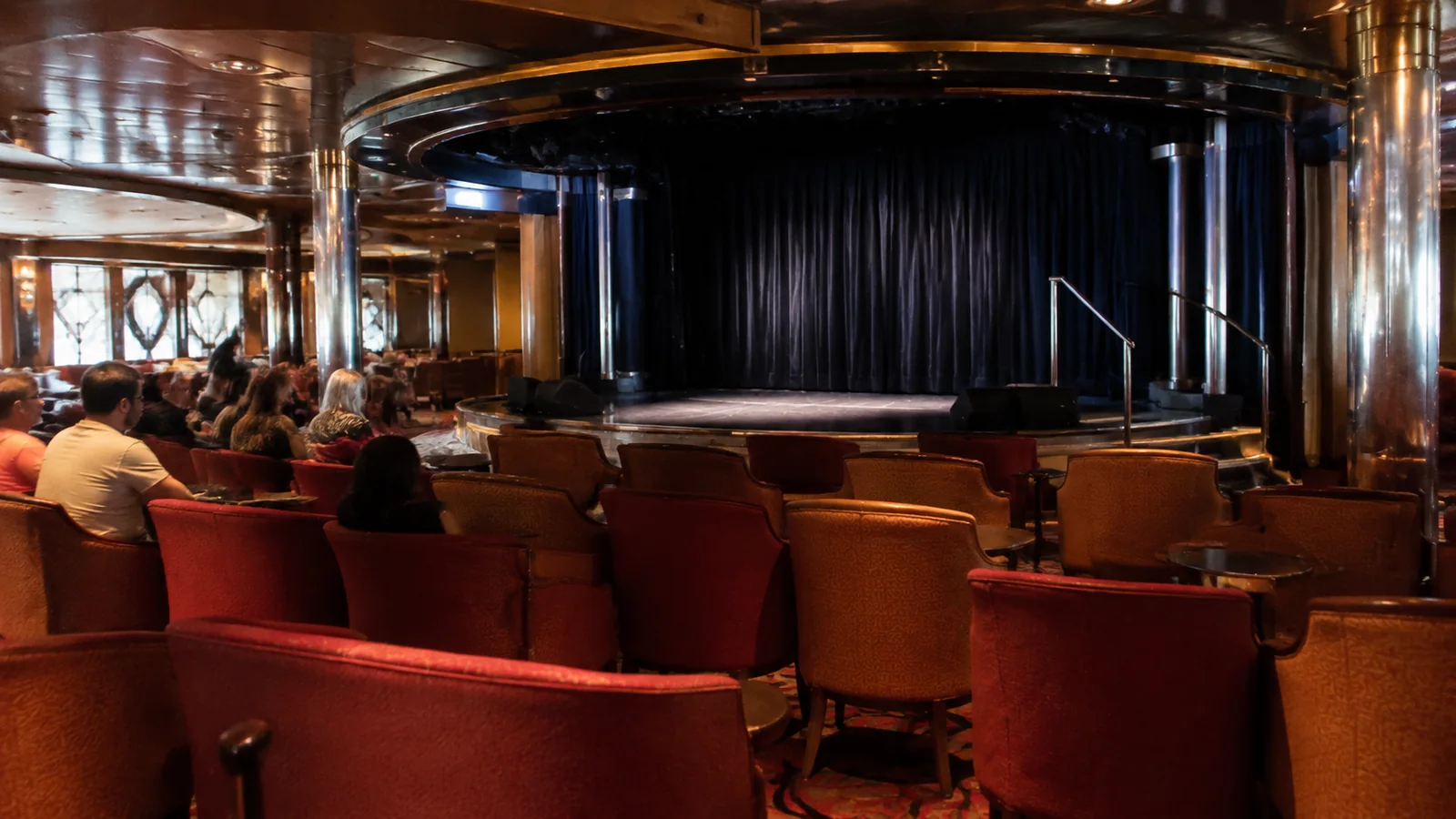
The forward Deck 6 rooms from roughly 6201 through 6273 align over the Deck 5 Showtime Theater, its entrance, and the forward atrium zone. Cabins closest to the theater footprint have the clearest location-based reason for a light sleeper to pause.
Possible disturbances include show bass, rehearsals, applause, and audience movement before or after a performance. None is guaranteed inside every cabin, and guests who attend late shows may find the location wonderfully convenient.
If early sleep matters, compare Deck 7 cabins in the same forward-to-midship span. Deck 7 has guest accommodations above and below, though cabins nearest its elevator lobbies can still receive hallway traffic.
Deck 6 cabins over Ocean Plaza
Deck 6 cabins around 6368 through 6407 align over Ocean Plaza, its dance floor, nearby bar activity, and the Lanai promenade. The exact exposure changes across the footprint, so a range is more honest than declaring every room equally noisy.
Cabins 6373, 6375, 6377, 6379, 6381, and 6383 sit on the starboard side above the busy venue zone. Their structural position is verifiable; whether music reaches your pillow depends on event programming, volume, and individual sensitivity.
For a quieter-location bet, compare Deck 7 balconies or interiors around 7350 through 7375. These are farther aft than the direct vertical match but remain between accommodation decks and away from the central atrium opening.
Cabin 6422 and the Vibe Dance Club zone
Cabin 6422 is a useful case because it combines two separate tradeoffs. It sits over the Vibe Dance Club area and connects to cabin 6424 according to the official plan.
A connecting door is excellent when your group books both rooms. When strangers occupy the other side, it can transmit conversation or television more readily than a solid uninterrupted wall, although guest behavior still determines the result.
Other rooms around 6416 through 6431 occupy the broader vertical footprint over Vibe and adjacent Promenade spaces. A late-night traveler may enjoy the short trip home, while a light sleeper should prioritize Deck 7 instead.
Compare nonconnecting Deck 7 rooms around 7418 through 7449, checking the printed connection symbol and bed icons before paying. The goal is not merely moving one deck up, but choosing a room whose doorway, capacity, and neighbors match your party.
Deck 6 cabins over the aft lounge
Cabins at the far aft of Deck 6, especially around 6470 through 6501, align over the Prime Steakhouse and Spotlight Lounge zone. Rooms closest to the lounge and stage carry the more plausible evening-sound tradeoff.
Restaurant adjacency alone is not an automatic warning because dining service usually has a different sound profile than a nightclub. The stage and audience footprint make the late entertainment schedule the more relevant question.
Deck 7 aft-view balconies 7460 through 7465 and nearby aft cabins sit between cabin decks, but stern motion and vibration remain possible. Choose them for wake view, not because any far-aft room can be promised silent.
This is the same vertical-comparison method used in the Carnival Breeze cabin guide. Sister-ship similarity can help with method, but Carnival Magic’s own plan must control its cabin numbers.
Deck 2 cabins below the galley
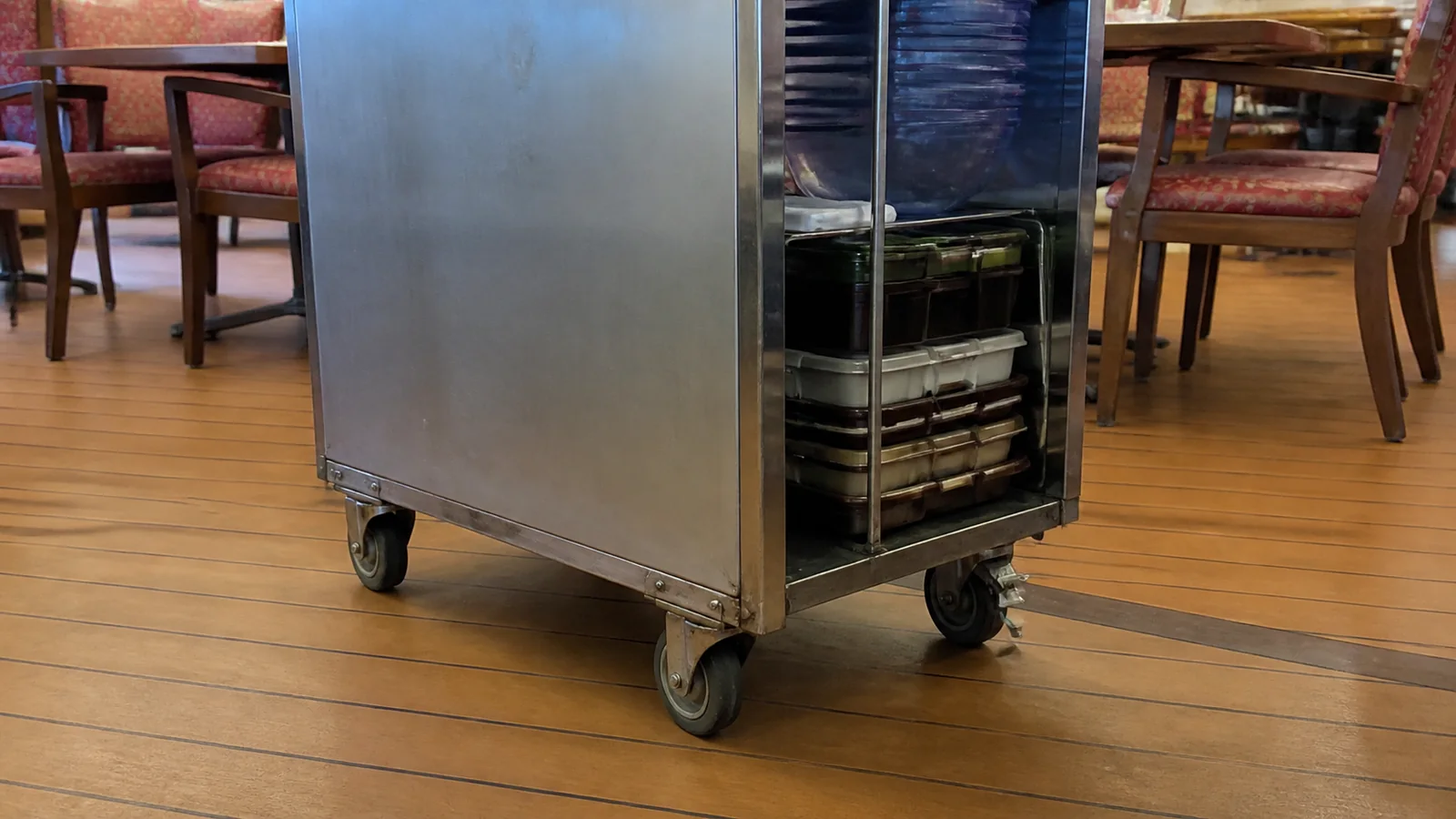
The Deck 3 galley occupies a long central-to-aft footprint above many Deck 2 rooms. Cabins from roughly 2364 through 2448 on the port side and 2393 through 2473 on the starboard side deserve a closer look if rolling carts, dropped items, or early food preparation would wake you.
The deck plan proves the galley location, not its overnight sound inside a particular room. Galley teams work around meal service, so the risk window can begin earlier and finish later than dining-room hours.
Cabins 2448 and 2473 are the least attractive match for a view-first light sleeper because Carnival also labels them obstructed. A lower Deck 1 Deluxe Ocean View away from the named obstruction list may be the cleaner compromise.
Cove balconies on Deck 2
Cove Balconies are not rooms to avoid by default. They sit close to the waterline and have a sheltered opening, which many guests value for sea connection, shade, and a lower position.
The tradeoffs are structural: lifeboats and public or service spaces occupy parts of the deck above, the balcony feels more enclosed than a conventional glass-fronted balcony, and heavy weather can affect access under operational rules. Choose one for the cove experience, not while expecting the same view as a high open balcony.
Use the cabin-by-cabin deck overlay before selecting a cove room. Moving a few doors can change what is directly overhead from dining room to galley or open atrium transition.
Deck 9 cabins under the Beach Pool
Forward-midship Deck 9 cabins around 9270 through 9359 align beneath the Beach Pool deck and its surrounding loungers on Deck 10. Footsteps, chairs, cleaning, and daytime music are possible rather than certain.
This zone can be excellent for families who want a one-deck trip to the pool. It is a weaker fit for someone who naps midday, sleeps early, or needs reliably calm overhead surroundings.
Compare Deck 8 rooms in a similar horizontal position, such as the 8270 through 8359 area. Deck 8 is largely sandwiched between cabin decks, while still keeping the Lido only two levels away.
Deck 9 cabins under Lido Marketplace
Cabins around 9360 through 9447 sit beneath the broad Lido Marketplace footprint. Dining chairs, cleaning equipment, footsteps, and back-of-house activity are the location-based concerns.
Not every part of the marketplace produces the same sound, and carpeting or fixed counters change transmission. The deck plan alone cannot identify the loudest square foot, so light sleepers should solve the entire uncertainty by moving to Deck 8.
Cabin 9476 and the aft food area
Cabin 9476 is an aft-view extended balcony on Deck 9 beneath the aft portion of the Lido Marketplace and food-service area. Its large wake-facing balcony is the reward; overhead activity and amplified stern movement are the tradeoffs.
This room is not a mistake for someone who prioritizes an aft balcony and stays up late. It is a poor value for a motion-sensitive light sleeper paying extra specifically for rest.
Compare Deck 7 aft-view extended balconies in the 7460 through 7475 group. They preserve a stern-facing concept with cabins above and below, although price, category, and balcony shape can differ.
High-forward cabins and motion
Forward cabins 9201 through 9229 on Deck 9 and 11201 through 11208 on Deck 11 sit high and close to the bow. That position generally produces more noticeable pitching than a lower room near the ship’s center during rough seas.
Motion varies with route, speed, wind, and swell, so no cabin causes seasickness by itself. A motion-sensitive traveler should compare Deck 1 or Deck 2 midship rooms and speak with a medical professional about prevention before sailing.
Aft-view cabins can also transmit different movement and occasional vibration, especially during maneuvering. Do not trade a forward room for the far stern while assuming “aft” means motion-free.
Elevator-adjacent cabins
Rooms beside elevator and stair lobbies have shorter walks but more guests passing the door. On Deck 6, examples include 6272 and 6275 near the forward bank, 6360 and 6361 near the midship bank, and 6460 and 6461 near the aft bank.
The concern is usually hallway conversation and waiting traffic, not a claim that the elevator machinery will be loud. Guests with limited mobility may reasonably accept that tradeoff because the shorter route improves every day of the cruise.
Category symbols that matter as much as location
Carnival Magic has Interior, Ocean View, Deluxe Ocean View, Cove Balcony, standard Balcony, aft-view categories, and several suite types. Carnival’s current ship page describes the room families, while the plan supplies exact icons.
- 1A Interior Upper/Lower: may use one twin plus an upper Pullman or sofa instead of the standard two-twin arrangement.
- 4J: an Interior with Picture Window and an obstructed view.
- PT: porthole windows rather than one broad picture window.
- Connecting symbol: an interior door joins the neighboring cabin.
- Upper-bed symbols: show whether Pullmans change sleeping capacity or bed conversion.
- Accessible symbols: identify specific mobility layouts, not rooms to book for extra space without need.
Match the icon to the people in the room before comparing deck. Carnival’s stateroom overview explains broad styles, but only the ship plan shows the exact cabin’s symbols.
The safest quiet-location strategy
Start on Deck 7 or Deck 8, place the room away from the atrium opening and elevator lobby, and confirm that another cabin sits directly above and below. Then reject an unwanted connection, Pullman, or obstructed-view symbol.
Deck 7 is the strongest default because it is farther from Lido than Deck 8 while remaining between accommodation decks. Deck 8 is a good compromise for guests who want easier pool access without sleeping directly beneath it.
The broader cruise cabin checklist adds questions about guarantees, family occupancy, and accessible inventory. Use general principles only after the Carnival Magic plan settles exact adjacency.
If another Carnival ship is in the comparison, do not copy cabin numbers across classes. Even the Carnival Panorama room guide uses a different plan and venue footprint.
My booking checklist
- Open Deck 5, the cabin deck, and the deck above in separate tabs.
- Find the exact cabin number, not only its category.
- Check Carnival’s obstruction, connection, bed, and accessibility symbols.
- Decide whether noise, motion, view, walking distance, or capacity matters most.
- Compare a nearby room and one room two decks away before paying.
- Recheck the live deck plan if the ship is refurbished or the booking changes.
The bottom line
Avoid 1440, 1459, 2448, 2473, 9205, and 9206 when an unobstructed view is essential. Light sleepers should also compare alternatives to Deck 6 entertainment-adjacent rooms, Deck 2 cabins below the galley, and Deck 9 cabins below Lido.
Everyone else can choose the tradeoff deliberately. A short walk to the club, a sheltered cove, or a wake-facing balcony can be worth more than theoretical quiet when it matches the way you actually cruise.