Oceanview vs Balcony Cruise Cabins: When I Would Upgrade
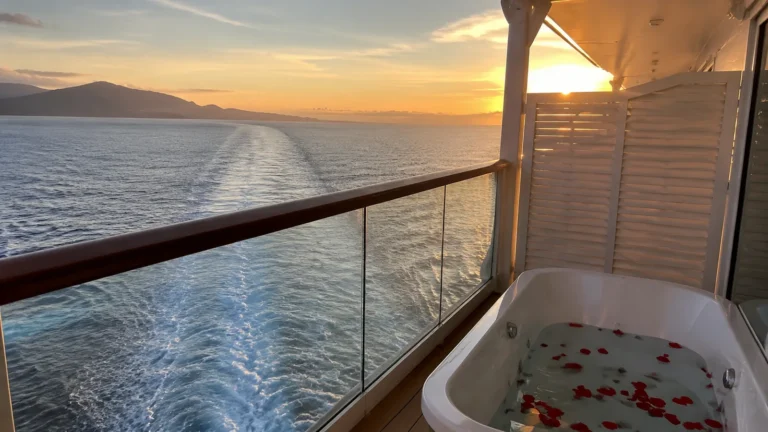
I would choose an oceanview when I want daylight at a sensible price and expect to spend most days around the ship or ashore. I would pay for a balcony when private outdoor time is something I will actually use, especially during scenic sailing or quiet mornings.
Before upgrading, I would compare the exact rooms, because a balcony does not automatically mean more indoor space or a better location.
The quick comparison I would use
- Choose oceanview for: Natural light, a lower total fare, and room time focused on sleeping or getting ready.
- Choose balcony for: Private outdoor seating, easy access to passing scenery, and a place to sit while a travel companion rests.
- Check before paying extra: Indoor square footage, view direction, obstructions, balcony coverage, and the decks above and below.
- Do not assume: Every balcony faces the ocean, every oceanview has a large window, or every premium category has a quiet location.
What an oceanview actually buys
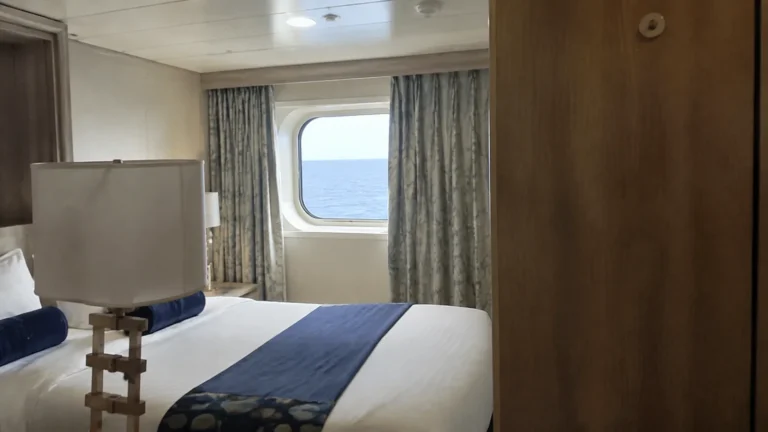
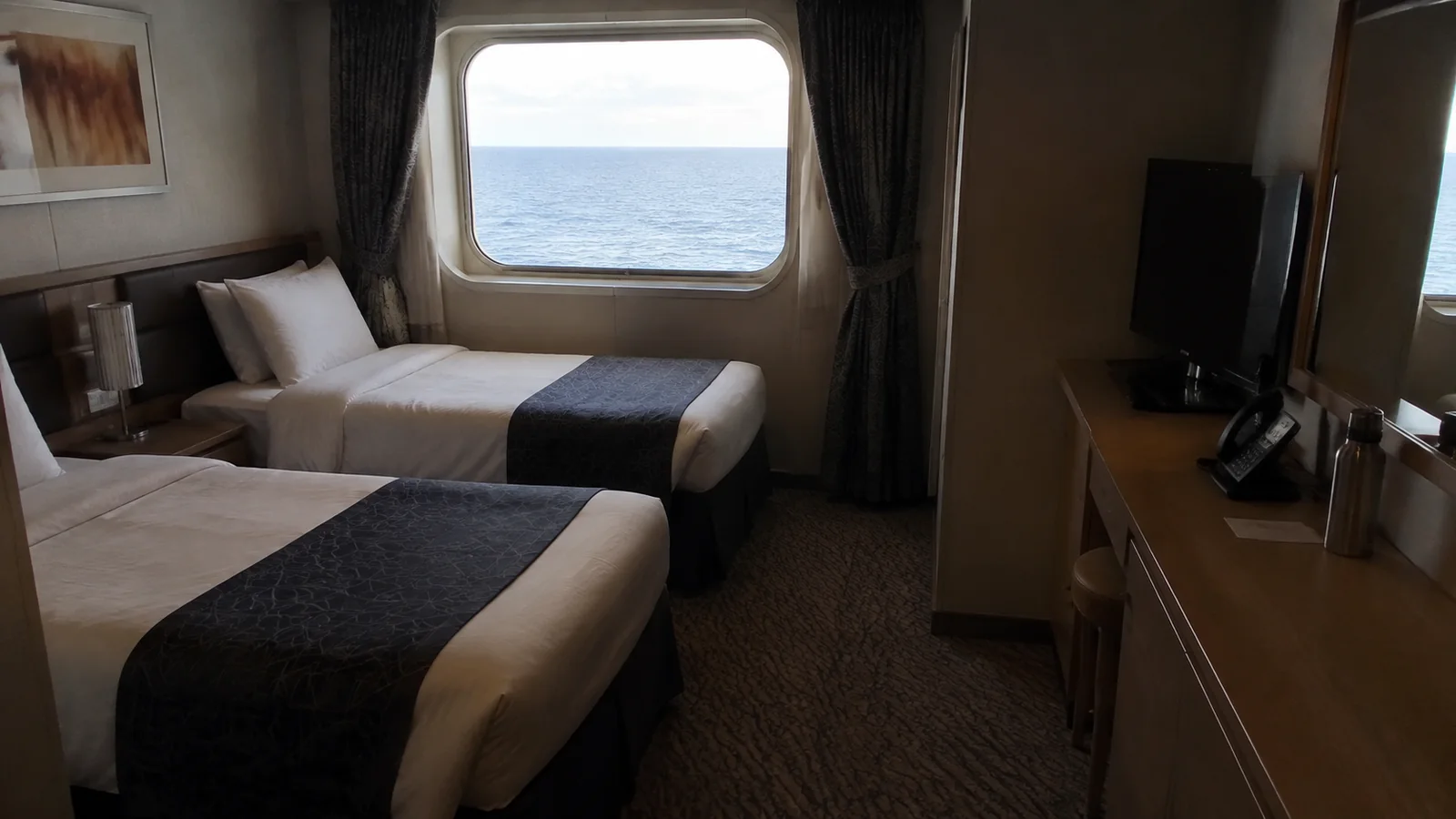
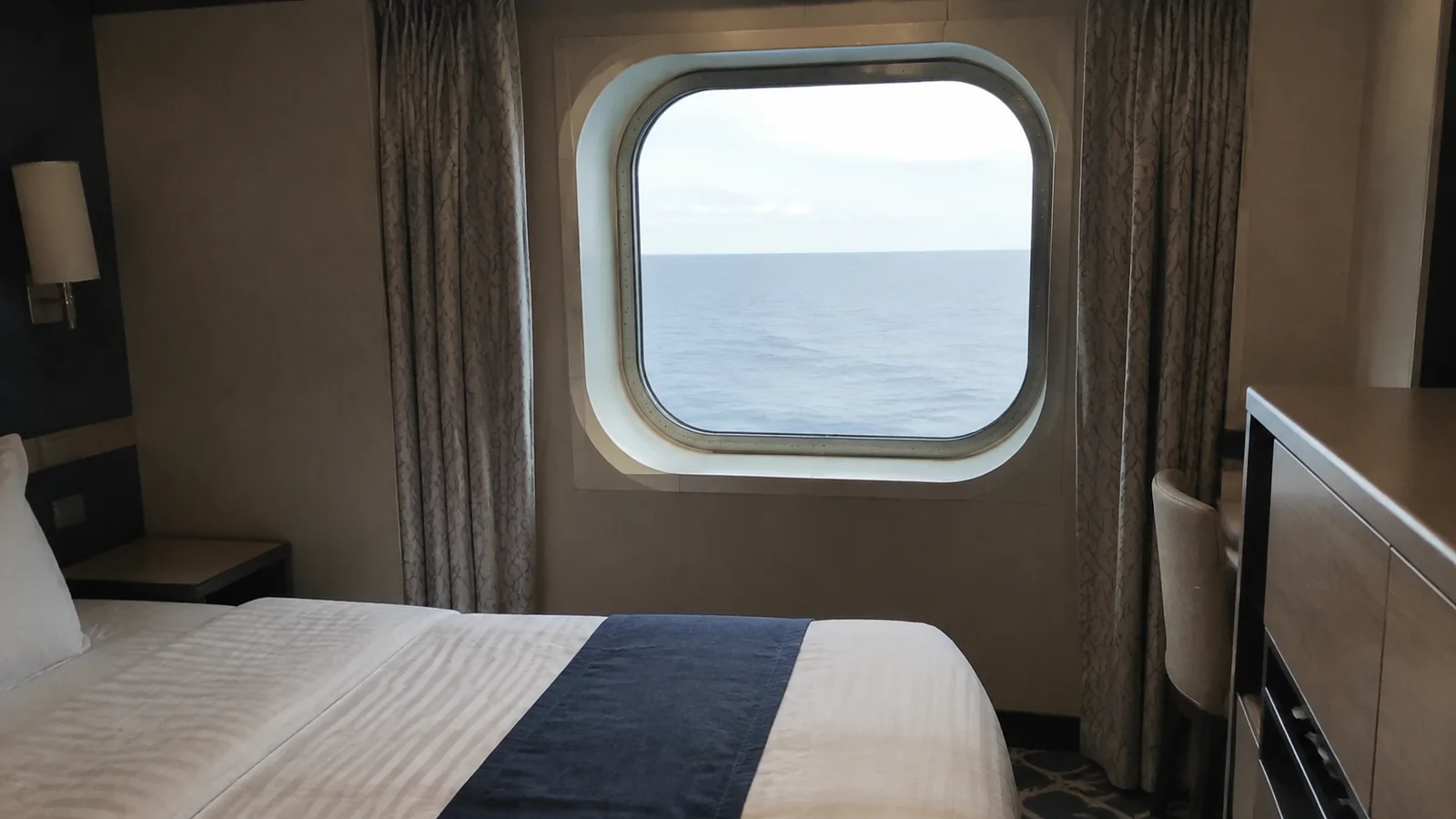
An oceanview is a room with a window or porthole and an outward view, although the size and clarity of that view vary. On a conventional ocean cruise ship, I would expect fixed glass unless the specific room description says otherwise.
The main upgrade from an inside room is daylight and a visual connection to the outside. That can make mornings more pleasant even if you do not spend much time sitting by the window.
I would look at the window position before paying more for a panoramic description. A bed or furniture arrangement can make a large window less convenient to use than the photograph suggests.
An obstructed oceanview needs a separate assessment. If a lifeboat fills most of the window, you may mainly be buying natural light rather than a place to watch the sea.
Princess’s stateroom overview distinguishes interior, oceanview, balcony, mini-suite, and suite accommodation. I would use the actual ship’s room description for dimensions instead of applying the fleetwide illustration to every cabin.
For my own budget, an oceanview is often the strongest middle choice. It avoids the enclosed feel of an inside room without committing me to an expensive outdoor area I might barely use.
A balcony changes how you can use the room
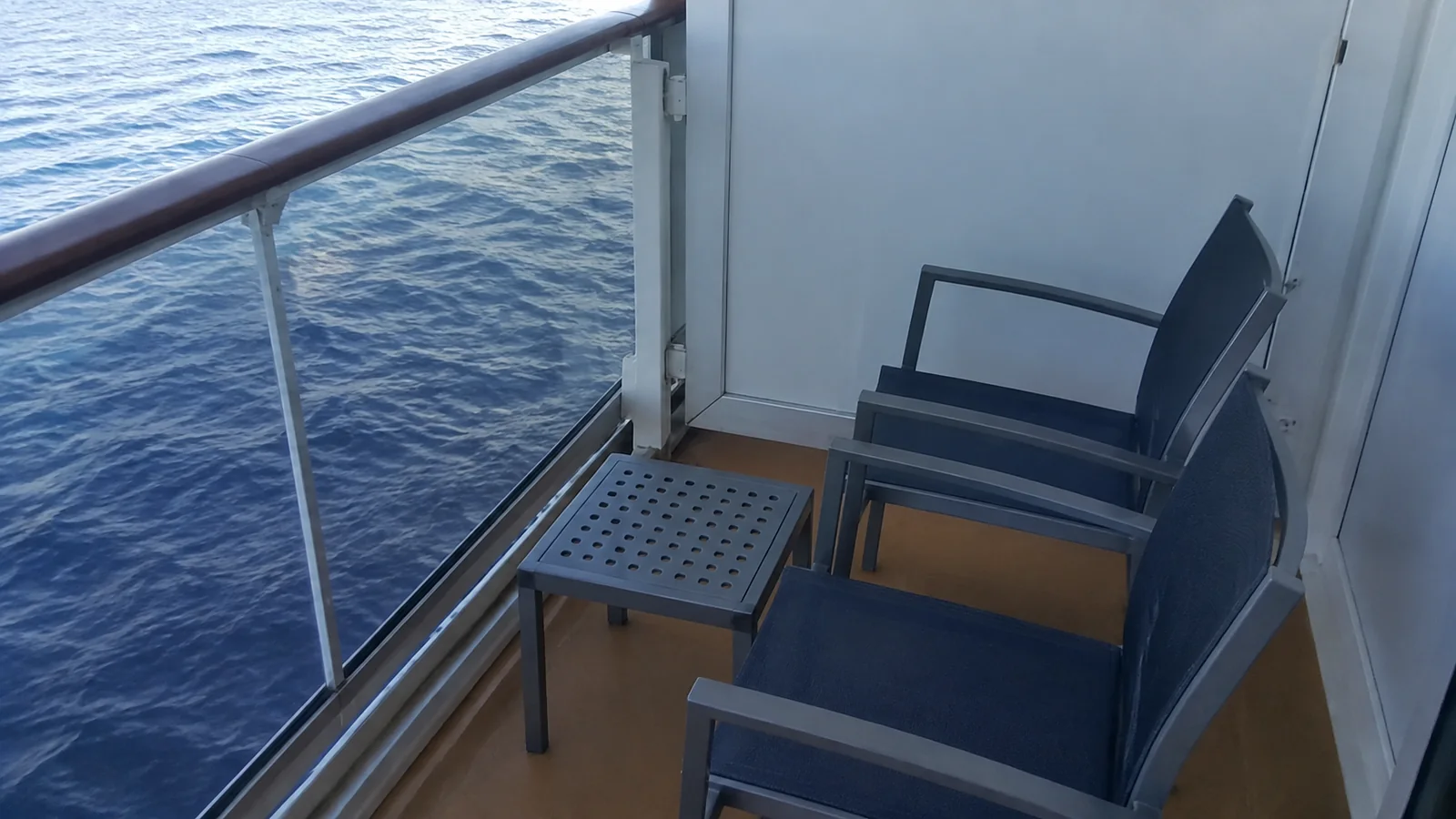
A traditional balcony gives you a separate outdoor area with a door between it and the cabin. I would value that most when two people want different things from the room at the same time.
One person can read outside while the other naps, provided they can use the door without disturbing the sleeper. It is also convenient for a few minutes of scenery without changing clothes and going upstairs.
I would not count every square foot of balcony as interchangeable with indoor living space. A windy chair outside does not replace room to open a suitcase or move around the bed.
Ask whether the advertised size includes the balcony. If one cabin is described by interior area and another by total area, the larger number can hide a smaller bedroom.
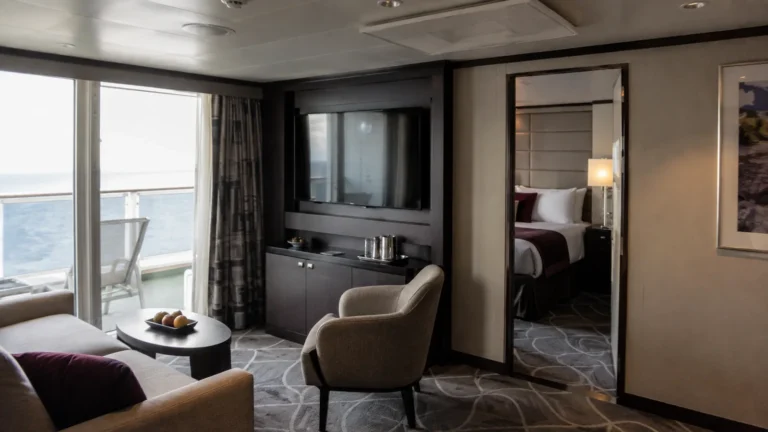
I would compare the bathroom and bed arrangement too. A balcony upgrade that leaves the same compact interior may offer less day-to-day benefit than a larger oceanview for a family sharing one room.

Not every balcony has the same view
Some ships have balconies facing inward toward promenades, gardens, or activity areas. These can be interesting places to sit, but they do not offer the same experience as an outward-facing ocean balcony.
I would look for the words ocean view in the full category description when a sea view matters. A photograph of a beautiful balcony elsewhere on the ship is not confirmation of what my room faces.
Even outward balconies can have lifeboats, steel railings, support beams, or deep overhangs affecting the outlook. I would ask for a photograph from the actual room when the booking page uses an obstructed or partial-view label.
Disney’s verandah-type explanation shows why a single balcony label can cover different arrangements. I would read the ship-specific description instead of assuming a Navigator’s Verandah is identical across Disney ships.
A partly sheltered balcony may be preferable in cool or rainy conditions. In warm weather, someone who wants direct sun might prefer a more exposed area, so I would choose for the itinerary and my habits.
Opening-window cabins deserve their own comparison
Some newer ships offer a room with a large opening window that changes how part of the interior feels. I would not automatically treat that as equivalent to a conventional balcony separated by an exterior door.
For example, MSC World America’s Infinite Ocean View rooms use a panoramic sliding window, and MSC explains that the captain can control its operation in certain conditions. I would read those limits before booking it for guaranteed outdoor access.
The attraction is a flexible indoor space with a broad view. The tradeoff is that opening the window affects the room itself rather than creating the same separation a traditional balcony offers.
If one traveler wants air-conditioning while the other wants to sit outside, I would favor a conventional balcony. If I mainly want a spacious-feeling room and a wide window, I would compare the opening-window option on its own merits.
Privacy is worth checking from both directions
On an oceanview beside a public walkway, someone outside may be able to look toward the glass. I would not rely on reflective glass for privacy at night when the cabin is lit.
A balcony can also be visible from a deck above, an opposite row of rooms, or a public promenade below. Private access does not necessarily mean complete visual privacy.
I would request two angles: the view outward and the view back toward the room from the balcony. The second often reveals an overhead walkway or neighboring angle that the first photograph hides.
For a couple who wants quiet breakfasts in pajamas, I would choose a conventional outward balcony away from those public sightlines. Someone who enjoys watching activity may be perfectly happy overlooking a lively promenade at a lower price.
My cabins-to-avoid guide explains other room features worth investigating. The aim is to choose a tradeoff you understand before the fare becomes difficult to change.
Location can outweigh the category upgrade
I would rather book a well-placed oceanview than a balcony directly beneath a busy pool deck if sleep is the priority. More expensive accommodation can still sit near a nightclub, buffet, or furniture-moving area.
I would open the deck above and below each candidate. The cruise floor-plan guide explains how to compare venue footprints without condemning an entire deck.
Motion-sensitive travelers should also compare position. A lower central oceanview may suit them better than a high forward balcony, although no location can guarantee a motion-free trip.
My seasickness planning advice is useful before treating fresh air as the reason for an upgrade. A balcony is a convenience, not a guaranteed remedy.
I would keep necessary accessible features at the top of the list. A balcony threshold, bathroom layout, or long walking route can make the more expensive room a less workable choice.
Put a realistic price on your outdoor time
I would compare the total fare difference for everyone in the room. Per-person advertisements can make a meaningful upgrade cost look smaller than the amount you will actually pay.
For a hypothetical seven-night trip, a $700 increase is $100 per cabin per night. I would ask whether I want that much private outdoor time after comparing the cost with excursions, transportation, or an extra hotel night.
If the difference is only $140 for the full week and the location is equally good, I would be inclined to take the balcony. A modest premium is easier to justify than a large upgrade that forces cuts elsewhere.
The comparison needs the same cancellation terms, passenger count, and included packages. A balcony with a nonrefundable deposit is not simply a nicer version of a flexible oceanview fare.
I would also resist valuing an included drink or dining package at its full retail price if I would never buy it separately. Only the parts I genuinely want should reduce the apparent cabin premium.
When I would spend more
On a scenic itinerary, I would lean toward a balcony if the price is comfortable and the view is clear. The convenience of stepping outside repeatedly can be worth more than it is on a voyage focused on beaches and port days.
For someone who needs frequent rests, private viewing can make the cabin a more useful base. I would check that the seating is comfortable and the view works from the position they will actually use.
For a family with naps, I would compare a balcony against a room with a separate sleeping area or two connecting cabins. The latter may solve more of the practical problem, even if it is less glamorous in a photograph.
My guide to family-friendly cruises helps with the larger ship decision. I would not spend the whole budget on a balcony if the ship’s children’s activities or room capacity do not fit the family.
When I would keep the oceanview
On a port-heavy itinerary, I would be comfortable choosing an oceanview and using public decks for occasional outdoor time. The savings could be better spent on the places I will actually visit.
I would also keep the oceanview if the only affordable balcony is an unknown guarantee or has a view I cannot verify. Knowing I have a comfortable room can be worth more than the chance of a higher category.
For a short first cruise, an oceanview can be a useful way to learn how you use the ship. I would avoid assuming that someone else’s must-have upgrade will become mine.
My five-minute comparison
- Compare the total trip price under equivalent fare conditions.
- Separate indoor square footage from balcony area.
- Confirm the window or balcony faces the view you want.
- Inspect obstructions, railing type, overhead coverage, and public sightlines.
- Check noise exposure above and below, plus motion and walking distance.
- Confirm bed capacity, bathroom features, and any opening-window restrictions.
Questions worth asking before upgrading
Are oceanview cabins always smaller?
No, and I would compare the actual floor plans. Some family oceanviews offer more useful indoor space than a standard balcony room.
Can I sleep with the balcony door open?
I would follow the ship’s instructions and keep the door closed when required. Air-conditioning operation, weather, and safety rules make this a poor assumption to build into a booking.
Is an obstructed balcony better than an oceanview?
It depends on the obstruction, location, and price. I would choose the balcony if the outdoor area is useful and the view is acceptable, then choose the oceanview if the upgrade mainly adds a compromise.

My choice
I would book a well-placed oceanview by default and upgrade when I can describe exactly how I will use the balcony. I would pay for usable private outdoor space, while keeping room layout, sleep, and the rest of the trip comfortably within budget.