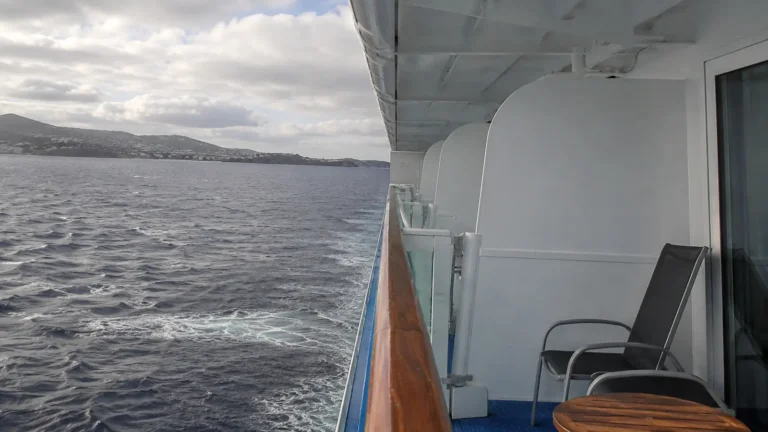
Ovation of the Seas Cabins to Avoid: Exact Rooms & Better Picks
Ovation of the Seas has several cabin numbers I would pause over, but each one has a different reason for making the comparison.
I would keep the warning tied to the actual room and neighbor instead of turning an entire deck into a blacklist.
Cabins I would compare first
- 6588 and 6590: Deck 6 obstructed balconies where the exact lifeboat relationship matters.
- 13694 and 13696: far-aft Deck 13 rooms beneath Windjammer, worth comparing with a residential ceiling for late mornings.
- 11525: an accessible interior near the children’s activity area; preserve needed access features while comparing corridor traffic.
- 11128–11160 and 11528–11560: broad forward Deck 11 proximity zones around Adventure Ocean, useful for families but not automatically quiet.
- 7110: a very forward balcony where motion and operational activity deserve consideration.
- 6292: an obstructed balcony whose nearby operational-looking space should be identified before booking.
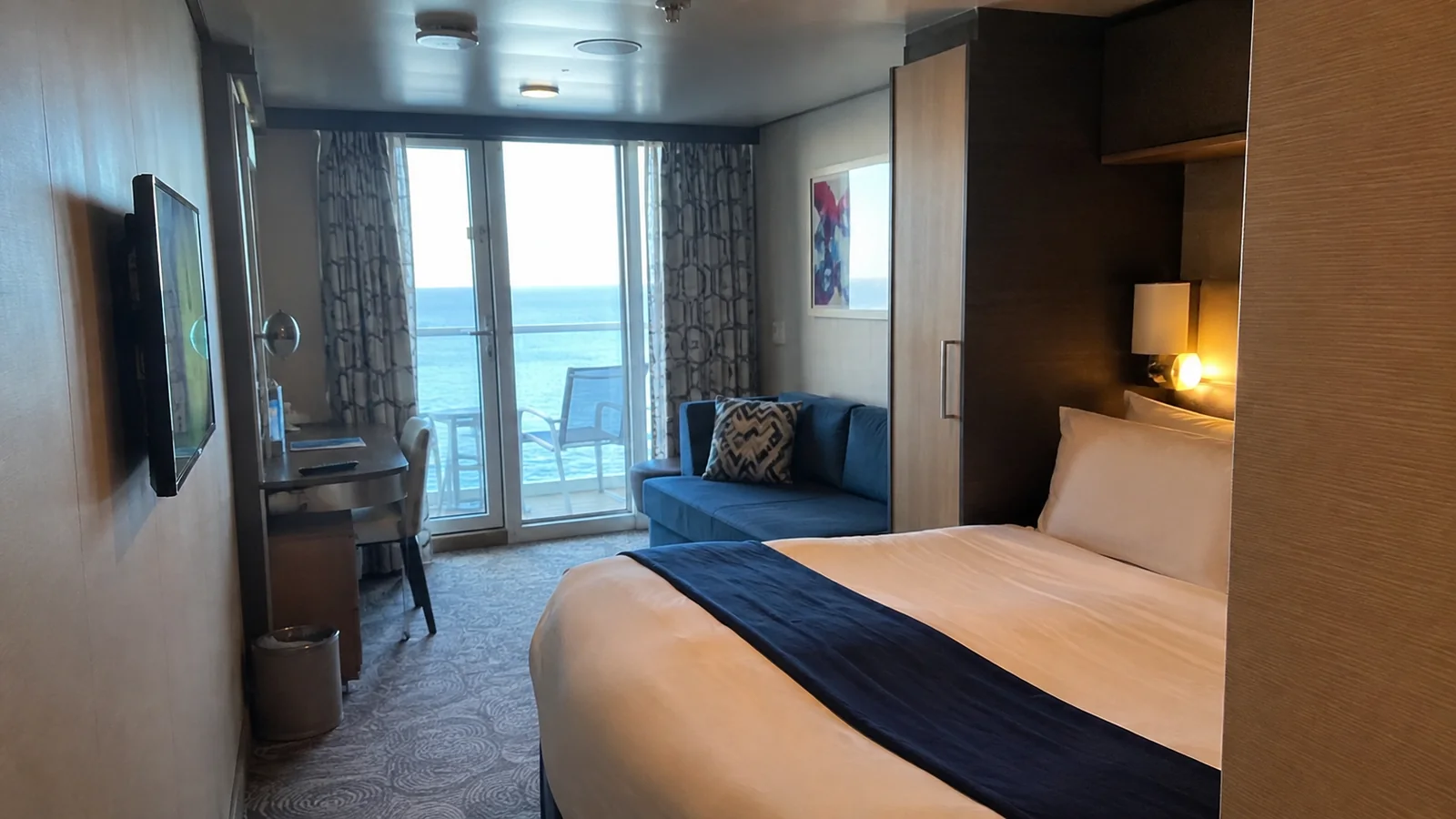
Ovation Cabins and Locations to Screen First
These are plan-based checks, not promises of noise or discomfort. The official layout can prove a lifeboat relationship, venue adjacency, or extreme position, but it cannot prove what you will hear on a future sailing.
- 6588 and 6590: Deck 6 obstructed-balcony choices where the exact lifeboat relationship matters.
- 13694 and 13696: Far-aft Deck 13 cabins below Windjammer space, with a possible early operational-sound tradeoff.
- 11525: An accessible interior room near the forward children’s activity area.
- 11128 to 11160 and 11528 to 11560: Broad Deck 11 forward screening zones close to Adventure Ocean activity and traffic.
- 7110: A very forward balcony where motion, wind exposure, and docking or anchoring operations deserve consideration.
- 6292: An obstructed balcony by an unlabeled or operational-looking vertical relationship that should be clarified.
- Deck 13 generally: Inspect the precise Deck 14 venue above instead of rejecting the whole level.
Rooms 7520 and 11130 sometimes appear in traveler warnings, but the plan does not identify a permanent drain, pipe, or wall defect in either cabin. I would not blacklist them from an unverified mechanical theory.
Verify the Exact Plan and Category
Royal Caribbean’s official Ovation deck-plan page displayed May 15 through September 11, 2026. Choose the date range covering your departure because symbols and category codes can change even when walls remain in place.
Confirm capacity and included features on the official Ovation rooms page. A quiet cabin is not a better cabin if it cannot hold your party or its “ocean view” is a virtual balcony rather than an exterior window.
Royal Caribbean’s deck-plan guide explains that plans show connections, access features, elevators, and obstructions. It also cautions that blank space can contain crew elevators, galleys, or ice machines, so an unlabeled block deserves a question rather than an assumption.
Follow my cruise floor-plan checklist to align the doorway, balcony, and full room footprint vertically. Do not use a cabin report from Anthem, Quantum, Spectrum, or Odyssey as proof about Ovation.
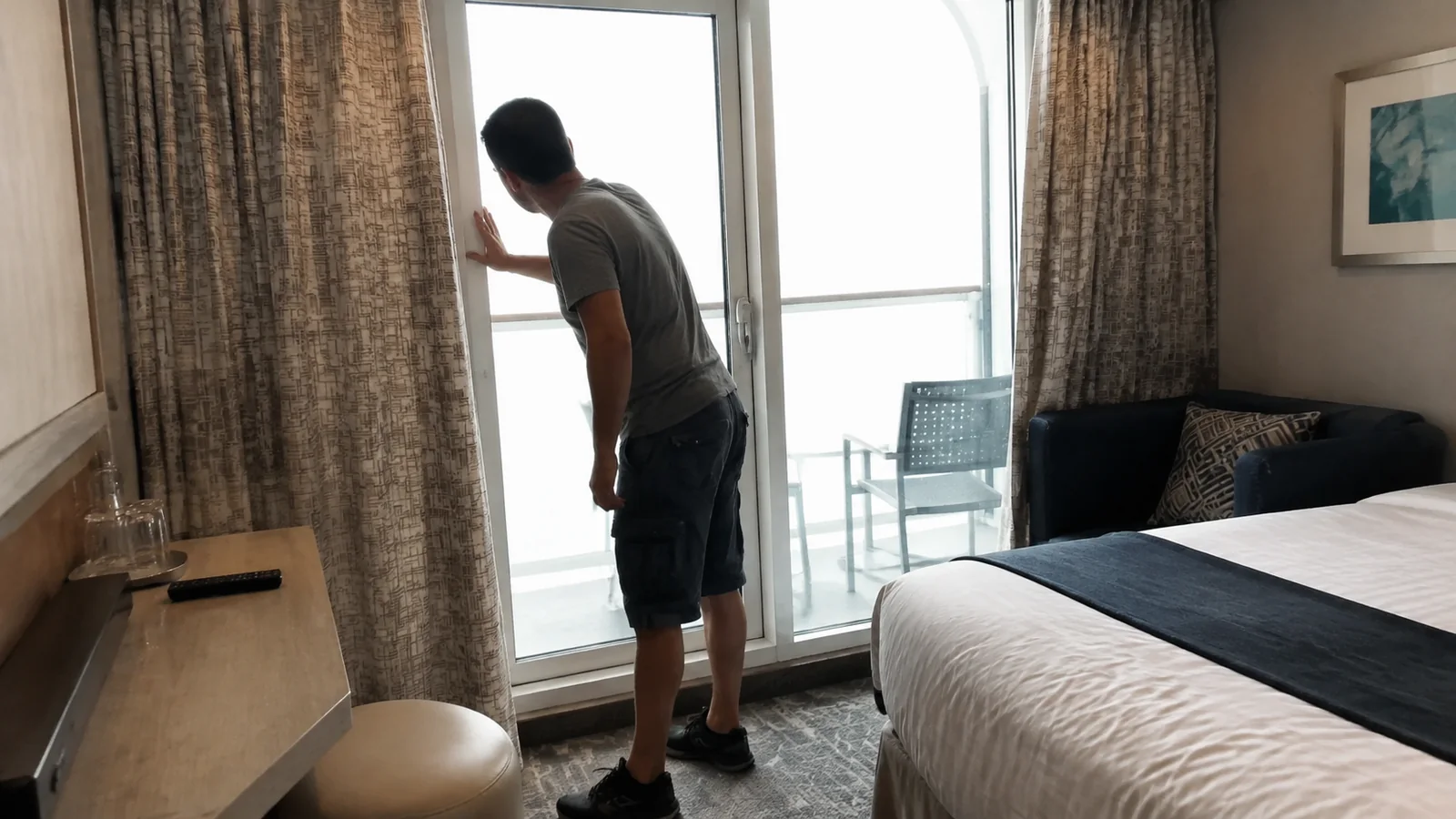
Obstructed Balconies 6588 and 6590
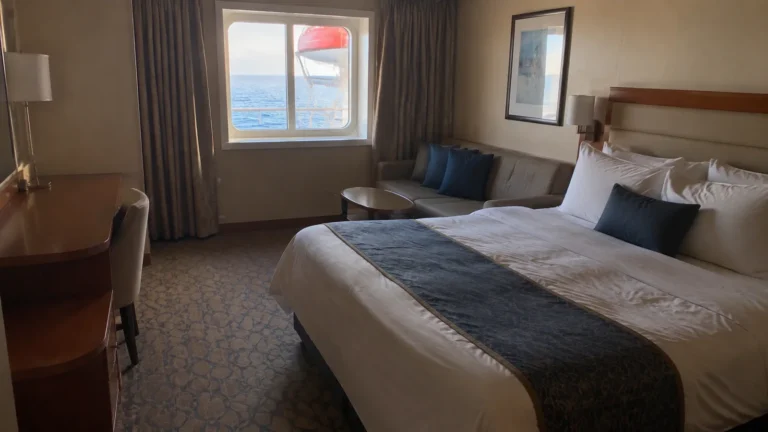
Cabins 6588 and 6590 are in Ovation’s Deck 6 obstructed-balcony zone beside the lifeboats. The obstruction designation is structural, but a category sample cannot show the precise portion of sky, horizon, water, or pier visible from each room.
Cabin 6588 deserves the closer check when an open view is the reason you want a balcony. Cabin 6590 should also be booked only after you see a current exact-room image, not because it sits one number away.
An obstruction can still be a good value if you want daylight, fresh air, and private outdoor space more than a clean downward view. It is a poor bargain for glacier photography, wildlife scanning, or long hours watching the shoreline.
Ask what physically blocks the sightline and from which direction. Keep a screenshot of the category, cabin number, and obstruction wording shown when you purchase.
For an Alaska route, scenery can arrive on either side and conditions change throughout the day. My guide to choosing cruise timing can help weigh daylight and wildlife goals, but it does not turn an obstructed room into an unobstructed one.
Far-Aft Deck 13: Cabins 13694 and 13696
Cabins 13694 and 13696 sit far aft on Deck 13 below the Windjammer area on Deck 14. The plan verifies that relationship, making rolling service equipment, cleaning, food-service preparation, and breakfast traffic plausible overhead.
Those sounds are not guaranteed, and the time pattern matters. An early riser who values quick Windjammer access may accept a little morning activity more happily than a traveler who plans to sleep until 9 a.m.
A comparable room on Deck 10 through Deck 12 with cabins immediately above and below is the safer sleep-first alternative. If you remain on Deck 13, move beyond the busiest restaurant footprint rather than assuming any two-door shift solves the issue.
Far aft also means a longer walk to forward venues and a position away from the ship’s center. That can be peaceful for an active traveler and inconvenient for someone managing fatigue, pain, or limited mobility.
Deck 11 Near Adventure Ocean
Accessible Interior Cabin 11525
Cabin 11525 is an accessible interior room near the forward children’s activity zone. The plan supports possible program-time foot traffic and excited hallway voices, but it does not prove all-day noise inside the cabin.
A family using Adventure Ocean may consider that short route a major advantage. An adult seeking quiet mornings should ask about a comparable accessible room farther from the entrance instead of giving up needed access features.
Rooms 11128 to 11160 and 11528 to 11560
Use 11128 to 11160 and 11528 to 11560 as broad proximity ranges, not a blacklist. Entrance location, doorway orientation, and the route children take at drop-off and pickup are more useful than the range endpoints.
Choose a midship room on Deck 10, 11, or 12 when you want a more conventional residential corridor. Choose the forward zone when children’s-program convenience saves your family more stress than occasional traffic might create.
Cabin 7110 at the Forward End
Cabin 7110 is far forward on Deck 7. That position supports a motion and wind-exposure conversation, while claims about permanent banging, a faulty balcony door, or guaranteed anchor noise require evidence the deck plan cannot supply.
Anchoring, docking, weather, speed, and heading vary by itinerary and day. Operational sounds may occur near forward working areas, but the plan cannot predict their timing or intensity inside 7110.
A motion-sensitive or noise-sensitive traveler should start closer to midship on Deck 8, 9, or 10 with residential decks above and below. A traveler who values a quieter-end corridor or a forward perspective may consciously keep 7110.
Do not book one side of an Alaska sailing because someone promises it always faces the scenery. The ship can turn, ports use different approaches, and important views may appear on both sides.
Cabin 6292 and Unlabeled Operational Space
Cabin 6292 is a port-aft obstructed balcony in a part of Deck 6 where the vertical relationship includes public or operational-looking space rather than a simple stack of passenger rooms. That makes the space below worth identifying before purchase.
The map alone does not prove a crew door slams below 6292 or that any vibration will recur. Ask Royal Caribbean or your travel advisor what occupies the area and whether a same-category room has passenger accommodation underneath.
For a cleaner structural bet, move to a numbered balcony with a residential deck below and no unwanted obstruction symbol. If the discount is substantial, decide separately whether the view limitation and uncertain service adjacency are worth the savings.
Why I Would Not Automatically Reject 7520 or 11130
Cabin 7520 is sometimes associated with alleged flushing or drain noise, while 11130 is associated with an unexplained pounding report. Neither cause appears as a permanent defect on Royal Caribbean’s current official plan.
A detailed past stay can be useful evidence that something happened, but maintenance can fix equipment and a guest’s explanation can be wrong. At equal price, a cautious light sleeper may choose another room without repeating an unproven diagnosis as fact.
If you keep either cabin, note the number on your booking and report persistent sound promptly onboard. Ask staff to hear it in the room, record the time pattern, and request a documented service response.
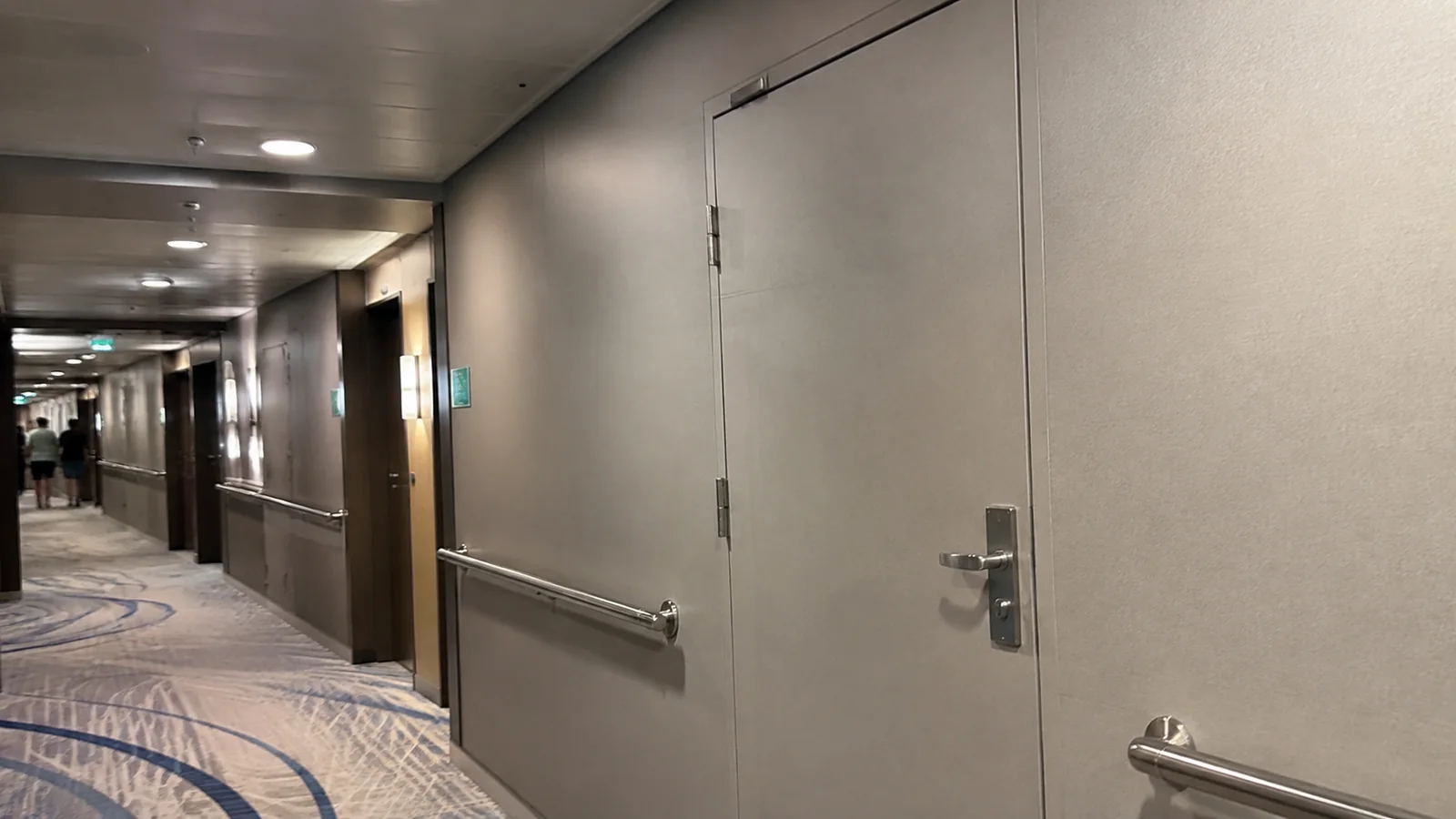
Deck 13 Is Not One Noise Zone
Deck 13 sits below public areas on Deck 14, but Solarium, pool, restaurant, and outdoor-path footprints create different exposures. The deck number alone tells you far less than the exact space over the bed and balcony.
A cabin below fixed carpeted seating may behave differently from one below a tiled service path. Choose Deck 10 through Deck 12 for the easiest cabin sandwich, or keep Deck 13 when upper-deck access is the priority and the overhead match is acceptable.
Do not assume an expensive suite or large balcony solves vertical sound. Category describes the room and benefits, while location still controls its neighbors.
Connecting Cabins and Guarantee Assignments
A connecting door is helpful when your group controls both sides. If you do not need it, a non-connecting equivalent removes one possible voice path without requiring a different deck or category.
A guarantee rate lets Royal Caribbean assign a cabin within the purchased terms. It is a poor fit when you would reject a lifeboat obstruction, far-forward position, Deck 13 venue adjacency, or children’s-area proximity.
Paying to select a number can be worthwhile when view, sleep, walking distance, or adjacent family rooms are essential. It offers control over the known compromise, not a promise that no neighbor or mechanical sound will occur.
Accessible-Cabin Etiquette
Royal Caribbean’s accessibility resources describe its accommodations and special-needs process. Accessible rooms should be selected for their functional features, not treated as an easy way to obtain more floor space.
Not every disability is visible, so passengers should not question another guest’s need. If 11525’s location does not work for you, request another accessible option rather than abandoning features required for a safe trip.
If you accidentally reserve an accessible room and do not need its features, contact Royal Caribbean or your advisor. That gives the line an opportunity to manage limited accessible inventory correctly.
Better Starting Points by Priority
Quiet Sleep
Start midship on Deck 8 through Deck 12 with cabins above and below, no connecting symbol, and no blank service recess beside the door. This removes the largest structural uncertainties without claiming absolute silence.
Best Possible View
Select the exact unobstructed balcony number and verify the category legend. Do not accept a guarantee if a lifeboat in the sightline would disappoint you.
Children’s-Program Convenience
Use the forward Deck 11 zone when short drop-off and pickup walks matter most. Pick farther from the entrance if naps and early bedtimes matter more than proximity.
Lower Motion
Begin low and close to midship, remembering that sea state controls the result. Avoid combining a high deck with the far bow or stern if movement is a known problem.
Reduced Walking
Choose the elevator bank closest to the dining room and venues you will use most. A busier central position may be the better accessible choice when it removes several hundred feet from repeated trips.
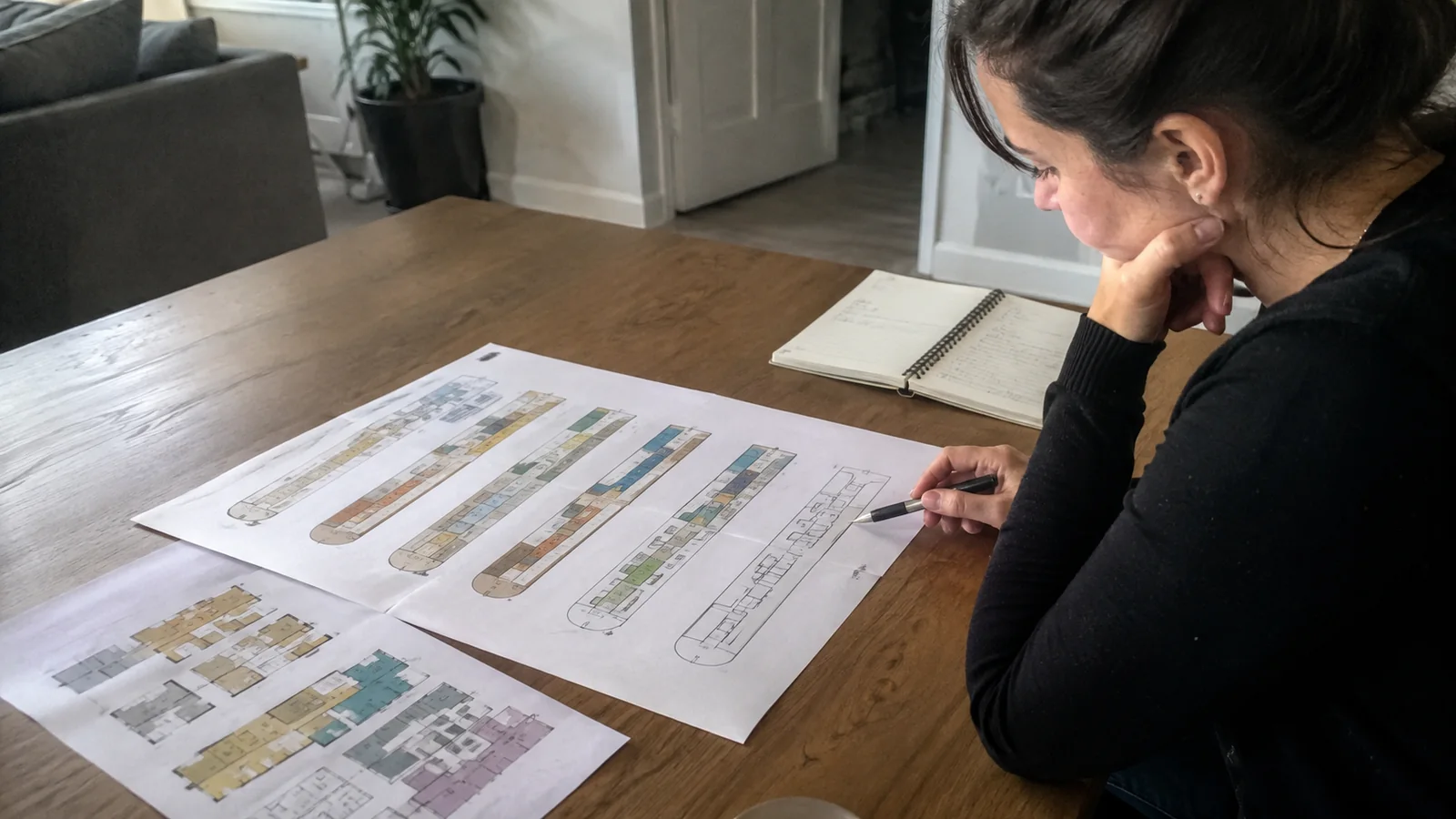
A Five-Minute Ovation Check
- Set the official plan to the dates covering your sailing.
- Search the exact room and confirm category, capacity, access, connection, and obstruction symbols.
- Align the cabin with the complete footprints immediately above and below.
- Identify unlabeled spaces, nearby entrances, and passenger traffic routes.
- Find a current photo from inside the exact obstructed balcony when the view matters.
- Compare a same-category room on a cabin-sandwiched deck.
- Document any essential bed, view, adjacency, or accessibility requirement.
Ask the cruise line concrete questions instead of accepting “it should be fine.” My collection of helpful cruise questions gives you a practical starting script.
Frequently Asked Questions
Are 6588 and 6590 Equally Obstructed?
Do not assume so. Both require an exact-room view check because adjacent balconies can line up differently with a lifeboat’s hull, davits, and open gaps.
Should I Avoid All of Deck 13?
No. Match the room to the precise Deck 14 space overhead and treat 13694 and 13696 as far-aft Windjammer-adjacency cautions rather than proof about the whole deck.
Is 11525 a Bad Cabin?
It is an accessible cabin near a children’s activity zone, which may create program-time traffic and may also be extremely convenient. The right alternative must preserve any access features the traveler needs.
Are 7520 and 11130 Defective?
A current official source does not establish a permanent defect in either room. Past complaints justify a cautious comparison, not a confident diagnosis about drains, pipes, or walls.
The Bottom Line
Ovation’s strongest structural checks are the obstructed Deck 6 balconies, 13694 and 13696 below Windjammer, the Deck 11 children’s-area zone, and far-forward 7110. Room 6292 deserves a direct question about its obstruction and vertical operational space.
Choose the compromise you can see and value. The safest all-purpose start is a non-connecting midship room on Deck 8 through Deck 12, surrounded by cabins, but the best room is the one that fits your view, sleep, mobility, and daily routine.
If you are comparing a much larger neighborhood-style ship, do not carry Ovation’s room numbers across classes. The Harmony cabin guide uses that ship’s own dated plan and venue footprints.