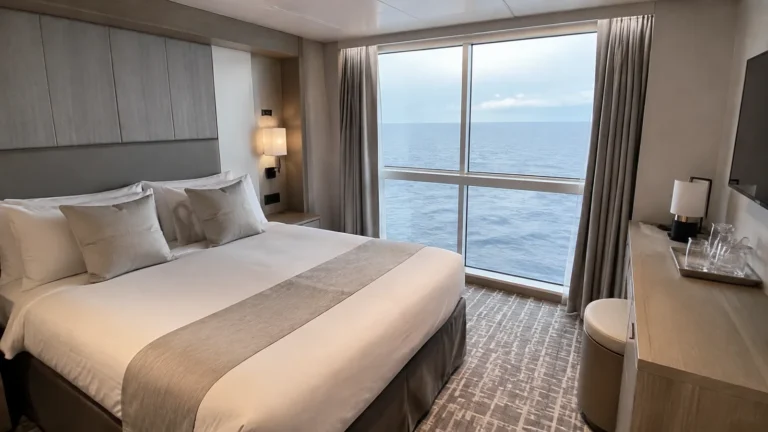
Harmony of the Seas Cabins to Avoid: Exact Rooms & Better Picks
Harmony of the Seas has so many different cabin settings that I would never use one generic warning for a whole deck.
I would start with these specific rooms and ranges, then choose whether their convenience is worth the particular view, venue or sleep tradeoff.
Cabins I would compare first
- 10454: a connecting room I would skip when I do not need the adjoining door and all other choices are equal.
- 14262 and 14274: Deck 14 examples beneath active Deck 15 space.
- 14162–14240 and 14562–14640: broad pool-deck screening zones; check the precise overhead space rather than rejecting every room.
- 6130–6160 and 6530–6560: forward Deck 6 areas over the Royal Theater footprint.
- 7270–7334: aft Deck 7 rooms above Playmakers and active Boardwalk space.
- 8671: close to the upper Dazzles and elevator-entrance area, worth a music-sensitive sleeper’s attention.
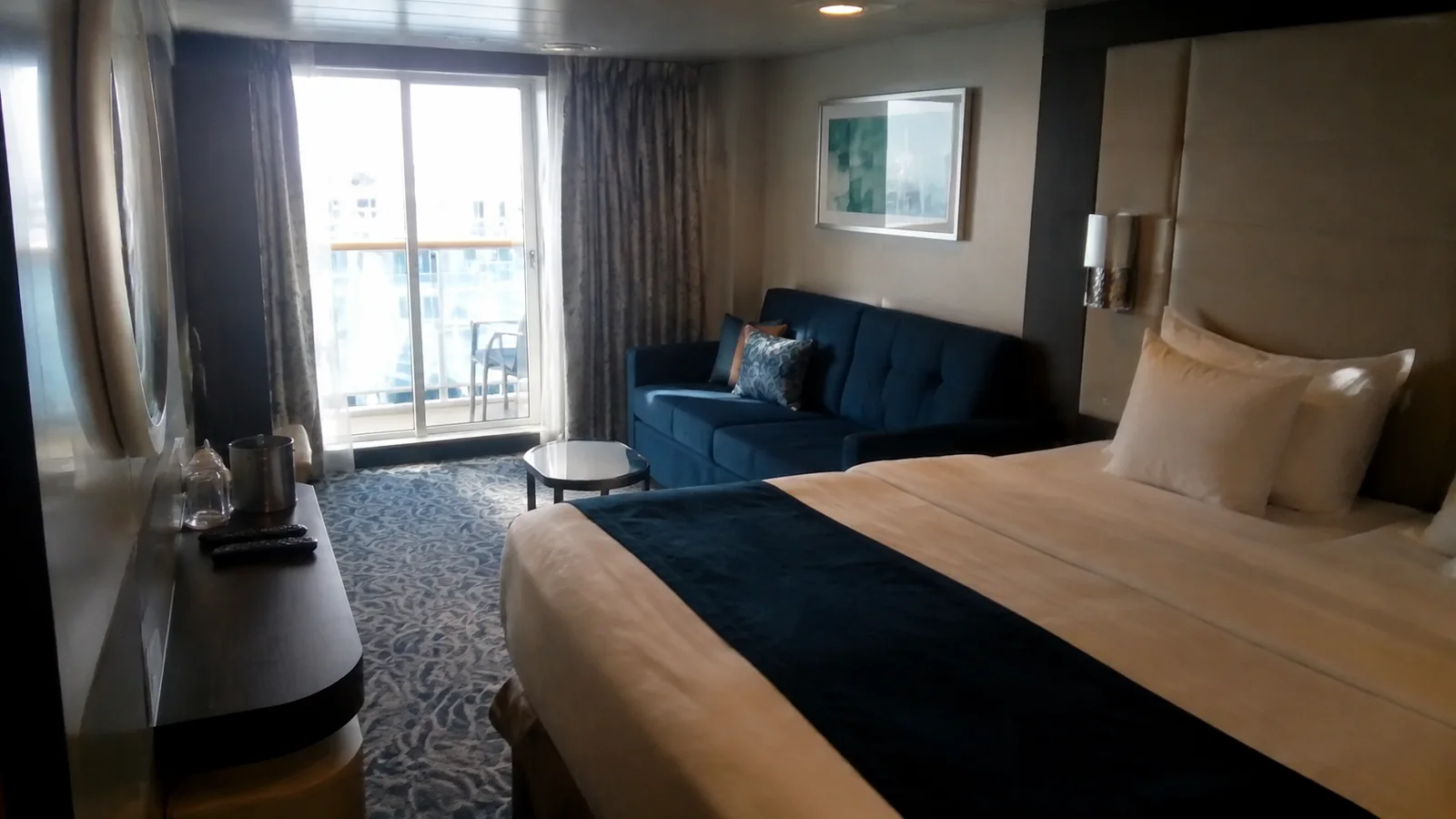
Harmony Cabins I Would Screen First
Start with the specific room or range below, then decide whether its fixed location conflicts with your trip. A structural fact can identify exposure, but it cannot predict your neighbors, the sea, or exactly what you will hear.
- 10454: A connecting room, worth skipping when you do not need the adjoining door and are sensitive to voices.
- 14262 and 14274: Deck 14 rooms below active Deck 15 space, with a possible overhead setup, cleaning, and footfall tradeoff.
- 14162 to 14240 and 14562 to 14640: Broad screening ranges below parts of the pool deck, not a verdict on every cabin in the ranges.
- 6130 to 6160 and 6530 to 6560: Deck 6 rooms within the footprint above the Royal Theater.
- 7270 to 7334: Aft Deck 7 rooms above Playmakers and the Boardwalk activity zone.
- 8671: A Deck 8 cabin close to the upper Dazzles and elevator entrance area.
- Aft Boardwalk balconies: Great for atmosphere, but weaker for privacy and predictable quiet.
- Forward ocean-view clusters: Inspect the plan’s view notation before paying extra for the scenery.
These are “check before booking” locations, not universally bad cabins. A night owl may happily accept a venue nearby, while a family with a napping toddler should probably buy more buffer.
Use the Deck Plan for Your Sailing Date
Royal Caribbean’s current Harmony deck-plan page is date specific and displayed May 21, 2026 through April 10, 2027. Match the plan to your departure before trusting any cabin list.
Harmony is an Oasis Class ship with open neighborhoods, entertainment venues, pools, and residential decks stacked closely together. The official ship overview identifies seven neighborhoods and 18 decks, which explains why checking vertically matters as much as checking the hallway.
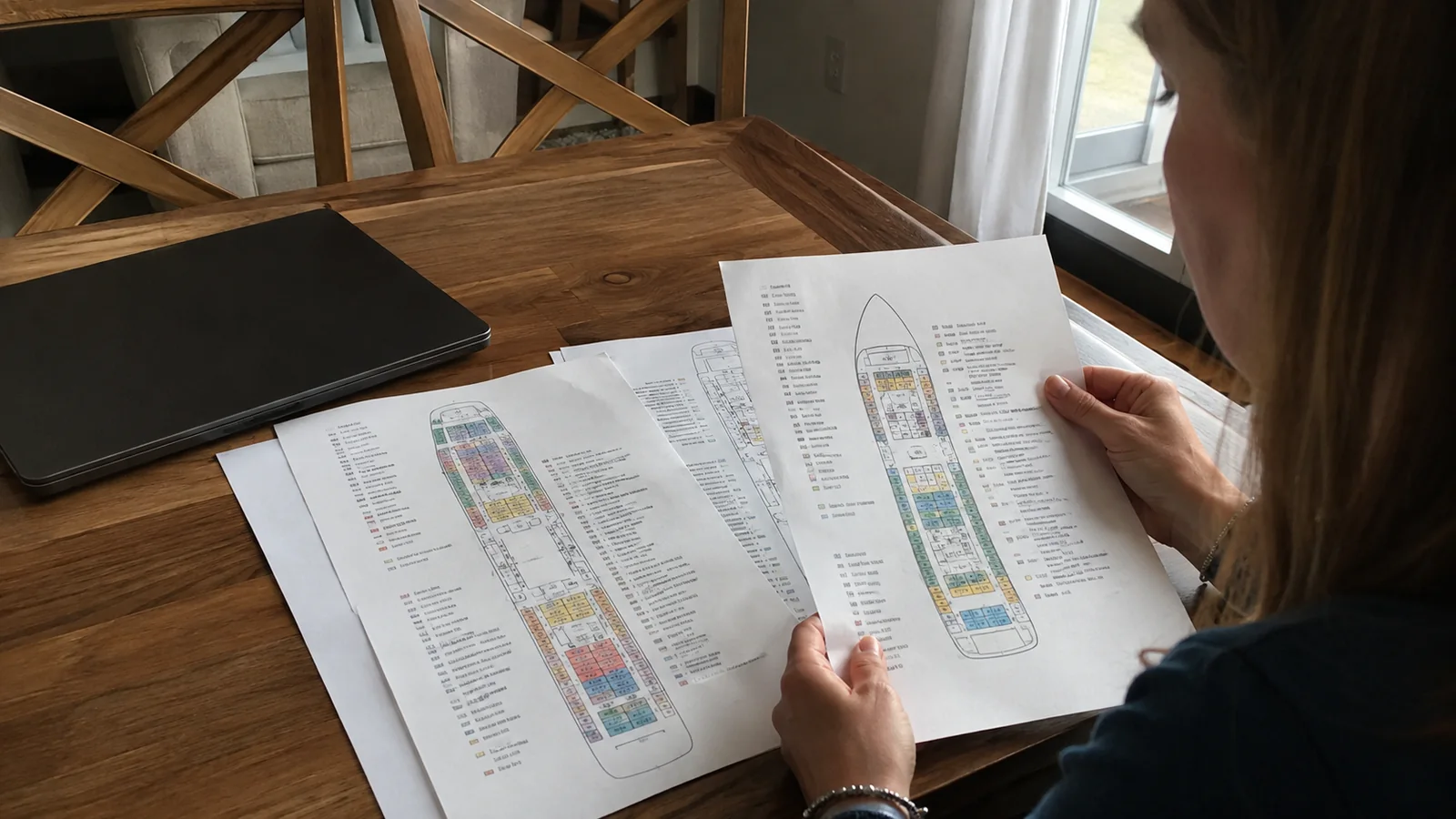
Royal Caribbean’s deck-plan instructions say plans can show connections, accessibility, elevators, and obstructions. They also warn that an apparently blank area may hide a galley, ice machine, or crew elevator, so blank does not mean silent.
Use the method in my cruise floor-plan guide if the symbols feel like alphabet soup. Search the exact cabin, align its doorway and balcony with the decks above and below, and then check the legend.
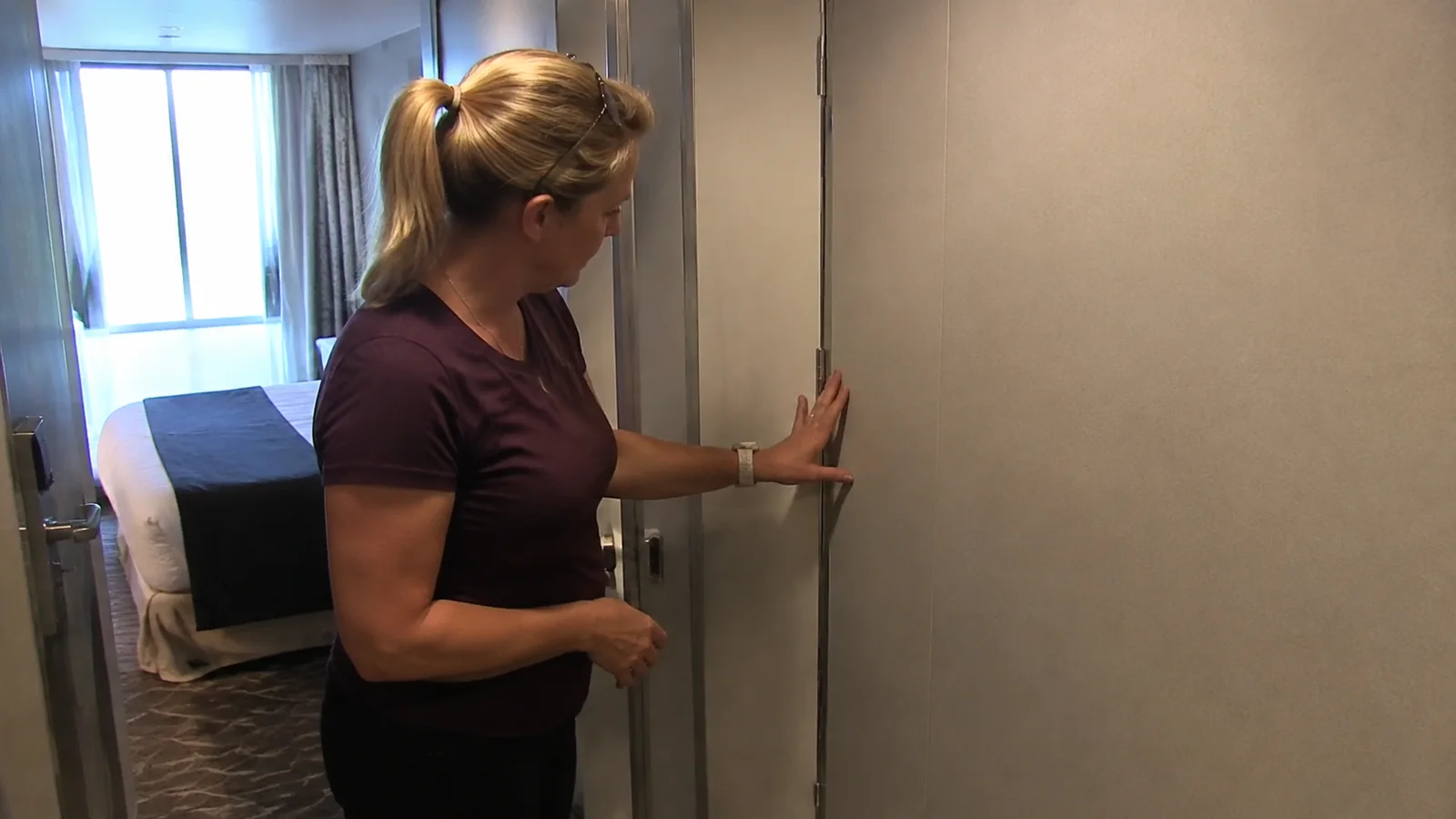
Cabin 10454: Connecting Door, Conditional Noise
The official plan marks 10454 as a connecting cabin on Deck 10. That door is the proven fact, while hearing conversation through it is only a possibility that depends on both parties and how sound carries during your sailing.
If your family books both rooms, the connection may be exactly why 10454 works. If you are a light sleeper traveling alone or as a couple, a non-connecting room in the same Deck 10 or Deck 11 section removes the issue without sacrificing the general location.
Do not reject all of Deck 10 because of one symbol. Much of the deck is residential, and a room with ordinary cabins above and below is a sensible starting point for a quiet-first shortlist.
Deck 14 Below the Pool Deck
14262 and 14274
Cabins 14262 and 14274 sit below active Deck 15 space. The plan verifies the vertical relationship, so chair setup, cleaning, running feet, and pool-day traffic are plausible overhead sounds rather than guaranteed disturbances.
Move to an ocean-facing cabin on Deck 12 when early sleep, late sleep, or daytime naps matter more than quick pool access. A family making several pool trips each day may reasonably keep the Deck 14 convenience.
The Broader 14162 to 14240 and 14562 to 14640 Zones
Use 14162 to 14240 and 14562 to 14640 as broad screening ranges beneath parts of Deck 15. The pool footprint changes along the corridor, so the first and last number do not create a hard noise boundary.
Place your candidate on the two plans and identify what is directly overhead, not merely somewhere on the next deck. A room beneath a quieter edge may be a better bet than one beneath movable seating or a heavily used path.
The lowest-risk alternative is not simply two doors away. Look on Decks 10 through 12 for a non-connecting ocean-facing room with cabins immediately above and below.
Deck 6 Above the Royal Theater
Cabins 6130 to 6160 and 6530 to 6560 occupy the forward Deck 6 footprint above the Royal Theater. Performances, rehearsals, audience movement, and technical work make sound possible, but the plan does not establish volume inside a particular room.
This location can be perfectly practical for travelers who attend the evening shows and return after the venue quiets down. It is a poorer match for an early bedtime, afternoon nap, or a child whose sleep schedule overlaps with entertainment.
For a nearby alternative, move vertically to a cabin-sandwiched section on Deck 7 through Deck 10 that lies beyond the theater outline. Do the full above-and-below check because changing decks alone does not guarantee a residential buffer.
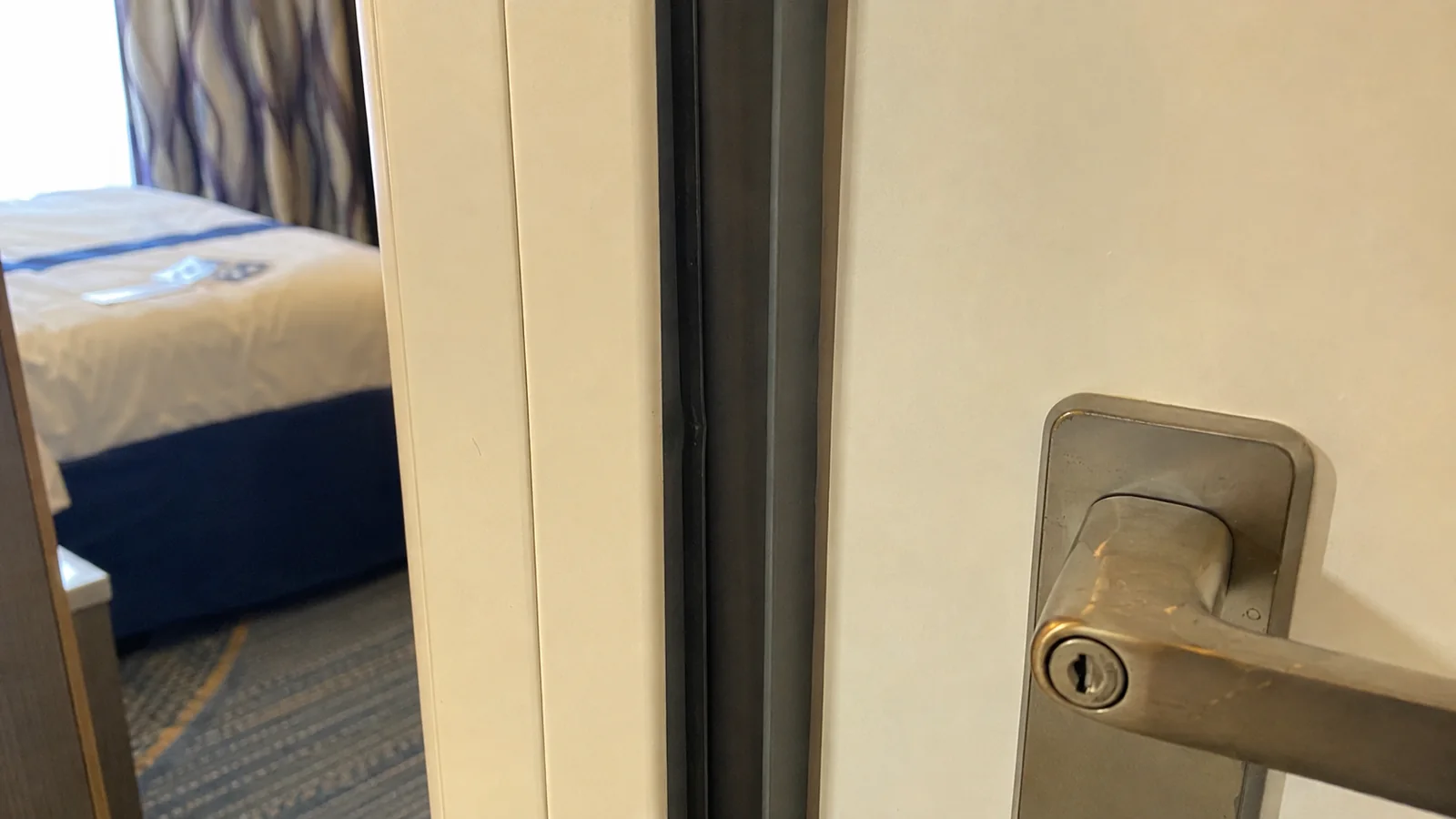
Deck 7 Above Playmakers and Boardwalk
The 7270 to 7334 area sits above Playmakers and active Boardwalk space. That adjacency can mean voices, televised sports, music, and evening foot traffic, although doorway orientation and venue schedules can make the result differ by room.
Cabin 7320 belongs in the inspection zone, but its location does not make it automatically loud. This is a good example of why a fixed structural risk should not be rewritten as a promise about someone’s stay.
A light sleeper should compare an ocean-facing room on Deck 9 through Deck 12. A nightlife-focused couple may prefer the short trip home and accept that activity can continue after an early bedtime.
Cabin 8671 Near Dazzles
Cabin 8671 is close to the upper portion of Dazzles and an elevator entrance area on Deck 8. Music and passing passengers are reasonable possibilities, but the official plan cannot prove bass or conversations will be audible inside the room.
If music is your specific sleep trigger, move farther forward on Deck 8 or choose a comparable Deck 9 cabin with residential space around it. If mobility and shorter walks matter, this location may be more useful than a remote cabin that looks quieter on paper.
Elevator proximity by itself is not a reliable warning. The stronger question is whether the door faces a gathering point, an entrance, or a concealed service area rather than how many feet separate it from the elevators.
Boardwalk Balconies: Atmosphere Versus Privacy
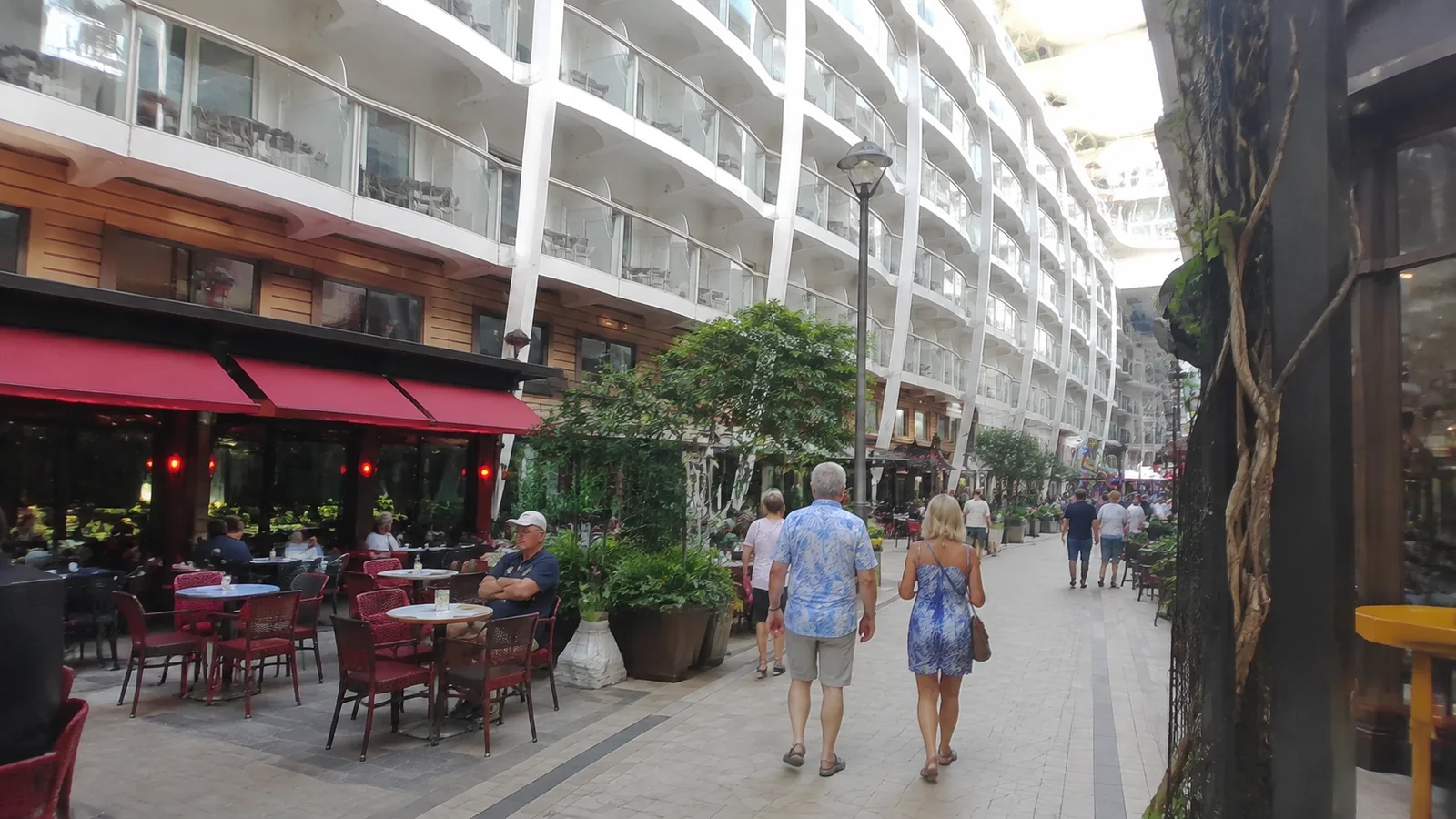
A Boardwalk balcony faces an open interior neighborhood instead of open water. You can see activity and, from some aft positions, parts of the AquaTheater, but other balconies and public areas can also face you.
Evening entertainment, music, and crowd reactions may reach these balconies. Closing the door may reduce sound, but no deck plan can promise silence, and the Ultimate Abyss structure can affect some aft sightlines.
Choose this category when people-watching and show atmosphere are part of the fun. Choose an ocean-facing balcony when privacy, darkness, and a direct sea view are worth more than neighborhood energy.
If you are comparing the near-identical sales language on another Oasis Class ship, use the exact ship plan rather than transferring room numbers. My Symphony cabin breakdown shows why sister-ship similarities still need a ship-specific check.
Forward-Facing Ocean-View Rooms
Inspect 7100 to 7108 and 7500 to 7510, then 8100 to 8108 and 8500 to 8510, before booking for an uninterrupted forward view. Also check 9100 to 9108, 9500 to 9510, 10100 to 10108, and 10500 to 10510.
The pattern continues around 11102 to 11106 and 11502 to 11506. These are view-screening clusters, not blanket noise warnings, and only the legend for your exact date can establish how Royal classifies a particular room.
Forward ship structure, window angle, and equipment may limit the panorama differently from room to room. If scenery is the entire reason for upgrading, request the precise obstruction description or select a clearly marked side-facing, unobstructed room.
Motion Is About Position and Conditions
Harmony’s size does not eliminate movement, and a high room far forward or aft can feel different from a lower midship room. Weather, speed, heading, and an individual body all affect the result, so no cabin number guarantees comfort.
For known motion sensitivity, begin lower and closer to midship, then check the walking route you will use most. A central ocean-view cabin may serve you better than a high balcony with a dramatic location.
Aft Boardwalk and AquaTheater accommodations combine a longer walk with a position farther from the ship’s center. That is an attractive compromise for show lovers and a less obvious fit for someone who wants minimal movement and quick access everywhere.
Pick by the Way You Travel
For a Light Sleeper
Start on Deck 10, 11, or 12 in a non-connecting ocean-facing room with cabins above and below. Screen out theater, pool, Dazzles, and aft Boardwalk footprints before comparing price.
For a Pool-Focused Family
Deck 14 can save repeated elevator trips and may outweigh a possible overhead sound tradeoff. Pick outside the busiest overhead footprint when possible, but do not move several decks solely because someone labeled the whole deck bad.
For an Early-to-Bed Family
Favor a residential corridor on Deck 9 through Deck 12. Avoid paying for a Boardwalk show atmosphere that your family will experience mainly as bedtime activity.
For a Nightlife-Focused Couple
Decks 6 through 8 can put dining and entertainment close at hand. A venue-adjacent room may be a smart value when you expect to be out until the public spaces wind down.
For a Traveler With Limited Mobility
Measure convenience by the elevator bank and venues you will use, not by the geometric center of the ship. A slightly busier corridor can be the better room if it removes hundreds of feet from every meal and activity trip.
Accessible Cabins Are Not Free Extra Space
Royal Caribbean’s accessibility information explains the line’s support and special-needs process. Accessible cabins contain features needed by travelers with disabilities, so book one because those features solve a real access need, not because the floor area looks generous.
Travelers do not all use visible mobility devices, and nobody should be challenged in the hallway about their needs. If you booked an accessible room accidentally and do not need its features, contact Royal Caribbean or your travel advisor so the inventory can be handled correctly.
A Five-Minute Booking Check
- Enter the exact Harmony sailing dates on Royal Caribbean’s plan.
- Search the cabin number and confirm its category, occupancy, and connecting symbol.
- Align the room with the same position one deck above and one deck below.
- Identify the doorway’s relationship to elevators, venue entrances, and blank service areas.
- Confirm whether the balcony faces the ocean, Central Park, or Boardwalk.
- Check any obstruction notation and ask what blocks the view.
- Compare a nearby cabin-sandwiched alternative before paying to move categories.
Bring these questions to your agent or the cruise line instead of asking only whether the deck is good. My list of useful cruise questions can help you pin down the parts of the booking that broad category descriptions leave fuzzy.
Frequently Asked Questions
Should I Avoid Every Cabin on Deck 14?
No. Screen rooms below active pool-deck sections if overhead setup or footfall is a problem, while keeping the deck’s excellent pool access in the decision.
Is 10454 Always Noisy?
No. The plan proves it connects to another room, not that the occupants next door will be loud or that sound will disturb you.
Are Boardwalk Balconies Bad?
No, they are experience-driven rooms with a privacy and sound tradeoff. They fit travelers who want neighborhood energy better than travelers purchasing a balcony for a quiet ocean retreat.
What Is the Safest Quiet Starting Point?
Begin with a non-connecting ocean-facing cabin on Deck 10 through Deck 12, surrounded vertically by other cabins. You still need to check elevators, service voids, and the exact plan for your dates.
The Bottom Line
Screen 10454 for its connecting door, 14262 and 14274 for overhead activity, 8671 for venue proximity, and the larger theater, pool, and Boardwalk ranges for structural exposure. None of those facts proves a cabin will be noisy.
Your best Harmony cabin is the compromise you chose on purpose. Match the fixed plan to your sleep, view, walking, and motion priorities, then select the closest cabin-sandwiched alternative if the tradeoff feels wrong.