Best Cabin for an Alaska Cruise: Side, Deck and Balcony Choices
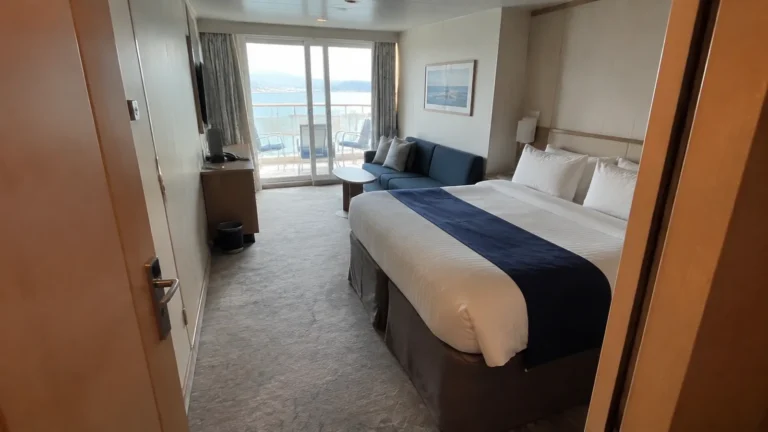
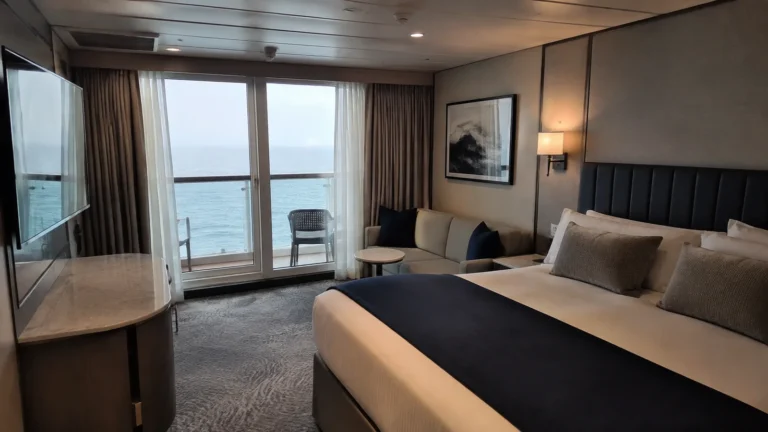
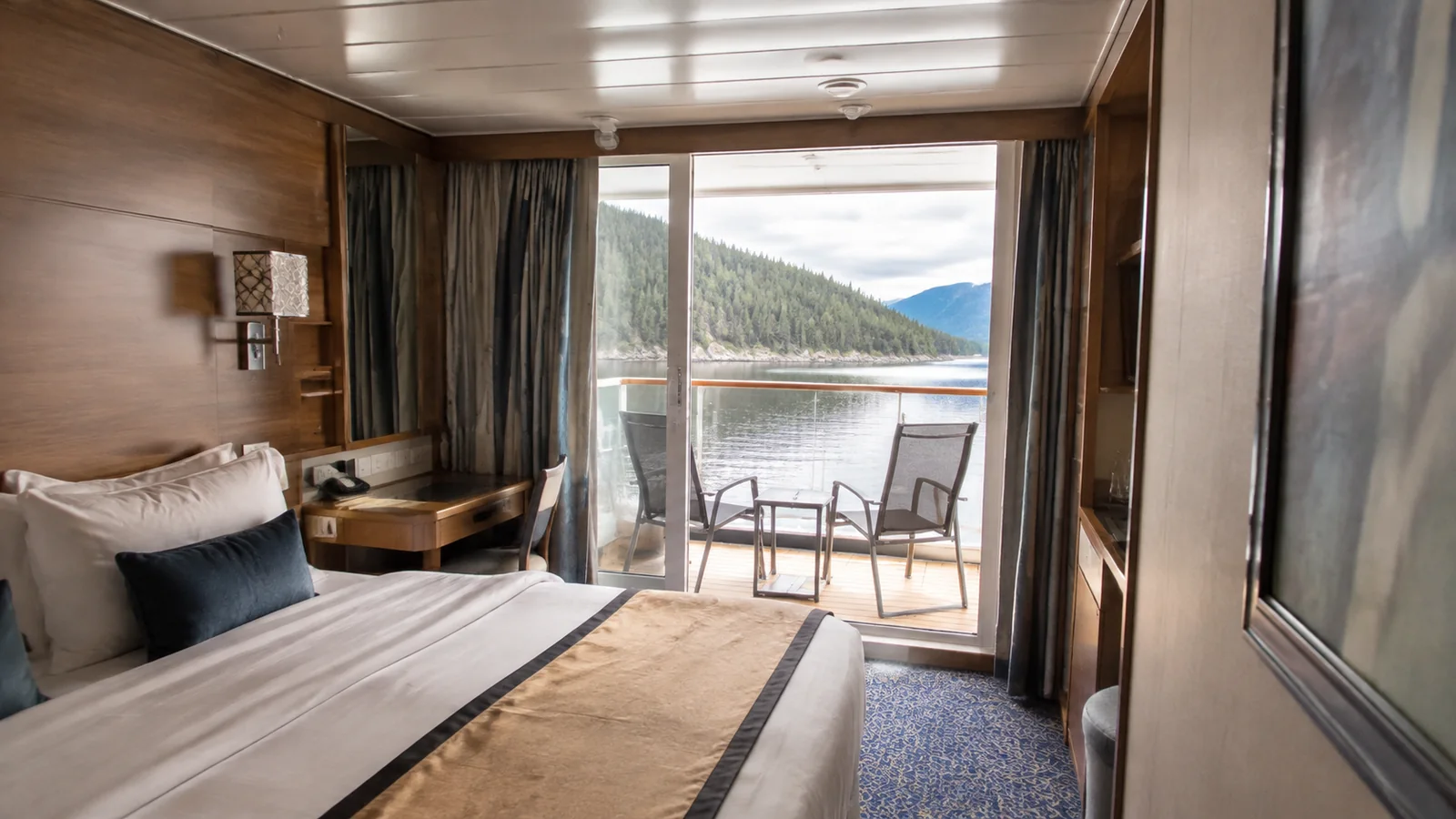
For an Alaska cruise, I’d start with a covered, ocean-facing balcony near the middle of the ship, with cabins above and below. If that upgrade eats the excursion budget, I’d happily choose an oceanview near good public viewing areas.
Spend more for usable outdoor space and a comfortable location before paying extra for a supposedly perfect side.
My Alaska cabin shortlist
- Best balanced choice: A midship balcony with some overhead shelter and an unobstructed view when seated.
- Best value: A comfortable oceanview within an easy elevator ride of an observation lounge and an open deck.
- Best budget choice: An inside cabin with a deliberate plan for scenic sailing outside the room.
- Worth questioning: Exposed forward balconies, rooms under busy public decks, and expensive side upgrades justified only by a northbound or southbound rule.
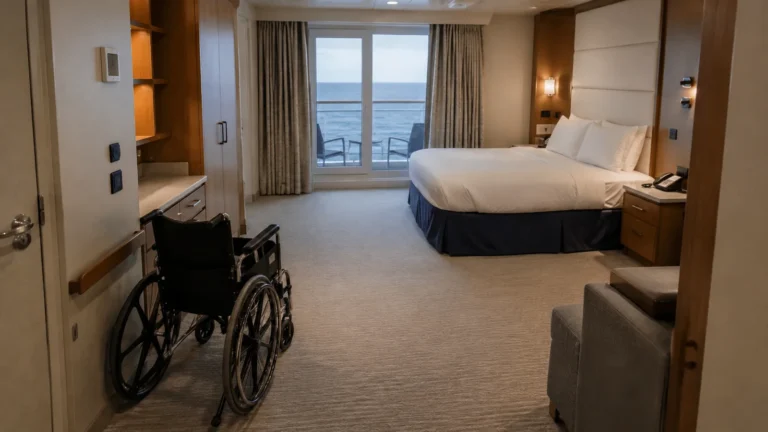
- For limited mobility: An accessible room that meets your needs, with a convenient route to sheltered viewing and dining.
Choose the itinerary before choosing a side
The cabin cannot add a glacier that your itinerary does not visit. Compare the named scenic cruising destinations and port time before getting attached to a room number.
Glacier Bay, Hubbard Glacier, and a fjord sailing are different itinerary experiences. A description that simply promises Alaska scenery does not tell you which of those is included.
On a one-way route, northbound travel generally puts the mainland to the east, which may favor starboard during some stretches. Southbound reverses that simple geographic relationship, but islands, winding channels, and the ship’s actual track complicate it.
Use that as a tie-breaker between otherwise equal rooms. Not pay a substantial premium or accept a noisy location just to follow it.
A round trip changes direction during the voyage, and shore scenery can appear on both sides. Port also means the left side facing forward, not the side that necessarily faces the dock.
Docking orientation is an operational decision, so neither side guarantees a waterfront view in every port. A ship across the pier can also change what you see from the balcony.
A balcony is useful, but it is not the whole viewing plan
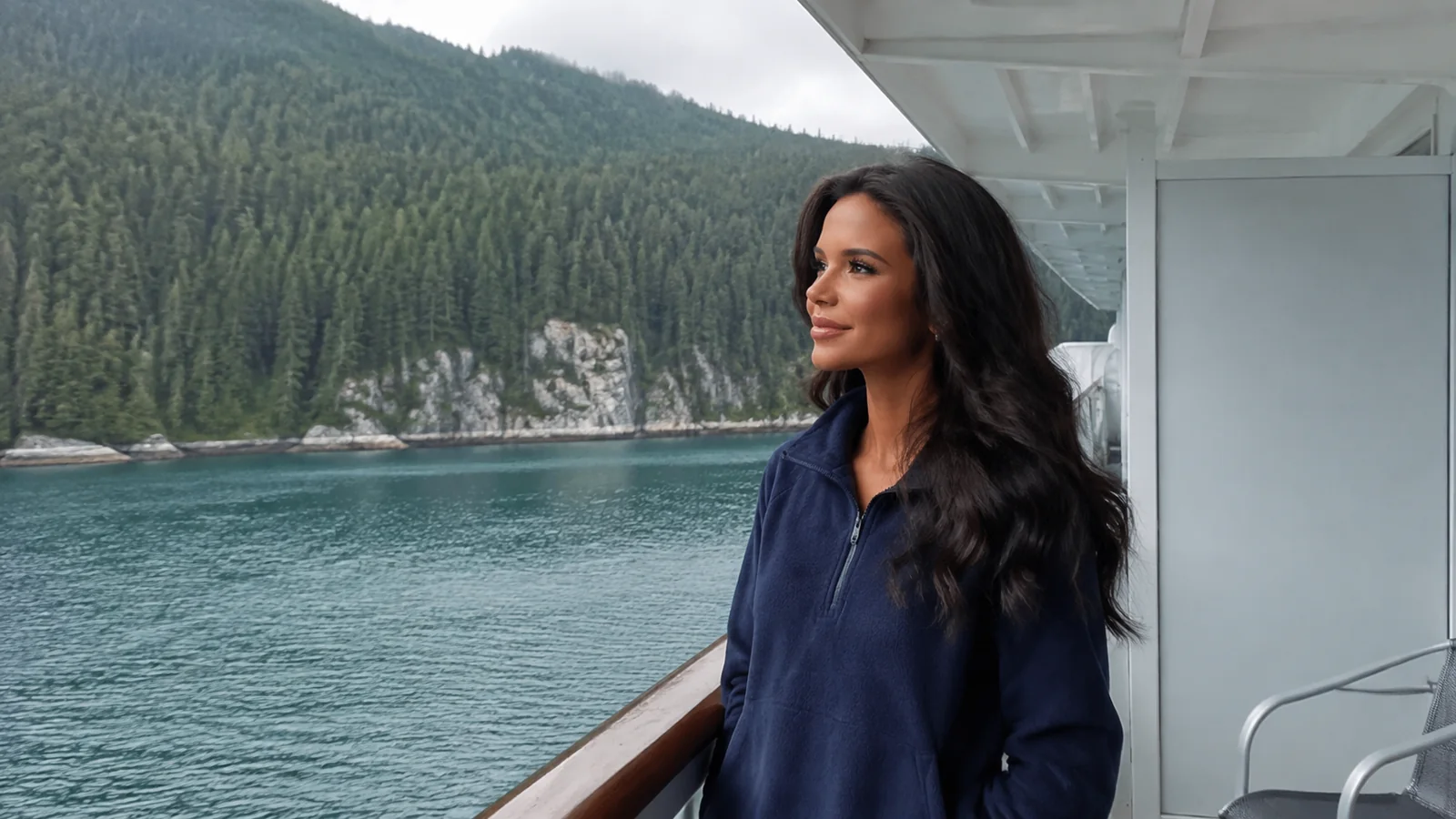
The strongest argument for an Alaska balcony is immediate access. I like being able to step outside between getting dressed, making coffee, and checking the day’s schedule.
That convenience is especially appealing when someone needs regular rest breaks. You can enjoy passing scenery without turning every viewing session into a trip across the ship.
A balcony still gives you a fixed angle, and the action may be on the other side. Leave the cabin for a wider view rather than wait for the scenery to arrive in my particular rectangle of ocean.
During Glacier Bay visits, I’d read the ship’s program the evening before. The National Park Service’s cruise visitor information explains the ranger program, onboard information desk, and typical full-day visit.
Ask where the ranger commentary can be heard and which viewing areas are open. A balcony is less helpful if you miss the explanation of what you are looking at.
Ships can turn or reposition during scenic cruising, but I’d not promise equal time on both sides. Ice, weather, traffic, and safe navigation take precedence over a balcony booking strategy.
Prioritize shelter before extra balcony length
A large balcony looks wonderful in a sales photograph taken on a sunny day. In Alaska, the more useful question is where you can sit when light rain arrives.
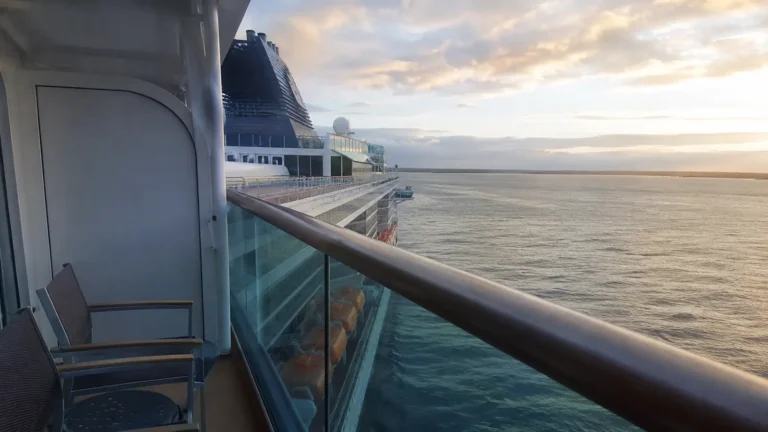
Look for overhead coverage over at least part of the seating area. A balcony that projects beyond the deck above may have more open space while offering less shelter.
An overhang has its own tradeoff because it can reduce the view upward. For my Alaska booking, some shelter would usually matter more than a completely open view of the sky.
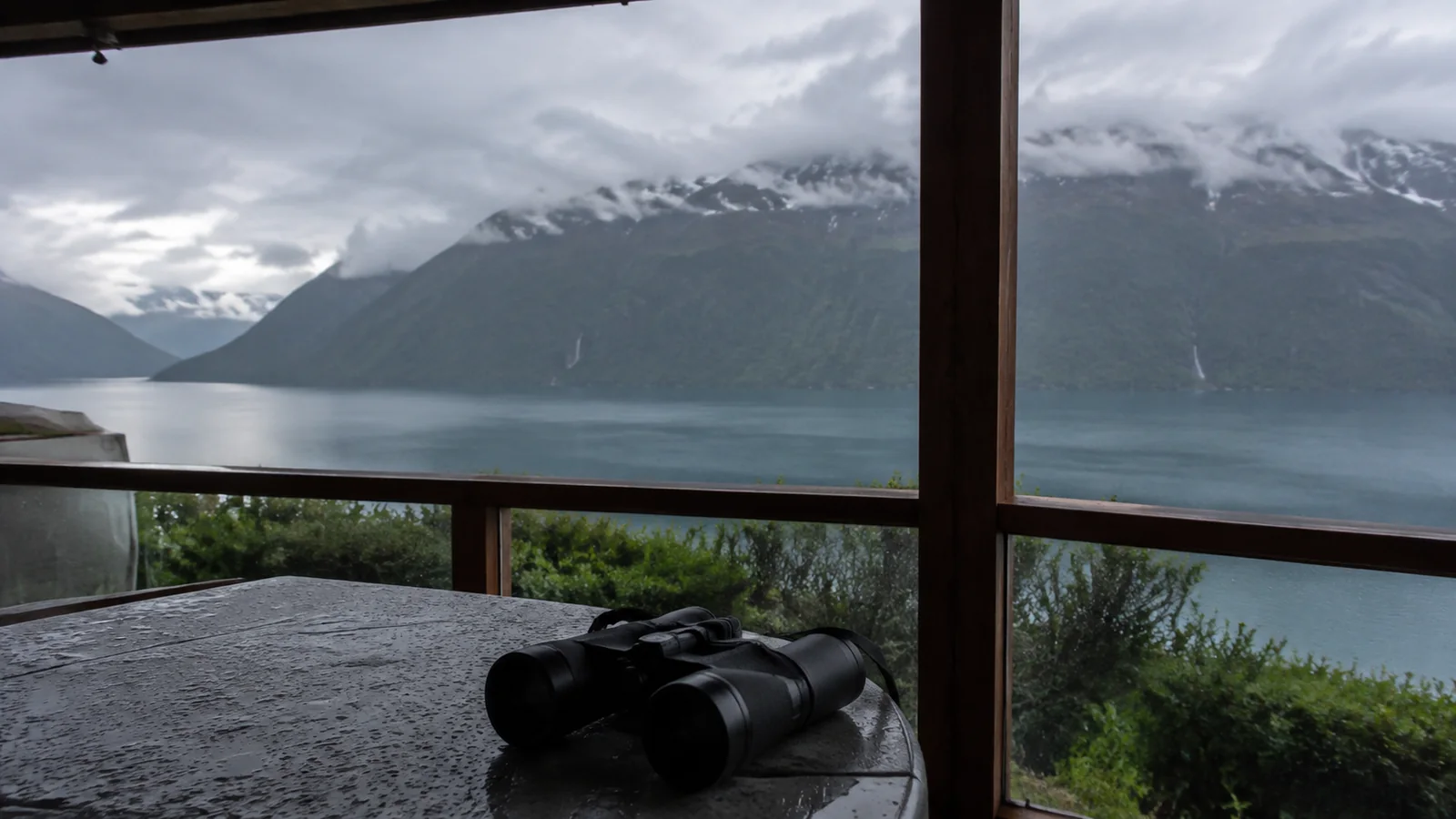
The Glacier Bay weather guidance describes cool, moist summers and recommends rain protection. That is a good reason to assess the usable seating area rather than buy a balcony based only on square footage.
Request a recent photograph taken from the room itself, ideally with the balcony furniture visible. A stock image of the category may show a different overhang, railing, or depth.
For a wheelchair user or someone who spends most viewing time seated, the railing deserves particular attention. A solid lower panel can interrupt the view that looks clear to a standing passenger.
The deck matters more than a fashionable cabin label
Find the cabin on its own deck and line up the decks immediately above and below. My guide to reading cruise floor plans explains how to follow venue footprints instead of trusting a deck’s general reputation.
Rooms directly beneath pool furniture, buffet seating, or outdoor dining deserve a closer look. Early cleaning and breakfast preparation can matter on a trip with early port mornings.
A public room underneath creates a different question. Check whether it is a quiet daytime lounge or a venue with amplified evening entertainment.
Move outside the footprint of the concern instead of ruling out the entire deck. On a large ship, the aft section can have a completely different ceiling from the forward section.
A nearby elevator is often useful in Alaska because viewing areas, dining, and the gangway may be several decks apart. Prefer a room around the corner from the lobby over a long walk chosen solely to avoid elevators.
The cruise cabins I’d investigate before booking include these location tradeoffs in more detail. A balcony upgrade does not cancel a poor position under a busy venue.
Motion-sensitive travelers should resist the highest forward view
Alaska is not a guarantee of calm water. An itinerary can combine sheltered passages with exposed coastal or Gulf of Alaska sailing.
If motion is a concern, I’d favor a lower cabin near the middle of the ship over a high room at either end. Then check for an easy route to a place where I can see the horizon.
My seasickness planning guide is useful before choosing a category. Cabin position helps manage a preference, but no room can promise that you will not feel the sea.
An aft balcony can be a lovely choice for someone who enjoys the wake view and accepts longer walks. Not call it the safest default for someone whose biggest worry is movement.
Also distinguish occasional maneuvering vibration from reports of persistent problems in a specific room. A brief disturbance while arriving in port is different from a cabin that repeatedly interrupts sleep.
Oceanview and inside cabins can make financial sense
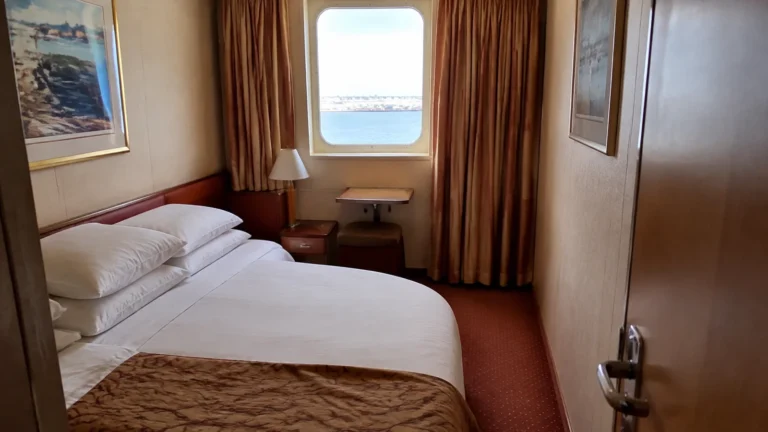
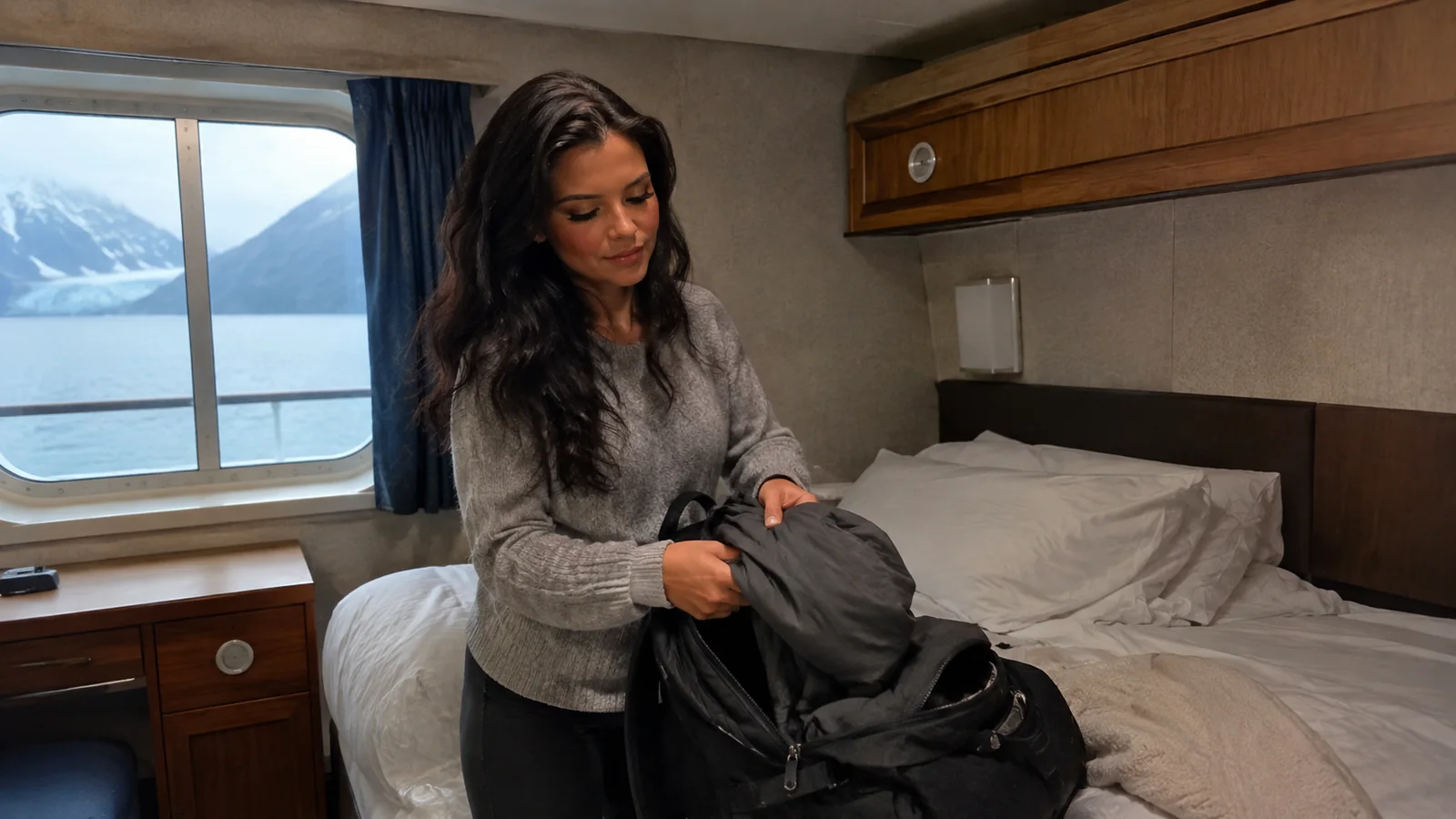
An oceanview gives you natural light and a quick look at the weather without the full balcony premium. Check that it has the view I expect, since a lifeboat or walkway can affect what the window actually offers.
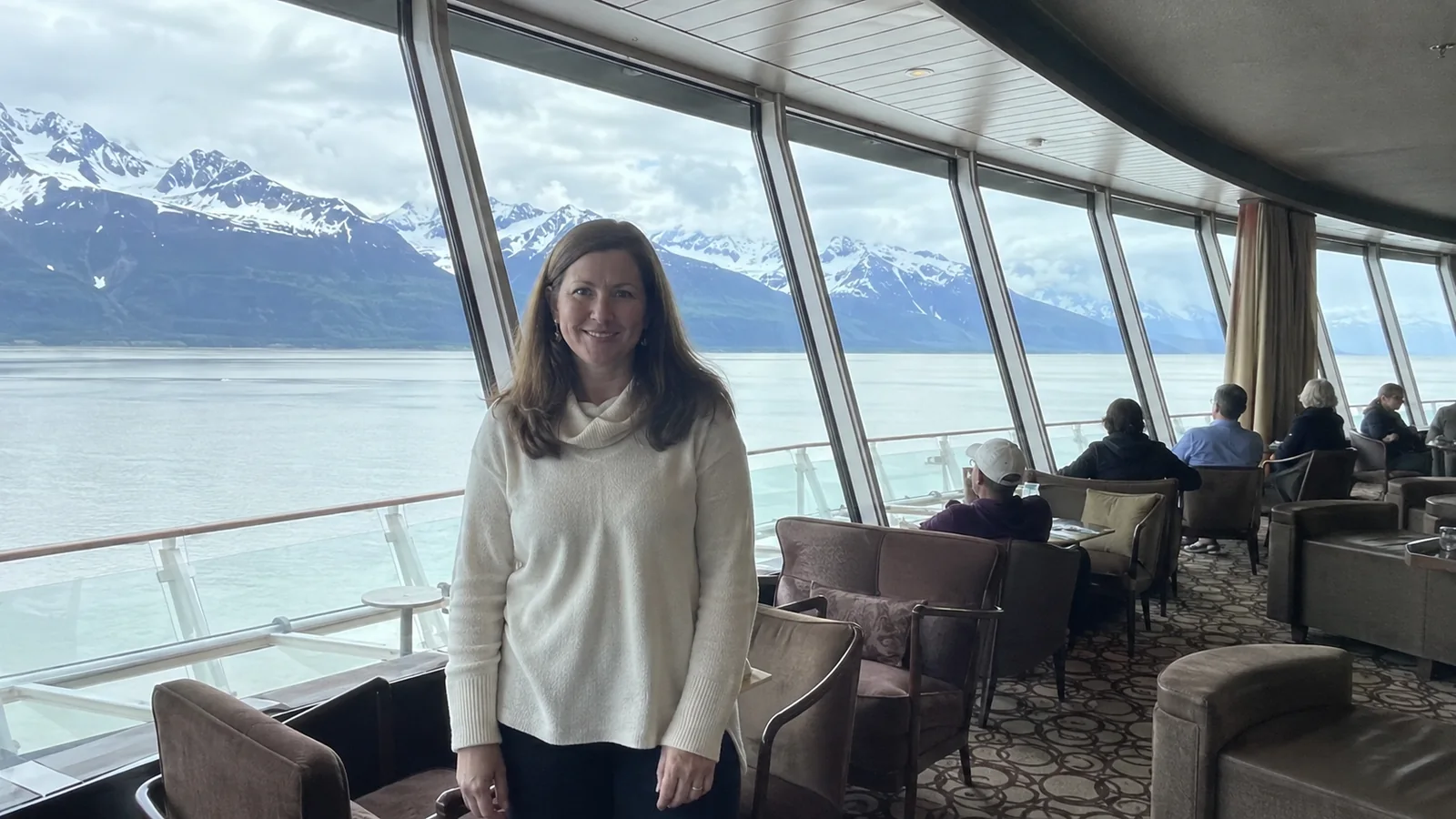
An inside room can work well if you enjoy spending the day around the ship. Choose it with convenient viewing access and a firm willingness to leave the cabin during scenic stretches.
Not choose an inside merely because someone says you are never in your room. Rest days, naps, and quiet mornings are real parts of a vacation, particularly for families or travelers managing fatigue.
Here is the comparison I’d make: if a balcony costs a hypothetical $1,400 more for a seven-night trip, that is $200 per cabin per night. Decide whether private outdoor access is worth that amount after pricing the excursions I actually want.
The answer can easily be yes for a couple who expects to spend hours outside. It can just as reasonably be no for someone who wants a wildlife outing, a comfortable hotel before sailing, and a less expensive room.
Use the total price for everyone traveling, with the same fare conditions and included packages. A balcony offer with different cancellation terms is not a clean comparison until those differences are accounted for.
Plan for the way your family watches scenery
For young children, a balcony allows an adult to enjoy the view while the room stays available for a nap. Still treat it as supervised outdoor space and follow the ship’s door-lock and furniture safety rules.
Two adults with different sleep schedules should compare the actual room layout. A larger cabin with one open sleeping area may be less useful than a separate bedroom or a connecting pair.
For a multigenerational trip, I’d locate the nearest accessible indoor lounge before paying for a suite. Comfortable seating, nearby restrooms, and a manageable walking route can matter more than the suite’s balcony size.
If several relatives plan to watch from one room, check the balcony’s seating and the cabin’s occupancy rules. Not assume a standard balcony can comfortably become the viewing lounge for the whole group.
My five-minute Alaska booking check
- Confirm the itinerary’s named glacier or scenic cruising destination and the amount of scheduled time there.
- Compare the same fare type, passenger count, and cancellation conditions across the cabins.
- Check the room above, the room below, the railing, and the balcony overhang.
- Find an indoor observation area and an outdoor alternative on the opposite side.
- Check the accessible route, bathroom configuration, and bed arrangement if anyone needs particular accommodations.
- Keep the excursion budget separate before deciding how much to spend on private viewing.
Also check the National Weather Service’s Southeast Alaska forecasts close to departure. That helps with clothing and viewing plans, while a long-range guess is a poor reason to choose one cabin over another months ahead.
Questions to settle before paying
Is starboard always better for a northbound Alaska cruise?
No, and I’d not make it the deciding factor unless two cabins are otherwise equal. The route, turns, islands, and glacier approach all affect the view.
Should I book an obstructed balcony to save money?
Consider one if a room-specific photograph shows an acceptable seated view and the savings are meaningful. If scenery from the balcony is the reason for upgrading, I’d avoid an obstruction I cannot evaluate.
Is a guarantee cabin worth it in Alaska?
Only if I’d accept every location and view type the fare permits. Select a room directly when motion, shelter, or a particular balcony configuration is essential.
Will I miss Alaska without a balcony?
No, provided you use the ship’s viewing areas. Put more effort into being outside at the right times than into defending a room upgrade I cannot comfortably afford.
What to book
My first choice would be a covered midship balcony with a clear seated view, cabins above and below, and convenient elevator access. My value choice would be a well-placed oceanview that leaves enough money for the Alaska experiences I came to enjoy.