Accessible Cruise Cabins: What to Check Before Booking
I would choose an accessible cruise cabin by the transfers, equipment, and daily routes it needs to support. A wheelchair symbol is a useful starting point, but it does not tell you whether the bathroom layout, bed clearance, or balcony threshold will work for you.
Get those details confirmed before choosing between otherwise attractive rooms.
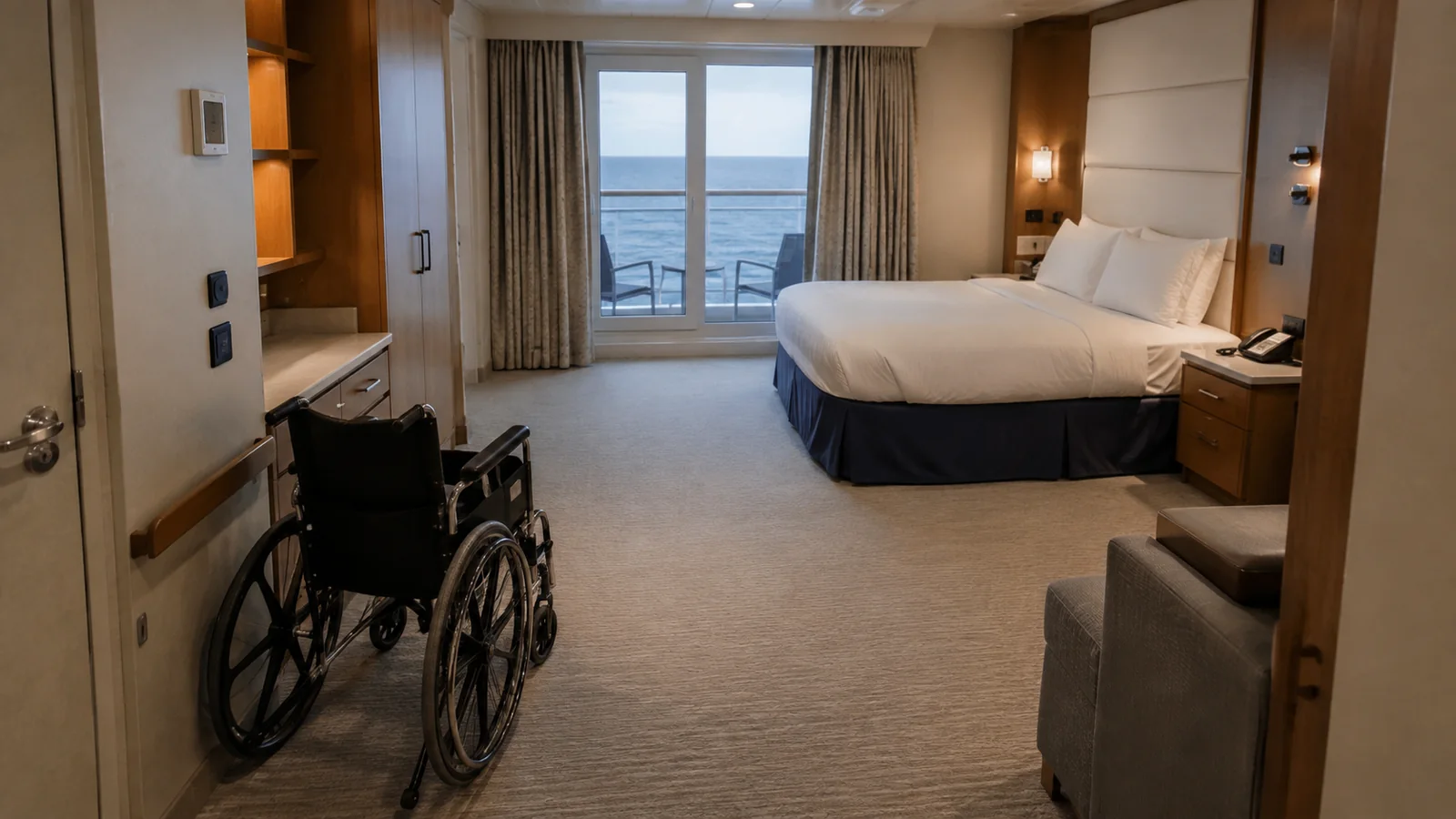
The booking order I would follow
- Identify the access features you cannot comfortably travel without.
- Measure your equipment in the configuration you will actually use onboard.
- Ask the cruise line’s accessibility team to match those needs to an exact room.
- Check the route to elevators, dining, and your assigned emergency meeting location.
- Review the itinerary’s gangways, tenders, and shore transportation separately.
- Confirm requests and arrangements in writing while alternatives are still available.
I would not trade a workable bathroom for a better balcony or move far from elevators just to avoid hypothetical conversation in a hallway. Access comes first, and the remaining cabin preferences fit around it.
Accessible categories can mean different things
Some rooms are designed for guests who use a wheelchair regularly, while others provide limited features for travelers who can walk but need additional support. Those are different products, even if both appear under an accessibility heading.
Carnival’s official accessibility information distinguishes fully accessible, single-side-approach, and ambulatory-accessible cabins. Its ambulatory category can retain thresholds and a narrow doorway, so I would not book it as a substitute for full wheelchair access.
The single-side distinction is particularly important when you transfer to bed from a specific direction. A photograph of an open floor area does not tell you whether that area is on the side you need.
Ask the line to explain its terminology in practical terms. I would want to hear which doors, thresholds, turning areas, and bathroom features differ from the standard cabin.
Measure the device that will come with you
Write down width, length, height, turning requirements, and weight for your wheelchair or scooter. Include footrests, baskets, controls, and other attachments that remain in place while you enter the room.
If you will rent equipment, get the specifications for the actual model rather than estimating from what you use at home. Two devices described as compact may need very different clearances.
The measurement that matters at a doorway is the usable clear opening. I would ask whether a published dimension accounts for the door in its open position and whether the approach allows you to line up straight.
Do not make the calculation so tight that every entrance requires a difficult maneuver. I would explain how I use the device and ask the accessibility team to assess the route with that routine in mind.
Royal Caribbean’s Guest Special Needs form requests equipment information and explains its storage requirements. Use the form for your own line as soon as the need is known, then follow up on anything requiring an individual answer.
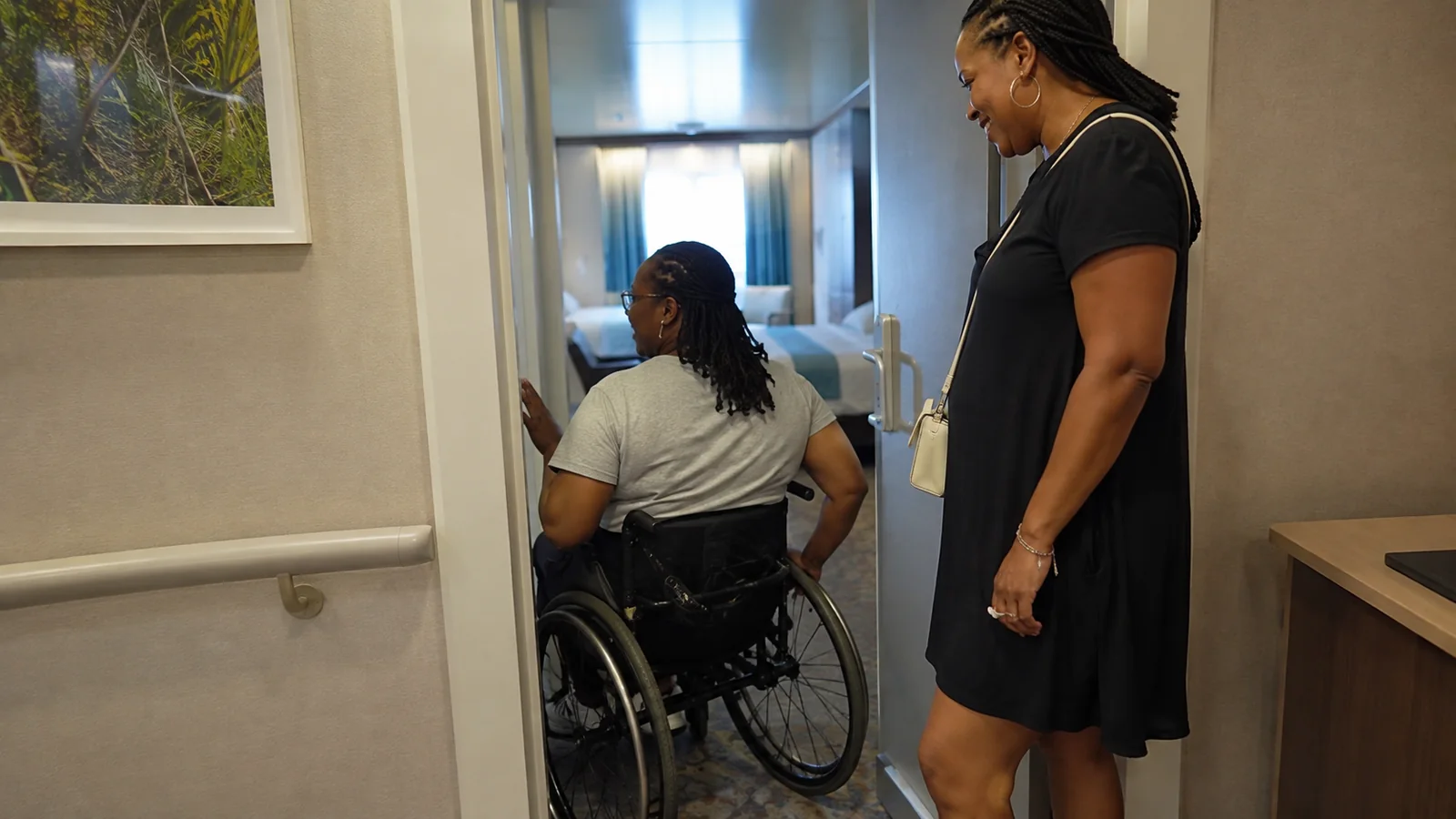
Check the bedroom with every bed in use
Request the bed height, clear floor area beside it, and available transfer side. If a lift or other equipment must reach underneath, confirm the clearance and whether the bed base allows that equipment to fit.
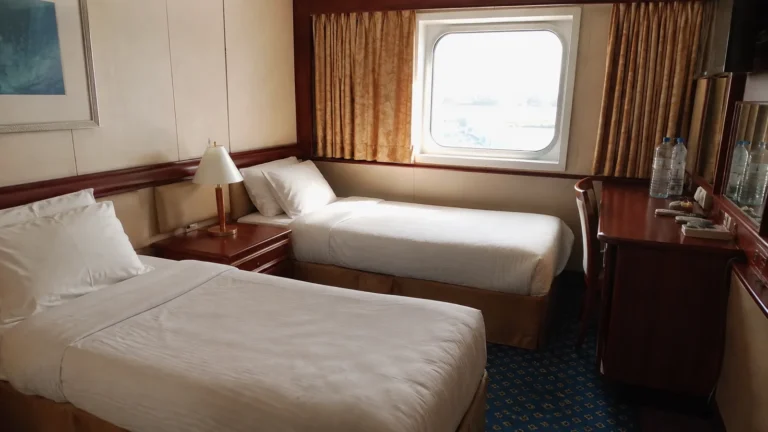
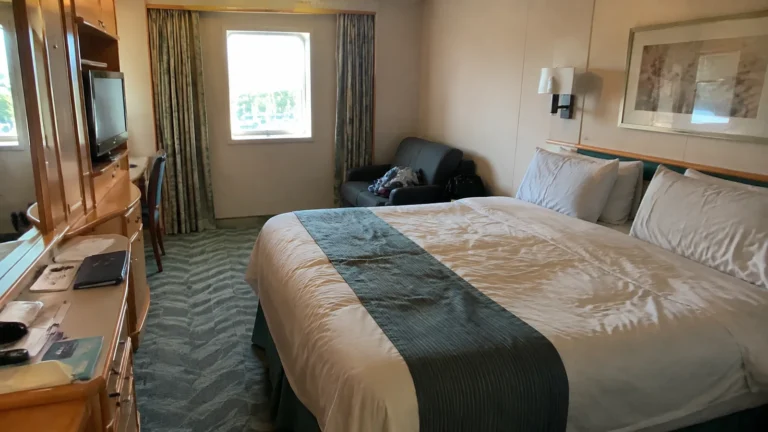
The daytime layout can be misleading for a cabin occupied by several people. Ask what changes when a sofa bed, pull-down bed, or extra bed is prepared for the night.
I would want an unobstructed route from my sleeping position to the bathroom and exit with everyone’s bedding in place. That route matters more than the room’s total square footage.
If you need assistance from a companion, include the space that person needs to stand or move. A room can accommodate the traveler and device yet still fail the transfer routine shared with a caregiver.
For practical organization once the layout is settled, my cruise cabin storage tips can help keep belongings out of the way. I would adapt any storage idea so it never narrows a required access route.
Ask bathroom questions one feature at a time
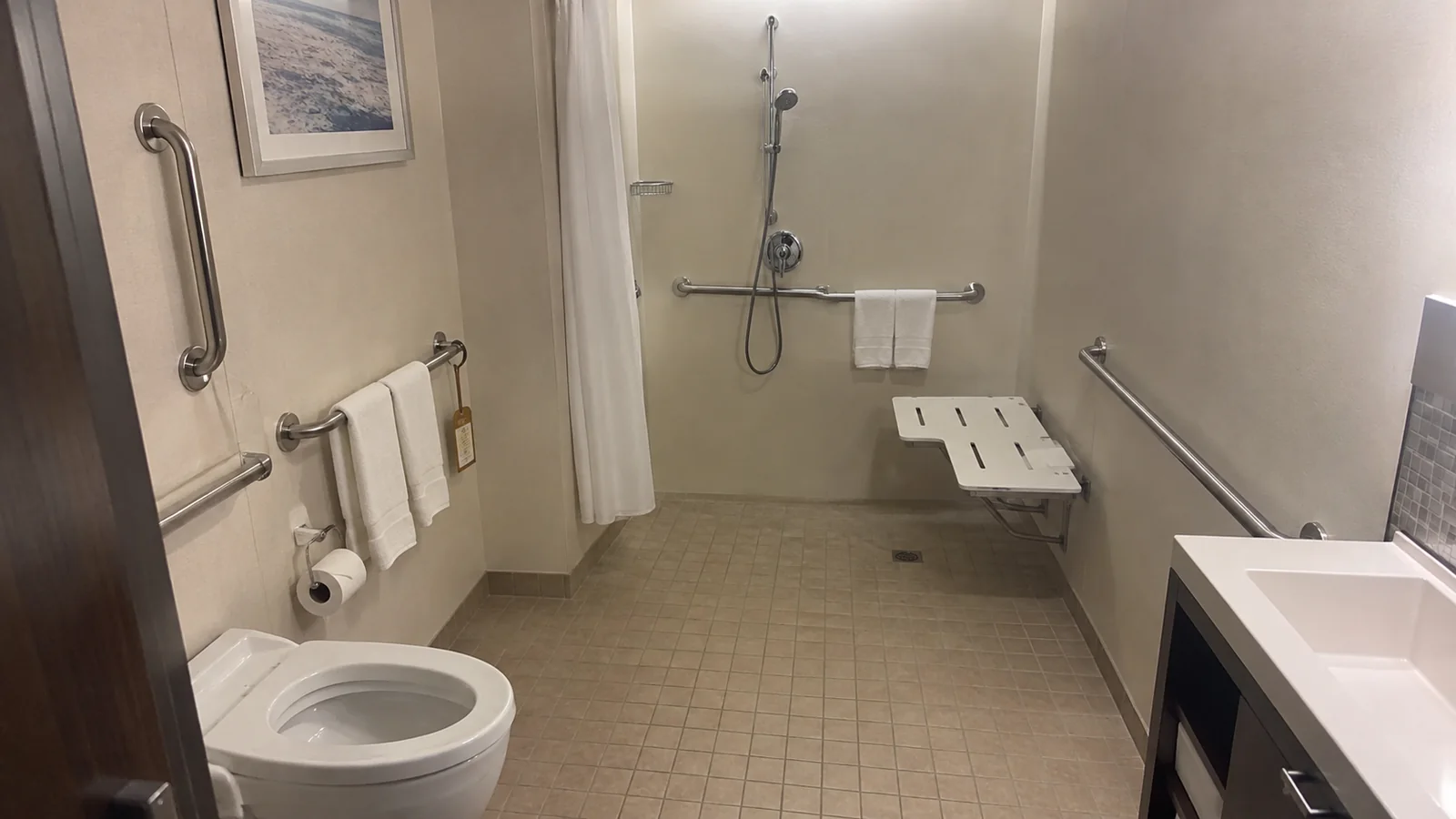
Confirm whether the shower is roll-in, what seating is available, and where the grab bars are positioned. Ask about the toilet height and the clear space beside it if either affects your transfers.
A bathroom described as spacious does not answer those questions. I would request measurements or a diagram rather than rely on a wide-angle photograph.
Check whether the shower seat is fixed, folding, or supplied on request. If equipment is requested separately, find out when availability is confirmed and what alternative is possible if it cannot be provided.
Sink height, knee clearance, mirror position, and reachable controls can affect everyday independence too. These details deserve attention before you get distracted by decor or the size of the television.
I would also ask how water is contained around a roll-in shower. The aim is to understand the room’s setup and plan a comfortable routine, not to assume every accessible bathroom behaves identically.
A balcony needs its own access check
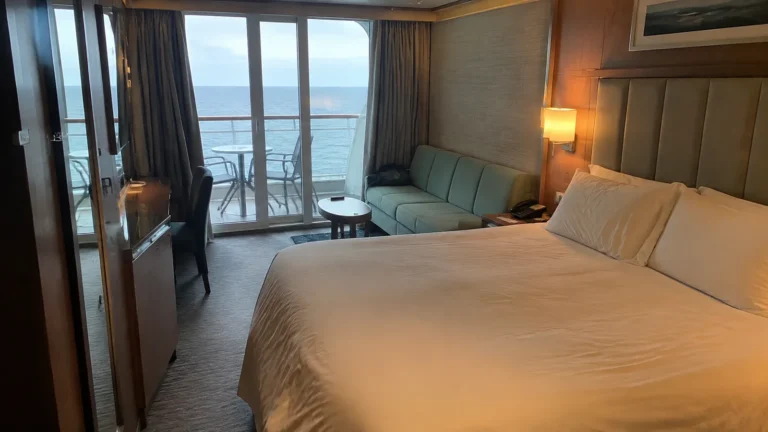
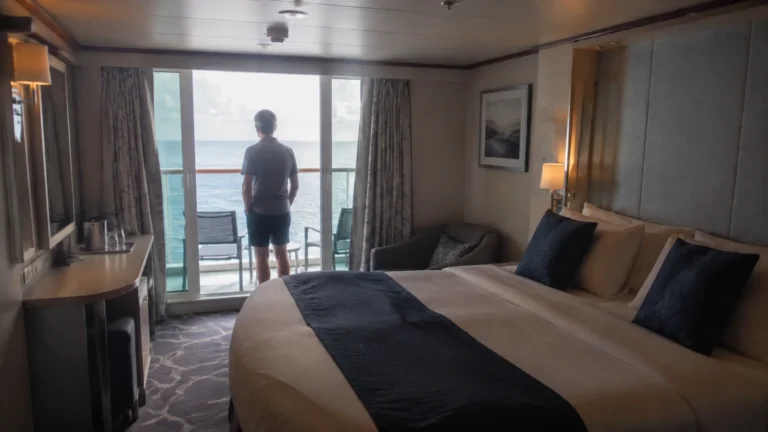
An accessible bedroom does not automatically establish a balcony you can use independently. Ask about the threshold, door opening, door weight, turning space, and room for the device beside the furniture.
Consider the view from your normal seated position. A solid balcony front can create a different experience from a glass panel even when both outdoor spaces have similar dimensions.
I would not pay a substantial balcony premium until I knew I could get out there and enjoy it. If the specific balcony does not work, a suitable oceanview room and accessible public viewing areas may be a better purchase.
A door that staff can help open occasionally may not meet your preference for independent access throughout the day. Be explicit about the difference when requesting advice.
Keep the useful elevator location
Royal Caribbean’s guide to accessible cruising notes that many accessible staterooms are deliberately near elevators. That proximity can reduce repeated travel along long corridors.
I would compare which elevator bank serves the venues I expect to use. The physically nearest bank is not always the most useful if it requires extra changes of deck or long detours.
My guide to reading cruise deck plans helps identify those relationships. For actual accessible routes and door details, I would use the cruise line’s ship-specific accessibility map or team.
Once suitable rooms are identified, check whether the cabin door faces a busy gathering area or sits around a corner. That allows a sensible noise comparison without discarding elevator access altogether.
Store and charge equipment inside the room
Plan a specific place for the device when you are sleeping or using the bathroom. Cruise lines’ mobility policies generally require devices to be stored inside the stateroom rather than in public corridors.
Ask where charging is possible without running a cord across an exit or transfer path. Bring the correct charger and confirm the line’s battery and electrical-equipment requirements before travel.
I would not assume a spare outlet means any extension cord is allowed. Request the approved arrangement through the accessibility team if the ordinary setup will not work.
When more than one traveler uses mobility equipment, describe both devices. Enough room for one parked scooter does not establish enough room for two, especially with additional beds occupied.
Hearing, vision, and sensory needs deserve specific requests
Mobility features are only one part of accessible accommodation. A traveler may instead need visual or vibrating alerts, communication assistance, a hearing kit, or an orientation to the room and ship.
Ask which equipment is provided, how it is requested, and whether it requires an accessible cabin or can be installed in another category. That can widen the room choices without giving up the feature you need.
I would also explain any difficulty using touch-screen controls, reading labels, or handling a heavy door. A general note saying special needs is less useful than describing the actual task that needs support.
For a child, check the cabin arrangement and youth-program support separately. My family cruise comparison can help shortlist the overall experience, but the line needs to confirm the individual accommodation and participation arrangements.
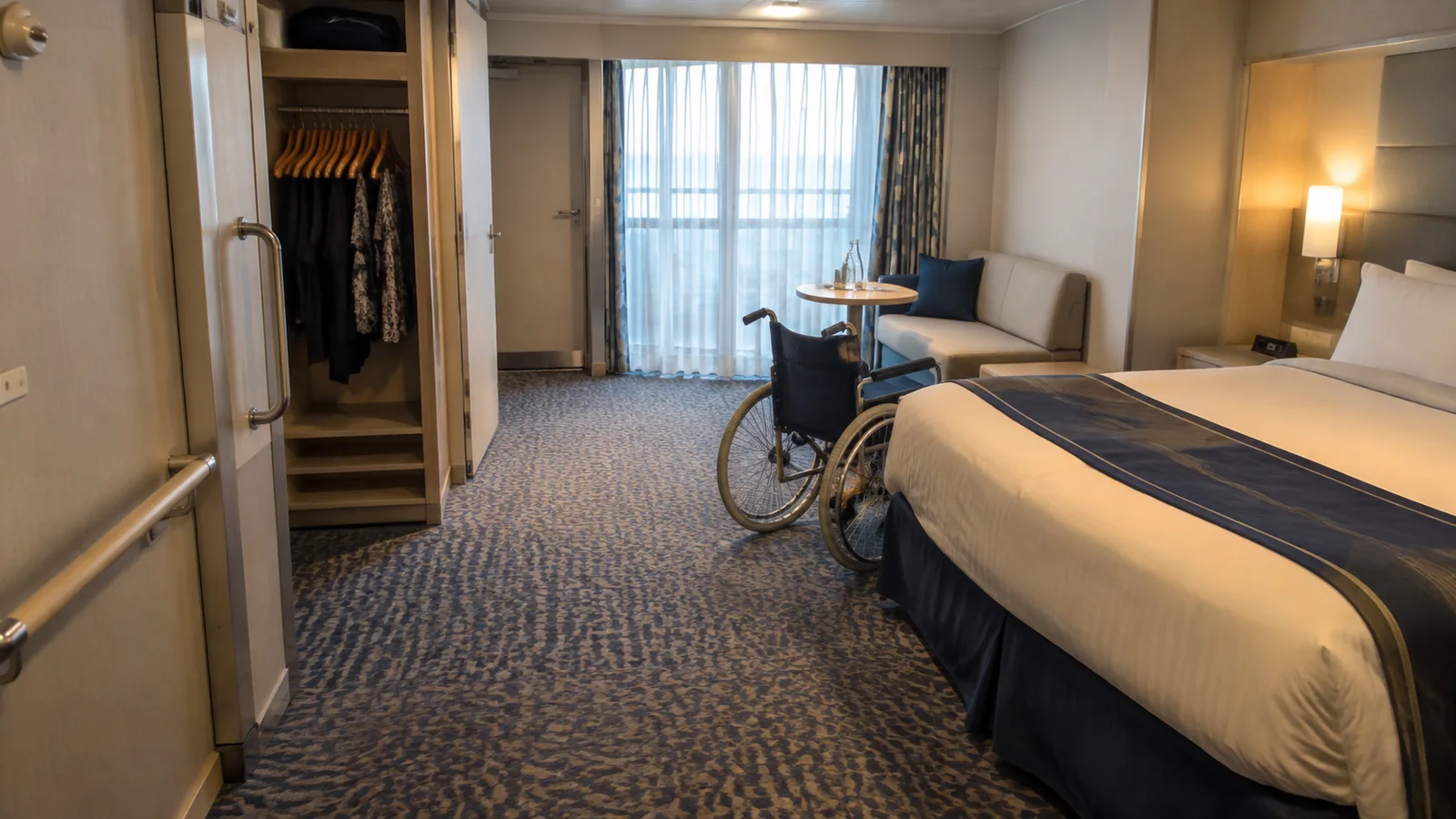
Cabin access and shore access are separate decisions
An excellent room does not make every port practical. Gangway slope, small-boat transfers, dock conditions, vehicle access, and terrain can each change what you can do ashore.
I would review every tender port before committing to an itinerary. Ask what equipment and assistance can be supported, and accept that weather or operating conditions may affect the final transfer decision.
For a shore excursion, request details such as vehicle lifts, steps, restroom access, walking distances, and whether you remain in your device. The word accessible on its own may not describe the features you require.
If a particular port is the whole reason for the trip, I would prioritize a workable arrival and excursion plan when choosing the sailing. A better room cannot compensate for an essential shore experience you cannot reach.
Put the assistance plan beside the cabin confirmation
Ask what staff can help with at embarkation and where that assistance starts. Clarify whether you need to bring or arrange equipment for regular onboard use rather than rely on a terminal assistance chair.
Personal care is a separate issue from embarkation assistance. I would arrange any help I need with dressing, bathing, transfers, or medication instead of assuming the room attendant provides it.
Keep the confirmed room, equipment requests, contact details, and relevant measurements together. Before final payment, check that outstanding requests have been answered and that any proposed room change retains the necessary features.
Five-minute booking review
- Exact room and accessibility category confirmed.
- Doorways, bathroom, bed height, and transfer side checked.
- Equipment storage, charging, and nighttime routes planned.
- Balcony access verified if paying for one.
- Required alerts, assistance, or supplied equipment requested.
- Elevator routes and port limitations understood.
Accessible cabin questions
Can I book an accessible room just for the extra space?
These cabins are intended for travelers who need their features. I would choose a standard larger category if that is your only reason, because line policies can allow reassignment to accommodate a guest with an access need.
Should I accept a guarantee fare?
I would only consider it if the line explicitly confirms it can guarantee every required access feature. A general promise of a cabin category is not enough when the exact layout determines whether you can use the room.
Is a suite automatically easier to use?
No, additional space can still come with steps, unsuitable bathroom fixtures, or an inaccessible balcony. I would evaluate the same practical measurements in every category.
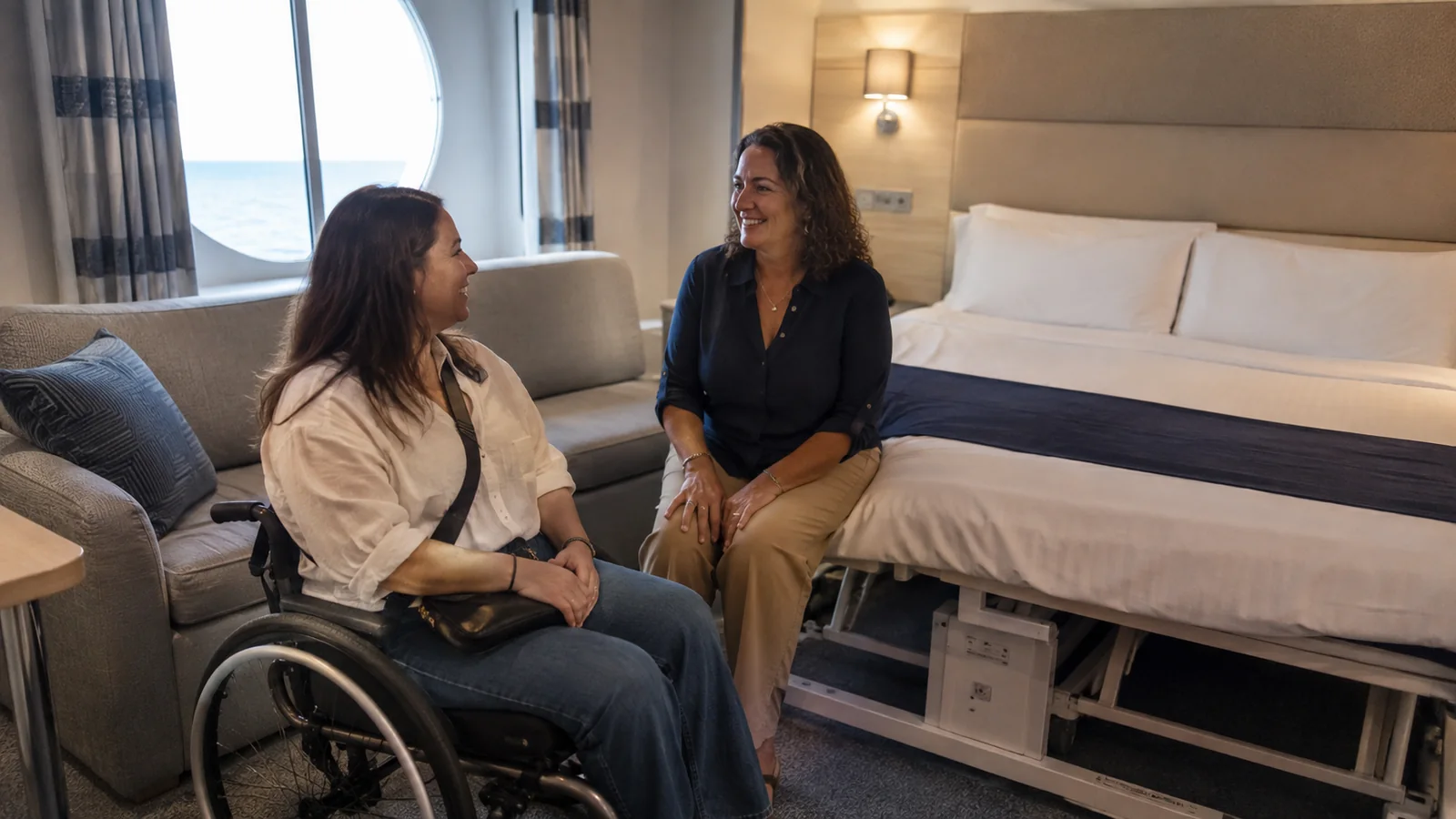
The cabin I would choose
I would book the room that supports my actual routine with confirmed features and a manageable route to daily activities. After that, I would compare quiet, view, and price among the genuinely workable options.