Best Falkland Islands Attractions: Cruise and Land Guide
The best Falkland Islands attraction depends less on a top-ten ranking than on how many hours you have. A cruise passenger in Stanley needs a very different plan from a traveler spending a week among the outer islands.
This guide separates easy Stanley sights from full-day 4×4 adventures and fly-in wildlife stays. That distinction will save you from booking an impressive place you cannot realistically reach.
Falkland Islands attractions at a glance
If you want the short answer, match your time and priorities to one of these choices:
- Best for a short cruise call: Historic Dockyard Museum, Christ Church Cathedral, Whalebone Arch, and the Stanley waterfront.
- Best easy wildlife outing: Gypsy Cove, about 4 miles from central Stanley.
- Best king penguin experience: Volunteer Point, if your ship schedule allows a long and bumpy 4×4 trip.
- Best mix of wildlife and a shorter transfer: Bertha’s Beach or another locally arranged wildlife site closer to Stanley.
- Best for military history: A guided 1982 battlefield tour around Mount Tumbledown, Wireless Ridge, and nearby memorials.
- Best for serious wildlife travelers: A multi-night land itinerary using FIGAS flights to Saunders, Sea Lion, Carcass, Pebble, or another outer island.
Anyone arriving on a South America sailing should also compare the wider route in my guide to South America cruises. The Falklands can be a highlight, but wind and sea conditions make every port day more conditional than the itinerary map suggests.
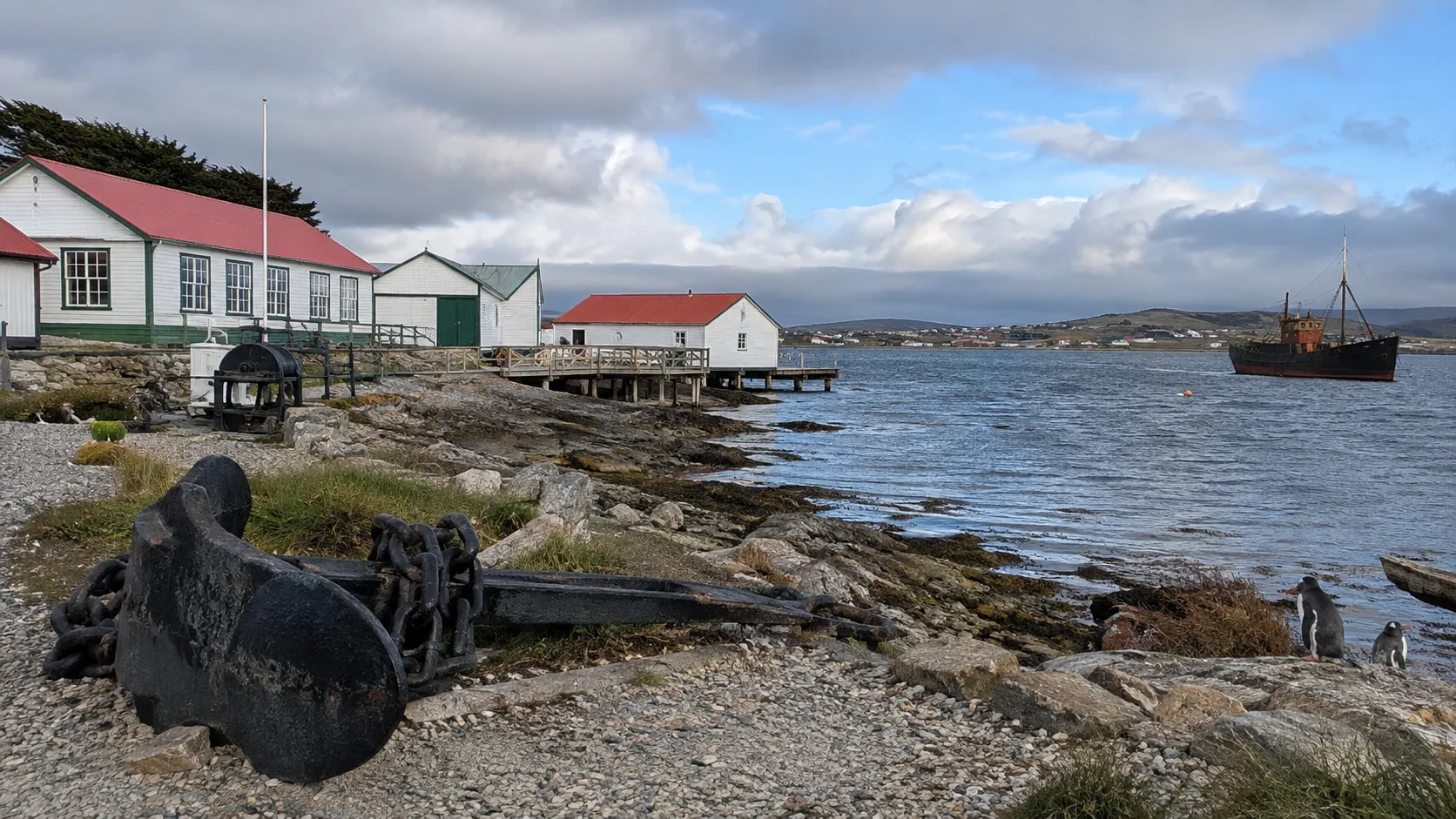
Best attractions in Stanley
1. Historic Dockyard Museum
The Historic Dockyard Museum is the smartest first stop for context on island life, maritime history, natural history, and the 1982 conflict. It is on Ross Road near the waterfront, so it works even when your shore time is short.
Allow roughly 60 to 90 minutes if you like reading exhibits, though a focused visit can be shorter. I would put the museum ahead of souvenir shopping because the rest of the islands makes much more sense once you understand settlement, farming, shipping, and isolation.
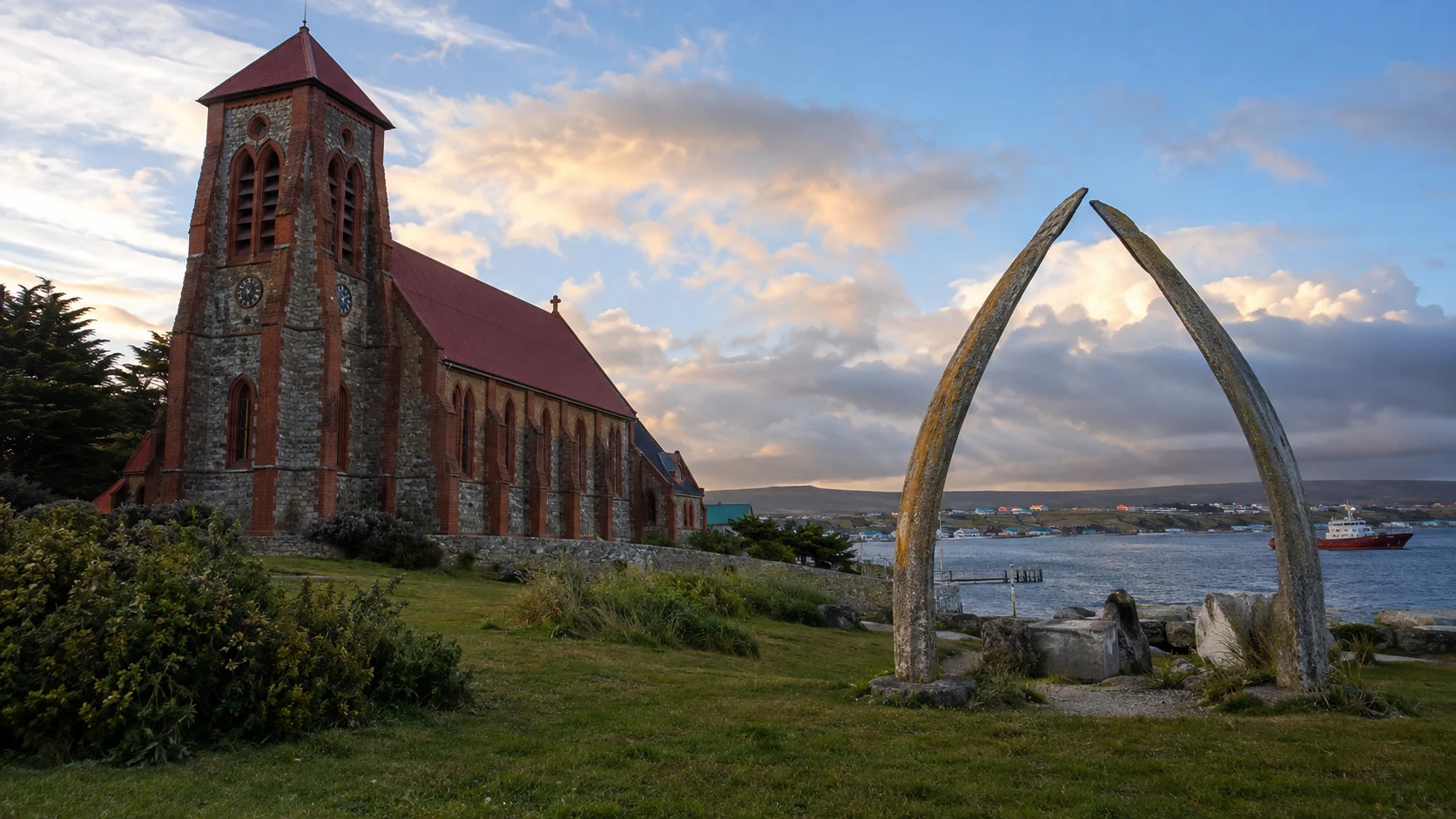
2. Christ Church Cathedral and Whalebone Arch
Stanley’s compact center is easy to explore on foot, with Christ Church Cathedral and the Whalebone Arch forming its most recognizable pairing. The arch was built from the jawbones of blue whales, while the cathedral remains an active place of worship rather than a staged photo stop.
Walk east or west along Ross Road for colorful roofs, Government House views, the mizzenmast of the SS Great Britain, and small memorials. Victory Green is another simple stop, especially if you want harbor views without committing to a vehicle tour.
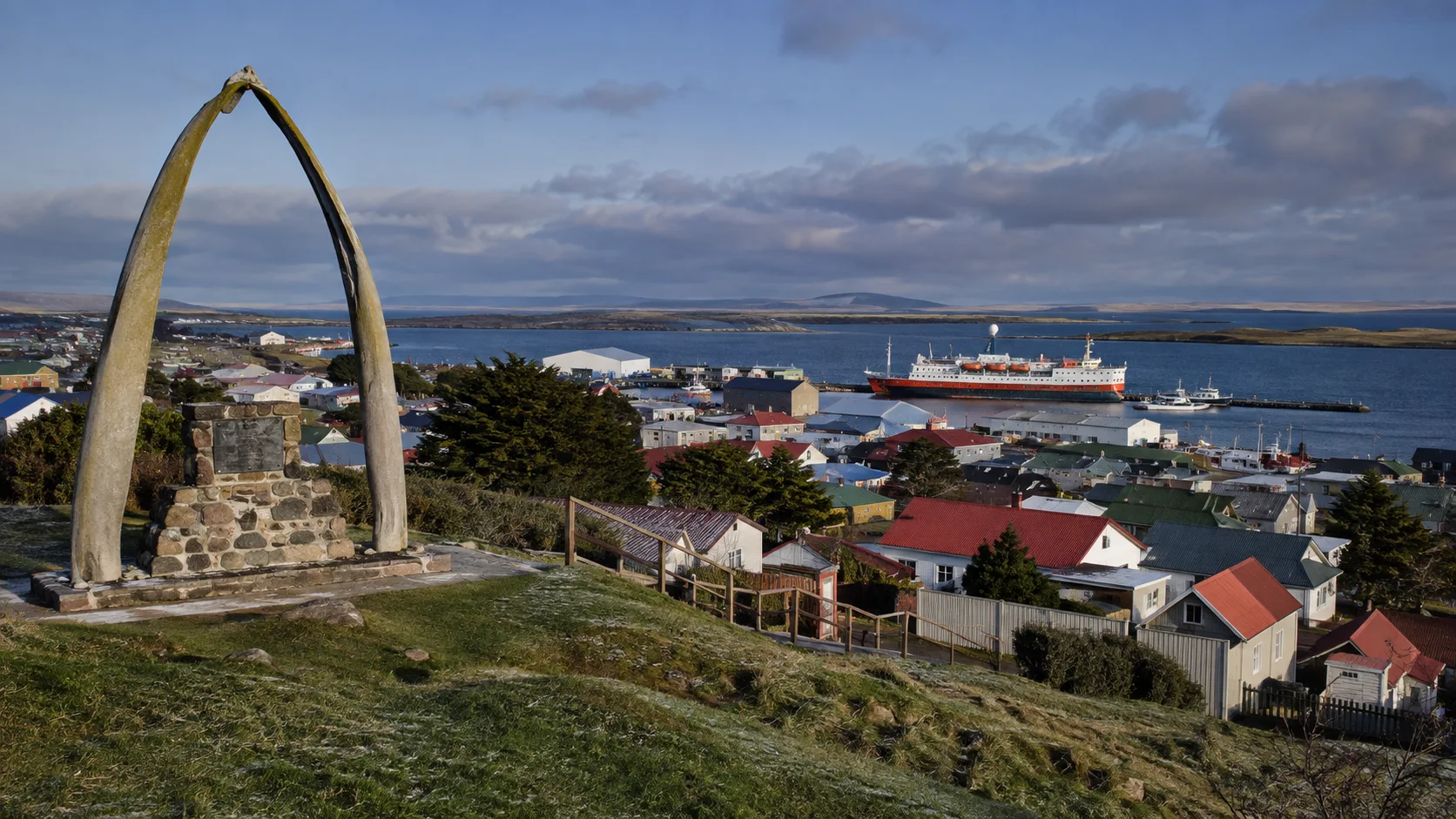
3. Stanley’s monuments and waterfront
The Liberation Monument and other memorials deserve a quiet, unhurried visit. They commemorate events that remain personal to many island residents, so this is a place for respectful curiosity rather than jokey battlefield selfies.
Best wildlife attractions near Stanley
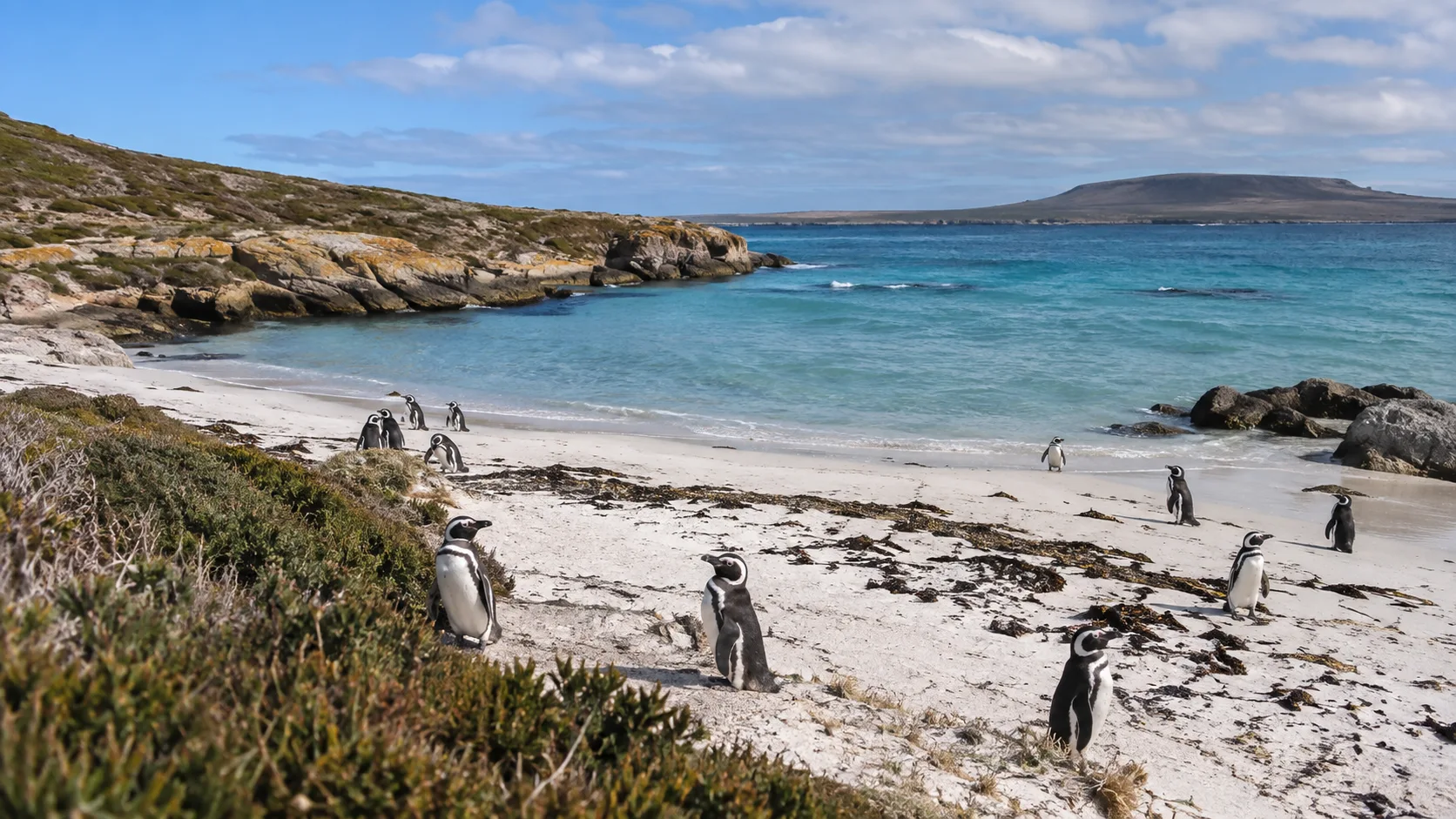
4. Gypsy Cove
Gypsy Cove is the easiest wildlife choice for most first-time visitors, sitting roughly 4 miles from Stanley within the Cape Pembroke area. Boardwalks and paths overlook white-sand coves where Magellanic penguins nest, with chances to see upland geese, shorebirds, and other local species.
This is not a substitute for the enormous king penguin colony at Volunteer Point, but it is far easier to fit around a short or uncertain port call. Wildlife sightings are never guaranteed, and the penguins’ visibility changes with season and nesting activity.
5. Volunteer Point
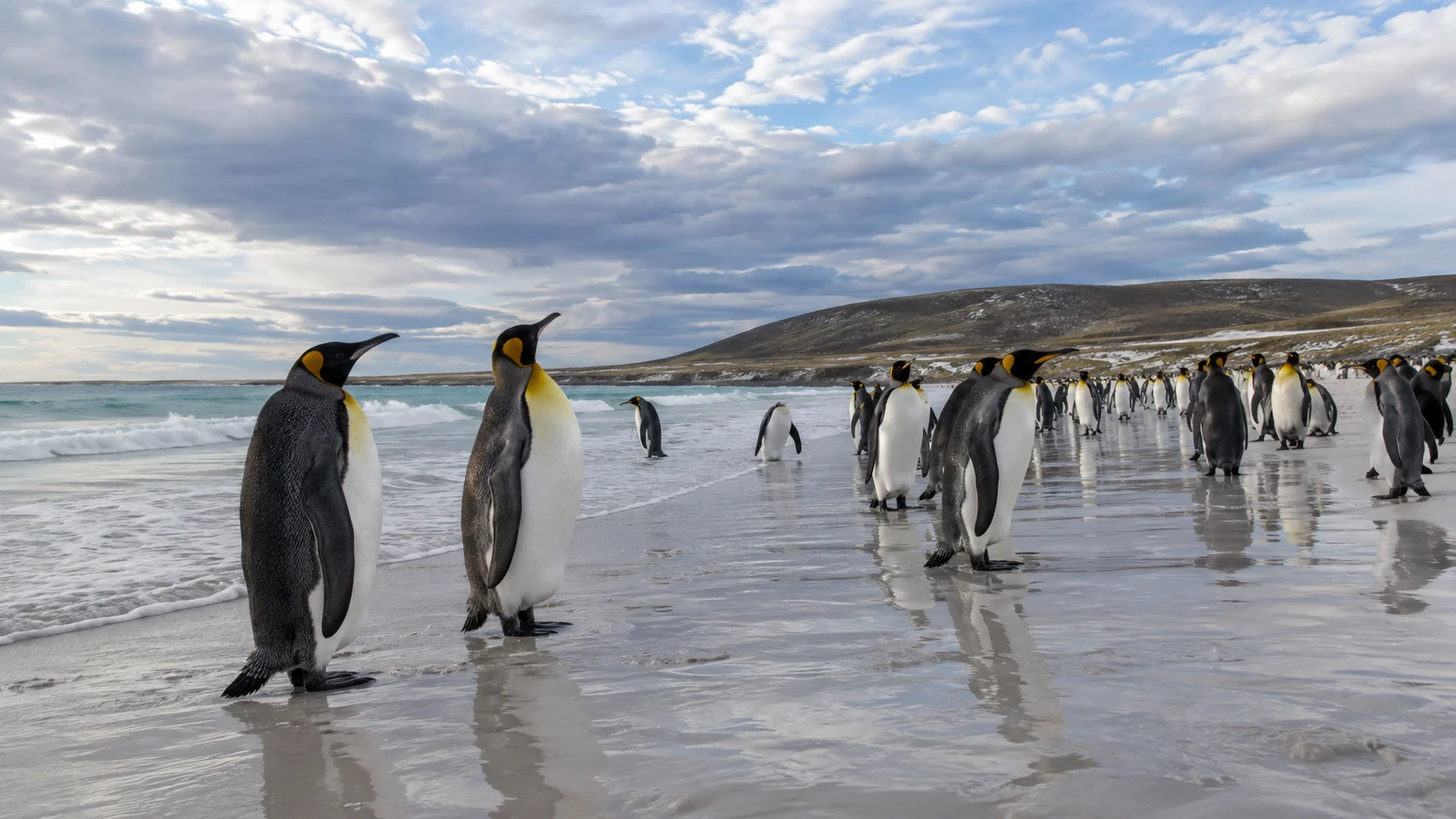
Volunteer Point is the headline wildlife trip for good reason: its privately managed nature reserve supports the islands’ largest breeding group of king penguins, alongside gentoo and Magellanic penguins. The official tourism listing explains that reaching Volunteer Point involves both road travel and an overland vehicle journey.
That last portion is the tradeoff. The ride is long, rough, and weather-dependent, so it is a poor fit for anyone with significant back or mobility concerns and risky for a cruise call without generous port hours.
Book through an established operator, confirm its ship-return policy, and avoid stacking other plans around the trip. A ship-sponsored option may cost more, but its schedule protection can be valuable here.
6. Bertha’s Beach and closer wildlife sites
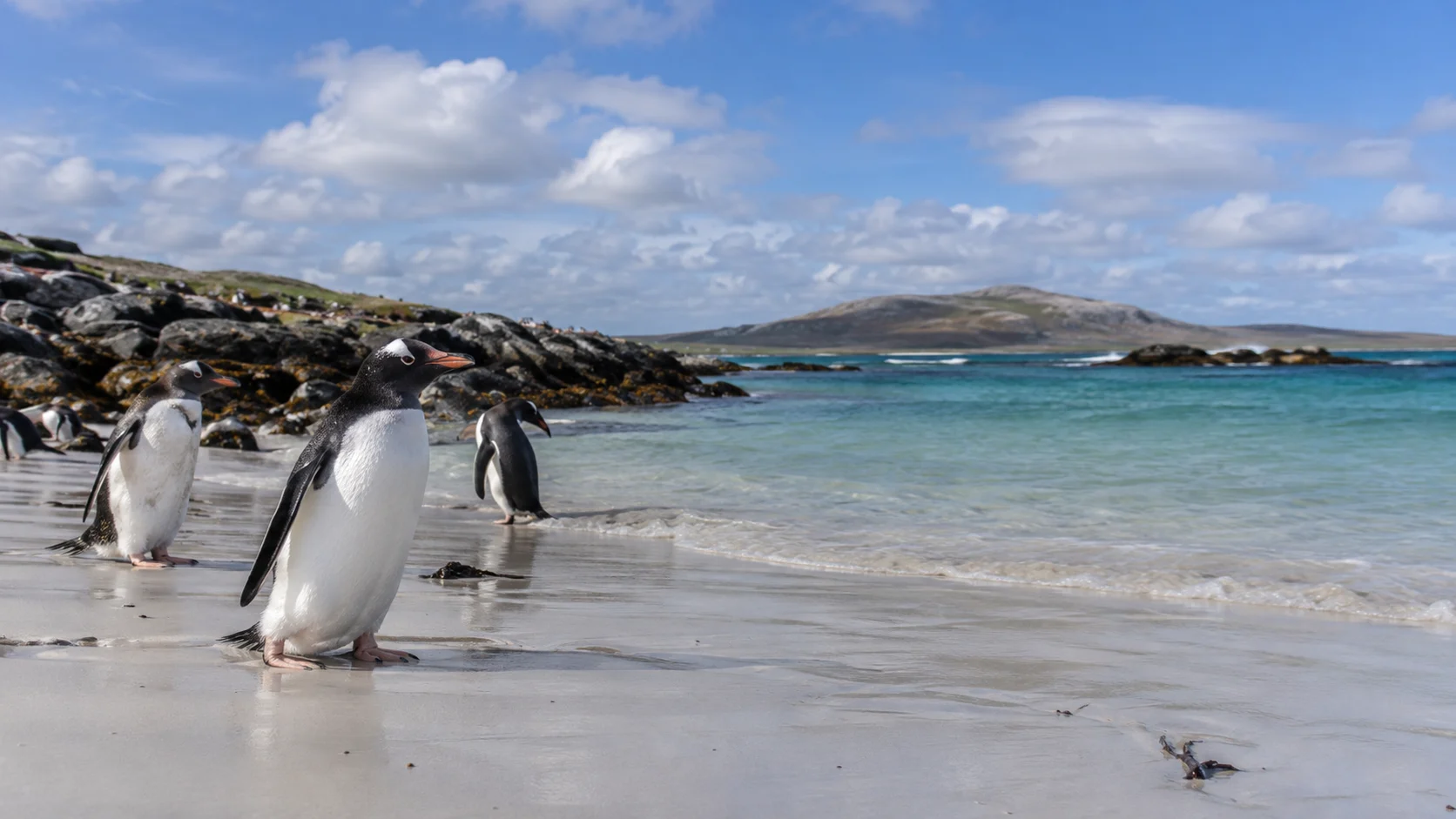
Bertha’s Beach lies on private Fitzroy Farm and combines a long sandy coast with gentoo and Magellanic penguins, waterfowl, and occasional dolphin sightings. It is both an Important Bird Area and a Ramsar wetland, making it more than a convenient penguin stop.
Access should be arranged rather than improvised because this is working private land. Depending on the day’s tour availability, Bluff Cove Lagoon or another locally operated site may offer a more comfortable alternative to Volunteer Point for travelers who want penguins without the longest off-road drive.
History and hiking beyond central Stanley
7. The 1982 battlefields
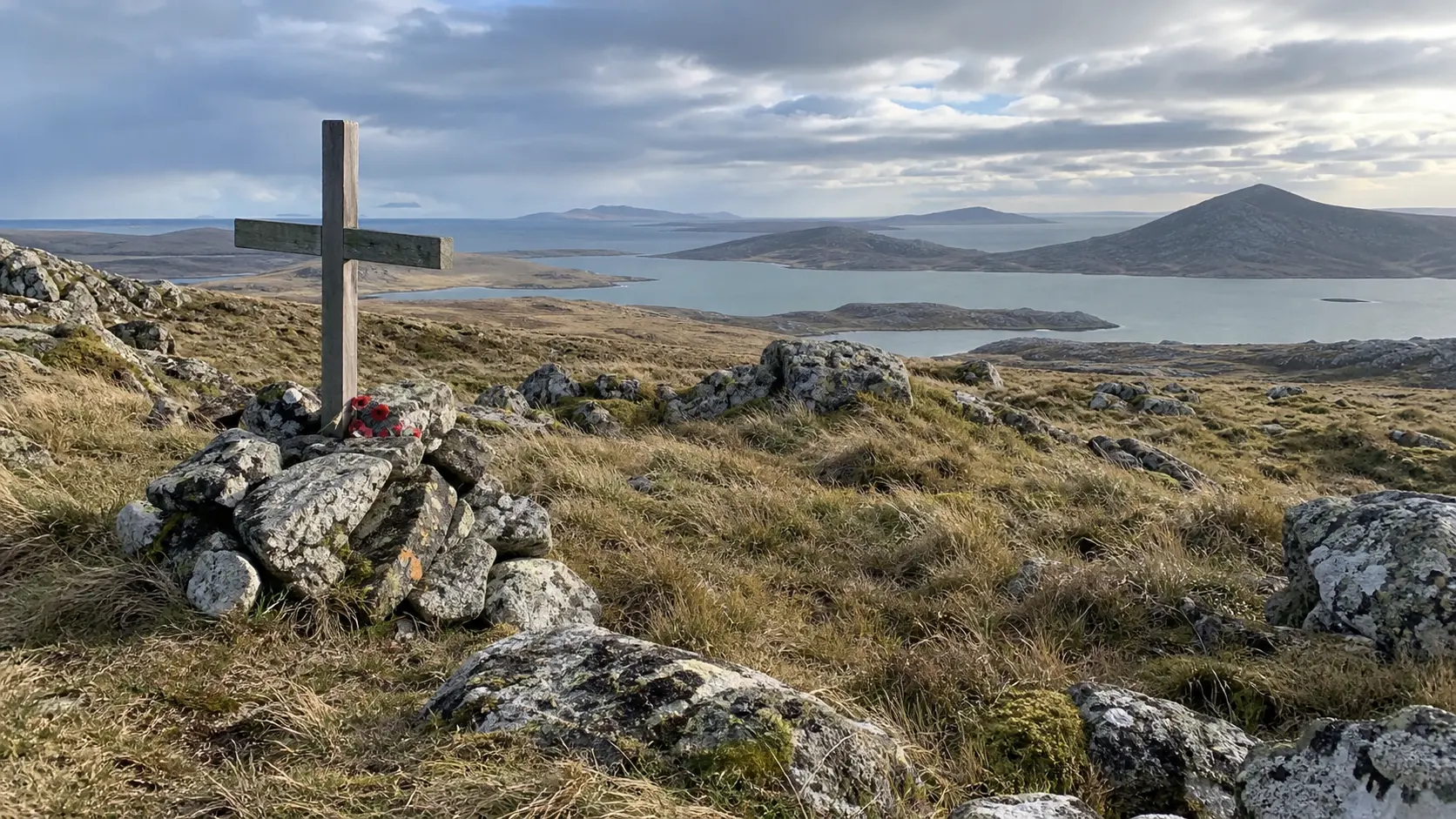
Mount Tumbledown, Wireless Ridge, Mount Harriet, and other battlefield locations surround Stanley. A knowledgeable local guide helps explain the terrain, sequence of events, and island perspective in a way that isolated plaques cannot.
Many sites are exposed, uneven, or reached across private land, so confirm the walking demands. With only a few hours, pair an accessible viewpoint with the Liberation Monument and museum.
8. Cape Pembroke Lighthouse
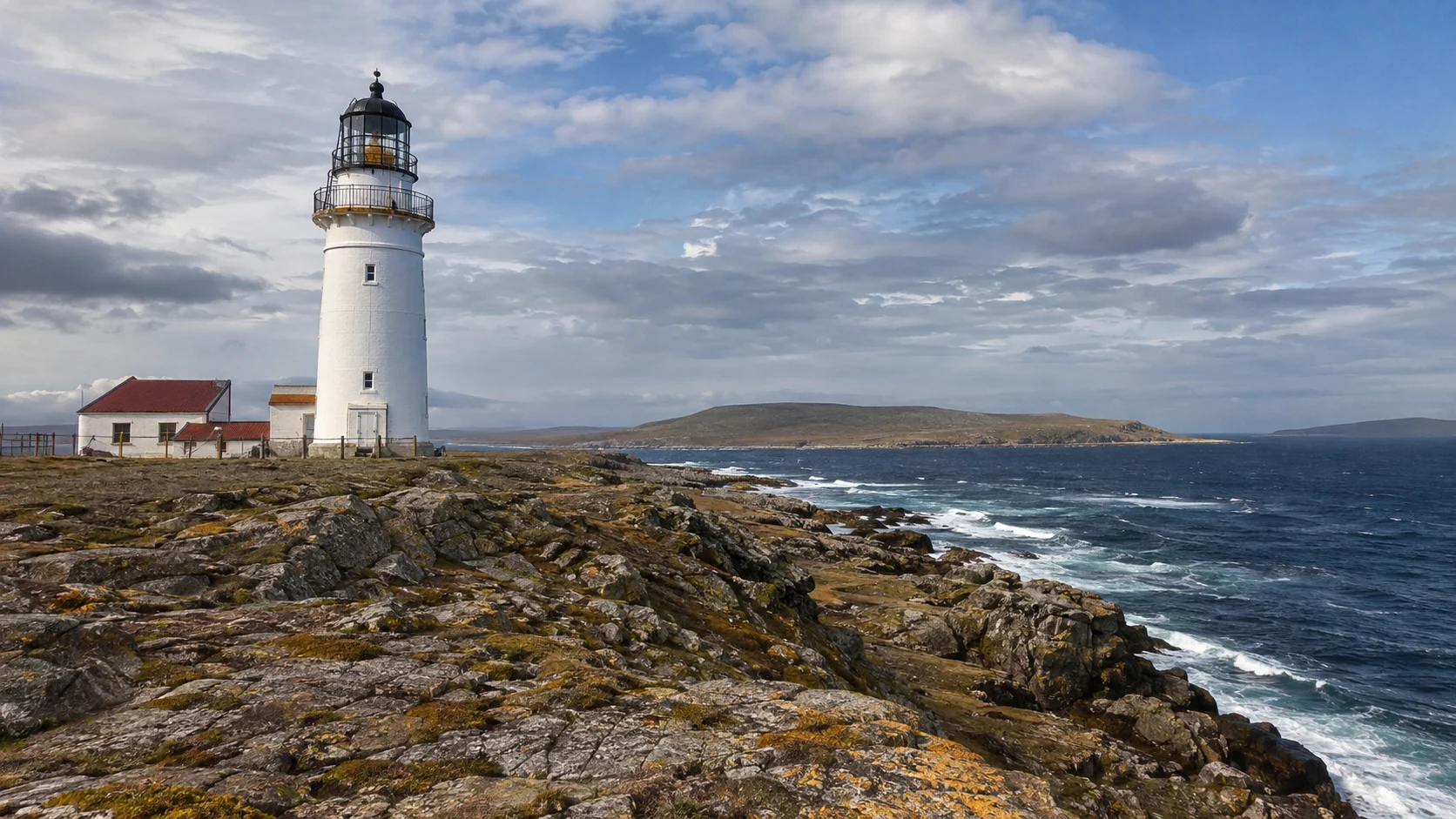
Cape Pembroke Lighthouse stands just over 7 miles east of Stanley at the end of a windswept peninsula. The official tourism information estimates the hike at around three hours, though conditions and your exact starting point can change the effort.
This outing suits hikers who value open landscapes, coastal birds, and solitude more than a checklist of buildings. Bring waterproof layers, tell someone your route, and leave enough margin for a slower return into the wind.
Make the lighthouse walk fit your day
The official Cape Pembroke listing places the lighthouse just over seven miles east of Stanley and describes about three hours of hiking to reach it. That is an outward journey from the Stanley area, not a three-hour round trip, and the precise distance increases or decreases with your accommodation and chosen drop-off.
For a long walk, leave Stanley eastbound toward the airport, then follow the established lighthouse vehicle track without cutting across airport land or closed areas. I would arrange a pickup at the lighthouse rather than assume I want another seven-mile walk home, carrying layers, water, and offline directions for the exposed coast.
My shorter choice is a prearranged vehicle visit, followed by 30 to 45 minutes around the lighthouse and nearby Atlantic Conveyor memorial on permitted paths. Ask the driver which track sections are suitable that day and agree on the return pickup, because this is not a place to rely on finding a passing taxi.
Best outer-island attractions
The outer islands are where the Falklands shifts from an unusual cruise stop into a dedicated wildlife journey. They are not realistic add-ons to a single Stanley port day because access usually involves small aircraft, local transfers, and overnight accommodation.
FIGAS operates more like a demand-based air taxi than a fixed-route airline. Daily flights depend on bookings, weather, and operations, so land itineraries need buffer time.
9. Saunders Island
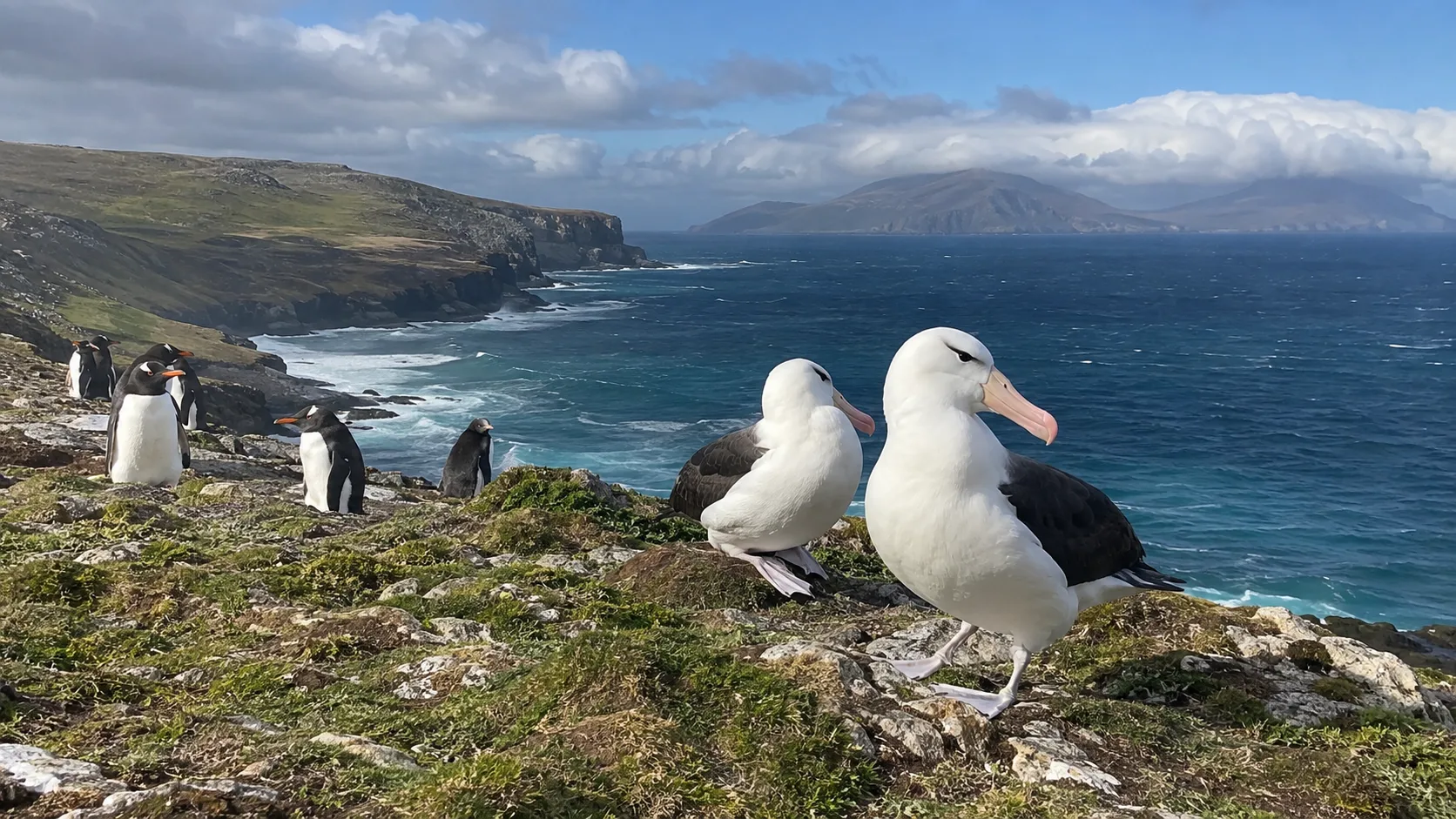
Saunders Island is a standout for photographers and birders because all five penguin species that breed in the Falklands can be found there, along with black-browed albatross colonies. Its celebrated wildlife areas include The Neck and The Rookery, but transfers between the airstrip, accommodation, and remote sites take planning.
Stay at least two nights if schedules allow. A one-night dash leaves too much riding on one flight and one spell of favorable weather.
10. Sea Lion Island
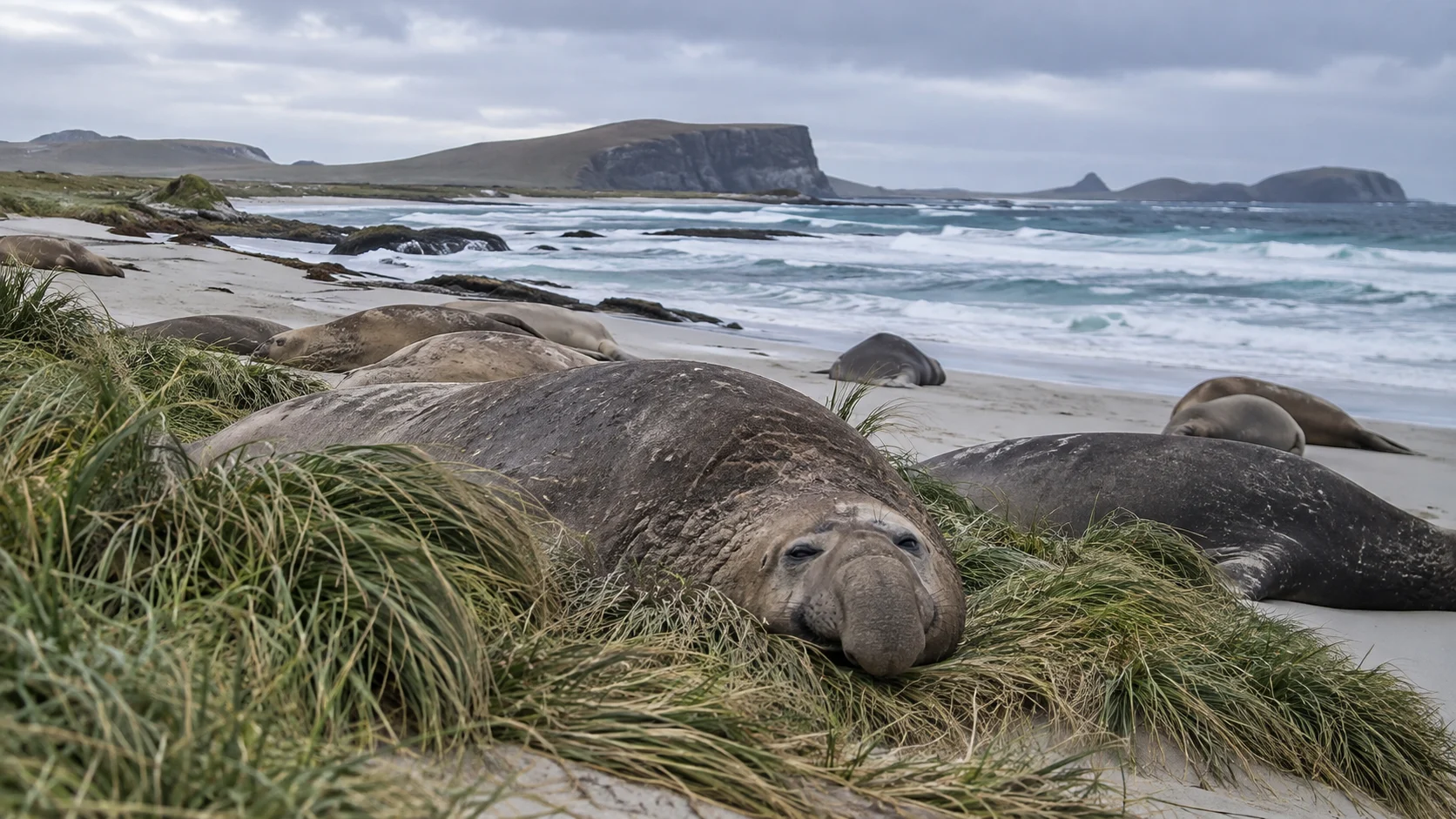
Sea Lion Island packs diverse wildlife into a comparatively compact area, with elephant seals, sea lions, penguins, and abundant birdlife. Its appeal is the ability to walk from accommodation toward several habitats rather than spending each day on long vehicle transfers.
11. Carcass, Pebble, and New Islands
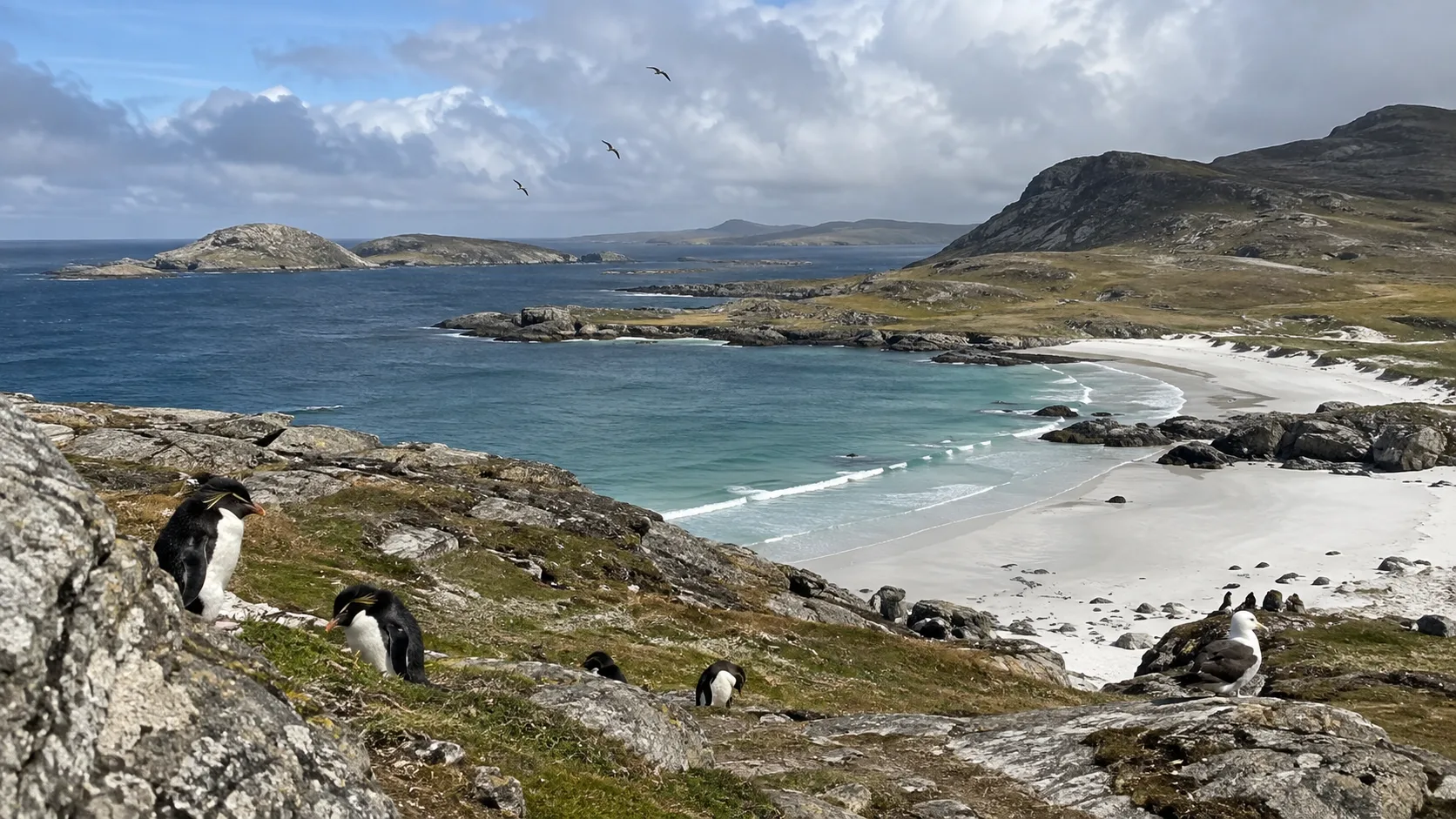
Carcass Island appeals to walkers and birders, while Pebble Island combines broad landscapes, wildlife, and 1982 history. New Island is known for dramatic seabird colonies, but availability, accommodation, and transport vary enough that it should be built into a custom land itinerary.
Official visitor information on reaching the outer islands is the right starting point before contacting lodges or a local tour planner. Expedition ships sometimes land at outer-island sites, but passengers should judge a cruise by its planned expedition program rather than assume every sailing visits the same colonies.
Choose one outer island for a proper stay
Carcass Island is my pick for gentler beach walks and birdwatching, including Magellanic penguins and smaller birds on a rodent-free island. Book accommodation and FIGAS flights together, aiming for at least two nights in the October-to-March visitor season so a weather delay does not consume the entire visit.
Pebble Island suits travelers who want penguins, wetlands, the long sweep of Elephant Beach, and 1982 history in the same stay. I would reserve two or three nights at an island lodge, arranging a guided vehicle day for the more distant wildlife sites rather than treating this long island as one walk.
New Island is the choice for dramatic seabird cliffs, particularly black-browed albatross and rockhopper penguins. Treat it primarily as a permitted expedition landing, with several hours ashore when the operator, conservation managers, and weather allow, rather than an assumed fly-in lodge stop.
For New Island, ask your expedition company which landing and walking route it has authorization to use; a beautiful bay on a map does not establish public access. Across all three islands, I would favor the austral spring and summer, confirm the current season with the host, and avoid building an international departure immediately after a small-plane transfer.
How to plan one day in the Falkland Islands
- Four hours or less: Stay in Stanley, adding Gypsy Cove only with firm transport and return timing.
- About six hours: Choose nearby wildlife, a battlefield tour, or Stanley plus Gypsy Cove.
- Eight hours or more: Volunteer Point is plausible when an operator confirms the drive and ship-return window.
Travelers continuing toward the Antarctic Peninsula may find the Falklands a gentler introduction to expedition-style uncertainty. My overview of Ushuaia to Antarctica cruises explains why weather, landing conditions, and flexible expectations matter across this region.
How many days do land visitors need?
Four nights is enough for Stanley plus one carefully chosen outer island, but six to eight nights makes a much more resilient first trip. Extra days let you absorb FIGAS schedule changes and spend meaningful time at wildlife sites rather than constantly repacking.
A balanced week could include two nights in Stanley, three nights on Saunders or Sea Lion Island, and a final buffer night back near Stanley. Add another island only if you are comfortable trading depth for variety.
If your trip includes Buenos Aires, the practical details in my Buenos Aires cruise port guide can help separate airport, hotel, and terminal days. Build connection protection around separate tickets.
Best time to visit Falkland Islands attractions
December through February is the official summer and generally the easiest period for longer days and active wildlife, but each species follows its own breeding calendar. A king penguin colony, an albatross nesting area, and an elephant seal beach will not peak at exactly the same time.
Even in summer, pack a waterproof shell, warm midlayer, hat, gloves, sunscreen, and sturdy footwear. Exposed terrain and persistent wind can change a comfortable outing quickly.
Cruise passengers should accept that a scheduled call is not a guaranteed landing. Stanley Harbour guidance allows passenger tender operations to be suspended when wind or visibility becomes unsafe, so refundable plans and a good onboard attitude both matter.
Wildlife rules that protect your trip
Keep at least 20 feet from wildlife, move slowly, and never block an animal’s route to the sea. The official safe travel guidance also warns visitors not to disturb or chase animals for photographs.
Clean soil, seeds, and plant material from boots, clothing, tripods, and bags before moving between islands or wildlife sites. The islands’ biosecurity guidance explains how easily visitors can transport invasive organisms without realizing it.
Practical planning before you go
- Prebook scarce tours: Volunteer Point vehicles and specialist guides can fill well before a busy cruise day.
- Confirm payment: Ask operators which currencies and cards they accept.
- Save details offline: Download tour contacts and meeting instructions.
- Confirm mobility demands: Ask about vehicle step height, rough ground, walking distance, and toilet availability rather than relying on a generic “easy” rating.
- Insure a land trip properly: Medical evacuation and disruption coverage matter in a remote archipelago.
Land-based visitors should check the Falkland Islands Government’s current visitor entry requirements, including passport, onward travel, accommodation, funds, and insurance expectations. Cruise lines handle some arrival formalities collectively, but every traveler remains responsible for valid documents.
If you are assembling a longer regional itinerary, the destinations in my guide to Argentina’s major landmarks make natural additions before or after the islands. Leave real buffer days rather than creating a chain of separate tickets that only works in perfect weather.
Frequently asked questions
Is Volunteer Point worth the drive?
Yes for travelers whose priority is king penguins and who can tolerate a long, rough 4×4 journey. No for a short port call, serious back concerns, or anyone who would enjoy a closer colony more than an all-day transit commitment.
Can cruise passengers visit an outer island?
Only when the ship’s itinerary specifically includes an outer-island expedition landing. You cannot fly from Stanley to an outer island and back during a normal cruise port call with a safe margin.
Which Falkland Islands attraction should you choose?
Choose Stanley and Gypsy Cove for a low-stress first visit, Volunteer Point for a full-day king penguin priority, and a guided battlefield tour for history. If wildlife photography is the trip rather than one part of it, skip the rushed checklist and devote several nights to one or two outer islands.
The Falklands rewards realistic planning more than aggressive sightseeing. Give transport, wind, wildlife, and local rules the final vote, and the day will feel memorable even when it does not follow the exact plan you made at home.