Chiloé Island Travel Guide: How to Plan the Right Trip
Chiloé is not a quick checkbox outside Puerto Montt. This green Chilean archipelago rewards travelers who give its ferries, wooden churches, coastal weather, and long island roads enough breathing room.
Chiloé Island Travel Guide: How to Plan the Right Trip
For a first visit, three nights is workable and four or five nights is much better. Base in Castro if you want the easiest balance of architecture, food, central roads, and day trips, or split your stay between Ancud and Castro to reduce backtracking.
The essential planning decision comes before your hotel: are you driving across the Chacao Channel, flying to Mocopulli, arriving by ship at Castro, or visiting Puerto Montt on a cruise? Those gateways are not interchangeable, and treating them as if they are can turn a lovely island day into an anxious race.
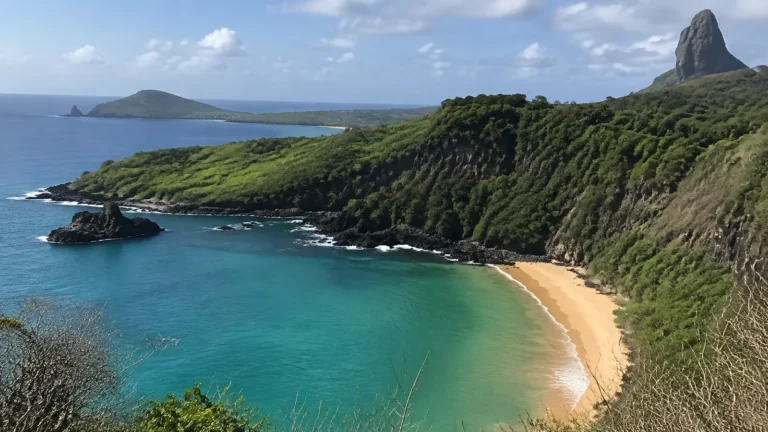
The official Chile Travel destination page identifies palafitos, Chiloé National Park, dense evergreen forest, rugged coastline, and the wooden church route as the island’s core experiences. That is a useful framework, but you still need to group stops by geography.
Is Chiloé Worth Visiting?
Yes, especially for travelers who like living heritage, moody landscapes, local food, and road trips with a little friction. Chiloé is less satisfying for anyone expecting one famous landmark, reliable beach weather, or a polished resort circuit.
The island’s strongest days mix one cultural anchor with one outdoor area. Think Castro’s stilt houses plus a nearby church, Dalcahue plus Quinchao Island, or Cucao plus a short national park walk.
Do not try to collect all 16 UNESCO churches in one hurried loop. They are spread across the main island and smaller islands, and ferry waits, opening hours, rain, and road conditions can rearrange an ambitious plan.
How to Get to Chiloé Island
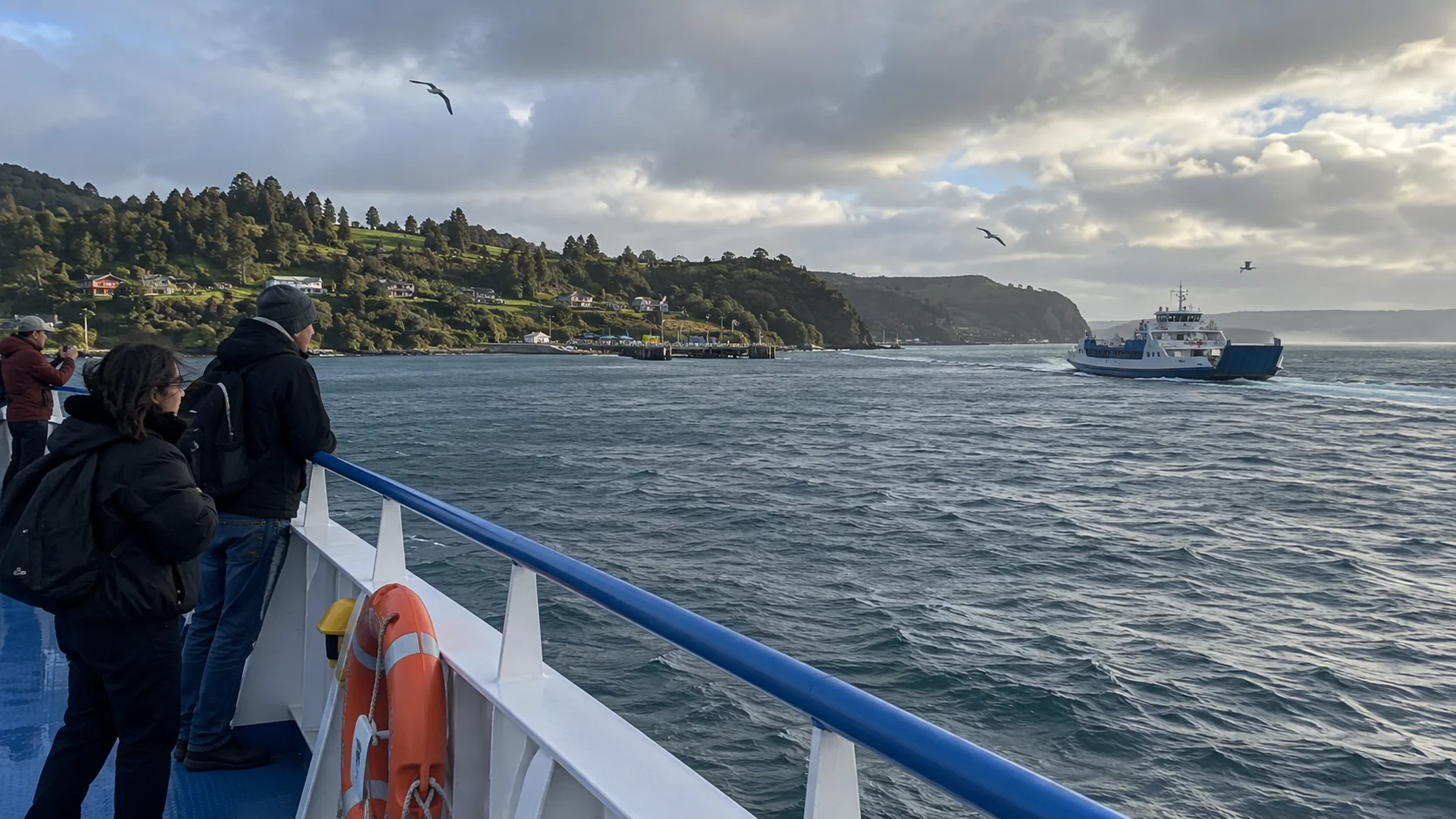
Drive from Puerto Montt and take the Chacao ferry
Route 5 runs south from Puerto Montt toward Pargua, where vehicles and passengers cross the Chacao Channel to Chacao. There is no road bridge in service, so the ferry is part of the journey, not a small optional detail.
Allow roughly 3.5 to 4.5 hours from Puerto Montt to Castro in ordinary conditions, including the road approach, loading, crossing, and island drive. That is a planning range rather than a promise, so add more margin on holidays, summer weekends, or windy days.
You normally remain with your vehicle until directed otherwise, and staff instructions take priority. Confirm the live operator, payment method, weather status, and queue before leaving Puerto Montt because service arrangements can change.
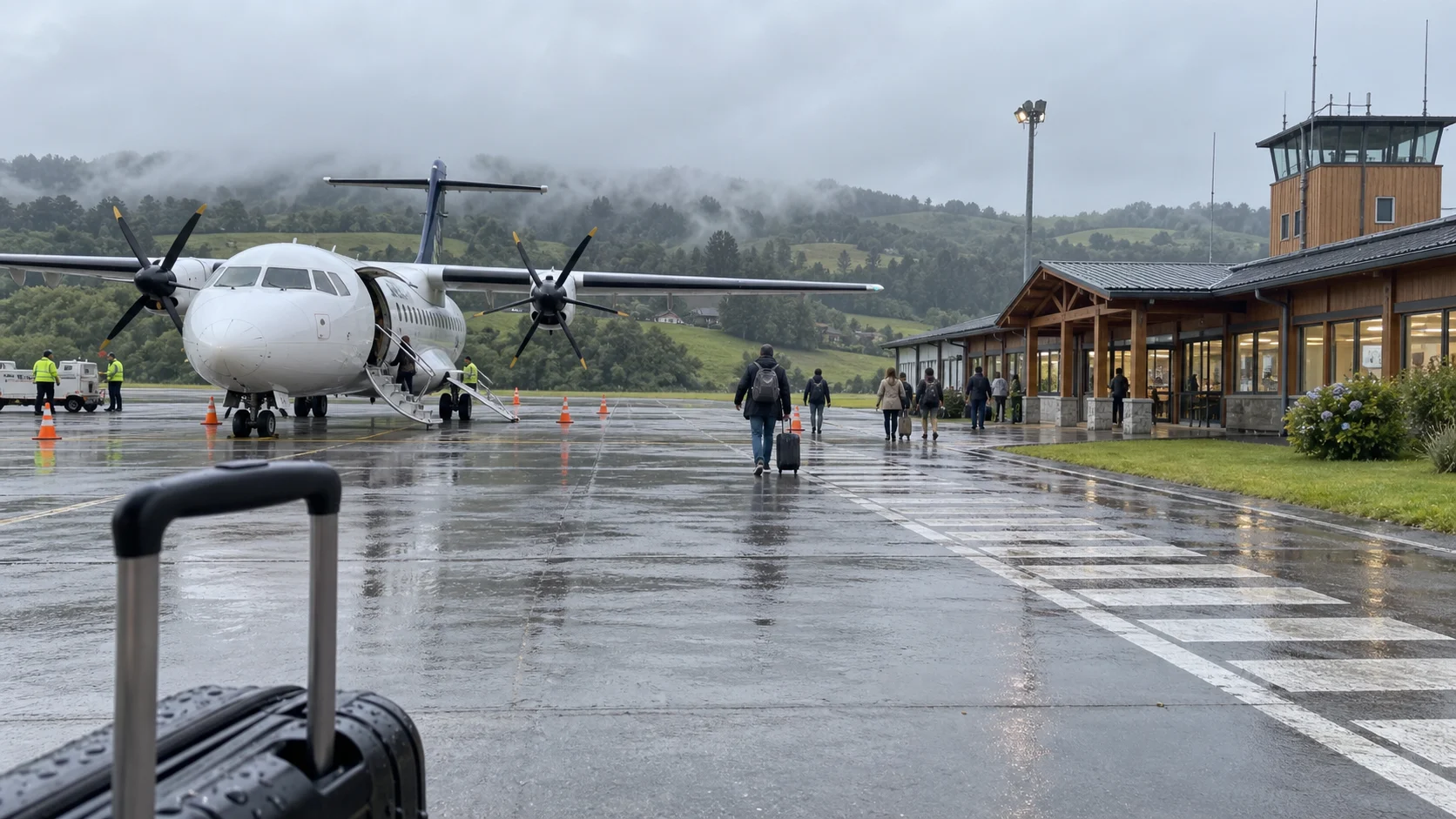
Fly to Mocopulli Airport
Mocopulli Aerodrome, airport code MHC, is on the island near Dalcahue. Chile’s civil aviation authority lists it as a public aerodrome, while the tourism authority describes direct Santiago service as the most direct air option.
Do not assume flights run at the same frequency every day or season. Search your exact date, compare it with flights to Puerto Montt’s PMC airport, and reserve a rental car or transfer only after the operating airline confirms the schedule.
Budget about 30 to 45 minutes from Mocopulli to central Castro in light traffic. If you land late, confirm the rental desk’s actual closing time and whether your lodging can receive you after dark.
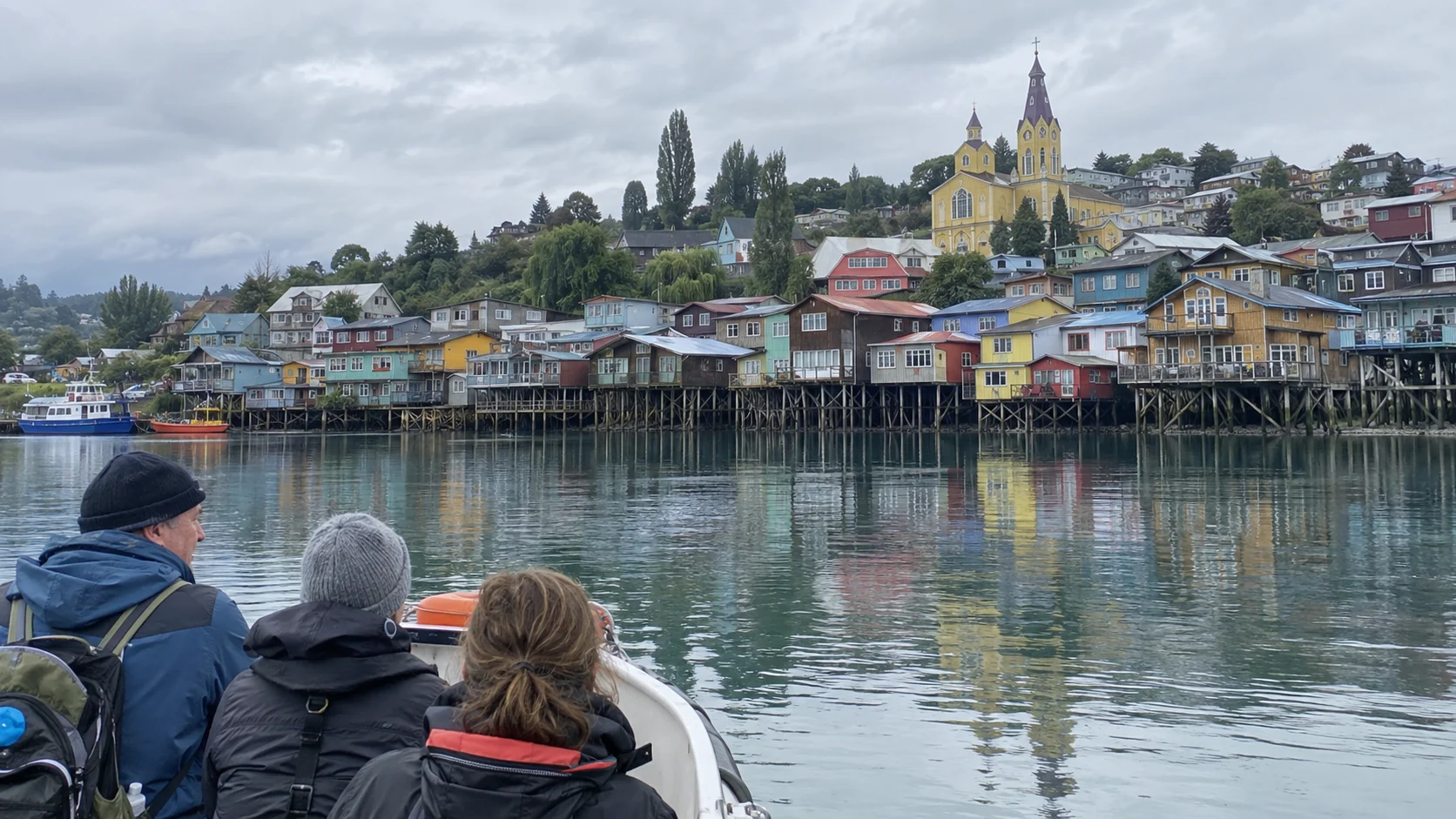
Arrive on a cruise ship
First, look at the exact port name on your itinerary. A Castro call places you on Chiloé, while Puerto Montt is on the mainland and still requires the drive to Pargua, ferry crossing, and substantial island mileage.
EMPORMONTT’s official infrastructure listing shows that Castro has a passenger terminal and international-passenger pontoon, but your ship may still use tender operations according to its size and the day’s conditions. Follow the cruise line’s final gangway and tender instructions, not an old port review.
A Castro port day can reasonably cover the city plus one compact nearby outing. A Puerto Montt call makes central Chiloé a long excursion with multiple failure points, so a ship-sponsored trip or a mainland alternative is usually the calmer choice.
If your itinerary is part of a longer regional voyage, compare its pace with these South America cruise route types. Chilean fjord scenery and a true Chiloé call are different experiences, even when both appear under the same broad itinerary label.
Chiloé Road Times That Matter
The main island looks compact on a regional map, but two-lane roads, rain, town traffic, ferries, and photo stops slow everything down. Use these as generous planning ranges, then check live navigation and local conditions on the morning you travel.
- Chacao to Ancud: about 30 to 45 minutes.
- Ancud to Castro: about 1 hour 15 minutes to 1 hour 40 minutes.
- Castro to Dalcahue: about 30 to 40 minutes.
- Castro to Cucao: about 1 hour 15 minutes to 1 hour 40 minutes.
- Castro to Quellón: about 1 hour 45 minutes to 2 hours 15 minutes.
Double the one-way figure before adding sightseeing, meals, parking, or ferry queues. That little calculation saves more Chiloé itineraries than squeezing in one extra viewpoint ever will.
Where to Stay on a First Trip
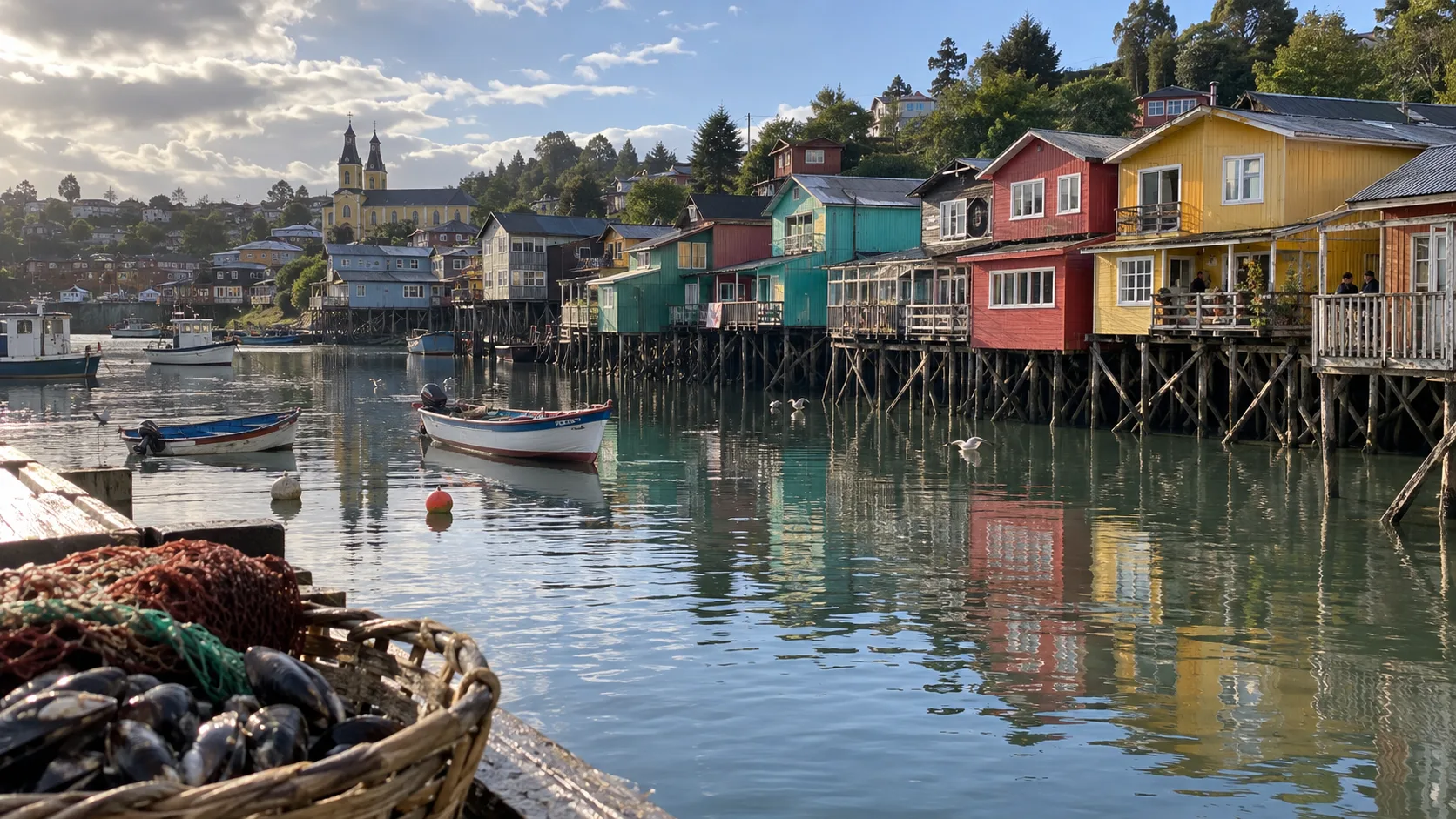
Castro for the best all-around base
Castro is the practical first choice because it sits near the island’s middle and has restaurants, services, the San Francisco Church, and views of the famous palafitos. It also reduces drive time to Dalcahue, Chonchi, and the western road toward Cucao.
Ask whether a palafito room faces the water or the road, whether stairs are required, and where a car can be parked. A beautiful stilt-house photo does not tell you anything about sound insulation, accessibility, or luggage handling.
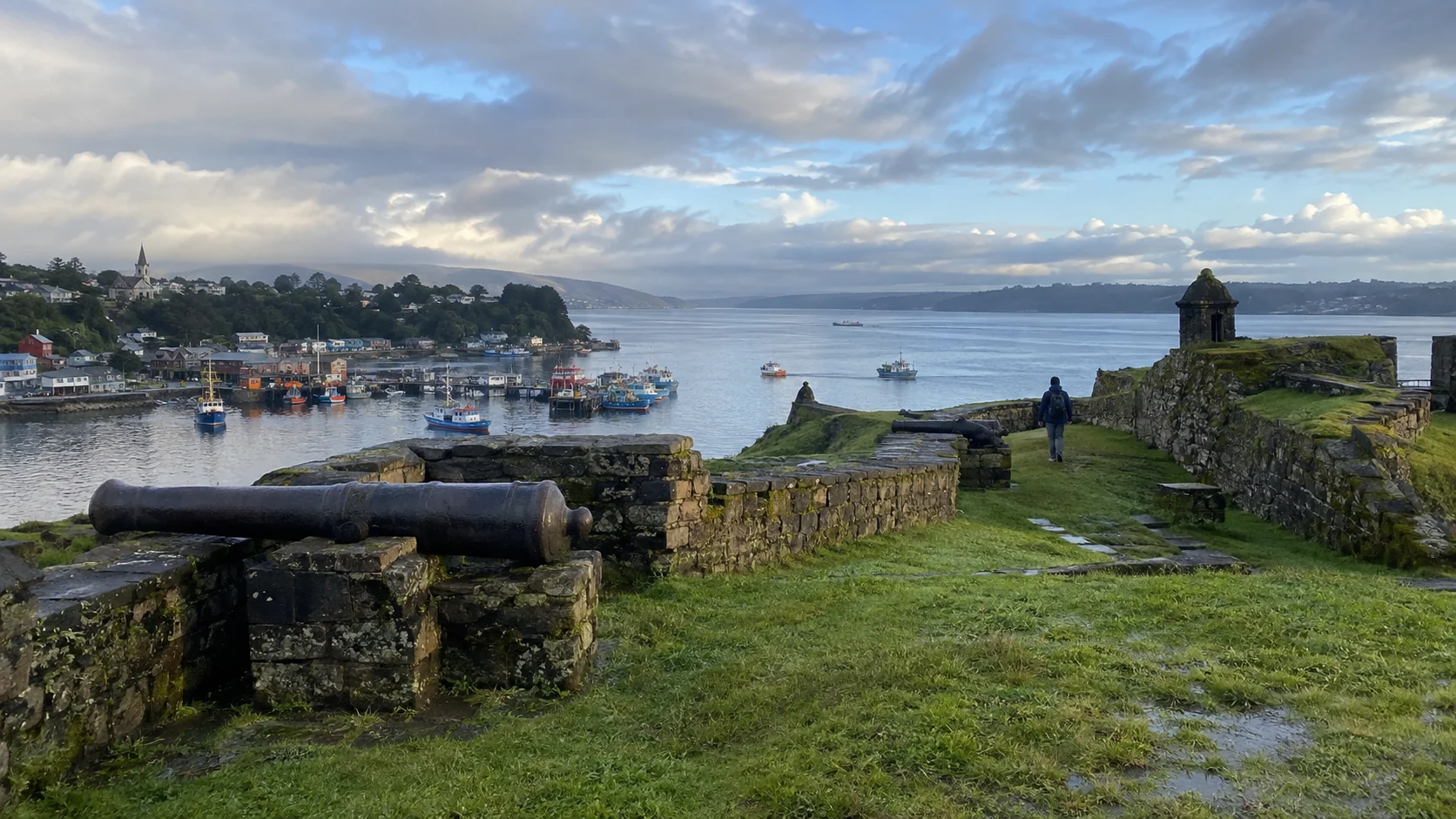
Ancud for a north-island focus
Ancud works well for the Chacao ferry, the northern coast, and excursions toward Puñihuil. It is also the sensible first or last overnight if you are driving to or from Puerto Montt and do not want to push to Castro after a delay.
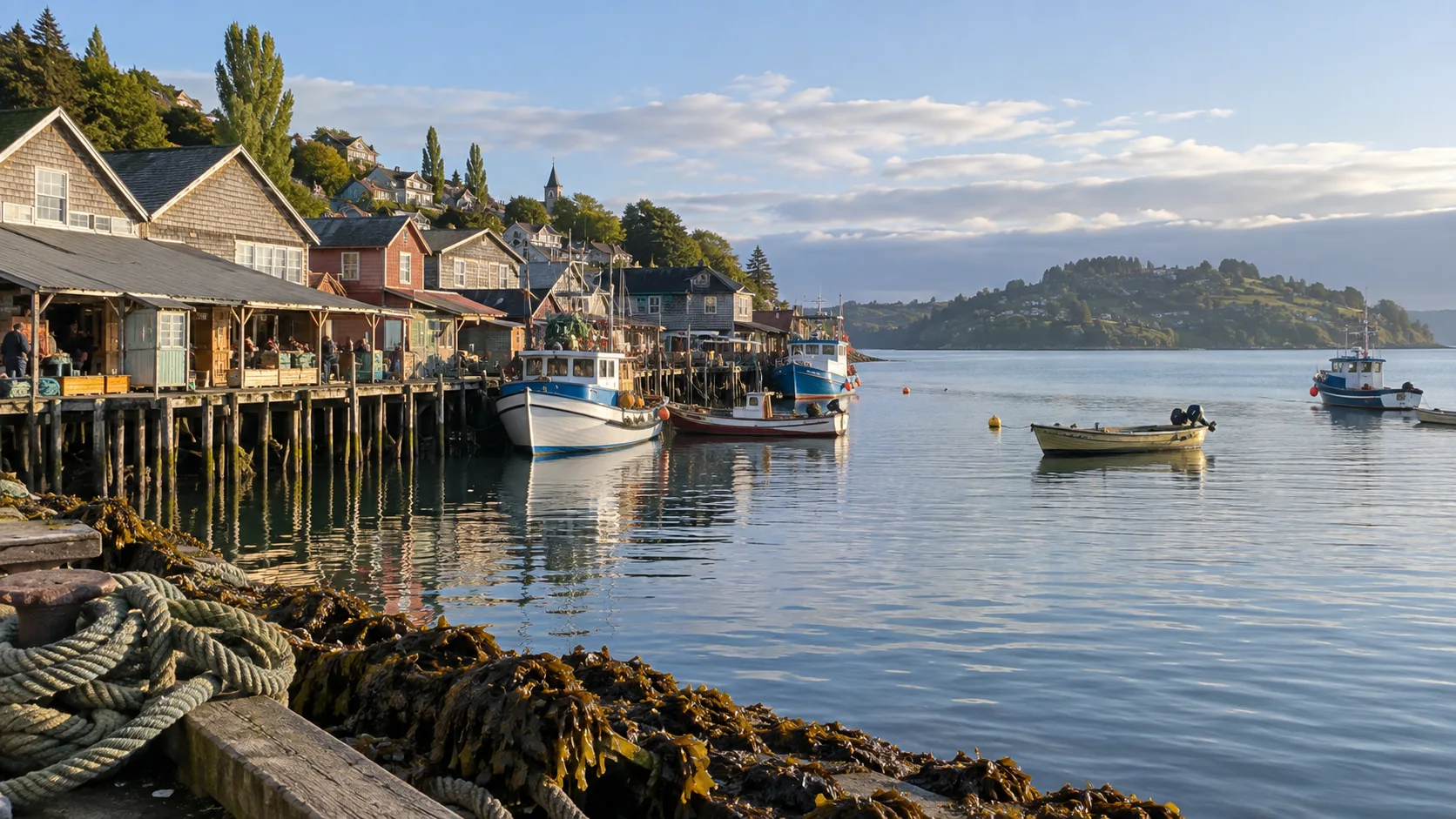
Dalcahue or Quinchao for a slower rhythm
Dalcahue is useful for crafts, food stalls, and the short local ferry toward Quinchao Island. Stay here when smaller towns and church architecture matter more than nightlife or the widest restaurant choice.
Quellón is a strategic southern base, not a must for every first visit. Add it for onward ferry logistics, southern communities, or a specific nature plan, and confirm transport before committing the night.
Two Castro stays to compare
For a couple, I’d start with Palafito 1326 in the Gamboa neighborhood, where heated rooms, balconies, and breakfast at shared tables suit a slower waterfront stay. There are no room TVs, which appeals to me for this trip, but I’d confirm the exact view and stair access before booking.
For friends or a family, I’d compare Palafito Hostel, also in Gamboa, because its room selection includes bunk-bed arrangements with private bathrooms and heating. Choose the room layout rather than assuming the word hostel means a dorm or that every room faces the water.
Both let you experience a working palafito neighborhood, but neither removes Castro’s hills or guarantees a step-free route. If mobility is the deciding factor, get photos of the entrance, room access, and bathroom before choosing between them.
A Realistic Four-Day Chiloé Itinerary
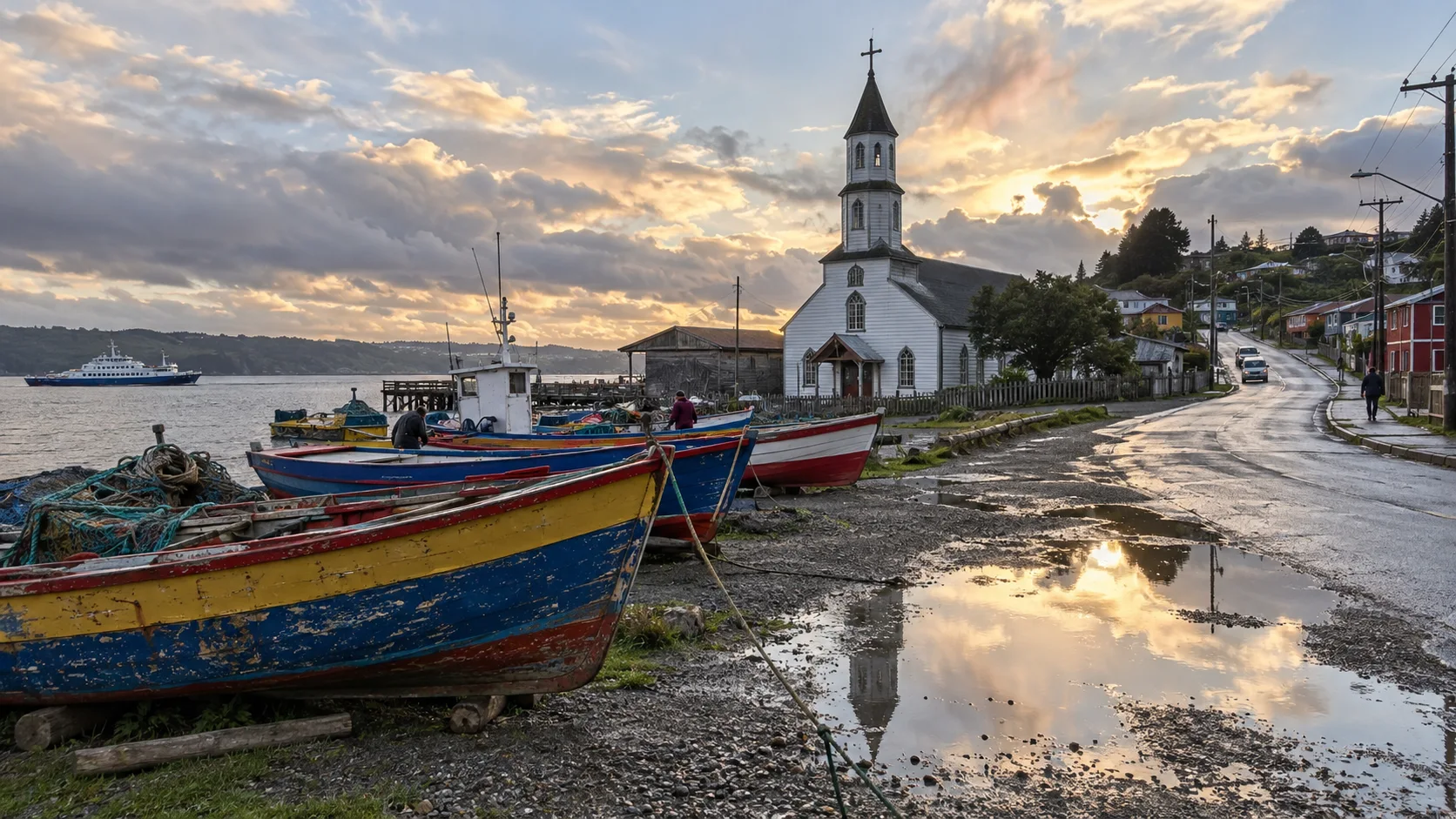
Day 1: Chacao and Ancud
Cross early, pause in Chacao, and continue to Ancud for a low-pressure orientation day. Choose a museum, fort area, market, or waterfront walk according to current hours rather than trying to stack all four.
If wildlife is your priority, investigate a licensed Puñihuil outing for your exact season. Boats, sea conditions, and wildlife activity vary, so no responsible operator can guarantee a specific penguin sighting.
My actual Ancud stop would be Fuerte San Antonio, for cannons, coastal views, and a clear introduction to the island’s colonial history. Allow about 45 minutes for an unhurried look and skip the exposed grounds in driving rain or strong wind.
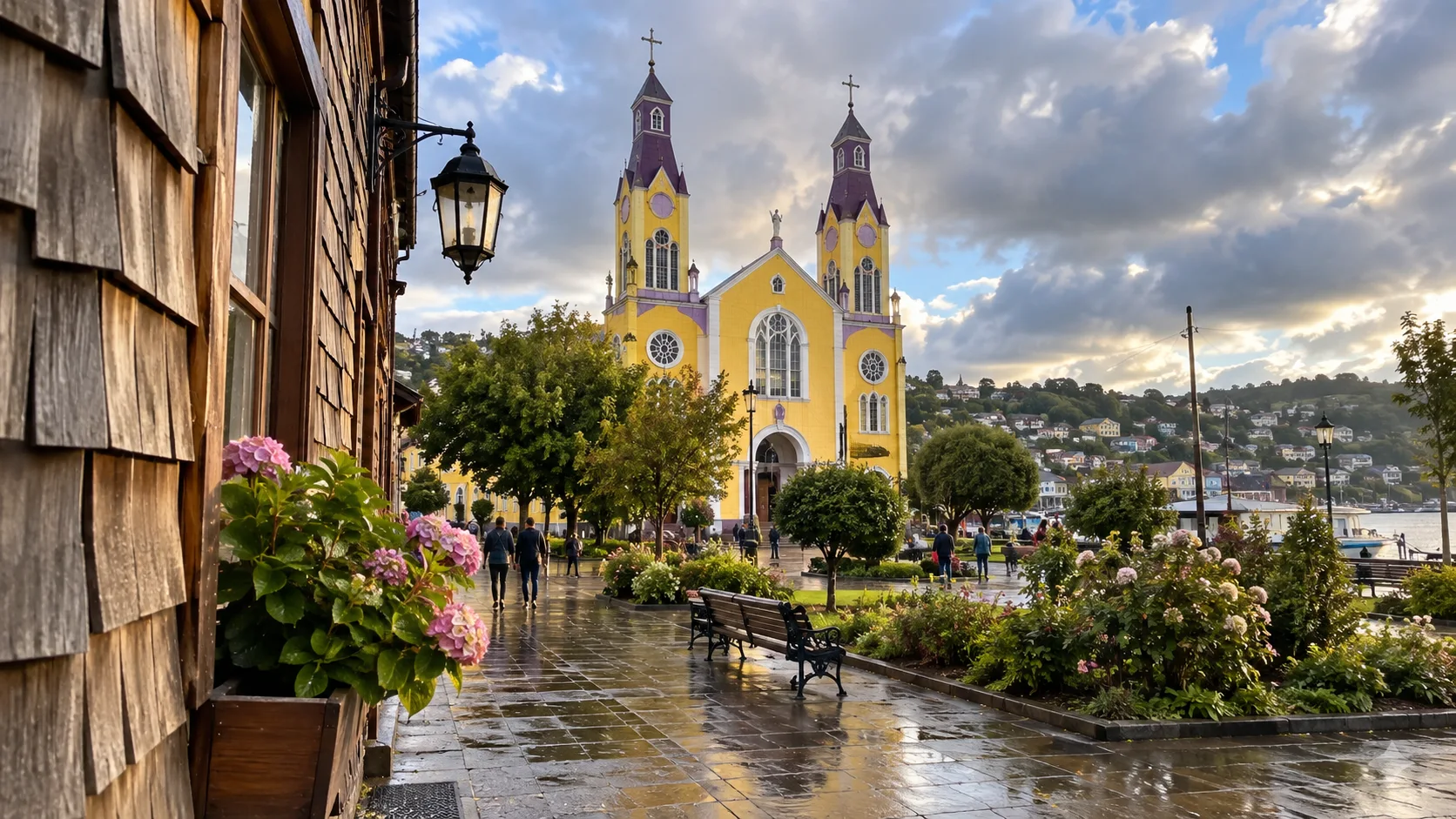
Day 2: Castro and nearby churches
Begin with Castro’s San Francisco Church, waterfront viewpoints, and palafito neighborhoods. Then add one nearby heritage church, such as Nercón or Chonchi, if access and road conditions cooperate.
Castro’s palafitos are homes, lodgings, and businesses rather than a staged attraction. Photograph from public viewpoints, avoid aiming cameras into private rooms, and keep drones grounded unless you have confirmed every applicable rule and permission.
For this day I’d choose Nercón after San Francisco, keeping Chonchi for the Cucao outing only if there is spare time. End back in Gamboa with dinner at La Terraza 1326, whose glassed-in third-floor setting makes a good weatherproof waterfront meal; check stair access if that climb would be difficult.
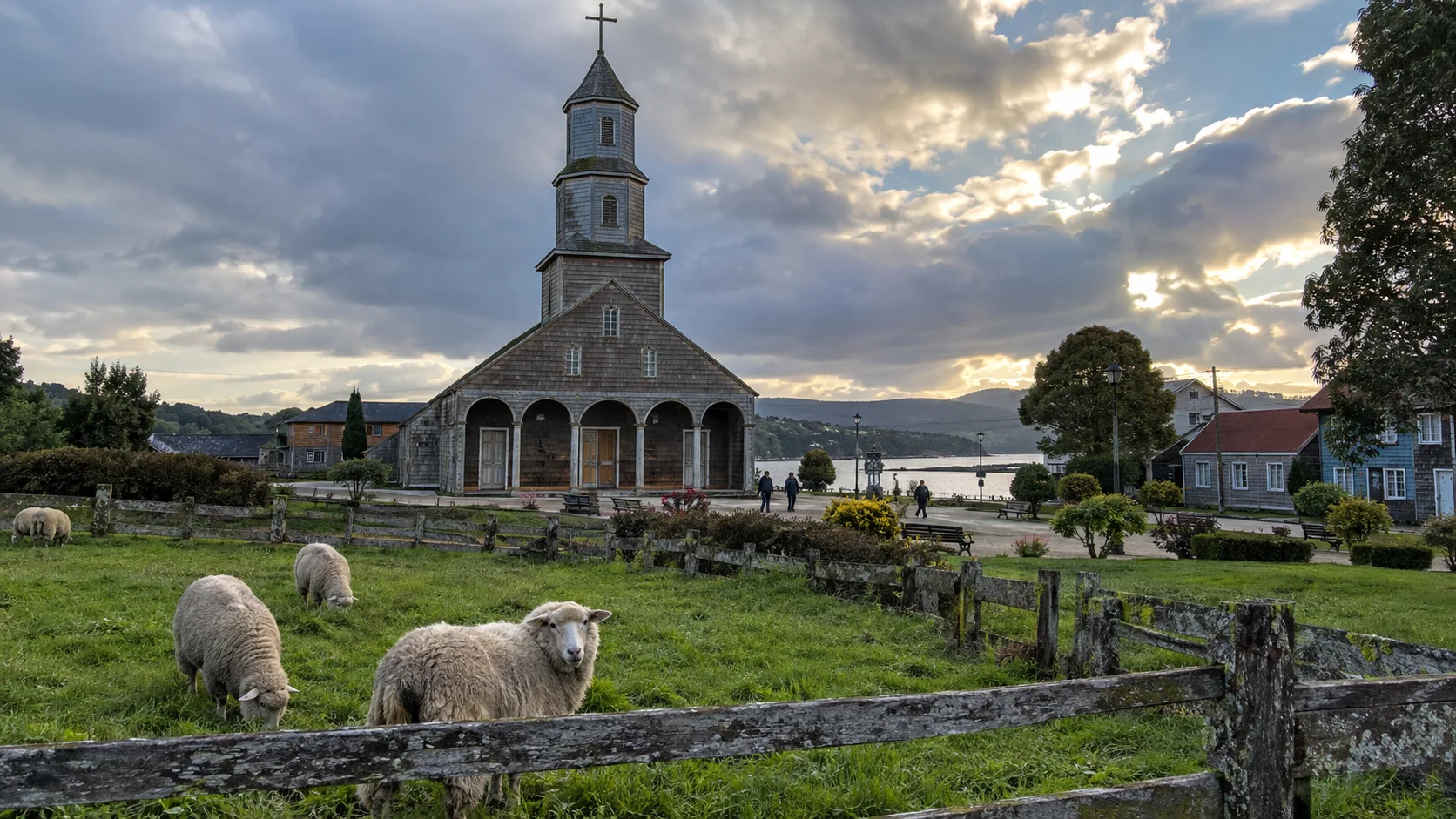
Day 3: Dalcahue and Quinchao Island
Drive to Dalcahue, then use the local vehicle ferry if your plan includes Achao or Curaco de Vélez. Ask about the last practical return crossing and keep enough time for a line, since a tiny map distance can still hide a transport bottleneck.
Visit Dalcahue’s church and waterfront food area first, then cross for the church and seafront in Achao. Skip the extra Curaco de Vélez stop if ferry lines are long, leaving time to enjoy Achao instead of turning Quinchao into a drive-through.
Day 4: Cucao and Chiloé National Park
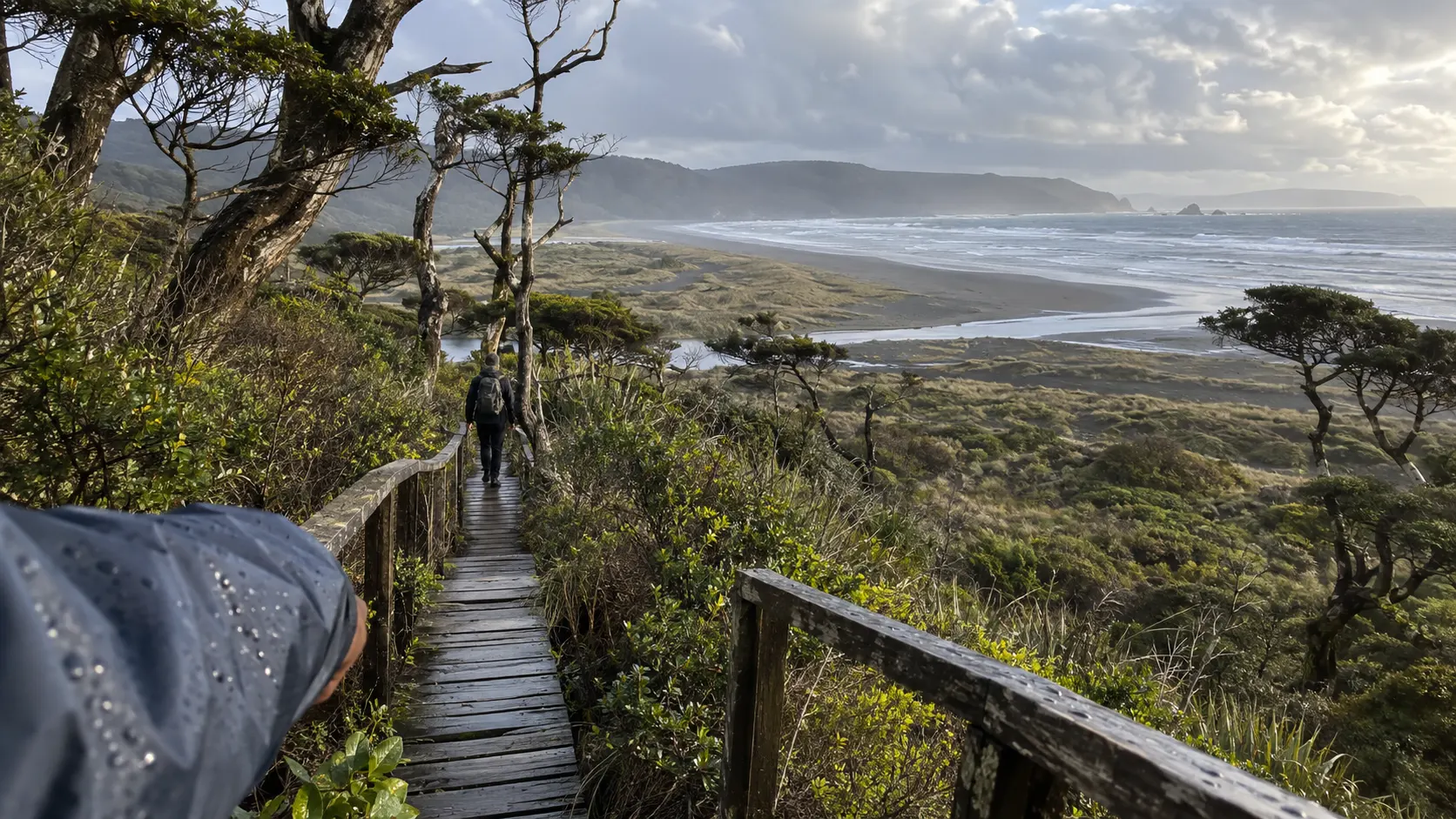
Head west through Huillinco toward Cucao for forest, dunes, and the Pacific edge. The road itself deserves time, particularly when rain or low clouds change visibility.
CONAF directs visitors to its official Chiloé National Park page and Pases Parques for current hours and conditions. Check before driving out, because trail access, tickets, and weather-related restrictions are operational details, not permanent facts.
Carry your own water, waterproof layer, and shoes with dependable tread. Boardwalks and roots can be slick, and Pacific surf deserves a wide margin even when the beach looks calm.
At Cucao, my first walk would be El Tepual, a short interpretive forest route near the Chanquín-Cucao visitor area, roughly half a mile long. Allow about an hour for a slow look at the twisted tepú trees, moss, and boardwalks, with extra time for photographs rather than treating the distance as a fitness target.
CONAF describes recent boardwalk and muddy-trail improvements, but short does not automatically mean wheelchair-accessible or slip-proof. Ask rangers about the current surface and choose the visitor area instead if wet footing or steps exceed your comfort.
My optional detour is a pause at Lake Huillinco on the drive back, following the same general corridor in Chile Travel’s Cucao itinerary. Skip a last-minute Muelle de las Almas addition on this day, since extra driving and a separate walk can erase the relaxed pace.
The UNESCO Churches Without the Confusion
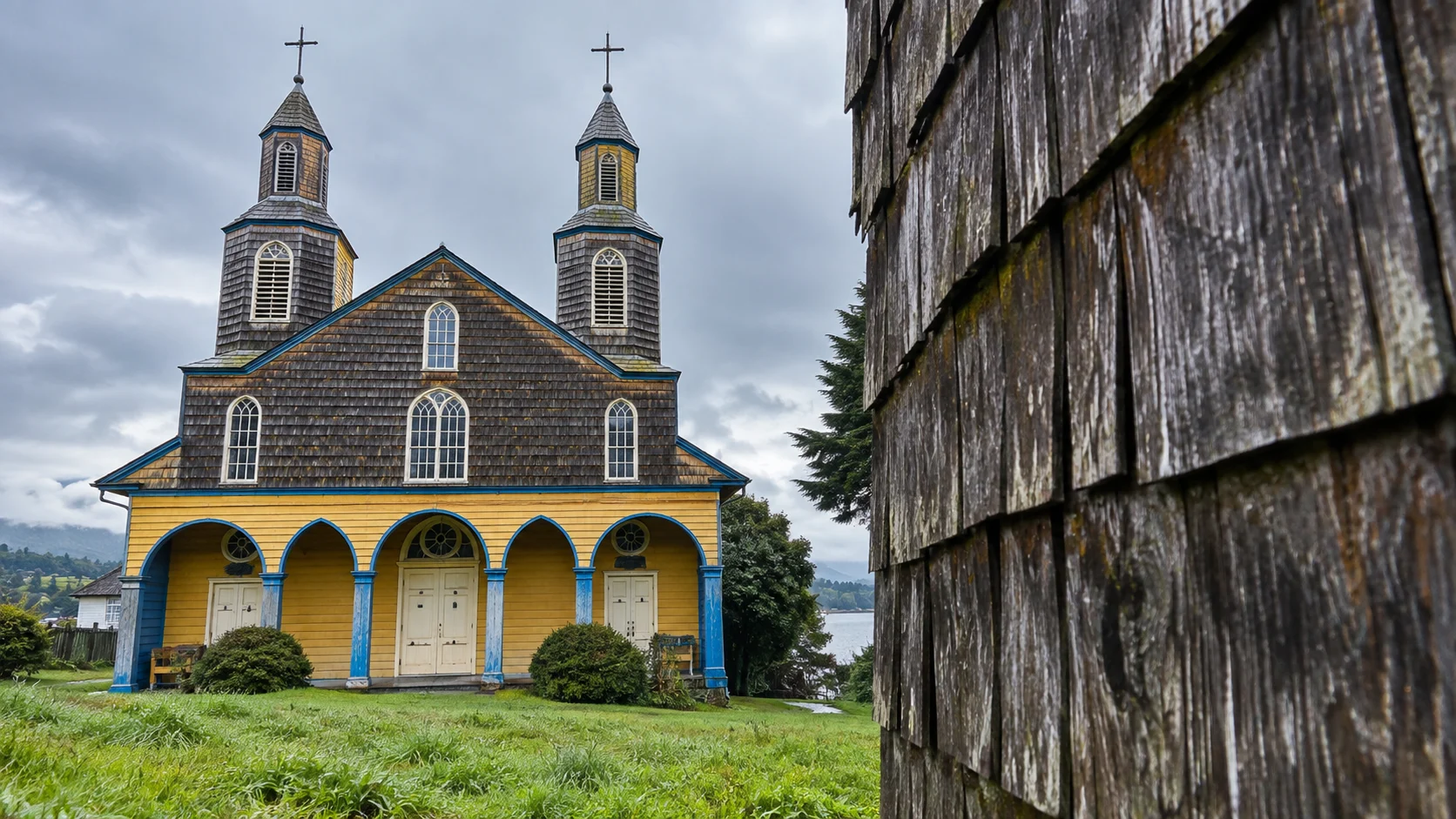
The UNESCO property is a specific group of 16 wooden churches, not every historic church in the archipelago. The UNESCO World Heritage listing describes a serial property representing a distinctive local wooden architectural tradition shaped by European and Indigenous influences.
Useful first-trip clusters include Castro with Nercón, the Dalcahue area with Quinchao crossings, and the northern island around Ancud. The churches at Castro, Achao, Dalcahue, Chonchi, Nercón, and smaller communities can be combined only if you respect road and ferry time.
These remain religious and community spaces. Dress with ordinary respect, lower your voice, never interrupt worship, and accept that a locked door or service may change your sightseeing plan.
Carry small Chilean-peso notes for donations or modest local purchases, but verify whether a site charges admission. Hours posted by an old blog or map listing are not reliable enough for a tight itinerary.
What to Eat and How to Order Well
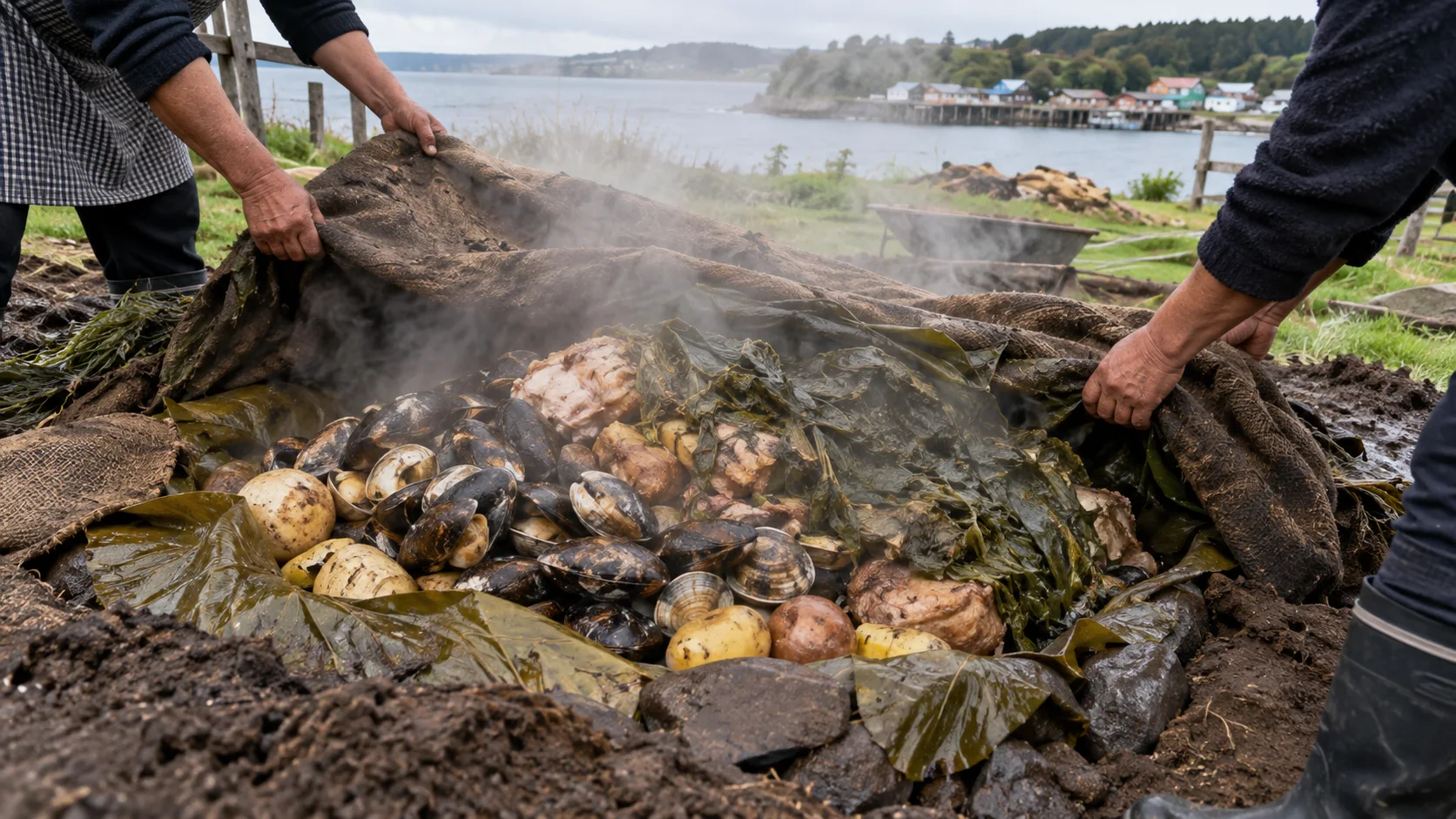
Curanto is Chiloé’s signature communal preparation, traditionally combining shellfish, meat, potatoes, and dumpling-like accompaniments. Some restaurants serve a pot version, while scheduled traditional preparations may require advance booking and a minimum group.
Seafood, potato dishes, smoked products, and local pastries also deserve room. Ask what was prepared that day, whether shellfish is cooked, and what ingredients are used if you have allergies or dietary restrictions.
Vegetarians should not assume a vegetable-looking side is meat-free, because stocks and cooking methods vary. A clear Spanish phrase saved offline is more useful than hoping every rural stop has an English menu.
Where to plan a curanto meal
For a meal built around curanto, put Quimey Restaurant Chilote in Aucho, Quemchi on a north-coast detour rather than trying to squeeze it into your Cucao day. The restaurant advertises pot-cooked curanto and scheduled earth-oven meals, so reserve the specific version you want before making the drive.
Choose a confirmed earth-oven sitting if seeing the cooking process matters, and pot-cooked curanto when the meal itself is the priority. This is a substantial seafood-and-meat dish, so discuss shellfish allergies and portion sizes directly instead of assuming it works as a small snack between stops.
For the easier Castro evening, choose La Terraza 1326 and order from its current bistro menu rather than assuming curanto is always available there. That gives you one special food outing and one convenient dinner without spending both days chasing a dish.
Best Time to Visit Chiloé
December through February
Southern summer brings the longest daylight and the easiest conditions for a multi-stop road trip. It also brings higher demand, busier ferries, and no guarantee of dry weather.
March through April
Early fall can feel calmer while retaining usable touring days. Shortening daylight and increasingly changeable weather mean your itinerary should have fewer fixed outdoor commitments.
May through August
Winter suits travelers who genuinely enjoy quiet towns, rain, indoor meals, and a slower pace. Expect shorter days, wet roads, reduced seasonal services, and a greater need to confirm every ferry, tour, museum, and restaurant.
September through November
Spring offers lengthening days and a gradual return of seasonal activity, but wind and rain can still interrupt plans. Pack for cold, damp conditions even if the forecast shows a bright afternoon.
If you are matching Chiloé to a voyage, the broader advice on when to cruise by region helps explain why itinerary availability and land weather do not always peak at exactly the same moment.
Driving, Ferry, and Rental-Car Judgment
A small rental car is adequate for the main paved routes, but confirm that the contract permits every secondary road and inter-island ferry you plan to use. Photograph existing damage, tires, fuel level, and the spare-tire area before departure.
Keep the tank above half once you leave the larger towns, and download offline maps. Cell service can weaken outside populated corridors, and a digital route is not a substitute for a full-size road sign or a local closure notice.
Avoid building a night drive into your plan. Rain, low visibility, pedestrians, animals, and unfamiliar curves make a daylight arrival worth protecting.
For a longer self-drive trip, use the same buffer-first logic in these travel saving strategies: pay for the nights that reduce risk, then cut costs from flexible meals and optional extras rather than from your only ferry margin.
Entry rules and safety for U.S. travelers
The U.S. State Department currently lists Chile at Level 2, Exercise Increased Caution, due to crime, unrest, and health. Its Chile travel page specifically notes that strikes can cause significant delays to remote areas including Chiloé, which is one more reason to keep ferry and flight plans flexible.
U.S. tourists generally do not need a tourist visa for stays of 90 days or less, but passport condition and entry decisions belong to Chilean authorities. Recheck the State Department, Chilean consular guidance, your airline, and your cruise line shortly before travel.
Keep original documents secure, carry a copy separately, and do not leave luggage visible in a parked car. In markets and terminals, use the same close-control habits you would use in any busy transport hub.
Avoid demonstrations, follow local instructions, and leave room for strikes or weather disruptions. Travel insurance is most useful when you understand its delay, missed-connection, rental-car, and medical exclusions before paying.
What to Pack for Chiloé
- A breathable waterproof shell with a hood
- A warm mid-layer, even in summer
- Water-resistant walking shoes with good grip
- A compact dry bag or waterproof pouch for electronics
- Offline maps, a car charger, and a backup battery
- Chilean pesos in small denominations
- Motion-sickness medication if ferries or tenders affect you
Pack for repeated transitions between drizzle, wind, indoor heat, and bright breaks in the clouds. The goal is adjustable layers, not one enormous coat that becomes awkward after ten minutes inside a café.
Cruise travelers can adapt the document pouch, rain shell, and day-bag sections of this cruise essentials checklist. Keep medication and your ship card on your body rather than in a bag left on a tour vehicle.
Chiloé Island FAQs
Can I visit Chiloé as a day trip from Puerto Montt?
You can reach northern Chiloé, but a casual day trip to Castro creates a long transport day with a ferry in both directions. Cruise passengers should use a ship-protected option or choose a closer mainland excursion unless their port call and operator provide a very large return buffer.
Do I need a car?
No, but a car makes a short visit much easier because the attractions are dispersed. Without one, base in Castro or Ancud, use intercity buses for town-to-town moves, and book specific excursions rather than improvising remote connections.
How many days are enough?
Three nights cover a focused first look, while four or five nights allow Castro, the north, Quinchao, and the west coast without constant rushing. Add more time for southern Chiloé, smaller islands, hiking, or onward ferries.
Is Chiloé accessible for travelers with limited mobility?
Some central promenades and viewpoints are manageable, but steep streets, steps, uneven church entries, wet paths, boats, and palafito buildings can create barriers. Ask each hotel and operator about step-free entry, bathroom layout, vehicle height, tender boarding, and actual walking distance.
What is the biggest planning mistake?
Underestimating transfer time is the classic one. Build each day around one area, verify ferries and opening hours that morning, and let Chiloé feel spacious instead of turning it into a race across a wet map.