Trujillo, Peru Attractions: 9 Best Stops and Itineraries
Trujillo rewards travelers who plan by geography, not by the length of an attraction list. Ancient Moche temples sit south of town, the Chimú capital and Huanchaco lie west, El Brujo is a separate northern outing, and the colonial center deserves more than a drive-by photograph.
Choose the right Trujillo plan
With one day, choose one archaeological cluster plus the historic center or coast. With two days, pair Huacas de Moche with downtown, then Chan Chan with Huanchaco; a third day makes El Brujo realistic without turning vacation into competitive van sitting.
- Best essential site: Chan Chan and its site museum.
- Best preserved wall art: Huaca de la Luna at Huacas de Moche.
- Best easy city walk: Plaza de Armas and the historic center.
- Best coast-and-culture stop: Huanchaco.
- Best dedicated day trip: El Brujo and Museo Cao.
- Best plan for a short cruise call: One guided archaeology circuit with a firm return buffer.
Opening areas, guided-entry practices, admission, and road conditions can change, particularly at active archaeological sites. Confirm details with the attraction shortly before visiting, and ask exactly which temple, museum, or palace sector the quoted ticket includes.
1. Understand Chan Chan at the museum first
Chan Chan was the capital of the Chimú kingdom, and UNESCO describes its monumental core as nine large rectangular complexes enclosed by thick earthen walls. Its scale is the point, but the giant map in your imagination will make more sense after the site museum explains the region’s cultures, irrigation, and urban development.
The Ministry of Culture’s Chan Chan Site Museum listing posts the current address and visitor schedule. Check whether the museum and archaeological circuit share the same hours and ticket on your date rather than assuming one open gate unlocks the whole ancient city.
Allow time for both museum context and the designated visitor sector. Chan Chan is not a free-range ruin where visitors wander among fragile adobe walls, so use signed routes and follow staff instructions.
2. Walk the designated palace circuit at Chan Chan
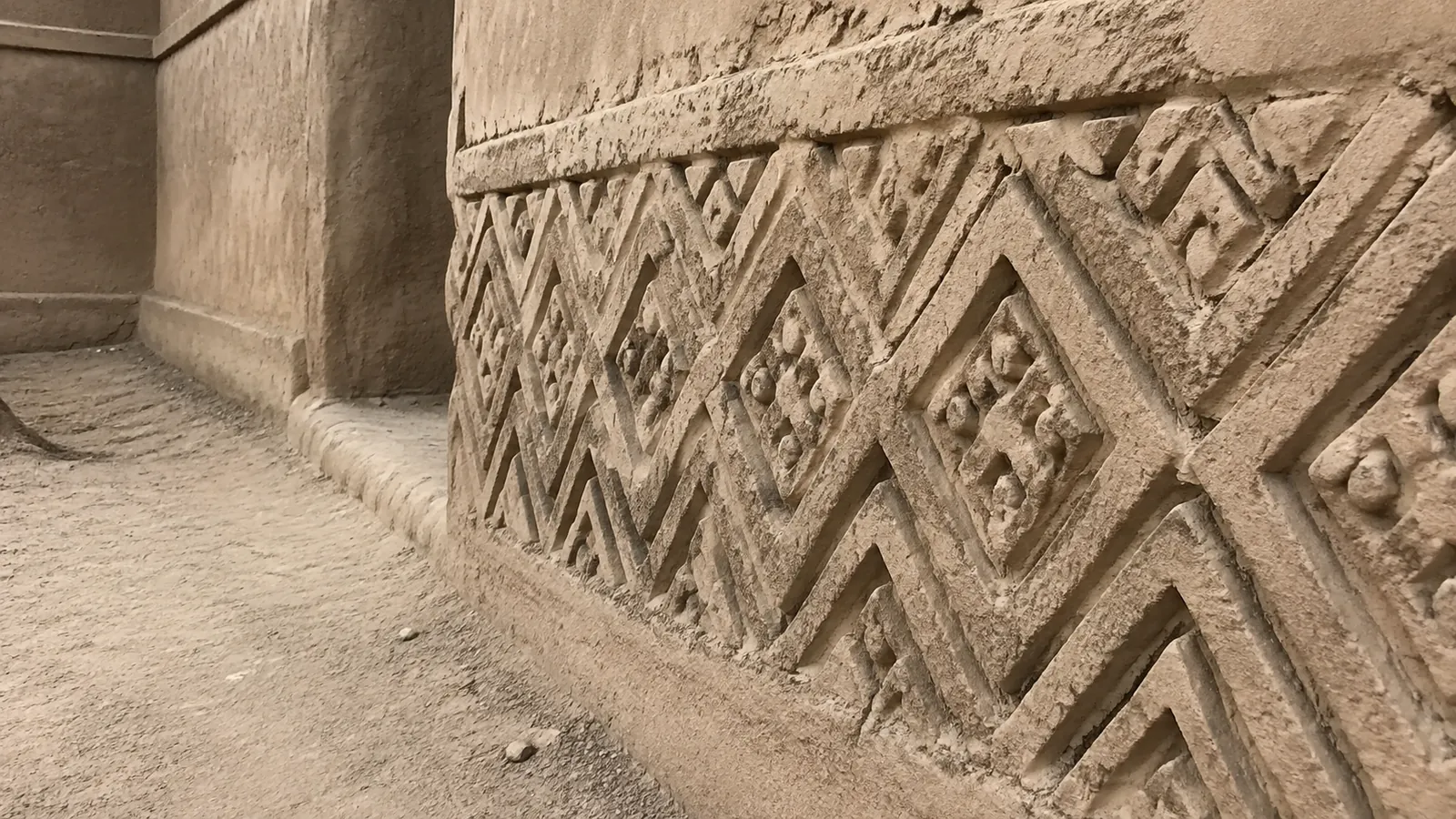
The visitor route commonly focuses on one restored palace complex, where courtyards, ceremonial spaces, storerooms, ramps, and relief patterns reveal how the city functioned. A knowledgeable guide can translate repeating fish, bird, wave, and net motifs into something more useful than “lovely wall, next wall.”
Chan Chan joined the World Heritage List and the List of World Heritage in Danger in 1986, reflecting the vulnerability of its earthen architecture. The UNESCO Chan Chan profile explains both its cultural importance and conservation context.
Bring water, a brimmed hat, sunscreen, and shoes that handle dust and uneven ground. Cloud cover can make the coastal light feel gentle while exposed archaeological routes quietly continue being outdoors.
How I would pair the museum and Nik An
The designated visitor palace is Conjunto Amurallado Nik An, the name used in the official tourism inventory for Chan Chan. Older guides may call it Tschudi, so ask for Nik An when arranging the tour instead of assuming all of the vast adobe city is open.
I would allow 45 to 60 minutes at the Chan Chan site museum, then 75 to 90 minutes on the authorized palace circuit. The museum and palace entrance are separate stops, so keep your driver for the short road transfer and agree on pickup at the palace before walking inside.
The museum’s published schedule is Tuesday through Sunday, so confirm its opening if your visit falls on Monday or a holiday. The linked inventory describes a combined ticket, but ask which included monuments are actually open that day because conservation work can limit access.
Inside Nik An, look for fish, seabirds, wave-like patterns, and net-like reliefs, which make the Chimú connection to the Pacific much easier to picture. I would spend time on those repeated details with a guide rather than rush toward the next bare courtyard, keeping hands and bags away from fragile surfaces.
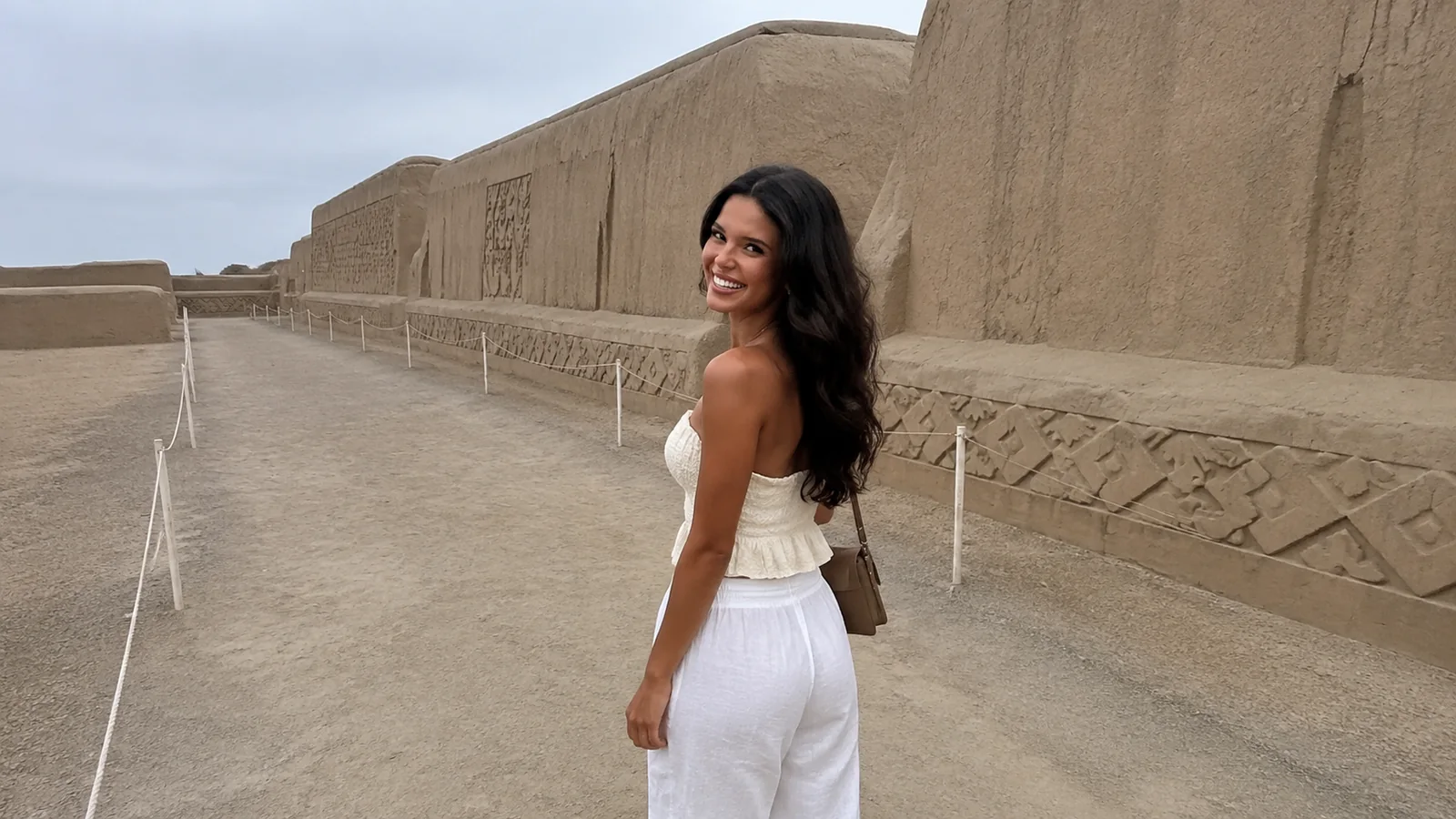
3. See Moche murals at Huaca de la Luna
Huacas de Moche represents a different civilization and visual language from Chan Chan, which is exactly why both belong in a two-day plan. The complex includes Huaca de la Luna, Huaca del Sol, the ancient urban area between them, and an on-site museum, although public access is not identical across every structure.
Huaca de la Luna is the usual visitor focus because excavated temple layers preserve painted reliefs and ceremonial imagery. The official Huacas de Moche project provides current visitor information and archaeological context from the research organization.
Do not skip the Museo Santiago Uceda Castillo if it is open during your visit. Its finds give the architecture human scale, and the official museum page says the collection comes from decades of investigation at the complex.
4. Walk from Plaza de Armas through the historic center
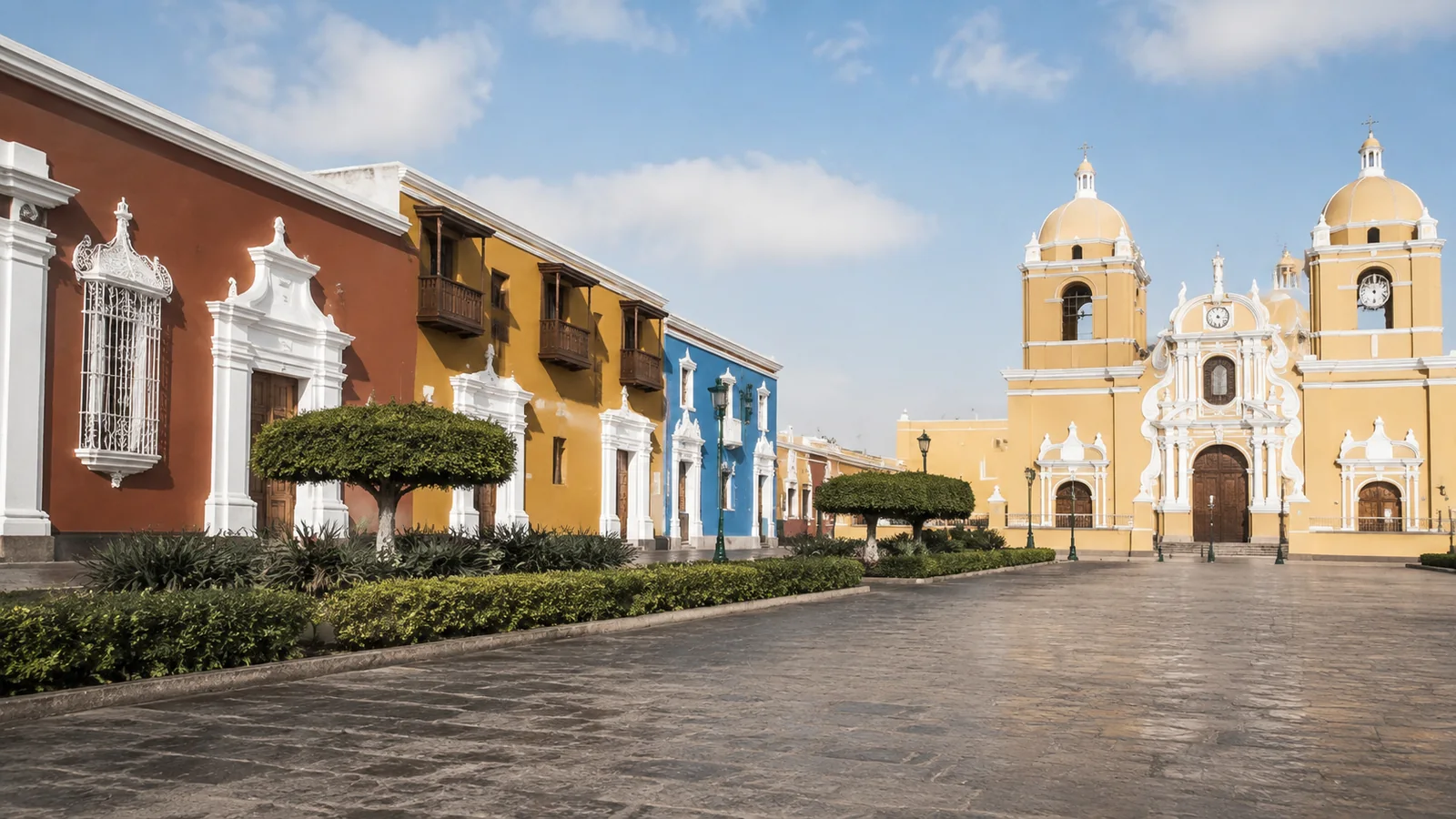
Trujillo’s central square is the simplest place to understand the Spanish colonial and republican city. The cathedral, municipal buildings, colorful facades, carved balconies, churches, and historic houses form a compact walking area that contrasts sharply with the earthen sites outside town.
Begin at the Monument to Liberty in the plaza, then choose two interiors instead of collecting closed doorways like disappointing souvenirs.
Church and museum schedules may pause around services, lunch, restoration, or events. Dress respectfully for active religious spaces, ask before photographing people or interiors, and keep valuables unobtrusive in busy streets.
5. Enter the cathedral and one historic house
The Cathedral Basilica of Trujillo anchors the square and remains an active place of worship rather than a stage set. When public access is available outside services, look for its altars, religious art, and the relationship between the church and the plaza.
Pair it with a historic residence such as Casa Urquiaga, also called Casa Calonge, or another house that is confirmed open that day. Interiors, courtyards, ironwork, and period rooms add detail that a facade-only city walk cannot provide.
Operating arrangements for these buildings are less predictable than a public square, so keep a substitute nearby. The cathedral museum, Casa de la Emancipación, an archaeology museum, or a longer cafe stop can rescue the hour without a dramatic negotiation with a locked door.
6. Give Huanchaco more than a lunch stop
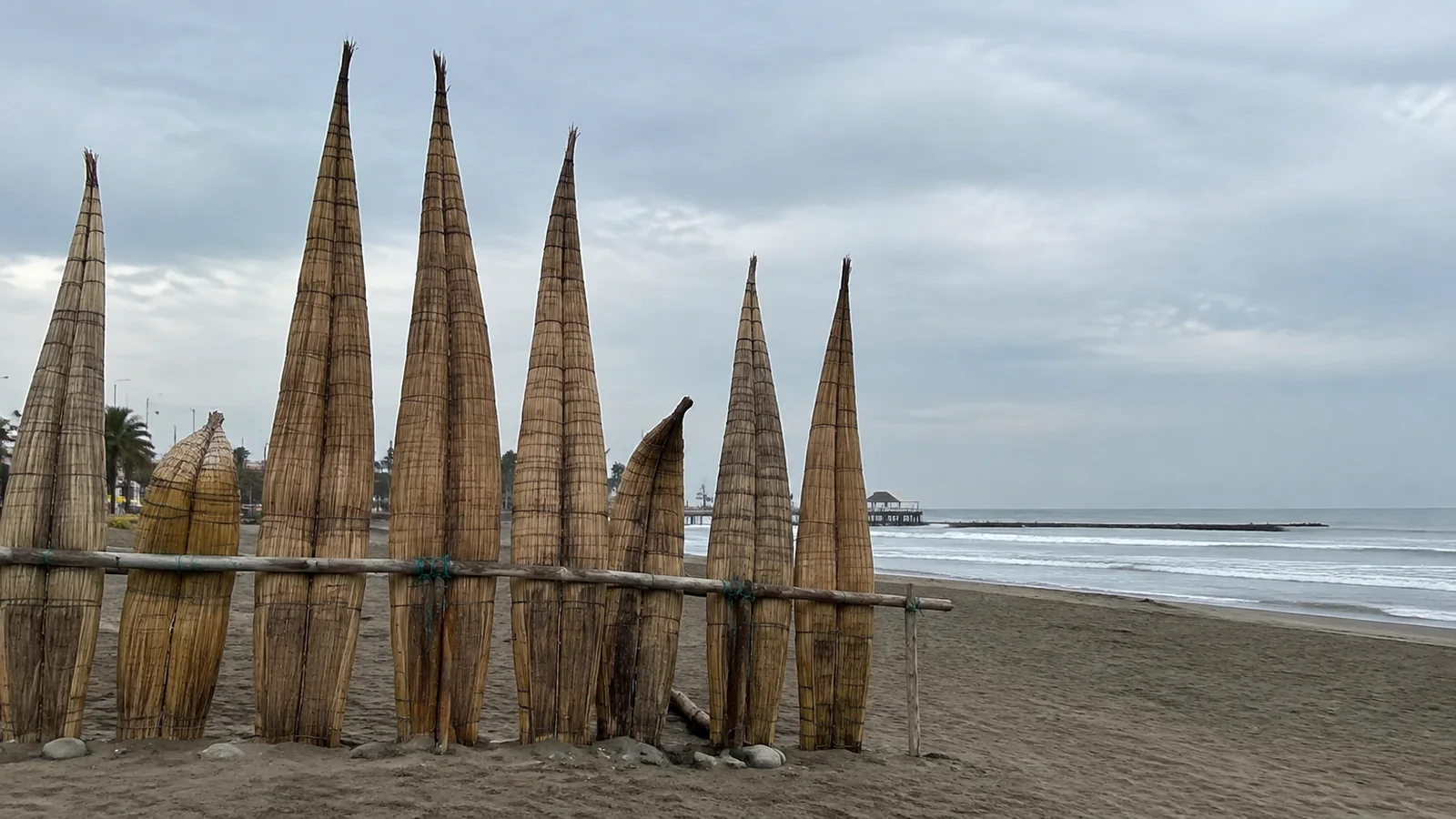
Huanchaco is a coastal district associated with fishing, surfing, seafood, and caballitos de totora, the narrow reed watercraft still visible along the shore. PROMPERÚ also maintains an official iPerú tourist-information office in Huanchaco, a useful place to ask about current conditions and registered services.
Walk the waterfront, watch the watercraft from a respectful distance, and choose a restaurant with clear prices and good food-handling cues. If you surf, book an established operator, match the break to your ability, and ask about currents, equipment, and instructor qualifications before entering the water.
Swimming conditions are not guaranteed simply because the Pacific looks photogenic. Treat lifeguard flags, local warnings, swell, water quality notices, and weather as the decision-makers, with your vacation fantasy serving in a nonvoting capacity.
7. Make El Brujo and Museo Cao a separate outing
El Brujo lies beyond the easy Chan Chan and Huanchaco pairing, so it deserves a half-day or longer with dedicated transport. The complex spans a long sequence of occupation and includes Huaca Cao Viejo, other archaeological sectors, and Museo Cao.
The museum displays the Lady of Cao and objects from her richly furnished burial, providing an unusually focused look at an elite Moche woman. The official El Brujo visitor page posts current hours, admission, and closure dates, so verify it before making the drive.
Combine the site with Magdalena de Cao only if transport timing allows. A driver or organized excursion is usually simpler than stitching together local vehicles, especially if your Spanish is limited or you must return to a ship.
8. Add Huaca Arco Iris only when access is confirmed
Huaca Arco Iris, also called Huaca del Dragón, is a compact Chimú temple north of central Trujillo with restored relief decoration. It can complement Chan Chan for travelers especially interested in Chimú art, but it should be an optional stop rather than the hinge of a short itinerary.
Confirm that the site is open to visitors, ask about the ticket, and arrange transport that waits or has a clear pickup plan. Smaller sites may have fewer visitor services, less English interpretation, and more changeable access than the headline complexes.
9. Use a museum for the details archaeology tours rush past
Trujillo’s archaeology collections can help organize thousands of years of north-coast history after the names Moche, Chimú, Cupisnique, and Inca begin competing in your notebook. Check the Universidad Nacional de Trujillo archaeology museum or another established collection for current hours and language support.
A museum is also the sensible weather or energy backup because major sites involve walking, sun, dust, and stairs or ramps. Families may get more from one focused gallery than a third ruin where every adult insists the children are “almost done.”
Realistic Trujillo itineraries
One day from a hotel in Trujillo
Start at Huacas de Moche and its museum, return for lunch, then walk the Plaza de Armas and two confirmed historic interiors. This plan minimizes cross-city zigzagging and leaves Chan Chan for a day when it can be paired naturally with Huanchaco.
Two days in Trujillo
Use the first-day route above, then spend day two at the Chan Chan museum and visitor circuit before continuing to Huanchaco. Keep enough time for the coast rather than arriving as restaurants close and the light disappears.
Three days in Trujillo
Add El Brujo and Magdalena de Cao as day three, with transport reserved in advance. This is the strongest archaeology-focused plan because each day covers a coherent place and civilization instead of reducing 14,000 years to a windshield montage.
One cruise day from Salaverry
Choose a ship excursion or a vetted private tour that guarantees a conservative port return. Huacas de Moche plus the historic center is geographically sensible, while Chan Chan and Huanchaco can work when the berth time, traffic, and operator’s plan genuinely support them.
Do not add El Brujo to a short port day merely because a sales page uses the words “full day.” Your ship’s all-aboard time, shuttle rules, terminal access, and return responsibility matter more than squeezing one more pin onto the map.
Transport, guides, and safety
Use registered taxis arranged by your hotel, an established tour operator, or a ride option that provides clear driver and trip records. Agree on price and waiting time before a street-hail trip when a meter is not used, and avoid displaying cash or a phone beside an open vehicle window.
A guide adds real value at Chan Chan, Huacas de Moche, and El Brujo because signs alone cannot always explain construction phases, ritual imagery, or conservation choices. Ask whether admission, museum entry, guide service, pickup, and waiting time are included in the quote.
Check the current U.S. travel advisory for Peru or your government’s equivalent before departure. Conditions and regional restrictions can change, so pair official advice with hotel guidance and same-day attraction updates.
Tickets, money, and packing
Carry Peruvian soles in small denominations for admissions or vendors that do not accept foreign cards, while keeping most cash secured. Buy from official ticket offices or authorized platforms and retain the ticket until the visit ends.
Pack water, sun protection, a light layer for coastal wind, comfortable closed-toe shoes, and a small amount of toilet tissue or sanitizer. A compact version of these travel-planning essentials works better than hauling a heroic daypack through every museum.
If Trujillo is part of a longer Peru itinerary, compare its coastal archaeology with the wildlife and desert landscapes in this Paracas planning guide. Budget travelers can also use the methodology in affordable South America planning to price transport, guides, admission, and lodging as one trip basket.
Questions travelers ask
Is Chan Chan or Huacas de Moche better?
Choose Chan Chan for Chimú urban scale and Huaca de la Luna for Moche murals and a more concentrated temple visit. With two days, see both because they explain different societies and periods rather than duplicating each other.
Can I visit Trujillo’s top attractions without a tour?
The historic center is straightforward to walk, and experienced independent travelers can arrange transport to major sites. A guide makes the archaeology far more legible, while a tour simplifies multiple transfers and a cruise deadline.
How many days does Trujillo need?
Two full days cover the strongest city, Moche, Chimú, and coastal highlights at a reasonable pace. Add a third for El Brujo, or use one tightly planned day if Trujillo is a cruise call or stop between longer bus journeys.
Is Trujillo at high altitude?
No, Trujillo is a coastal city, so this is not a Cusco-style altitude stop. Heat, sun, wind, walking surfaces, traffic, and hydration still deserve planning even when mountain acclimatization does not.

The short answer
First-time visitors should prioritize Huaca de la Luna, Chan Chan, the Plaza de Armas, and Huanchaco, then add El Brujo when a third day or long private outing is available. Confirm live schedules, group nearby sites, and give the ancient cities enough time to become places rather than names checked off between van doors.