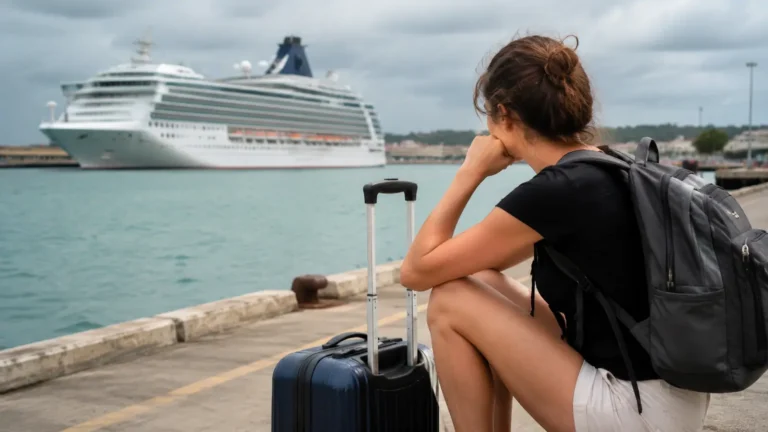
25 Most Forgotten Cruise Packing Items
The cruise items people forget most are the boring ones: document backups, extra medication, the right charging cable, a cruise-legal way to charge everything, and a first-afternoon carry-on kit. Here are the 25 I’d never sail without, starting with the ones that can wreck a trip.
First, put the can’t-replace stuff in your carry-on
Before anything cute goes in your bag, handle the things you can’t buy onboard: documents, medication, glasses, payment cards, and whatever you need for your first few hours on the ship. Forget a sun hat and you’re mildly annoyed.
Forget your passport or daily prescription, though, and you might watch sail-away from the terminal. That’s why this whole layer rides in your personal item or carry-on, never in the suitcase you hand to a porter.
Checked cruise bags can take until late afternoon to reach your cabin, and airline bags can go missing before you even get to the port. If you want the full clothing and quantity breakdown, pull up our complete cruise packing list next to this one.
This guide sticks to the easy-to-miss stuff that solves real problems. Here’s my list, most important first.
1. A complete document wallet
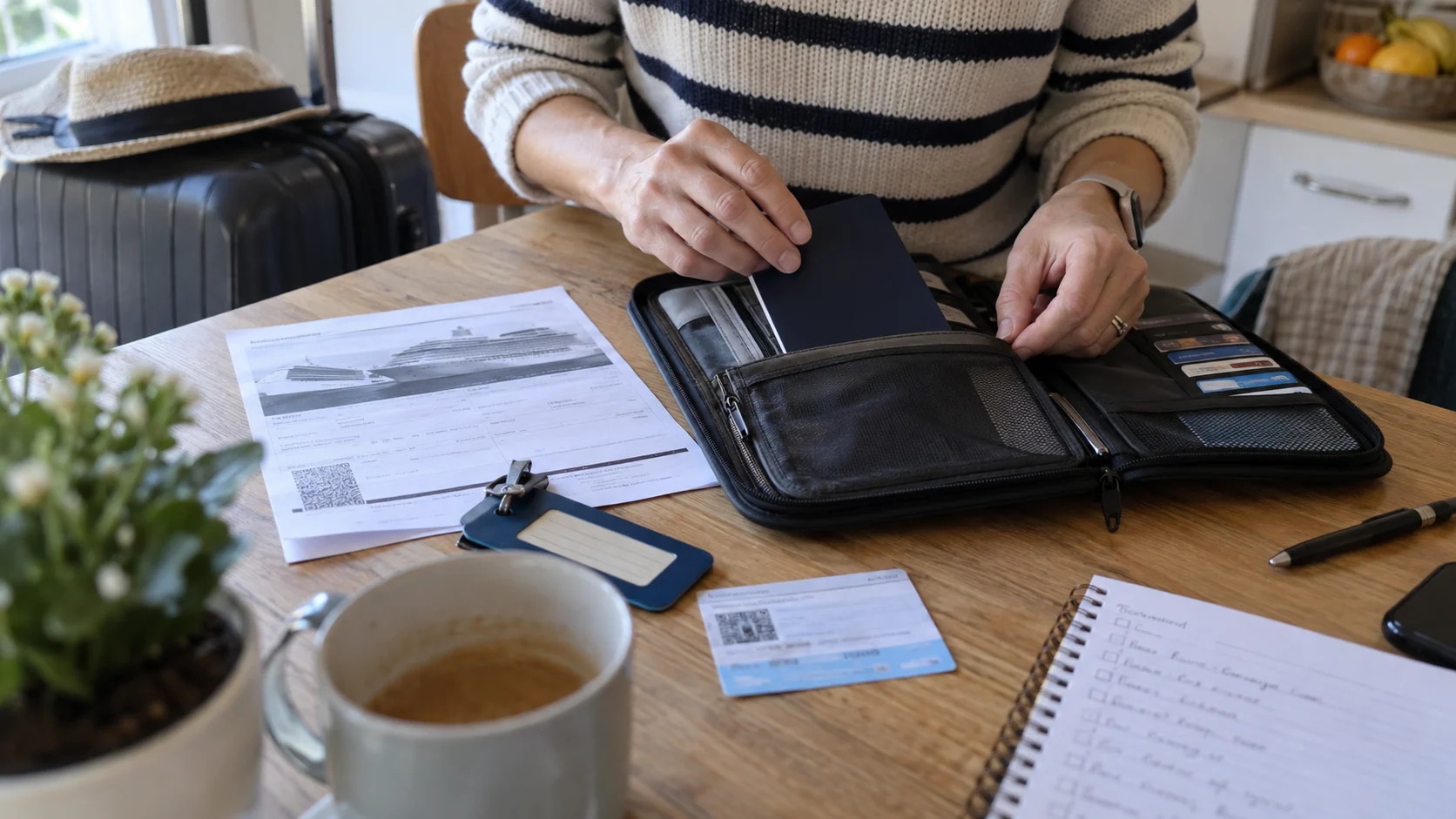
Put everything in one zip pouch: passports or other accepted ID, visas, your cruise boarding pass, insurance details, flight and transfer confirmations, and any required health forms. “It’s in my email” isn’t a backup when the terminal Wi-Fi is crawling.
Here’s the rule that trips up a lot of U.S. citizens. On a closed-loop cruise (one that starts and ends at the same U.S. port), you can usually board with a state-certified birth certificate plus a government-issued photo ID instead of a passport.
I’d still bring a passport, and the cruise lines strongly recommend one too. If you miss the ship or need to fly home from a foreign port, you’ll need it, and cruises that aren’t closed-loop generally require a passport that’s valid for at least six months past the end of your trip.
Save offline copies on your phone and leave a copy with someone at home. Then check visa and entry rules for every country on your itinerary, because a cruise line can deny boarding if a document is missing, even for a port where you planned to stay onboard.
2. Prescription medicine plus a delay cushion
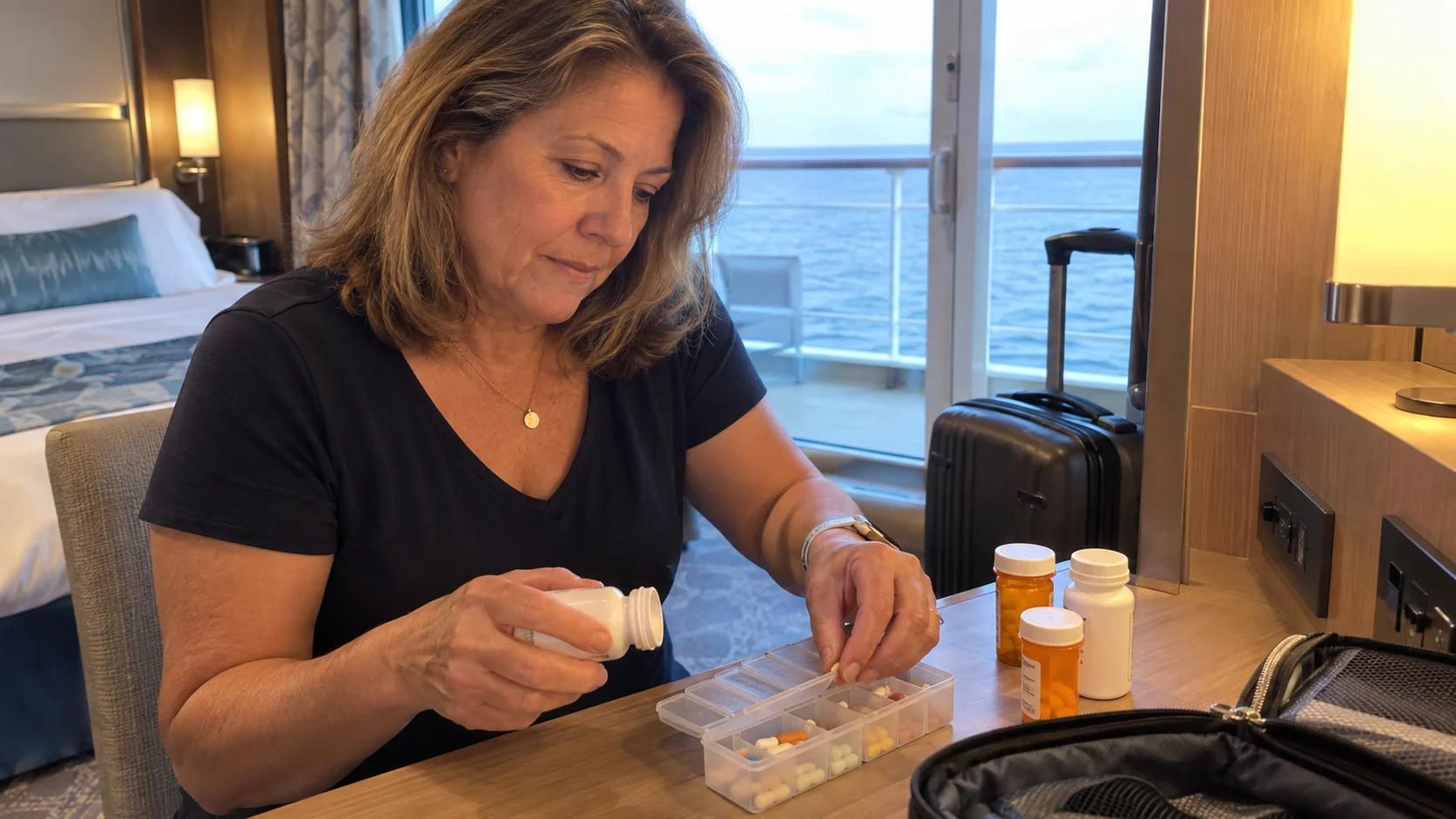
Pack enough prescription medicine for the whole cruise, plus a few extra days in case a flight gets canceled or you’re stuck somewhere. The CDC’s guidance for traveling with medicine says to keep it in your carry-on, in the original labeled containers, with copies of your prescriptions that list the generic names.
On a long sailing like my 30-day Panama Canal repositioning cruise, that cushion is non-negotiable. Hunting for your exact prescription at a pharmacy in Peru or Chile is not how you want to spend a port day.
If you use a controlled medication or injectables like insulin or an EpiPen, ask your doctor for a note. Check with the embassy of each country you’ll visit too, since a medicine that’s totally normal at home can be restricted somewhere else.
One more heads-up: Carnival and Norwegian both ban marijuana and CBD products, even ones that are legal where you live. If you need sharps disposal or a fridge for medication, contact the cruise line before you sail so it’s sorted when you board.
3. Backup glasses and contact lens supplies
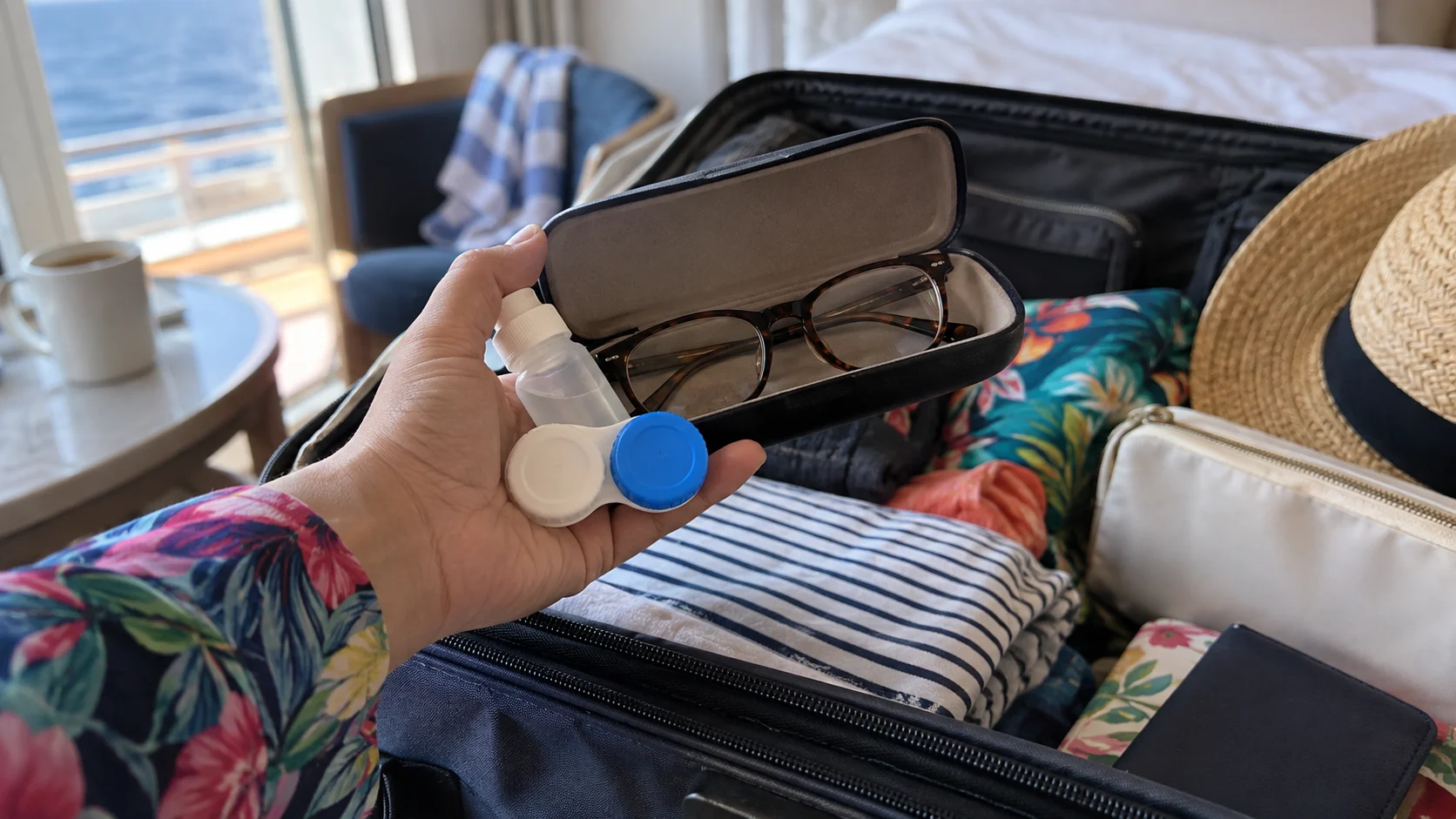
Spare glasses aren’t glamorous, but they’re one of the smartest things you can pack. Toss in a sturdy case, a lens cloth, a copy of your prescription, and more contacts than the exact number of days you’ll be gone.
If you’re flying out of the U.S., regular toiletries still follow the TSA liquids rule: 3.4 ounces (100 ml) per container, all in one quart-size bag. Contact solution counts as a medically necessary liquid, so a bigger bottle is fine in your carry-on as long as you tell the officer at screening.
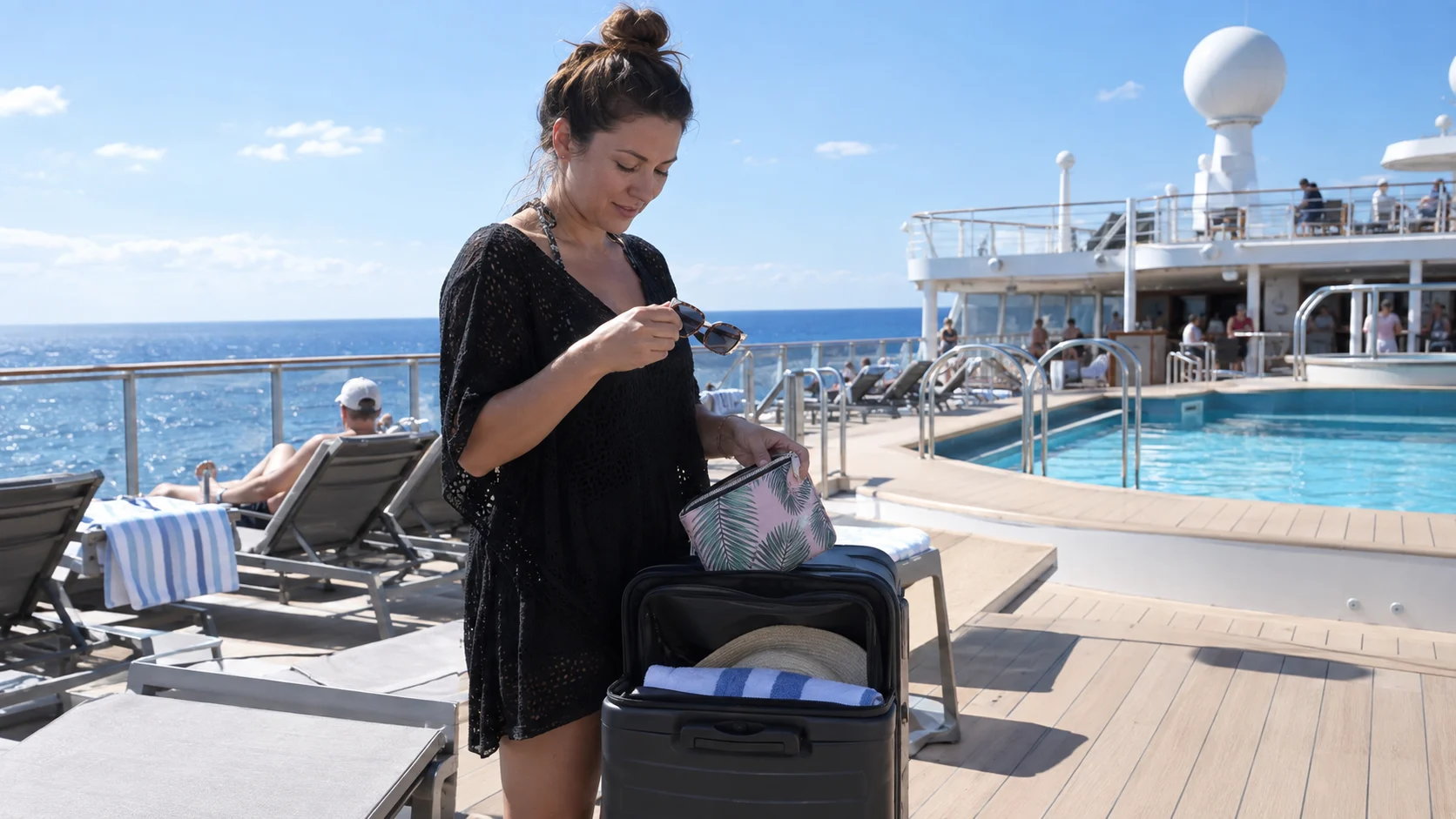
4. A first-afternoon carry-on kit
Your cruise suitcase might reach your cabin by early afternoon, or it might show up right before dinner. Don’t let that decide whether you get a pool afternoon.
Pack a swimsuit, sunscreen, a change of clothes that works for dinner, a light layer, basic toiletries, and medicine. If you’re traveling with kids, add diapers, snacks, and anything else they’ll need before the bags arrive.
Passports, cash, jewelry, and electronics stay with you, never in the bag you hand to a porter. The same little kit also saves you if an airline loses your suitcase on the way to the port.
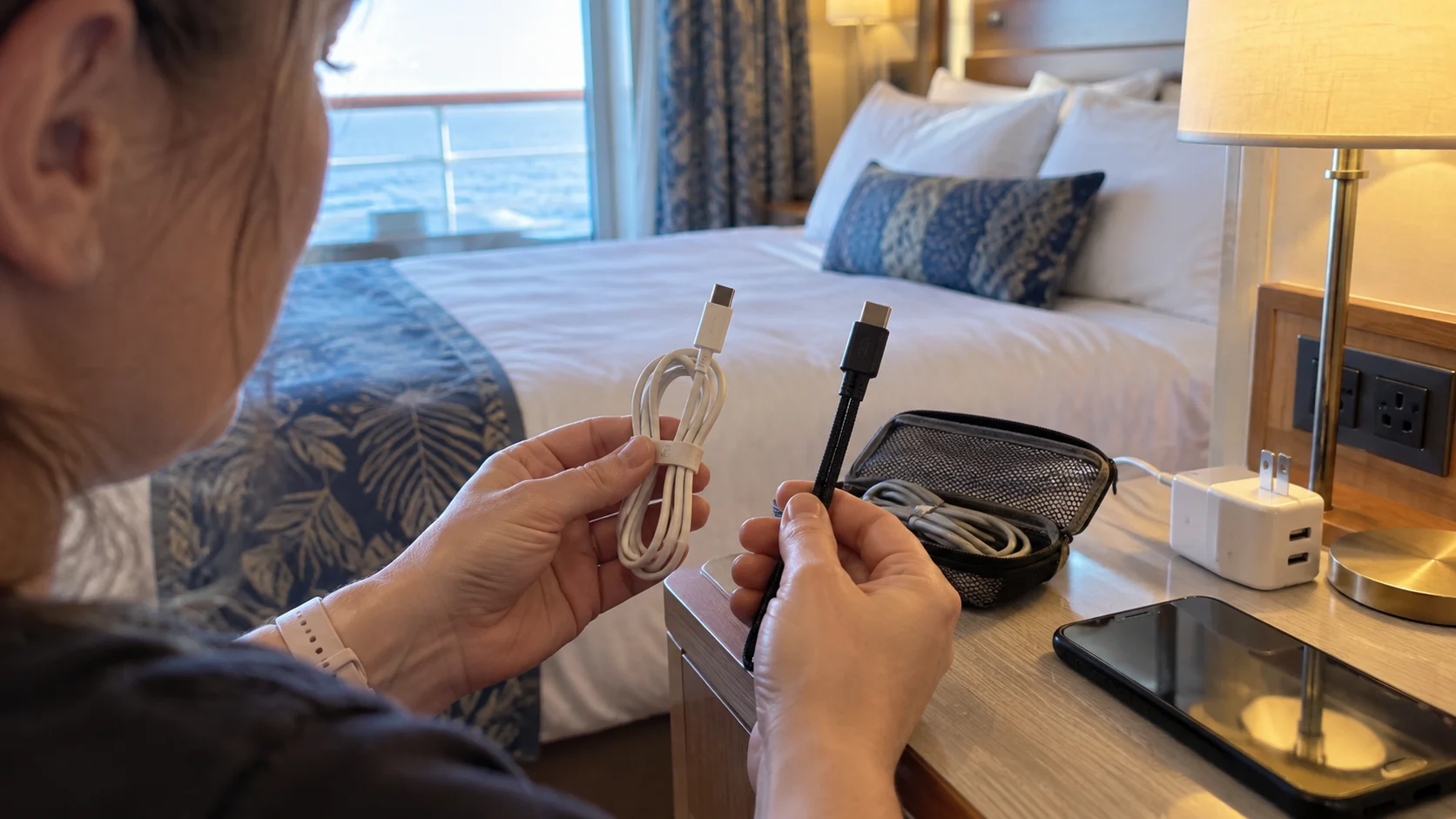
5. The right charging cable, plus one backup
Everyone remembers the phone and forgets the cable, the wall plug, the watch charger, the camera cord, or the hearing aid charger. Lay out every rechargeable thing you’re bringing and physically match each one to its cord before it goes in the bag.
A spare phone cable earns its spot because cables die way more often than chargers do. If your family uses look-alike cords, label them so you’re not playing cable detective every night.
Most ships sailing from the U.S. have American-style outlets, and many add European-style ones, so check your line’s FAQ before you buy an adapter. An adapter changes the plug shape, not the voltage, so make sure your device’s label says it can handle the power.
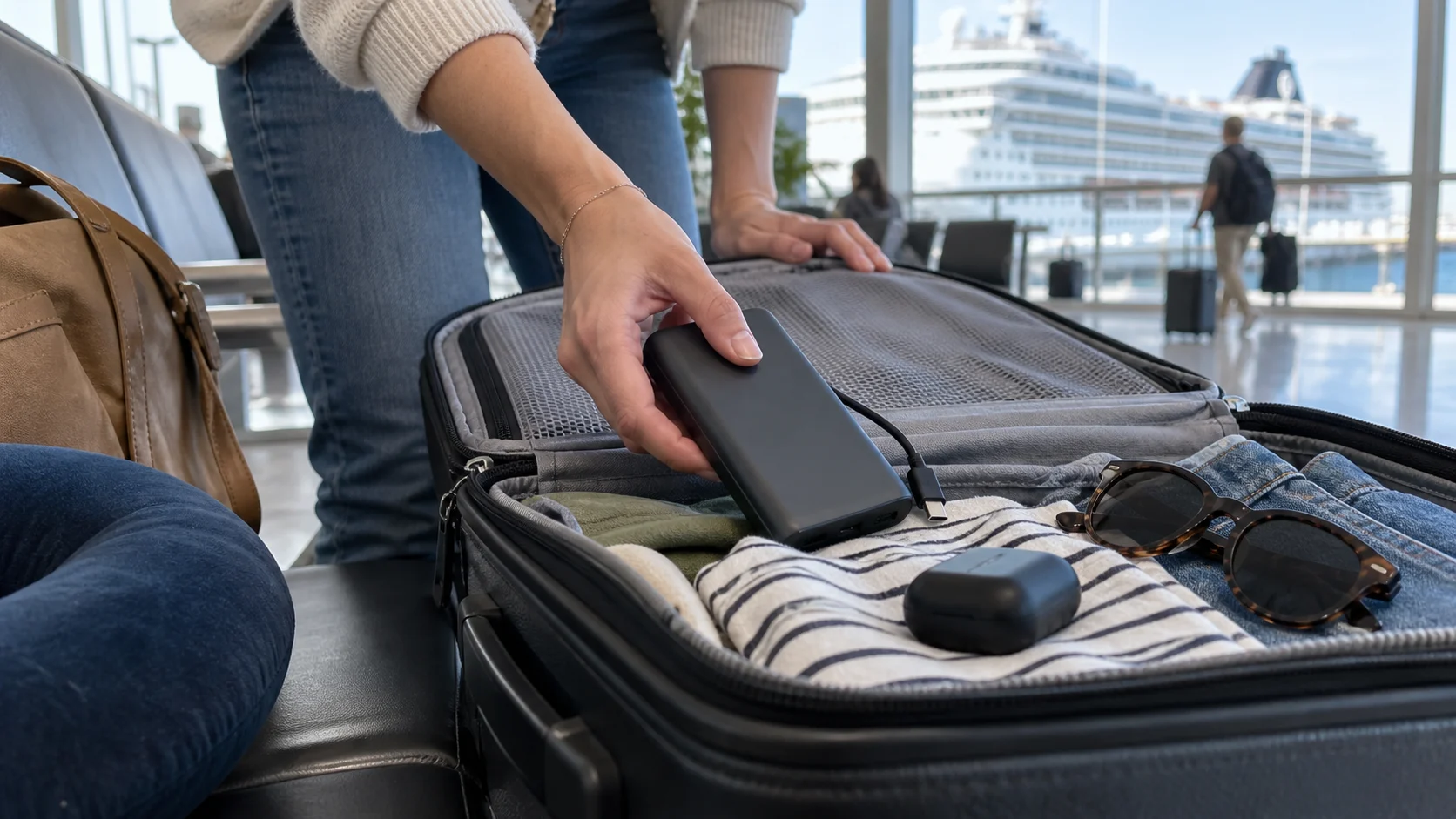
6. A compliant power bank
A power bank keeps your maps, excursion tickets, and ride apps alive on a long port day. If you’re flying, the FAA’s battery rules say spare lithium batteries and power banks must go in your carry-on, never in checked bags.
Batteries up to 100 watt-hours don’t need airline approval, and most phone power banks are well under that. Airlines can be stricter than the FAA, though, and a growing number limit using or charging power banks during the flight, so check your carrier before you go.
If your carry-on gets gate-checked, pull the power bank out first. On the ship, don’t leave one charging under your pillow or baking in a sunny window, and skip anything that’s damaged, swollen, or recalled.
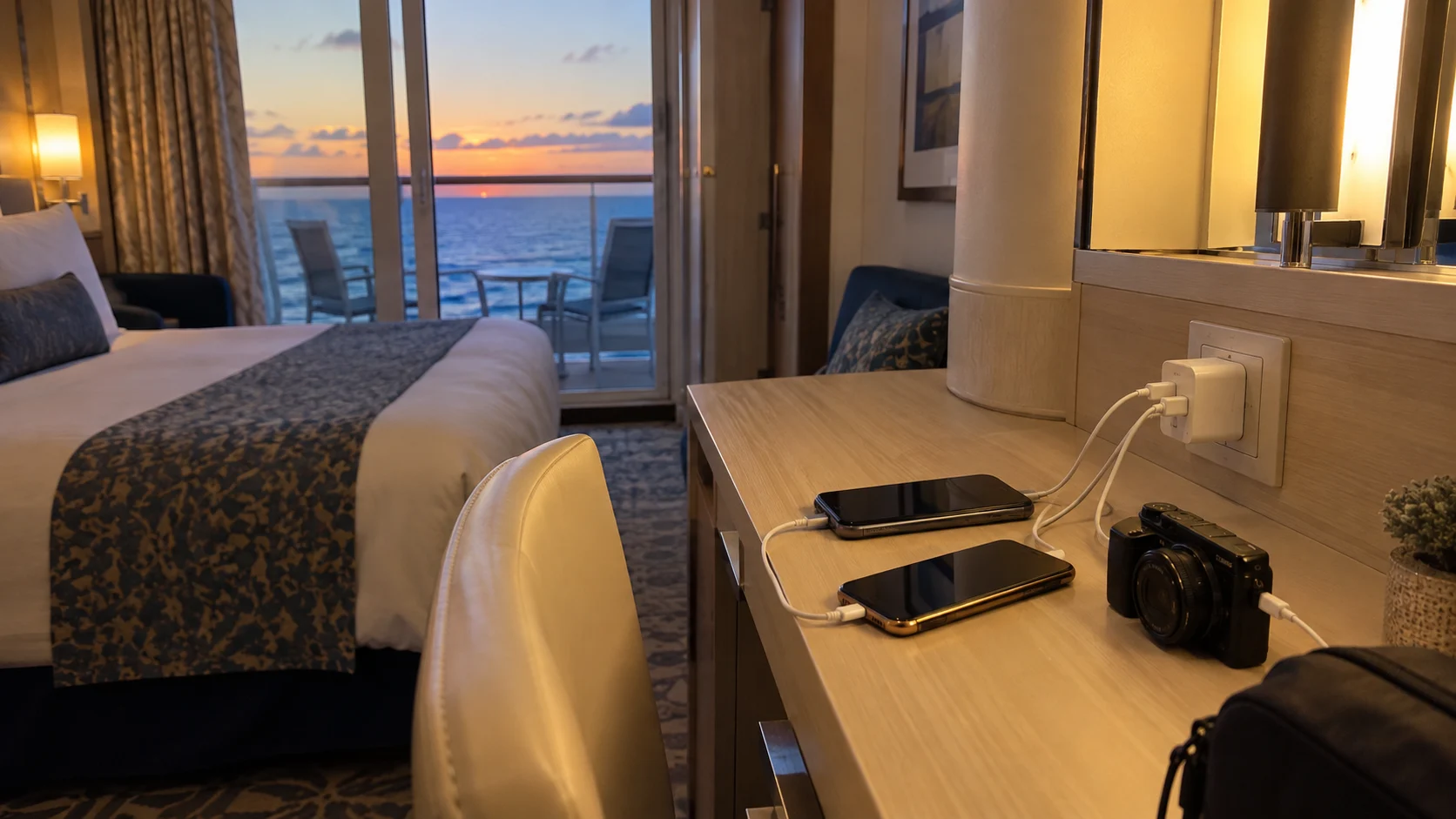
7. A cruise-legal way to charge everything
Cabins often have just a couple of outlets, and your group probably has a phone, watch, and earbuds each. That’s why everyone wants to pack a power strip, and it’s also the item most likely to get pulled at security.
Here’s how the rules differ between three major cruise lines:
- Royal Caribbean: Extension cords, power strips, and multi-plug outlets are all prohibited under its prohibited items policy. USB chargers with a recognized U.S. or European safety certification are allowed.
- Disney Cruise Line: Power strips, extension cords, multi-plugs, and surge protectors are all off-limits. Multi-port USB chargers are fine.
- Carnival: Power strips, multi-outlet adapters, and extension cords are allowed only if they don’t have surge protection, and security can still remove one it considers unsafe.
- Surge protectors: Not allowed on any of these three lines, so skip anything with surge protection built in, even if the box says “cruise approved.”
My pick for any line is one compact USB wall charger with three or four ports (USB-C and USB-A) from a known brand with a safety certification mark. It plugs straight into the wall, charges the whole cabin overnight, and fits the rules on Royal Caribbean, Disney, and Carnival.
On Norwegian or any other line, read the current list before you pack anything with more than one outlet. If you rely on a medical device like a CPAP, contact the line’s accessibility team ahead of time instead of improvising with cords.
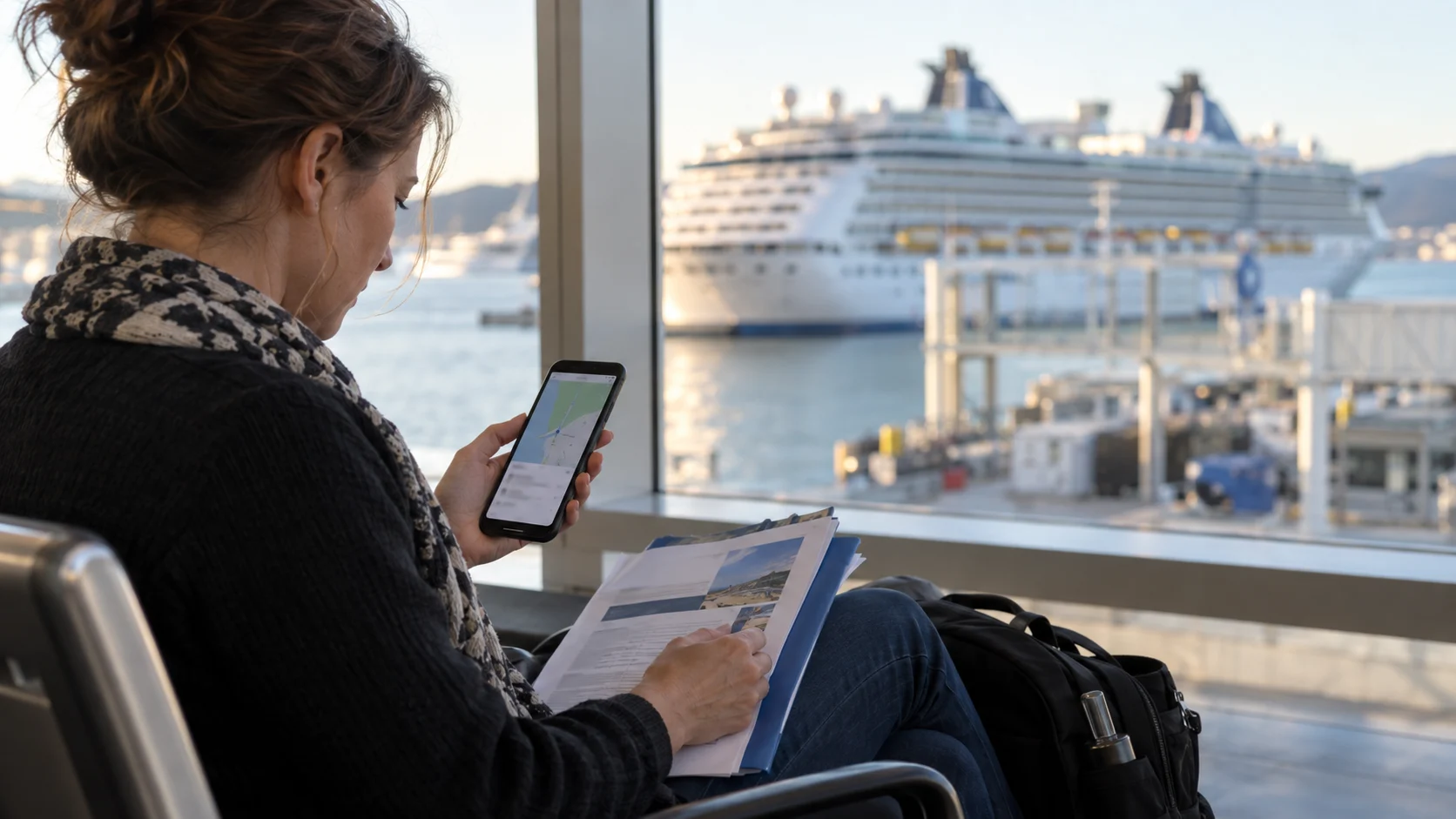
8. Offline copies of everything your phone “knows”
Before you lose good cell service, download maps for each port, plus your tickets, excursion vouchers, hotel address, insurance info, and the cruise line’s port agent contacts. Screenshots are great, but some barcodes refresh, so check whether a saved image will actually scan.
Here’s what I’d do: write the ship name, the all-aboard time, and the port agent’s phone number on a small card for each port day. That way a dead phone is a minor hassle, not the reason you’re sprinting down a pier.
Download shows, books, playlists, and any two-factor login codes too. Ship Wi-Fi is way better than it used to be, but it can still slow down in remote spots or when thousands of people are online at once.
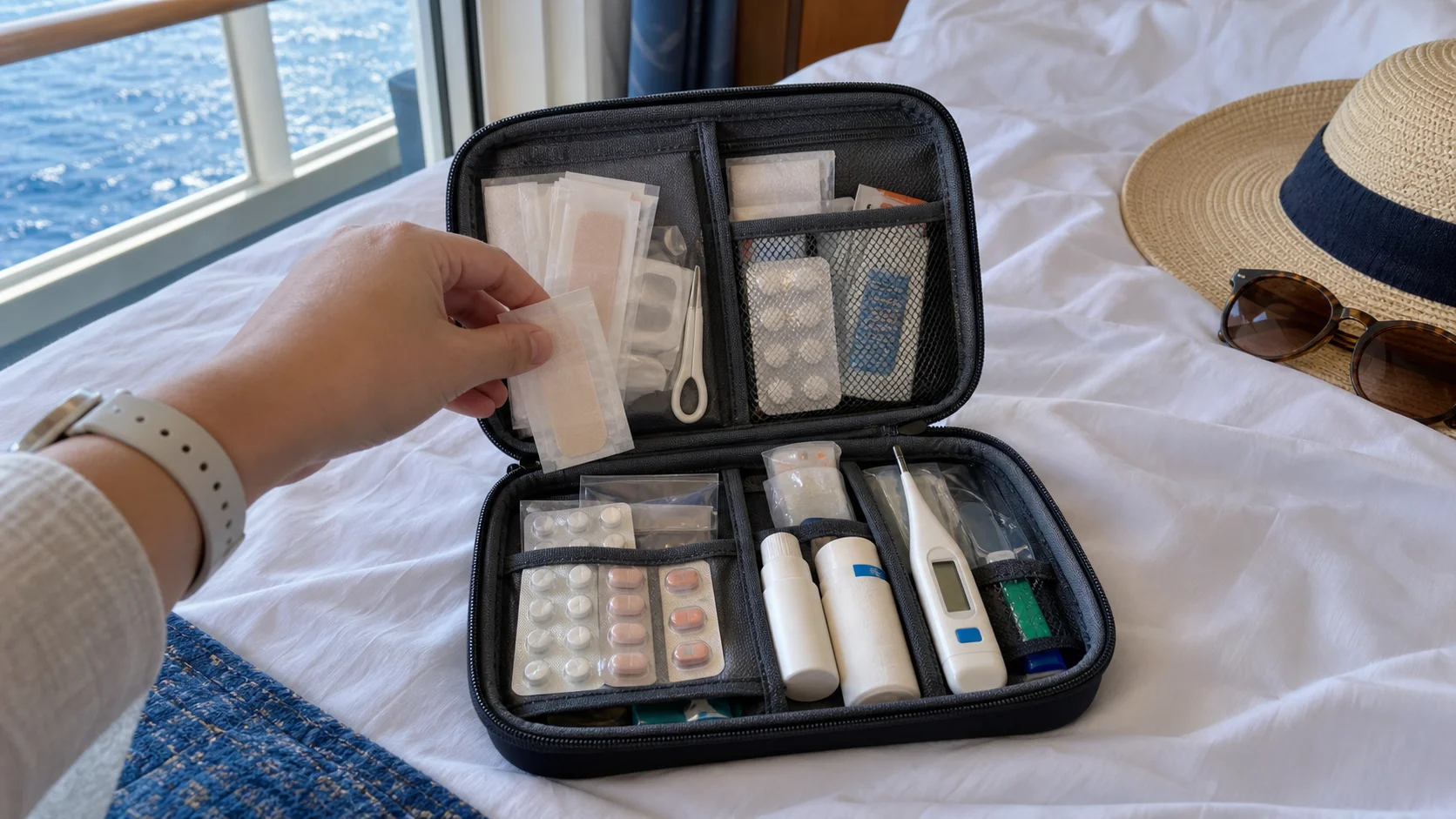
9. A small travel health kit
Pack a mini kit with bandages, blister pads, a pain reliever you know works for you, a motion sickness remedy, and something for an upset stomach. The CDC Pack Smart list is a great checklist to start from, and it also suggests hand sanitizer with at least 60% alcohol and bug spray with DEET or picaridin.
Stick to products you’ve already used, in their original packaging. Ship shops sell basics, but the selection is small and the prices can sting.
Seasickness remedies work best when you take them before you feel awful, so make a plan with a pharmacist or doctor before the trip. That goes double if you’re pregnant, take other medications, or want a non-drowsy option.
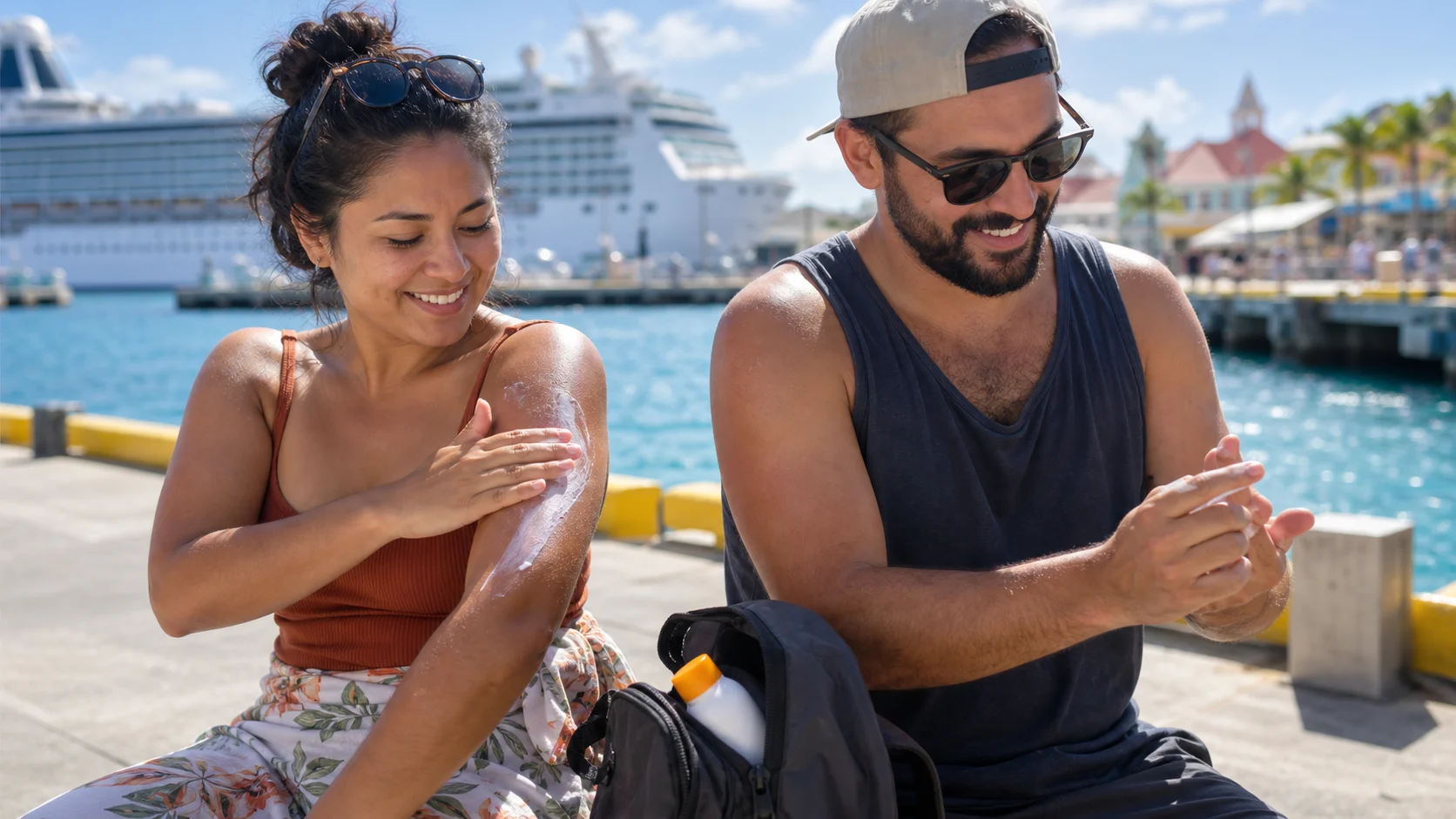
10. Sunscreen for both face and body
That tiny travel tube isn’t going to cover you through a week of beach days. Pack enough broad-spectrum sunscreen for the whole trip, plus SPF lip balm, a hat, and a rash guard if you burn fast.
Some destinations regulate sunscreen ingredients to protect coral reefs. The U.S. Virgin Islands banned sunscreens with oxybenzone, octinoxate, and octocrylene in 2020, and Hawaii bans the sale of ones with oxybenzone and octinoxate, so a mineral formula is the easy pick for those trips.
Keep a small bottle in your port-day bag and the big one in the cabin. Put both in zip bags, because sunscreen has a real talent for finding your nicest dinner outfit.
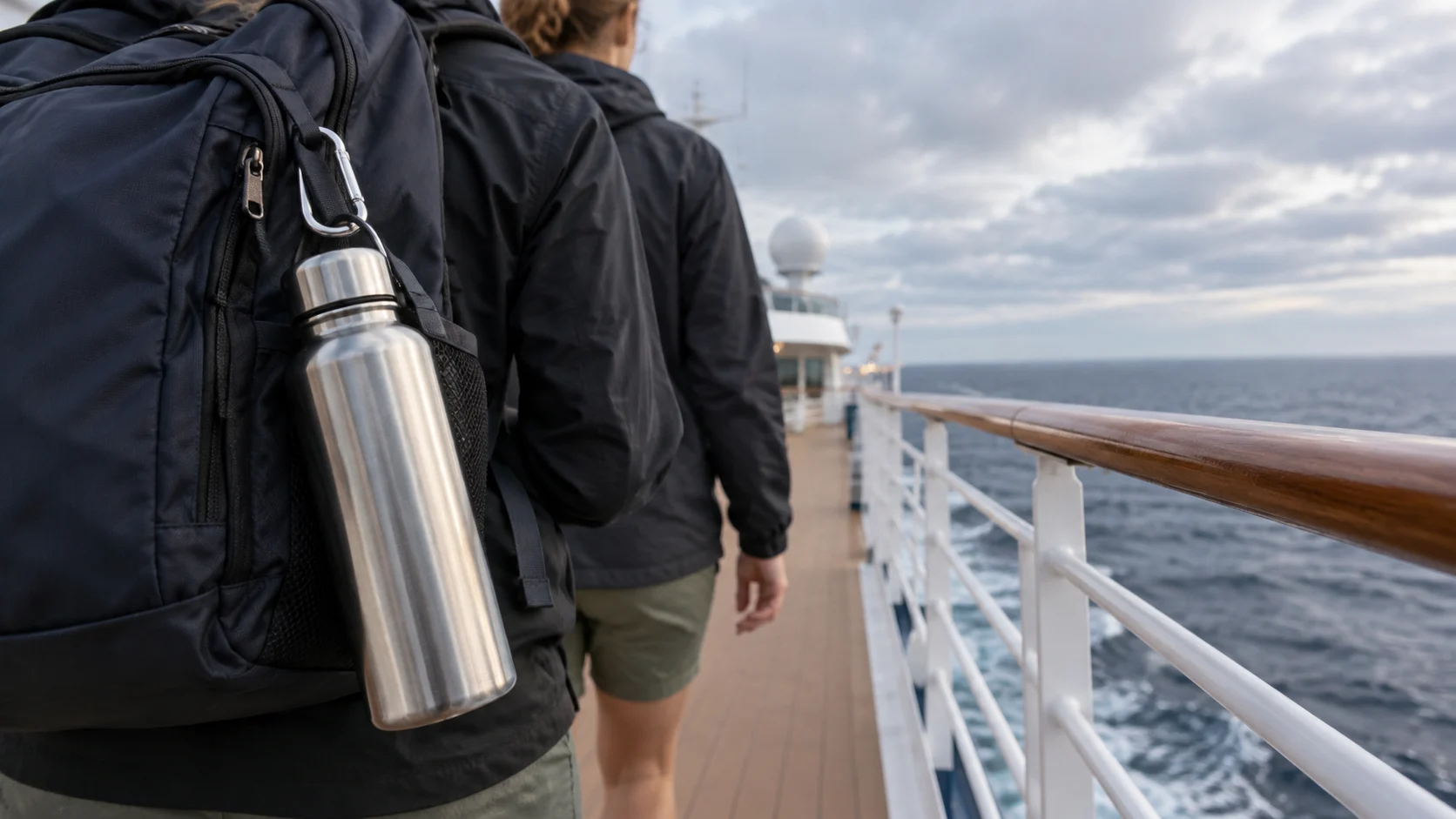
11. A refillable water bottle
A reusable bottle is great for the gym, the pool deck, and hot port days. At the ship’s water stations, follow any posted refill rules, since some ask you to use a cup instead of touching your bottle to the dispenser.
Empty it before airport security. An insulated one keeps water cold through a long shore excursion, which you’ll really appreciate on a humid Caribbean afternoon.
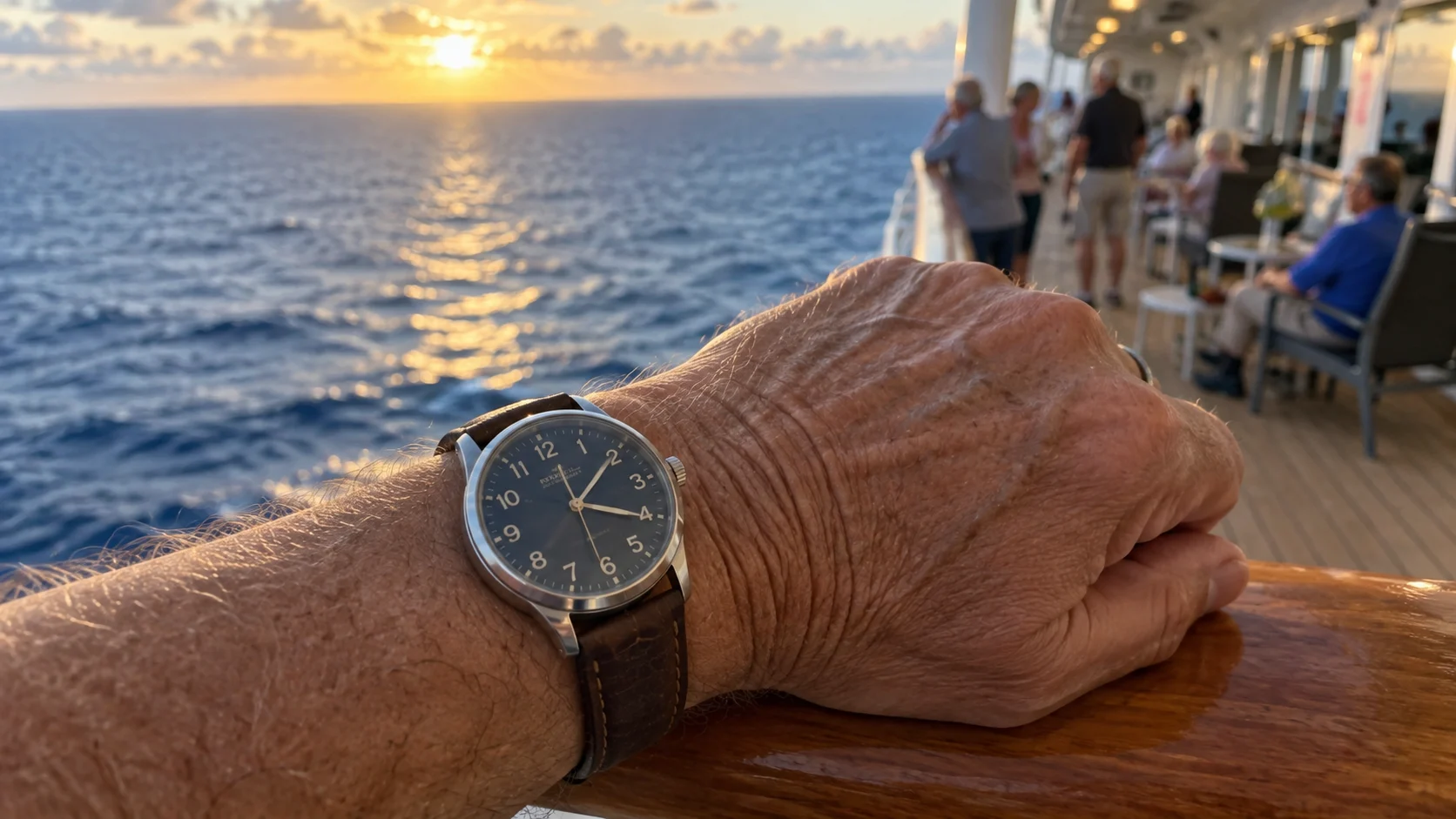
12. A real watch
Your phone can switch to local time the second it grabs a signal in port, even when the ship is running on a different clock. A cheap wristwatch set to ship time takes the guesswork out.
Always go by the time in the daily program or the cruise app, and remember that all aboard is earlier than the listed departure. Ships don’t wait for passengers who come back late on their own, so don’t let a phone that quietly jumped an hour make that call for you.
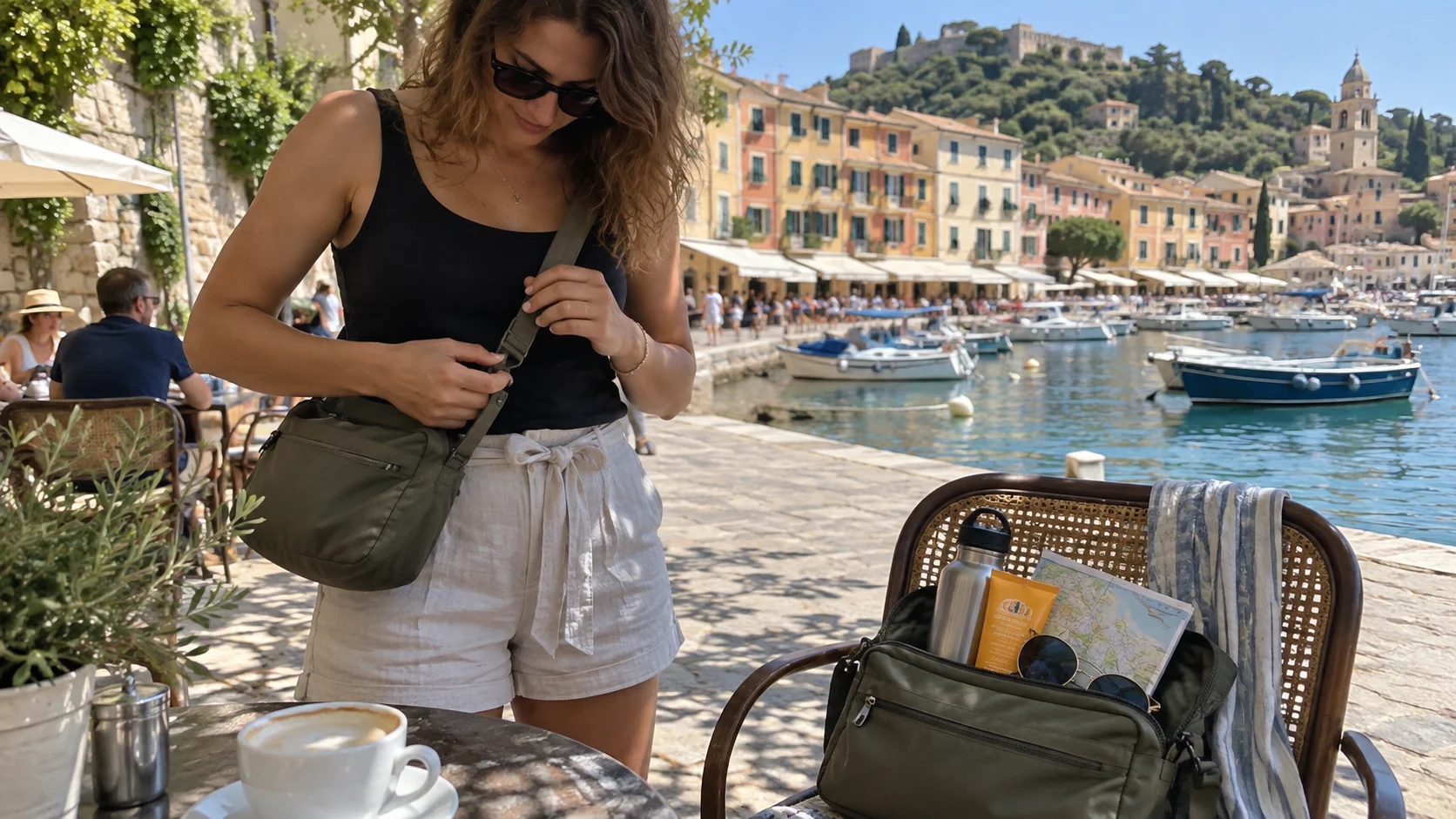
13. A compact port-day bag
Bring a crossbody, small backpack, or belt bag that fits water, sunscreen, a light layer, your ID, cash, a card, and any medicine. Zippers matter in busy markets and on crowded buses.
For beach or boat days, add a dry bag or waterproof phone pouch. Test the seal at home with a paper towel inside before you trust it with your phone.
If you’ll be in moving water, skip neck lanyards that can’t break away. Carry as few valuables as you can and follow whatever the excursion guide tells you.
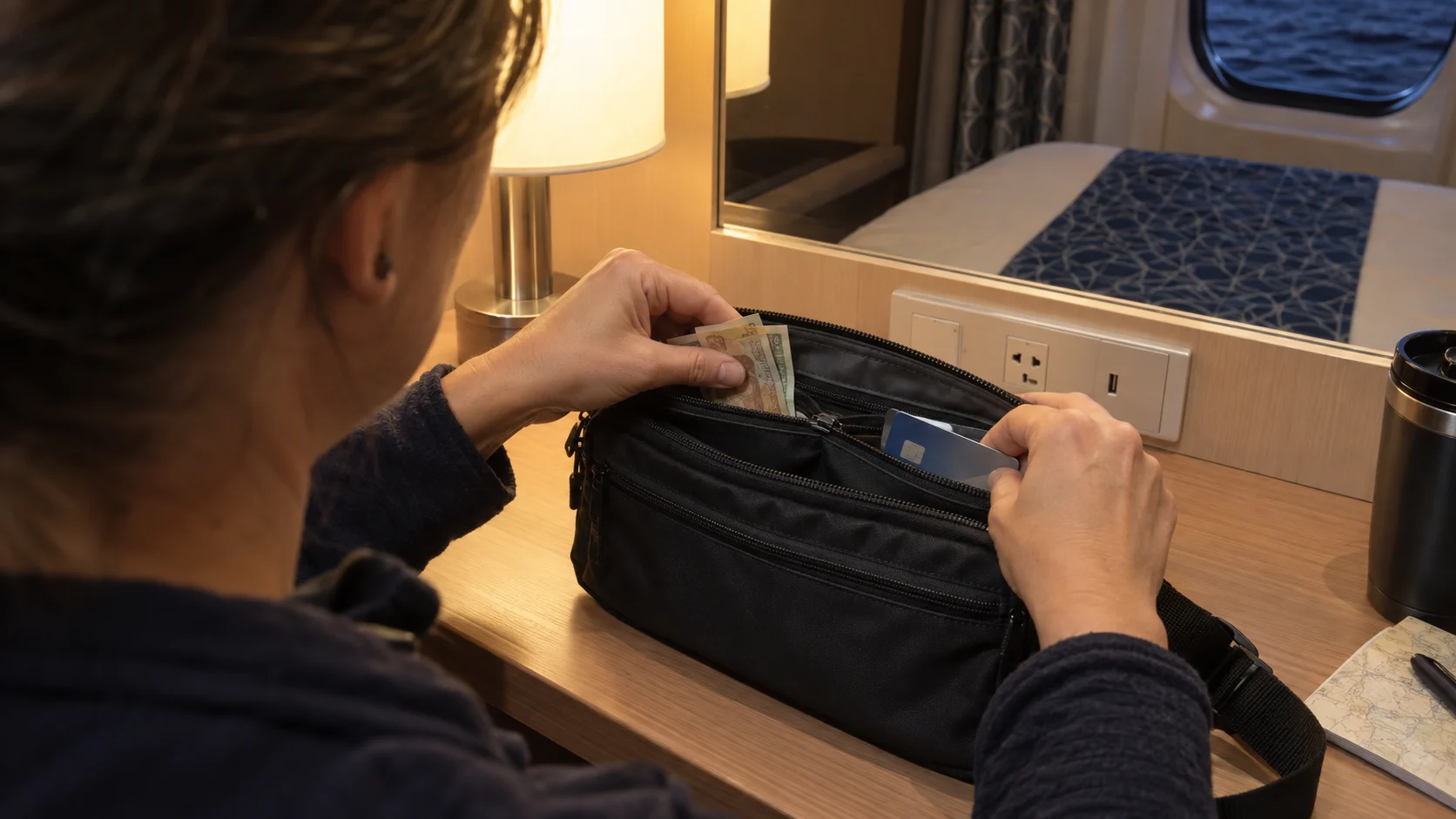
14. Small bills and a backup payment card
Small bills come in handy for tips, taxis, little vendors, and the occasional pay restroom. Don’t assume U.S. dollars will be accepted everywhere, or at a fair exchange rate when they are.
My Panama Canal repositioning cruise stopped in Santa Marta, Colombia; Callao, Salaverry, and Pisco in Peru; and Coquimbo, Chile. That’s three different currencies on one trip, so look up what each port uses before you go.
Keep a backup credit card separate from your main wallet and know how to lock both in your bank’s app. Use ATMs inside banks when you can, not random standalone machines.
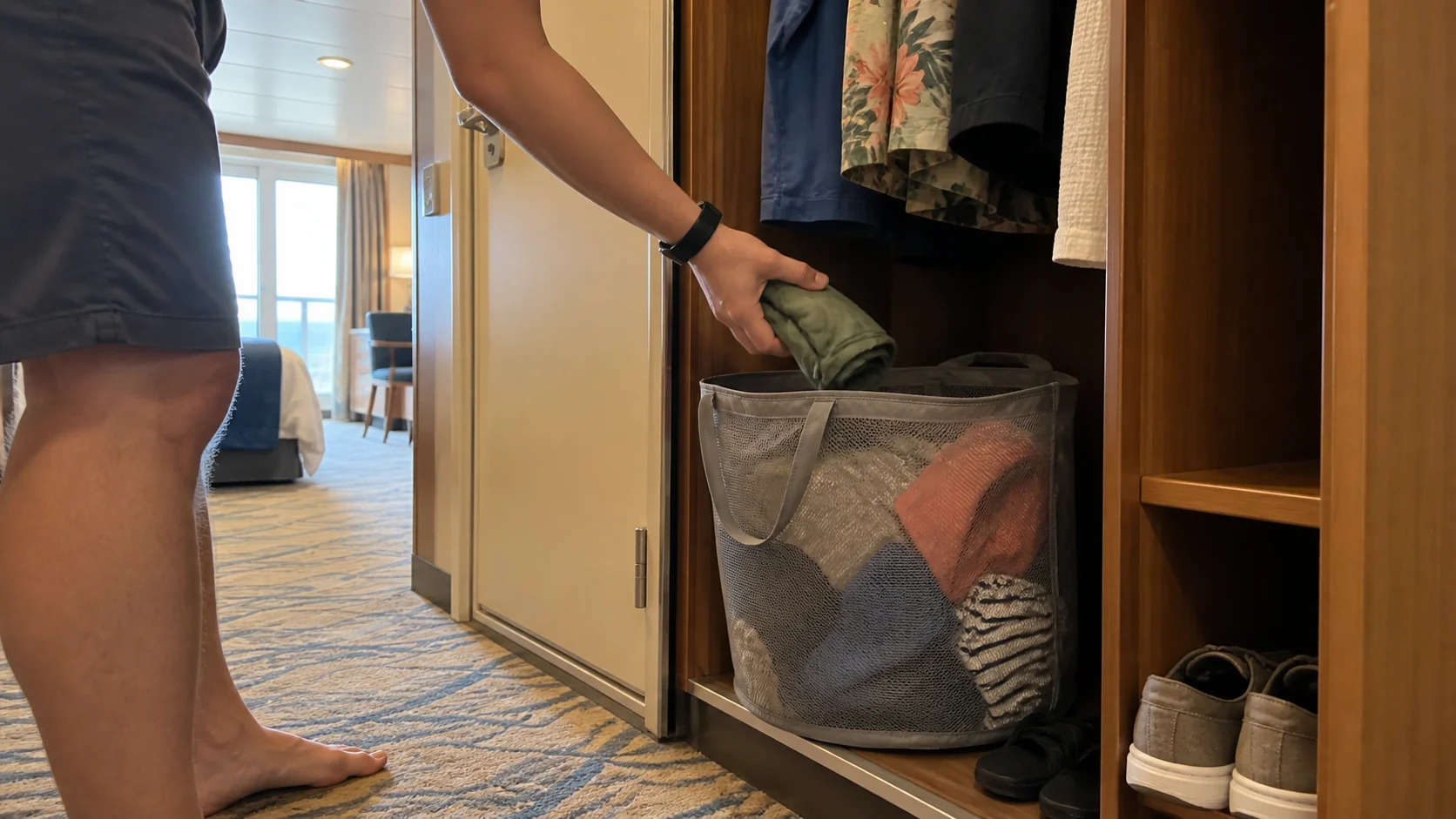
15. A laundry bag
A lightweight laundry bag keeps sweaty port-day clothes away from your clean dinner outfits. It also makes packing on the last night so much faster, because nobody wants to sniff-test a pile of shirts at 10 p.m.
A mesh or fabric bag lets damp things breathe. Let your swimsuit dry before you seal it in anything, or your suitcase will greet you at home with a smell.
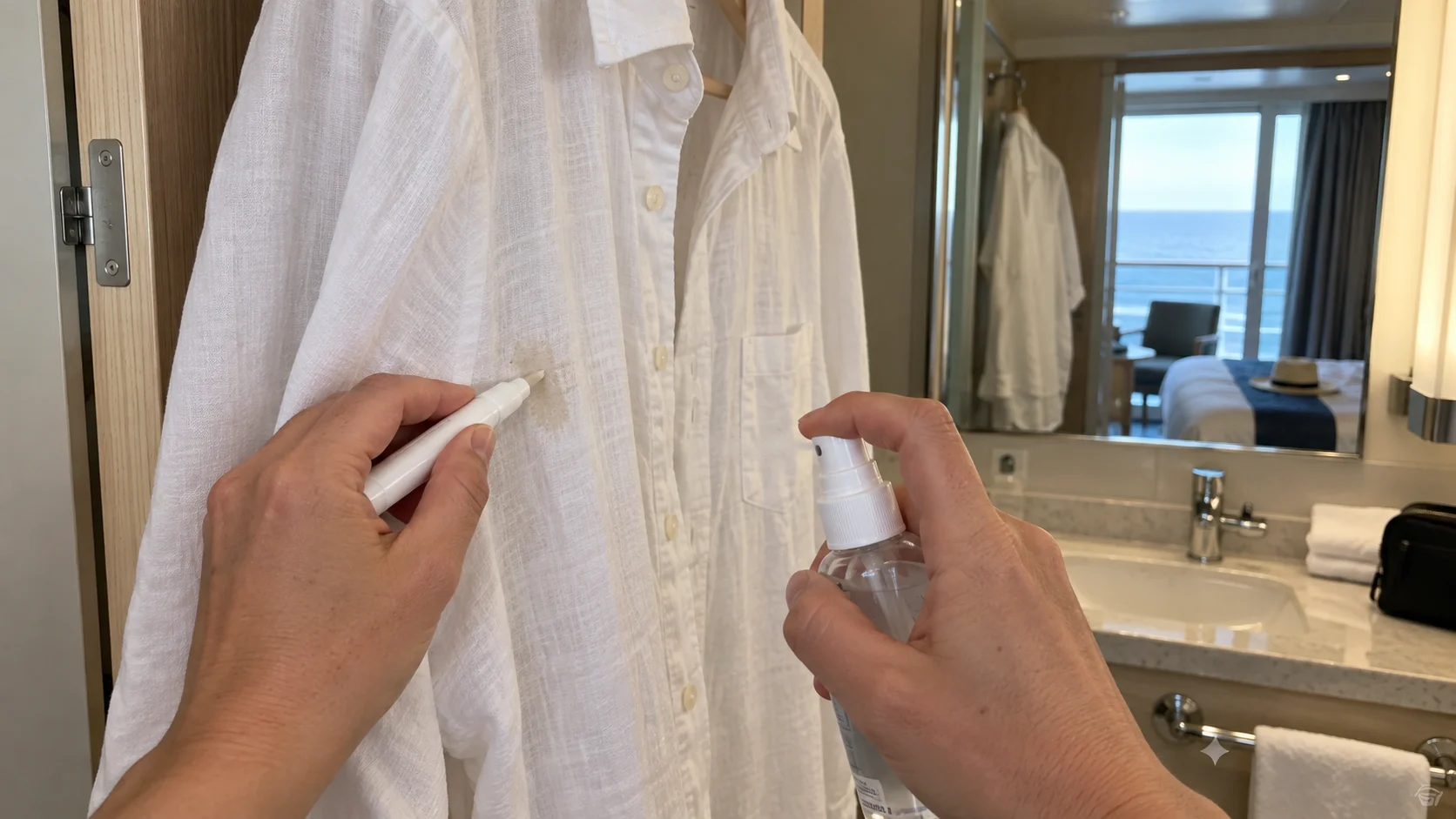
16. Stain treatment and wrinkle release spray
A stain pen or a few stain wipes can save your favorite shirt after a run-in with coffee, pasta sauce, or sunscreen. Test it on a hidden spot first.
Leave the travel iron and steamer at home. Royal Caribbean and Carnival both ban clothing irons and garment steamers, and Norwegian bans any appliance with a heating element, clothing irons included, because they’re a fire risk at sea.
Pack a travel-size wrinkle release spray instead, hang clothes in the bathroom while you shower, or pay for the ship’s pressing service. Princess and Disney also have irons in their self-service laundry rooms, and hair tools are a separate category (Royal Caribbean specifically allows flat irons and curling irons).
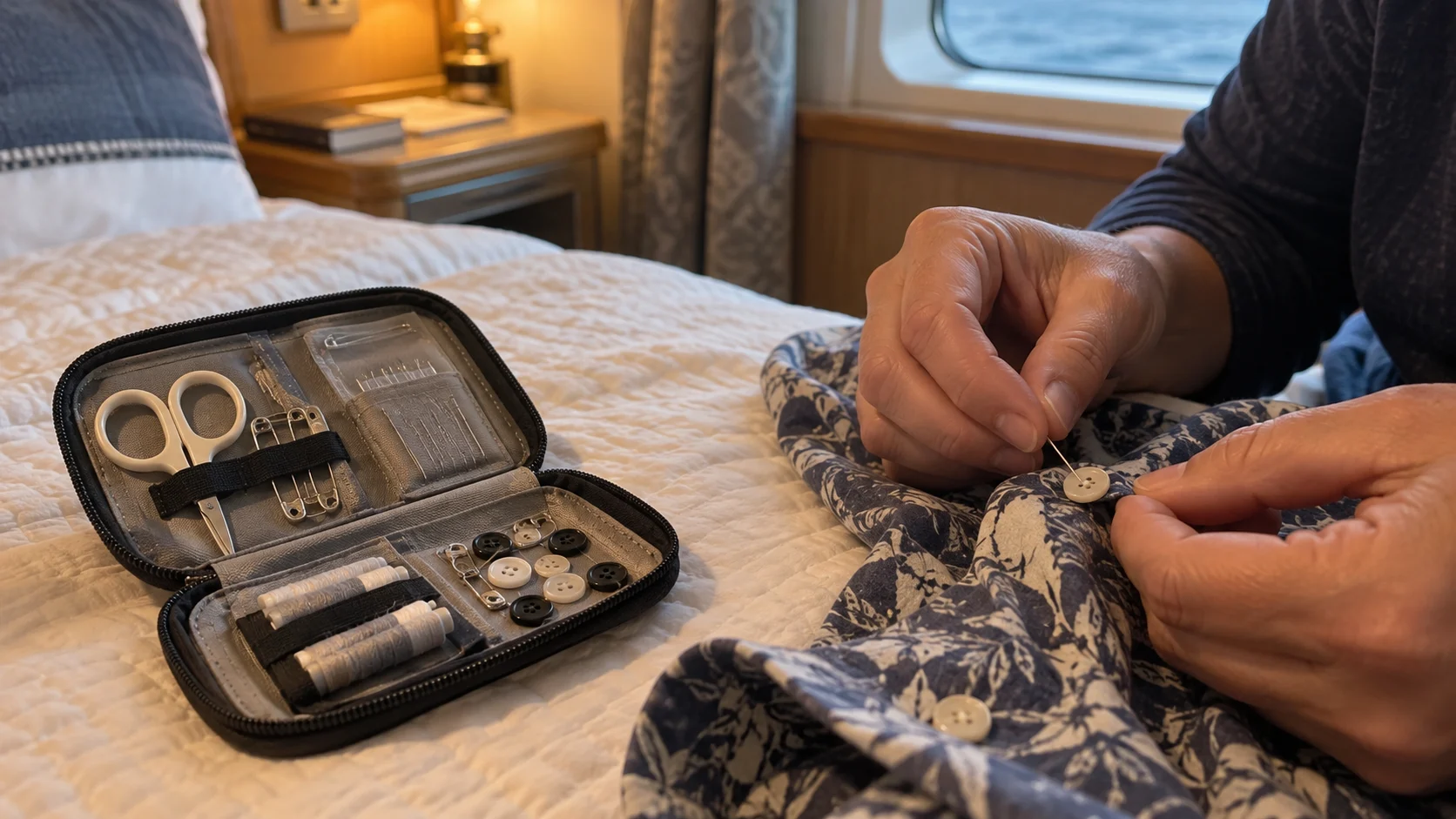
17. A tiny sewing and clothing repair kit
A few safety pins, a needle, some neutral thread, fashion tape, and a spare button weigh basically nothing. They’ll rescue a broken strap or a falling hem before dinner.
If your kit includes scissors, TSA allows blades under 4 inches (10 cm) from the pivot point in your carry-on. Honestly, nail clippers cut thread just fine and raise fewer questions at cruise security.
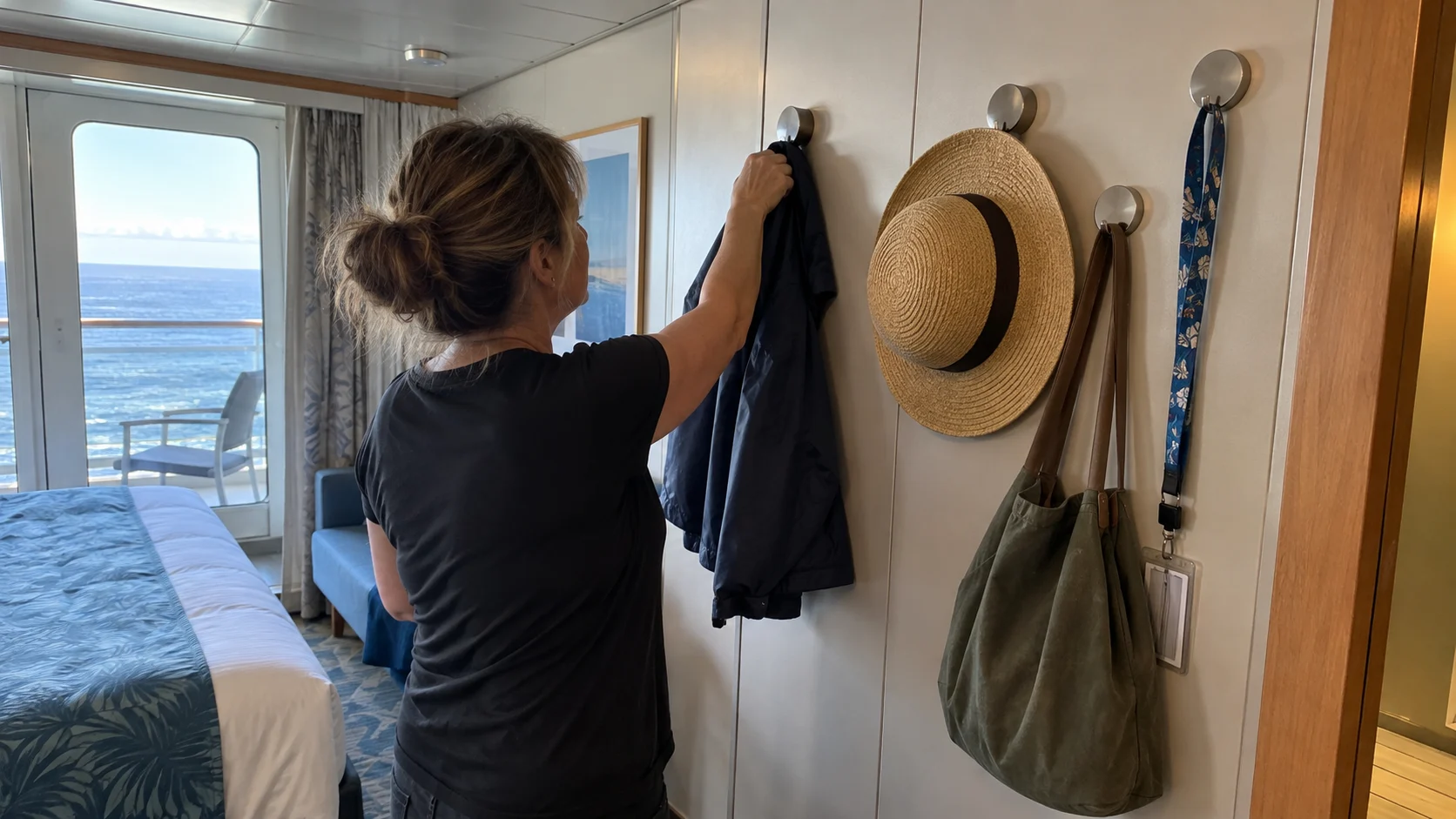
18. Magnetic hooks
Most cabin walls are metal, so a few magnetic hooks give you instant spots for hats, lanyards, and the daily schedule. They’re one of the cheapest cabin upgrades you can bring.
Get strong ones with a rubber coating so they don’t scratch anything. Don’t hang heavy bags on them, and keep them away from sprinklers, safety signs, and electronics.
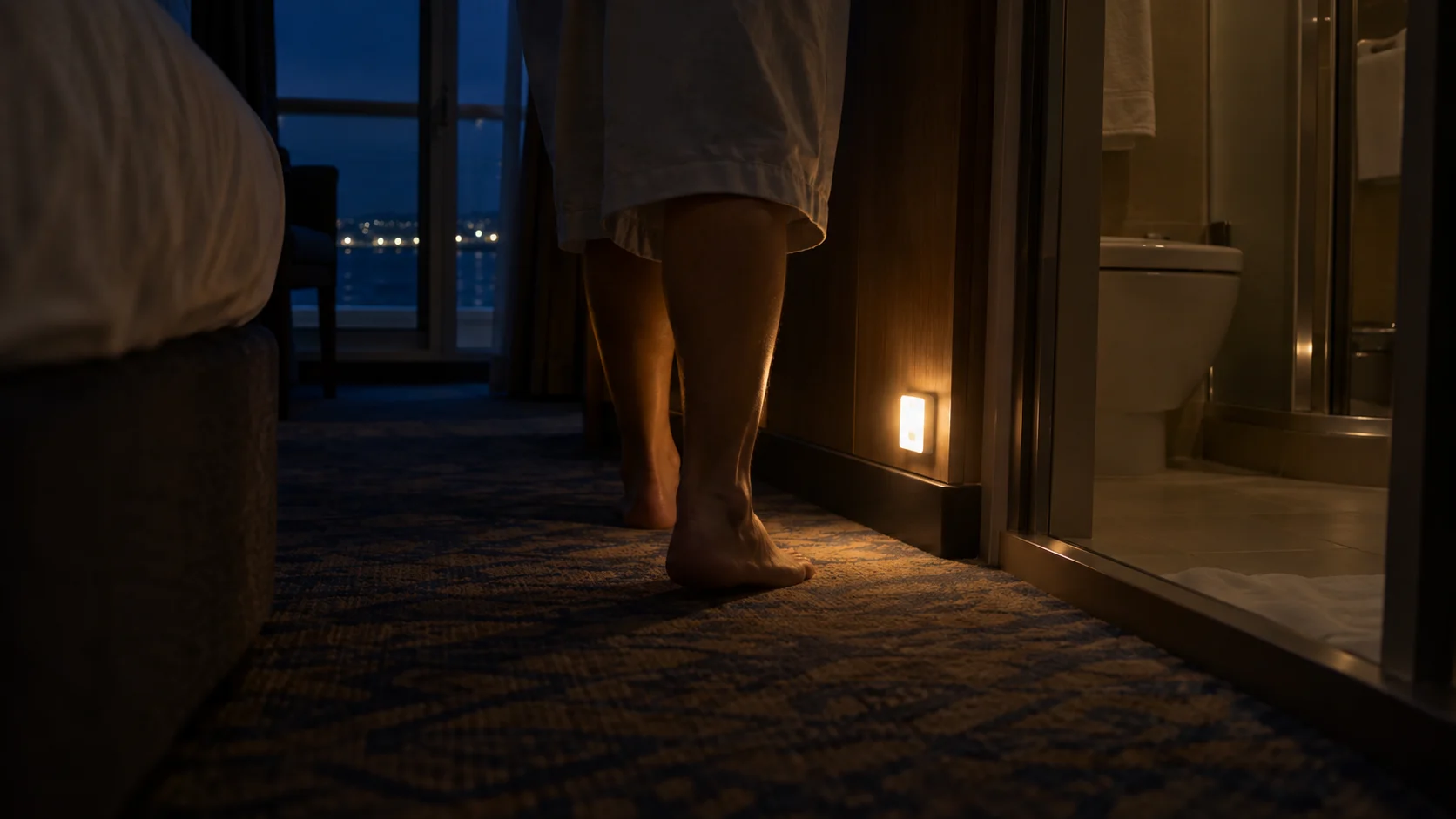
19. A battery-powered night-light
Inside cabins get pitch black, which feels amazing until you’re hunting for the bathroom at 3 a.m. A small battery-powered motion light fixes that without stealing an outlet.
Pick a soft glow that won’t wake your cabinmate. Leave candles and incense at home, since open flames are banned and Carnival and Norwegian both list candles by name.
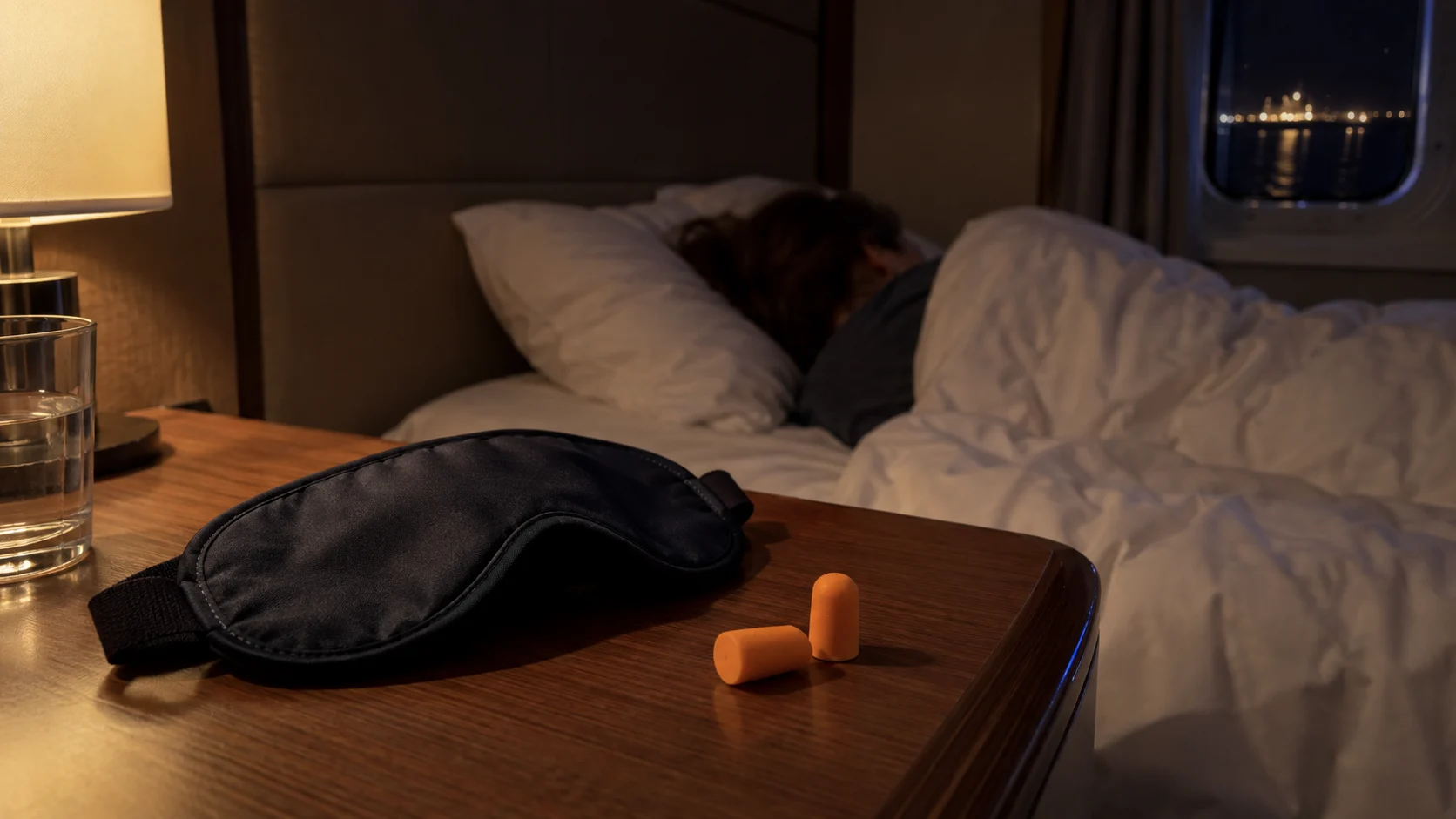
20. Earplugs and an eye mask
Earplugs and an eye mask help on the flight, in the pre-cruise hotel, and in a cabin near a busy hallway or under the pool deck. They’re also clutch if your cabinmate is a sunrise person and you’re not.
Just make sure you can still hear alarms and emergency announcements. If you’re traveling with kids, decide which adult sleeps plug-free.
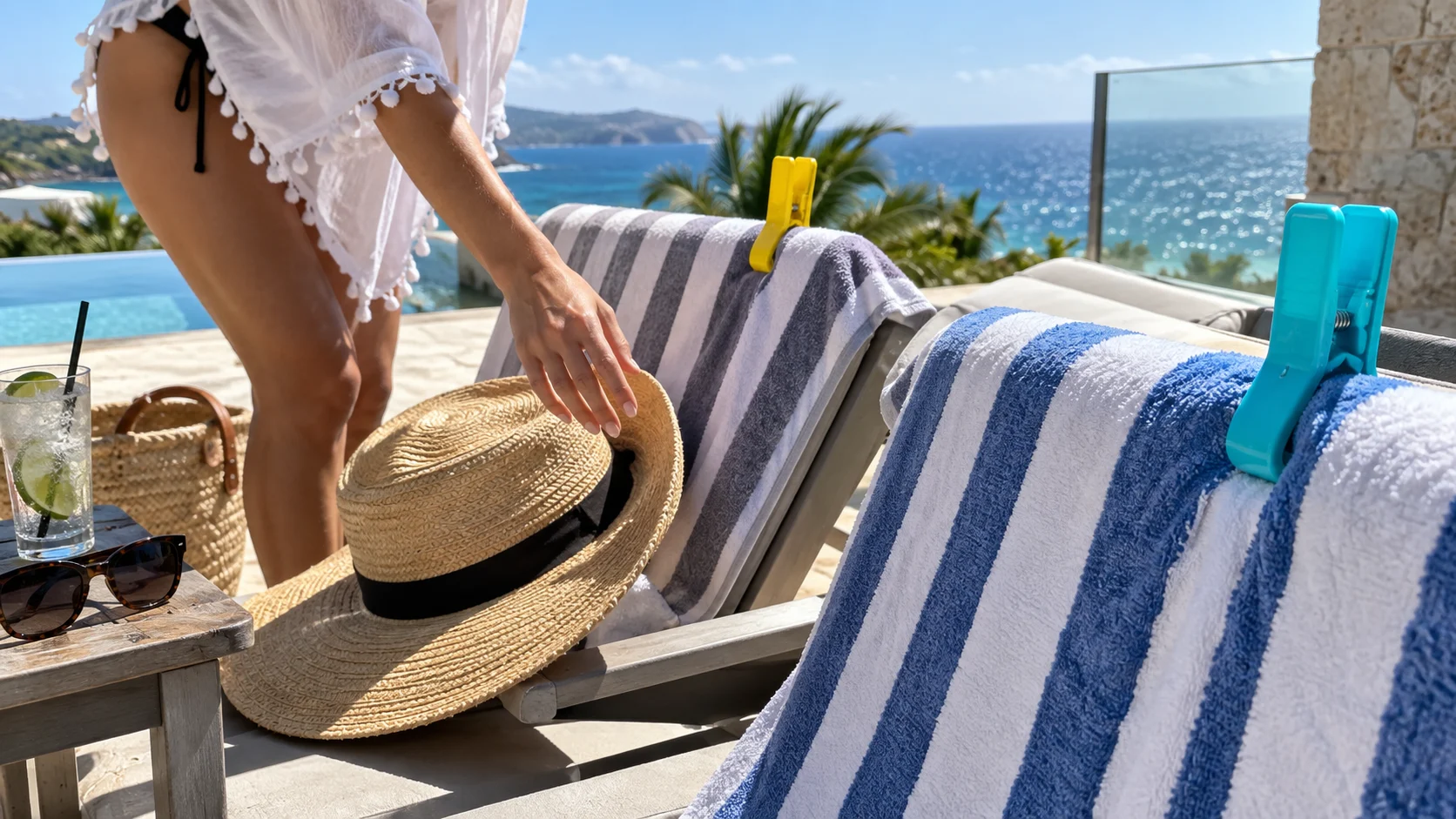
21. Towel clips or bands
A couple of towel clips keep your towel from blowing off a lounger on a windy pool deck. They don’t give you permission to save a chair for hours, though, and the big lines will clear chairs that sit empty too long.
They’re also handy for hanging a wet swimsuit in the bathroom. Never clip anything to the balcony railing, because the wind will happily send it overboard.
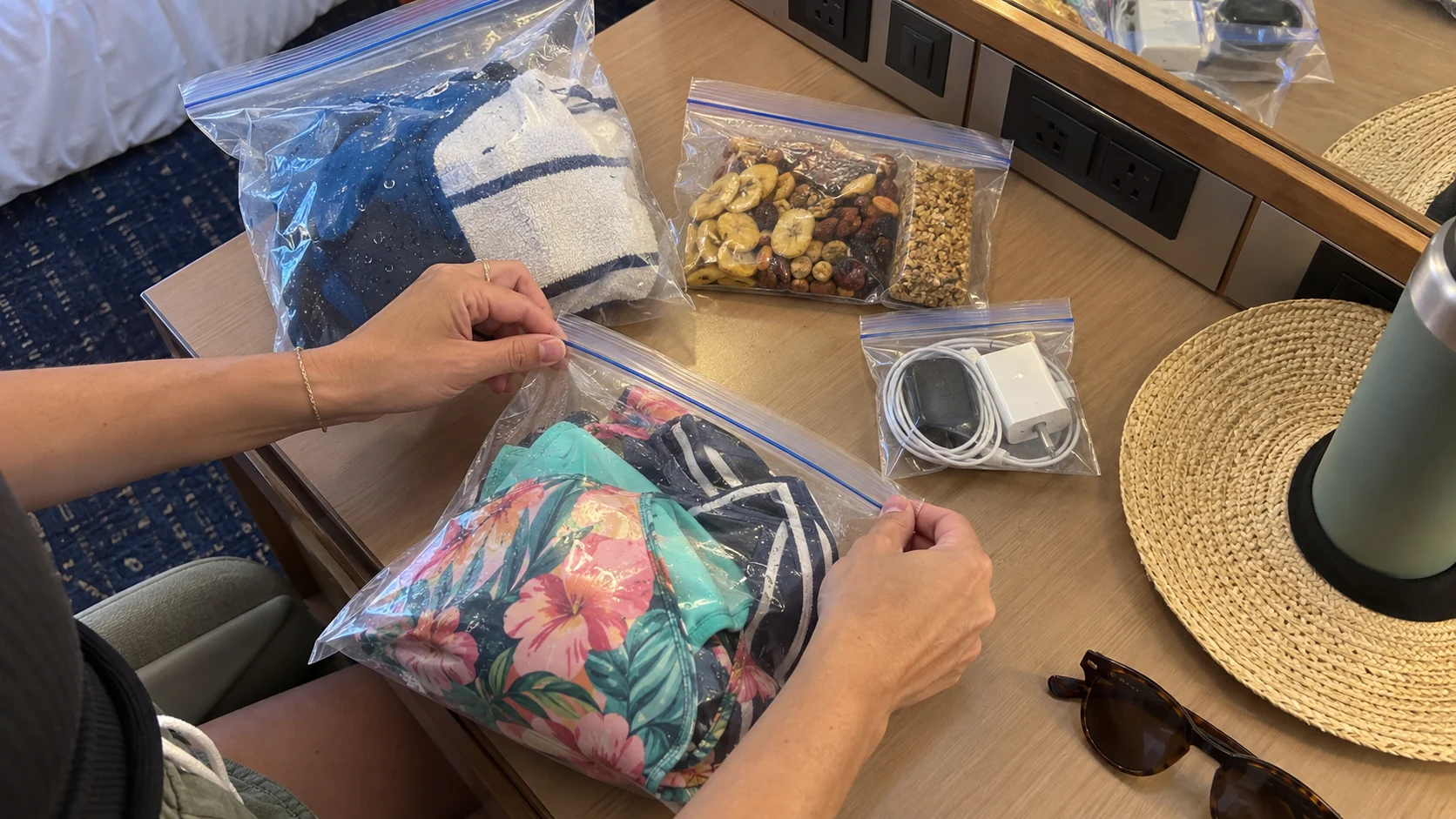
22. Resealable bags in two sizes
Small zip bags corral leaky toiletries, damp swimsuits, receipts, and cables. Big ones hold wet sandals or protect papers on a rainy excursion.
Don’t use them to carry food off the ship. Many ports have strict agriculture rules, and a forgotten apple in your bag can earn you a fine.
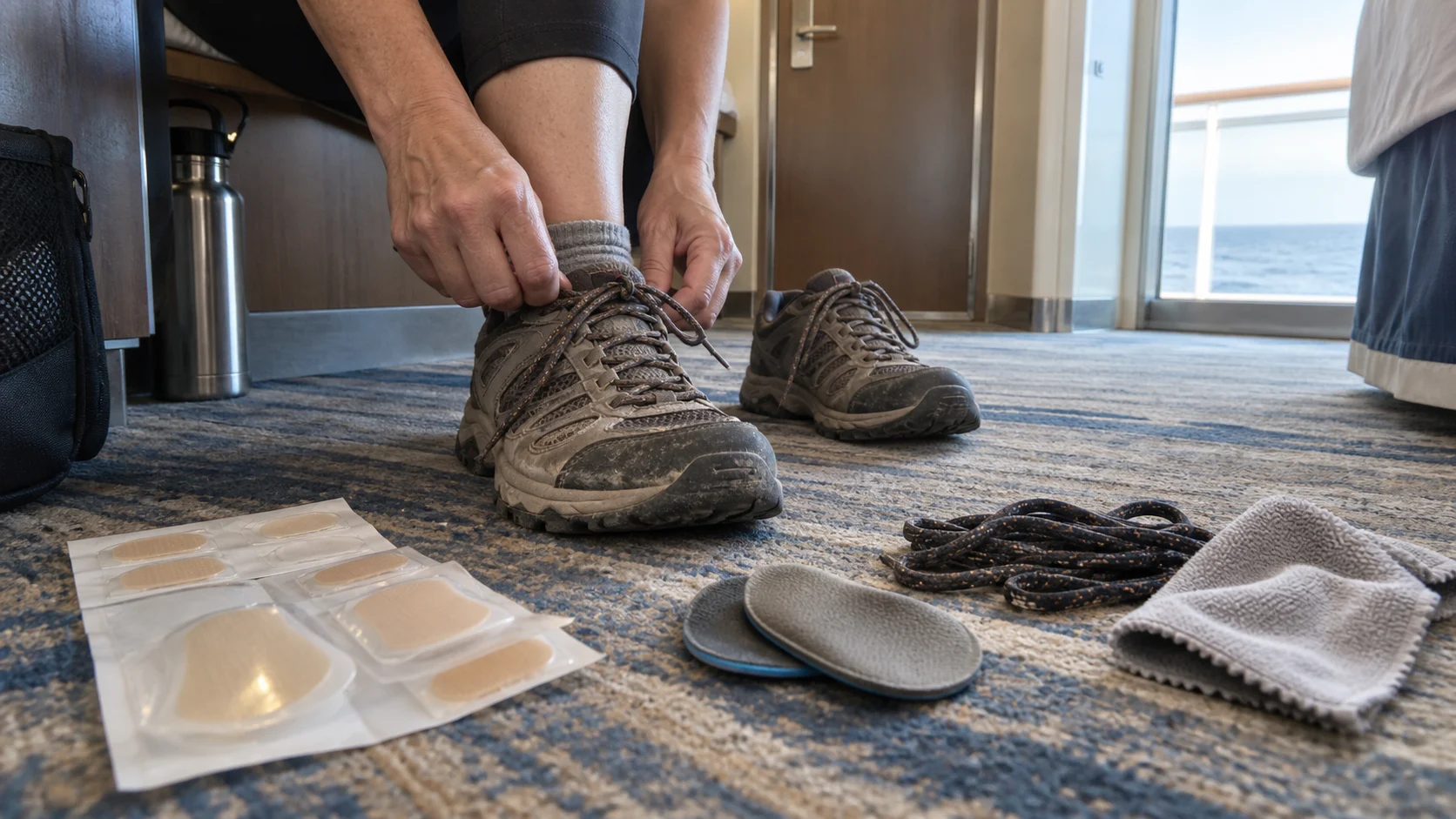
23. The boring shoe supplies
Everyone packs shoes and forgets what makes them wearable: blister pads, the right socks, spare laces, and a bag for sandy or muddy soles. Break in new walking shoes at home, because a port day is a terrible time to find the rub spot.
Pack for traction and distance, since wet gangways and cobblestone streets are both very real. Our cruise clothing guide helps you match outfits and shoes without bringing your whole closet.
24. A light rain layer and one warm layer
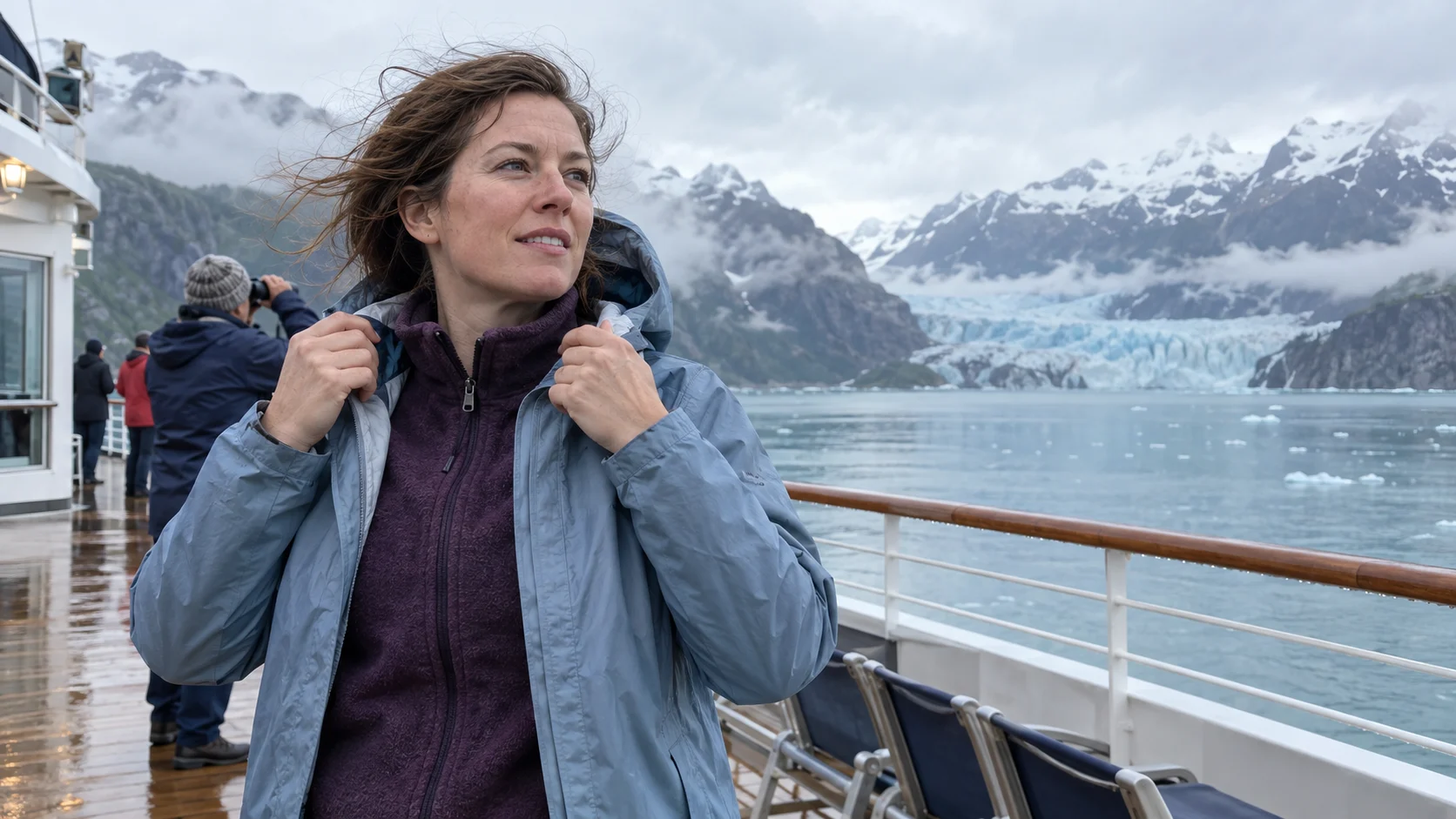
Tropical doesn’t mean dry, and a sunny sail-away tells you nothing about tomorrow’s excursion. A packable rain jacket beats a flimsy umbrella on a windy pier every time.
I’ve had port days in Whittier and Icy Strait Point, and that stretch of Alaska coast is famously wet. For any Alaska sailing, a real rain shell goes in the bag first.
Ships also crank the AC in theaters and dining rooms. One neutral sweater or wrap that goes with everything saves you from packing a different layer for every outfit.
25. Your own small comfort item
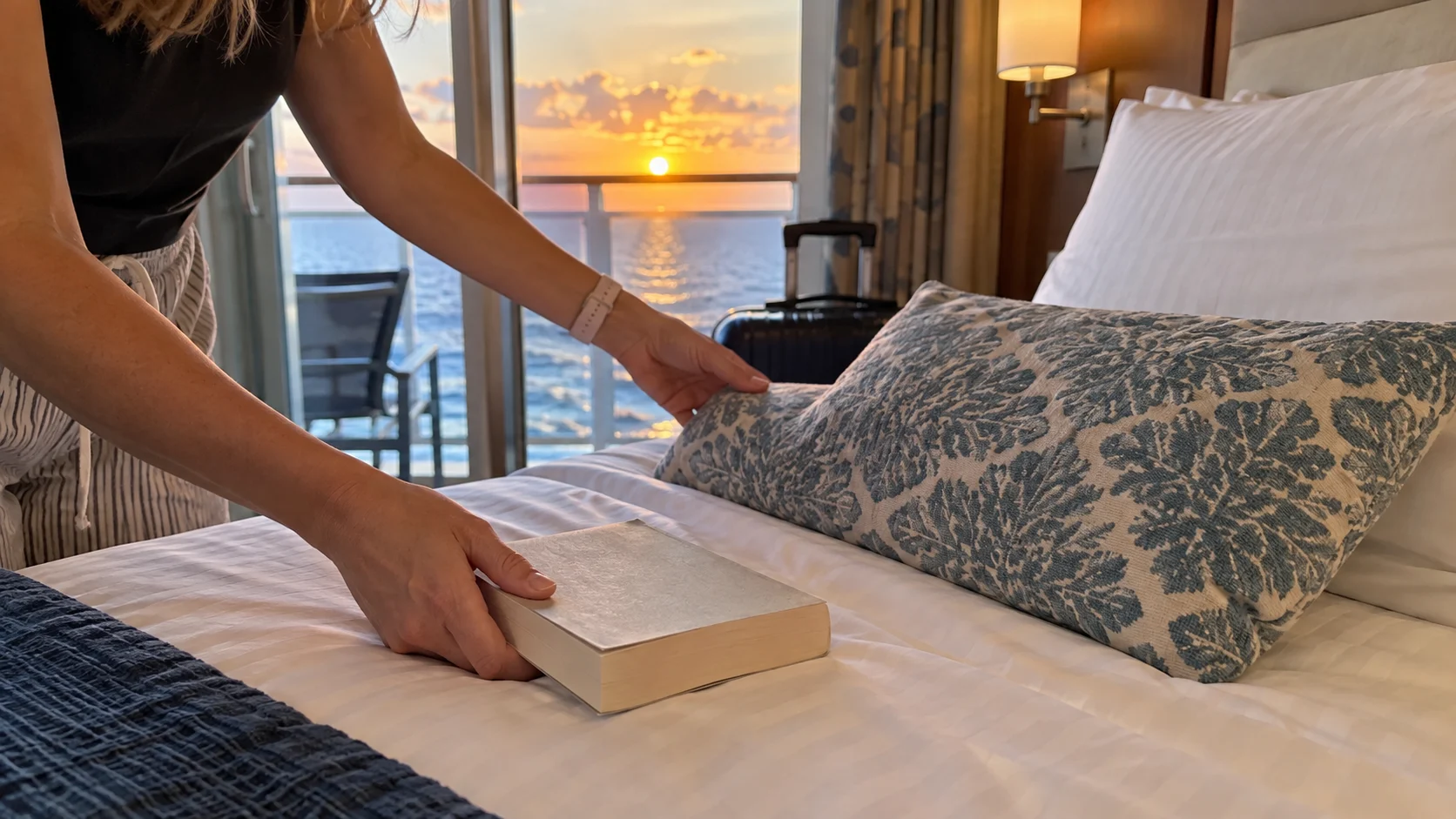
This could be your favorite tea bags, cozy socks, a paper book, a kid’s favorite stuffed animal, or the one hair product you can’t live without. The right pick is small, allowed, and something you actually use at home.
Keep it to one or two things. Choose whatever you’d miss every single day, and leave the rest of your bathroom cabinet at home.
Popular packing hacks that break cruise rules
Viral packing lists spread a lot faster than cruise policies change. Before you copy one, make sure the item is allowed on your line, OK with your airline, and actually useful in a cabin.
- Power strips and extension cords: Banned on Royal Caribbean and Disney, and allowed on Carnival only without surge protection. A multi-port USB wall charger works on all three.
- Irons and steamers: Banned on Royal Caribbean and Carnival, and Norwegian bans clothing irons along with other heating appliances. Use wrinkle spray or the ship’s pressing service.
- Coffee makers and immersion heaters: Norwegian bans coffee machines with hot plates and immersion heaters by name, so plan on grabbing coffee from the buffet or a cafe.
- Bluetooth speakers: Carnival bans all portable speakers and holds them until the end of the cruise. On any line, keep your music in your headphones.
- Walkie-talkies: Norwegian bans them. Royal Caribbean allows two-way radios with a range up to 10 miles (16 km) and power up to 5 watts, but steel walls cut the signal fast.
- Drones: Norwegian prohibits them outright, so check your own line’s policy before packing one.
- CBD and marijuana: Carnival and Norwegian ban them, even products that are legal in your home state.
- Alcohol: Allowances vary by line. Carnival, for example, lets guests 21 and older bring one 750 ml bottle of wine or champagne at embarkation, so read your line’s current beverage policy instead of packing from memory.
- Knives and multitools: Airline and cruise security rules both apply, and Norwegian bans knives with blades longer than 4 inches (10 cm).
Check your line’s prohibited items page a few days before you leave, not just when you book. Policies do change, and port security won’t care what someone posted in a forum three years ago.
A five-minute final packing check
Stand at your door with just your carry-on and picture the first 24 hours without your suitcase. Can you board, take your meds, see clearly, charge your phone, change clothes, and pull up every booking?
If yes, run through this quick check:
- Touch every original travel document, not a photocopy.
- Count prescription doses and put them in your carry-on.
- Match each essential device to its charger.
- Put power banks in your carry-on bag.
- Pull out any power strip or surge protector your line bans.
- Download maps, confirmations, and emergency contacts.
- Recheck airline, cruise line, and destination rules.
- Attach cruise luggage tags the way your line tells you to.
Our cruise packing tips help you squeeze the final pile into fewer bags. The trick is cutting the “maybe” items without touching your carry-on essentials.
What to do if you forget something anyway
Don’t panic. Ships sell sunscreen, toiletries, and basic over-the-counter medicine, and most ports have drugstores, although hours and brands vary.
Ask your cabin steward or guest services before you buy anything, since they can often help with small stuff. If a forgotten item doesn’t affect your health, documents, or safety, repeat a shirt, buy the toothpaste, and get back to vacation.
The big exception is prescription medicine. The ship’s medical center can help in a pinch, but visits come with a fee, so your meds are the one thing to triple-check.
New to cruising? Our first-time cruise tips walk you through embarkation day and what a normal port day looks like, and packing gets a lot easier once you know how the days flow.
Final thoughts on forgotten cruise items
The best forgotten items list isn’t the longest one. It’s the one that protects your documents, meds, power, and first-day basics, then adds a few small comforts that fit how you actually travel.
Pack those in your carry-on, check your line’s current rules, and stop adding gadgets once the bag zips. A lighter suitcase and a calmer brain are the best things you can bring aboard.