21 Cruise Packing Tips That Prevent Common Mistakes
Cruise packing gets easier when every item has a job tied to the actual sailing. A Caribbean weekend, Alaska voyage, expedition trip, and formal transatlantic crossing do not share one perfect list, no matter how many “must-have” gadgets appear online.
These 21 cruise packing tips protect documents, medications, first-day comfort, and port plans while leaving the speculative clutter at home.
Start With the Sailing, Not a Generic List
1. Check the Weather by Port and Time of Day
Look at typical conditions while planning, then check the short-range forecast before closing the suitcase. Pack for exposed decks, early arrivals, rain, wind, and air-conditioned interiors rather than one afternoon temperature.
Layering beats one bulky coat on most sailings because conditions change between the ship and shore. For cold routes, make the outer layer wind-resistant and let thinner insulating pieces handle the temperature changes underneath.
2. Read the Exact Dress Guidance
“Formal,” “gala,” “elegant,” and “dress to impress” do not mean the same thing on every line. Check the current policy, number of suggested evenings, specialty-restaurant rules, themed parties, and whether your own comfort level calls for participating at all.
A coordinated outfit that reuses shoes and a layer is more efficient than packing a separate look for every night. Dress codes are a reason to plan, not a reason to surrender half the suitcase.
3. Build Around Rewearable Pieces
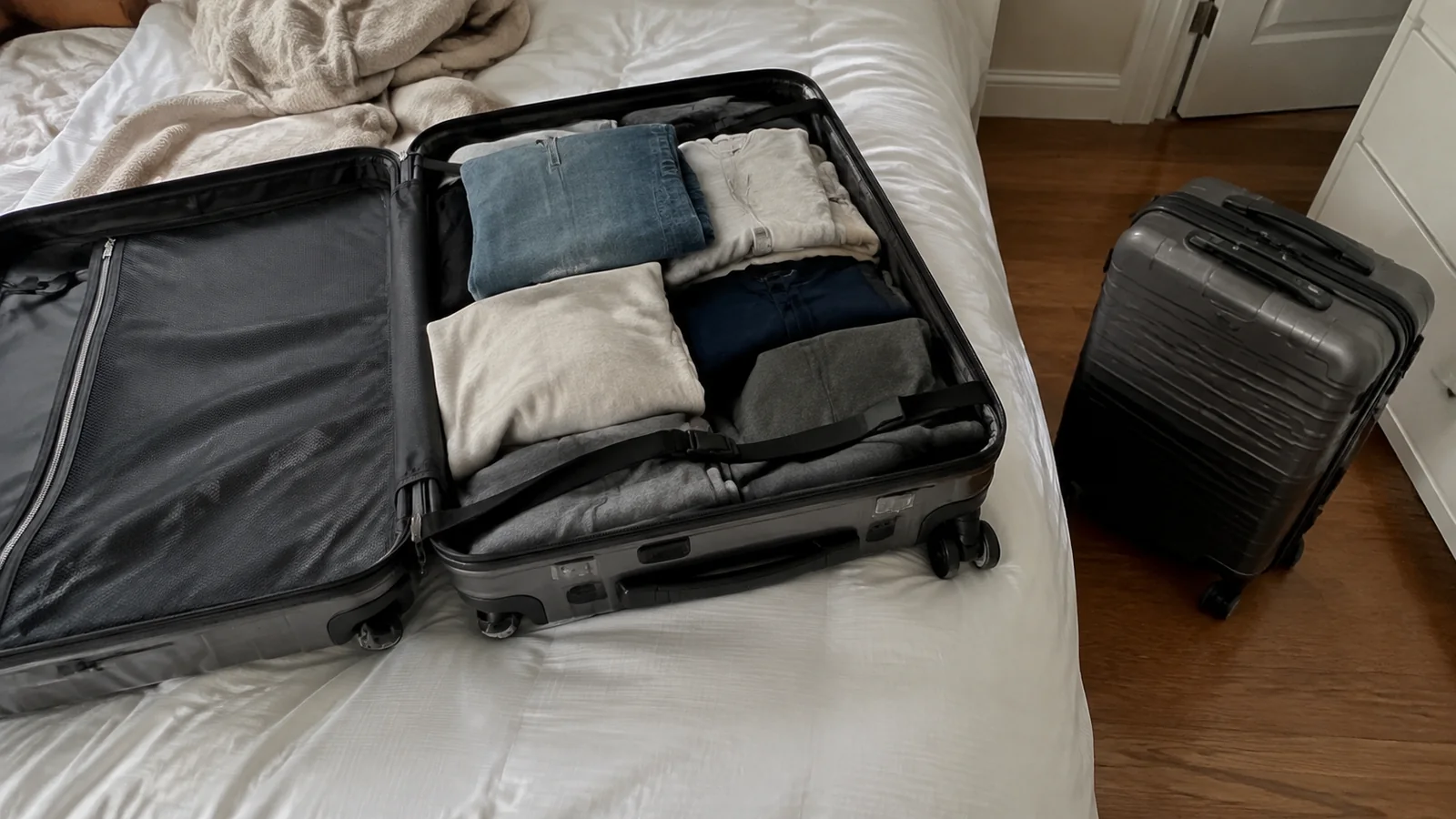
Choose bottoms that work with several tops, one light layer that fits over dinner clothes, and shoes that cover multiple settings. Neutral does not have to mean dull, but every awkward one-use item should earn its space.
Check laundry options before deciding how many days of clothing to bring. Self-service machines, ship laundry, bag specials, and sink washing each support a different packing strategy.
Protect the Items That Can Stop the Trip
4. Keep Travel Documents With You
Carry passports or other required originals, visas, cruise documents, insurance details, and identification for minors in your personal bag. Never attach the only copy of a critical document to luggage handed to a porter.
The U.S. State Department recommends passport books even when a cruise may allow another document because an emergency flight home can require one. Requirements depend on citizenship, itinerary, destination, and cruise line, so a friend’s last trip is not proof for yours.
5. Carry Medication and Medical Equipment
Keep medication in your carry-on, with labeled packaging and supporting documentation appropriate to the route. Bring enough for the voyage plus a delay margin, and do not count on the ship or a small port pharmacy stocking the exact prescription.
Contact the cruise line early about CPAP water, extension arrangements, refrigeration, sharps, oxygen, mobility devices, and dietary needs. Security and storage rules can differ for medical equipment, so written approval is more useful than a product seller’s assurance.
6. Make an Offline Document Folder
Save confirmations, emergency contacts, insurance, hotel and transfer details, prescriptions, and passport copies to a folder that opens without service. Add paper backup for the details you would need after a lost phone or empty battery.
A copy does not replace an original at immigration. It gives you reference numbers and proof while you contact the right authorities.
Pack the Embarkation-Day Bag First
7. Assume Checked Bags Will Arrive Later
Ship staff may deliver checked luggage after cabins open and sometimes after dinner begins. Carry medicine, documents, valuables, electronics, sunscreen, swimwear, and one change of clothes so boarding day works without the suitcase.
Keep the bag small enough to manage through the terminal, lunch, and safety procedures. Cabins and bag-drop services may not be available immediately.
8. Split Essentials Between Suitcases
Travel partners should place one everyday outfit and basic toiletries in each other’s bags. If an airline or port delays one suitcase, nobody loses every wearable item at once.
Use a packing cube or labeled pouch for the borrowed space so repacking stays simple. This small redundancy is much more useful than doubling every accessory.
9. Keep Power Banks in the Carry-On
If flying to the port, airline security rules also shape cruise packing. TSA directs passengers to carry devices containing lithium metal or lithium-ion batteries in carry-on baggage, with detailed limits depending on the battery.
Check the airline’s current battery policy too, especially for larger power banks, mobility aids, smart luggage, or spare batteries. Capacity labels should remain readable.
Respect Ship Safety Rules
10. Check the Cruise Line’s Prohibited List
Do this for the exact line shortly before departure because policies change and brands disagree. Heating appliances, candles, weapons, drones, alcohol, sports equipment, and electrical accessories can each have special rules.
Carnival’s current prohibited-items guidance, for example, addresses power strips, multi-outlet adapters, cords, fans, oxygen, and CPAP machines. That is useful only for a Carnival sailing, not permission to bring the same item on another line.
11. Ignore the Phrase “Cruise Approved”
No universal cruise authority certifies a power strip, organizer, fan, or steamer for every ship. Royal Caribbean currently prohibits power strips and multi-plug outlets, illustrating why a retailer’s label cannot replace carrier policy.
If a medical device needs power near the bed, contact accessibility services before sailing. Do not improvise with an extension cord that may be confiscated.
12. Leave Fire Risks at Home
Pack wrinkle-release spray or use ship laundry instead of bringing an iron or steamer unless the line explicitly permits it. Choose battery candles rather than real flames, and use the cabin hair dryer unless your line allows a personal one with your specifications.
13. Verify Beverage Rules
Alcohol, bottled water, soda, and corkage policies vary by line, embarkation port, and beverage type. Read quantity, container, carry-on, and consumption rules before shopping on the way to the terminal.
Do not move a permitted drink into a different bottle. Sealed original packaging is often part of the rule and makes security screening much easier.
Choose Cabin Items That Solve Real Problems
14. Bring a Night Light With a Safe Power Source
An inside cabin can become completely dark, while unfamiliar furniture makes a midnight walk awkward. A compact battery light or motion light provides orientation without occupying a scarce outlet or shining across the whole room.
15. Pack Organization, Not Furniture
A few packing cubes, zip pouches, clips, and a laundry bag usually control a cabin better than a bulky organizer. Over-the-door products can damage doors or conflict with rules, so verify permission and protect the surface if you bring one.
The cabin setup checklist separates ship-safe storage ideas from tricks that create clutter or maintenance problems. Unpack first, then solve the storage problem that actually exists.
16. Bring Charging Cables That Match Your Devices
Count phones, watches, cameras, headphones, and medical devices, then pack tested cables and one compliant charger. Check the ship’s cabin specifications because outlet type and USB availability vary by vessel, cabin renovation, and bed location.
17. Skip Duplicate Ship Supplies
Most mainstream ships provide towels for pool use and often for approved shore use, plus basic soap and shampoo. Confirm your line’s offerings before packing beach towels, a hair dryer, hangers, or a large bottle of something already provided.
The longer cruise essentials list is best used as a menu, not an order form. Choose the items that solve needs on this ship and route.
Pack for Port Days

18. Match Footwear to the Excursion
Bring broken-in walking shoes for city days and activity-specific footwear only when the tour requires it. Water shoes help on some rocky beaches, but they are dead weight on an itinerary built around museums and cafes.
Read excursion restrictions for closed toes, heel straps, hiking traction, weight, or mobility. Comfortable footwear still must satisfy the operator’s safety rule.
19. Create One Port-Day Kit
Use a light bag for the required identification, ship card, water, sun protection, weather layer, medicine, one payment backup, and port contact details. Add a dry bag or phone pouch only when the day includes spray, rain, or swimming.
Do not carry every passport and credit card by reflex. Follow the ship’s destination-specific document instructions and leave unnecessary valuables secured onboard.
20. Pack Sun and Insect Protection
Sun exposure matters on cool, cloudy, and windy decks as well as tropical beaches. CDC recommends sunscreen and destination-appropriate insect precautions, with health preparation based on the ports rather than the ship alone.
Bring products you will actually reapply and clothing that adds coverage. Reef rules and ingredient restrictions may apply at specific destinations, so check locally before departure.
Prepare for the Final Night
21. Keep a Disembarkation Outfit Outside
If you place luggage in the hallway for collection, first remove tomorrow’s clothes, shoes, documents, medication, chargers, and toiletries. The famous cruise mistake is not dramatic: it is waking up with only pajamas and no suitcase.
Use a separate pouch for anything needed after security or customs, including car keys and parking information. Review the account and transport details before packing the phone charger.
What Not to Pack
- Multiple “just in case” formal outfits that do not fit your ship’s culture
- Full-size toiletries when a smaller amount covers the trip
- Beach towels, robes, hangers, and hair dryers supplied by the ship
- Unverified power strips, steamers, candles, or extension cords
- New shoes that have never handled a full walking day
- Every cruise gadget recommended by an affiliate storefront
If you enjoy accessories, the cruise accessory comparison explains which problems each item is meant to solve. A lanyard, waterproof pouch, binoculars, or magnetic hook can be useful, but none belongs in every suitcase.
A Simple Final Packing Check
- Required documents and medication are in the personal bag.
- The first day works even if checked luggage is late.
- Every electrical item follows the current cruise-line policy.
- Every battery follows airline rules for the trip to port.
- Port clothing matches weather, culture, terrain, and tour rules.
- The final-night plan leaves clothes and essentials outside.
Bottom Line
The best cruise packing strategy is specific, layered, and a little skeptical of gadgets. Protect documents and medicine, build one capable embarkation bag, respect ship and airline restrictions, and let repeatable clothes do most of the work.
Pack for the itinerary you booked, not an imaginary emergency or somebody else’s favorite accessory. The reward is a lighter cabin, a calmer first day, and far less time managing belongings at sea.