Fernando de Noronha: Fees, Trails, Beaches and Trip Planning
Fernando de Noronha rewards travelers who plan the unglamorous details before dreaming about beaches. You may need a Brazil visa, an island environmental fee, a separate marine-park ticket, and reservations for specific trails, while weather and conservation closures can redraw the itinerary after you arrive.
Why Fernando de Noronha takes more planning
Fernando de Noronha is a remote Brazilian archipelago in the Atlantic, administered as part of Pernambuco. The main island holds the airport, lodging, restaurants, roads, and most visitor services, while protected land and water limit how some celebrated places can be used.
This is not a beach destination where one resort wristband settles every cost and permission. The environmental fee and national-park ticket pay for different access, and a park ticket still does not guarantee a space on a capacity-controlled trail.
Build the trip in this order: Brazil entry permission, flights, lodging, island fee, park ticket, trail plan, transportation, and weather backup. That sequence prevents a beautiful reservation from sitting behind a missing document or unavailable flight.
The two Fernando de Noronha charges are different
1. Taxa de Preservação Ambiental, or TPA
The TPA is the territorial environmental preservation fee tied to how long a visitor stays on Fernando de Noronha. The island administration’s current 2026 TPA schedule lists R$105.79 for one day, with a duration-based schedule rather than one flat admission.
The official 2026 TPA schedule lists R$105.79 for a one-day stay and increases by length of stay. Do not convert that into a fixed U.S. dollar promise because both the fee schedule and exchange rate can change; enter your exact arrival and departure dates in the official payment system for the total that applies.
Paying ahead can shorten arrival formalities, but save the voucher offline and on paper. If flights change, update the declared stay through the official process rather than assuming the original payment will reconcile itself.
2. Marine National Park ticket
The Fernando de Noronha Marine National Park ticket covers public visitor areas inside the federal park, not the entire island. The park’s current visitor page lists R$384 for the general public and R$192 for Brazilians, valid for 10 days.
Those prices took effect in November 2025 and were still posted on September 4, 2026. Check again before purchase because a future adjustment, eligibility rule, or sales process could change.
The ticket can currently be purchased online or at the Visitor Center in Boldró, where the listed ticket-office hours are 8 a.m. to 7 p.m. Specialized services, guides, boats, rentals, and tours remain separate expenses.
Do you need both?
Most vacationers pay the TPA because they are staying on the island. Buy the park ticket if your plan includes park-controlled attractions, viewpoints, beaches, trails, or water access that require it.
A traveler who visits only nonpark areas may not use enough park sites to justify the second ticket, but many headline experiences lie within the park. Mark every desired place on the official map before deciding.
Brazil entry rules come before island rules
Fernando de Noronha has no separate international immigration system for tourists arriving from abroad. You first meet Brazil’s passport, visa, health, and customs requirements, then take a domestic flight to the island.
As of September 4, 2026, the official Brazil eVisa portal identifies U.S., Canadian, Australian, and Chinese nationals among those directed to its electronic visa process. Nationality, residence, passport type, trip purpose, and rule changes matter, so use the eligibility tool rather than copying another traveler’s answer.
Apply only through the government-designated portal linked by a Brazilian consulate or embassy. A search ad can look official, charge a service premium, and still leave you uncertain about the application’s status.
Your airline may require proof before the first flight to Brazil, even though Noronha itself is a domestic segment. Keep the visa approval, passport, return or onward booking, lodging details, TPA voucher, insurance, and park ticket accessible without internet.
How to get to Fernando de Noronha
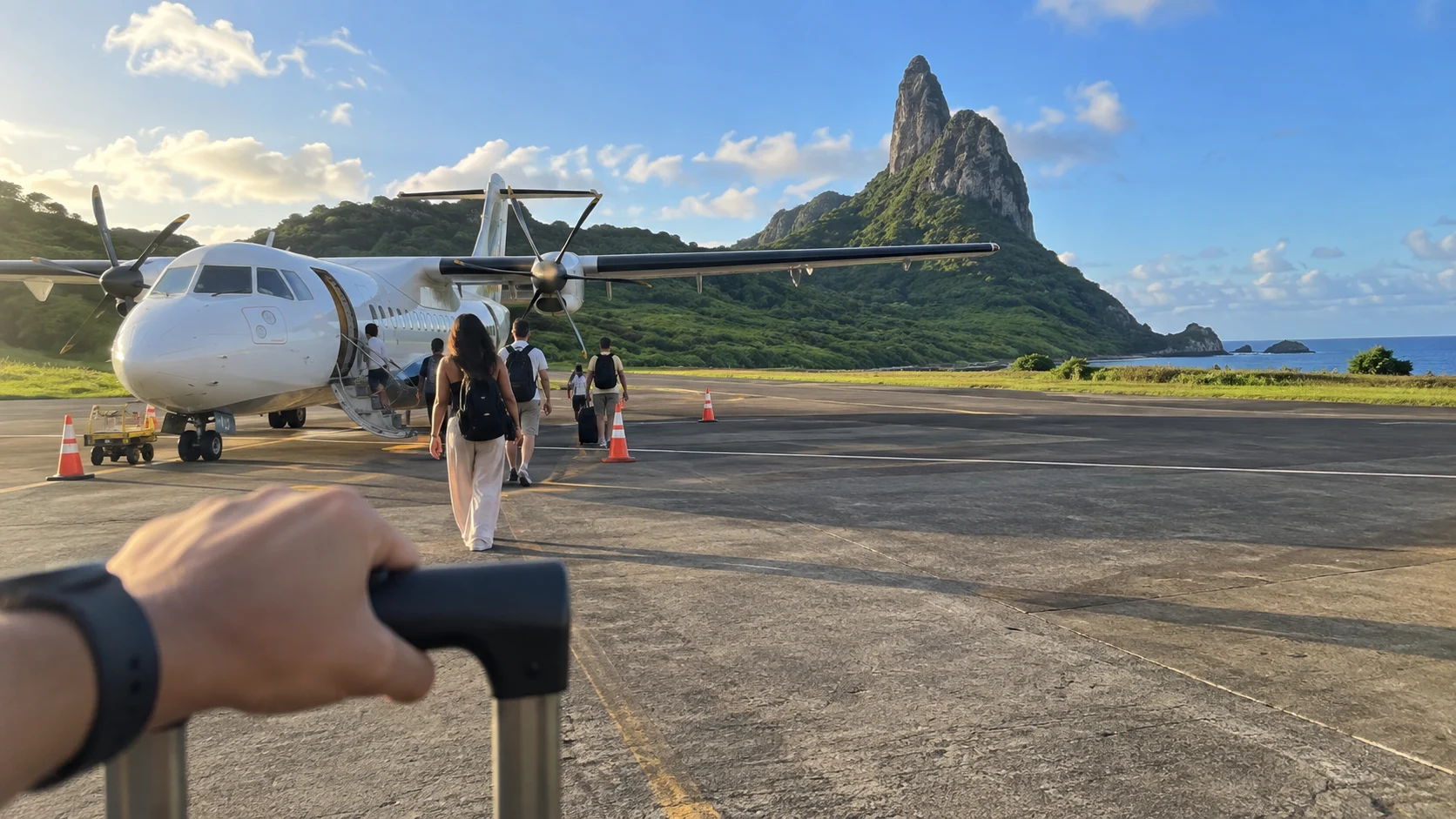
Visitors normally fly to Fernando de Noronha Airport, code FEN, from mainland Brazil. Nonstop cities, airlines, aircraft, frequency, baggage limits, and connection quality change, so search your dates rather than relying on an old statement that every trip connects through Recife or Natal.
The island’s new passenger terminal was officially inaugurated in May 2026, but a newer terminal does not remove weather, runway, or small-market schedule risk. Leave a substantial buffer before a separate international ticket.
The safest flight strategy
- Put the mainland connection and island flight on one ticket when practical.
- Allow an overnight in the mainland gateway if separate tickets are unavoidable.
- Do not schedule a nonrefundable international departure shortly after leaving Noronha.
- Check checked-bag limits for every segment, since the smallest aircraft can govern.
- Use flexible lodging and transfer terms for the first and last nights.
A same-day connection that is legal on paper can still be fragile. Delayed bags, immigration, terminal transfers, weather, or a schedule change have fewer recovery options on an island route.
Trail reservations are a separate step
Several park experiences use timed reservations to control visitor pressure and safety. The current park page identifies Capim Açu, Enseada dos Abreu, Piscina da Atalaia, Pontinha Caieira, Atalaia Pontinha Caieira, and Morro São José among the attractions requiring scheduling.
Some routes also require an accredited guide, including Capim Açu, Pontinha Caieira, Atalaia Pontinha Caieira, and the swimming version of Morro São José under the presently posted rules. Requirements can change with tides, staffing, trail condition, or management decisions.
Do not buy a tour from an unverified seller who says a park ticket guarantees a trail slot. The official reservation and the guide booking are distinct, and a guide cannot create capacity where the park has closed it.
How to protect your trail plan
- Buy or activate the park ticket through the official system.
- Review the live list of reservation-required attractions.
- Reserve as early as the current booking window permits.
- Hire an accredited guide when the route requires one.
- Save the QR code, time, meeting point, and equipment rules offline.
- Arrive early and accept that conditions can still cancel access.
Atalaia and other natural pools are ecosystems, not swimming pools with a fixed opening schedule. Tide, turbidity, heat, wildlife, and staffing can change access or shorten water time.
If hiking is a major reason for the trip, apply the same access-first thinking used in this permit and season guide to outstanding hikes. A famous trail is only a good choice when you can enter legally and complete it safely.
Check live closures before every park day
The park’s official alerts page is more important than any static itinerary. On September 4, 2026, it reported that water activities at Praia do Sueste were suspended while the sand remained available for walking and observation.
The same page reported access to Cachoeiras do Sancho closed because of landslide and rockfall risk. That notice concerns the stated access area, so do not turn it into a claim that every Sancho experience is closed without checking the latest wording.
Closures are a conservation and safety tool, not a service failure. Build at least two substitute activities for every must-do water or trail day.
Two practical five-day Fernando de Noronha plans
I would choose the active version if everyone is comfortable with sand, uneven trails, and the possibility of ladders, then use the scenery version when easier access matters more than water time. Both keep nearby stops together and leave a useful substitute for a canceled excursion.
Day one: Vila dos Remédios and a sunset choice
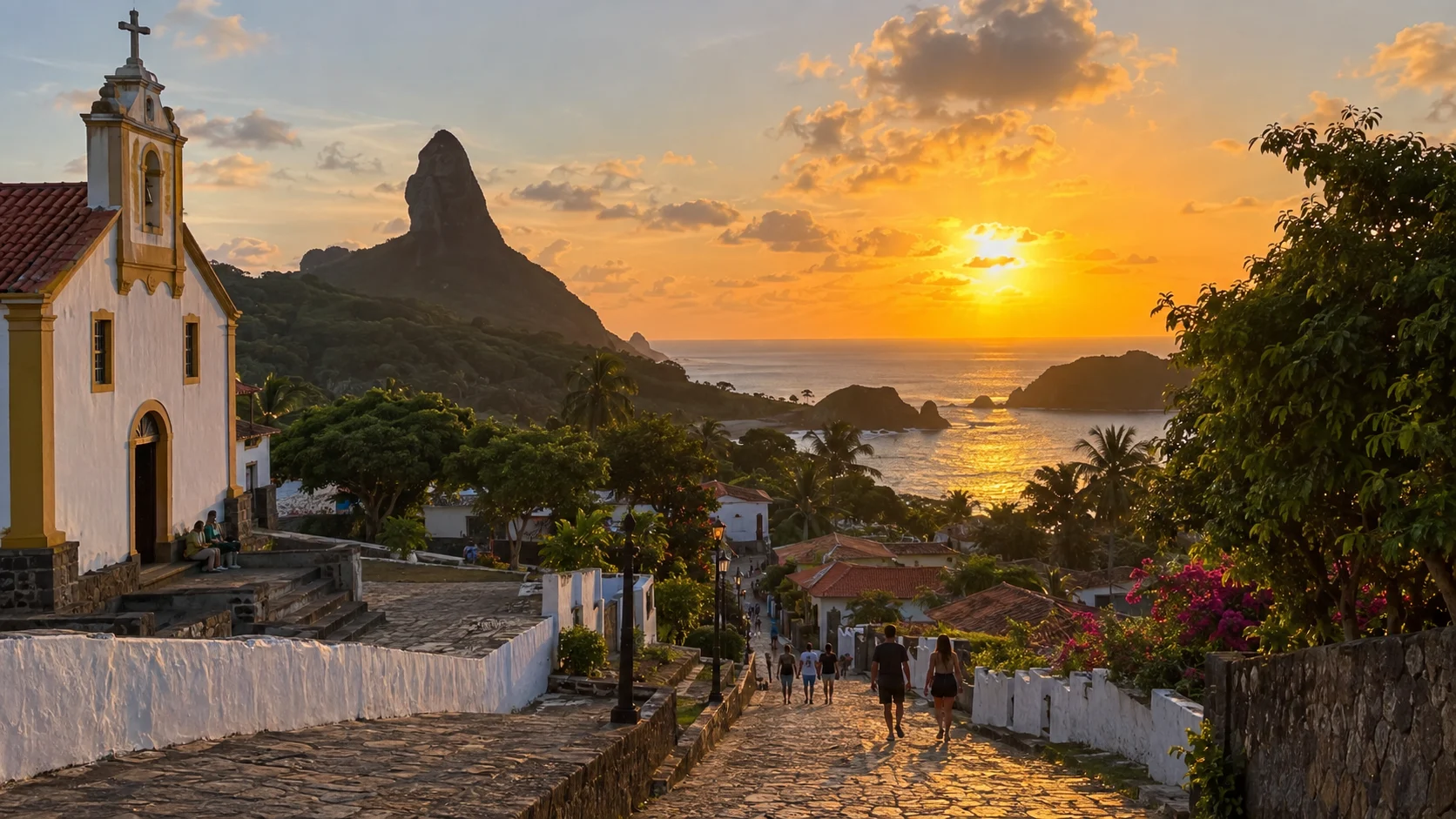
After arrival formalities, settle into your pousada and explore Vila dos Remédios rather than starting with an isolated beach. I would make the church and historic center the first outing, with drinking water and an easy dinner arranged before a longer walk.
For the active plan, consider Forte Nossa Senhora dos Remédios for sunset, allowing time for the uphill approach and current admission arrangements. For the easier version, choose a prearranged car drop near Praia da Conceição and enjoy the view from an accessible seating spot without assuming the sand is easy to cross.
Day two: Golfinho-Sancho, with or without the beach descent
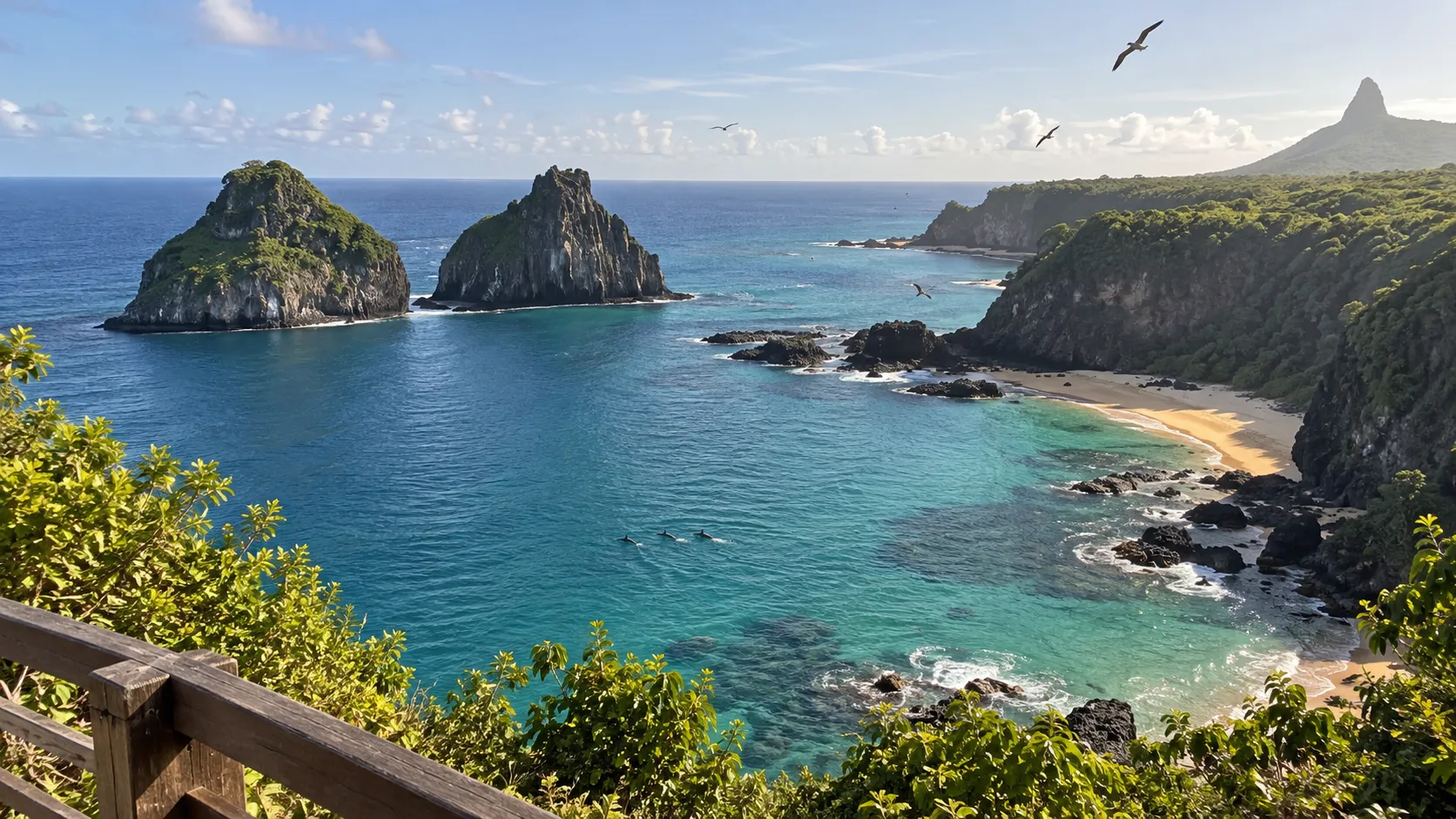
My first-choice park walk is the Golfinho-Sancho visitor area, entering through PIC Golfinho-Sancho with your park ticket. Start with the Baía dos Golfinhos viewpoint, then continue toward the Sancho viewpoints, allowing roughly two to three hours for a leisurely visit and breaks.
The park’s attraction page explains that the dolphin bay is a resting area viewed from above, with no swimming or boat traffic inside the bay. Go early for the possibility of seeing spinner dolphins, but keep expectations flexible because wildlife does not arrive by appointment.
Active travelers can add the Sancho beach descent only when the ladders, posted one-way access times, and sea conditions work for the group. I would skip that descent if anyone is uncomfortable in narrow rock passages or cannot manage a ladder independently.
For the scenery version, remain on the elevated viewpoint routes and return by the approved access path. The park’s accessibility information distinguishes the accessible Golfinhos trail from the steeper Sancho approach, so arrange assistance and a suitable vehicle in advance rather than assuming every boardwalk is equally easy.
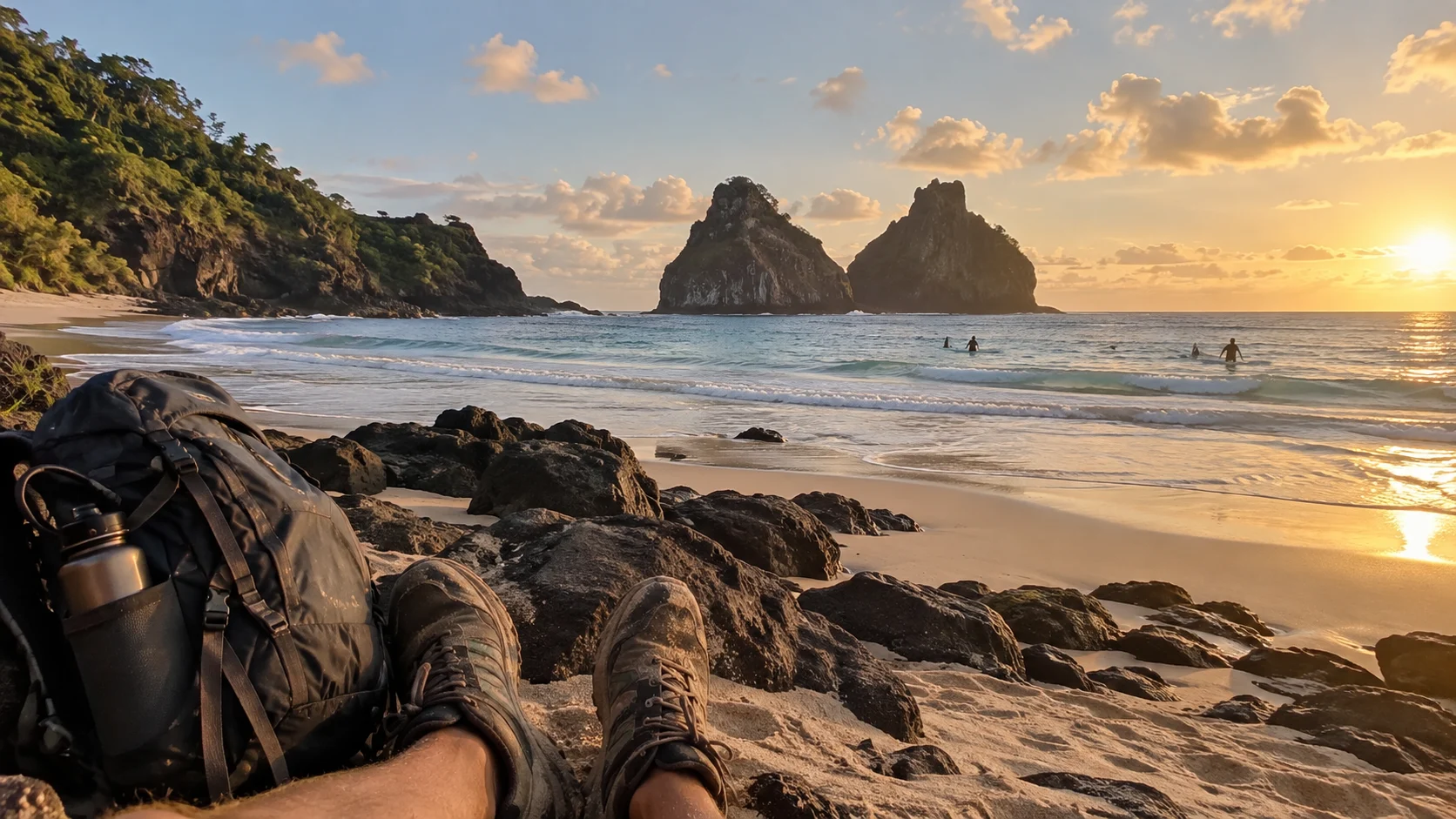
Day three: Cacimba do Padre and a conditional reserved trail
For the active version, group Cacimba do Padre with the permitted approach toward Baía dos Porcos, using a taxi or guide to avoid spending the day walking between scattered road turnoffs. Take a broad beach-and-Dois-Irmãos view first, then attempt the rocky connection only within the ranger-approved tide window and with any required protective equipment.
Baía dos Porcos has rockfall restrictions, including the closed natural pool on the left-hand plateau, so stay within current marked access. If the approach closes, remain at Cacimba for the view and return by road, with swimming a separate decision based on the day’s surf.
If you want a reserved walking experience instead, compare Pontinha Caieira with an accredited guide and an available slot in the official trail reservation system. I would give that outing its own half-day and follow the confirmed meeting point, tide window, and equipment requirements, rather than attaching it to a full beach tour.
For the easier version, make Cacimba a short scenery stop only if the vehicle access and sand suit your mobility, then return to the village for lunch. Otherwise repeat the accessible Golfinhos route or spend the morning in Vila dos Remédios, where it is easier to shorten the outing.
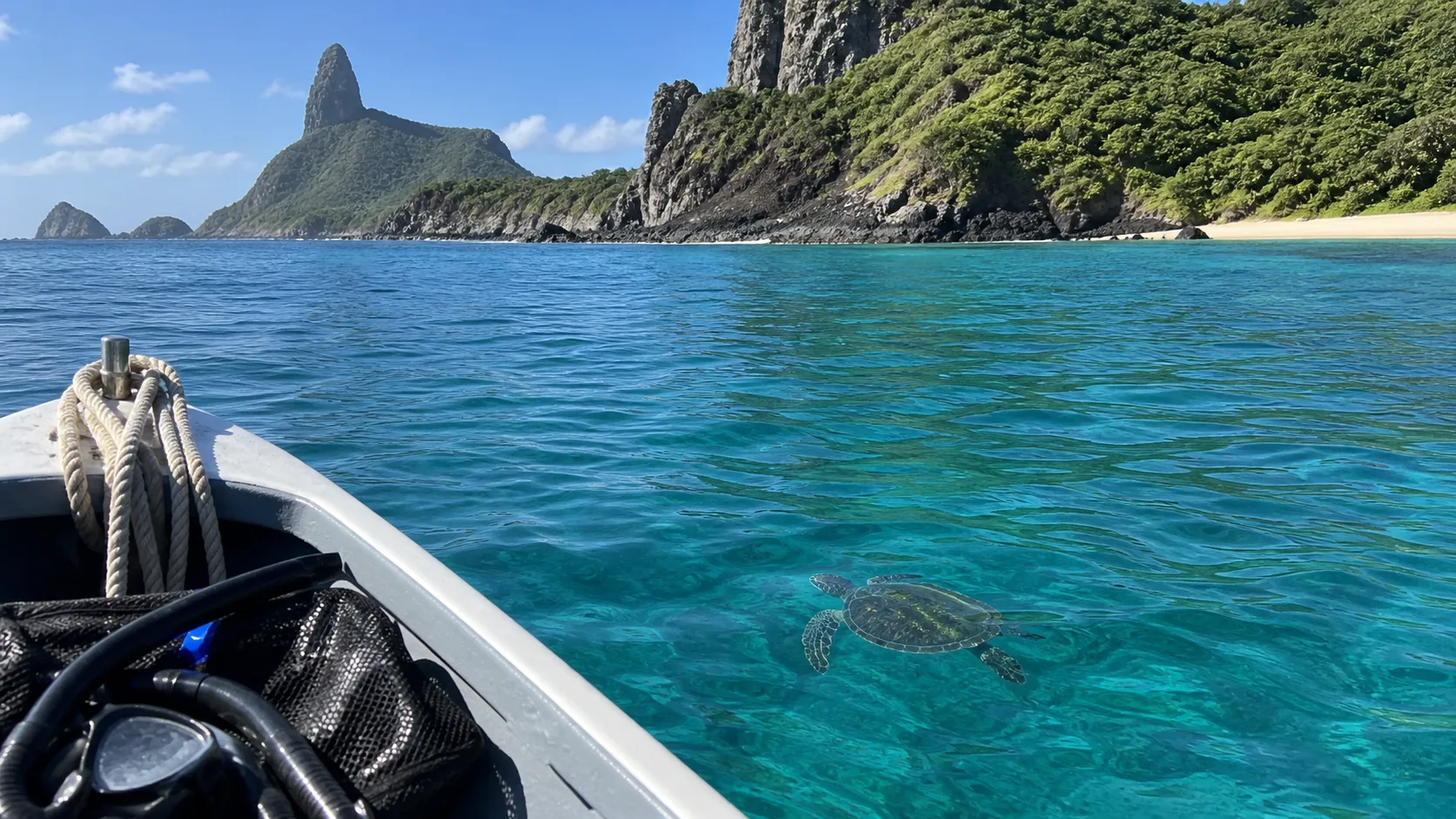
Day four: a boat outing or Sueste scenery
Active swimmers can use this day for a licensed boat excursion departing from Porto de Santo Antônio, with the swim stop selected for current sea conditions. Confirm the boarding steps, flotation equipment, group size, and whether entry back into the boat requires a ladder before paying.
For the scenery version, use a prearranged vehicle to group Sueste’s permitted observation area with a Praia do Leão viewpoint stop. Sueste water activities remain suspended under the park’s posted notice, so this is a shore-view outing rather than a snorkeling plan.
I would not automatically substitute a boat for walking limitations, because boarding a moving vessel can be the harder activity. If sea conditions or access make either version unsuitable, choose a shorter village morning and a longer lunch instead.
For a specific meal stop, I would compare Restaurante Varanda in Vila do Trinta, listed by the Boa Lembrança restaurant association for contemporary cooking and seafood. Reserve it for a meal you want to linger over, and tell the kitchen about shellfish allergies rather than assuming a seafood menu can accommodate every restriction.
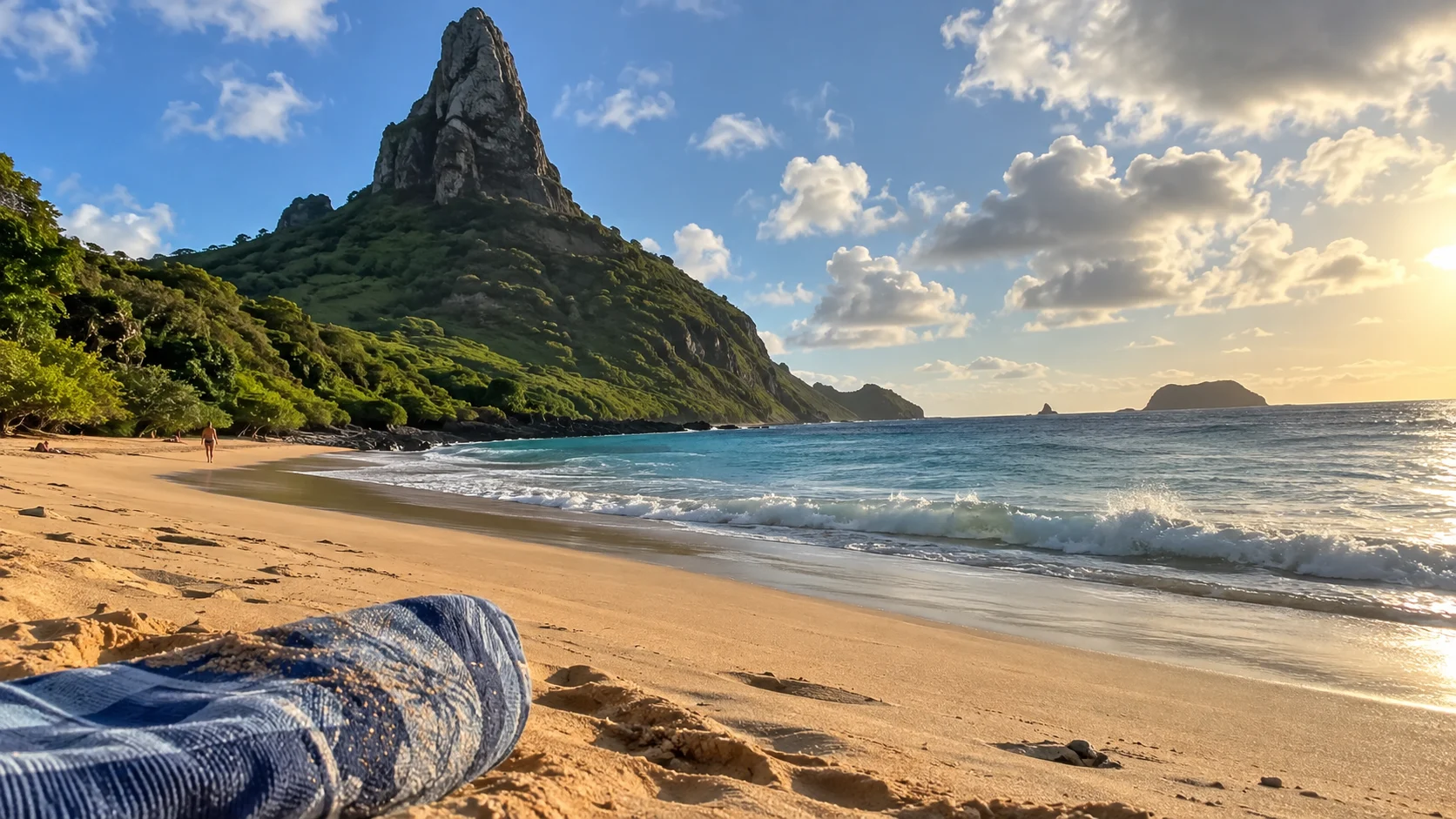
Day five: Conceição and your weather reserve
Make Praia da Conceição the named first choice for the last full day, with a taxi drop and pickup if the hilly village walk would be tiring. Active travelers can choose a locally approved swim window, while scenery-focused travelers can plan a meal and ocean view without committing to the beach itself.
This is also the day I would move a canceled Golfinho-Sancho visit or boat trip into, provided the replacement fits the conditions and flight schedule. Keep scuba diving out of the final preflight window and follow the operator’s no-fly guidance for your actual dives.
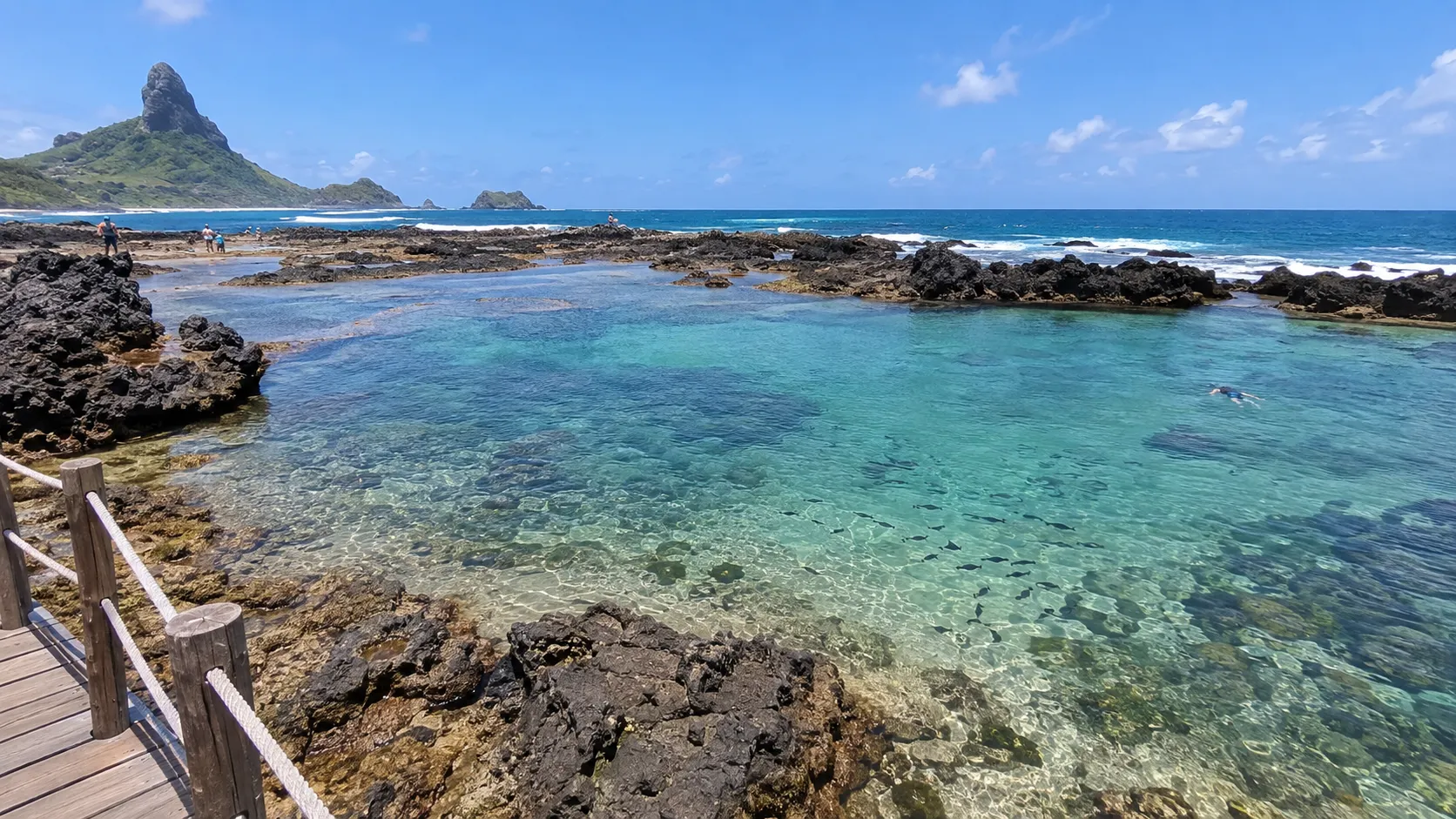
Where Atalaia fits now
I would not build a September 2026 plan around swimming in Atalaia Pool: ICMBio’s social notice announced a three-month bathing suspension beginning August 3. Recheck the park’s current instructions before treating a reopened trail or a bookable slot as permission to enter the pool.
For a later trip after confirmed reopening, the short Atalaia route can replace day three, with the reservation secured separately from any guide booking. Until then, Golfinho-Sancho offers a concrete first-choice park visit, and Cacimba or Conceição supplies a beach-based alternative without depending on that pool.
Which beaches fit which traveler?
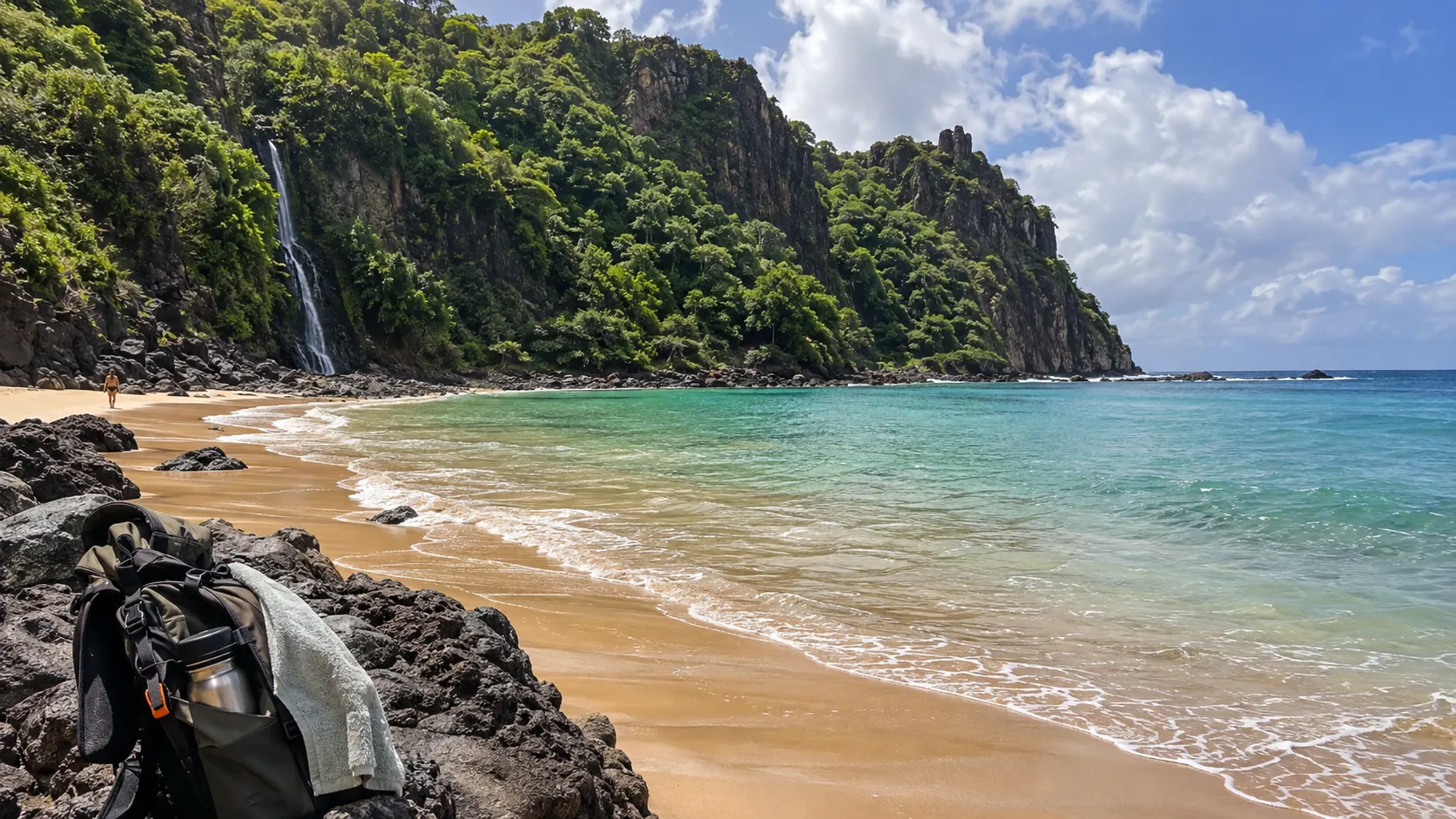
Baía do Sancho
Sancho is the iconic choice for scenery and clear-water expectations, but access can involve steep ladders and stairs. Travelers with claustrophobia, limited mobility, vertigo, or large bags should study the current access route rather than relying on aerial photographs.
Sea and trail conditions still govern the experience. Confirm what is open on the park alert page the same day.
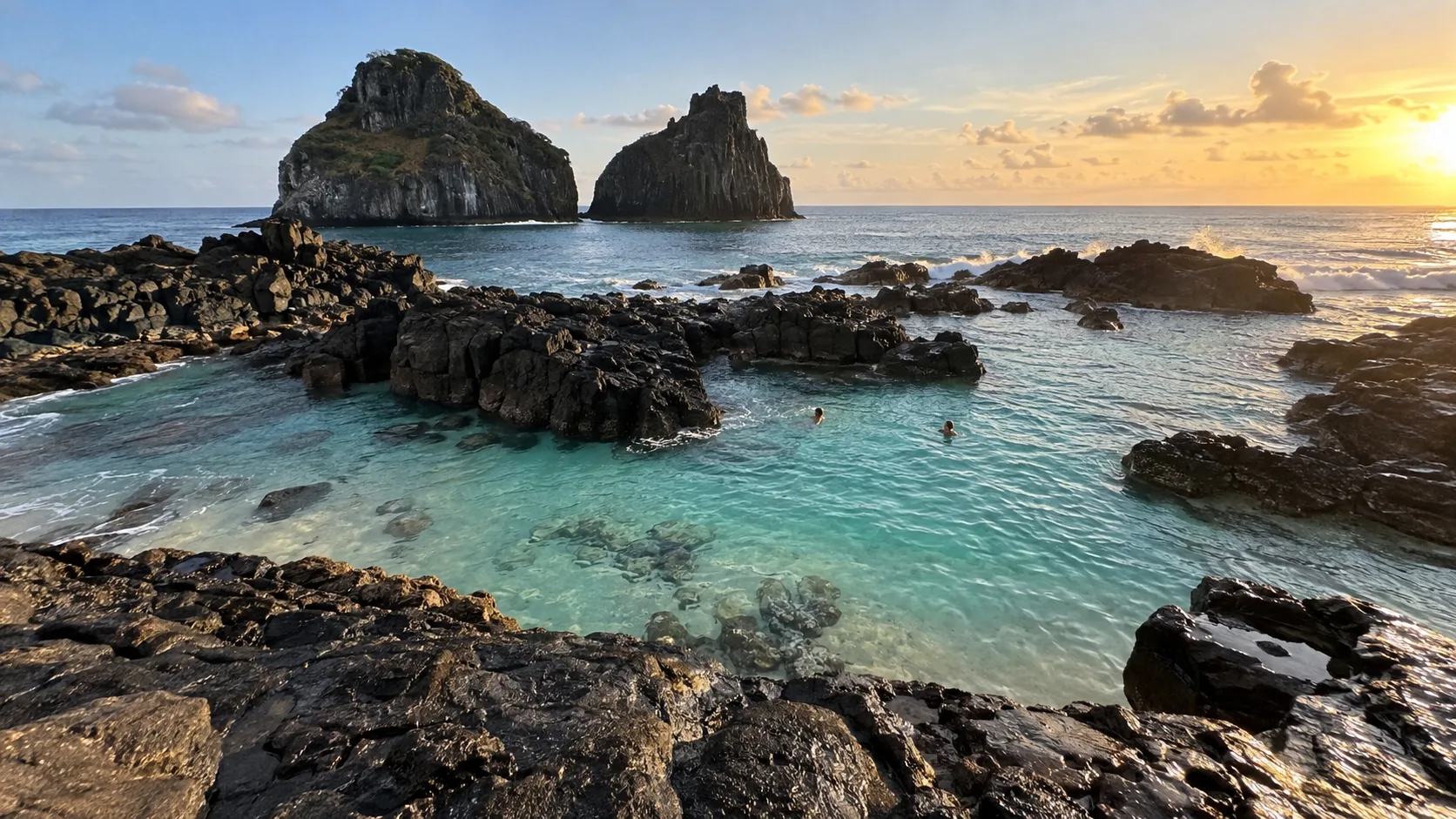
Baía dos Porcos
This compact cove is prized for its view toward Morro Dois Irmãos and natural beauty. Tide, swell, rocks, and capacity rules can sharply limit how the visit feels.
Wear footwear with real grip and obey closures around natural pools. A calm-looking photograph does not reveal the conditions at your arrival hour.
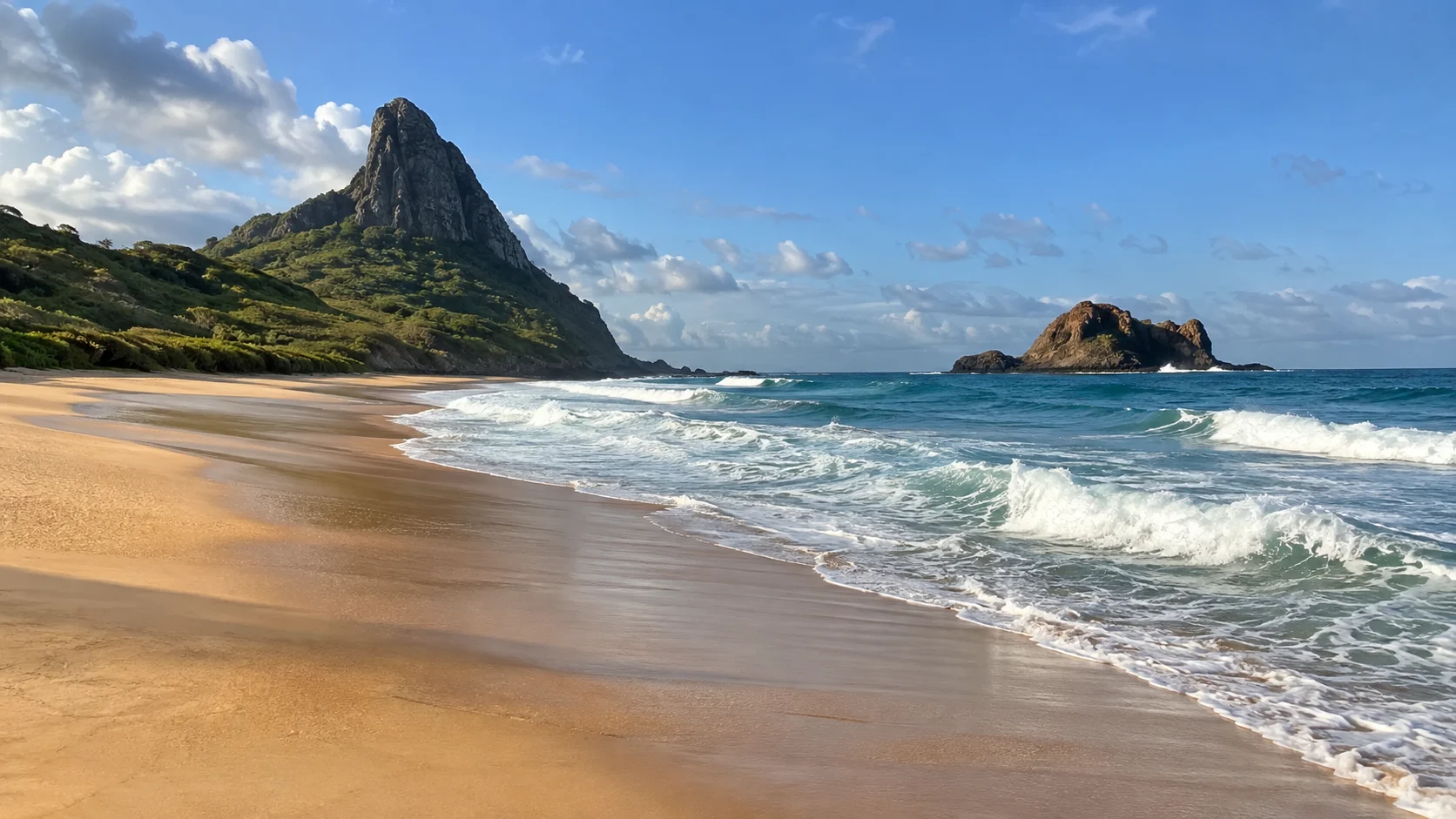
Praia do Leão
Leão suits travelers seeking a wilder beach and broad scenery rather than services. Strong surf, heat, distance from help, and protected wildlife activity make independent swimming decisions especially important.
Stay out when authorities or guides advise it, even if another visitor enters. There is no vacation value in proving that a warning did not apply to you.
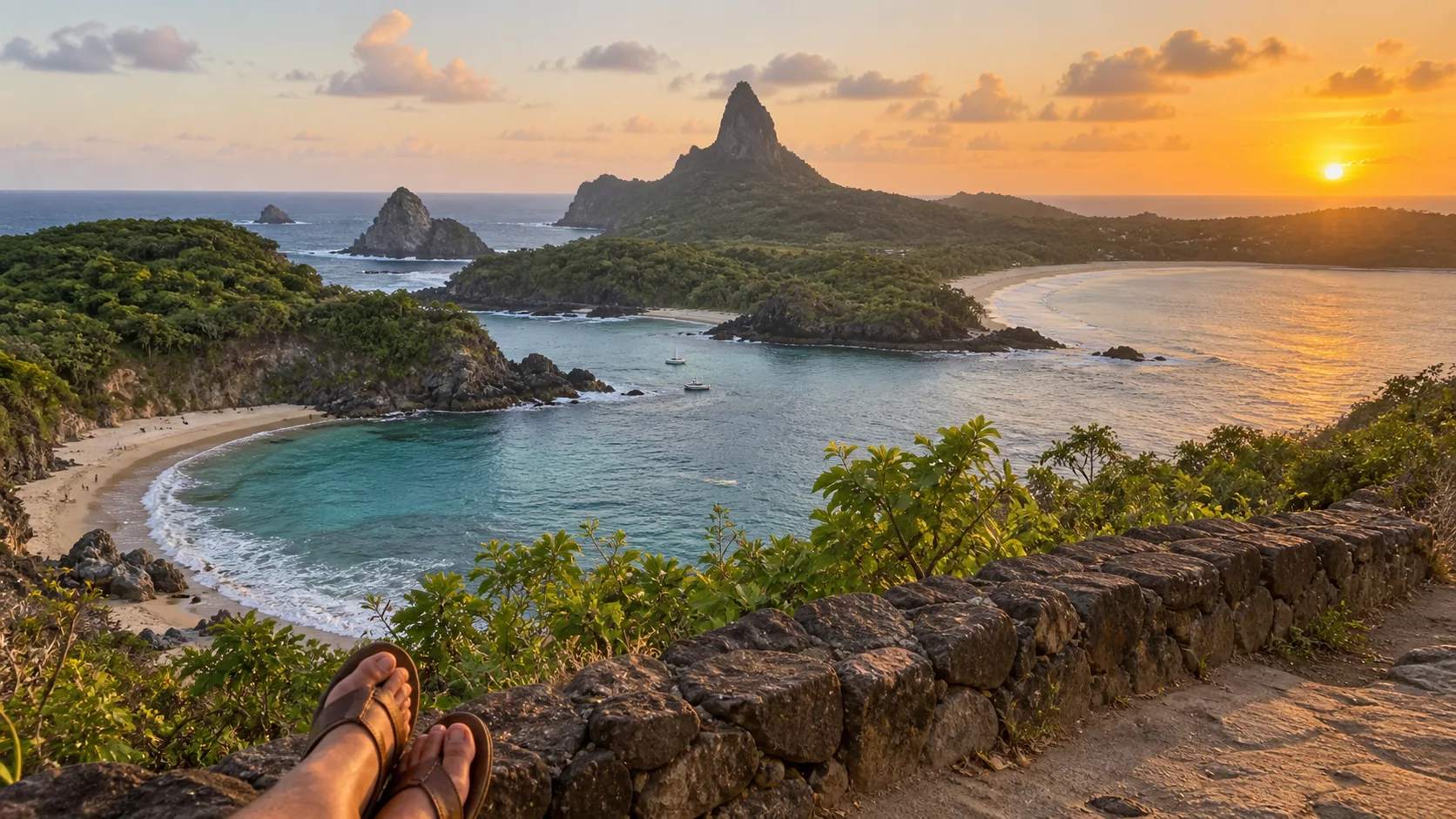
Praia do Cachorro, Meio, and Conceição
Beaches near Vila dos Remédios can be easier to combine with restaurants and a less structured day. Seasonal swell and tide still change access, swimming, and the amount of usable sand.
They are good backups when a distant park plan closes, but “town beach” does not mean lifeguarded or risk-free. Ask locally about the safest area that day.
When to visit
Broadly, drier conditions often appeal from roughly August into the first part of the year, while wetter months can bring greener scenery and more showers. Ocean personality matters at least as much as rainfall because swell changes beaches, boats, snorkeling, and surfing.
Surfers often seek the larger northern swell of the austral summer, while snorkelers may prefer calmer periods. Neither group should book by month alone, since daily wind and swell still win.
Brazilian holidays and school breaks can tighten flights, rooms, guides, and trail availability. Compare total trip cost, not just pousada rates, because the TPA, park ticket, flights, transfers, and tours remain substantial.
Where to stay
Vila dos Remédios and nearby areas suit travelers who want restaurants and evening life within easier reach. Floresta Nova and Floresta Velha can balance location with a residential feel, while farther stays may trade convenience for quiet or views.
Distance on the map is deceptive when heat, hills, uneven shoulders, and infrequent transportation enter the day. Ask the lodging for the walking time to a bus stop, grocery store, restaurant cluster, and the exact pickup assumptions used by tours.
“Pousada” covers a wide range, from simple rooms to refined boutique stays. Confirm air-conditioning, hot water, backup power, breakfast hours, stairs, Wi-Fi expectations, and cancellation terms rather than inferring standards from price.
Transportation on the island
A public bus follows the main road, while taxis and tours reach many visitor areas. Rental buggies are popular but add sun, rain, dust, fuel, parking, and safety responsibilities.
Do not rent a buggy solely because travel photos make it look essential. A mix of bus, taxi, and organized pickup can cost less and remove the burden of navigating rough access roads.
If you do rent, inspect tires, lights, seat belts, fuel level, damage record, emergency contact, and insurance. Never drive after drinking, and secure belongings rather than leaving phones and documents in an open vehicle.
Ocean and trail safety
- Check the official park alert and local sea conditions each morning.
- Never enter natural pools or closed trails outside authorized hours.
- Use accredited guides where required and sensible guides where conditions exceed your skill.
- Carry more water than a short map distance suggests.
- Protect against strong sun with clothing, shade, and correctly used sunscreen.
- Keep distance from dolphins, turtles, nesting birds, sharks, and other wildlife.
- Do not touch coral, stand on reefs, feed animals, or collect natural material.
- Leave valuables secured and carry only what the outing needs.
Travel insurance should address medical care, evacuation, diving or adventure activities, and flight disruption as applicable. Island medical capacity is limited, and the appropriate higher level of care may be on the mainland.
Conservation is part of the itinerary
Fernando de Noronha is not merely a scenic backdrop with annoying rules. Its visitor limits, fees, trail scheduling, wildlife boundaries, and closures are mechanisms that keep a small ocean ecosystem from becoming an unrestricted resort.
Choose locally operated services where they meet safety and licensing needs, refill water where safe, refuse unnecessary single-use plastic, and stay on marked routes. The ecotourism activity framework can help distinguish a conservation-minded experience from one that simply markets wildlife.
Do not chase, surround, touch, or bait animals for a photograph. A close encounter created by harassment is not a better encounter.
Who should choose Fernando de Noronha?
Choose it if snorkeling, diving, protected scenery, and active days justify substantial logistics and fees. It especially rewards travelers who can accept that the island sets the schedule.
Think twice if you need effortless wheelchair access, abundant nightlife, broad medical services, or guaranteed calm-water beach days. Ask direct accessibility questions because ladders, sand, boats, and uneven trails make vague assurances useless.
Solo travelers can visit successfully, but should arrange late arrivals, water outings, and remote trails deliberately. These first-time solo travel safeguards are a useful layer beneath the island-specific rules.
Final planning checklist
- Check Brazil visa eligibility for your passport.
- Book flights with a mainland disruption buffer.
- Reserve lodging with clear cancellation terms.
- Calculate and pay the TPA for exact dates.
- Buy the separate marine-park ticket if your itinerary needs it.
- Schedule controlled trails and accredited guides.
- Review live closures before every park day.
- Leave one flexible day for weather changes.
- Confirm insurance for the activities you will do.
- Carry documents and reservations offline.
My recommendation
Give Fernando de Noronha at least four full days after the arrival day, with five or six better for divers and hikers. Pay for the permissions your actual itinerary needs, reserve controlled access early, and leave one day unscheduled.
Most importantly, check the park alerts after you arrive. A good Noronha plan is specific enough to secure scarce access and flexible enough to respect the island when that access must close.