12 Most Beautiful Hikes in the World That Feel Almost Unreal
Some hikes are beautiful in photographs. Others surround you so completely that the landscape feels almost impossible, from glacier-carved valleys to volcanic ridges glowing in colors that hardly seem natural.
These are the hikes that make the long flight, tired legs, and early alarm completely worth it. Each one offers a different version of awe, whether you dream about waterfalls, ancient ruins, sea cliffs, or mountains that fill the entire horizon.
1. Tour du Mont Blanc, France, Italy, and Switzerland
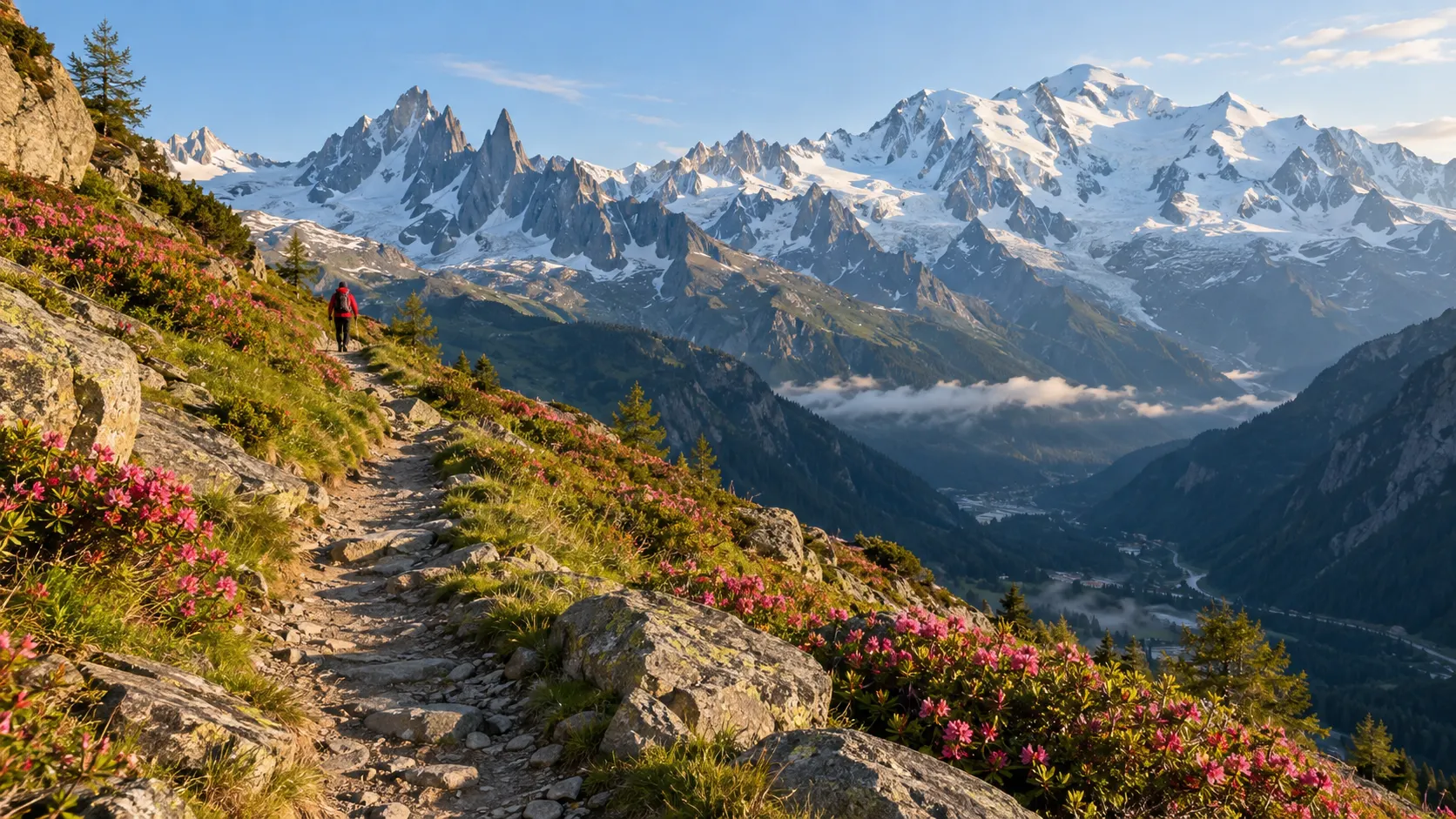
Tour du Mont Blanc feels like walking through the greatest hits of the European Alps. Snowy peaks rise above green valleys, glaciers spill between dark rock walls, and tiny villages appear below flower-filled meadows.
The scenery changes constantly as the trail circles the Mont Blanc massif through France, Italy, and Switzerland. One morning may begin beneath icy summits, while the afternoon brings cowbells, stone farmhouses, and a terrace where hikers linger over warm food with the mountains still in view.
What makes this route especially memorable is its scale without complete isolation. You spend the day in enormous alpine scenery, then end it in a refuge or mountain village that feels cozy and deeply connected to the landscape.
The complete loop covers roughly 105 miles with about 32,800 feet of cumulative climbing and usually takes seven to 11 days. July through early September is generally the most inviting window, although snow and mountain weather can change conditions quickly.
2. Milford Track, New Zealand
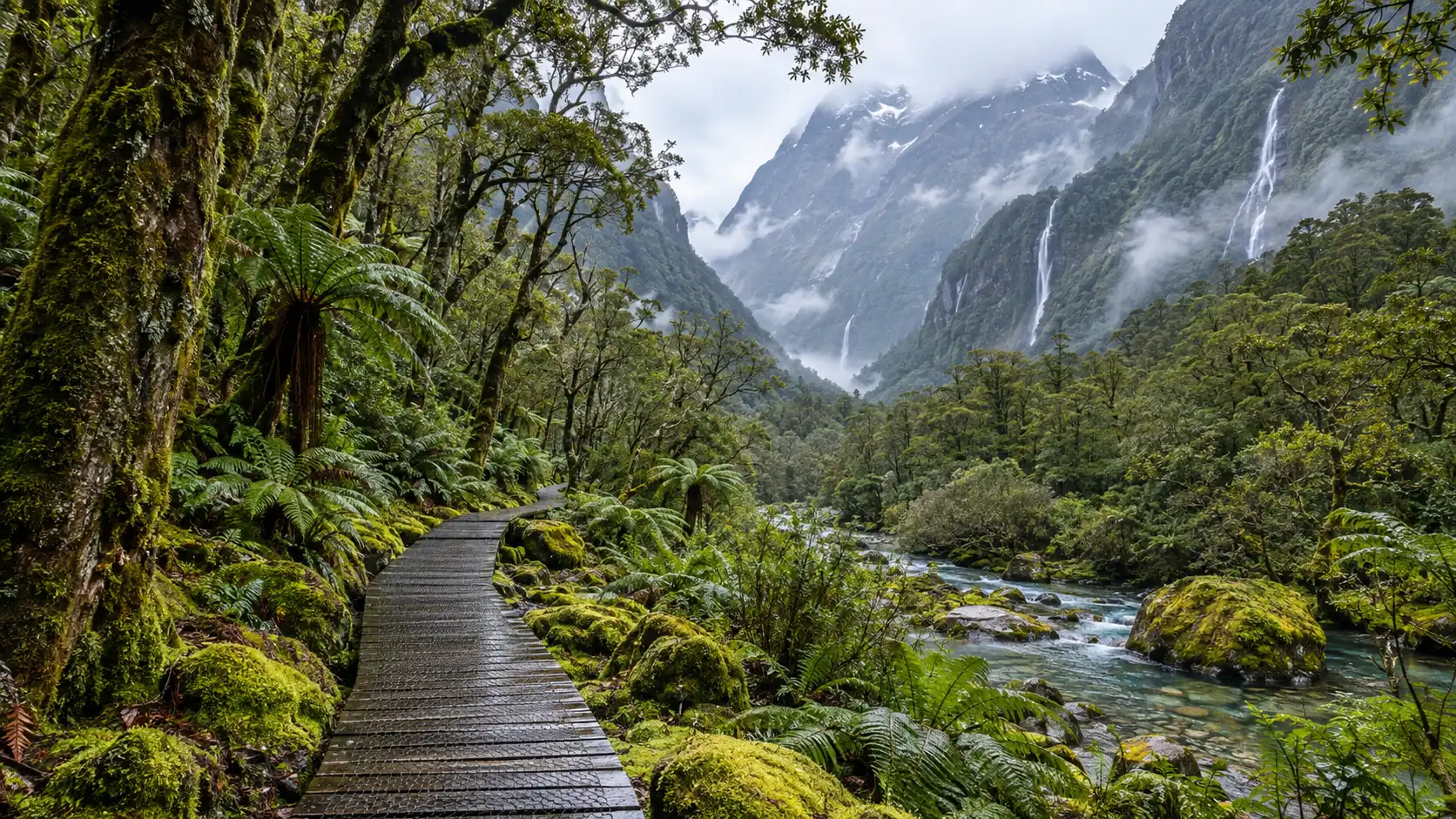
Milford Track is a world of water. Rain slips from mossy trees, rivers glow an almost glassy green, and waterfalls pour down the walls of Fiordland in numbers that become impossible to count.
The trail moves through valleys carved by ancient glaciers before climbing to Omanui/McKinnon Pass. From the high point, layers of steep mountains stretch into the distance while the Clinton and Arthur valleys open far below.
Even the rain can make this hike more beautiful. Fiordland is famously wet, and a storm can transform bare cliffs into curtains of temporary waterfalls that vanish once the clouds lift.
This is a one-way, four-day Great Walk with three overnight huts and no camping along the main route. Hut and transport reservations are required during the managed season, so use the New Zealand Department of Conservation when you are ready to turn the dream into a trip.
For more inspiration beyond Fiordland, the country’s mountain regions show just how much dramatic scenery New Zealand fits into two islands.
3. Classic Inca Trail, Peru
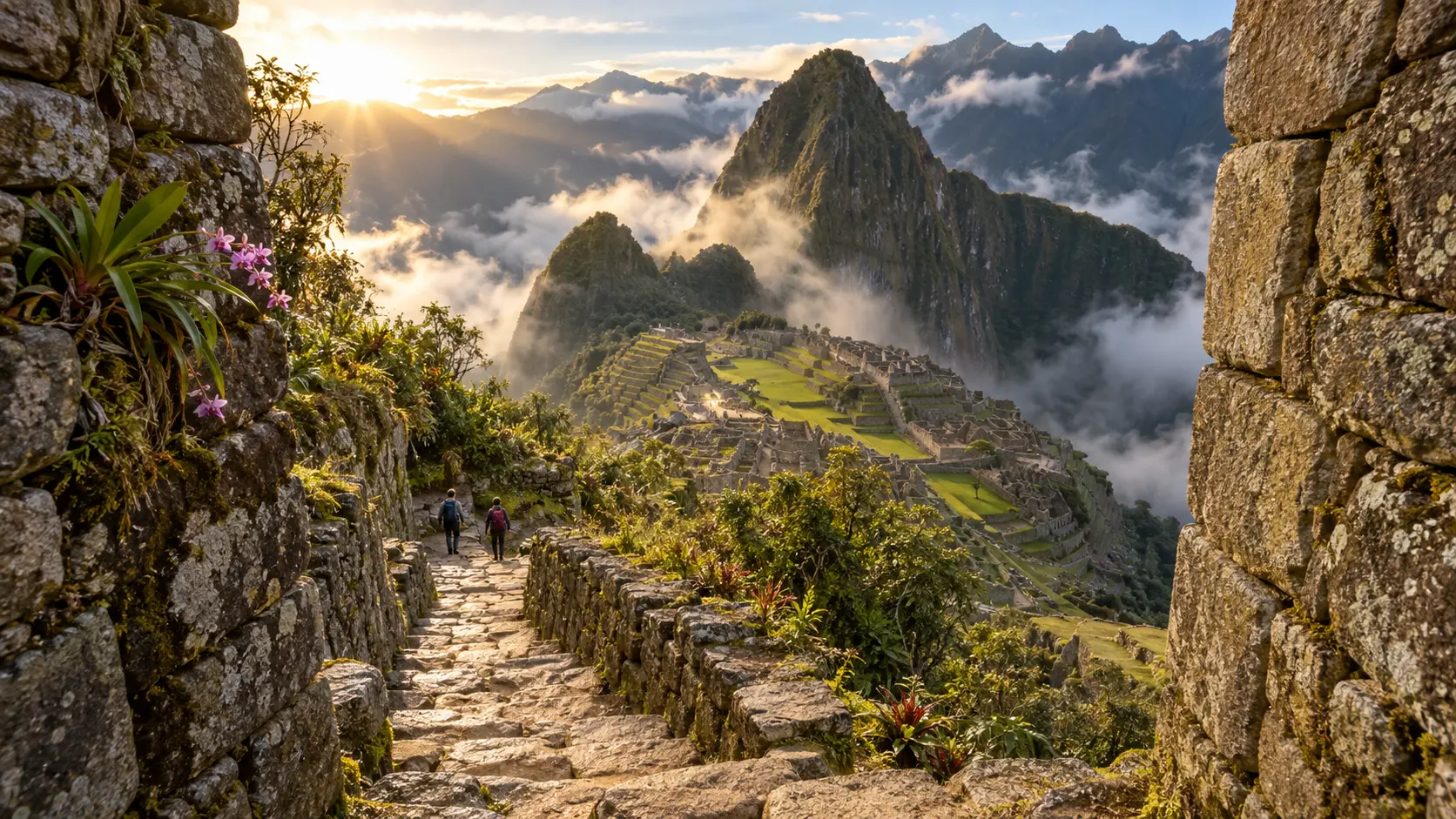
The Classic Inca Trail is beautiful before Machu Picchu ever appears. Stone paths climb through high Andean passes, cloud forest wraps around old staircases, and archaeological sites emerge in places that seem impossibly remote.
Dead Woman’s Pass brings the route to its highest point at about 13,800 feet, where the mountains feel stark and enormous. Later, orchids, moss, and mist soften the landscape as the trail descends into greener terrain.
The emotional peak comes at Inti Punku, the Sun Gate. Catching that first view of Machu Picchu after several days on foot feels completely different from arriving by bus because the journey has slowly built toward that moment.
The classic route is about 26 miles and is normally completed over four days. Access is controlled through authorized operators, and the trail closes each February, but those details should support the experience rather than overshadow what makes it extraordinary.
4. W Trek, Torres del Paine, Chile
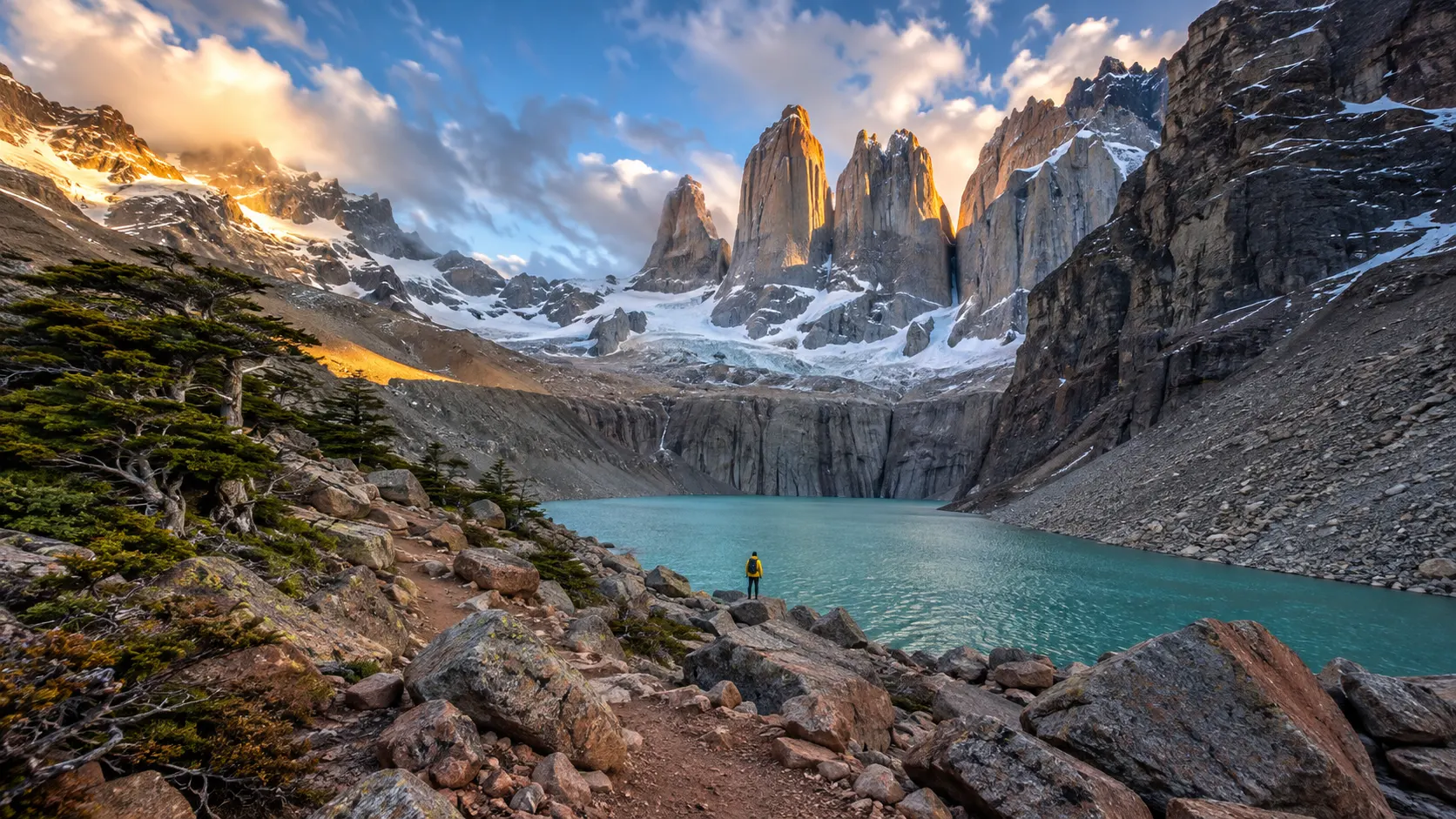
Few landscapes look as boldly designed as Torres del Paine. Pale granite towers rise almost vertically from the earth, turquoise lakes spread beneath wind-shaped mountains, and the Southern Patagonian Ice Field gleams beyond the trail.
The W Trek links three of the park’s most unforgettable areas. Base Torres delivers the famous view of the three towers above a milky blue lake, the Francés Valley surrounds hikers with hanging glaciers, and Grey Glacier stretches toward the horizon in fractured shades of blue.
Patagonia’s fast-moving weather only adds to the sense of drama. Sunlight can sweep across a lake minutes after rain, turning the water electric blue while clouds continue to coil around the peaks.
Most travelers complete the route in four or five days during the Southern Hemisphere’s warmer months. Campsites or refuges must be reserved for the overnight circuit, but the lasting memory will be the feeling of standing very small beneath those granite walls.
5. Laugavegur Trail, Iceland
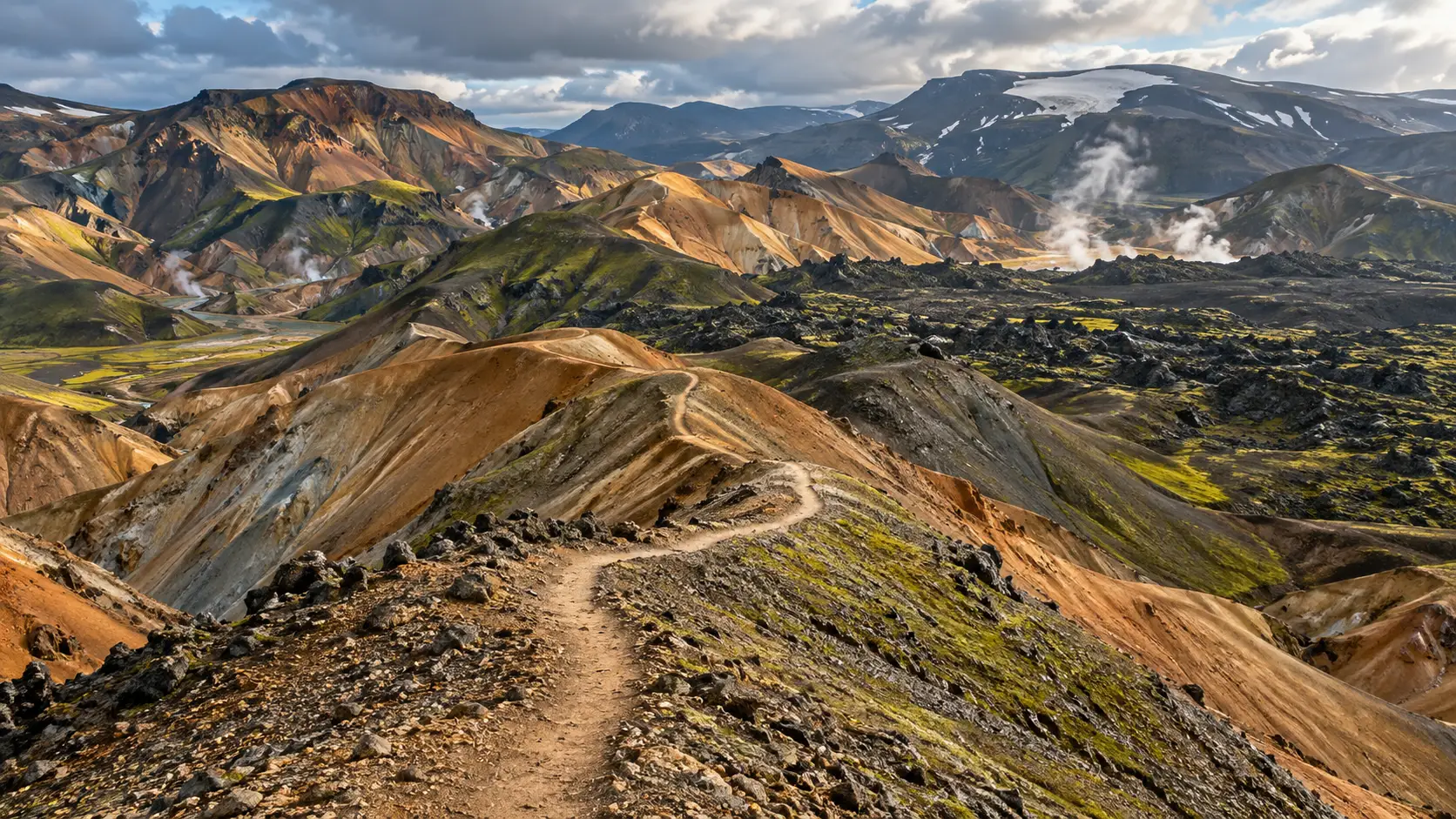
Laugavegur looks less like a single landscape than several planets stitched together. The trail passes rainbow-striped rhyolite mountains, steaming geothermal valleys, black volcanic deserts, neon moss, and surprisingly bright green river plains.
Landmannalaugar provides a spectacular opening, with rust, gold, pink, and gray slopes rising around hot springs. Farther south, the route becomes darker and wilder before descending into the forested valley of Þórsmörk beneath glaciers and sharp ridgelines.
The contrast is what makes this trail unforgettable. A few hours can carry you from snowfields and sulfur-scented steam to a silent expanse of black sand where the mountains appear to have been painted onto the horizon.
The main trail covers approximately 34 miles and is commonly walked in four days, with an optional extension toward Skógar. The practical season is short, usually from late June into early September, and anyone arriving at Landmannalaugar by car should check current parking and Highland road requirements.
It also fits beautifully into a longer trip using this Iceland travel guide, especially if volcanic scenery is already the reason you want to visit.
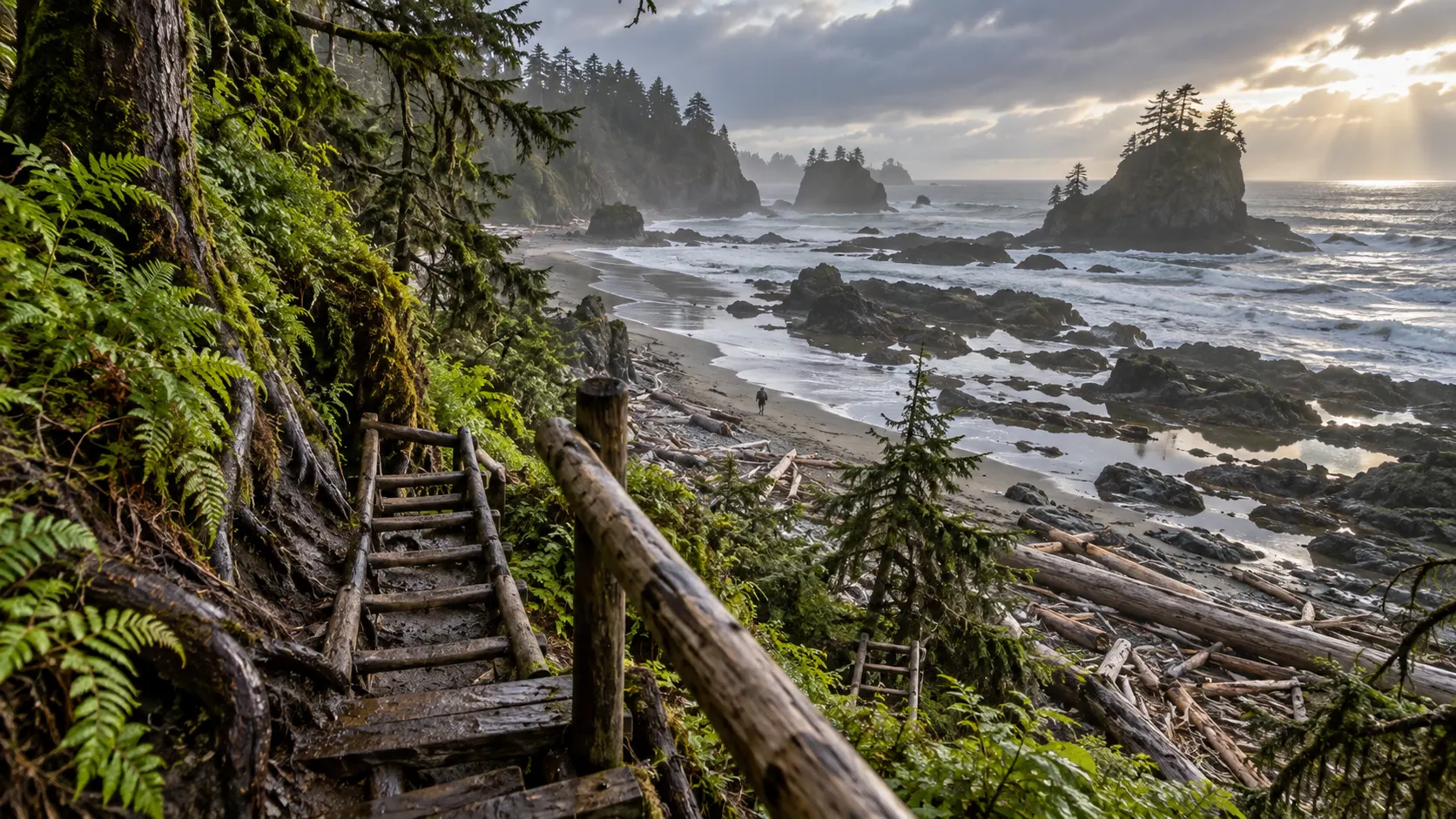
6. West Coast Trail, British Columbia
The West Coast Trail is moody, untamed, and cinematic. Ancient rainforest presses close to the path, sea stacks rise offshore, and long beaches disappear into Pacific mist.
This is not a manicured coastal stroll. Hikers descend towering ladders, cross rivers, time beach sections around the tides, and follow forest paths where giant ferns and moss soften nearly every surface.
Then the trees suddenly open to the ocean. Whales may surface offshore, sea lions gather around rocky outcrops, and sunsets wash the beaches in gold after a day spent moving through deep green forest.
The roughly 47-mile route usually takes six to eight days and is best suited to experienced backpackers. Parks Canada limits overnight entries and provides the essential current information on its official West Coast Trail page.
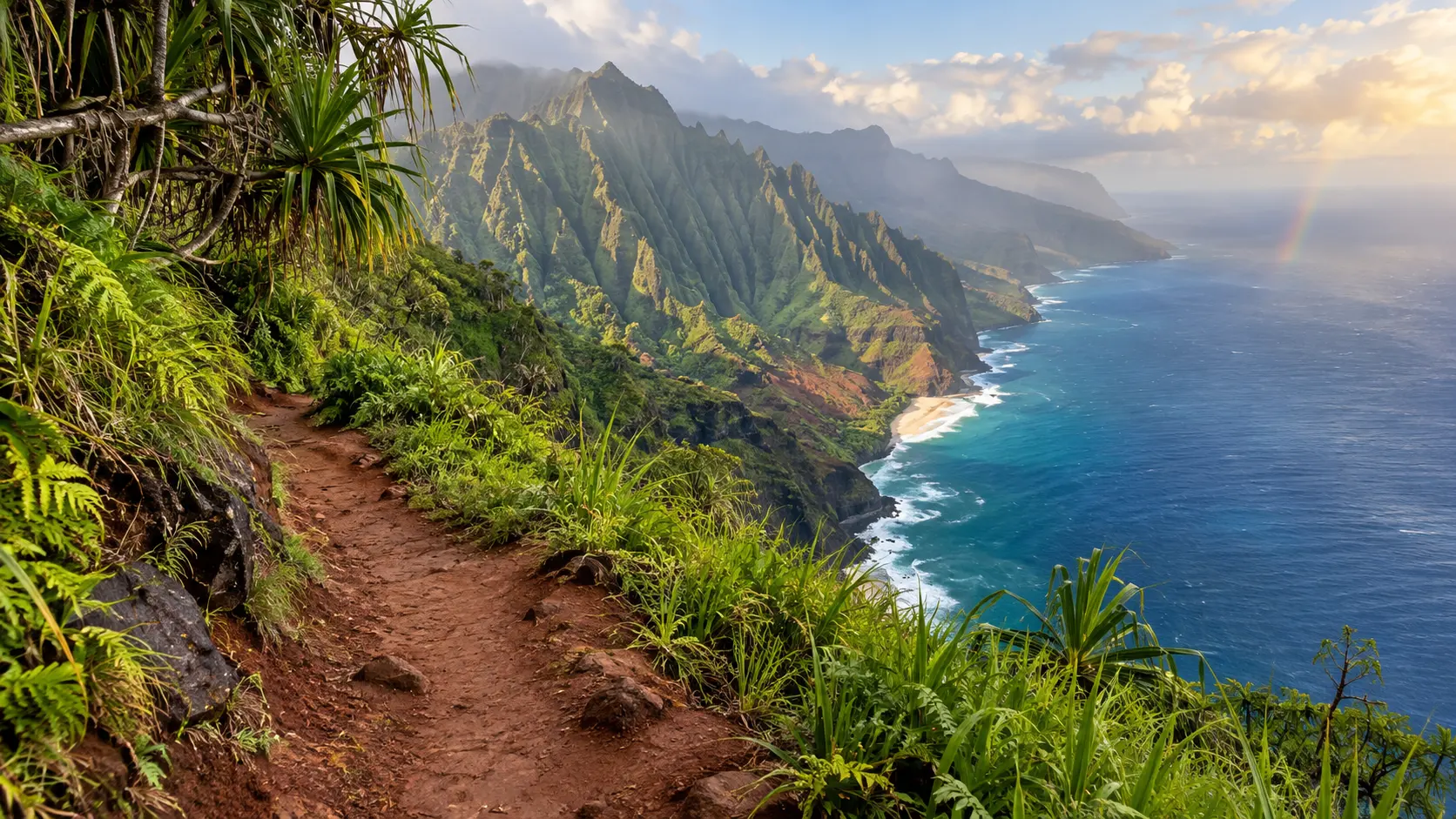
7. Kalalau Trail, Kauaʻi, Hawaii
Kalalau Trail clings to one of the most spectacular coastlines in the Pacific. Green ridges fold toward the ocean, waterfalls thread through narrow valleys, and the blue water below seems even brighter beside the red-brown earth.
The trail begins near Keʻe Beach and winds into the deeply carved Nāpali Coast. Each turn changes the angle of the cliffs until Kalalau Valley finally opens ahead, backed by fluted green walls and fronted by a remote beach accessible only by foot or permitted boat.
Tropical beauty makes this route look gentle in photographs, but the landscape is raw. Mud, heat, exposed ledges, stream crossings, and rapidly changing weather are all part of the same wild setting that makes the hike so magnetic.
The full trip to Kalalau Beach and back is about 22 miles, and a camping permit is required to continue beyond Hanakāpīʻai Valley. The trail is currently closed following hurricane damage, so confirm reopening through Hawaii State Parks before making plans.
Hanakāpīʻai Beach is also beautiful but dangerous for swimming. Admire it from shore unless local officials explicitly indicate safe conditions.
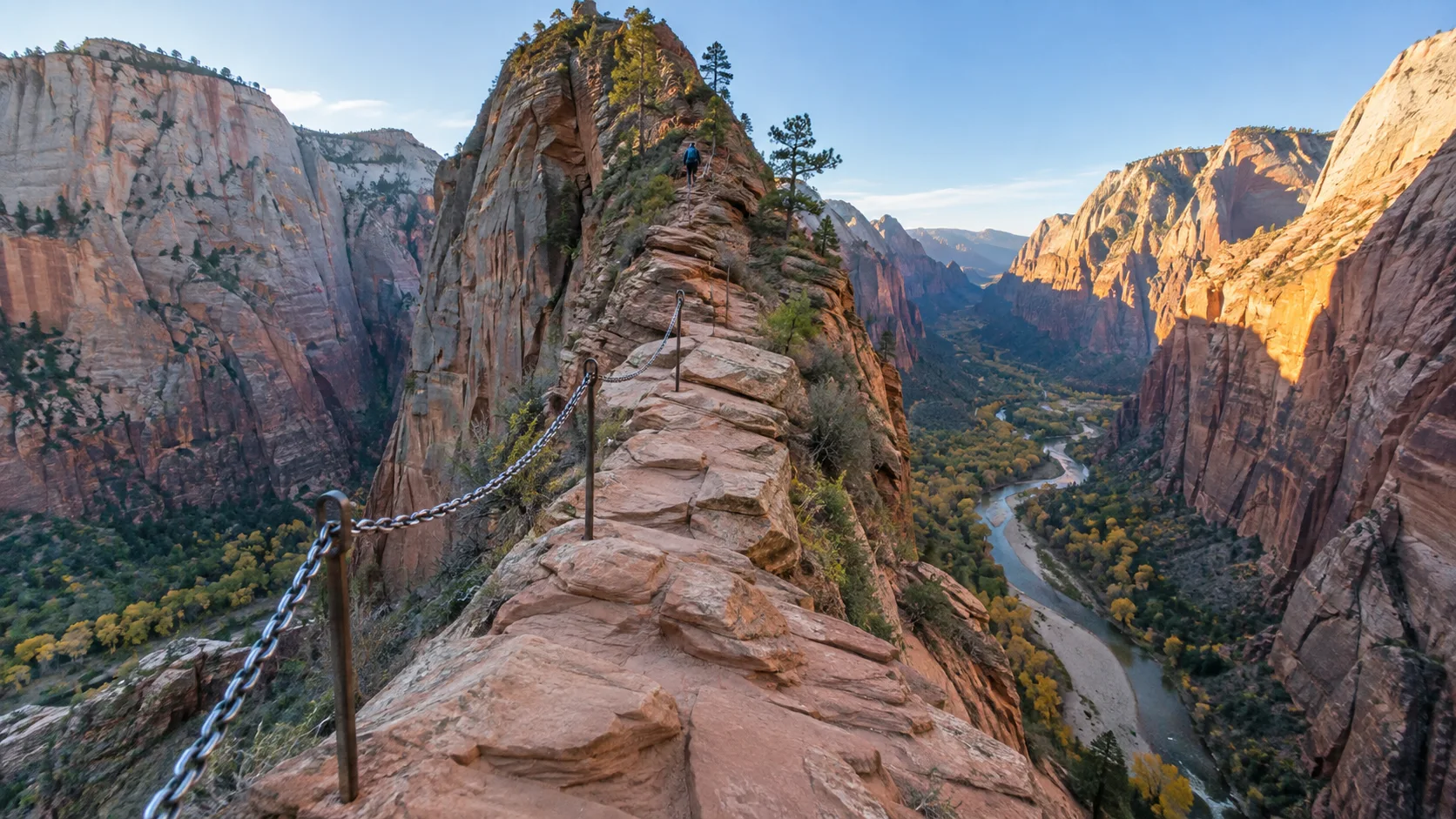
8. Angels Landing, Utah
Angels Landing turns the immense scale of Zion Canyon into something you can feel. Red and cream cliffs rise on every side, while the Virgin River traces a thin green ribbon along the canyon floor far below.
The climb through Walter’s Wiggles is impressive, but the final ridge creates the unforgettable view. From the summit, Zion Canyon stretches in both directions and the sandstone walls glow differently as the sun moves across them.
This hike is beautiful partly because it places you directly inside the drama. The chains section follows an exposed spine with steep drop-offs, so every view feels immediate and intensely real.
The complete route is about 5.4 miles round trip with roughly 1,500 feet of elevation gain. A permit is required beyond Scout Lookout, and the National Park Service explains the seasonal and day-before lotteries.
Scout Lookout remains a wonderful choice for anyone uncomfortable with the chains. It captures much of Zion’s grandeur without requiring the most exposed section.
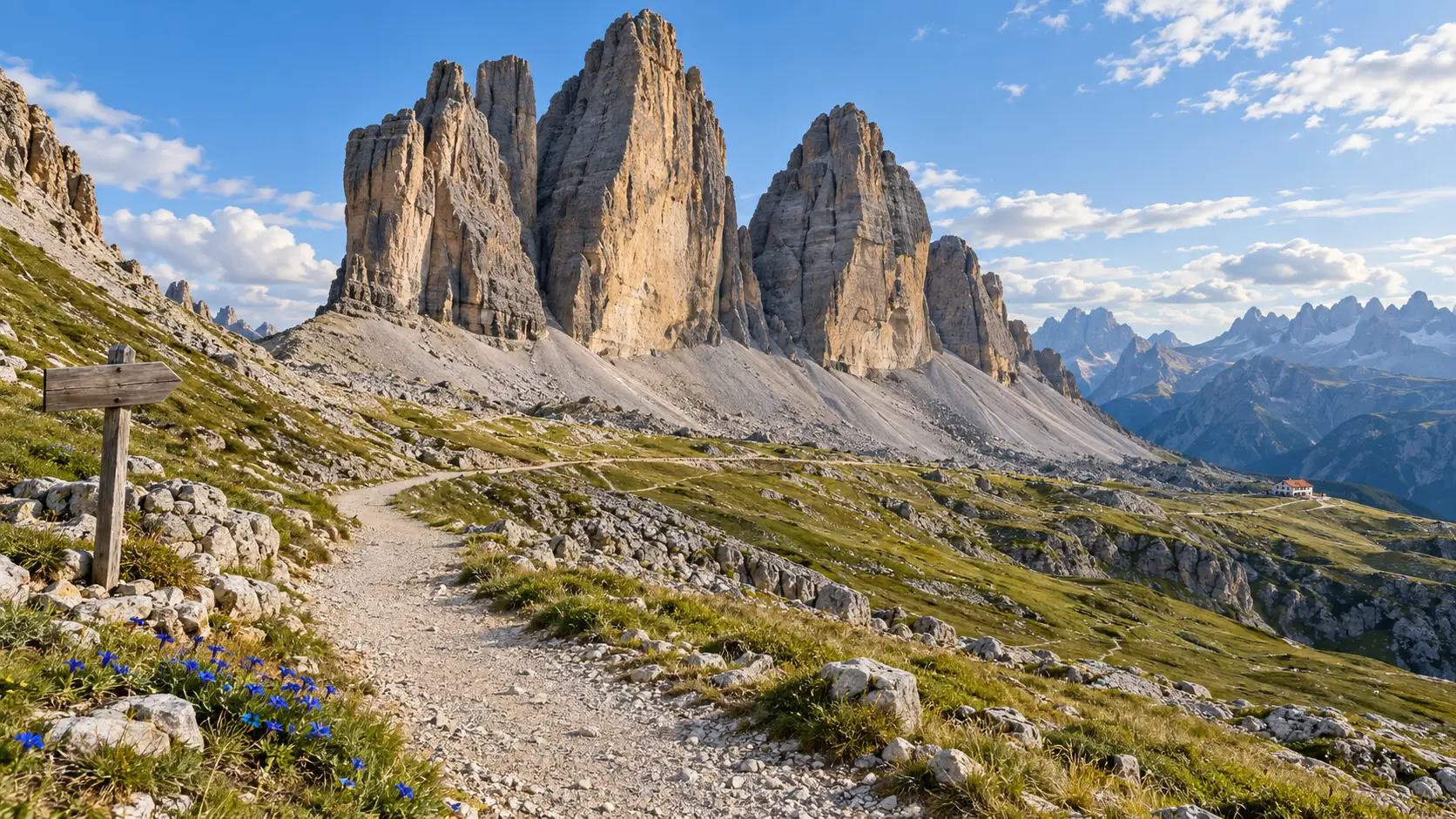
9. Tre Cime di Lavaredo Loop, Italy
Tre Cime di Lavaredo proves that a relatively approachable day hike can still deliver world-class scenery. The three enormous limestone towers dominate the landscape, shifting shape as the path circles around them.
The Dolomites combine sharp rock with unexpectedly gentle details. Wildflowers brighten the meadows, rifugios sit beneath vertical cliffs, and distant peaks layer across the horizon in pale gray and blue.
The north face of Tre Cime is the image most travelers remember, but the full loop keeps rewarding you. Small lakes, old military remains, sweeping passes, and changing light make the approximately 6-mile circuit feel far richer than its distance suggests.
Summer through early fall is the usual hiking window, although snow can linger and mountain conditions change quickly. Start early enough to experience at least a few quiet moments before the busiest viewpoints fill.
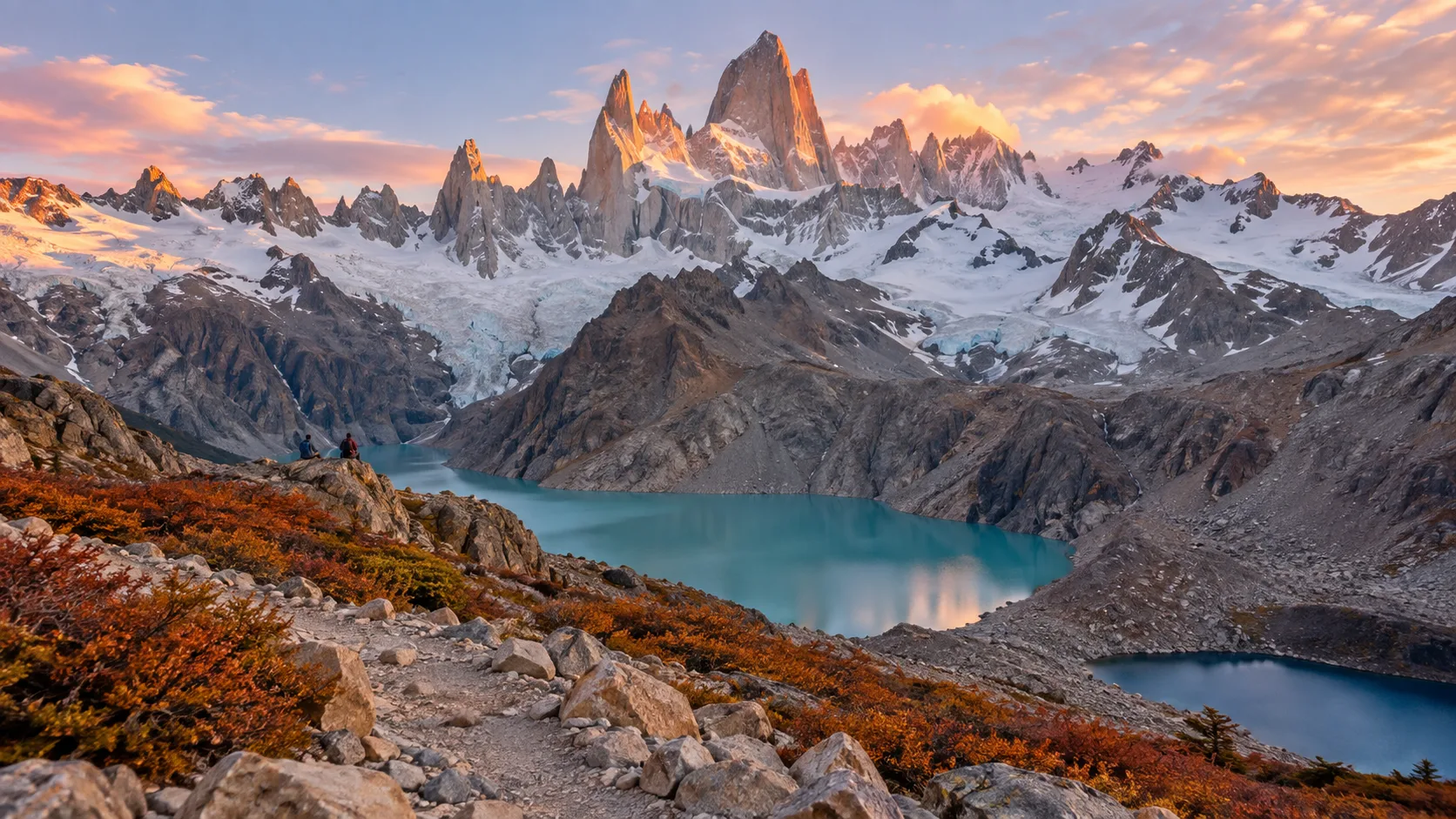
10. Laguna de los Tres, Argentina
Laguna de los Tres leads to one of the defining views of Patagonia. Mount Fitz Roy rises behind a glacial lagoon in a wall of pale granite, often catching pink or orange light before the valley below is fully awake.
The journey from El Chaltén is beautiful long before the final climb. Forest paths reveal flashes of the Fitz Roy massif, open ground frames the mountains above winding rivers, and Laguna Capri offers a calmer preview of what lies ahead.
The last ascent is steep enough to make the reveal feel earned. Cresting the ridge and seeing the lagoon directly beneath Fitz Roy is the kind of moment that can silence an entire group of hikers.
The round trip covers about 15.5 miles and generally takes eight to nine hours. Patagonia’s main hiking season runs from roughly October through April, but cloud, wind, and snow can transform the view in any month.
El Chaltén works especially well within a longer journey through the country, and these Argentinian landmarks and regions can help build out the rest of that dream trip.
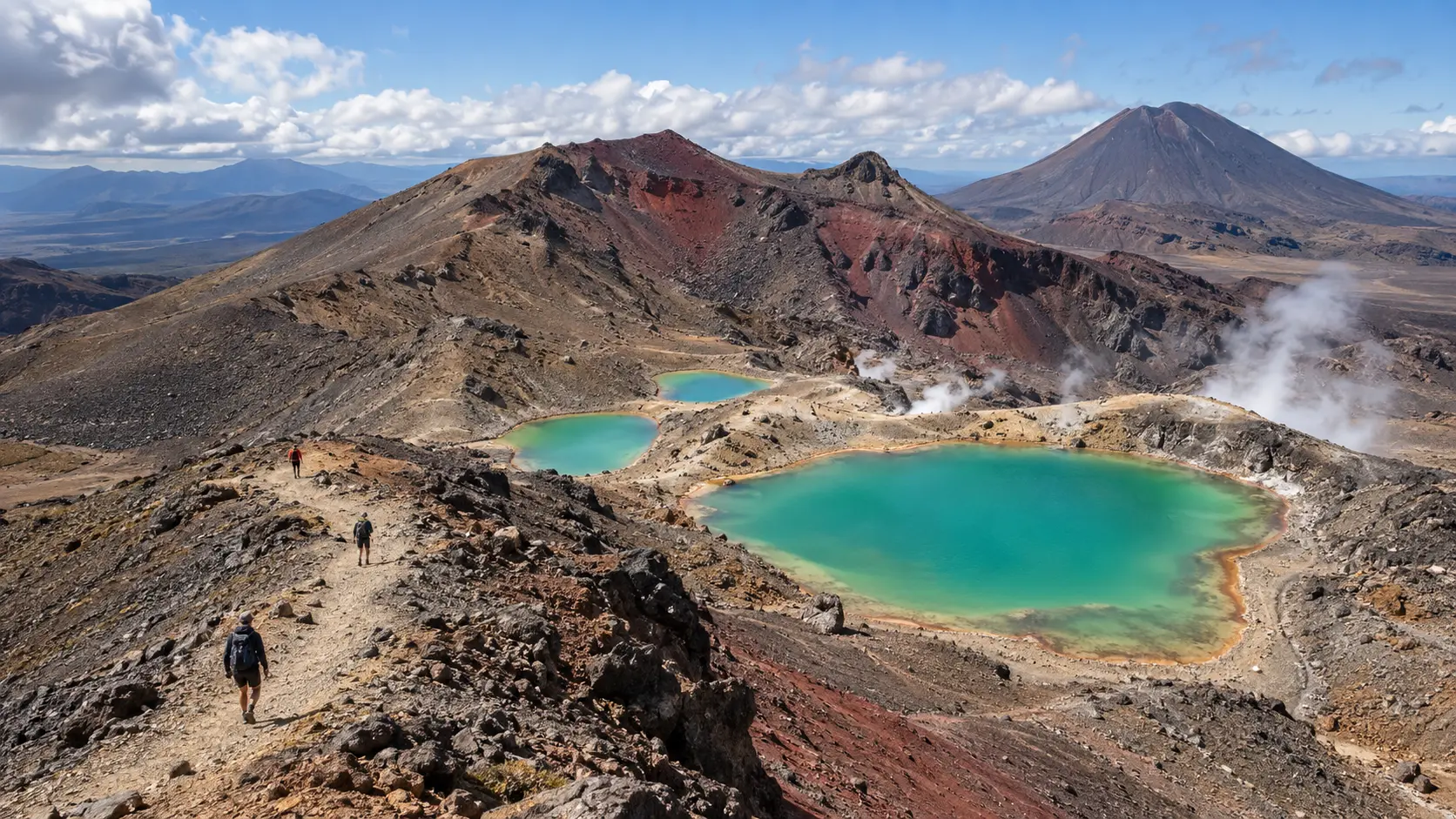
11. Tongariro Alpine Crossing, New Zealand
Tongariro Alpine Crossing moves through a volcanic landscape that feels raw and newly formed. Black lava fields, rust-red craters, steaming ground, and vivid blue-green lakes appear within a single day.
The climb toward Red Crater reveals an extraordinary collision of color. Deep red slopes fall toward the Emerald Lakes, while the wider landscape stretches across old lava flows to distant mountains and Lake Taupō.
These features are not simply scenic. Tongariro is culturally and spiritually significant to Māori, and the lakes are considered sacred, which gives staying on the trail and out of the water an importance beyond ordinary hiking etiquette.
The point-to-point route is approximately 12.6 miles and crosses exposed alpine terrain with little shelter. In warm-season conditions it is a demanding day hike, while winter turns it into an alpine undertaking requiring specialized skills and equipment.
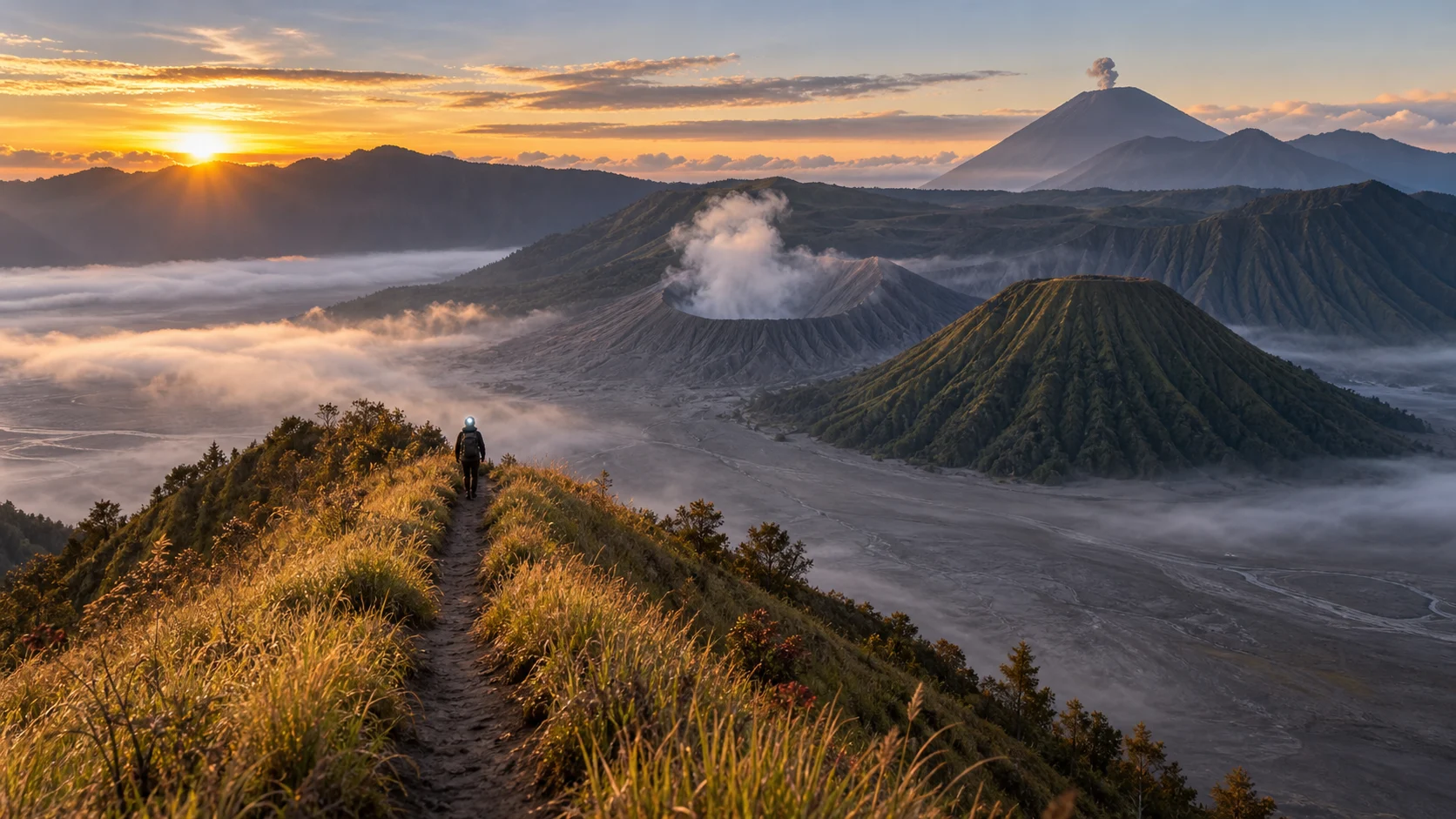
12. Mount Bromo sunrise routes, Indonesia
Mount Bromo at sunrise looks like a scene from another world. Volcanic cones rise through a basin filled with mist, while Mount Semeru often sends a plume into the brightening sky behind them.
The classic experience begins at a high viewpoint, but the landscape becomes even more surreal at ground level. Crossing the Sea of Sand places you inside the vast caldera before stairs climb the edge of Bromo’s smoking crater.
Color arrives slowly, first outlining the peaks and then turning the entire Tengger landscape gold. The combination of darkness, cold air, drifting mist, horses, jeeps, sand, and volcanic scale creates a morning that feels almost dreamlike.
Travelers can combine a sunrise viewpoint with a walk across the caldera and the crater stairway, or begin on foot from Cemoro Lawang for a more substantial hike. Because Bromo is active, official closures and exclusion zones always take priority over reaching a particular viewpoint.
How to choose among these hikes
Choose the landscape that you cannot stop picturing. Difficulty matters, but the best match begins with the scenery that makes you want to lace up your boots immediately.
- For glaciers and waterfalls: Milford Track feels lush, powerful, and constantly in motion.
- For huge alpine variety: Tour du Mont Blanc changes character every day.
- For history woven into the trail: The Inca Trail makes the approach to Machu Picchu part of the wonder.
- For the biggest mountain drama: The W Trek and Laguna de los Tres put Patagonia’s granite peaks front and center.
- For volcanic color: Laugavegur and Tongariro look almost too vivid to be real.
- For a wild coastline: Kalalau is tropical and vertiginous, while the West Coast Trail is misty and untamed.
- For an unforgettable day hike: Tre Cime offers enormous visual rewards without requiring a multi-day trek.
- For pure sunrise spectacle: Mount Bromo turns an early morning into the highlight of an Indonesian trip.
The views worth crossing the world for
The most beautiful hike is rarely the one with the longest mileage or the highest summit. It is the one whose landscape stays clear in your memory long after the sore legs have disappeared.
For some travelers, that will be the first glimpse of Machu Picchu through the Sun Gate. For others, it will be Fitz Roy turning pink, temporary waterfalls covering Fiordland, or the Emerald Lakes glowing beneath Red Crater.
Pick the scene that gives you that immediate pull. Then prepare well enough to be fully present when you finally step into it.
Questions hikers ask before choosing
Which hike is best for beginners?
Tre Cime di Lavaredo is the most approachable option on this list for an active beginner in good summer conditions. Its roughly 6-mile loop delivers giant mountain views without the commitment of a hut trek or backpacking route.
Scout Lookout in Zion is another rewarding alternative if Angels Landing’s chains feel too exposed. The best beginner choice is always one that leaves enough energy to enjoy the scenery rather than merely endure the trail.
Which hike has the best scenery?
For sheer mountain drama, the W Trek and Laguna de los Tres are difficult to beat. For the greatest variety within one route, Laugavegur combines more wildly different landscapes than almost any other hike here.
Milford Track is my pick for travelers who love water, greenery, and a landscape that becomes even more dramatic in the rain. Kalalau wins if your dream view combines tropical cliffs with the open ocean.
Which hike feels most unique?
The Inca Trail stands apart because its beauty includes both nature and human history. Walking old stone paths through archaeological sites before reaching Machu Picchu gives the route an emotional arc that no simple viewpoint can reproduce.
Laugavegur is the strongest choice for scenery that feels otherworldly from beginning to end. Mount Bromo offers a shorter taste of that volcanic wonder, especially as the first sunlight reaches the caldera.
Do I need to be an expert hiker?
No, but these trails span an enormous range of difficulty. Tre Cime is an accessible day hike for many active travelers, while Kalalau and the West Coast Trail demand genuine backcountry experience.
Match the route to your current ability rather than the version of yourself you hope will appear at the trailhead. Awe is much easier to feel when you are challenged but still confident and in control.