Fashionable Cruise Dresses That Earn Their Suitcase Space
The best cruise dress is not the one that looks perfect while you stand still in a fitting room. It is the one you can sit in through dinner, wear on windy stairs, pair with shoes you trust, and reach for again without feeling as if you packed a costume.
Start with your ship, itinerary, and real life
“Cruise dress” is a shopping label, not a useful dress code. A Caribbean sundress, an Alaska knit midi, and a Cunard Gala gown solve completely different problems.
Before opening a shopping tab, write down your sailing length, climate, planned dining venues, themed events, shore activities, and laundry access. Then decide how many dresses you genuinely enjoy wearing rather than how many an influencer packed.
- For a hot-weather day: Look for breathable fabric, secure straps, a manageable hem, and coverage that works beyond the pool deck.
- For casual dinner: Choose a dress that still feels comfortable after a full meal and works with a light layer in air-conditioning.
- For a dress-up night: Match the line’s wording, your dining plans, and your own appetite for glamour.
- For port: Prioritize walking, stairs, weather, destination norms, and a bag that leaves both hands free.
- For a cold route: Build around layers rather than expecting one heavy dress to handle every temperature.
If you prefer pants, separates, or a jumpsuit, wear them. Stylish cruise clothing is not a requirement to wear dresses, and several lines explicitly include elegant pantsuits or tailored separates in their evening suggestions.
Check the dress code before buying anything
Cruise lines do not share one definition of formal, smart casual, or gala. Policies can also differ by venue and event, so the app or daily program for your exact sailing outranks a generic packing graphic.
Princess: smart casual plus Dress to Impress
Princess currently suggests evening gowns, cocktail dresses, or elegant pantsuits when formal nights are held, according to its official onboard experience guidance. The number and scheduling of those evenings can vary with voyage length and operations.
A packable cocktail midi is enough for a traveler who wants to participate without carrying a gown. Someone who loves a sweeping formal look can absolutely bring one, but should first account for garment care, luggage space, stairs, and shoes.
The detailed Princess formal-night planner explains how to confirm sailing-specific expectations. Do that before buying a dress for a night that may not fall where an old itinerary review says it did.
Royal Caribbean: casual, smart casual, and Dress Your Best
Royal Caribbean’s official dress-code page presents cocktail dresses and evening gowns as acceptable Dress Your Best options, alongside smart-casual dresses, skirts, blouses, and pantsuits. It also says the number of dress-up nights is at the ship’s discretion and can vary by itinerary.
That makes a versatile solid-color midi a safer purchase than a single-purpose ball gown for most Royal Caribbean sailings. Add jewelry, a wrap, or a polished flat for dinner, then wear the same dress more simply another night.
Norwegian: relaxed, with venue-specific boundaries
Norwegian’s current restaurant and bar guidance emphasizes clothing suited to the setting, with shirts and footwear required and swimwear reserved for the pool. A casual dress can cover most evenings, while an upgraded accessory makes it feel special when you want that.
Do not buy a formal gown because you think every cruise requires one. On a relaxed line, an outfit you would wear to a good neighborhood restaurant is often more useful than something reserved for one photo.
Cunard: make room for Gala Evenings if you plan to join
Cunard has a more traditional evening rhythm, with Smart Attire and Gala Evenings described in its official packing guidance. Floor-length gowns, cocktail dresses, and smart trouser suits are among the Gala suggestions, while alternative venues are available for a more casual evening.
If the occasion is part of why you booked, bring the dramatic dress and enjoy it. If not, study where the evening code applies and plan a polished but comfortable alternative instead of feeling pressured into a purchase.
Virgin Voyages: style without formal-night pressure
Virgin Voyages says it has no formal nights or strict dress code in its current style guidance. Themed happenings may inspire a color or mood, but a new wardrobe is not the price of admission.
A red dress might be fun for Scarlet Night, yet a red top, scarf, earrings, or lipstick can serve the same theme with less luggage. Bring what makes you feel like yourself, not what creates a costume panic.
The six cruise dress categories worth considering
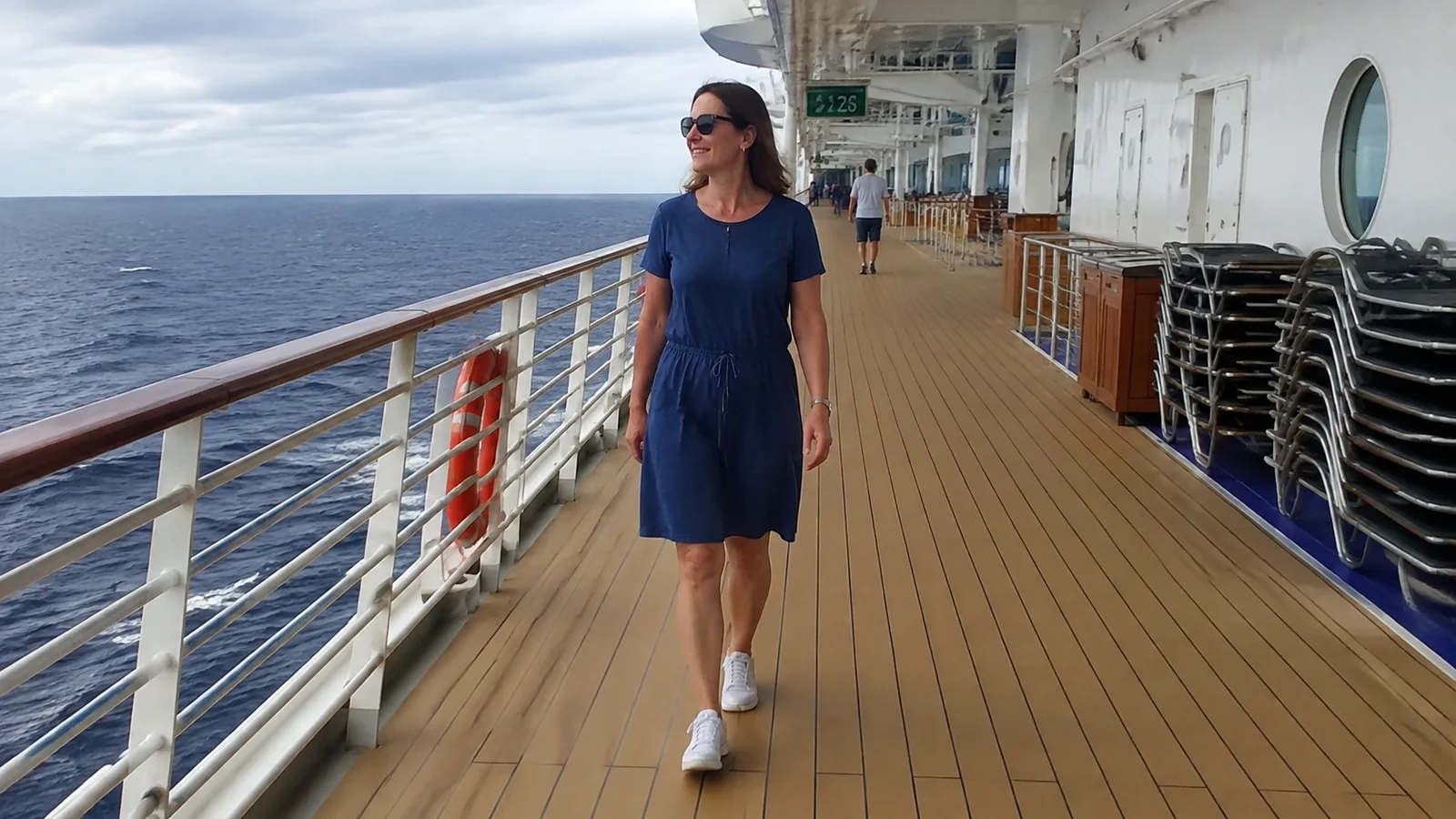
1. The casual T-shirt dress
A T-shirt dress is useful for breakfast, ship exploring, an easy port, or a casual lunch. Look for fabric with enough weight to avoid clinging and enough stretch to handle sitting, steps, and a full day.
A straight shape can be belted, layered under a jacket, or worn loose. Test whether the neckline shifts when you bend and whether a crossbody strap makes the fabric bunch uncomfortably.
2. The breathable day midi
A cotton, linen-blend, or airy woven midi can handle hot ports while offering more sun and destination coverage than a very short hem. Side slits improve movement, but check their height while seated.
Pure linen is cool and beautiful but wrinkles visibly, which may be charming or irritating depending on your style. A blend can reduce creasing, while a loose print hides it better than a pale solid.
3. The shirt dress
A shirt dress works as a daytime outfit, dinner dress, or open layer over swimwear when its fabric is not too precious. Buttons provide ventilation and styling range, although gaps across the chest or hips need a real movement test.
Sit, reach, and climb one flight of stairs before committing. Hidden snaps or a small amount of stretch can solve a problem that a larger size does not.
4. The wrap or faux-wrap dress
A wrap silhouette can adjust through travel bloat and temperature changes, but the skirt and neckline may shift in wind. A faux wrap or strategically secured overlap offers the look with less monitoring.
Raise both arms, lean forward, and sit near a fan during the home try-on. Fashionable is much easier when you are not holding the neckline or skirt in place all evening.
5. The knit midi
A knit midi can move from smart-casual dinner to a cooler port with sneakers and a jacket. Choose a knit that recovers after sitting and does not become transparent when stretched.
Ribbed fabric may highlight seams from undergarments, while a smooth double knit often feels more polished. Neither is universally better, so test the full outfit in daylight and under bright indoor light.
6. The packable cocktail dress
The hardworking cocktail dress has a comfortable waist, bra-friendly structure if you need it, and a hem that clears stairs. Matte crepe, stretch lace, and some substantial knits tend to travel more easily than fragile beading or crisp fabric that needs pressing.
A solid navy, black, jewel tone, or metallic neutral can appear different with two accessory sets. Color is personal, though, and a vivid print you love will always outperform a “safe” neutral you never reach for.
How to shop for fit without judging your body
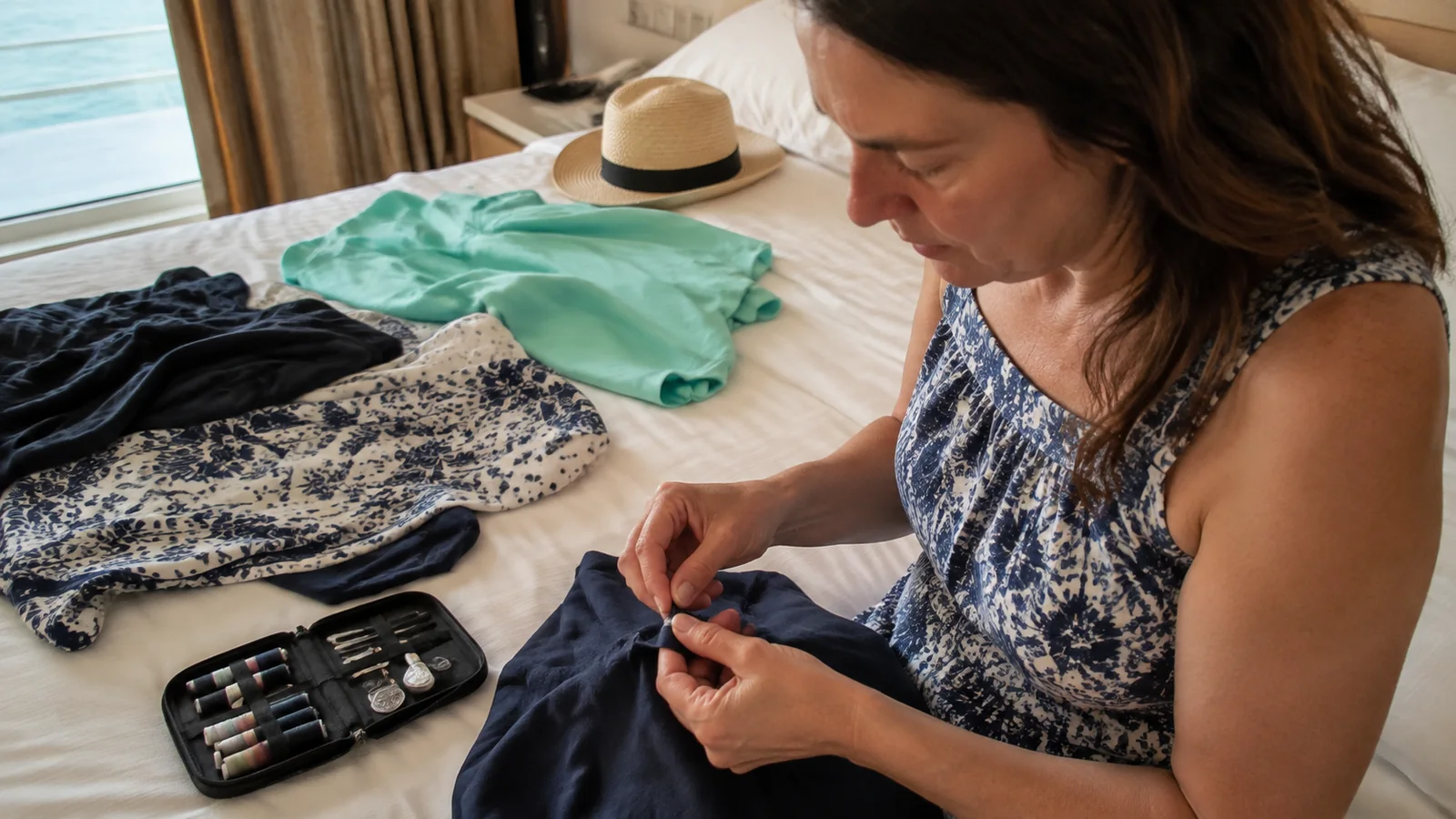
The dress must fit the body you are taking on vacation today. The problem is the garment when it pinches, pulls, rides up, restricts breathing, or demands constant adjustment.
Try each candidate with the bra, shapewear, anti-chafe shorts, or no extra layer that you intend to wear. A dress that works with imaginary undergarments is not ready for the suitcase.
- Sit for 20 minutes and notice pressure at the waist, armholes, and neckline.
- Walk quickly, use stairs, bend, reach, and step across a wide gap.
- Check the back and side view in daylight.
- Make sure closures can be managed alone in a small cabin bathroom.
- Test straps with the intended bra and shoulder bag.
- Confirm the hem works with the actual shoes.
Between sizes, buy for the largest measurement the dress needs to accommodate and tailor elsewhere if worthwhile. Sizing varies wildly between brands, so the number on the tag is inventory information, not a verdict.
Pockets are useful, but inspect them
Pockets can carry a keycard or keep hands relaxed in photos, but a phone can distort a lightweight skirt. Shallow pockets are also risky on theater seats, tenders, and stairs.
Place your phone and keycard inside, walk, sit, and climb stairs. If the pocket opens outward or drags the waist down, use a small crossbody or evening bag instead.
Hidden zip pockets are excellent for port days, provided they sit comfortably under a bag strap. No pocket makes a dress inferior if its cut, fabric, and comfort are otherwise right.
Choose fabric for the climate and care plan
Fabric content matters, but weave, weight, lining, and fit can matter just as much. Two dresses labeled polyester can feel completely different in tropical humidity.
- Cotton: Breathable and familiar, but can hold moisture and wrinkle.
- Linen: Airy in heat, with creasing that is part of the look.
- Viscose or rayon: Often drapes beautifully, but some versions wrinkle, shrink, or weaken when wet.
- Polyester: Can pack compactly and dry fast, although some weaves trap heat or odor.
- Jersey knit: Comfortable and forgiving, but weight and recovery determine whether it bags at the seat.
- Silk: Elegant and light, yet vulnerable to water marks, sweat, and difficult onboard care.
Read the care label before purchase. A dry-clean-only dress is a poor workhorse for a humid 14-night sailing unless you are happy to pay for care or wear it once.
Hold pale and open-knit fabrics toward a bright window to check opacity. A lining can improve coverage but also double the heat, so test the full garment rather than judging the shell fabric alone.

Build outfit formulas by itinerary
Caribbean, Bahamas, or Mediterranean summer
Use an airy midi with secure sandals for port, then add earrings and a light wrap for dinner. Pack a second casual dress that doubles as a polished swimsuit coverup, but do not wear damp swimwear into indoor dining.
A hat, rash guard, and breathable layer will do more work than a fourth dinner dress. For churches, mosques, and community visits, carry coverage for shoulders and knees and follow posted local rules.
Alaska, Norway, or another cool route
Pair a knit or long-sleeve midi with tights, low boots or clean sneakers, and a cardigan. Dresses should complement the weather system in your suitcase, not replace rain protection and warm layers.
For evening, use the same dress with a scarf or jewelry after changing shoes. A warm coat must still close comfortably over the outfit.
Transatlantic or repositioning voyage
Bring dresses that repeat gracefully because sea days create more onboard wear. Two casual dresses and one dressier option can cover many nights when each pairs with different layers.
Wind on open decks can make a full skirt difficult, while indoor spaces may feel cool. A heavier knit or narrower midi often behaves better than a very light maxi.
Expedition or adventure cruise
A dress is optional and should not displace waterproofs, technical layers, or required footwear. One comfortable knit dress can give you a change for dinner without pretending the trip is a fashion show.
Check whether the ship requests guests to change out of wet or expedition gear before entering lounges. Practical compliance is more stylish than dragging mud or water through a shared space.
Shoes decide whether the dress succeeds
Choose shoes before finalizing the hem. Ship thresholds, wet decks, cobblestones, gangways, and stairs all punish a shoe selected only for a mirror photo.
A three-pair system works for many warm-weather sailings: walking sneaker, secure sandal, and polished flat or low block heel. If one pair serves two jobs comfortably, even better.
Break shoes in at home and walk at least a mile in port shoes. Test evening shoes on stairs and slick flooring, then add blister care to the day bag rather than assuming discomfort is inevitable.
Heels are optional, including on dressy nights. A metallic flat, sleek loafer, low wedge, or supportive dress sandal can look intentional without turning the walk from dinner to the theater into an endurance test.
A seven-night cruise dress capsule
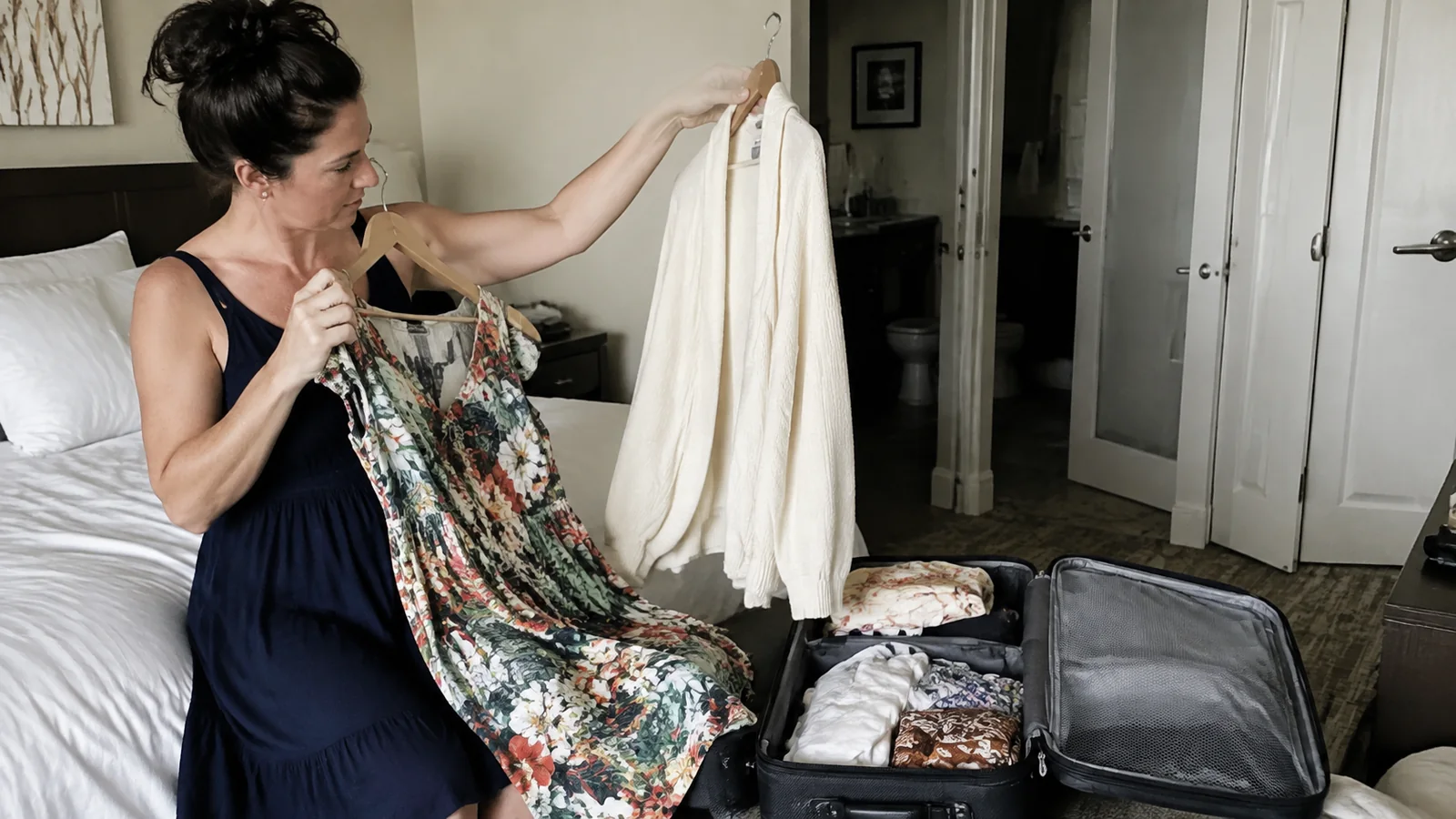
For someone who enjoys dresses, start with three rather than seven. Laundry, climate, and personal style may justify fewer or more, but this formula makes every item explain its job.
- Dress one: Breathable port midi that also works for casual dinner.
- Dress two: T-shirt, shirt, or knit dress for sea day and travel day.
- Dress three: Cocktail or elevated midi for the dressiest planned evening.
- Layer one: Cardigan, wrap, or polished jacket that works with all three.
- Accessories: One daytime bag, one small evening option, and two compact jewelry or scarf changes.
For a three-night cruise, one day-to-dinner dress and one optional dress-up outfit may be enough. For 14 nights, add a second everyday dress and plan laundry instead of doubling every category.
Use the broader cruise clothing capsule to balance dresses with pants, layers, swimwear, and outerwear. The women’s cruise clothing guide also offers body-neutral alternatives when a dress is not the answer.
Make one dress look different without overpacking
Change the visual focus, not the entire outfit. A scarf, earrings, belt, wrap, jacket, or different shoe can move a plain midi from daytime to dinner.
Do not pack six accessories that each work with one look. Choose a metal, color family, and bag that repeat across the capsule.
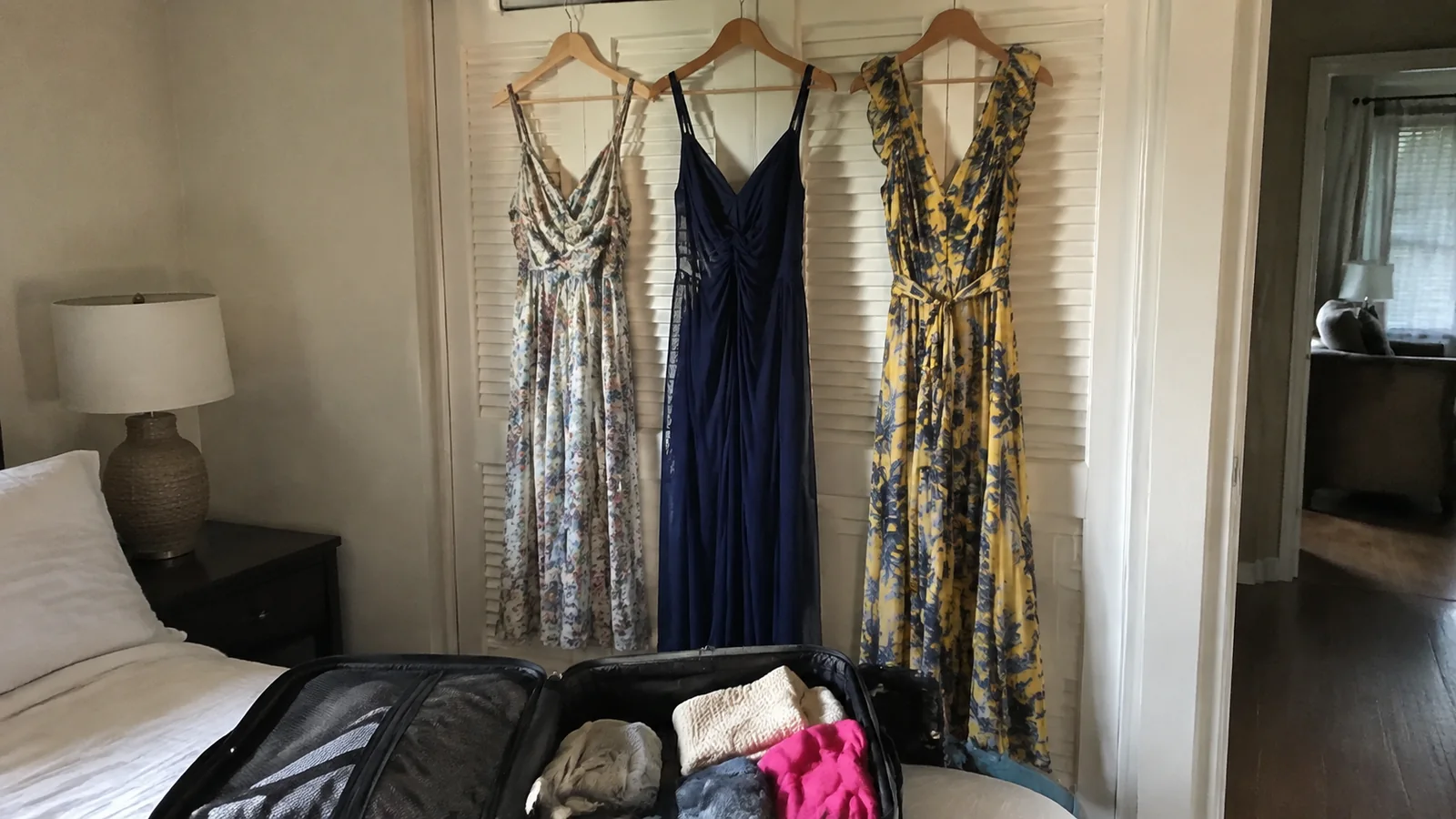
Photograph each complete outfit before packing, including undergarments, layer, bag, and shoes. This exposes missing pieces and gives you an easy reference when getting ready in a small cabin.
If photos matter, the cruise photo ideas can help you choose settings and poses without turning the entire wardrobe into content production. Comfort still shows better than an outfit you cannot move in.
What not to buy for a cruise
Skip any dress that requires a different bra, new shoes, emergency tailoring, and constant tape unless you genuinely enjoy that project. The cruise is not a deadline for becoming a different dresser.
Avoid hems that catch under your heel, loose embellishment that snags, and sleeves that drag through buffet food. Beading can also add surprising luggage weight and may feel rough against bare arms.
Do not trust “wrinkle-free,” “travel,” “cooling,” or “reef dinner” language without checking fiber, construction, care, and return terms. This guide does not claim product testing, and a marketing label cannot predict fit on your body.
Finally, do not order five maybes when one proven dress is already in your closet. Shop your wardrobe first, stage a full try-on, and spend only where a real gap remains.
Your final cruise dress checklist
- Does it meet the line and venue guidance?
- Can you sit, bend, reach, and use stairs comfortably?
- Does the hem behave in wind and with your shoes?
- Is the fabric suitable for heat, rain, or cold?
- Can you wear the intended undergarments?
- Does it offer appropriate destination coverage or pair with a layer?
- Can you care for it onboard?
- Will you wear it at least twice, or is the occasion worth the space?
- Do its pockets hold anything safely?
- Do you feel like yourself in it?
The simplest recommendation
For most seven-night cruises, pack one breathable day dress, one comfortable casual dress, and one elevated midi or cocktail option. Make all three work with the same layer and no more than three pairs of shoes across the entire wardrobe.
If your line is relaxed, reduce the dress-up category; if Cunard-style Gala Evenings are part of the fun, give formalwear more room. The fashionable choice is the dress that fits the actual cruise and frees you to enjoy it.