24 Cruise Accessories Worth Packing, Plus What to Skip
Cruise accessories should make your cabin calmer, your port day easier, or your suitcase more organized. If a gadget solves no specific problem, it is just another thing to unpack in a very small room.
These are the optional cruise products I would consider after documents, medication, clothing, and true essentials are covered. I will also tell you what to skip, because “cruise approved” on a shopping page is not permission from your cruise line.
How to decide whether a cruise accessory is worth packing
Give every accessory a job before it earns suitcase space. “Keeps my phone dry during two beach excursions” is a job, while “everyone online bought one” is not.
Next, check whether the ship already provides the item or a better solution. Beach towels, a hair dryer, hangers, soap, and a safe are common onboard, although exact cabin amenities vary by ship and line.
Finally, read the current prohibited-items policy for your carrier. Rules are not standardized, and security staff do not have to honor an online seller’s homemade “cruise approved” badge.
This list complements our complete cruise packing checklist, which covers documents, clothes, embarkation-day medication, and other necessities. Here, the focus is convenience gear you may happily leave home.
Cabin accessories that solve real problems
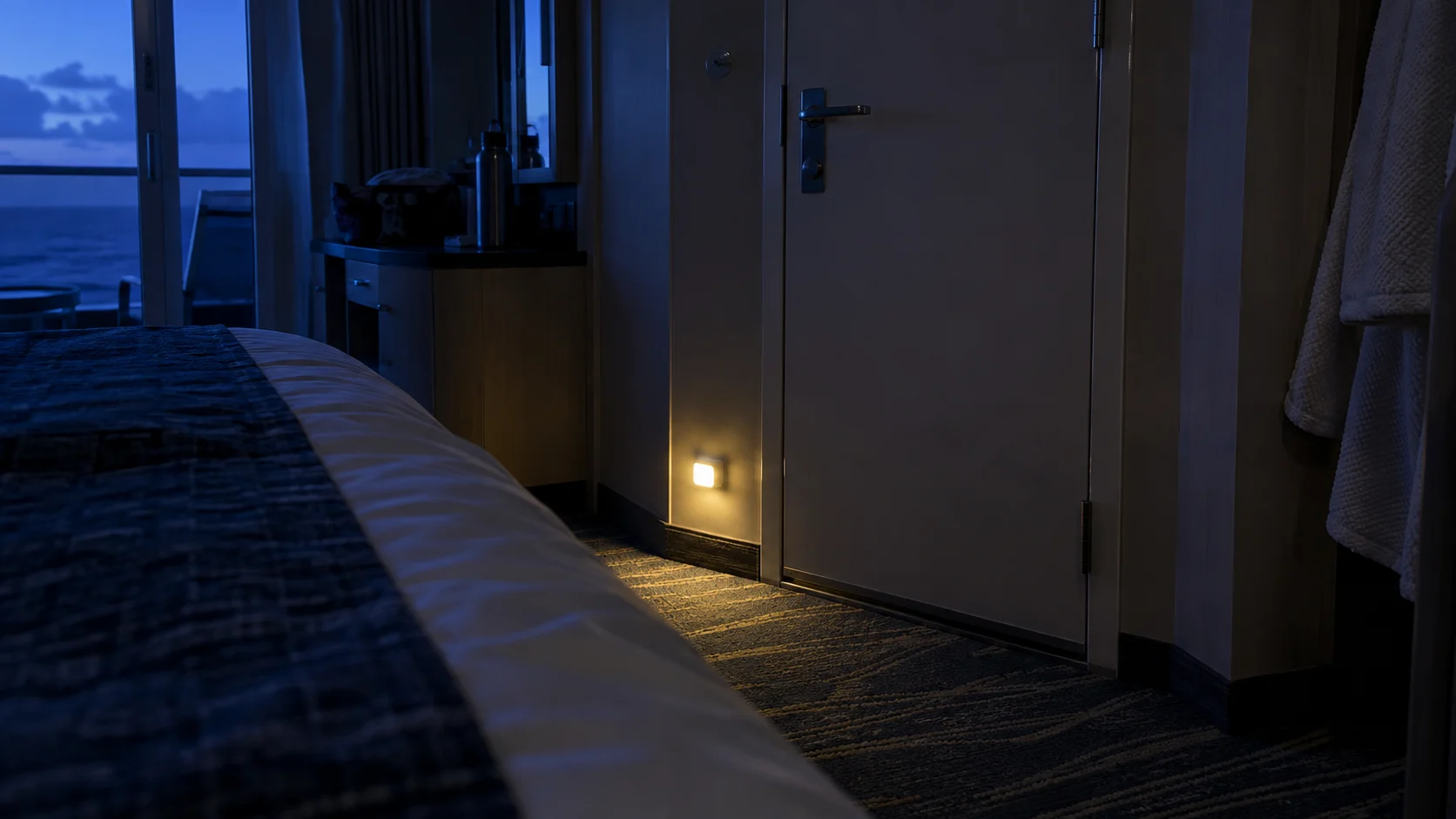
1. A small motion-sensor night-light
An inside cabin can be completely dark, and an unfamiliar bathroom step is not a fun midnight surprise. Choose a compact battery-powered light with a soft sensor setting rather than a bright plug-in model that occupies a scarce outlet.
Turn it off or cover it if your roommate needs total darkness. A phone flashlight also works, so this is optional rather than essential.
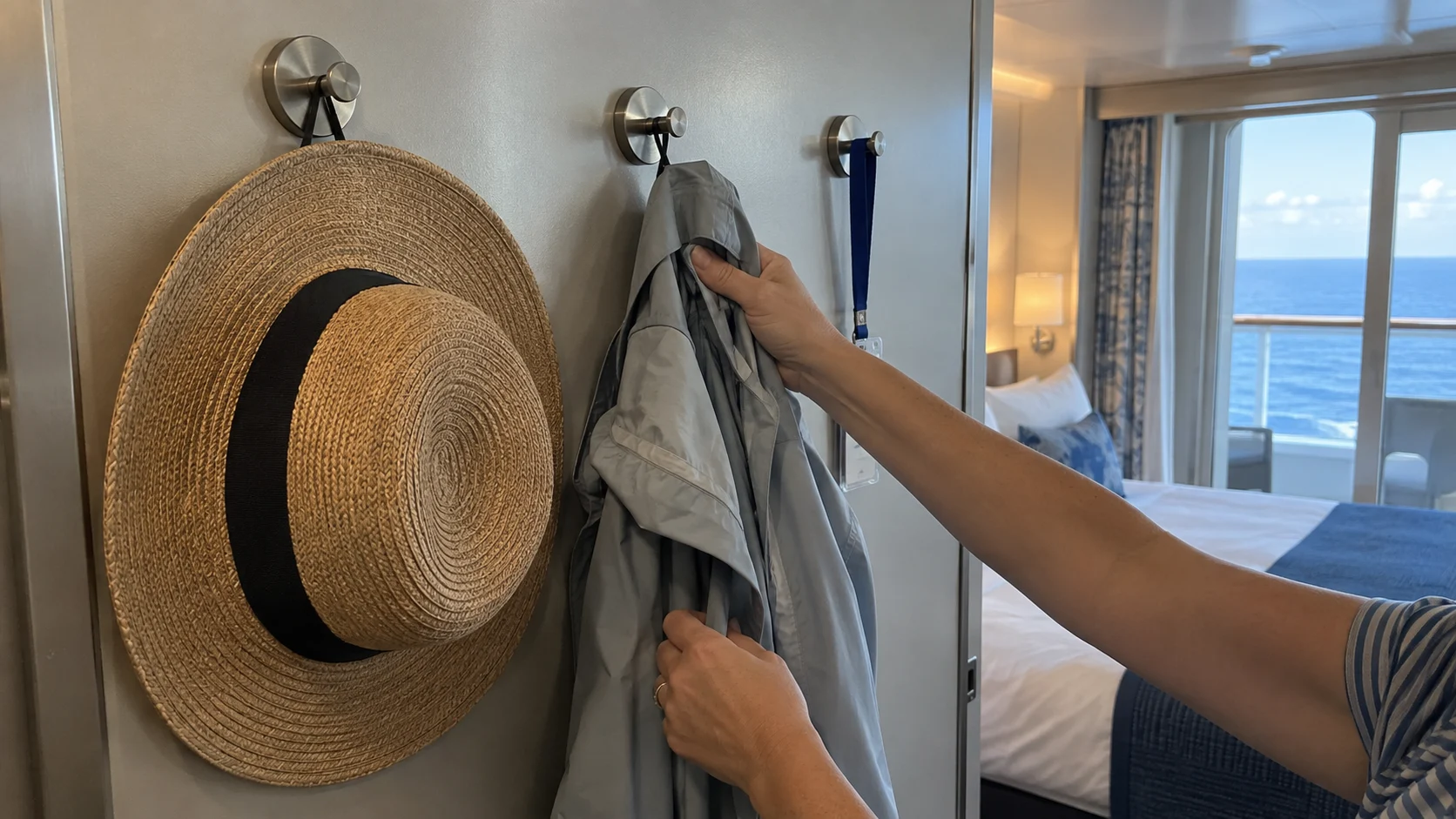
2. Magnetic hooks with realistic expectations
Many cabin walls contain steel behind the finish, making strong magnetic hooks useful for hats, lanyards, and light clothing. Their advertised holding strength usually assumes an ideal vertical pull, so a hook on a wall may hold much less.
Never hang heavy bags, glass, or anything that could fall on a sleeper. Bring only a few, test them gently, and remove them without scraping the surface.
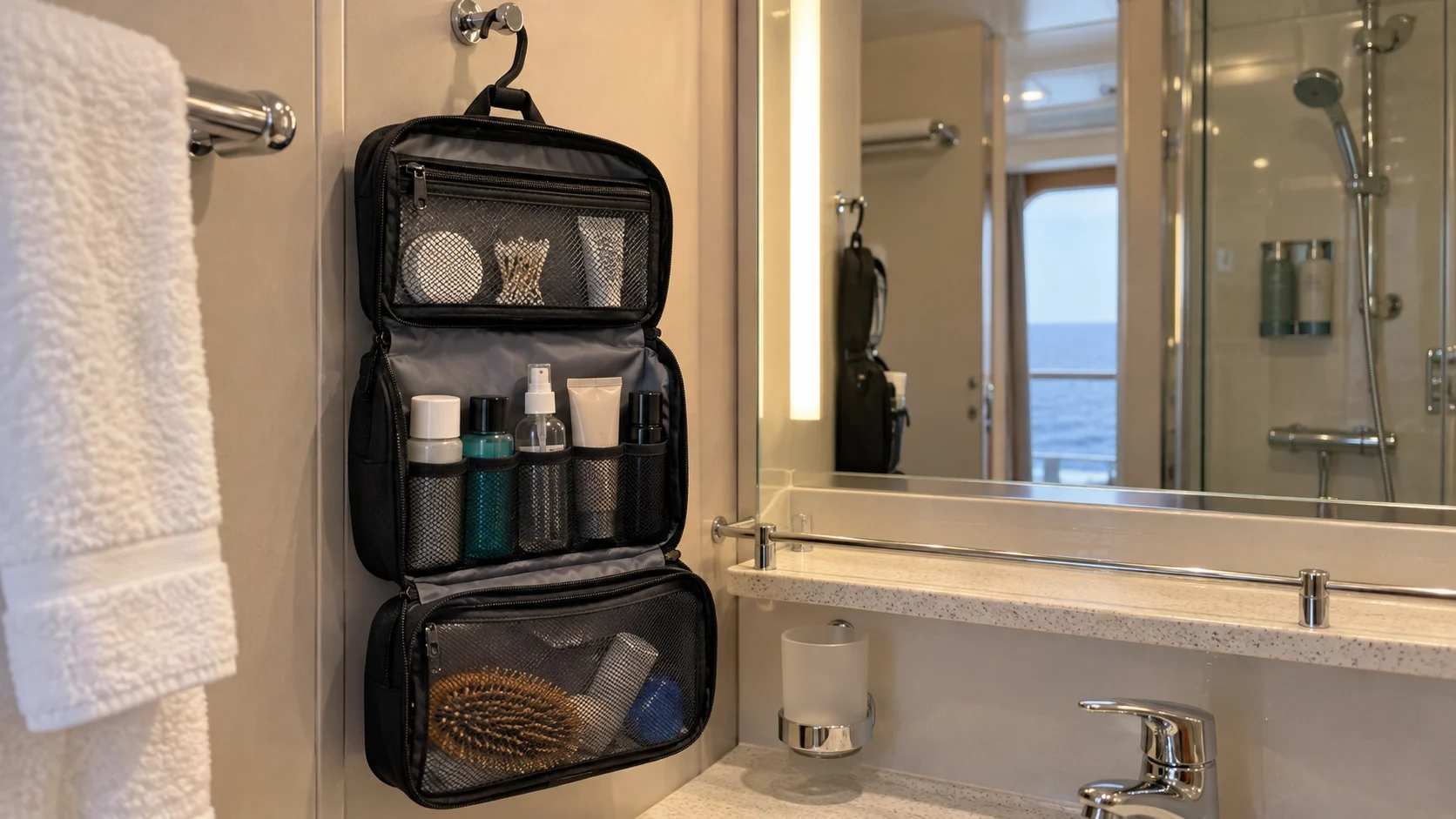
3. A compact hanging toiletry bag
Bathroom counters can be tiny, and a hanging toiletry bag keeps everyday items together. It is especially helpful when two or more people share the room and need to clear the sink quickly.
Choose one that closes securely and hangs from an existing hook. Do not overload towel bars or improvised fixtures.
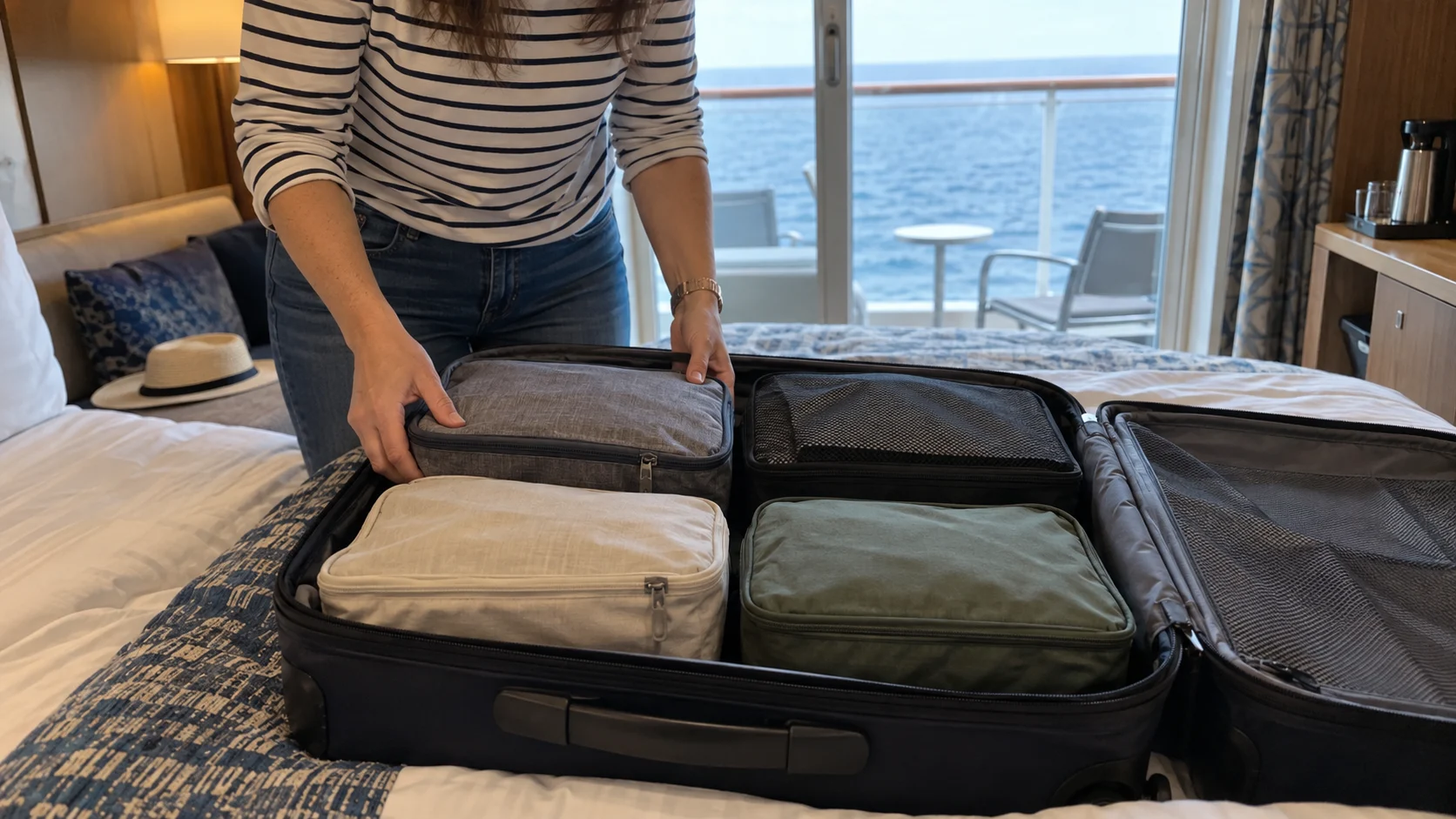
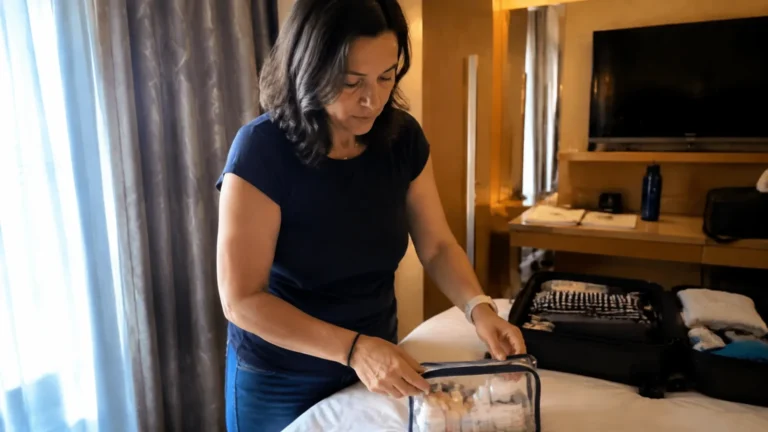
4. Packing cubes
Packing cubes turn cabin drawers and shelves into categories, then make repacking far less dramatic. One cube for underwear, one for swimwear, and one for each day’s children’s outfits can work better than an elaborate color system.
Compression cubes save volume but can encourage overweight luggage. They organize weight; they do not make it disappear.
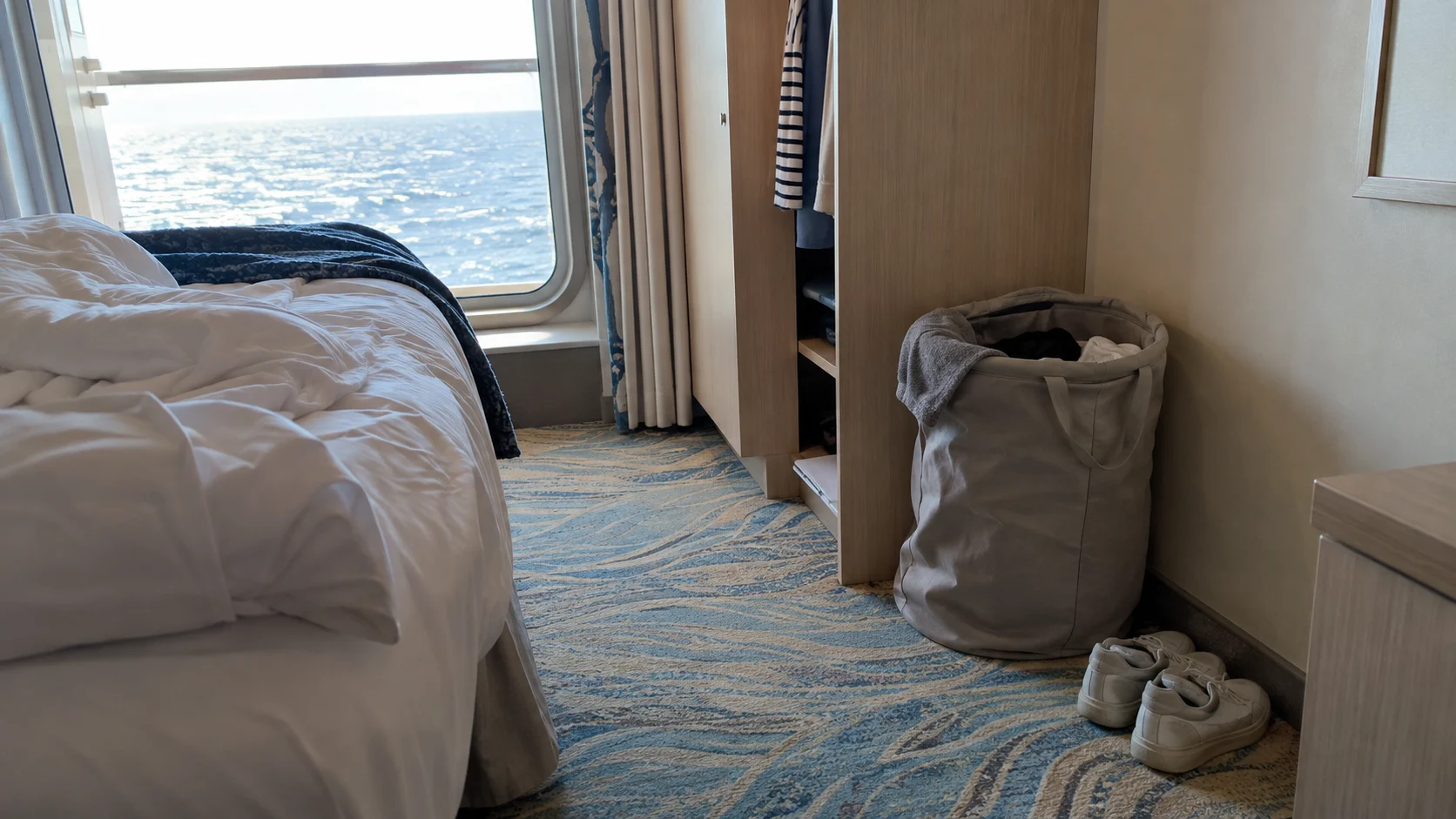
5. A fold-flat laundry bag
A breathable or washable laundry bag keeps worn clothing from spreading across the cabin. Two small bags can separate items that may be reworn from clothes headed directly to the washing machine at home.
A basic pillowcase can do the same job. Buy nothing new if you already own a light bag that packs flat.
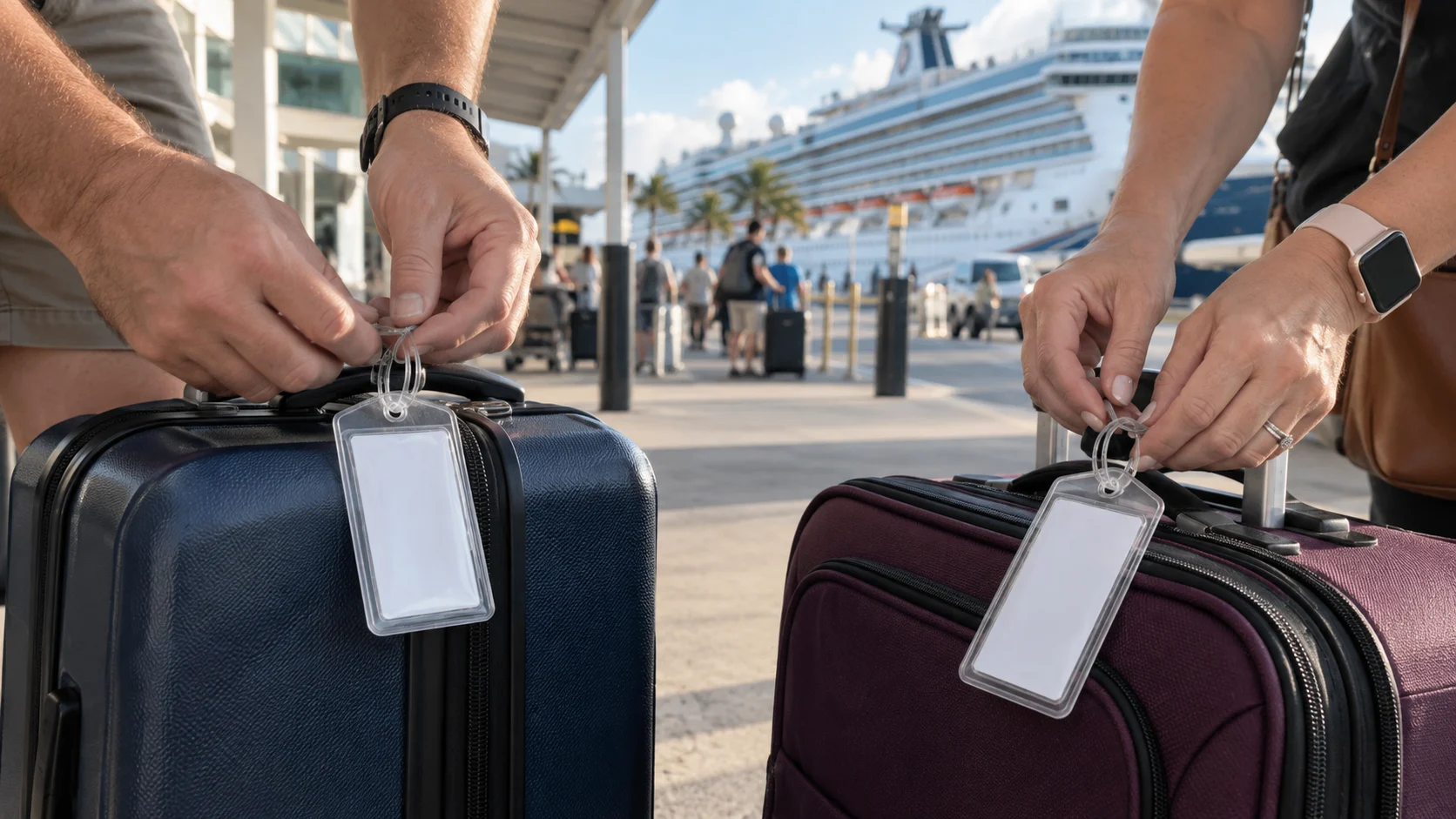
6. Reusable luggage-tag holders
Plastic holders can protect printed cruise luggage tags from rain and torn staples. They are useful for repeat cruisers, but the correct size and attachment style depend on the line’s current tag format.
You can also fold and attach the paper tag exactly as instructed. Never put medication, travel documents, keys, or irreplaceable items in luggage handed to a porter.
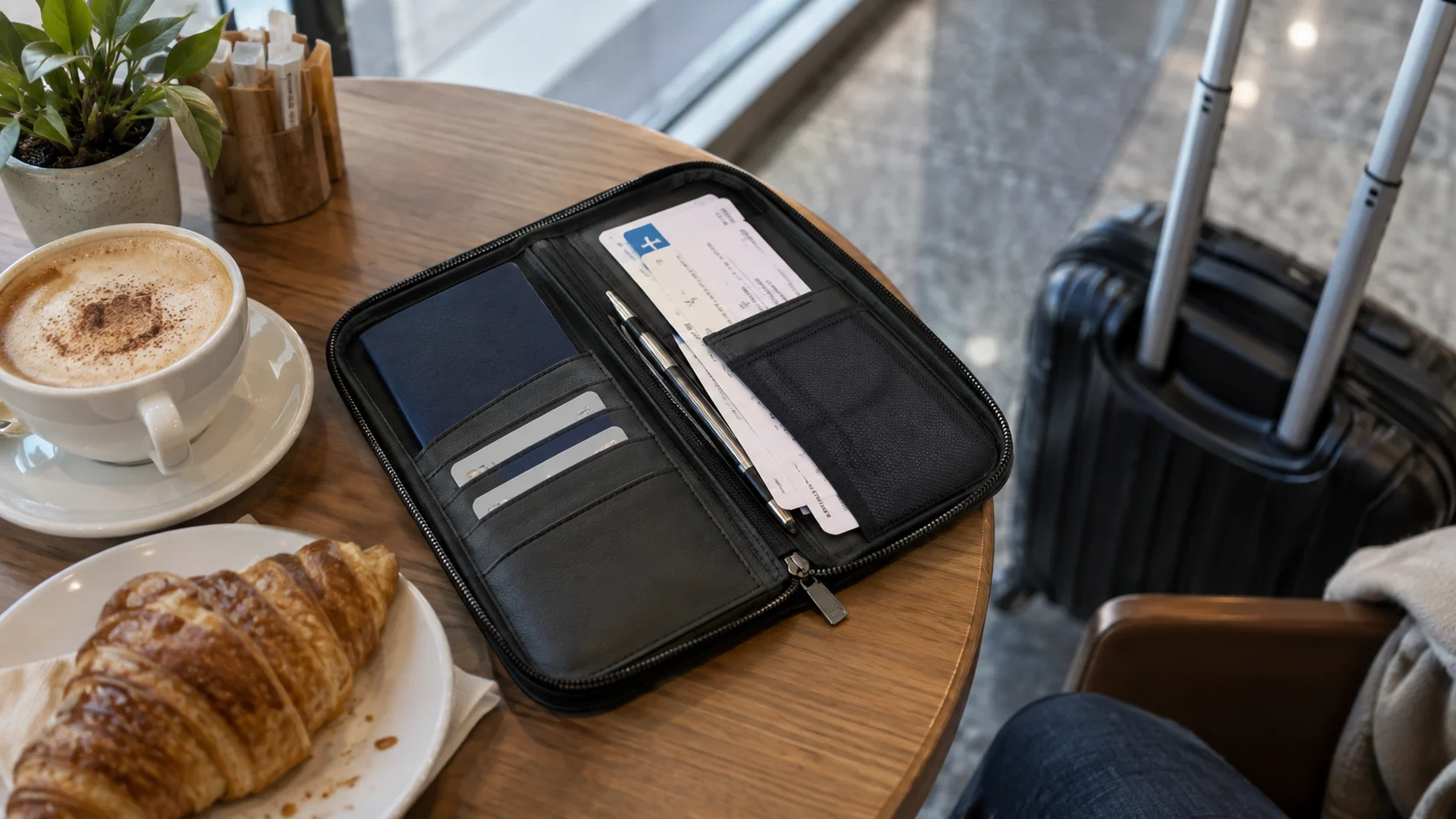
7. A simple document wallet
A slim zip wallet keeps passports, consent forms, insurance details, and boarding paperwork together during embarkation. It should stay in your carry-on and under the control of a responsible traveler.
Do not advertise its contents with giant passport graphics. A plain organizer is easier to use discreetly in a terminal or airport.
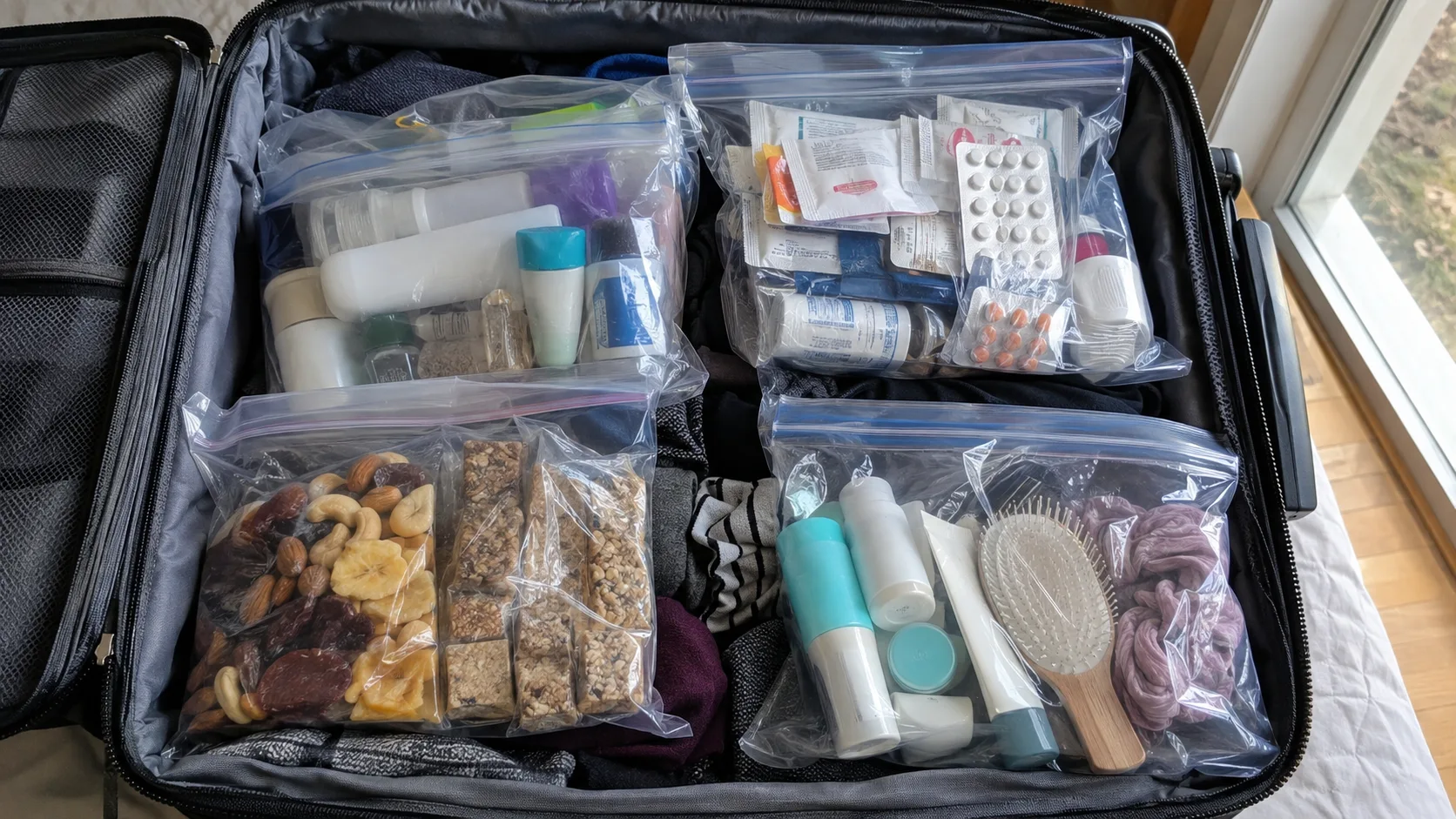
8. A few resealable bags
Small and medium resealable bags are wonderfully unexciting. They isolate a damp swimsuit, protect paper, contain a leaking bottle, and organize tiny chargers.
They are not an excuse to remove food where customs, agricultural, or cruise rules prohibit it. Use them for organization, not rule dodging.
Charging and technology accessories
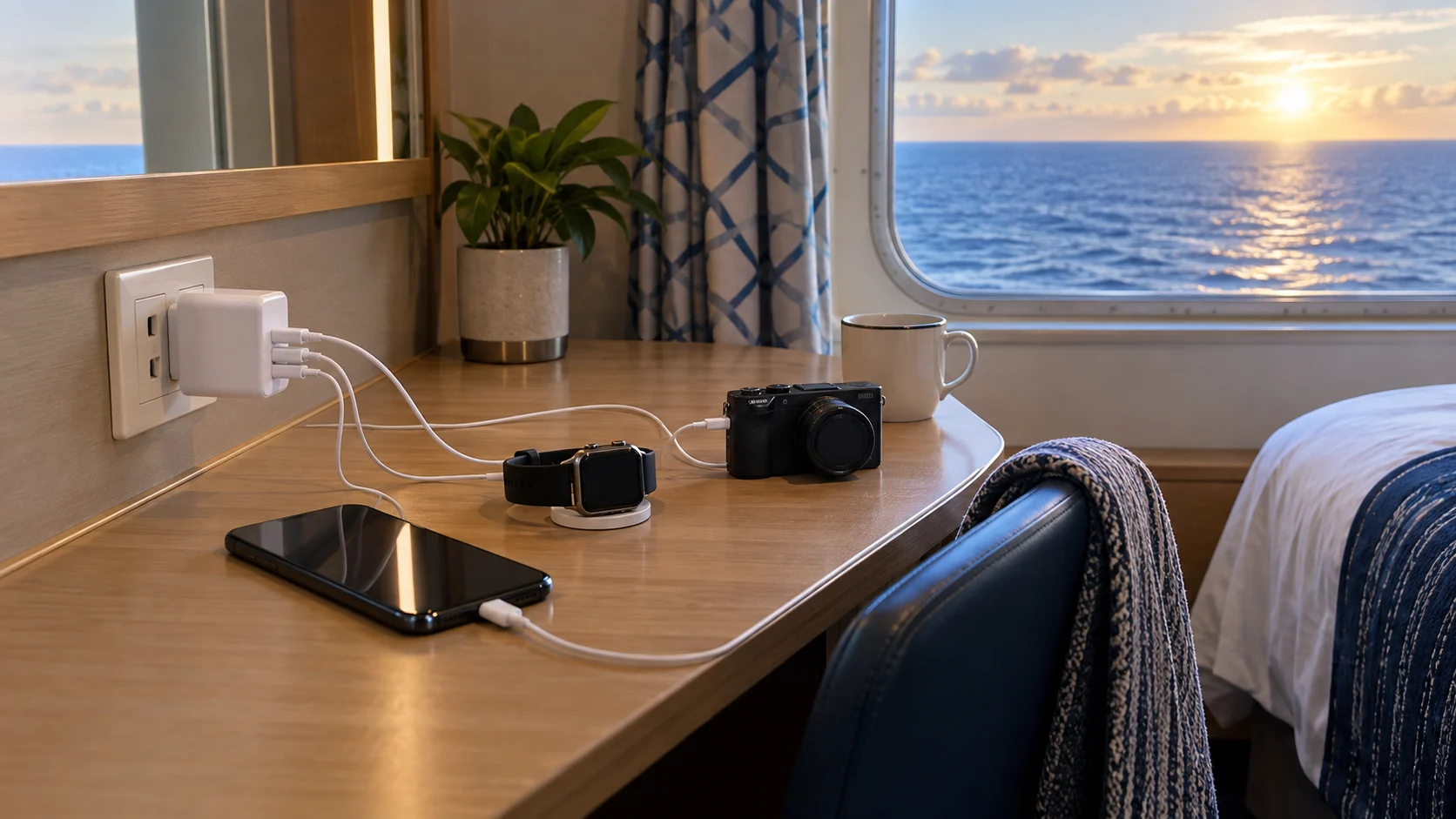
9. A multiport USB charger, if the line permits it
A single compact charging block with several USB ports can replace separate phone and watch adapters. This is different from assuming that a power strip, extension cord, or multi-plug outlet will be accepted.
Royal Caribbean’s current prohibited-items policy, for example, lists extension cords, power strips, and multi-plug outlets among prohibited electrical equipment. Check your own line and exact device rather than applying one carrier’s rule everywhere.
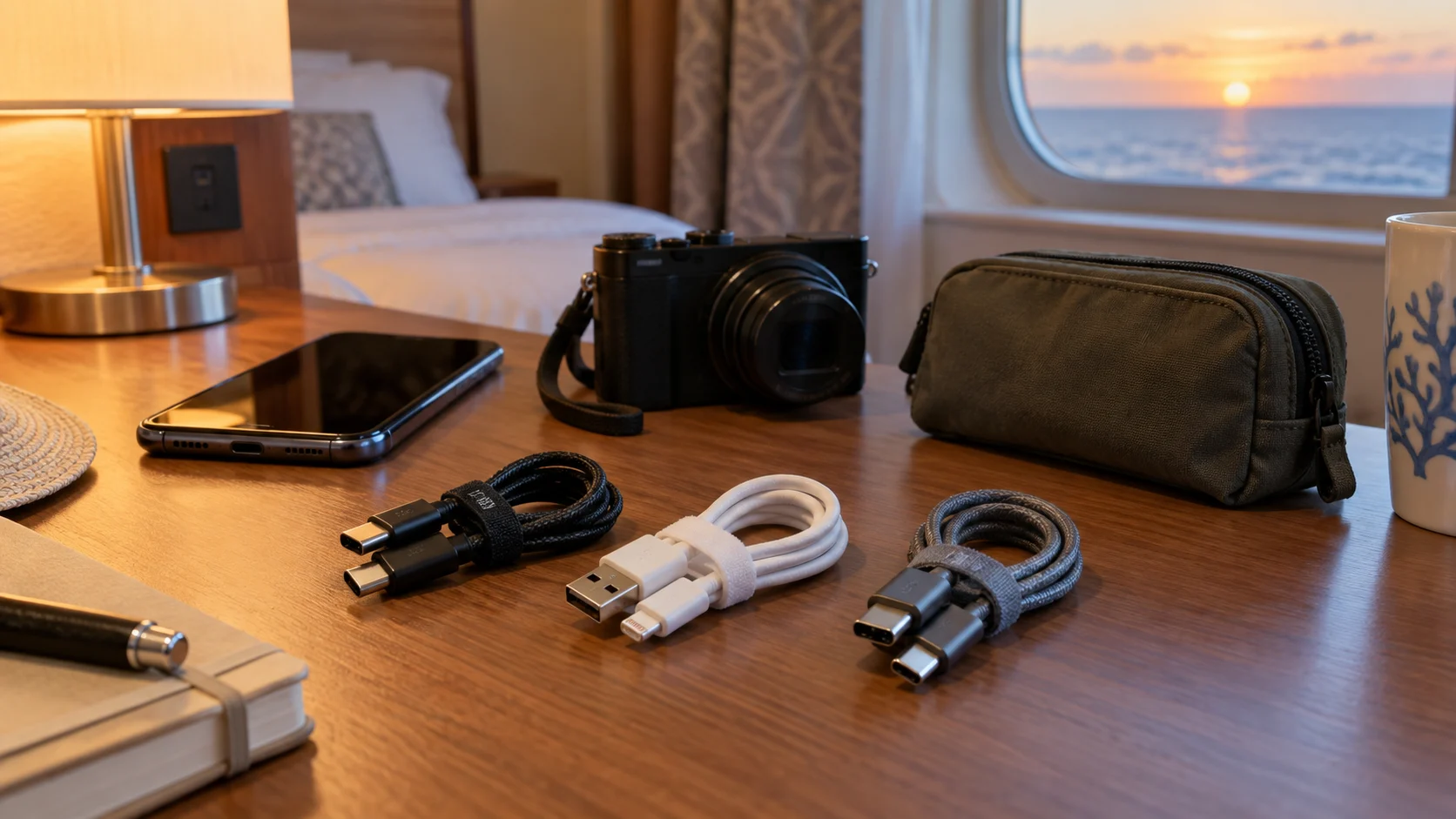
10. Short, durable charging cables
A reliable cable is more useful than a pouch full of mystery cords. Label identical cables when cabin mates use the same connector, and bring one spare for the device that matters most.
Very long cords create clutter and can become a trip hazard. Route every cable away from walking paths and cabin doors.
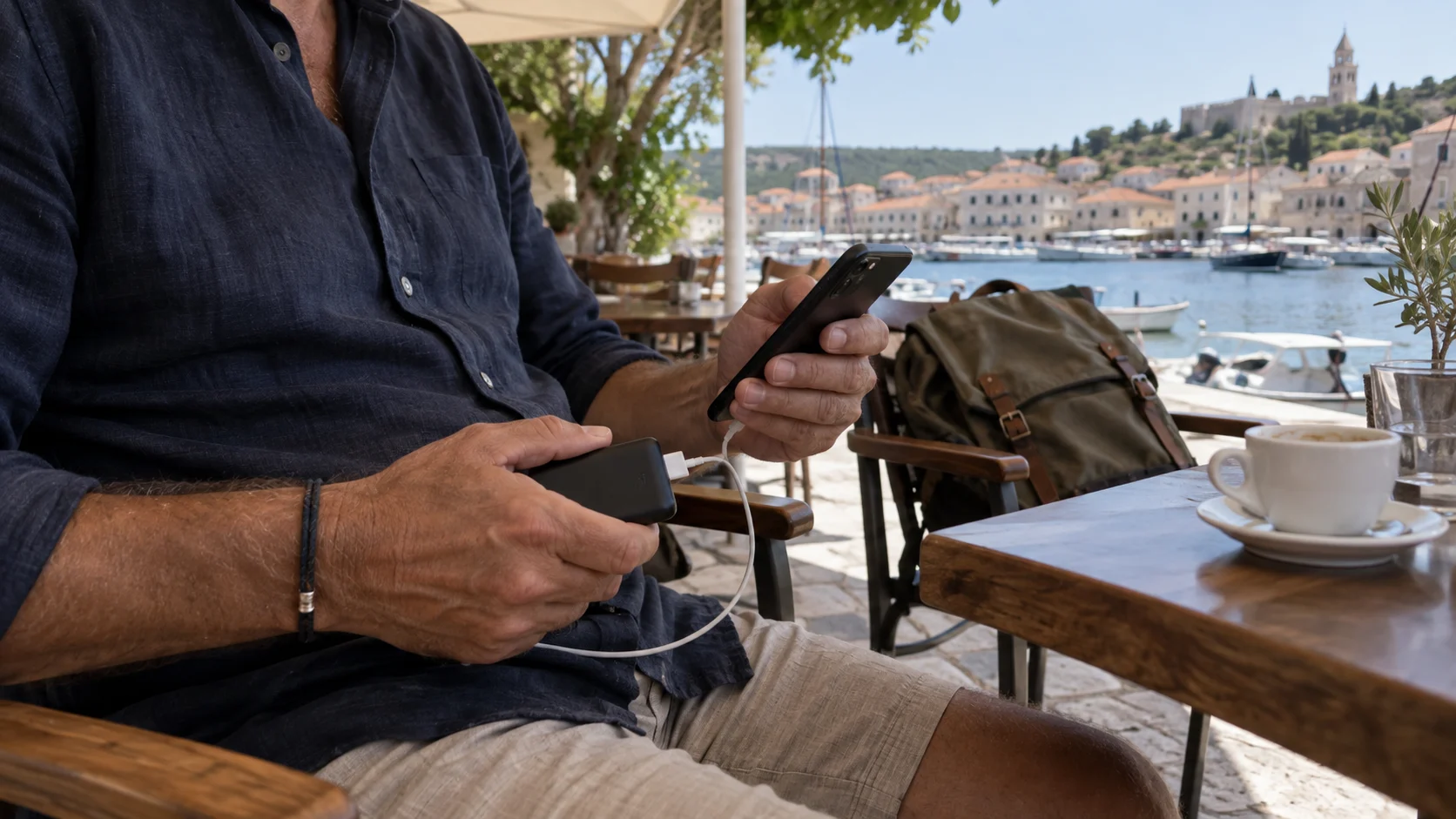
11. A modest power bank
A power bank is helpful on a long excursion when maps, tickets, photos, and emergency communication all live on your phone. Choose a reputable battery with its capacity clearly marked and no swelling or damage.
If you fly to the cruise, the FAA says power banks and spare lithium batteries belong in carry-on baggage, not checked luggage. Review the current FAA battery rules and your airline’s limits before packing.
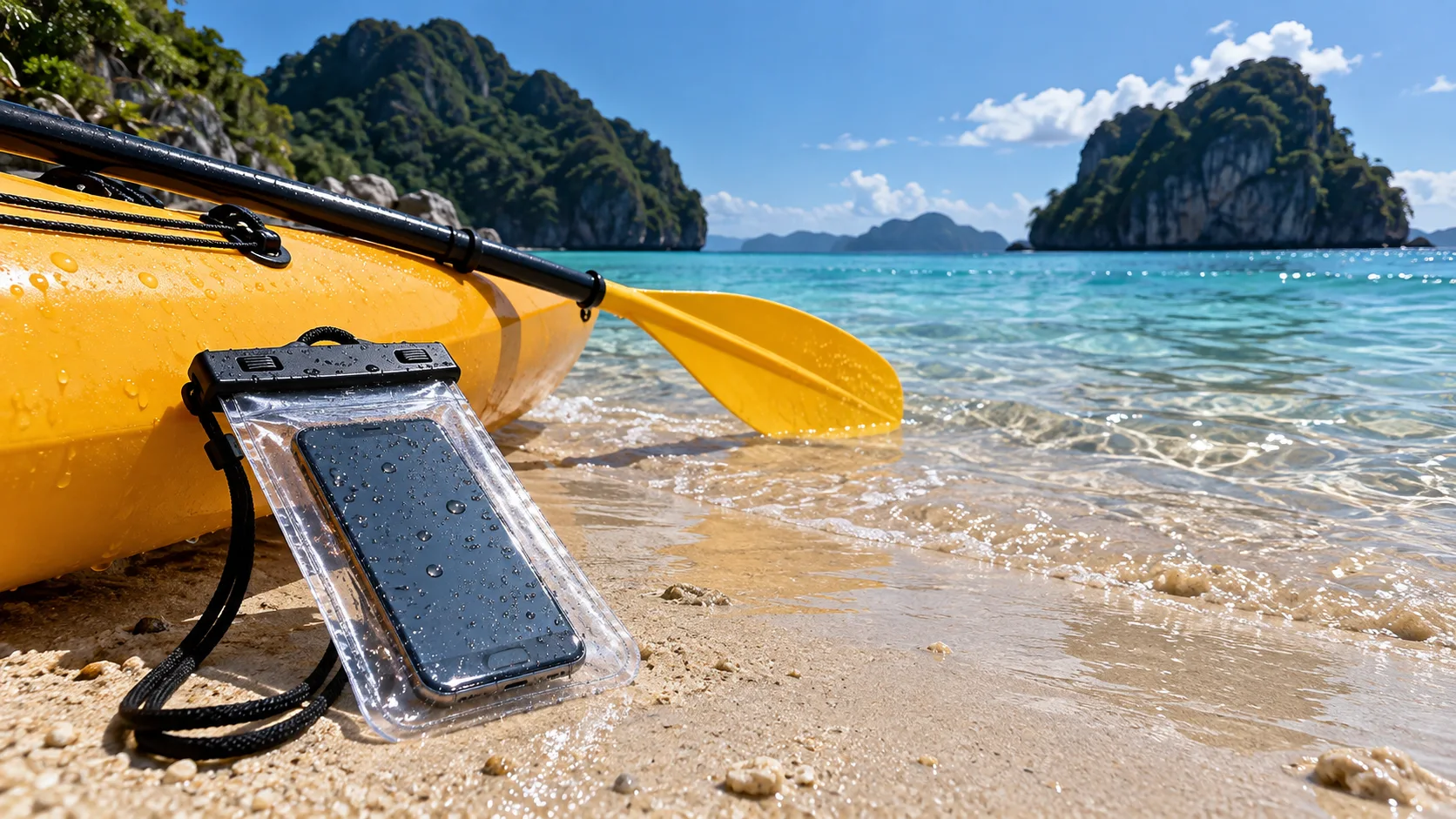
12. A waterproof phone pouch
A waterproof pouch can protect a phone from splashes during a beach or small-boat day. Test it at home with paper inside, inspect the seal every time, and treat its depth rating as a limit rather than a challenge.
Do not rely on a pouch as flotation or swim beyond your ability to retrieve a photo. A damaged seal can turn a cheap accessory into an expensive lesson.
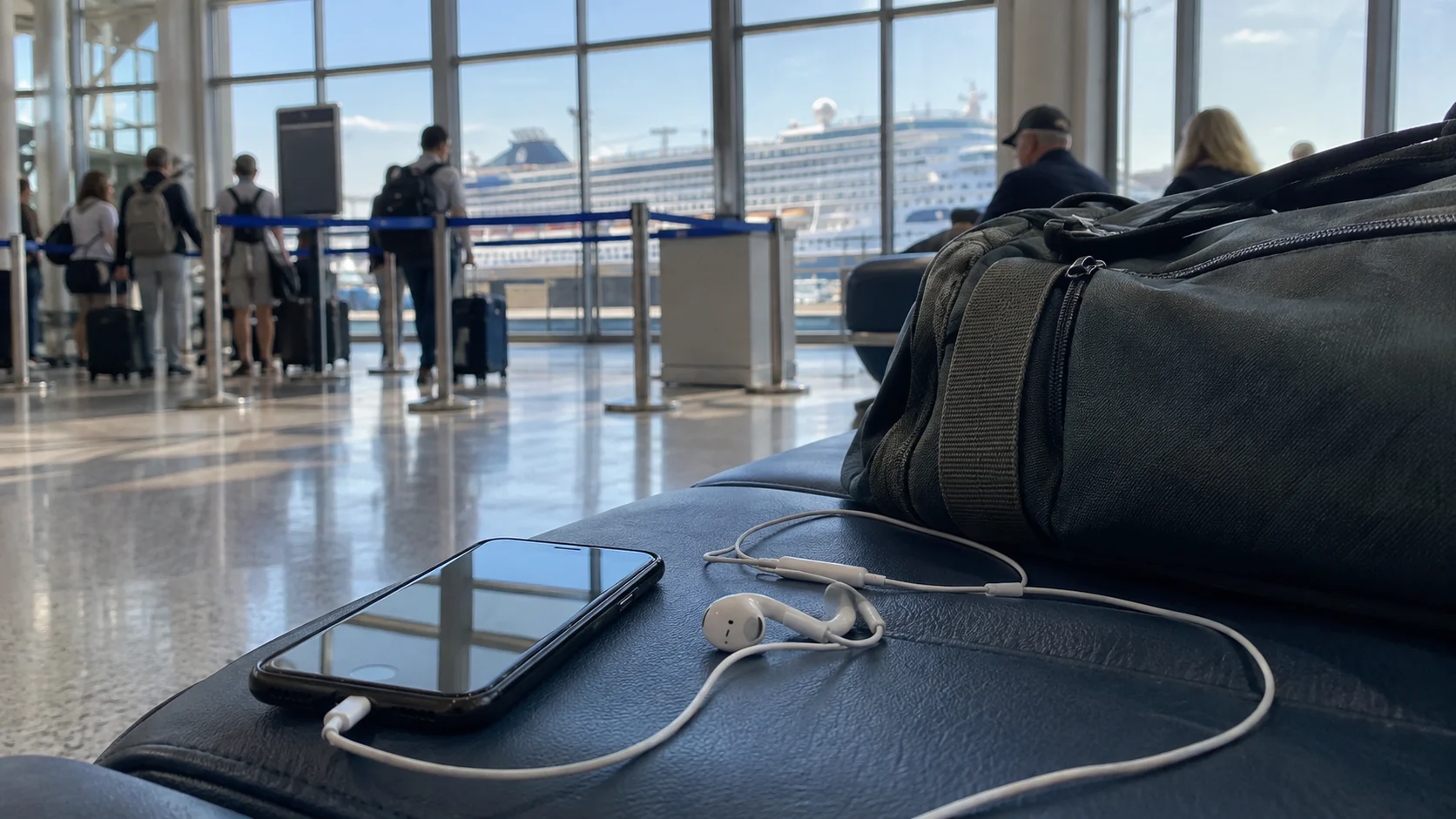
13. Wired headphones
Wired headphones do not need charging and can save the day when wireless earbuds die. They also let you watch or listen privately without turning the cabin or pool deck into your personal sound system.
Carnival’s current prohibited-items guidance lists Bluetooth and other portable speakers as prohibited and directs guests to use headphones in public areas. Speaker policies vary, but consideration should not.
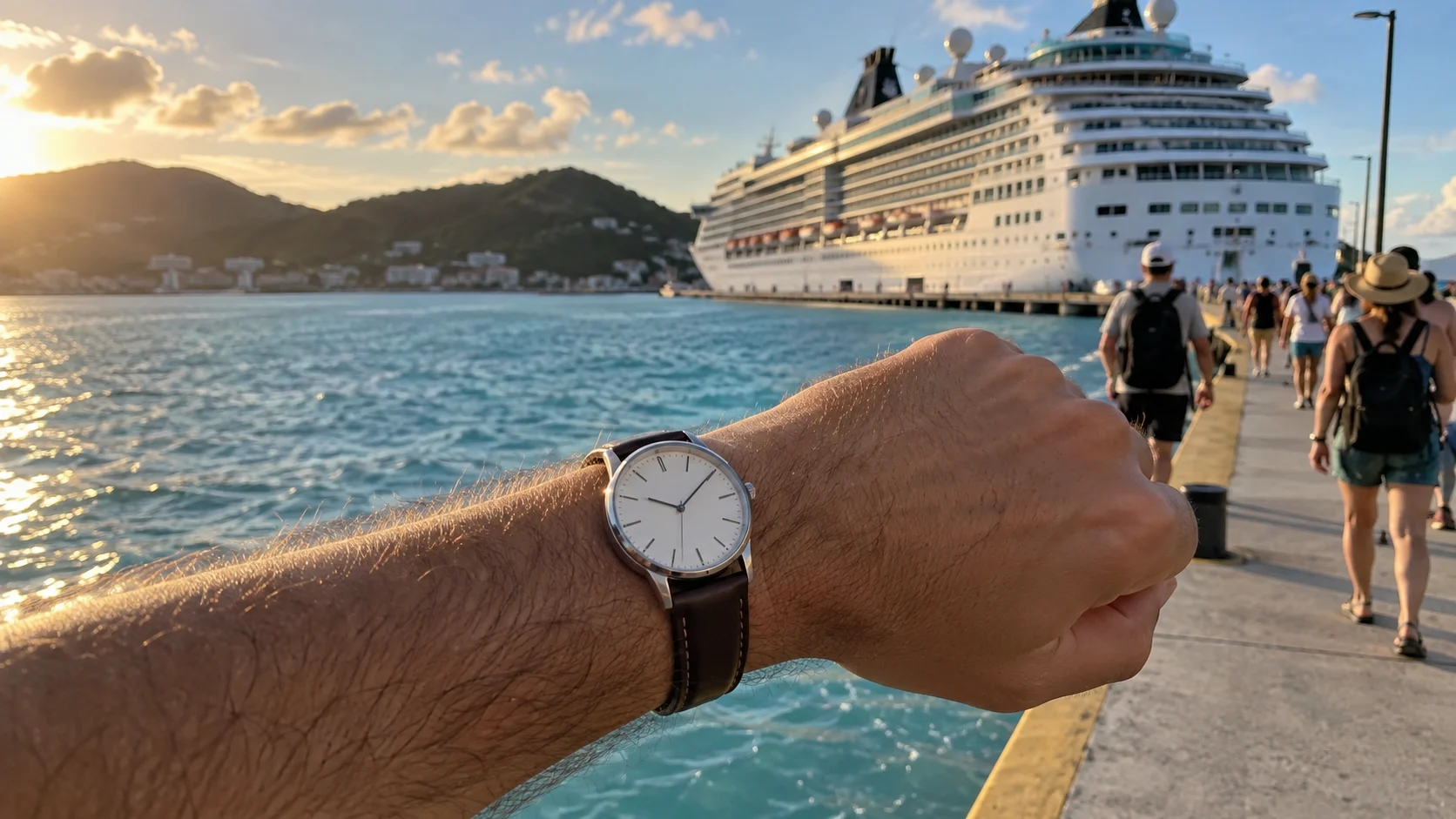
14. A basic watch
A simple watch keeps ship time visible without pulling out a phone on the beach. This matters because local time and ship time do not always behave the way a traveler expects.
Set it to the time announced by the ship and verify the all-aboard deadline. The ship’s instructions win over an automatically updating device.
Port-day accessories worth considering
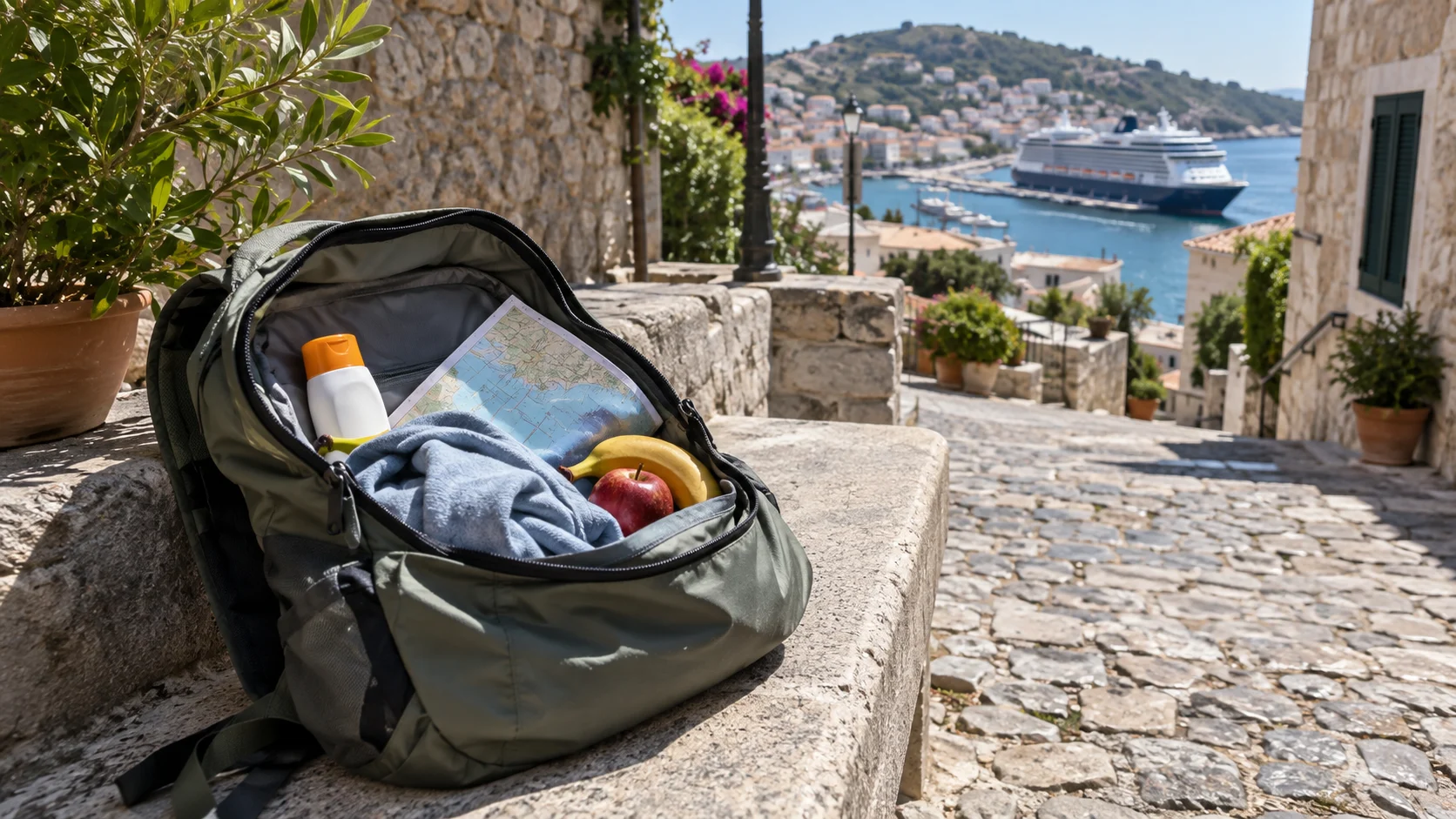
15. A packable day bag
A light backpack or zip-top tote carries water, a cover-up, sun protection, and excursion paperwork. The best one is comfortable, secure enough for the destination, and small enough to remain with you.
Open beach totes are convenient but poor choices in crowded transport. Choose the bag for the actual port day rather than for a matching embarkation photo.

16. A reusable water bottle
A leak-resistant bottle makes hydration easier on deck and ashore. Fill it according to ship hygiene rules, which may require using a clean cup rather than placing your bottle directly under a dispenser.
Insulated bottles are pleasant but heavy. A lighter bottle may be the smarter accessory when you will carry it for six hours.

17. A small dry bag
A roll-top dry bag is useful on kayaking, rafting, beach, and tender days. Pick a size that holds only what must stay dry, because a giant bag becomes awkward on ladders and small boats.
Even a dry bag is not a substitute for travel insurance or cautious handling. Keep passports and valuables out of the water whenever possible.
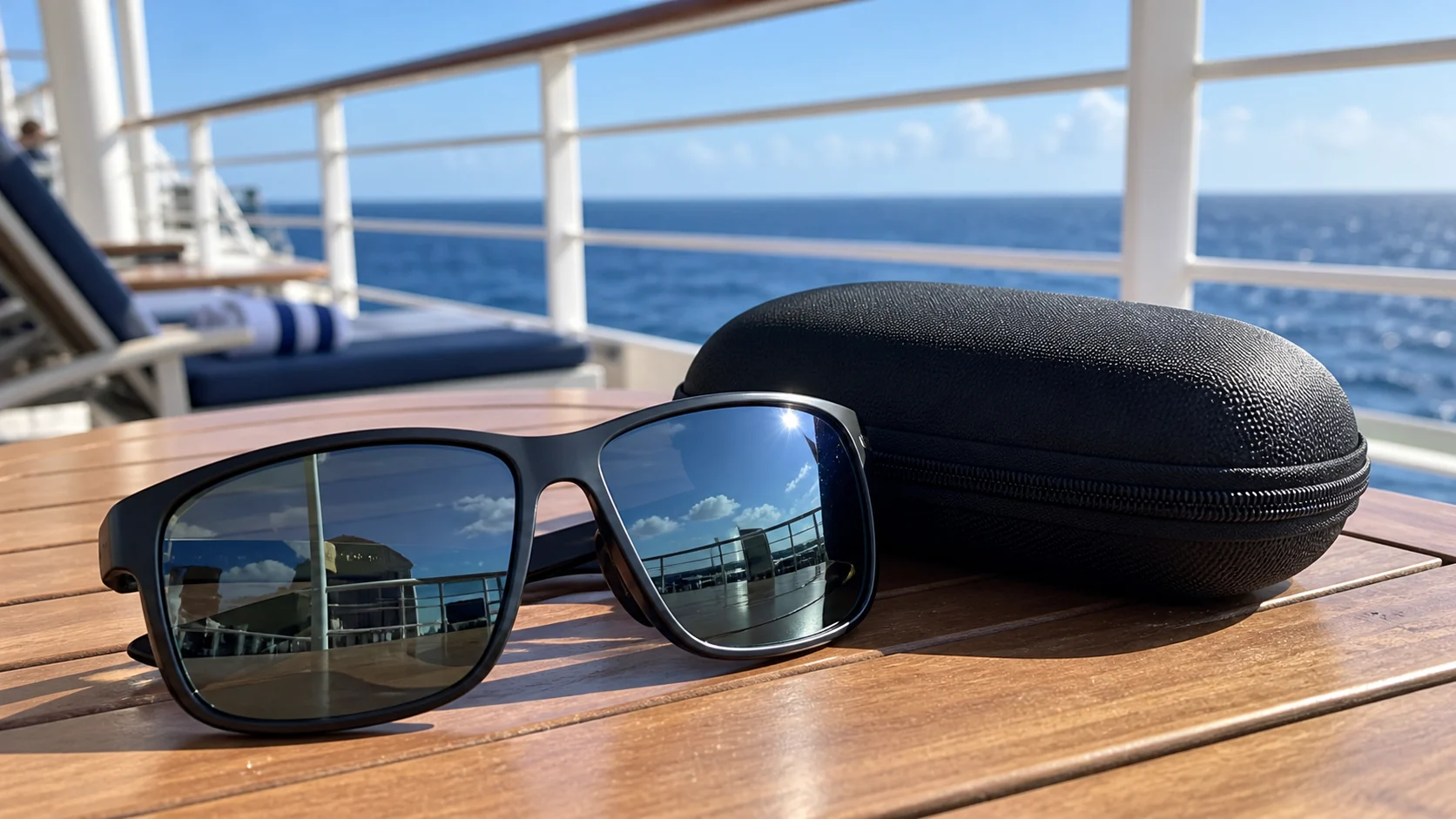
18. Polarized sunglasses with a case
Glare on water can be tiring, and a hard or semi-rigid case protects glasses inside a crowded day bag. A retaining strap helps on boats if the operator permits it.
Bring the pair you will actually wear rather than expensive sunglasses that make you anxious all day. Sun protection matters more than a logo.
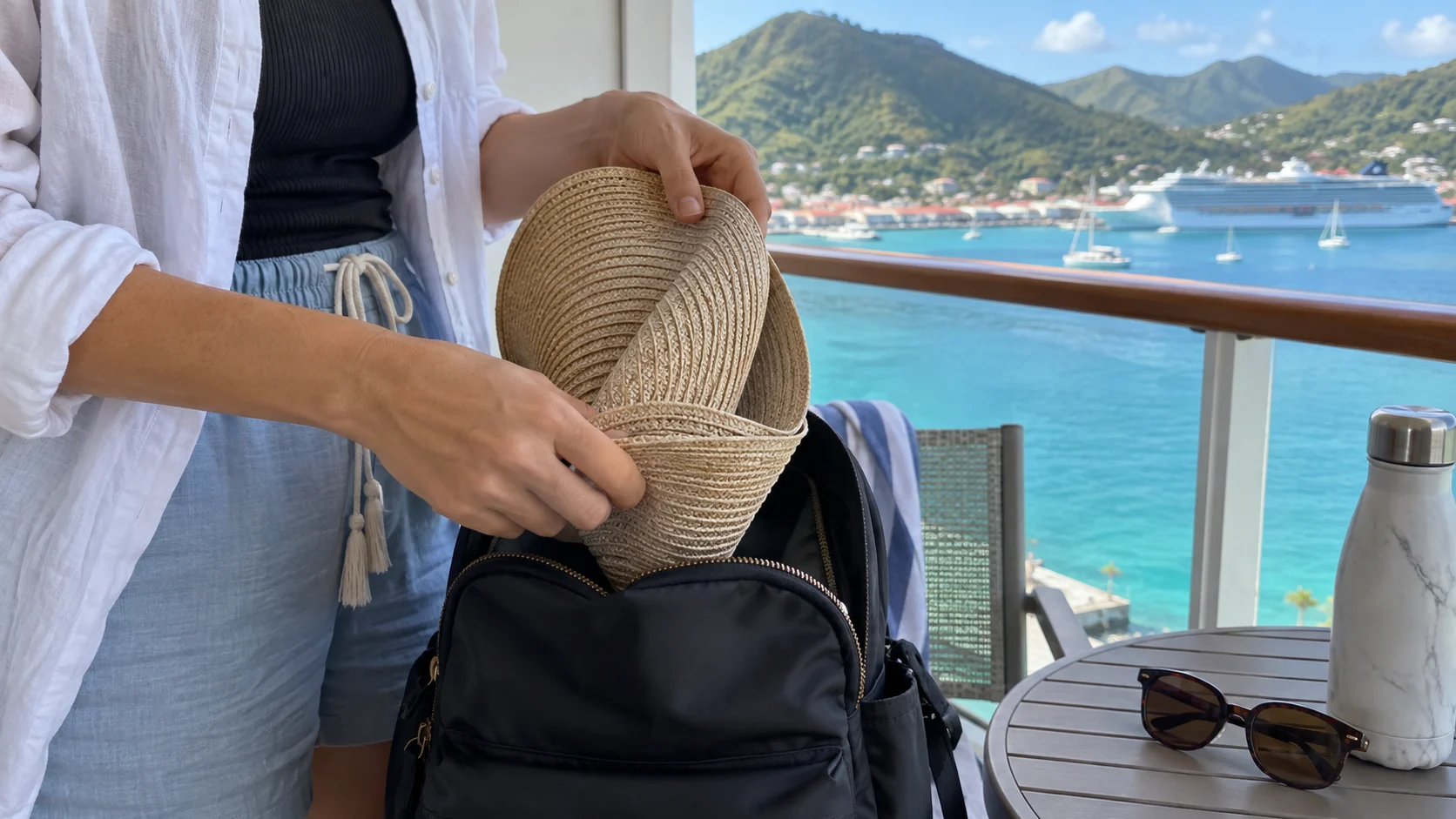
19. A foldable sun hat
A brimmed hat earns its space on pool decks, walking tours, and beach days. Choose one that stays on in wind and survives being packed.
A hat does not replace sunscreen, shade, water, or protective clothing. It is one layer of a sensible sun plan.

20. Compact binoculars
Binoculars are genuinely useful in Alaska, Norway, Panama, and wildlife-rich ports. They can also turn a quiet sea day into something more interesting without another paid activity.
Choose a compact, weather-resistant pair and use the neck strap near railings. Wildlife sightings are never guaranteed, so buy binoculars only if you will use them elsewhere.
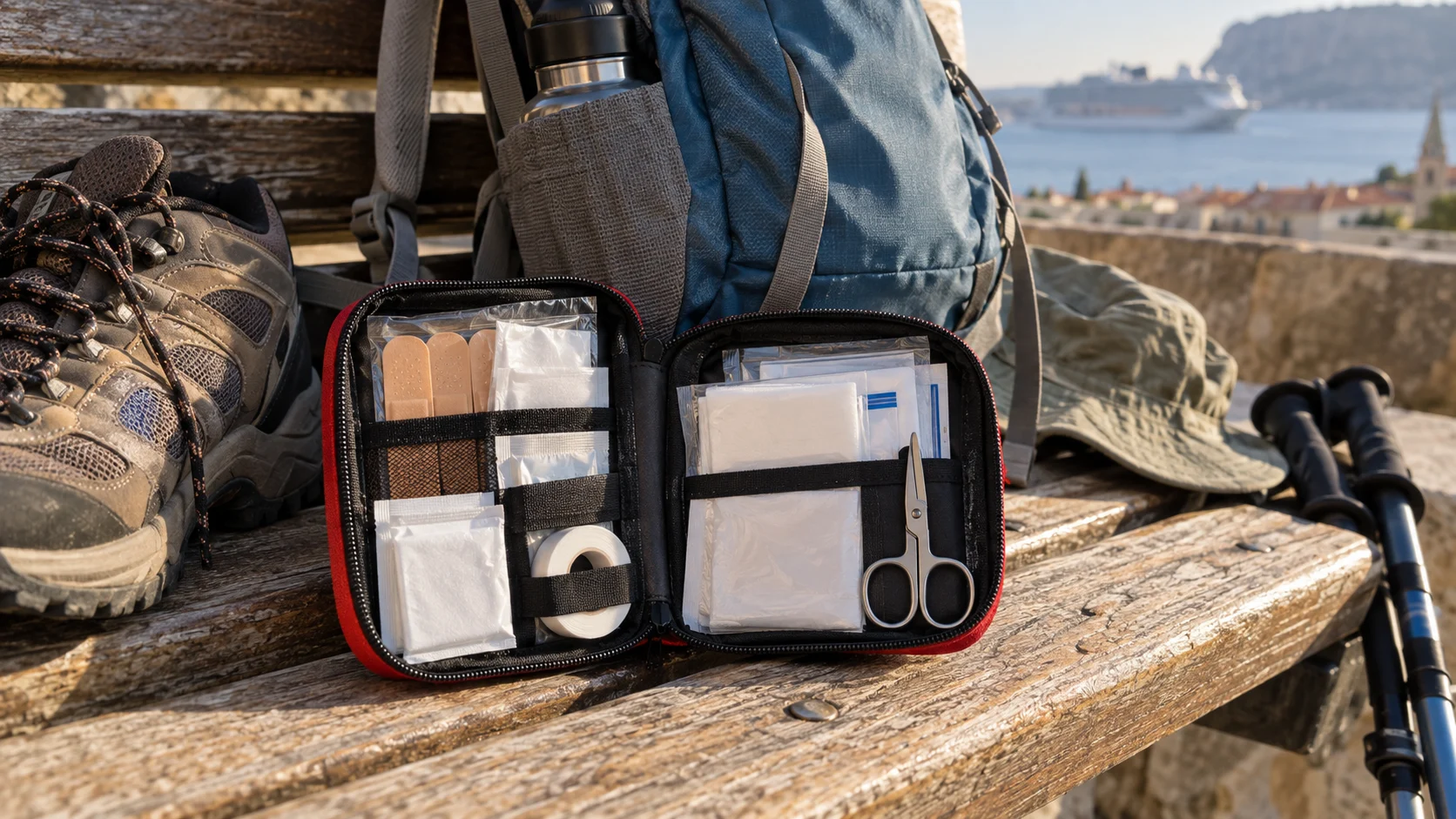
21. A tiny first-aid organizer
A few adhesive bandages, blister care items, and personal over-the-counter supplies can prevent a small annoyance from consuming port time. Medication choices and interactions are individual, so ask a clinician or pharmacist when appropriate.
For motion sickness, the CDC advises travelers to discuss prevention and medicine with a health care provider because personal risks and drug interactions matter. Its cruise health guidance is a better starting point than a stranger’s one-size-fits-all remedy.
Pool and comfort accessories
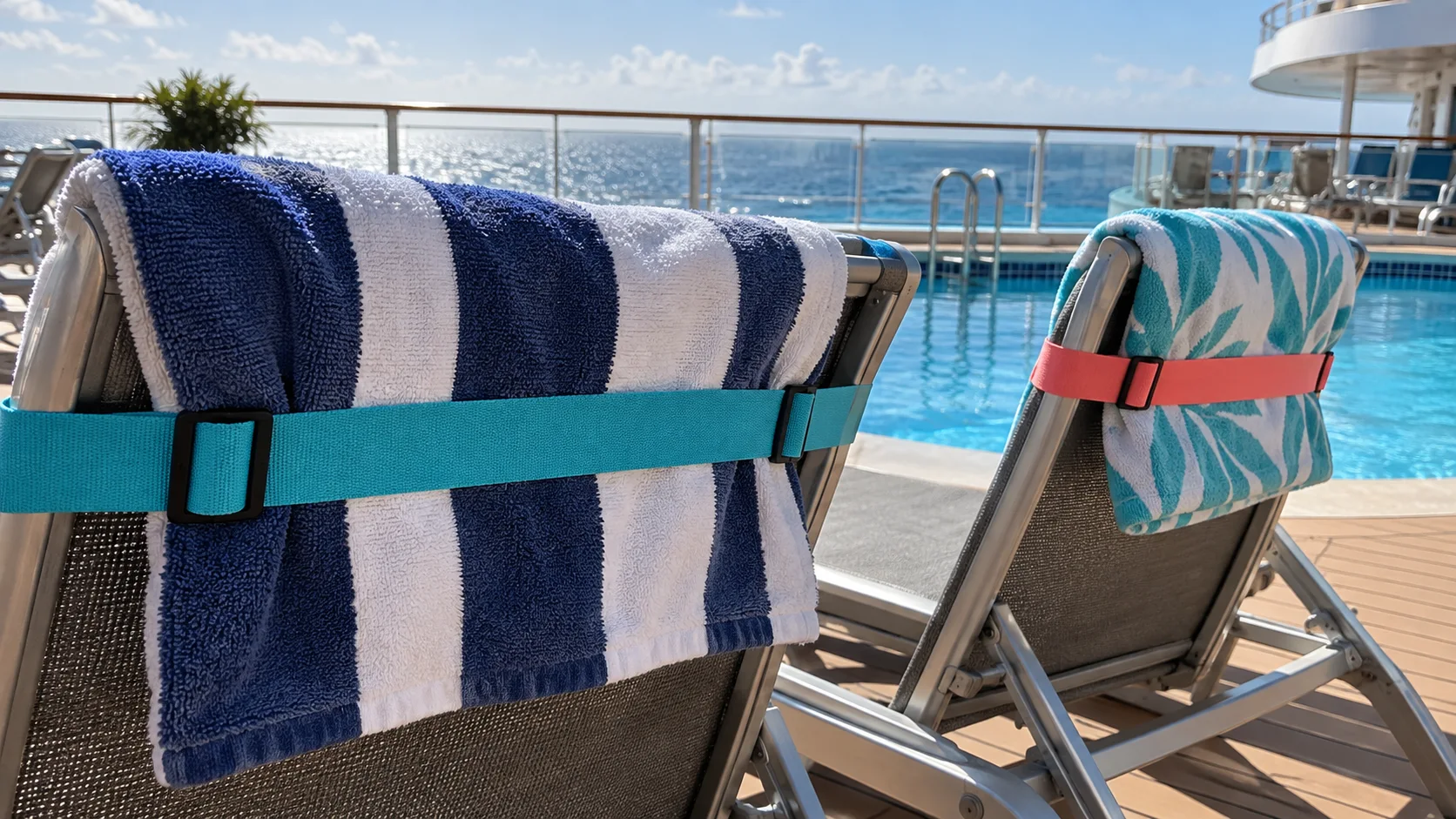
22. Towel bands or clips
Clips or silicone bands keep a towel from whipping in the wind while you are actively using a chair. They are light and can help identify your spot among identical towels.
They do not make an unattended chair yours for hours. Follow the ship’s chair-use policy and take your belongings when you leave.

23. Earplugs and a sleep mask
These tiny accessories help with hallway noise, early port light, and a roommate’s different sleep schedule. Bring a style you have already tested rather than learning on vacation that it hurts your ears.
Never block an alarm or safety announcement you need to hear. Travelers with hearing or accessibility needs should ask the line about approved alert systems.
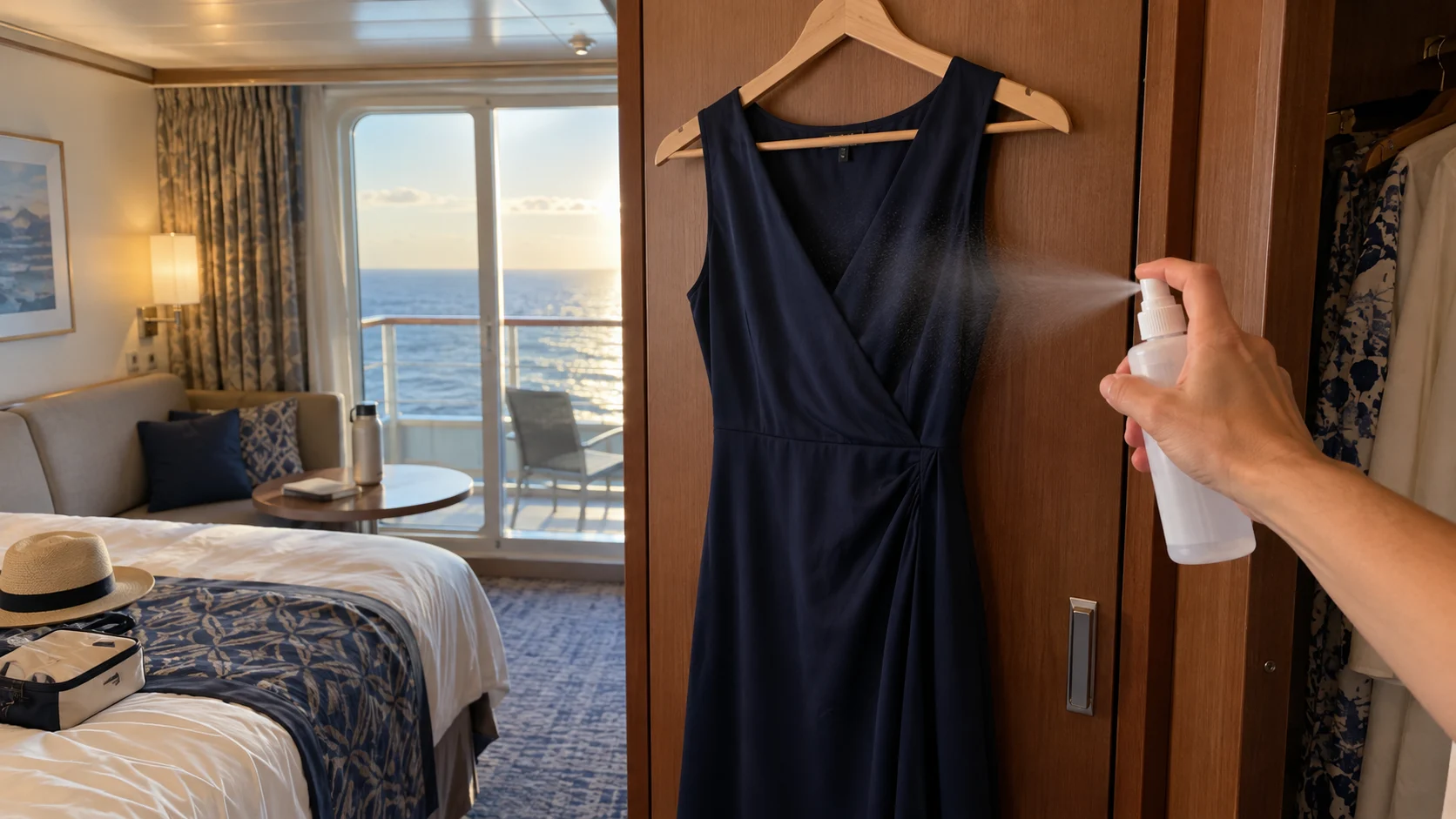
24. Wrinkle-release spray in a travel-size bottle
A small wrinkle-release product can help clothing recover from a suitcase. Test it on the fabric at home, follow the label, and use it where overspray will not make the cabin floor slippery.
Hanging clothes in the bathroom during a shower may help slightly, but never bring a prohibited steamer or iron. The ship may offer pressing or laundry service if a particular outfit truly matters.
Cruise accessories to skip
Anything marketed only as “cruise approved”
No retailer can grant permission to bring an item onboard. Verify electrical adapters, fans, organizers, decorations, alcohol, sports equipment, and tools with your carrier’s current written policy.
Power strips and extension cords
Rules differ, but several lines prohibit categories that shopping listings casually call acceptable. If a medical or accessibility device requires power near the bed, contact the cruise line’s accessibility team rather than improvising.
Over-the-door organizers without checking rules
Some carriers restrict how organizers hang, what materials they use, or whether they may touch the door. A compact toiletry bag and a few permitted magnetic hooks often solve the same problem with less bulk.
Full-size snorkel sets for one short excursion
Personal gear can improve fit, but fins and masks consume space. If a reputable excursion includes sanitized gear and you will snorkel once, renting may be more sensible.
Large speakers and public-noise gadgets
Portable speakers may be prohibited, and even accepted devices can annoy everyone nearby. Headphones provide better sound without forcing strangers to join your vacation playlist.
Too many cabin decorations
Decorations create fire, residue, obstruction, and cleanup concerns when chosen carelessly. If your line permits door decor, bring one small compliant piece and keep it away from frames, signs, lights, sprinklers, and balconies.
Single-purpose novelty products
Ask whether the item works at home, on another vacation, or for several jobs. A dry bag, daypack, or power bank usually earns its space more easily than a bulky gadget built for one cruise-specific trick.
How I would prioritize this list
For a first cruise, I would start with packing cubes, a fold-flat laundry bag, a document wallet, a night-light, a water bottle, a day bag, and tested earplugs. Add a power bank and waterproof pouch when the itinerary makes them useful.
Alaska raises binoculars and rain-friendly gear on the list, while a Caribbean route makes a dry bag and sun accessories more valuable. An inside cabin benefits more from a night-light than a balcony cabin with morning light.
For the playful extras that make a group trip feel special, see these fun things to pack for a cruise. Travelers in their twenties may also like our practical perspective on choosing and enjoying a cruise as a young adult.
Frequently asked questions
Are magnetic hooks allowed on cruise ships?
They are commonly used, but permission and cabin-surface suitability vary. Check the current line policy, use them inside the cabin, keep them away from safety equipment, and avoid damage.
Can I bring a power strip on a cruise?
Do not assume so, even when a product says it lacks surge protection. Some cruise lines prohibit power strips, multi-plug outlets, or extension devices broadly, so verify the exact item with your carrier.
Do I need cruise luggage-tag holders?
No. They can protect printed tags and are convenient for repeat cruising, but following the cruise line’s folding and attachment instructions can work perfectly well.
What is the best cruise accessory for an inside cabin?
A small battery-powered motion-sensor night-light offers an excellent comfort-to-space ratio. A sleep mask sounds unnecessary in a dark room, but it can still help if your roommate turns on lights.
What cruise accessories should go in a carry-on?
Keep the power bank, document wallet, medication organizer, charging cable, valuables, and any item needed before checked bags arrive with you. Airline battery rules and cruise-line security rules both apply during a fly-cruise trip.
Pack solutions, not a shopping haul
The best cruise accessories quietly remove friction. They keep a phone charged, a wet swimsuit contained, a dark cabin navigable, or a port bag comfortable without demanding attention of their own.
Start with what you already own, match extras to the actual ship and itinerary, and verify current rules before packing. If an accessory cannot explain its job in one sentence, it probably deserves to stay home.