Devil’s Lake State Park from Madison: A Complete Visitor Guide
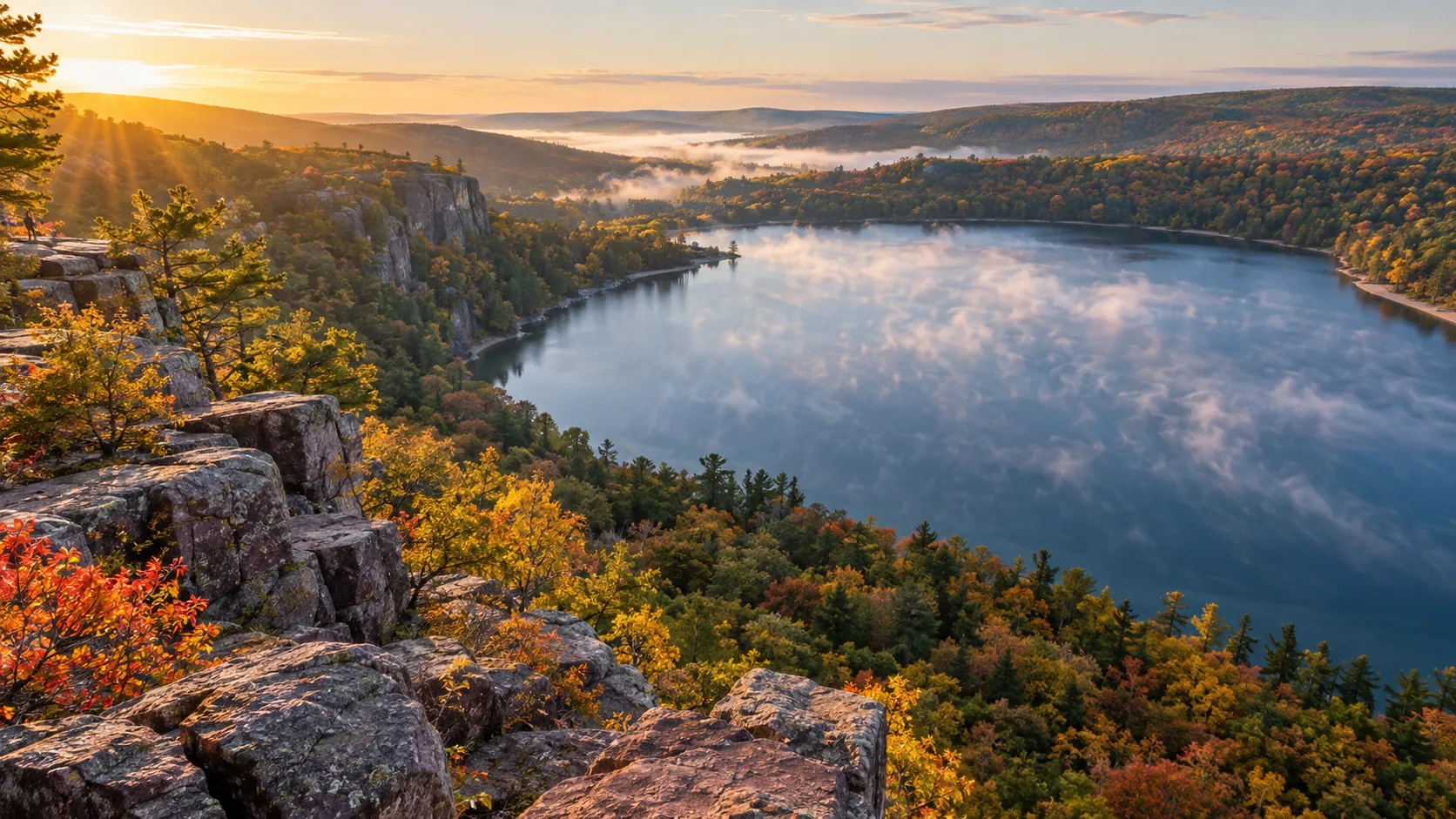
Devil’s Lake does not ease into the scenery: pink-purple quartzite rises abruptly above blue water, and the first bluff view feels much bigger than the drive suggests.
I keep returning for that contrast, and this guide will help you choose the right trail, beach, arrival plan, and optional Baraboo stop without turning a beautiful park day into an endurance test.
Why Devil’s Lake State Park is worth visiting
Devil’s Lake packs quartzite bluffs, wooded trails, two beaches, picnic space, and lake-level walking into one exceptionally scenic park. It can fill anything from a relaxed half-day by the water to a full day of hiking, swimming, and paddling.
From central Madison, the park is roughly 40 miles northwest and usually about a 50-minute drive, although summer weekends can take longer. Visitors coming from elsewhere should choose the North or South Shore entrance before setting out because the two arrival points are not interchangeable.
Few parks let you climb above a lake in the morning, cool off at a beach after lunch, and still finish in a real downtown before dinner. That range also makes Devil’s Lake an easy fit within longer Wisconsin road trip routes.
I recommend treating Baraboo as an optional late-afternoon add-on, not an equal half of the day. The park deserves most of your daylight, especially if you want to hike and swim.
I learned that lesson after a visit when my sister and I kept saying we would leave the beach in “five more minutes” and reached Baraboo too late to enjoy much beyond dinner. I now let the park win rather than rushing everyone into a second attraction.
How to plan your Devil’s Lake visit
Arrive early on busy days
Leave early on warm Saturdays, holiday weekends, and peak fall-color days. An early start makes parking easier and lets you climb before the exposed rock and stone steps become hot.
Set your navigation for the North Shore entrance unless your chosen hike specifically starts on the south side. The North Shore has the visitor center, Chateau, nature center, picnic area, beach, and direct access to several popular trails.
The South Shore also has a beach, picnic space, and trail access, but it is a separate arrival point on South Lake Road. Double-check the trail map before driving because choosing the wrong shore can waste a surprising amount of time.
Choose the correct shore before you arrive
A Wisconsin state park vehicle admission pass is required, and passes can be purchased online or at self-service kiosks. Check the official Devil’s Lake visitor information before your visit for current access notes, alerts, and pass instructions.
Do not begin with the vague goal of hiking “the bluffs.” The East Bluff, West Bluff, Balanced Rock, Potholes, and lakeshore trails differ sharply in difficulty, so pick the route that matches the least confident person in your group.
Hike the East Bluff for the classic views
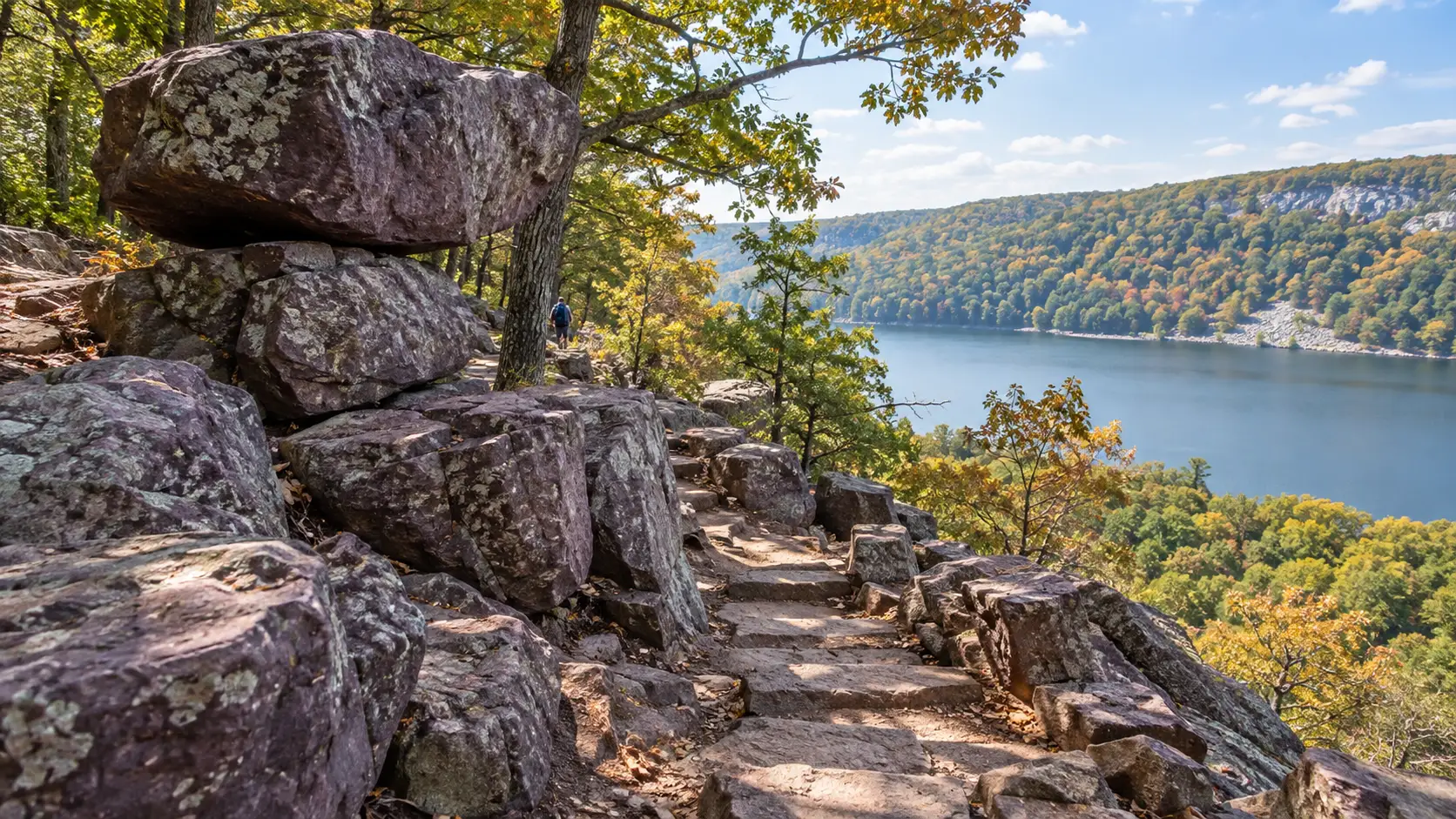
For a first visit, I recommend the East Bluff Trail from the North Shore. It delivers high lake views and access to Devil’s Doorway without requiring the brutally steep Balanced Rock approach.
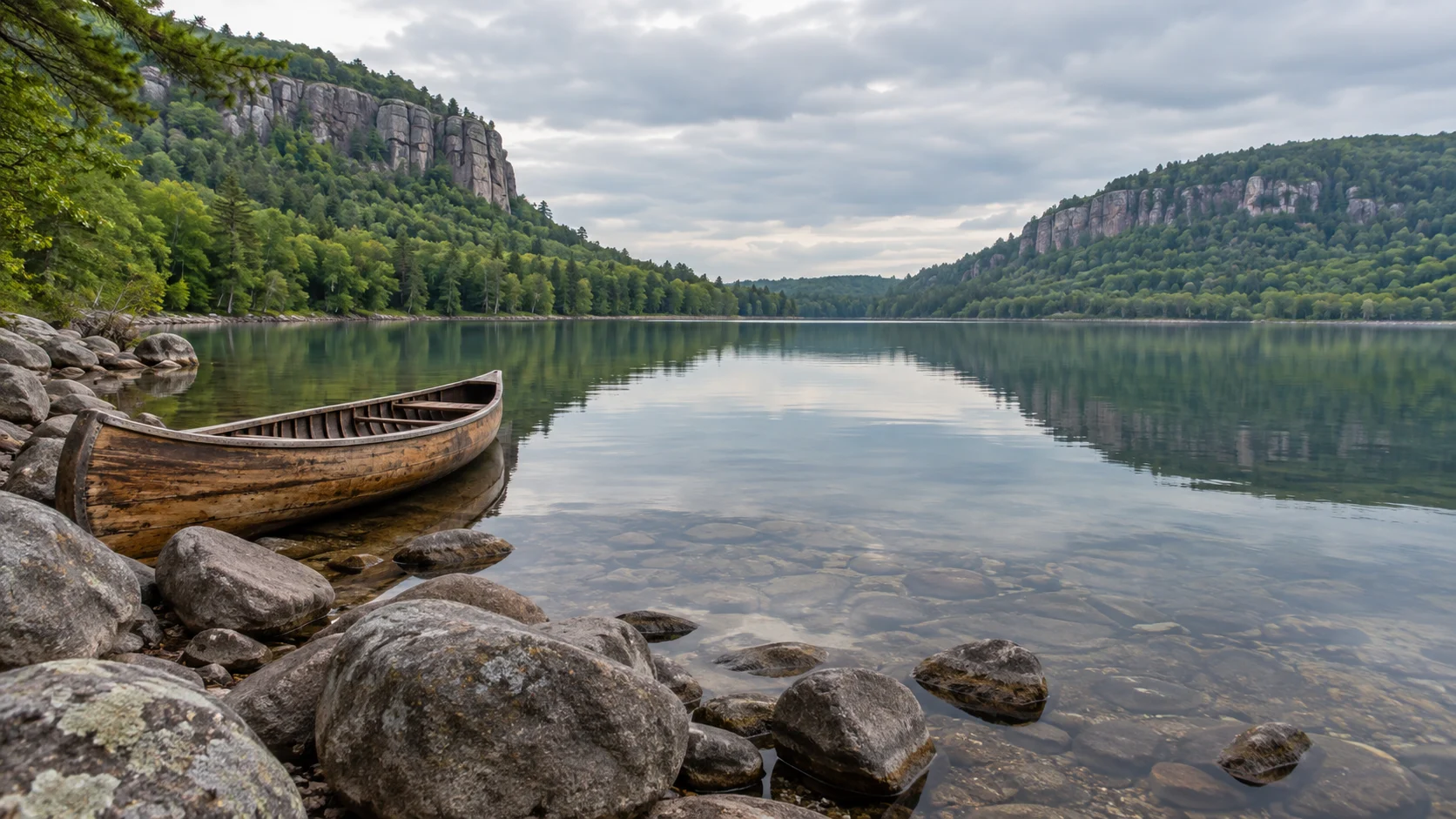
On one early morning, my brother and I reached an East Bluff overlook just as the light hit the quartzite, and the whole lake seemed to brighten beneath us at once. That quiet reveal is the reason I still choose this route even when its stone steps make my legs complain.
The official trail description rates the 1.7-mile East Bluff Trail as most difficult because of its repeated climbs, descents, and stone steps. Add the short Devil’s Doorway spur, then return by East Bluff Woods if you prefer a wooded descent or retrace your route if conditions make that simpler.
This is not a casual paved overlook. Wear shoes with reliable traction, keep back from unguarded edges, and allow plenty of time for careful footing on wet leaves or damp rock.
Strong hikers who deliberately want a steep rocky staircase can consider Balanced Rock or Potholes from the South Shore. I would skip both with small children, mobility limitations, a nervous dog, questionable footwear, or anyone uncomfortable scrambling up uneven stone.
Before committing, review the Wisconsin DNR’s Devil’s Lake trail descriptions and distances. That page is much more useful than choosing a route from scenic photos alone.

Pack a picnic lunch for the lake
Bring lunch in a cooler so you can eat as soon as the hike ends. A sandwich, fruit, salty snack, and more water than you think you need will serve you better than leaving the park at midday to find food.
The day-use areas have picnic space, and seasonal concessions may operate, but hours and offerings can change. I would treat concessions as a bonus rather than the entire lunch plan.
If you strongly prefer a restaurant meal, save it for Baraboo after the park. Driving out, waiting for food, and returning can consume the best part of the afternoon.
Choose one lake activity
Both shores have beaches, but swimming conditions and seasonal services can vary. Check posted notices, keep children within reach, and remember that a beach visit here is not the same as a lifeguarded pool experience.
If paddling is the priority, confirm current rental availability before relying on it and follow the park’s boating rules. Beginners can also use this practical kayaking guide to decide whether a rental belongs in the plan.
My preferred rhythm is simple: hike first, eat, then choose one low-pressure lake activity. Trying to swim, rent a boat, hike both bluffs, and visit Baraboo makes the day feel like a checklist.
Add the Tumbled Rocks Trail for an easier walk
Tumbled Rocks is the best afternoon walk if you still want scenery but not another major climb. The one-mile route follows the west side of the lake beneath a striking field of fallen quartzite blocks.
The trail is rated easiest by the DNR, although “easiest” should not be read as perfectly smooth. The roughly paved northern portion may work for some wheelchairs and strollers with a capable companion, while surfaces farther along can be less forgiving.
This walk provides lake-level views that feel completely different from the bluff. It is also the smarter choice for visitors who want the landscape without exposed heights or long stair climbs.
How to add Baraboo without rushing the park
If everyone still has energy, drive into downtown Baraboo for coffee, ice cream, local shops, or an early dinner. The compact historic center is pleasant for an hour, but it does not need to become another tightly scheduled itinerary.
Circus World is the major Baraboo attraction, with circus history exhibits and seasonal programming on the Ringling family’s former winter quarters. It deserves several hours, so I would make it the main event on a separate day or replace the afternoon lake time rather than squeeze it in near closing.
Families who care more about circus history than swimming could leave the park after an early lunch and devote the afternoon to Circus World. Confirm operating dates and performance schedules directly because the experience changes by season.
Choose a relaxed finish instead of another major stop
Have dinner in Baraboo if the group is hungry, return to nearby lodging, or continue your drive before evening traffic thickens. After a bluff hike, I would choose an easy meal over extending the day with another distant stop.
Which Devil’s Lake hike should you choose?
Choose East Bluff Trail for the signature elevated views and Devil’s Doorway. It suits active first-time visitors who can manage many stone steps and exposed terrain.
Choose Tumbled Rocks Trail for lake views without a major ascent. It is the most broadly approachable scenic option, although parts are still uneven.
Choose Grottos Trail for a short, level gravel walk near the South Shore. The 0.7-mile trail is a useful alternative when the bluff routes are too demanding.
Choose Steinke Basin for a quieter, relatively level woodland-and-grassland loop away from the lake crowds. It is better for solitude than dramatic water views.
Skip Balanced Rock and Potholes unless everyone actively wants a steep climb. Their short mileage hides uneven rock stairs and strenuous elevation gain.
Parking, timing, and practical logistics
Parking is included with the required vehicle admission rather than charged by the hour, but a pass does not guarantee a convenient space. Arrive early and follow staff direction instead of circling the closest beach lot indefinitely.
Download or screenshot a park map before you arrive. Cell service can be inconsistent, and trail junction decisions are easier when you are not waiting for a page to load.
Restrooms and visitor services are concentrated in the developed day-use areas, not along the bluff trails. Use them before starting and carry out everything you bring onto the trail.
Dogs are allowed in many outdoor areas when leashed, but they are restricted from certain beaches and buildings. Check current pet rules, pack water, and use the broader advice in this pet-friendly travel guide before bringing a dog onto hot quartzite.
When I brought my two Aussiedoodles, they were far more interested in inspecting every lakeshore scent than covering impressive mileage. Their leisurely pace made Tumbled Rocks the right choice and reminded me that the best group route is the one everyone can actually enjoy.
Accessibility and lower-effort options
The park lists accessible paved paths in both day-use areas, a North Shore walking path, portions of lakeshore routes, and accessible picnic and concession facilities. North Shore Beach also has an access mat and a beach wheelchair that can be checked out at the Chateau when available.
For the most predictable visit, contact the park before arrival to confirm equipment, surface conditions, and the best parking area for your needs. Trail labels cannot account for an individual visitor’s mobility, balance, or comfort on grades.
A satisfying low-effort day can combine the North Shore path, a picnic, lake views, the accessible viewer, and a short drive into Baraboo. You do not need to climb a bluff to make the trip worthwhile.
What to bring
- Closed-toe shoes with reliable tread
- At least one full water bottle per person, plus extra on hot days
- Picnic lunch and a cooler
- Sun protection and insect repellent
- Swimsuit, towel, and dry layer if swimming
- Downloaded trail map and vehicle admission confirmation
- Leash, bowl, and extra water if bringing a dog
For more trail ideas after this trip, these southern Wisconsin hikes offer several different difficulty levels and landscapes.
What I would skip on a one-day visit
I would skip Parfrey’s Glen unless it is the main reason for your trip. It is a separate natural area with special protections, no food or drink on the trail, and no pets, so adding it to a full bluff-and-beach itinerary creates unnecessary driving and rule changes.
I would also skip a second major bluff hike after lunch. The views are rewarding, but tired legs and rushed footing are a poor combination on stone stairs.
Finally, do not promise children both a long hike and an entire afternoon attraction in Baraboo. Pick the park or the museum as the day’s anchor and let the other stop remain optional.
Off the Beaten Path: Local Finds Most Visitors Miss
The North Shore and East Bluff receive most of the attention, but the park and Baraboo area have quieter places with completely different personalities. Pick one of these rather than trying to bolt all four onto an already full park day.
Steinke Basin
Steinke Basin’s 2.4-mile loop crosses mostly level woods and grassland around an old glacial lake bed, with small streams and signs of beaver activity. It fits hikers who value birds and breathing room more than a dramatic lake overlook, although wet weather can make the grassy sections messy.
Use the signed basin access and download the park map because this area feels separate from the beach hub. I prefer it on a repeat visit when the shoreline lots are humming and I want to hear leaves and birds instead of car doors.
Roznos Meadow
Roznos Meadow offers prairie restoration, a broad view toward the terminal moraine, and a less familiar approach to the park’s geology. The 1.8-mile trail eventually climbs through woods, so it suits walkers who want open landscape and moderate effort rather than the East Bluff’s stone stairs.
Parking at outlying trailheads is limited, and this is not the place to invent a roadside space. Follow the current DNR map and choose another trail if the designated area is full.
Man Mound County Park
East of Baraboo, this tiny county park protects the only surviving human-shaped effigy mound in North America. It is a brief, reflective stop for visitors interested in Indigenous history, not a playground or hiking destination.
The mound is a sacred cultural site, so stay on the viewing route and never walk on the earthwork. Services are minimal, and the short stop works best before dinner or on the drive between the park and Baraboo.
Van Hise Rock
West of Baraboo on Highway 136, a tiny wayside protects a tilted slab of Baraboo Quartzite that helped geologist Charles Van Hise explain how rocks deform during mountain building. The roadside setting looks modest, but the outcrop became a National Historic Landmark because of its importance to structural geology.
This is a five-to-ten-minute curiosity for geology fans, not a hike or a scenic overlook. Pull fully into the designated wayside, watch traffic closely, and leave neighboring rock faces and private land alone.
Who will enjoy Devil’s Lake most?
Devil’s Lake is ideal for active couples, families with trail-ready children, photographers, paddlers, road-trippers, and nearby visitors who want a nature-focused outing. The mix of strenuous and easy routes also lets a group choose different activities and meet again near the shore.
It is less suitable for anyone expecting a quiet beach on a peak summer weekend or a completely barrier-free wilderness trail. Those travelers should visit on a weekday, stay near developed areas, or choose a calmer stop from this collection of Wisconsin day trips.
Devil’s Lake State Park FAQ
How long should you spend at Devil’s Lake?
Allow at least half a day for one hike and time by the water. A full day is better for a bluff hike plus swimming or paddling, while two slower days work well if you also want Baraboo and the quieter corners of the park.
Do you need a reservation?
Day visitors generally need a valid Wisconsin state park vehicle admission pass rather than a hiking reservation. Check park alerts before departure because temporary closures, capacity measures, and seasonal services can change.
Can you swim at Devil’s Lake?
Yes, the park has designated beach areas on the north and south shores. Review posted conditions and current park guidance when you arrive.
Can you visit Devil’s Lake and Baraboo in one day?
Yes, if Baraboo is limited to a meal and short downtown walk. If Circus World is a priority, replace part of the park itinerary instead of adding it after a full day of hiking and swimming.
What is the best season to go?
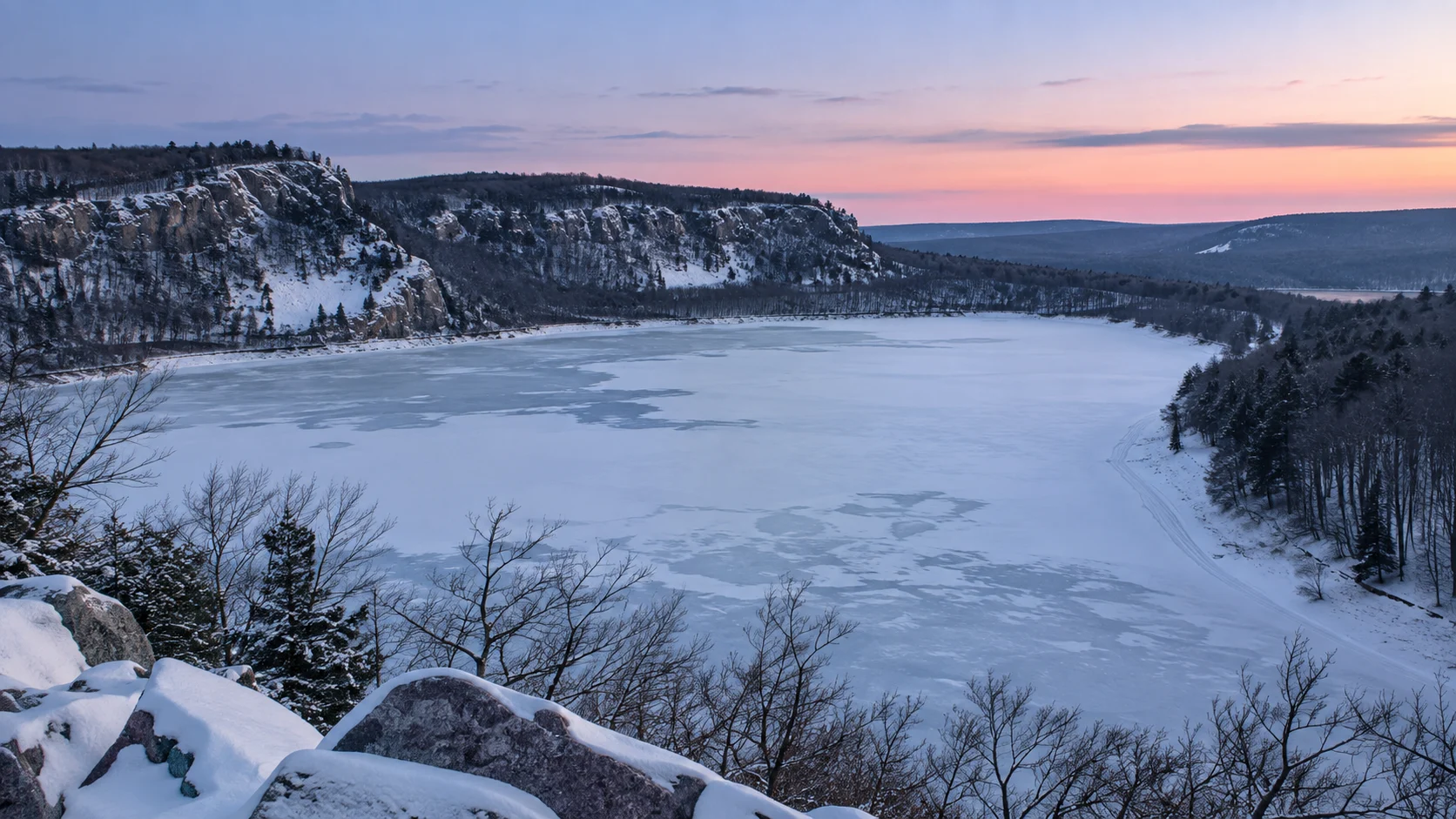
Late spring through fall offers the widest range of hiking and lake activities, while winter can suit experienced cold-weather visitors. Summer weekends and fall-color periods are busiest, so weekday mornings provide the easiest logistics.
How I would plan a first visit
Arrive early, hike East Bluff before the day heats up, picnic by the water, and spend the afternoon on the lake or Tumbled Rocks Trail. Add Baraboo only if everyone still has energy, because Devil’s Lake deserves to be the main event.