Fishing on Isle Royale: Licenses, Rules and Best Trip Styles
Fishing on Isle Royale can mean trolling Lake Superior with a charter, carrying a compact rod to an inland lake, or making a few casts from a public dock. Those are three very different trips, and the best plan begins with licenses, transport, water type, safety, and realistic expectations rather than a heroic tackle box.
Start with the two fishing systems
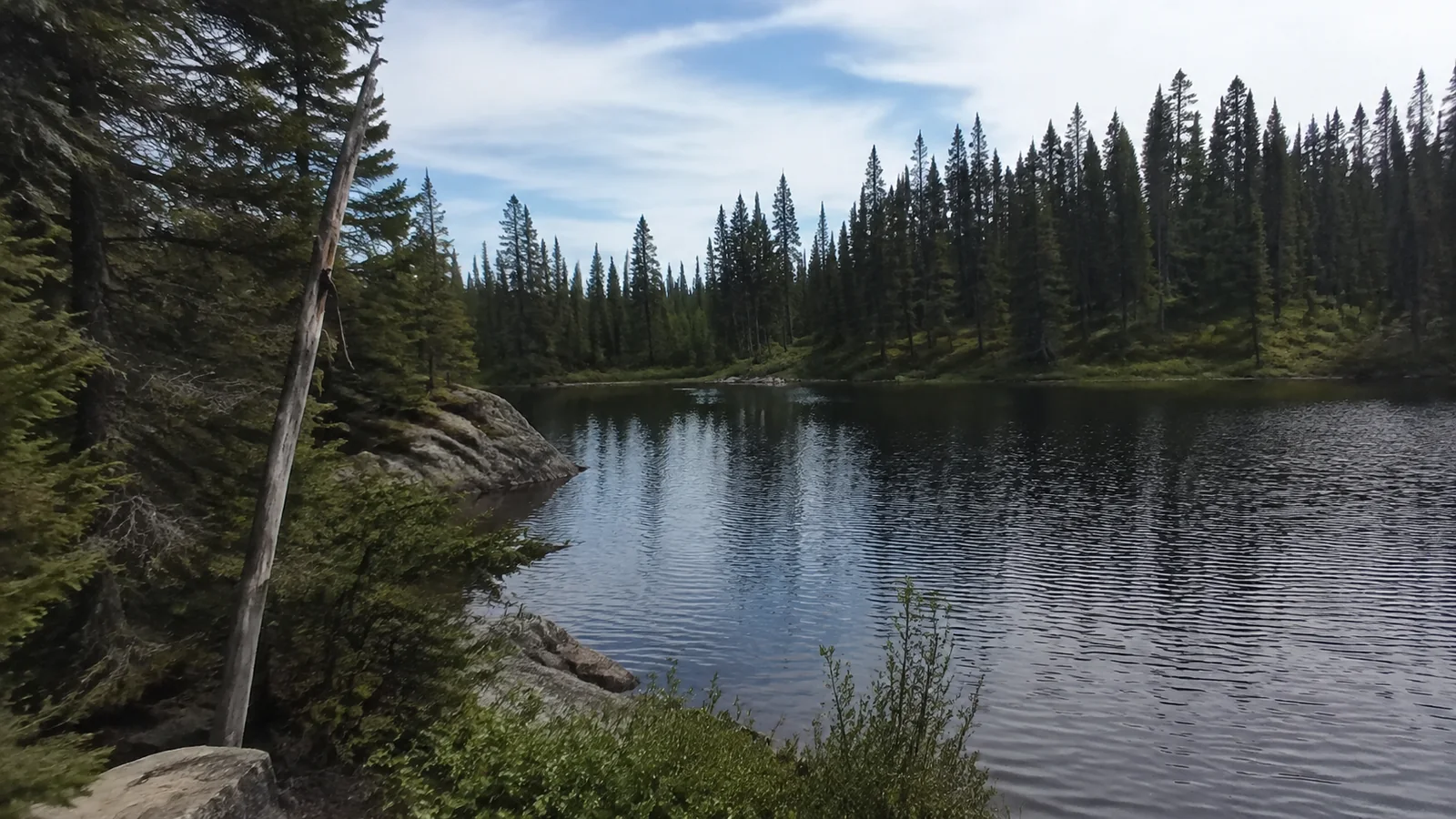
Isle Royale National Park contains both Lake Superior waters and inland lakes and streams. The license rules, allowed bait, species, access, boats, and practical gear can change when you step from one system into the other.
Lake Superior fishing
A Michigan fishing license is required to fish Lake Superior around Isle Royale, subject to age and other state exemptions. Michigan seasons, size limits, possession limits, and gear rules apply alongside park-specific restrictions.
Lake trout are the main offshore target, with salmon and other species possible depending on season, depth, location, and method. This is large, cold, weather-driven water where a charter or properly equipped private boat makes more sense than improvising from a recreational canoe.
Inland lake and stream fishing
NPS does not require a Michigan license for Isle Royale’s inland lakes and streams, but park fishing regulations still apply. Artificial lures are required in interior lakes, and individual waters can have species-specific seasons, sizes, and possession limits.
Northern pike, yellow perch, walleye, and lake trout occur in parts of the interior system, not in every lake. The current NPS interior fishing page organizes regulations by species and water, including special rules for Siskiwit Lake.
Do you need a fishing license?
Buy the correct Michigan license before fishing Lake Superior and carry proof in the form Michigan currently accepts. The park says anglers younger than 17 do not need a Michigan fishing license, but everyone remains responsible for applicable fishing rules.
Do not use “inside the park” as a shortcut for “no license.” The dividing line is the water body: Lake Superior requires the state license, while inland lakes and streams do not.
Consult the current Michigan DNR fishing regulations and license portal close to departure. Regulations can change between seasons, and a screenshot from last summer is not a pocket-sized legal exemption.
Park rules anglers need to know
Isle Royale adds conservation rules designed for an isolated fishery and wilderness setting. Review the complete NPS fishing regulations, then check the Michigan rules for Lake Superior rather than assuming one page replaces the other.
- Coaster brook trout are catch-and-release only in all park waters.
- Artificial lures are required on interior lakes.
- Transporting fish or fish parts into the park for bait is prohibited.
- Lake Superior bait rules restrict which fish or fish parts may be used.
- Fishing from public docks is allowed only when it does not interfere with boat traffic.
- Daily catch and possession limits apply even when transportation home takes another day.
Identify the fish before deciding to keep it, and measure it using a reliable ruler. If the identification or rule is uncertain, release the fish carefully and ask a ranger before continuing.
Barbless hooks are a practical conservation choice even where not mandated, especially if catch-and-release fishing is the plan. Carry needle-nose pliers, wet your hands before handling fish, minimize air exposure, and cut the line when removing a deeply embedded hook would do more harm.
Four ways to build the trip
1. Book a Lake Superior charter
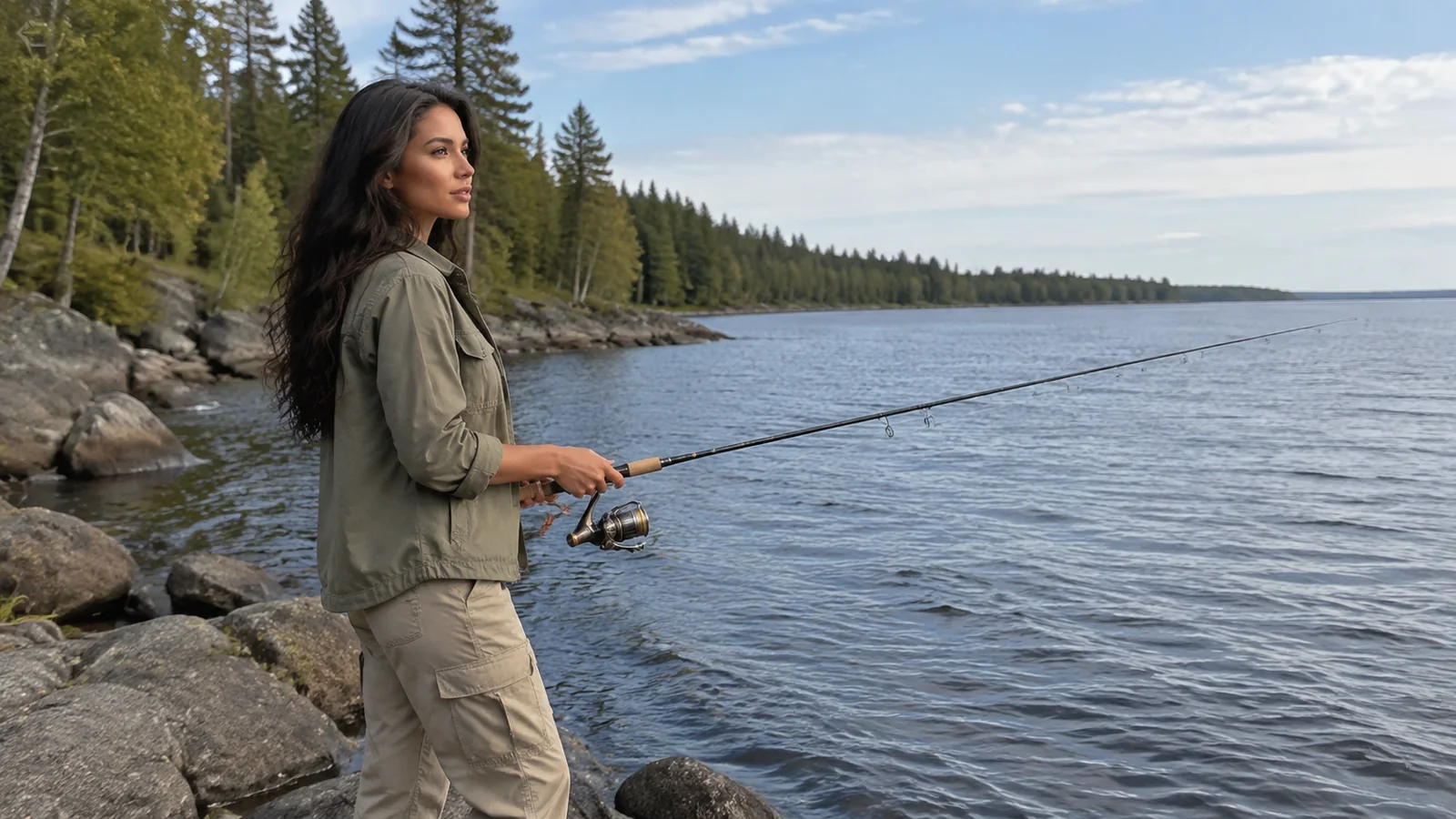
A charter is the simplest fit for anglers who want to target lake trout or salmon without bringing a capable Great Lakes boat, trolling gear, sonar, and local weather knowledge. Confirm that the captain is authorized to operate commercially in the park and ask exactly what license, tackle, fish cleaning, gratuity, and weather policy are included.
Charter availability and departure points are seasonal, and a canceled fishing day may not fit elsewhere in a ferry itinerary. Compare that tradeoff with mainland options in the Lake Superior charter planner.
2. Fish from Rock Harbor or Windigo
Public docks can support a few casts when doing so does not obstruct ferries, water taxis, seaplanes, service vessels, or private boats. This is an add-on to a park visit, not a guaranteed route to a cooler full of fish.
Ask a ranger where fishing is currently appropriate and step aside immediately when boat operations require the space. Keep hooks away from pedestrians, never leave gear across a dock, and remember that developed-area access does not erase cold-water risk.
3. Carry a rod on a backpacking trip
For a first inland fishing add-on, I would choose Lake Richie while already camping at Moskey Basin rather than redesigning the whole island trip around a catch. The NPS Harbor to Hills route describes the Lake Richie approach as about 1.9 miles, so plan roughly 4 miles of hiking out and back plus your fishing time.
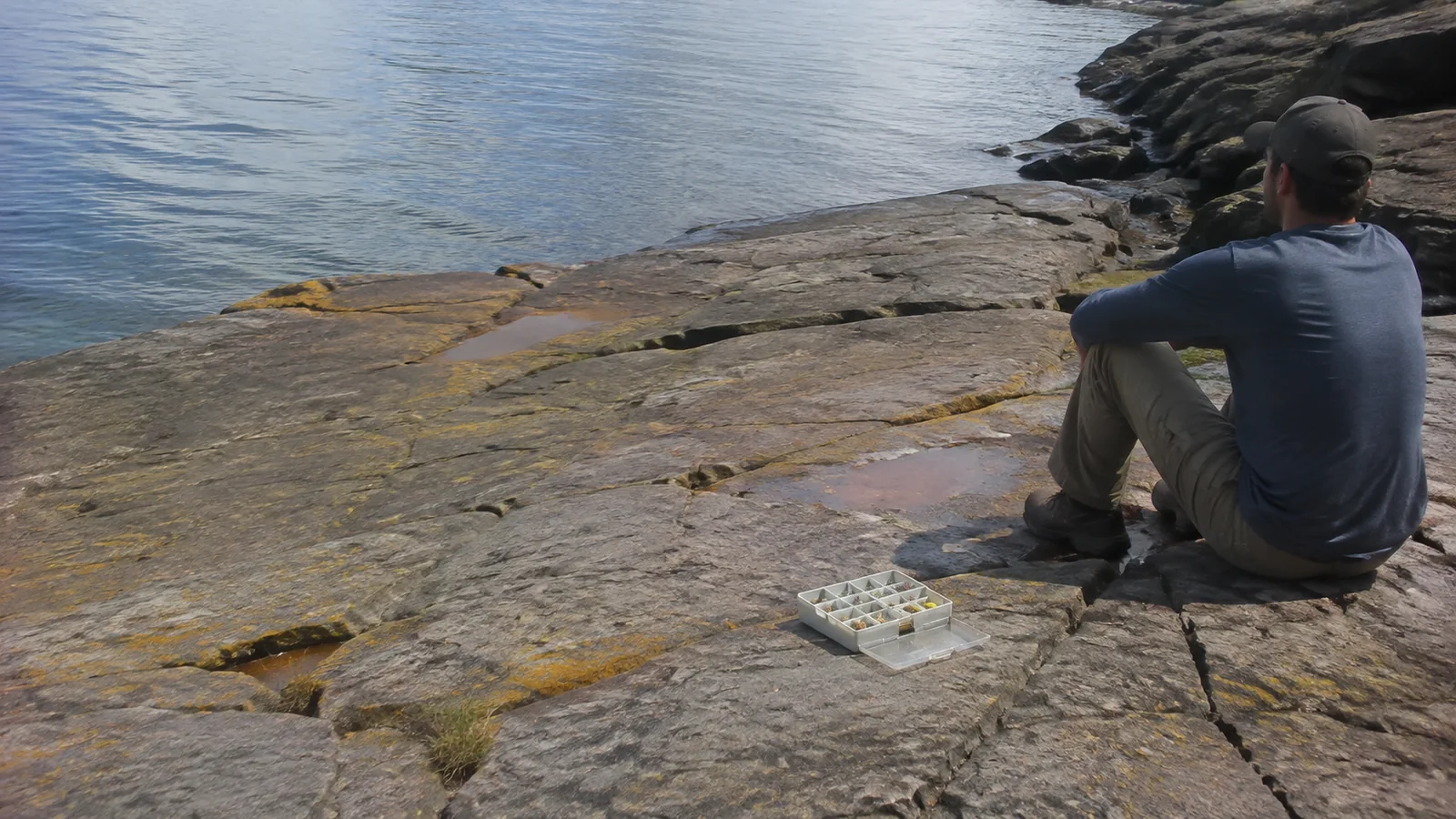
Allow a half day, carry lunch, and fish only from a stable, legal shoreline position rather than forcing a cast through brush or wading unfamiliar water. This is an add-on once you are at Moskey Basin, not a quick round trip from the Rock Harbor ferry dock.
- Water: Lake Richie
- Target and approach: Northern pike; hike from Moskey Basin or use the designated inland portage network
- Why choose it: A realistic backpacking rod stop, with casting options dependent on shoreline vegetation.
- Water: Siskiwit Lake
- Target and approach: Lake trout; inland paddling trip or Malone Bay portage approach
- Why choose it: Better for a dedicated fishing itinerary with a suitable craft, since useful trout water may lie beyond shore-casting reach.
The NPS specifically identifies northern pike in Lake Richie, while its current rules address Siskiwit lake trout. Check the season and size limits for the exact water, and remember that trout depth shifts with conditions.
A compact rod and a small legal lure selection can add fishing to an inland itinerary without making every mile about angling. Choose campsites and routes for your group’s hiking ability first, then identify waters with current regulations and sensible shore access.
Many lake edges are marshy, brushy, steep, or poor for casting, and catching is never assured. A light fishing kit is delightful; carrying eight pounds of tackle past every inaccessible shoreline is an unusually specific form of strength training.
4. Paddle the inland lakes
Marked canoe routes and portages lie mainly on the northeast half of the island. Portage devices are not allowed in wilderness, and motors cannot be used or transported on inland lakes and streams, even when the motor is not operating.
Choose a boat light enough for the route, secure rods and tackle, wear a properly fitted life jacket, and plan self-rescue. The broader Lake Superior kayaking guide explains why an open-lake crossing demands a different craft and skill set from a sheltered inland paddle.
How to reach Isle Royale
There is no road or car ferry to the island. Passenger vessels and seaplanes serve Rock Harbor, Windigo, and selected points on seasonal schedules from Michigan and Minnesota.
NPS lists the Ranger III from Houghton, Isle Royale Queen IV from Copper Harbor, and Voyageur II and Sea Hunter III from Grand Portage among the ferry choices. The official ferry overview makes clear that fares, luggage policies, boat transport, routes, and schedules differ.
Reserve transportation before building a fishing itinerary, and verify the carrier’s current rod tube, tackle, cooler, fuel, and watercraft policies. A six-piece rod is only convenient if its case fits the luggage rules.
Day trips allow limited time and rarely support serious inland fishing once arrival, orientation, walking, and required return check-in are counted. An overnight visit creates more flexibility, but camping and lodging must be arranged through their current systems.
When to go
The park is closed to public use from November 1 through April 15, while practical visitor transportation operates within a shorter spring-to-fall window. For example, the NPS Ranger III schedule lists passenger service from late May through early September in 2026.
Early season brings cold water and cooler air, midsummer brings longer days and busier transportation, and fall brings shortening daylight with increasing schedule risk. Fish location and behavior also change with water temperature, so discuss current depth and method with a charter or ranger rather than relying on a universal month ranking.
Reserve a weather buffer on both sides of any must-catch connection. Lake Superior fog, wind, and waves can delay or cancel transportation and fishing, and the island does not owe anyone a smooth crossing because vacation days were approved.
Cold-water and boat safety
Lake Superior remains dangerously cold even when the dock feels summery. Wear a life jacket on the water, dress for immersion, carry signaling and communication equipment, and use a boat suited to the route and forecast.
Open-water anglers need current marine forecasts, charts, navigation backup, spare propulsion, required safety equipment, and a conservative return point. Fog can erase visual references, while offshore wind can turn the final miles into the most expensive part of the story.
A handheld marine radio and registered emergency beacon may be more useful than a phone where coverage is unreliable. File a float plan with a responsible person and include vessel details, route, party, return time, and the procedure for raising an alarm.
Shore anglers should protect against slick rock, cold spray, waves, lightning, and unstable footing. Never stand on an exposed ledge for a longer cast when swell is reaching it.
Bringing a private boat
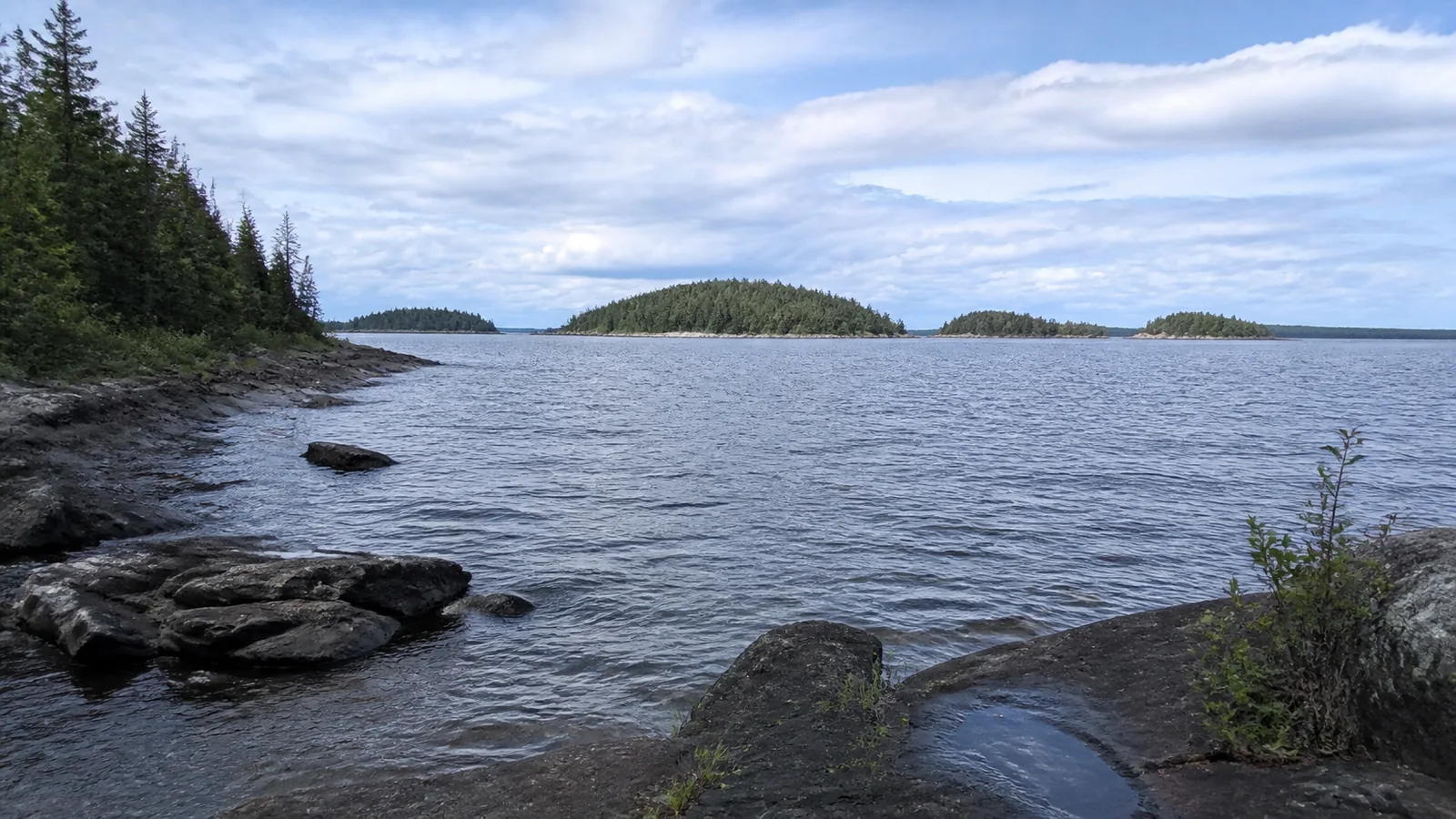
Private motorboats may use Lake Superior park waters but must satisfy registration, safety, and park requirements. Interior lakes prohibit motors and even the transportation of a motor, so a detachable outboard does not turn one craft into a legal all-purpose solution.
Boaters must decontaminate vessels before entering park waters to reduce invasive-species risk. Follow the current NPS decontamination instructions for boats, bilges, live wells, anchors, lines, trailers, and fishing equipment.
Do not move live water, bait, fish parts, plants, or mud between waters. Clean, drain, dry, and inspect equipment before the trip, then obey the park’s stricter bait restrictions once there.
What tackle should you pack?
For that Lake Richie hike, I would carry a compact spinning rod, a few spoons and spinners in contrasting finishes, spare line, long pliers, and wire leaders for pike. Fish a spoon slowly enough to cover the reachable water, vary the retrieve, and move only where the established shoreline access permits.
This small artificial-lure kit covers a practical pike session without adding bait-storage work to a backpacking trip. It does not turn into a complete deep-water lake-trout outfit, which needs a different plan and more specialized tackle.
Match tackle to one specific plan instead of preparing for every fish in the archipelago. A charter may supply nearly everything, while an inland backpacker benefits from a packable rod, spare line, pliers, ruler, compact legal lures, and a small repair kit.
Lake Superior trolling requires different rods, reels, line, leaders, weights, and lures from casting for pike or perch inland. Ask the charter what is aboard before buying gear that will enjoy a scenic ferry ride inside its packaging.
- Printed or offline regulations for the exact water
- Fishing license proof when using Lake Superior
- Needle-nose pliers and line cutters
- Reliable measuring board or ruler
- Polarized glasses and eye protection
- Small tackle box with artificial lures for inland waters
- Dry bag, rain shell, insulation, and sun protection
- Life jacket and communication equipment appropriate to the route
Keeping, eating, and transporting fish
Know the daily and possession limits before keeping the first fish, then consider how it will be cooled safely and transported on the scheduled vessel. NPS also points anglers to current consumption advisories because some inland fish have elevated mercury and Lake Superior fish may contain PFAS.
People who are pregnant, may become pregnant, are breastfeeding, or are feeding children should pay particular attention to current state and federal consumption advice. Catch-and-release avoids a transport problem but still requires careful handling.
Clean fish away from docks, campgrounds, trails, and water sources, and never feed remains to gulls or wildlife. Park rules specify how remains must be cut, punctured, and placed in deep water or away from developed areas, so review the current disposal instructions before keeping a fish.
Camping, food, and wildlife
Fishing does not create a separate right to camp wherever the evening bite ends. Follow the current campground, group, backcountry, stay-limit, food-storage, and permit rules for the itinerary.
Store food, trash, scented products, and fish odors exactly as NPS directs, using campground lockers or approved methods for the setting. Never leave a stringer, scraps, or cooking equipment where wildlife can associate anglers with food.
Keep a clean camp and give moose and wolves substantial space. The wider Isle Royale trip planner can help balance fishing with hiking, transport, and the park’s wilderness rhythm.
A practical first-trip plan
For a fishing-first visit, reserve three or more nights at Rock Harbor or Windigo, book one authorized charter day, and leave one weather-flexible day for shore fishing or hiking. For backpackers, select a route with one or two regulated inland waters and carry a minimalist artificial-lure kit.
Confirm transportation, license, camping or lodging, current closures, fish regulations, weather, and emergency equipment immediately before departure. Isle Royale rewards preparation, then cheerfully reminds everyone that the lake and the fish retain final editorial approval.