Cruise Essentials: What to Pack and What to Skip
The best cruise packing list is not the longest one. Pack documents and medicine where they cannot be separated from you, build clothes around the itinerary, and check the cruise line’s prohibited-item policy before buying clever cabin gadgets.
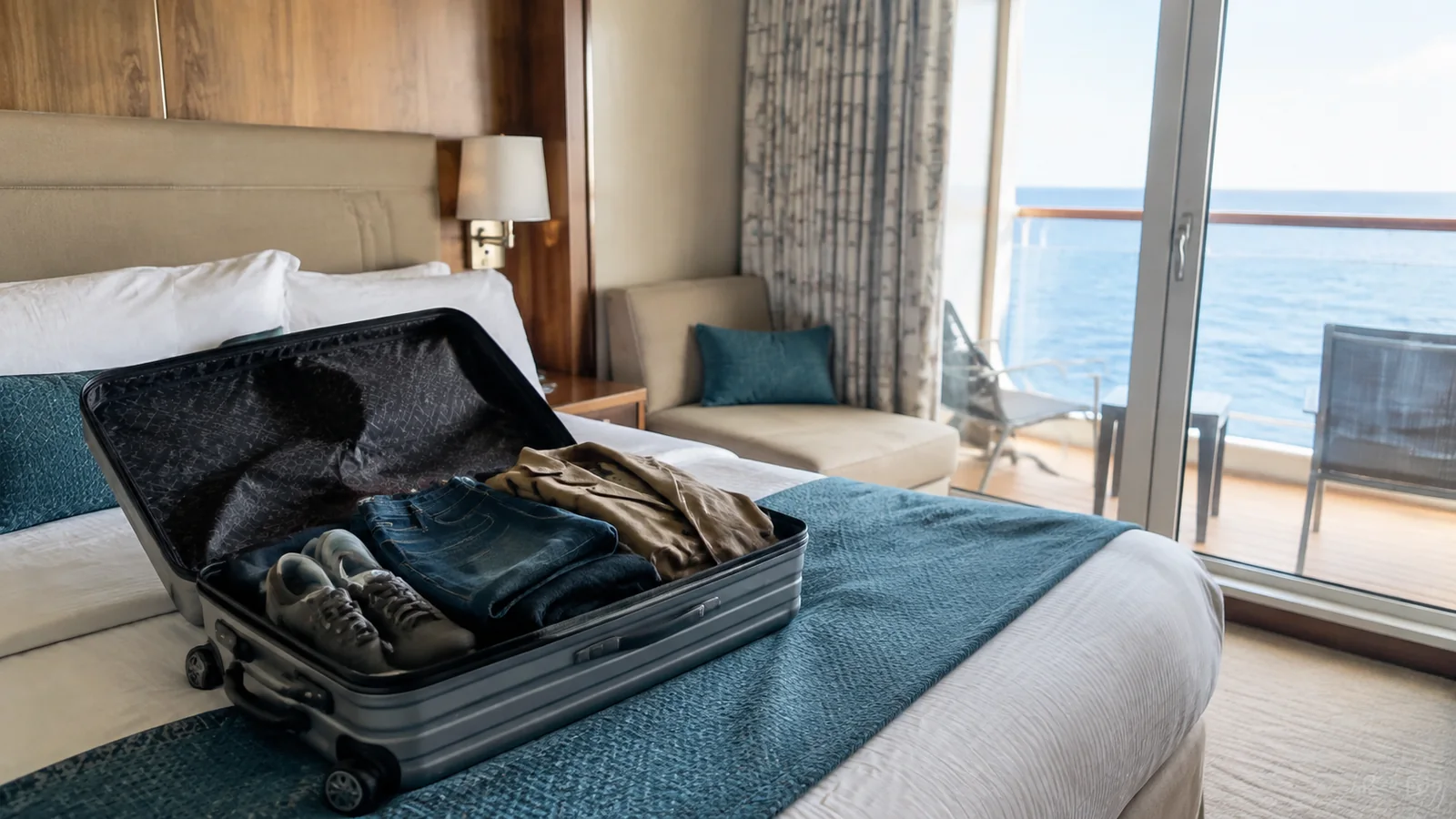
The Cruise Essentials Shortlist
- Required travel documents and printed backup details
- Prescription medicine in your personal bag
- Phone, cables, and an airline-compliant power bank
- One embarkation-day outfit plus swim or cold-weather gear
- Comfortable walking shoes with reliable grip
- Layered clothing for the actual ports and season
- Sun, rain, and insect protection as the route requires
- A small port-day bag that closes securely
- Travel insurance and medical-contact information
If those items are correct, the cruise is recoverable when checked luggage arrives late. Matching towel clips and a hanging shoe organizer are optional, no matter how loudly a packing video calls them essential.
Use a Three-Bag System
1. Personal Item
Your personal item holds passports, visas, wallet, medicine, phone, chargers, insurance, essential medical information, and anything irreplaceable. Keep it with you during flights, transfers, terminal check-in, and embarkation.
2. Embarkation-Day Carry-On
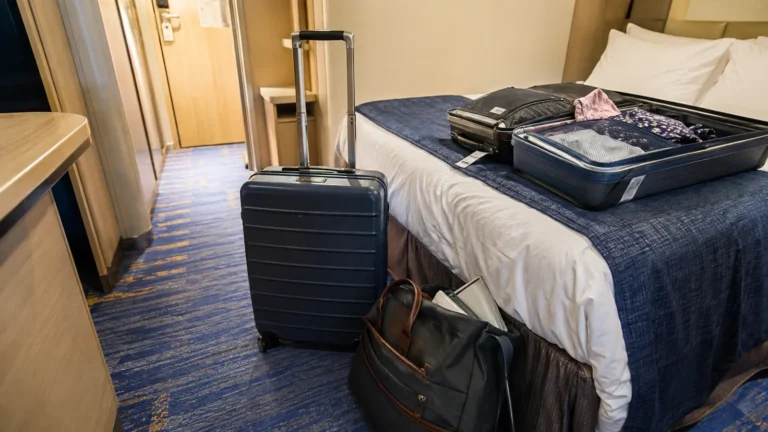
This bag adds a change of clothes, swimsuit, sunscreen, glasses, basic toiletries, and what you need until the cabin is ready. Cruise staff may take larger luggage at the terminal, and delivery to the stateroom can take hours.
3. Main Luggage
Main luggage carries the replaceable clothes, shoes, and nonessential toiletries that can wait. Leave space for purchases instead of beginning the cruise with a suitcase that only closes when someone sits on it.
Travel Documents Come First
Check the cruise line’s document tool, every destination’s entry rules, the embarkation country, transit countries, and airline requirements. A voyage can be “closed loop” and still have a cruise-line or destination rule that demands more documentation.
U.S. Customs and Border Protection says eligible U.S. citizens on some closed-loop cruises may use specified proof of citizenship and photo identification. The exact CBP document guidance has conditions, so a social-media summary is not enough.
The U.S. State Department strongly recommends a passport book even when it is not required because an emergency flight home can be difficult without one. Make sure names, expiration dates, blank-page needs, and children’s documents match the booked travelers.
Carry paper and offline copies of the itinerary, insurance, emergency contacts, transfer instructions, and the ship’s port agent details. Store document images securely, but do not leave the only usable passport in an easily lost phone photo.
What Goes in the Embarkation-Day Carry-On
- Documents, wallet, phone, and boarding information
- All essential medication and medical devices
- A change of clothes and basic toiletries
- Swimsuit, cover-up, and sunscreen for warm-weather ships
- Warm hat, gloves, or rain shell for cold departures
- Glasses, contacts, hearing supplies, and mobility accessories
- Valuables and airline-required battery items
Pack for the departure city as well as the pool deck. A February sailing from Florida and a July Alaska cruise can both involve a cold terminal, rain, wind, or hours before luggage delivery.
Put luggage tags on the main bags only after flying so airline and cruise routing labels do not compete. Carry spare tags or a printed reservation number in case one tears.
Prescription Medicine and Health Essentials
Bring enough prescription medication for the trip plus a reasonable delay margin, in original labeled containers when possible. Keep it in carry-on baggage with a medication list, allergies, clinician details, and any documentation required by destination law.
The CDC notes that ship medical capabilities vary and onboard care is typically not included in the cruise fare. Its 2026 cruise-health guidance recommends reviewing vaccines, insurance, medical needs, and destination risks before sailing.
Ask a clinician about motion-sickness prevention before departure, especially for open-ocean, expedition, or tender-heavy routes. Some medicines cause drowsiness or interact with health conditions, so the middle of a rough sea day is a poor time to experiment.
Pack the over-the-counter products you normally use in sensible quantities, plus bandages, blister care, hand sanitizer, and sun protection. Report gastrointestinal or respiratory illness promptly and follow the ship’s isolation and hygiene instructions.
Clothing: Pack by Day, Not by Fantasy
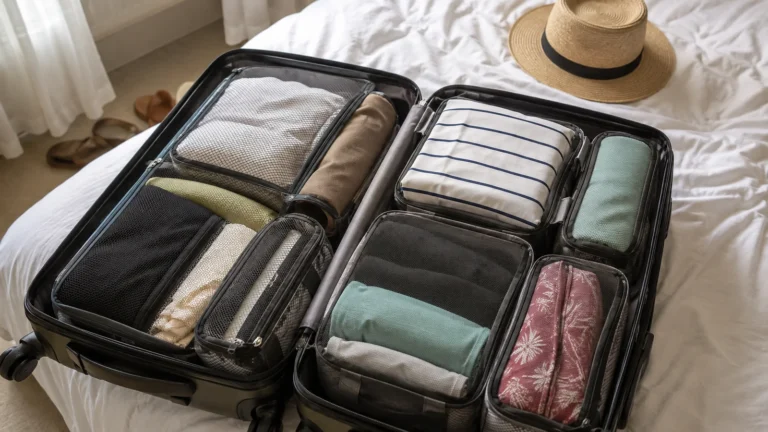
Write each day as sea, city, beach, hiking, expedition, or travel, then assign a repeatable outfit. Neutral layers and planned laundry beat seven completely separate looks for most cruises.
For seven nights, many travelers can manage with three or four daytime bottoms, five or six tops, two evening combinations, sleepwear, underwear, and activity-specific layers. For 14 nights, add laundry rather than doubling everything.
Warm-Weather Cruises
Pack breathable clothes, two swimsuits so one can dry, a cover-up acceptable away from the pool, sun hat, and a light rain layer. Air-conditioned restaurants and theaters can feel cold, so one cardigan or overshirt earns its space.
Alaska and Northern Europe
Use a moisture-managing base, warm midlayer, waterproof and windproof shell, hat, light gloves, and shoes suited to wet ground. Heavy cotton and one giant coat are less adaptable when a port moves between sun, rain, wind, and heated interiors.
Expedition Cruises
Follow the operator’s technical packing list exactly and confirm what parkas, boots, waterproof pants, dry bags, or binoculars are supplied. Activity clothing and luggage limits can be stricter than on a conventional cruise.
Formal Night Without Overpacking
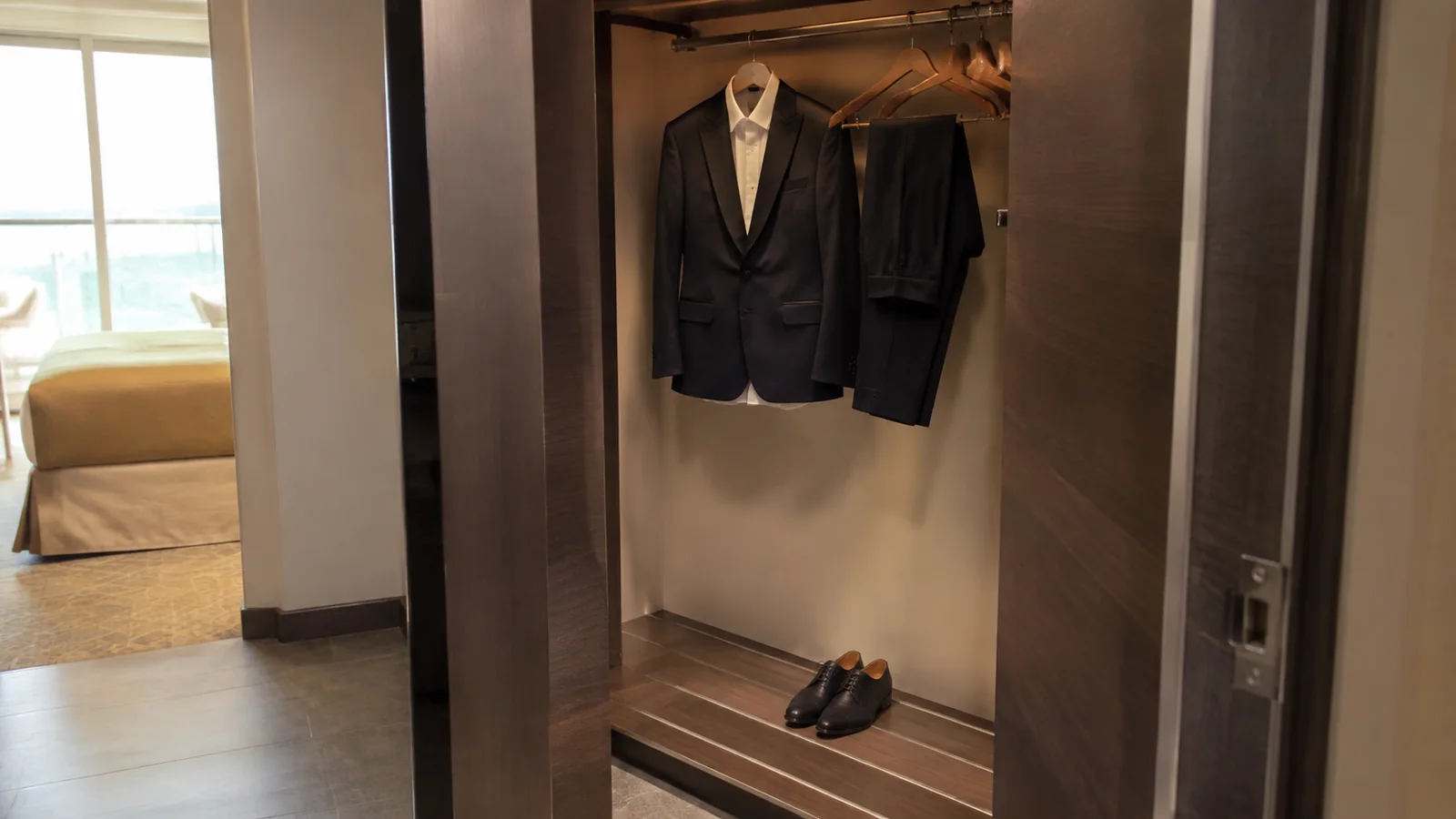
Dress expectations depend on cruise line, ship, venue, and sailing length. Pack one versatile evening outfit that can change with a scarf, shirt, tie, jewelry, or shoes unless dressing up is part of your fun.
For Royal Caribbean specifically, this formal-night timing explanation shows why the app and daily planner matter more than a fixed “second night” rule. Alternative dining venues may have different expectations, but swimwear and bare feet are still poor dining-room strategy.
Shoes: Three Pairs Is Usually Enough
Bring walking shoes, pool or beach sandals, and one evening or activity-specific pair. Every shoe should solve a named problem, and none should meet your feet for the first time on embarkation day.
Waterproof hiking shoes make sense for trail-heavy cold routes, while reef shoes belong only where local rules and surfaces justify them. Flip-flops are useful at the pool but offer weak traction on wet stairs and long port walks.
Cabin Essentials That Earn Their Space
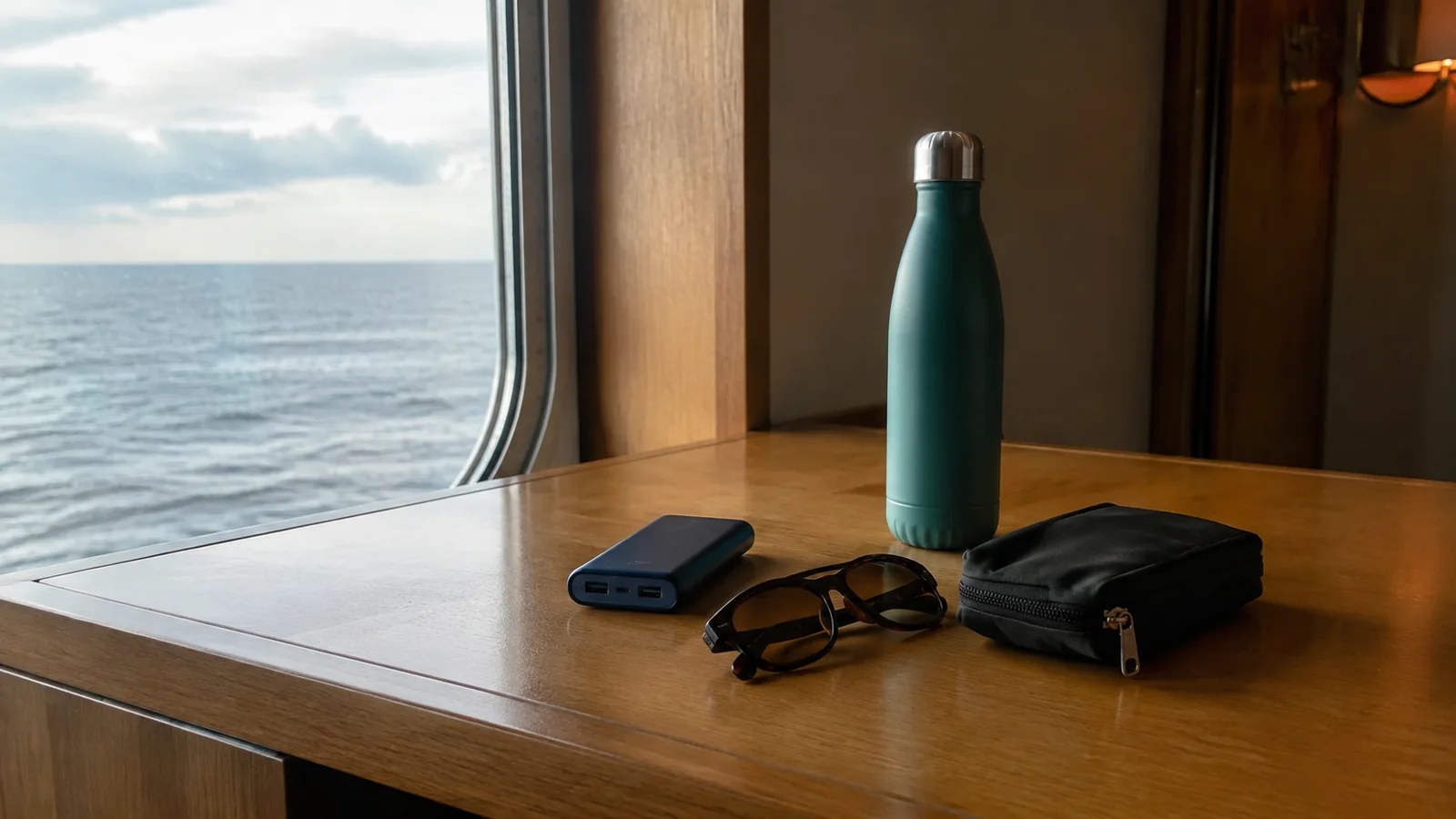
- Short charging cables with a clearly permitted charger
- Reusable water bottle for approved filling stations
- Small night-light with no open flame or heating element
- Magnetic hooks only if the cabin surface accepts them
- Clips for drying small items, where permitted
- Foldable laundry bag and a few stain-treatment sheets
- Earplugs and an eye mask
Cabin walls, outlets, storage, hair dryers, kettles, and bathroom layouts vary even within one fleet. Look at the exact ship and cabin category instead of purchasing a box of gadgets for an imaginary stateroom.
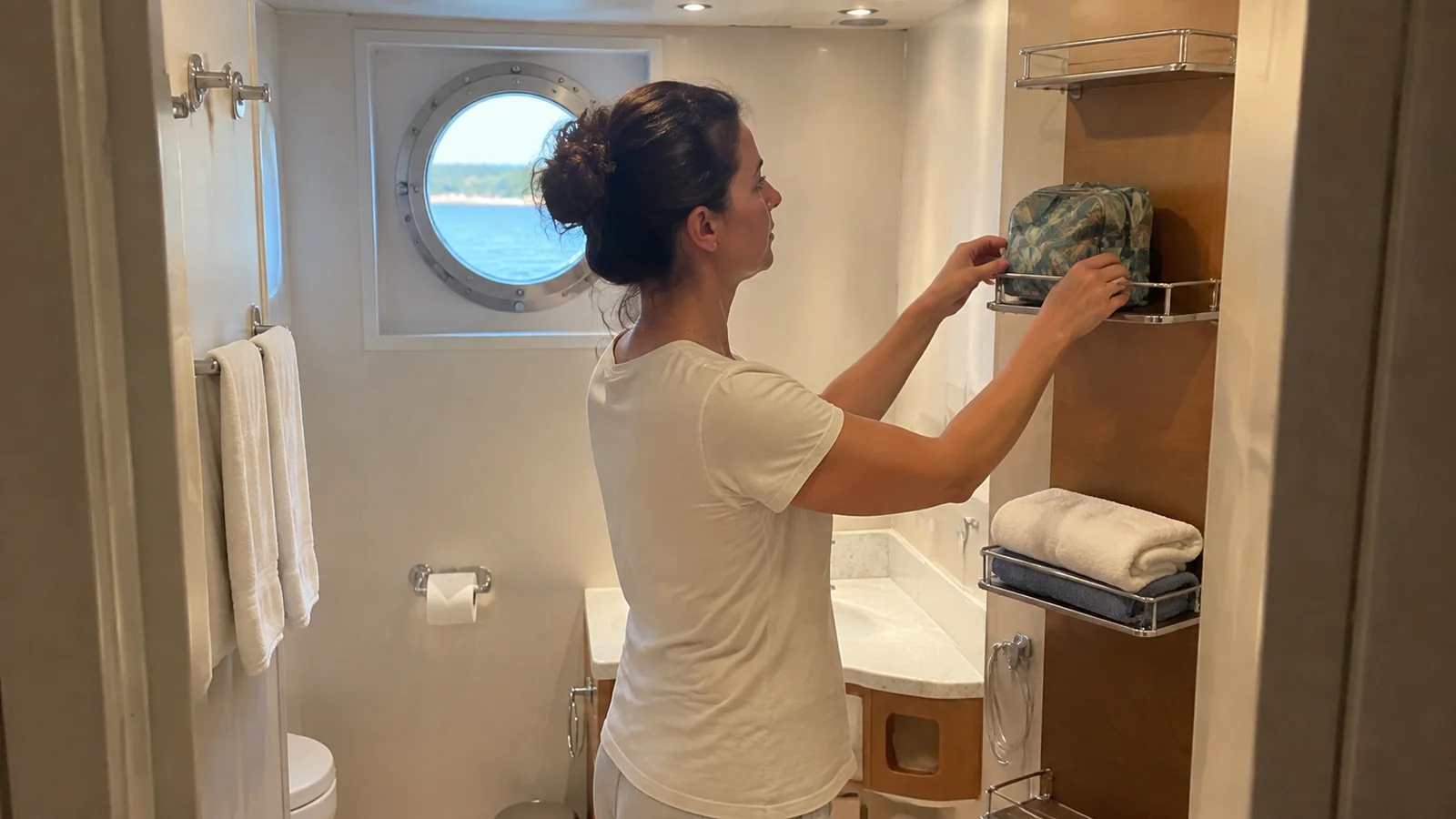
A small toiletry kit is useful because bathroom counters can be tight, but hanging organizers can block doors or damage surfaces. Never attach adhesive products unless the cruise line permits them.
Electronics and Charging Rules
Bring one multiport USB charger only if it complies with the cruise line’s current policy and matches the cabin voltage. Do not assume “non-surge” makes every multi-outlet device acceptable.
Royal Caribbean’s current prohibited-items policy, for example, bans extension cords, power strips, and multi-plug outlets while allowing personal device and USB chargers. Other lines write their own rules, so check the operator you actually booked.
If flying, the FAA requires spare lithium batteries, including power banks, to travel in carry-on baggage and be protected from damage and short circuit. Review the current watt-hour and airline-approval limits, particularly for large chargers and mobility equipment.
Download the cruise app, airline app, maps, tickets, books, and entertainment before leaving reliable Wi-Fi. Put the phone in airplane mode after departure, then deliberately enable ship Wi-Fi to avoid maritime roaming charges.
Port-Day Essentials
- Ship card and the identification required by that port
- Offline address for the pier and port-agent contact
- Water, weather layer, sun protection, and insect repellent
- Small cash plus a backup card stored separately
- Portable charger and cable
- Medication needed before the planned return
- Secure, comfortable day bag
Keep independent plans comfortably inside all-aboard time and confirm whether the port uses a tender. A ship can leave late passengers, and local traffic does not become the cruise line’s responsibility because your tour had good reviews.
Separate the ship’s departure time from the port’s local time when they differ. Photograph the daily notice and check the gangway sign rather than relying on a phone that changed time zones automatically.
Beach and Pool Gear
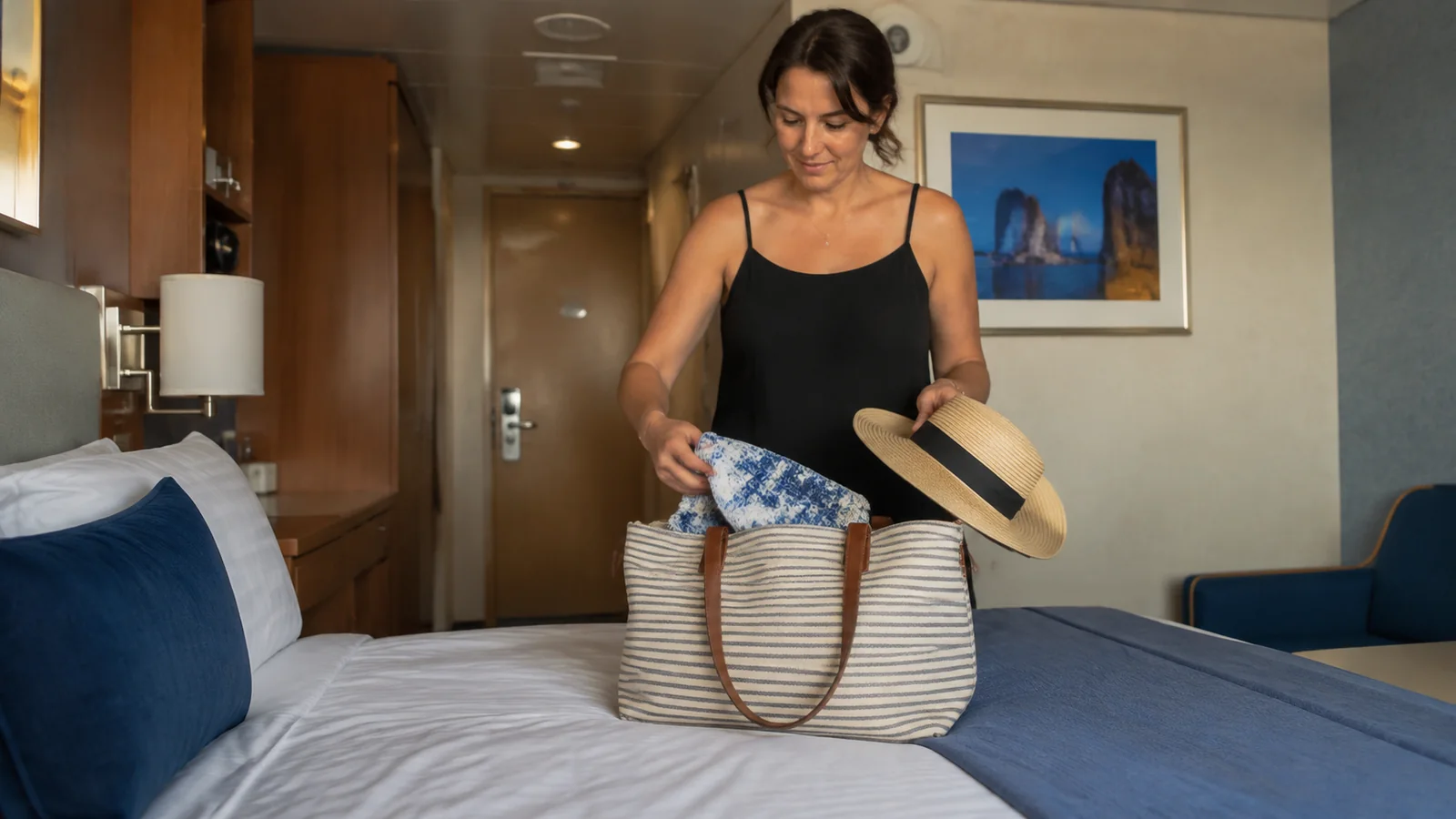
The cruise line usually supplies towels, so verify before packing one that fills half the suitcase. Bring reef-safe sunscreen where required, a wet bag, swimsuit, cover-up, sunglasses, and a hat that can handle wind.
Pool chairs do not need towel clips in calm weather, and reserving chairs for hours is inconsiderate or against policy. Clips are helpful for drying a suit only when the cabin rules allow it.
Family Cruise Essentials
Carry every child’s required document, medication, swim diaper if permitted, comfort item, and one clean outfit in the adult’s personal bag. Confirm crib, bed rail, formula, bottle-warming, stroller, kids-club, and age rules directly before sailing.
Pack a few compact activities for embarkation, dining waits, and bad-weather sea days rather than recreating the playroom. Label gear discreetly and establish a family meeting point that does not depend on working phones.
Items to Leave at Home
- Irons, steamers, candles, incense, and heating appliances
- Unapproved extension cords, power strips, and outlet splitters
- Weapons, fireworks, illegal drugs, and flammable liquids
- Large hard coolers unless specifically permitted
- Full-size towels and too many shoes
- Door decorations that use banned materials or damage surfaces
- Anything the current line policy prohibits
Alcohol, bottled drinks, drones, sports gear, knives, scissors, medical extension cords, and baby equipment receive different treatment across lines and ports. Request written approval for a medical accommodation instead of hoping security makes an exception.
Do You Need Cruise-Specific Products?
Buy an item only when it solves a problem on your exact ship or itinerary. A luggage-tag holder is handy for paper tags, magnetic hooks can add storage, and a lanyard helps some passengers, but none is universally necessary.
The broader travel essentials list covers everyday flights and city needs. Cruise packing adds ship documents, embarkation separation, sea-day clothing, and a prohibited-item check.
Final 48-Hour Packing Check
- Recheck documents, visas, online check-in, and terminal time
- Review airline, cruise-line, and port prohibited items
- Move medicine, valuables, and power banks to carry-on bags
- Download apps, confirmations, maps, and insurance contacts
- Check weather for embarkation and the first three ports
- Attach cruise luggage tags after the flight
- Confirm transfer, terminal, and pre-cruise hotel plans
Your packing volume should match the sailing length, laundry access, and baggage journey. This cruise-length comparison helps explain why a weekend sailing and a month-long voyage need different systems, not merely different suitcase sizes.
My Cruise Essentials Recommendation
Protect the trip with documents, medicine, insurance, correct batteries, a complete embarkation carry-on, and clothing suited to the ports. Then remove one pair of shoes, half the cabin gadgets, and anything bought only because a stranger called it mandatory.
A well-packed cruise does not require a rolling warehouse. It requires knowing which items must stay with you, which rules apply to your ship, and which comforts genuinely improve your days.