Service Animals on Cruises: Rules, Documents and Ports
I would plan a cruise with a service dog around the animal’s entry documents, relief routine, and the handler’s access needs before choosing excursions. Cruise-line acceptance does not automatically clear the dog to enter every country on the itinerary.
Start early with the line’s accessibility team and an appropriate veterinarian. The trip needs to work for the full working team, including the return to the United States if that is where the cruise ends.
The checks I would make before paying
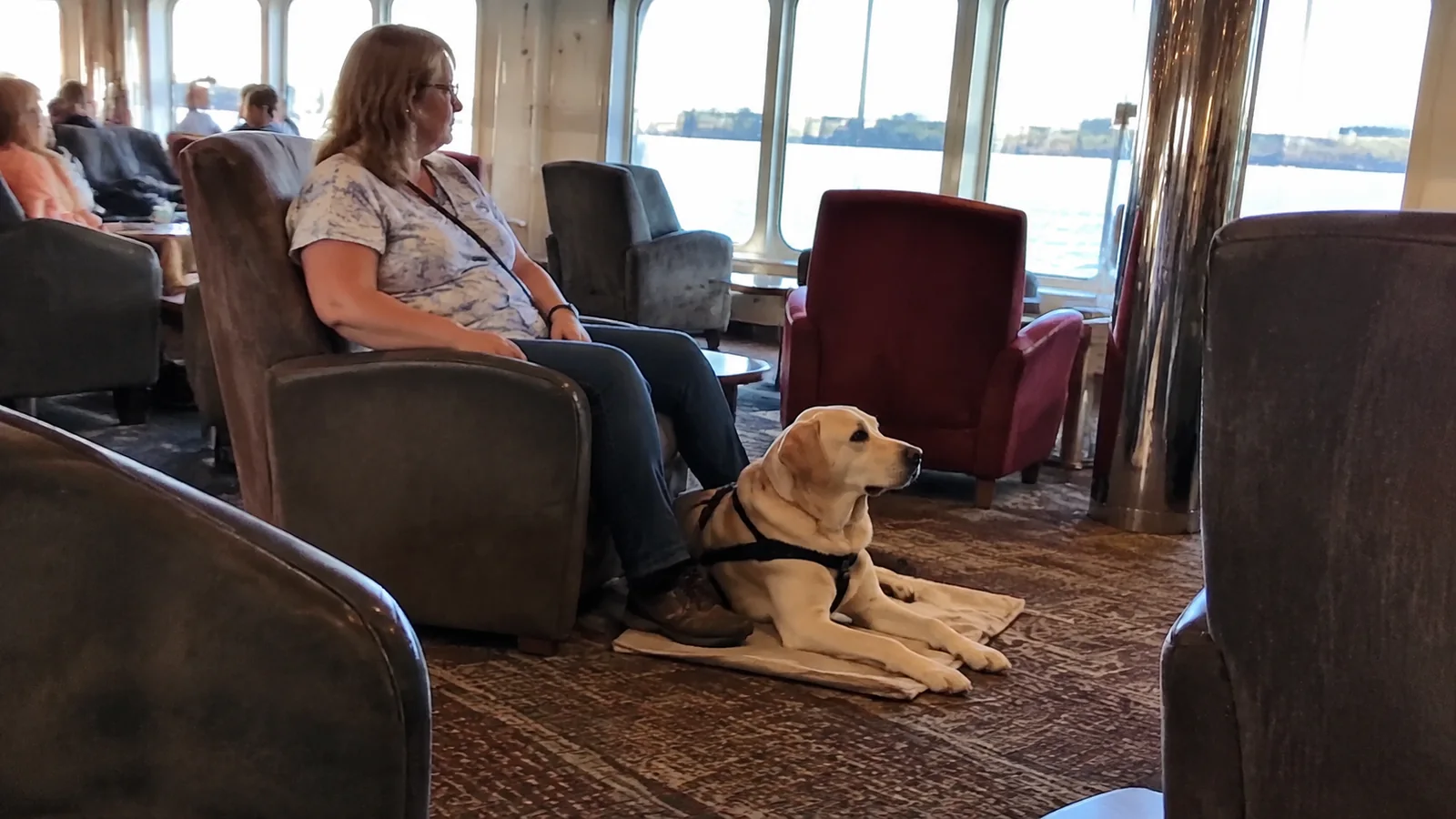
- Confirm the cruise line’s service-animal definition and notification process.
- Review animal-entry requirements for every destination and the return country.
- Ask how those rules apply when the dog stays aboard at a port.
- Confirm the ship’s relief area, substrate, access route, and care responsibilities.
- Check food, medication, transport, and veterinary arrangements.
I would not make the booking depend on an uncertain import permission. Veterinary paperwork can involve timed treatments and endorsements that are difficult to arrange once a ship is already moving between countries.
Service dogs, emotional-support animals, and pets are different
Cruise lines commonly distinguish task-trained service dogs from emotional-support animals and ordinary pets. Check the line’s actual policy rather than assuming every animal described as providing support can sail.
Carnival’s service-dog policy permits working dogs trained to perform disability-related tasks and explains the handler’s responsibilities. Its rules should not be replaced by a general online claim that a certificate allows any dog aboard.
I would use the accessibility channel to explain the service-animal arrangement and ask what the line needs for the sailing. Animal health documents and import permits are separate from questions about the dog’s work.
Do not buy a registration card or vest expecting it to override a cruise policy or border requirement. Ask the responsible authority what is actually required for the animal and itinerary.
Build the document plan country by country
List the embarkation country, every scheduled port, any overnight stays, and the final destination. Include flights and land transfers that bring the dog into another jurisdiction before or after the cruise.
The USDA APHIS animal-travel resources provide destination guidance and explain veterinary documentation for travel from the United States. Use the destination government’s current requirements to resolve questions about permits, certification, and entry.
I would create one short checklist per country with the document, responsible person, and deadline. That makes a narrow treatment window easier to spot than keeping everything in a folder of unrelated links.
Ask a USDA-accredited veterinarian when U.S. export certification requires one. Tell the clinic the complete itinerary early so it can identify tests, treatments, endorsement steps, and timing conflicts.
Staying aboard is not one universal exemption
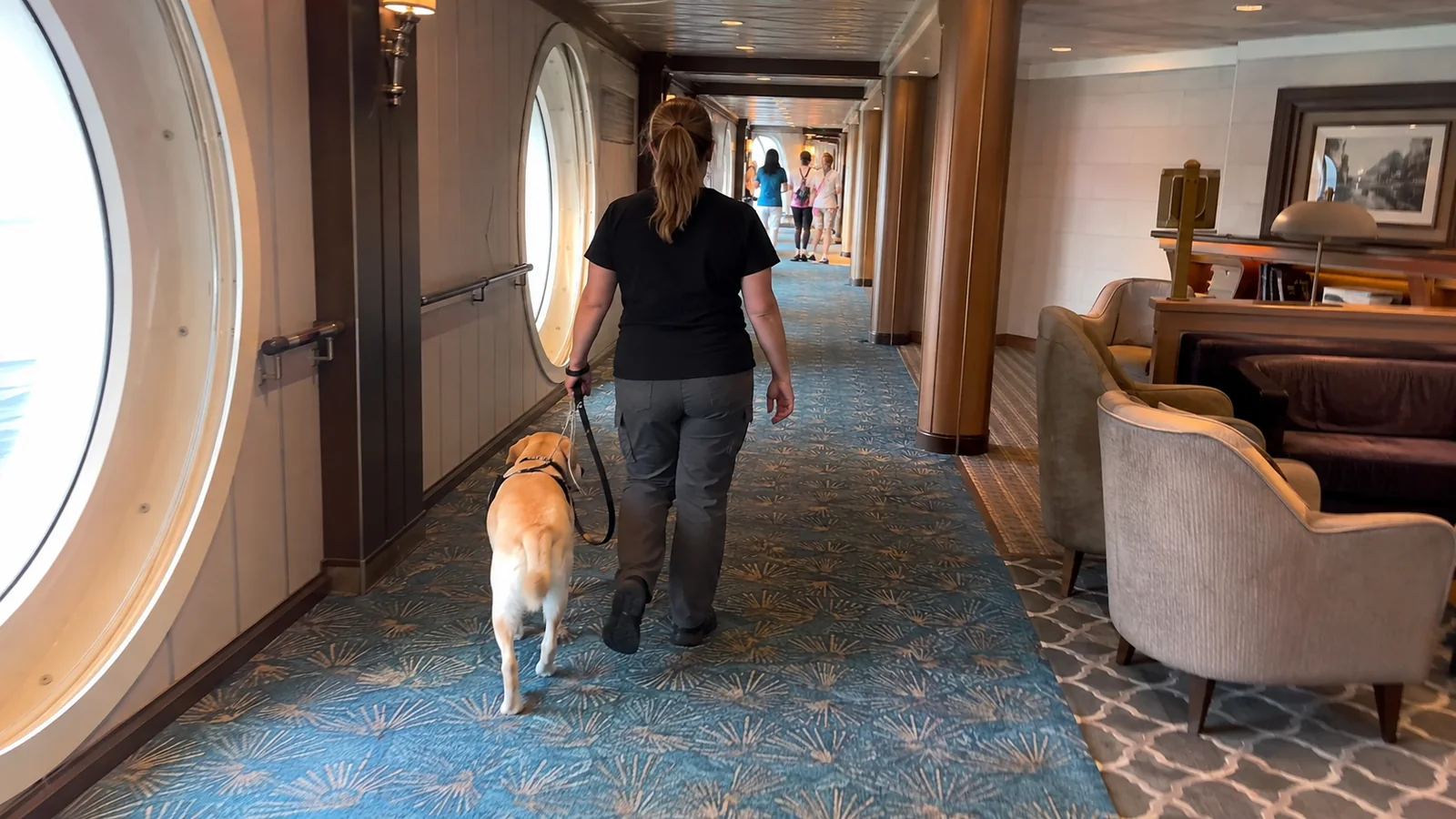
A destination may have requirements affecting animals aboard a visiting vessel even when the handler does not plan to disembark with the dog. Ask the country’s authority and the cruise line how the rule applies to the specific visit.
Do not assume the phrase “transit only” settles the issue. Its meaning can differ between an airport connection, a port call, and formal animal importation.
There is a useful specific distinction in U.S. return rules. The CDC’s current dog-import FAQ says a service dog that remains aboard during a high-risk-country port call is not considered to have been in that country for that CDC requirement.
That CDC distinction does not erase another country’s rules for the ship’s visit. I would keep those two questions separate and obtain the appropriate answer for each.
Plan the return to the United States before departure
U.S. dog-entry requirements depend on factors including the dog’s recent travel history and where its rabies vaccination was administered. A dog that lives in the United States still needs the applicable return documentation.
The CDC’s current FAQ includes specific seaport procedures for service dogs returning after visits to high-risk countries. U.S.-vaccinated and foreign-vaccinated dogs can need different supporting records.
I would work through that route with the veterinarian and relevant authorities before the outbound trip. Do not assume that a document used for a previous cruise remains valid for a different itinerary or arrival port.
Check whether the receipt or form needs to identify the specific U.S. seaport. If the cruise changes its final port, ask how the documentation must be updated.
Relief-area location should influence the cabin
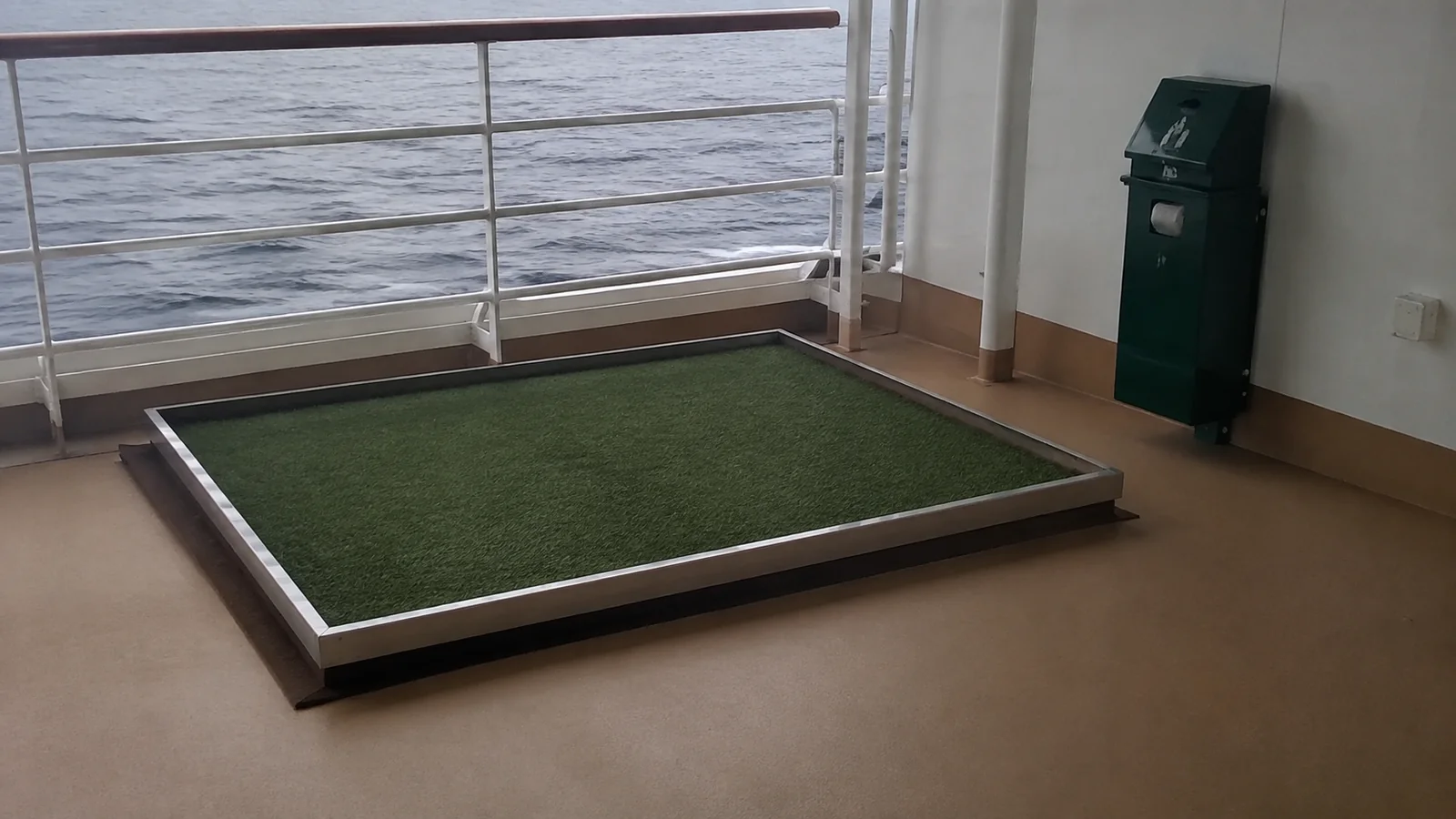
Ask which deck holds the relief area, whether it is sheltered, and how the handler reaches it at night. Confirm the substrate and whether the same location is expected throughout the sailing.
A route that seems short on a map can involve several doors, a crowded elevator, and an exposed deck. I would compare cabins against that everyday trip before choosing a room solely for the view.
Use the ship’s deck plan to identify the likely route, then ask the accessibility team about details the drawing does not show. The relief area may not appear on the public plan at all.
If the dog normally uses a very different surface, discuss preparation with the handler’s trainer or veterinarian as appropriate. I would introduce unfamiliar equipment or routines before embarkation, not at the first late-night visit.
Confirm who handles care and cleanup
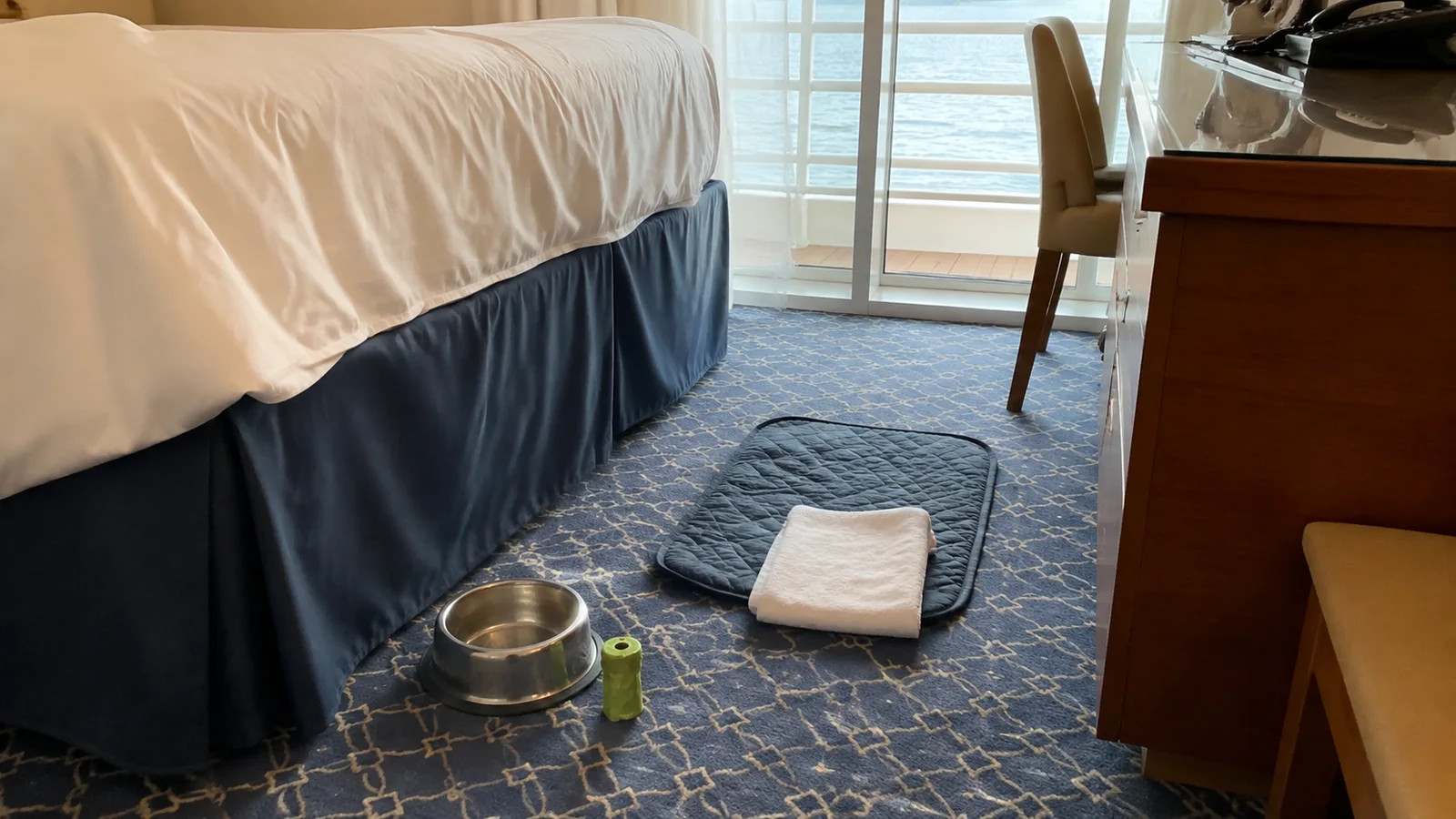
Ask the line about waste supplies, disposal, cleaning expectations, and access to water. The handler remains responsible for the dog’s care, and crew should not be assumed to provide walking or pet-sitting services.
Check the policy on leaving a service dog unattended in the cabin. Many lines prohibit it, so a port activity that excludes the dog may also be unsuitable for the handler’s plan.
If another traveling adult can assist with care, agree on that arrangement beforehand and make sure it fits the dog’s training and the line’s rules. A willing companion is more useful than a last-minute request to the cabin steward.
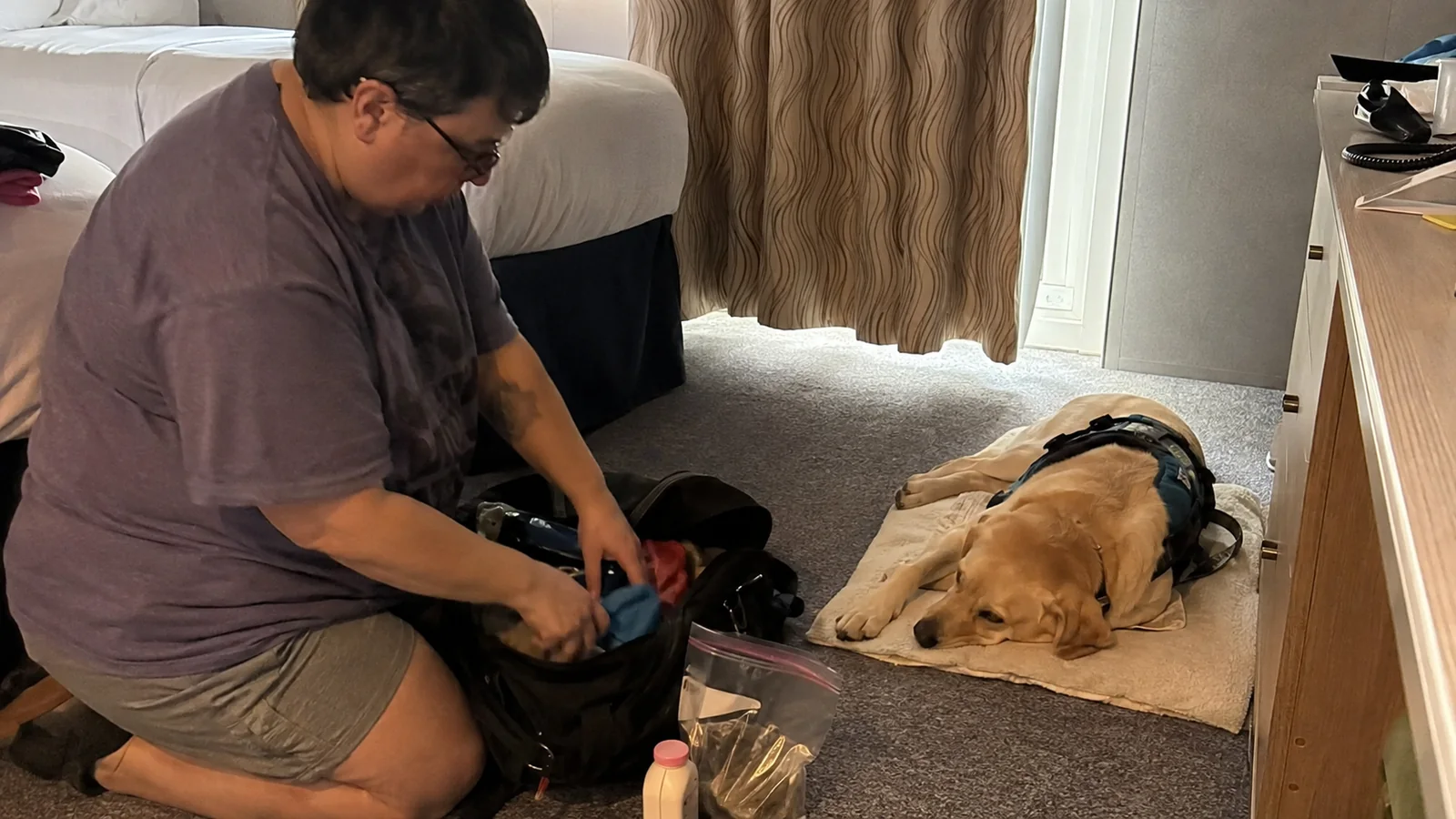
Keep the dog resting where it does not block the cabin exit or public aisles. Ask dining staff to help identify a suitable position when the table layout is tight.
Food and medication need their own import check
Bring enough of the dog’s appropriate food for the journey and a reasonable delay margin, while respecting destination restrictions. Ask whether packaging must remain sealed, what must be declared, and what can be taken ashore.
Do not assume every country permits meat-based food simply because it is commercially packaged. Prescription diets can still require clarification under animal-product or food-entry rules.
Check storage needs with the cruise line before relying on a cabin refrigerator or freezer. I would avoid a meal plan that requires a facility the ship has not agreed to provide.
Carry necessary medication in labeled packaging and ask the veterinarian about documents and storage. Keep a record of the generic names and doses for a veterinary professional if replacement care becomes necessary.
Shore excursions need both permission and practical access
An animal-entry permit does not automatically establish access to every attraction, transport provider, beach, or wildlife area. Local laws and the venue’s operating rules need a separate check.
Ask the operator about the dog and handler together, including the vehicle, space to rest, shade, water, and length of the outing. I would request a clear answer rather than relying on the word “accessible” in a tour listing.
For a tender, confirm how the team boards and whether the handler can make the required transfer safely. Permission to bring the dog is only one part of that process.
A shorter private outing may offer more control over breaks and return timing. If a port cannot provide a workable arrangement, plan an enjoyable ship day rather than improvising at the gangway.
Heat and surfaces can change a port plan
Consider hot pavement, salt, rough ground, wet decks, and long periods without shade. Ask the veterinarian or trainer about appropriate preparation for the actual climate and terrain.
I would schedule necessary breaks and carry the supplies the handler normally uses. A shore excursion should not require the dog to work through conditions the team would avoid at home.
The same care applies in cold-weather ports, where rain, ice, and unfamiliar surfaces can affect comfort and footing. Bring suitable equipment only if the dog is accustomed to using it.
My cruise packing list can help organize the human supplies alongside a separate dog-care kit. Keep original documents and essential medication readily accessible rather than in checked luggage.
Find veterinary options before they are needed
A ship’s medical center treats people and should not be expected to provide veterinary care. Identify an appropriate clinic near a practical port and save its contact details and opening hours.
Ask about how the dog would reach the clinic and whether the visit could affect onward travel documents. A treatment or unexpected overnight stay can create additional certification questions.
Check any insurance or assistance product for the expenses you actually want covered. Human travel medical coverage should not be assumed to include veterinary bills or transporting the dog after an interruption.
I would keep a concise veterinary summary with the handler’s travel folder. Include the microchip details, vaccination records, relevant conditions, and the usual clinic’s contact information.
Recheck after an itinerary change
A substituted country, delayed arrival, or changed final port can alter the documentation needed. Contact the ship’s accessibility and security teams before taking the dog ashore at an unplanned stop.
Ask who communicates with local officials and whether the existing documents remain valid for the new date. Do not make that decision solely from a port announcement.
My cruise planning tips can help with flexible travel arrangements, but animal-entry clearance deserves its own check. An ordinary passenger being allowed ashore does not settle the dog’s eligibility.
The sailing I would choose
I would choose an itinerary with achievable documentation, suitable shore access, and a relief routine the working team can comfortably use every day. I would give up a complicated port before accepting a trip that depends on uncertain clearance or unavailable care for the dog.