Poop Decks Explained: Meaning, History and Cruise Ship Myths
A poop deck is the raised deck at the stern of a traditional ship, usually forming the roof over an aft cabin or superstructure. The name has nothing to do with a toilet, and most modern cruise ships do not label any passenger area a poop deck.
What is a poop deck?
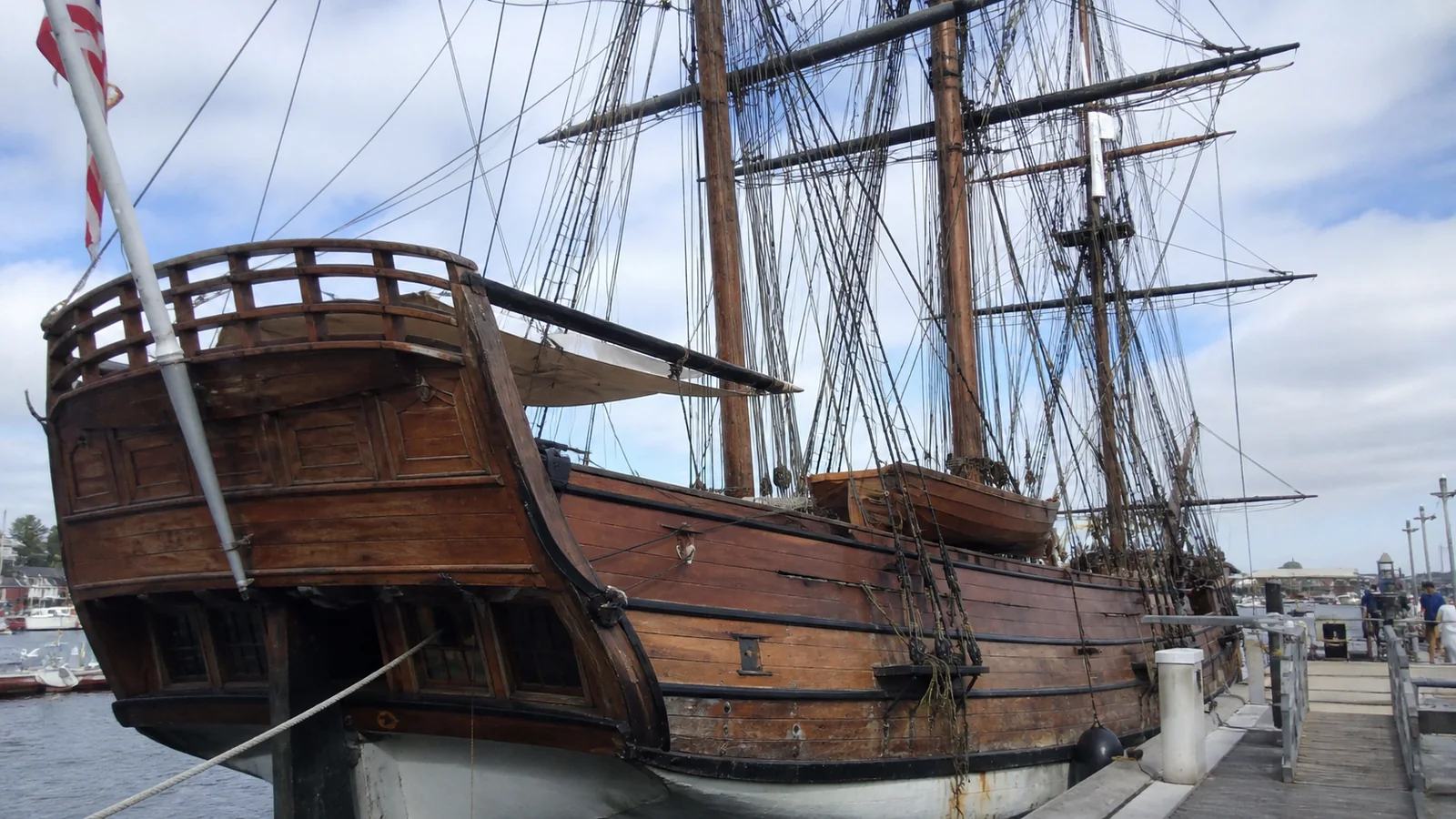
In strict nautical use, a poop deck is a short deck raised above the main afterdeck at the rear of a ship. “Aft” means toward the back, while “stern” names the back end itself.
Merriam-Webster defines a poop deck as a partial deck above a ship’s main afterdeck. That compact definition matters because not every open deck at the stern qualifies historically.
The traditional poop deck often formed the roof of the poop cabin or aft accommodations. It created an elevated working platform with a view over the ship and sea.
On a modern cruise, people sometimes use “poop deck” jokingly for any rear outdoor deck. That is understandable casual speech, but it is not how most current cruise deck plans name the area.
Why is it called a poop deck?
The nautical word “poop” came through French vocabulary for the stern, with deeper roots in the Latin puppis. The Oxford Reference maritime definition traces the term to Latin and describes the poop as the short aftermost deck raised above a ship’s quarterdeck.
In other words, the funny modern association is accidental. The deck was named for its position at the ship’s rear, not for anything sailors did there.
The bathroom meaning and the ship meaning are separate entries with separate histories. A modern reader hears the same spelling and sound, then understandably invents a connection that the nautical record does not support.
Did sailors use the poop deck as a toilet?
No, the poop deck was not a designated toilet. It was a prominent working and command area associated with officers, observation, steering arrangements on some vessels, and the cabins below.
Shipboard toilets became known as “heads,” another nautical term that still survives. Facilities and waste arrangements varied enormously by century, navy, merchant service, vessel size, and rank, so one cartoonish explanation does not fit all ships.
It is safer to remember the clean distinction: poop deck means an elevated aft deck, while the head means a toilet or lavatory. Neither term tells you exactly how sanitation worked on every historical vessel.
What was the poop deck used for?
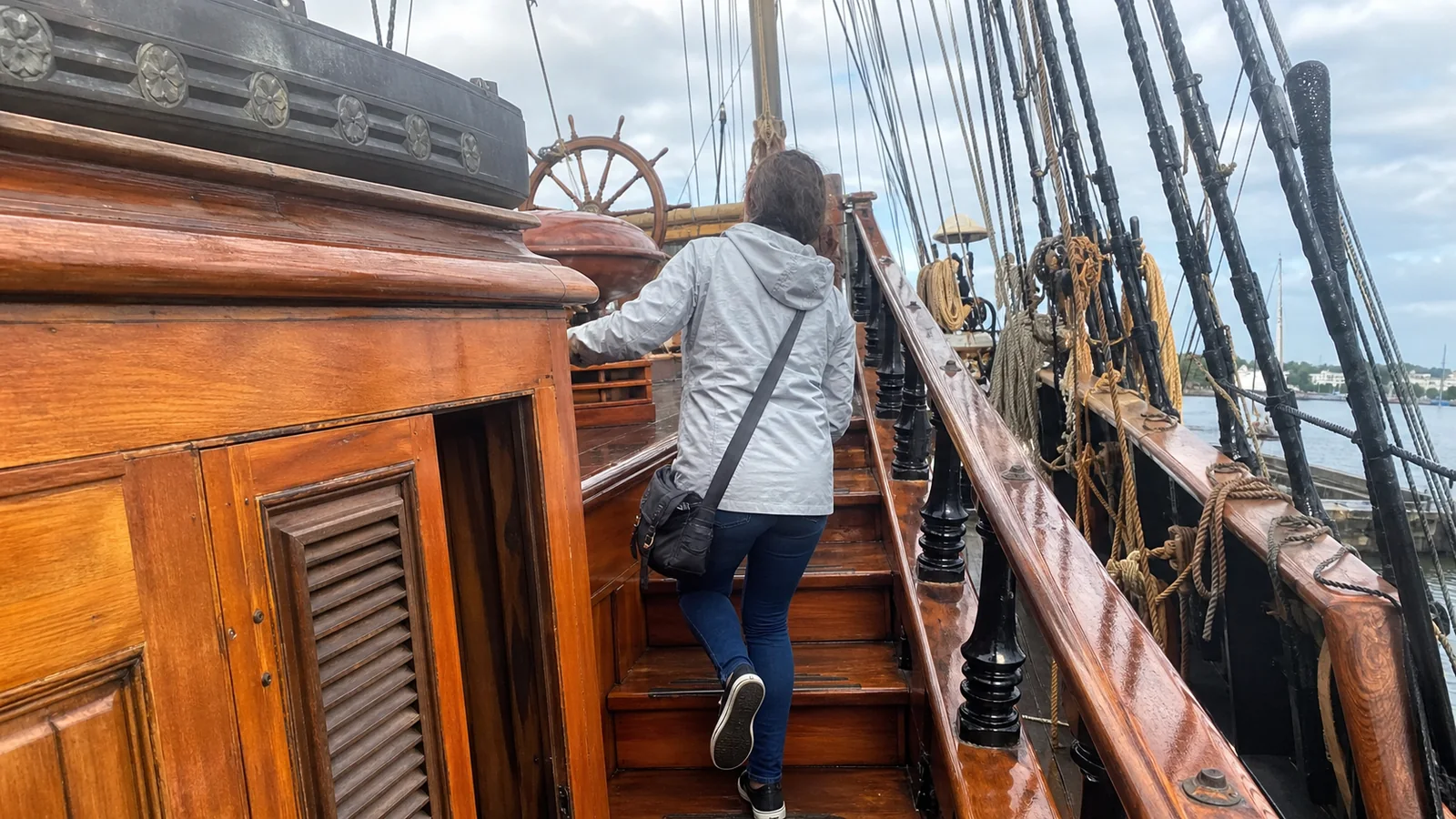
The elevated position made it useful for seeing along the ship, supervising work, navigating, and steering on vessels whose design placed relevant equipment there. It also roofed accommodations or working spaces in the aft superstructure.
The National Park Service explains that Balclutha’s poop deck served as a command center, steering and navigation area, and officers’ observation point. The space below included their dining and sleeping quarters.
Balclutha is a preserved square-rigged ship, not a template for every craft that ever crossed an ocean. Its physical layout is useful because visitors can see how an elevated afterdeck and enclosed space below worked together.
The poop deck could support these functions:
- Giving officers a higher view of sails, crew activity, sea conditions, and the vessel’s wake.
- Providing space near steering or navigation functions on ships arranged that way.
- Forming the weather-exposed roof over cabins or sheltered space below.
- Creating a defined aft working area separate from lower decks.
- Offering space for lookout, signaling, or shipboard routines according to the vessel and era.
Notice how none of those uses involves a bathroom. The joke is memorable, but the real design is more interesting.
Where is the poop deck on a ship?
Face forward toward the bow, then look behind you toward the stern. On a traditional sailing ship with a poop, the deck is the raised section at that aft end.
It is not simply “the back half” of the vessel. The term identifies a particular elevated deck or roof structure, usually shorter than the main deck beneath and ahead of it.
If you are standing at the stern rail of a modern cruise ship, you are aft. You are not necessarily on a poop deck, even if the view of the wake resembles what an officer on a sailing vessel might have seen.
Our port and starboard explainer makes the rest of the orientation easy. Port is left and starboard is right when you face the bow, while forward and aft tell you which end you are moving toward.
Poop deck versus quarterdeck
The poop deck and quarterdeck are not exact synonyms. On many sailing-ship arrangements, the quarterdeck lay forward of the poop and served as a major command area.
The shape, height, and boundaries changed across periods and vessel types. A generic pirate-ship drawing may blur the two, while an actual ship plan labels them separately.
“Quarterdeck” also developed ceremonial and operational importance in naval tradition beyond a simple geometric location. Treating it as another silly word for the stern strips away that context.
When visiting a museum ship, use the labels provided for that vessel. The people who documented and restored it know whether a platform is the poop, quarterdeck, afterdeck, shelter deck, or something else.
Poop deck versus afterdeck
An afterdeck is broadly a deck in the aft part of a ship. A poop deck is a more specific raised aft deck, so the terms can overlap without being interchangeable in every design.
Think of “afterdeck” as the wider geographic description and “poop deck” as a named architectural feature. The second requires more than merely being near the back.
Poop deck versus stern
The stern is the rear end of the vessel, not a deck. A ship may have a stern without having a poop deck, which is true of countless modern ships.
“Aft” describes direction or location toward the stern. Cruise passengers will see “aft” far more often than “poop” on signs, cabin categories, elevators, and deck plans.
Poop deck versus bridge
A modern ship’s bridge is the enclosed command and navigation center from which officers operate the vessel. It is commonly high in the forward superstructure on a cruise ship, not on an open stern platform.
The poop deck historically offered command and observation advantages, but that does not make it an old bridge with a new name. Technologies, ship shapes, steering systems, visibility needs, and operational spaces evolved.
A cruise ship may also have bridge wings extending to either side for visibility during docking. Those are part of the bridge complex, not modern poop decks.
Do modern cruise ships have poop decks?
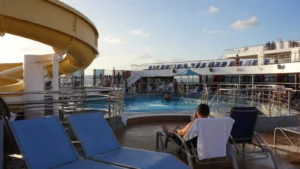
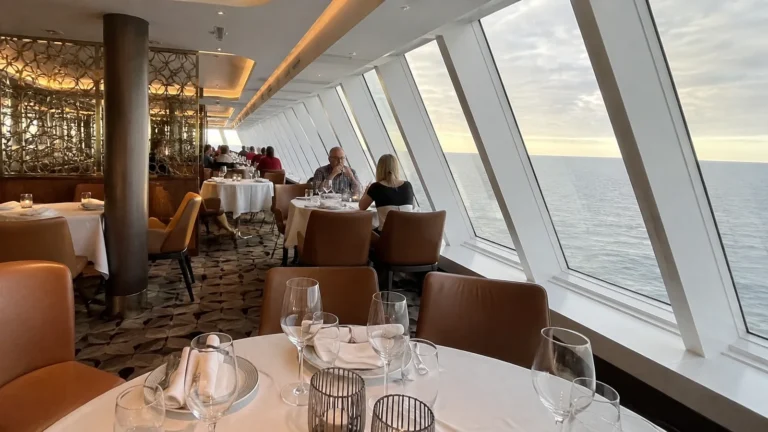
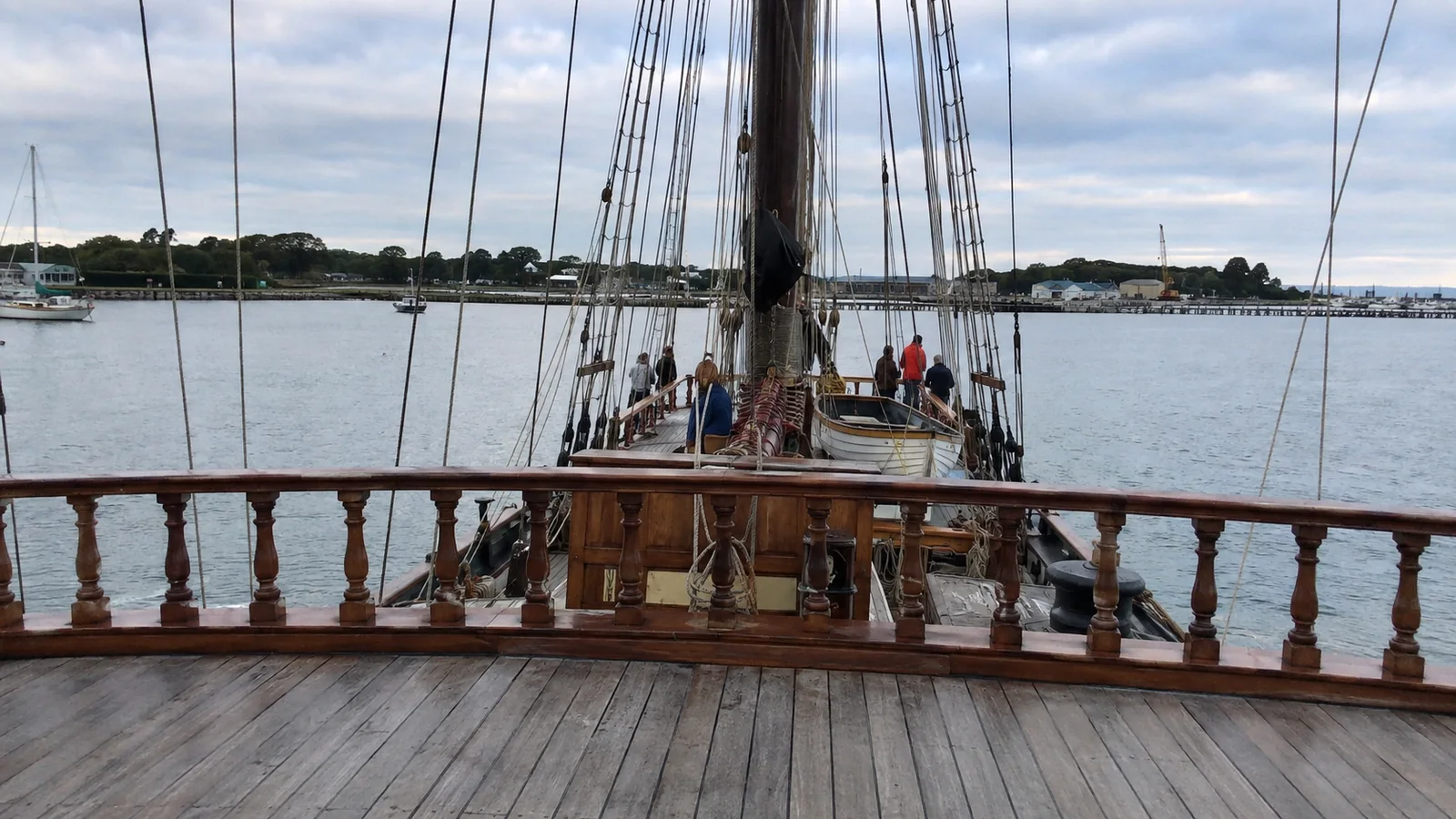
Modern cruise ships generally do not use “poop deck” as an official passenger-deck name. Their sterns may hold terraces, pools, restaurants, lounges, sports areas, crew spaces, machinery, or stacked cabin balconies.
A ship could still have a structure that a maritime historian describes with older vocabulary, but you should not assume every high aft deck is technically a poop. Check the builder’s plan or an authoritative ship description.
On vacation, use the venue name or deck number when meeting someone. “See you by the aft pool on Deck 15” is much more useful than “Meet me on the poop deck.”
Our guide to reading cruise ship deck plans shows how to trace stairs, elevators, cabins, and public spaces. Modern plans are designed around guest navigation, not a lesson in Age of Sail terminology.
Is the aft deck a good place to spend time?
Often, yes. An open aft deck can offer wake views, shelter from some winds, and a calmer feeling than the main pool area, depending on the ship.
It can also collect engine or exhaust noise, soot, vibration, sun, or wind under certain conditions. None of those effects is universal, and the ship’s structure matters more than the word aft.
Venue rules can change by time of day. A restaurant terrace may be open only during service, an aft pool may be adult-only, and a crew gate should never be crossed for a better photograph.
Is an aft cabin on the poop deck?
No, an aft cabin is simply located toward the stern. On a cruise ship, it may face the wake directly or sit along either side near the back.
Aft-facing balconies can have wonderful views, yet their design varies by deck. Some are deep and shaded, some are exposed to cabins above, and some sit near public terraces or equipment.
Motion can feel different at the ends of a ship, particularly in rough seas, while vibration and docking noise may be noticeable on some lower aft decks. Travelers sensitive to movement often prefer a cabin closer to the ship’s center and lower down.
Use our cabin-location checks before choosing an aft room. The exact deck plan and adjacent spaces tell you far more than nautical vocabulary.
Did Titanic have a poop deck?
Yes, Titanic’s plans used the historical term for an aft deck area. That fact does not mean the poop deck was a bathroom or that a modern cruise ship copies Titanic’s arrangement.
Titanic was an early 20th-century ocean liner with passenger classes, machinery, safety standards, and deck organization unlike today’s cruise resorts. Our Titanic and modern cruise ship comparison separates meaningful differences from viral size graphics.
Be cautious with precise stories about who stood where during the sinking unless they come from serious historical research. A deck name is easy to verify, while individual movements and motives can be much harder.
What does “swab the poop deck” mean?
To swab a deck is to clean it with a mop-like tool, so the phrase literally means cleaning that aft deck. Popular culture loves it because the words sound instantly nautical and mildly ridiculous.
Cleaning wooden decks could remove salt, dirt, blood, fish residue, spills, and other grime according to the ship’s work. Claims that every poop deck was swabbed for one single secret reason are usually oversimplified.
Modern cruise crews still clean outdoor decks, but you are unlikely to hear an officer issue the movie-pirate command. Cruise sanitation follows contemporary equipment, materials, safety procedures, and departmental routines.
Could a ship be “pooped” by a wave?
Yes, “pooped” also has an old nautical verb sense involving a sea breaking over the stern. Merriam-Webster records this ship-related meaning separately from the slang senses.
That does not prove the poop deck was named because waves pooped the ship. The deck name is traced through the word for stern, while the similar verb describes what water does at that end.
Common poop deck myths
- Myth: It was the ship’s toilet. Reality: It was a raised aft deck and working area.
- Myth: Every ship has one. Reality: The feature belongs to particular designs, especially traditional vessels.
- Myth: Every aft cruise deck is a poop deck. Reality: Modern plans use deck numbers and venue names, and most do not label a poop.
- Myth: It is exactly the same as the quarterdeck. Reality: The areas could be adjacent but had distinct labels and roles.
- Myth: It became the modern bridge. Reality: Some functions overlap historically, but the structures and technologies differ.
- Myth: Pirates invented the term. Reality: It belongs to broader nautical language, not one romanticized group.
How to spot a real poop deck
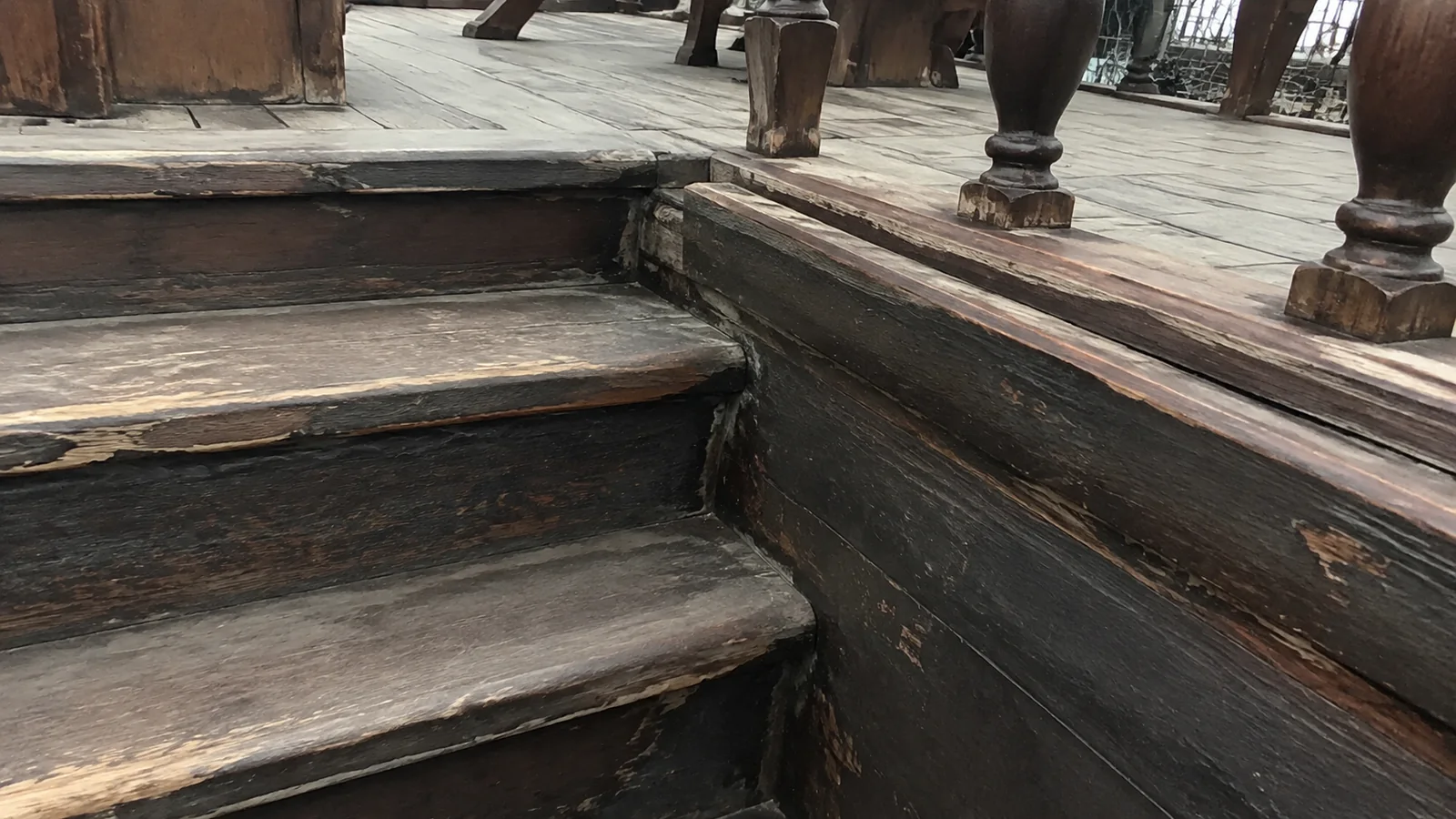
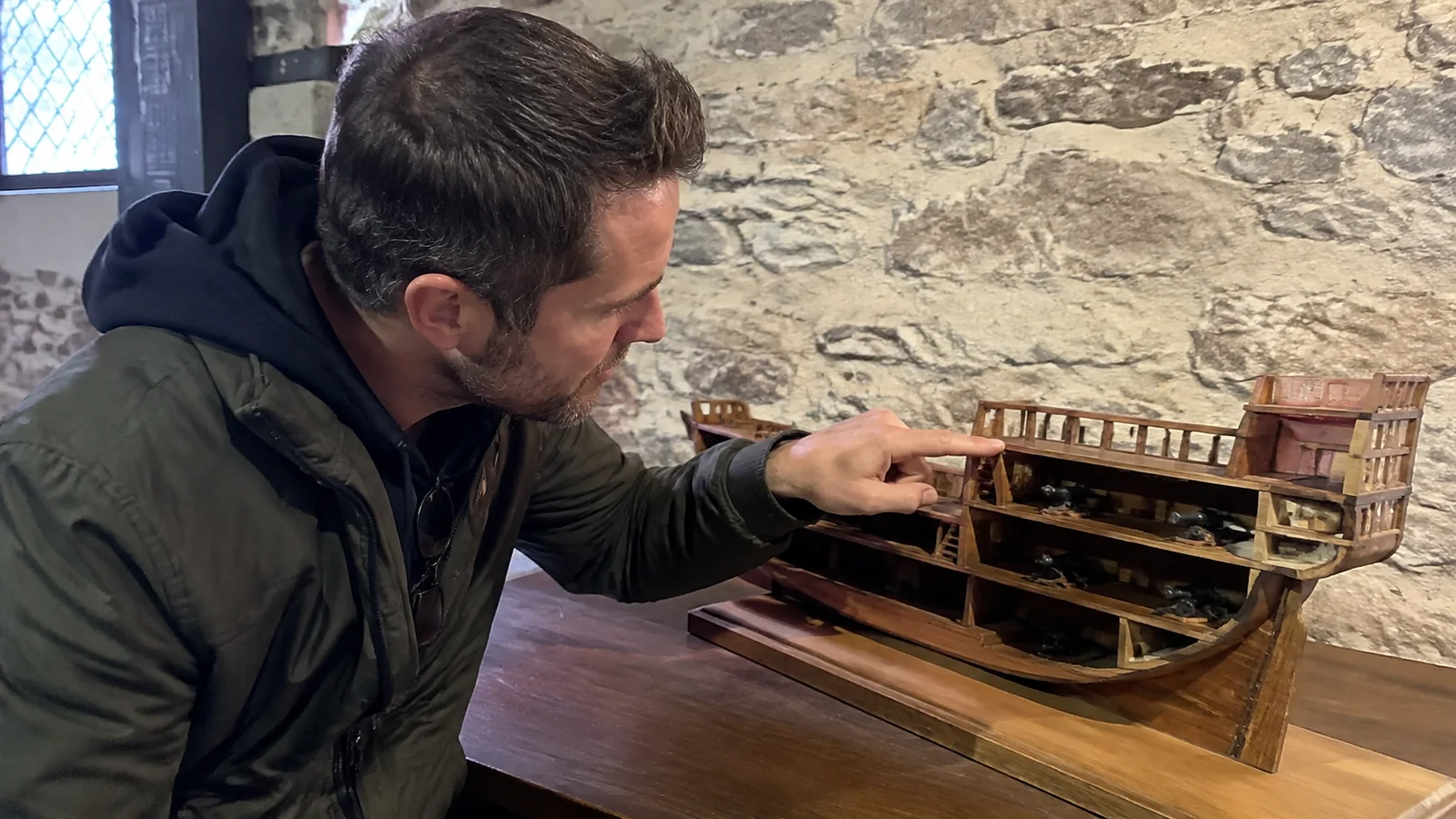
Museum ships are the best classrooms because the deck exists in three dimensions. Look for an elevated platform at the stern, the enclosed or sheltered volume beneath it, and its relationship to the quarterdeck and mizzenmast.
The National Park Service’s Balclutha audio-tour transcript even explains how the ship’s poop deck was extended over time. That is a lovely reminder that real vessels evolve and may not remain frozen in their launch configuration.
Read the museum’s signs instead of forcing every ship into one diagram from the internet. A preserved clipper, warship, fishing vessel, and passenger liner can use similar words for visibly different structures.
The bottom line
A poop deck is a raised deck at the stern, historically useful for command, observation, navigation, steering arrangements, and covering aft spaces. Its name comes from older maritime language for the rear of a ship, not from human waste.
Most modern cruise ships use “aft deck,” a deck number, or a venue name instead. You can enjoy the joke and still get the history right, which is honestly the best possible outcome for a term this memorable.