Titanic vs Modern Cruise Ships: What Really Changed
Put Titanic beside a modern cruise ship and size is the least interesting difference.
What travelers would feel most is the shift from class-controlled transportation to a resort vacation, plus private bathrooms, broad dining choice, instant communication, and a safety system rebuilt through more than a century of lessons.
Titanic and a Modern Cruise Ship Served Different Trips
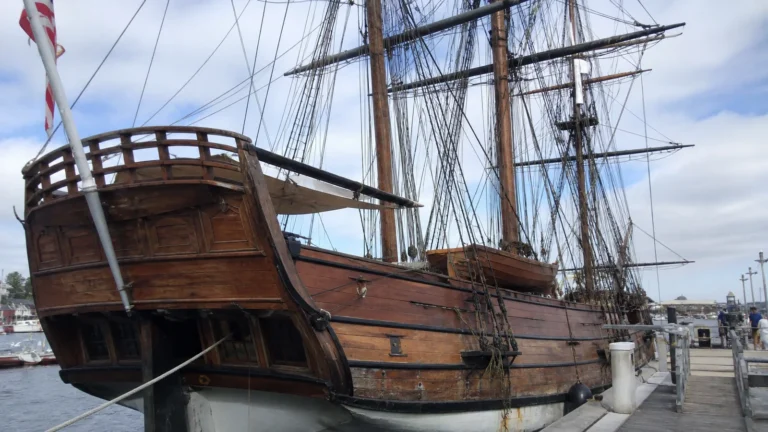
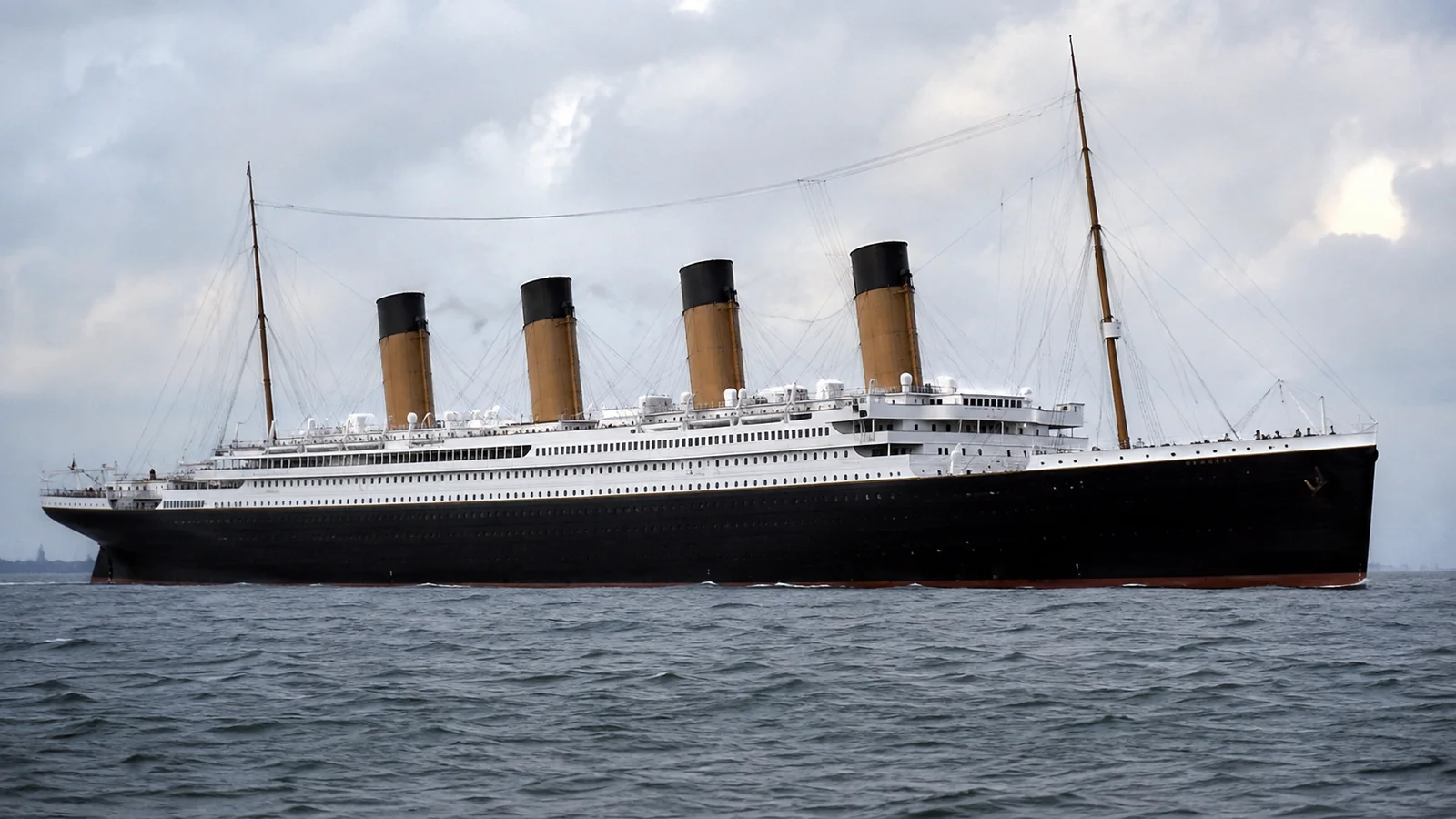
RMS Titanic was an ocean liner, built to transport passengers and mail across the North Atlantic on a schedule. Its maiden voyage began in Southampton in April 1912 and was supposed to end in New York, not loop back to the same vacation home port.
A modern cruise ship is primarily a leisure destination that moves between ports. That distinction matters because waterparks, balcony cabins, children’s clubs, specialty restaurants, and long port days solve a different problem than fast, prestigious transatlantic passage.
For a fuller look at the category, ocean liners and cruise ships should not be treated as interchangeable labels. Queen Mary 2 still operates scheduled ocean crossings, but most ships travelers call liners today are cruise ships.
A Size Comparison That Labels the Numbers
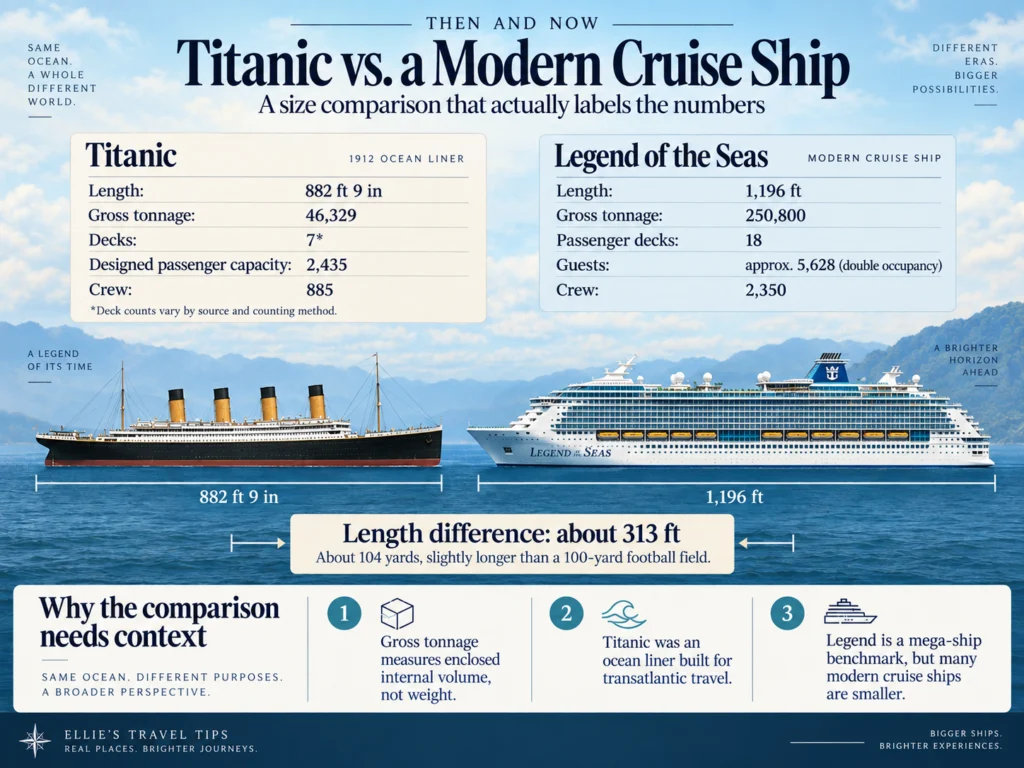
Titanic measured 882 feet 9 inches overall, with a beam of 92 feet 6 inches and gross tonnage of 46,329. Royal Museums Greenwich lists seven decks, passenger capacity for 735 first-class, 674 second-class, and 1,026 third-class guests, plus 885 crew.
That gives Titanic a designed passenger total of 2,435, although it did not sail full on its only voyage. Capacity, people aboard, and survivors are three different figures and should never be swapped for dramatic effect.
The mega-ship comparison
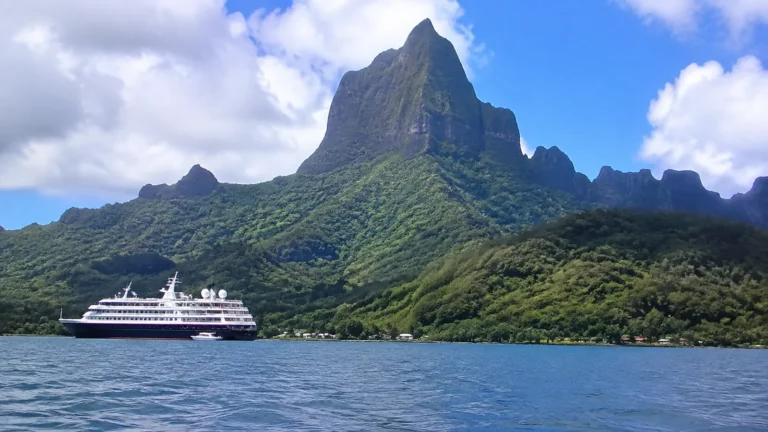
Royal Caribbean’s Legend of the Seas entered service in 2026 and gives us a current upper-end comparison. The cruise line lists 250,800 gross tons, 1,196 feet in length, 18 passenger decks, approximately 5,628 guests at double occupancy, and 2,350 crew on its current fleet overview.
Legend is about 313 feet longer than Titanic, or roughly another football field including end zones. Its gross tonnage is more than five times Titanic’s, but gross tonnage measures enclosed internal volume, not weight.
“More than twice as many passengers” also needs a label. Legend’s 5,628 figure is double occupancy, while Titanic’s 2,435 was a class-by-class maximum; modern maximum berths can produce a still larger number when third and fourth beds are occupied.
Most modern cruise ships are not mega-ships
Legend is a useful scale marker, not the default modern vessel. Expedition ships may carry a few hundred guests, premium and luxury ships often stay smaller, and many mainstream ships sit between those extremes.
Bigger brings more dining, entertainment, family facilities, and cabin categories, but also longer walks and more competition at peak times. Travelers who dislike the floating-city format should compare ship capacity categories rather than deciding that cruising itself is too crowded.
Speed and Propulsion Changed Less Dramatically Than Scale
Titanic used two reciprocating steam engines and one low-pressure turbine, driving three propellers. Royal Museums Greenwich gives a 21-knot service speed and an estimated top speed of 23 to 24 knots.
That is not embarrassingly slow beside a modern cruise ship, because today’s itineraries prioritize fuel planning, arrival windows, and onboard time rather than an Atlantic speed contest. Many large cruise ships sail routine legs below their potential maximum.
Modern vessels generally use diesel-electric systems in which engines generate electricity for propulsion motors, hotel systems, and enormous onboard loads. Some new ships use liquefied natural gas-capable engines, but a fuel label alone does not settle the ship’s total climate impact.
Thrusters, azimuthing propulsion pods on some vessels, satellite positioning, radar, electronic charts, and modern bridge systems give crews tools Titanic’s officers never had. Technology improves awareness and maneuverability, but trained people, procedures, maintenance, and conservative decisions still matter.
Cabins Reveal the Social Change
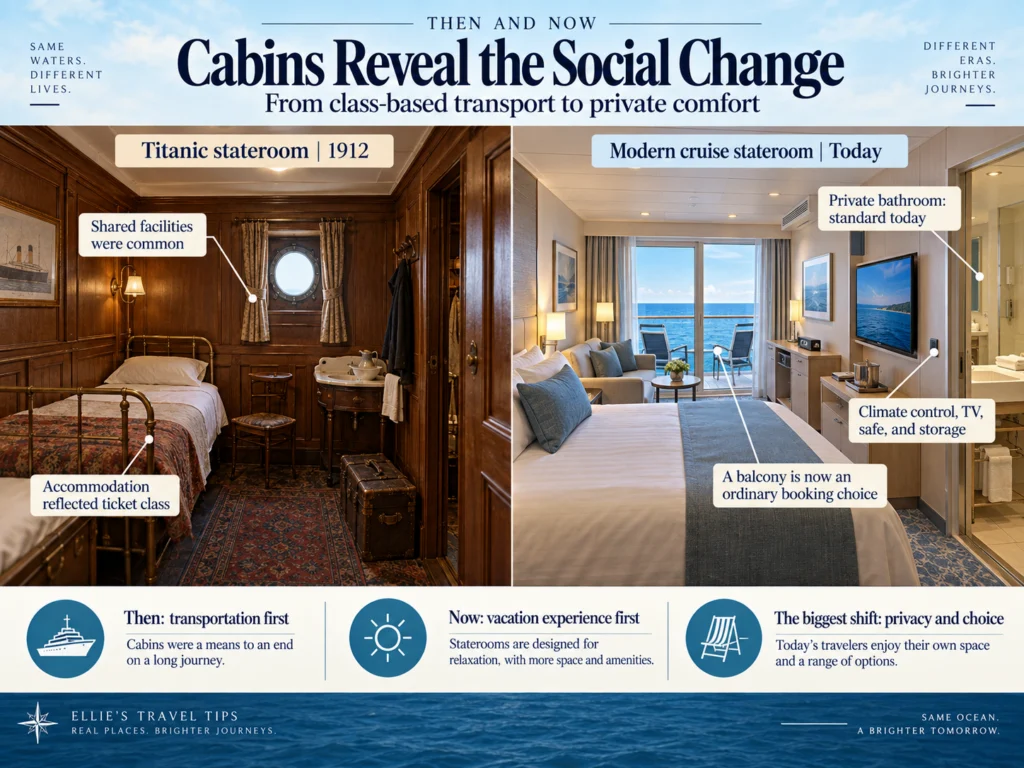
Titanic’s accommodation was explicitly divided by ticket class. First class ranged from comfortable cabins to lavish suites, while many third-class passengers shared simpler rooms and bathroom facilities in a way that would surprise today’s mainstream cruiser.
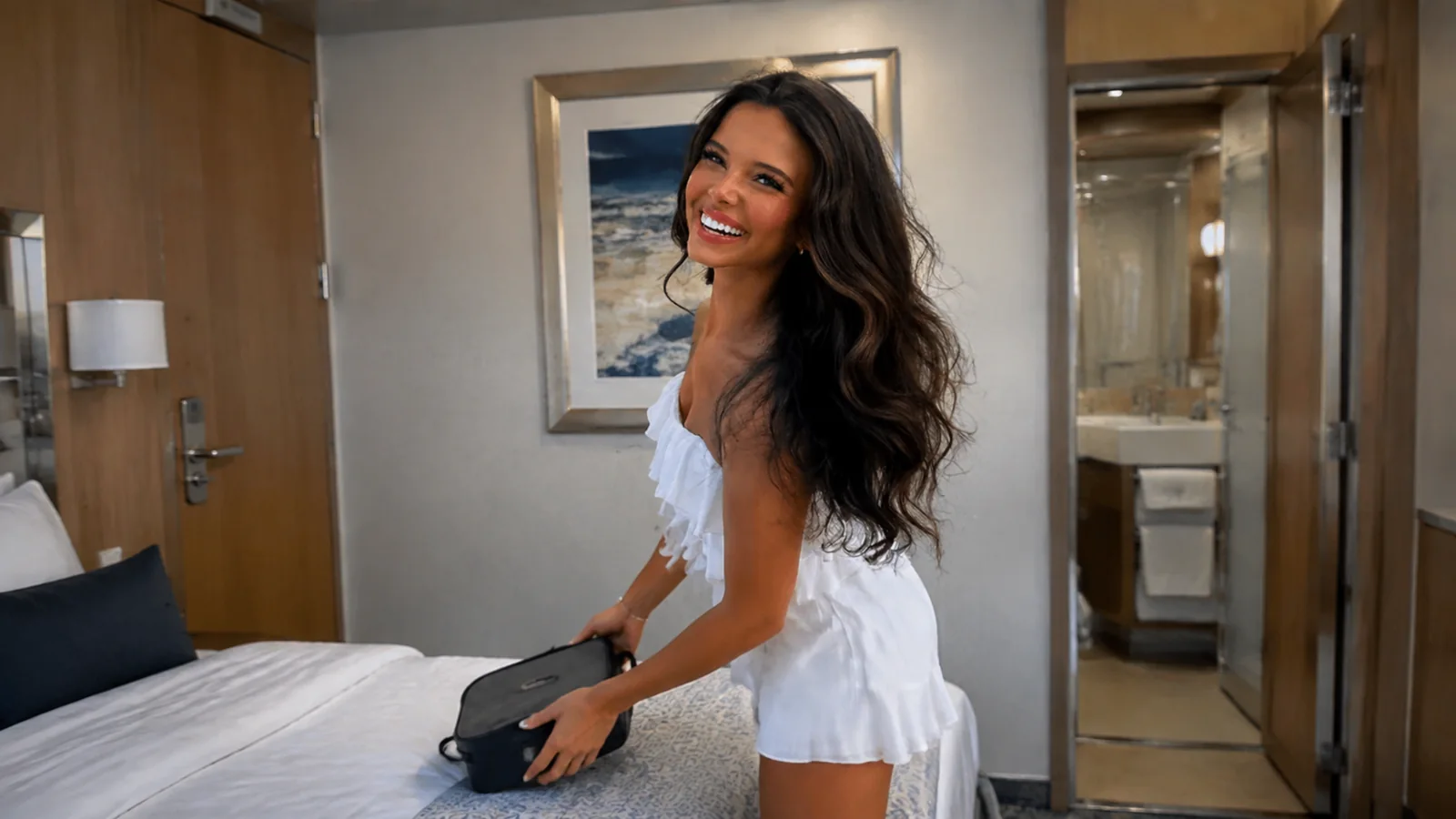
A modern ship still has a hierarchy of inside cabins, ocean views, balconies, suites, and exclusive suite areas. The crucial difference is that an ordinary cabin usually gives its occupants a private toilet and shower, climate control, television, safe, phone, and storage.
A balcony is now an ordinary booking choice
Titanic did not have the rows of private cabin balconies that define many modern ship exteriors. Current travelers can choose an ocean-facing balcony, inward-facing neighborhood balcony, virtual view, window, or no exterior opening at all, depending on the vessel.
That choice is not automatically “modern equals better.” An interior cabin can be quiet and economical, while a poorly placed balcony may sit under a pool deck or above late-night music, so use current deck plans and the broad cabin-location warning signs before booking.
Accessibility is designed, but not identical
Modern ships offer accessible cabins, elevators, step-free routes, hearing-support features, and mobility assistance that did not exist as a coordinated passenger product in 1912. Exact equipment, transfer space, tender access, and evacuation support vary by ship, so travelers should confirm needs with the cruise line before payment.
Dining Went From Class System to Choice System
Titanic’s dining rooms and menus reflected class divisions, with passengers eating in spaces tied to their ticket. First-class luxury was extraordinary for the period, but it was not a shipwide experience shared equally by everyone aboard.
Modern mainstream ships commonly combine a main dining room, buffet, quick-service counters, specialty restaurants, cafes, bars, room service, and dietary-request procedures. Some venues are included in the fare, others carry a cover charge or à la carte pricing, and the most desirable times can require reservations.
The modern advantage is variety, not necessarily simplicity. A guest can eat sushi, tacos, steak, pizza, and soft-serve in one day, then discover that beverage packages, service charges, premium items, and specialty dining have complicated the bill.
Entertainment Became a Core Reason to Sail
Titanic offered promenades, lounges, smoking rooms, libraries, music, conversation, games, and notable first-class leisure facilities, including a swimming bath and gymnasium. Those amenities were impressive in 1912, but they were supporting a crossing rather than programming a weeklong resort.
Large modern ships can add production theaters, ice rinks, surf simulators, ropes courses, water slides, casinos, comedy, children’s clubs, spas, multiple pools, and app-based daily schedules. The ship is often marketed as strongly as the ports.
This is one place where smaller can still win. A quiet observation lounge, uncrowded promenade, strong lectures, and port-focused schedule may suit an adult couple better than the vessel with the longest attraction list.
Communication Changed the Experience of Distance
Titanic communicated beyond the ship through wireless telegraphy, and passenger messages were transmitted by radio operators as paid telegram traffic. News, navigation information, and personal communication moved slowly by modern expectations.
Today’s bridge combines satellite and terrestrial communications with dedicated distress systems, while passengers may have ship Wi-Fi, messaging apps, live maps, and television news. Internet quality and pricing still vary, and a steel ship remains unfriendly to ordinary phone signals between decks.
Modern convenience also creates a new boundary problem: being at sea no longer guarantees disconnection. Anyone who wants a true break should set notification and work rules before sailing rather than expecting the ocean to do it.
Safety Is the Most Important Difference
Titanic carried 20 lifeboats with space for about 1,178 people, far fewer than its total capacity. The Royal Museums Greenwich fact sheet records both that capacity and the ship’s main dimensions, machinery, speed, and accommodation figures.
Modern passenger ships operate under an international safety framework that grew directly from disasters including Titanic. The International Maritime Organization says the 1912 loss led to the first Safety of Life at Sea treaty, while present passenger ships must comply with relevant safety and pollution-prevention standards.
Lifeboats are only one layer
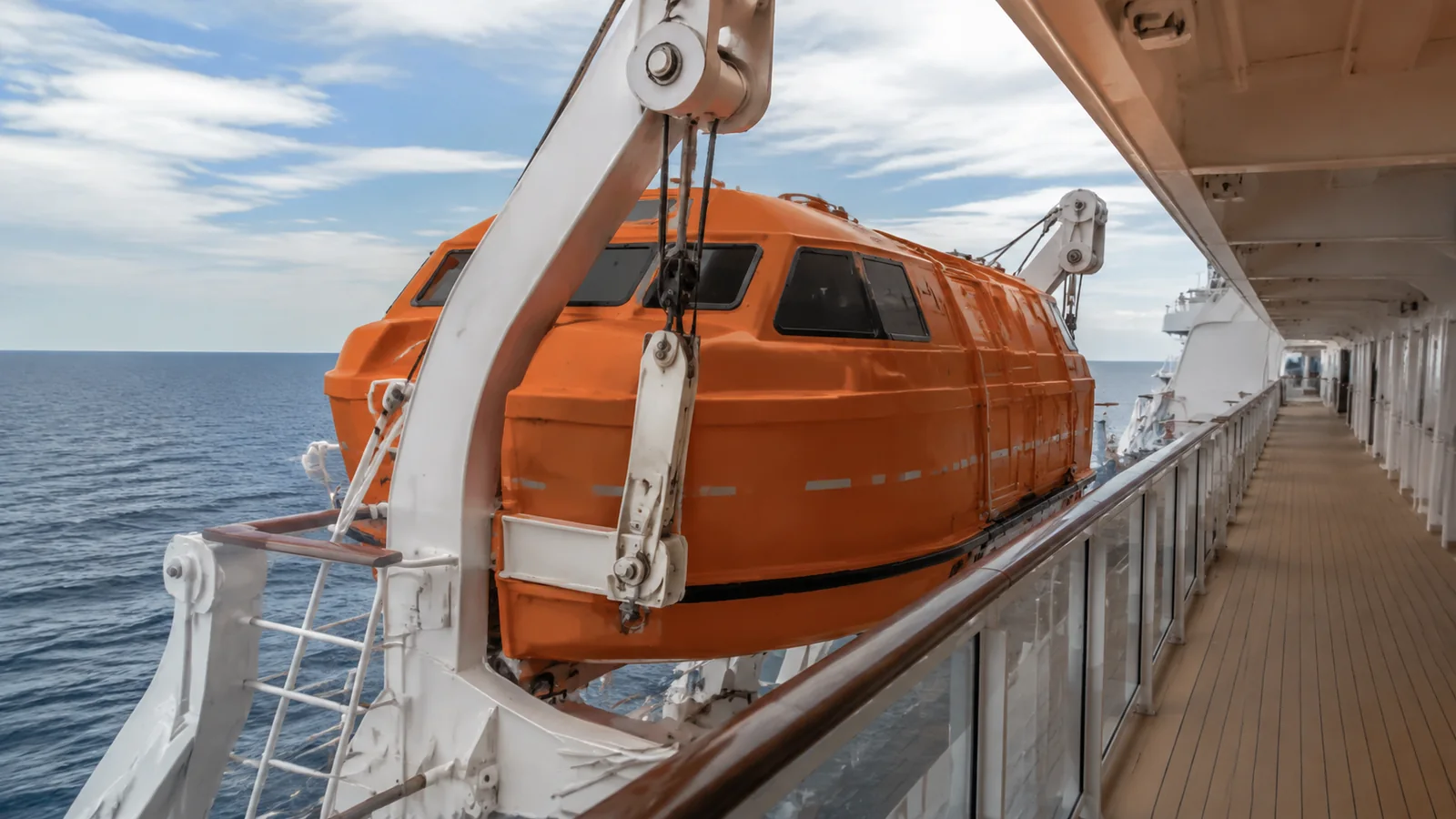
The modern safety system includes survival craft and life jackets, fire detection and suppression, subdivision and stability rules, navigation equipment, distress communication, emergency power, muster instructions, drills, crew training, and inspection. IMO’s SOLAS overview explains that Chapter III covers life-saving appliances such as lifeboats, rescue boats, and life jackets.
A passenger’s part is small but real. Complete the required safety briefing, locate the assigned muster station, count doors between the cabin and exits, keep needed medication accessible, and follow crew instructions rather than filming an emergency.
Modern does not mean risk-free
Fire, grounding, severe weather, medical emergencies, equipment failure, and human error have not vanished. What changed is the depth of prevention, detection, communication, response, evacuation planning, and international regulation around those hazards.
The IMO’s passenger-ship safety work also recognizes the practical challenge of safely evacuating thousands of people, including elderly and injured passengers. Ship size creates capabilities and complications at the same time.
Crew Work Is More Visible and More Specialized
Titanic’s 885-person crew handled navigation, engineering, communications, food, housekeeping, and passenger service across a rigid social structure. Modern mega-ships may employ well over 2,000 people across maritime operations, hotel management, entertainment, retail, food, medicine, security, youth programming, and technical departments.
That larger number does not necessarily mean a more personal experience. Luxury and small ships may offer higher crew-to-guest ratios, while a mega-ship relies on scale, systems, and carefully timed service.
Ticket Price Comparisons Usually Mislead
A 1912 ticket cannot be turned into a trustworthy modern cruise fare with one inflation calculator. Class, route purpose, included meals, cabin occupancy, voyage length, labor markets, taxation, and the entire travel economy changed.
A modern advertised fare can also omit taxes, gratuities, drinks, Wi-Fi, specialty dining, excursions, transfers, and travel insurance. Compare the trip’s full cost per person, not a Titanic ticket anecdote against a cruise line’s cheapest inside-cabin headline.
Which Ship Would Feel More Luxurious?
For a wealthy first-class passenger in 1912, Titanic offered craftsmanship, service, and social prestige at the edge of contemporary luxury. For most travelers today, a standard modern ship offers more private space, more reliable temperature control, broader food choice, easier communication, and better access to entertainment.
Luxury is also personal. Titanic’s grand staircase has emotional power no waterslide can reproduce, while a private balcony, flexible dinner, and bathroom shared with nobody outside your cabin may be the more meaningful indulgence.
The Fairest Bottom Line
Legend of the Seas is longer, more than five times Titanic’s enclosed volume by gross tonnage, and designed to carry far more guests and crew. Yet the headline is not that engineers simply enlarged Titanic until it became a modern cruise ship.
The purpose changed from crossing to vacation, cabins became private retreats, dining and entertainment became choice-driven, communications collapsed the feeling of distance, and maritime safety became layered and international. Titanic belongs in its 1912 ocean-liner context, while a modern cruise ship should be judged by how well its size, itinerary, service, and onboard style fit the traveler choosing it.