Is Cruise Specialty Dining Worth It? When I Would Pay
I would pay for cruise specialty dining when the restaurant offers a meal or setting I genuinely want, especially for a celebration. I would skip a package if using every credit means booking dinners I would not otherwise choose.
Start with the restaurants on your ship, then compare the final price with the included dining you already have.
Specialty dining is worth it when the meal fits
- Book one restaurant when a particular menu or occasion matters more than maximizing a discount.
- Consider a package when you can name enough eligible meals you want to use.
- Keep included dining when the upgrade mostly adds another reservation and a larger bill.
- Check existing fare, suite, or loyalty benefits before paying twice for the same meal.
- Confirm dietary accommodations, children’s pricing, and the desired reservation time before committing.
I would rather book one dinner I am excited about than three chosen to make a package feel worthwhile. A lower average price does not make unwanted meals a saving.
Read the menu before reading the sale banner
Look at the menu for the specific ship and restaurant, including what the cover charge includes. A steakhouse, sushi restaurant, tasting menu, and dinner show may all use different pricing models.
I would check whether the dishes I actually want are included or carry supplements. A package can cover admission or a standard meal while leaving premium items outside the allowance.
Also consider whether the menu suits the whole table. If one traveler has only a single acceptable dish, the restaurant may be a weak choice regardless of the discount.
Do not assume every ship has the same venues as the line’s newest vessel. A fleetwide dining advertisement can feature restaurants that are absent from your sailing.
If the menu available online is undated, use it to judge the style and confirm the current version before paying. Specific dishes and prices can change.
The included restaurants set your comparison
You have already paid for some dining through the cruise fare. A specialty restaurant needs to add enough value beyond those options to justify the extra expense.
That value might be a cuisine you enjoy, a smaller room, a particular service style, or an occasion worth planning around. It does not have to mean the included food is poor.
I would try the included choices unless a scarce reservation or important celebration makes advance booking sensible. A traveler happy with the main dining room may have no reason to upgrade several nights.
The same logic applies to a suite or restricted dining room included with your cabin. Paying for another restaurant may be enjoyable, but the opportunity cost includes skipping a benefit you already bought.
My cruise budget guide helps compare dining extras with other uses for the money. A meal should compete honestly with an excursion, better cabin location, or savings for another trip.
Do the package math with meals you will use
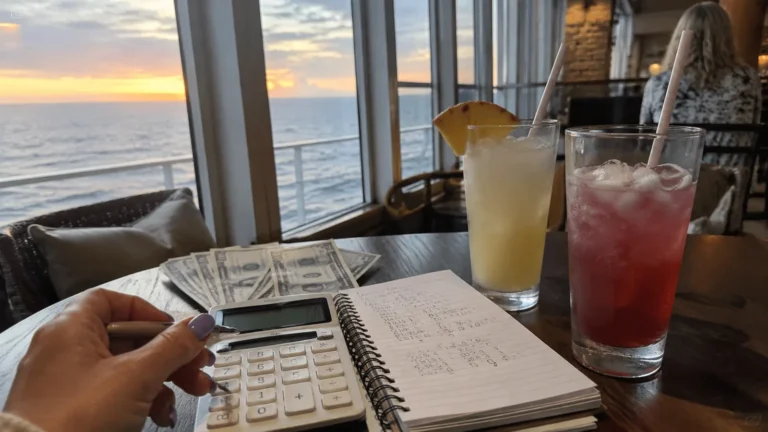
Start with the total package price after any mandatory charges. Divide it by the number of eligible meals you realistically expect to attend.
For a hypothetical example, a $180 package used for three dinners costs $60 per dinner. If you only want two of those dinners, the effective cost is $90 each.
Now compare that with the final standalone prices of those same restaurants. Do not compare the package with a premium venue you will never book simply because it produces a flattering savings number.
I would write down the dates as well as the restaurants. A package that looks sensible until you notice three late port days may not fit the cruise.
If a perk already includes two meals, compare an additional package only against the meals still needed. Avoid counting the same included dinner as both a benefit and a reason to buy more credits.
“Unlimited” still has conditions
A package name is not a substitute for its terms. Check eligible restaurants, meal periods, daily limits, spending allowances, supplements, and reservation availability.
Royal Caribbean’s dining-package page describes its Unlimited Dining Package and specialty lunches on sea days. That does not mean every experience, beverage, or menu supplement is included without restriction.
I would check the terms attached to the package in the planner for my sailing. A restaurant appearing on the ship does not automatically mean it is included in that product.
An à la carte allowance can be exhausted before the full meal is ordered. Confirm whether unused allowance carries over, whether it applies per visit or per day, and how extra spending is billed.
Do not plan on sharing a personal package or using one traveler’s credit for another unless the terms expressly allow it. Ask before the meal rather than disputing the charge afterward.
Gratuities and beverages can change the total
Check whether gratuities are already included in the displayed package price or added during purchase. The answer can differ between pre-cruise and onboard sales.
Royal Caribbean’s package gratuity FAQ currently distinguishes packages bought through My Royal Cruise from those purchased onboard. I would use the final checkout amount for comparisons and save the receipt.
Dining packages also may exclude beverages. A drink package, if you have one, follows its own rules and may not cover every wine, pairing, or specialty drink.
For a celebration dinner, decide whether you actually want the pairing or bottle before ordering. A menu price that looked manageable can grow substantially when drinks are added.
If gratuity is already on the check, any extra tip should be intentional. I would not calculate value using a mandatory charge twice or assume an optional tip is compulsory.
Norwegian benefits depend on the offer attached to your booking
Norwegian’s promotional terms explain the dining benefits and exclusions for its offers. Booking date, offer, cruise length, and guest eligibility can affect what is included.
I would verify each passenger’s dining entitlement in the reservation rather than assume an advertised number of meals applies to everyone. Promotional programs change, and old descriptions can remain in circulation.
Check which menu items count toward a meal and whether additional entrées or premium choices cost extra. The restaurant staff should be able to explain how your particular benefit applies before you order.
A dining perk included in a fare is still worth evaluating against any associated charge or higher fare. Compare the total booking alternatives instead of treating the word “included” as proof that the perk costs nothing.
A package is not a reservation
Buying a dining package and securing a specific table time are separate steps unless the purchase process explicitly combines them. Check when and how restaurant reservations open.
I would book an important anniversary or birthday meal directly if the desired time matters more than the package discount. A theoretical saving is not useful if the only available dinner begins when you wanted to be at a show.
If pre-cruise times look limited, ask about onboard availability, but do not assume unlisted tables are guaranteed to appear. Keep a second acceptable restaurant or time in mind.
Reserve for the correct number of people. If several cabins plan to dine together, coordinate the booking rather than hoping separate reservations can be combined at the door.
Check the confirmation for the date, time, venue, and party size. On a busy trip, booking the right restaurant for the wrong evening is an easy mistake.
Choose an evening with room to enjoy the meal
A specialty dinner is often better when it does not compete with a long excursion or a tightly scheduled performance. I would pick an evening with enough time to get ready and eat without watching the clock.
Sea days can work well, but popular times may be in demand. Port days can be quieter choices if you expect to be back early enough.
My Naples cruise port guide shows how different excursions produce very different return schedules. A nearby walk and a full-day trip should not lead to the same dinner reservation automatically.
If the meal includes a performance or a long tasting sequence, ask about duration before booking. Leaving halfway through can mean paying for an experience you do not finish.
I would also avoid scheduling a heavy dinner solely to use a final credit after an indulgent lunch. Your appetite is part of the value calculation.
Families should check age rules and children’s menus
A restaurant may welcome children, offer reduced pricing, use a separate kids’ menu, or restrict certain experiences by age. Verify the specific venue rather than applying one fleetwide assumption.
Ask whether a child ordering from the regular menu pays the adult charge. The price can depend on what is ordered as well as age.
My family cruise guide can help with the broader ship choice. For this meal, I would focus on whether the timing, menu, and length suit the children who will actually attend.
If adults plan to dine while children use a youth program, confirm that program’s hours and meal arrangements. A dining reservation does not establish that childcare is available for its entire duration.
I would skip a costly tasting menu if keeping the children comfortable will require constant negotiation. A restaurant the whole family enjoys is better value than an impressive name.
Dietary needs need a conversation before purchase
Check whether the restaurant can accommodate allergies or other necessary restrictions before booking a nonrefundable experience. A limited tasting menu may offer less flexibility than the main dining room.
Explain the specific requirement and ask how the kitchen handles it. Do not assume a dish is suitable because the menu name sounds simple.
I would reconfirm with the restaurant after boarding even if a pre-cruise note exists. If the available adaptation removes most of what made the meal appealing, choose another venue.
For accessibility, ask about the route, seating, and table arrangement when those details matter. My deck-plan guide can help you locate the restaurant, but staff should confirm practical access questions.
Cancellation and no-show fees are worth checking
A reservation may carry a penalty if canceled too late or missed. Royal Caribbean’s dining booking FAQ describes cancellation conditions and notes that the venue’s policy is displayed during booking.
Save that policy with the confirmation. I would set a reminder before the deadline if an excursion or other plan might change.
If illness or a ship-related schedule change affects dinner, contact the restaurant promptly and explain the situation. Do not assume a refund or exception, but give staff the opportunity to help.
Check that the reservation actually disappears or shows the correct revised time after making a change. A failed app action is not evidence that the booking was canceled.

What I would buy
I would begin with one specialty dinner that has a clear reason: a menu I want, a celebration, or an experience unavailable in the included venues. Then I would consider a package only if several other eligible meals are equally appealing and fit the itinerary.
The best purchase is the one you would still enjoy without calculating a discount at the table. If the package turns dinner into a quota, I would keep the money and use the included restaurants.