Cruise Boarding Documents: The Checklist I Would Use
Bring the original travel documents required for your citizenship, cruise line, and exact itinerary, plus your boarding information. For a U.S. citizen taking an international cruise, I would choose a valid passport book whenever possible because it also works for an unexpected international flight.
A boarding pass, passport photo, or completed online check-in does not replace the documents staff must inspect at the terminal.
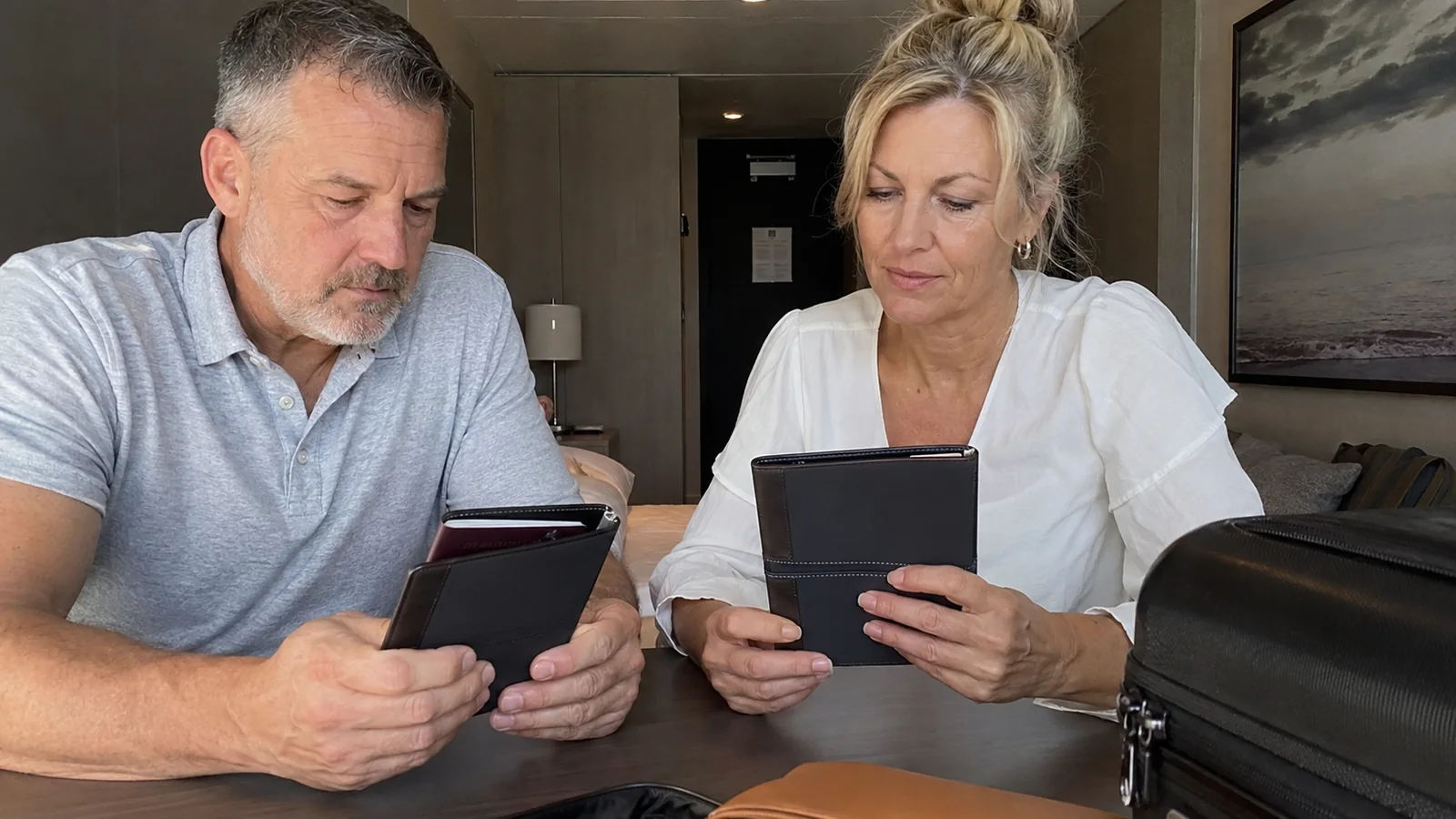
The document folder I would prepare
- Each traveler’s accepted passport or other specifically permitted citizenship and identification documents.
- Boarding passes or the line’s equivalent electronic cruise documents.
- Required visas, entry permissions, or other itinerary-specific approvals.
- Any required minor-travel authorization and evidence of parental or legal-guardian authority.
- Supporting name-change documents when the line requires them.
- Travel insurance details and emergency contact information, kept as practical backups.
The first five items can affect whether you are allowed to board. Insurance details and emergency contacts are useful to carry, but they are not substitutes for a missing passport or visa.
I would check requirements before booking nonrefundable travel, again before final payment, and during the final preparations. The terminal is too late to discover that a destination has a stricter rule than a general cruise FAQ.
Start with citizenship and the full itinerary
Write down the citizenship and residency status of every person traveling. People sharing one cabin may need different documents, even when they live at the same address.
Next, check the embarkation port, every destination, and the final disembarkation port. Include any countries visited during flights, pre-cruise travel, or a land extension.
A round trip from one U.S. port is different from a sailing between two different U.S. ports. A cruise departing abroad is a different document question again.
I would use the cruise line’s itinerary-specific requirements alongside the relevant government guidance. A rule about entering the United States does not, by itself, settle whether the cruise line or a foreign destination will accept a document.
Why I would choose a passport book
The State Department recommends a passport book for cruise passengers, including those on sailings where it is not required. Its practical advantage is flexibility if you need to fly home from another country.
A medical emergency, missed ship, or major itinerary disruption can turn a sea journey into an air journey. I would prefer to have the document for that possibility already with me.
Check both the expiration date and the validity required by the line and destinations. Some requirements extend beyond the end of the cruise, so “it has not expired yet” is not enough.
Do not apply a single six-month rule to every nationality and route without checking. Instead, identify the strictest applicable requirement for your trip and make sure the passport satisfies it.
Also check the condition of the book and any required blank pages. A damaged document or insufficient room for necessary entry stamps can create a problem even when the expiration date looks fine.

When a birth certificate may be accepted
U.S. Customs and Border Protection describes a limited document exception for certain U.S. citizens on closed-loop cruises, meaning cruises that begin and end at the same U.S. port. The Western Hemisphere Travel Initiative guidance is the place to check the government rule.
That exception is not a blanket promise that every round-trip cruise accepts a birth certificate. The line, destinations, traveler’s age, and required photo identification still need checking.
If you plan to use a birth certificate, read exactly which issuing authority and form the line accepts. A souvenir hospital certificate, baptism record, and government-issued birth certificate are different documents.
For example, Royal Caribbean’s birth-certificate guidance calls for a state-certified government-issued document and rejects ordinary photocopies. Other providers’ wording should be checked independently rather than copied from that example.
A certified copy issued by a vital-records office is also different from a copy you make on a home printer. If the terminology is unclear, ask the line to confirm the exact record you intend to bring.
A passport card is not a passport book
A U.S. passport card has a more limited travel use than a passport book. It cannot be used for international air travel.
I would not buy a passport card as the only document for a cruise involving international flights. Even where the card meets a sea-entry rule, the cruise line and itinerary still have to accept it.
Similarly, a REAL ID driver’s license is not a general replacement for a passport for international cruising. Its domestic identification purpose does not make it proof that you satisfy every cruise destination’s entry rules.
Enhanced driver’s licenses are a separate document type from ordinary REAL ID licenses. If you intend to rely on one, verify that exact document against the current line and itinerary requirements.

Visas and electronic permissions need their own check
Having a passport does not mean every country allows entry without another approval. Requirements can depend on citizenship, destination, duration, transit arrangements, and whether you are joining or leaving the cruise there.
Check the official government source for any visa or electronic travel authorization that applies. Read whether the approval is tied to a particular passport number.
If you renew a passport after receiving a travel authorization, verify whether the authorization remains valid or needs replacing. I would not assume a permission attached to the old number transfers automatically.
Do not assume staying onboard always removes a destination’s document requirements. The cruise line needs to confirm what is required for passengers on the itinerary, including those who do not plan to go ashore.
Print or save approval evidence in the form the government and line specify. An application receipt is not necessarily proof that an approval has been granted.
Children need individual document checks
Do not treat a child as covered by the accompanying adult’s passport. Check the accepted documents for that child’s age, citizenship, route, and cruise line.
A minor traveling with someone other than a parent or legal guardian may need the line’s authorization form. The required signatures, notarization, and supporting records can vary, so a generic letter from another family’s cruise may not be sufficient.
Disney’s passport and travel-documentation page includes instructions for adults traveling with minors who are not their children or legal wards. Use the current form for the line you actually booked.
If only one parent is traveling, check destination rules and any applicable custody arrangements well before departure. I would ask about the exact family situation instead of assuming that every cruise requires, or waives, a notarized letter.
Families comparing sailings can use my guide to cruises for kids for youth-program choices. Document requirements deserve a separate check before excitement about the ship takes over the planning.
Name changes and different family surnames
Compare the reservation, passport, visa, and other required identification together. If the names differ, contact the line or booking agent while there is still time to correct the reservation.
A marriage certificate, divorce decree, or court order may provide the link between names when the line accepts it. I would bring the required form of supporting record rather than assume a phone photo will be enough.
For children whose surname differs from the accompanying adult’s, ask what evidence of the relationship or guardianship is needed. Do not wait for a terminal employee to explain the requirement on departure morning.
Also check for a typing error rather than assuming every mismatch is a legal name-change issue. The fix may simply be correcting a reservation field through the proper channel.

Permanent residents and other nationalities
U.S. residency and U.S. citizenship are different statuses. A closed-loop exception discussed for U.S. citizens should not be applied to a permanent resident or another foreign national without checking.
Review the documents needed to leave, visit destinations, and reenter the country where you live. If a residency document is being renewed or extended, ask about the exact combination of original documents and official extension evidence.
I would resolve unusual immigration or reentry questions with the relevant authority and the cruise line before finalizing travel. A friend with a different passport may have sailed successfully under completely different rules.
Keep originals with you, backups elsewhere
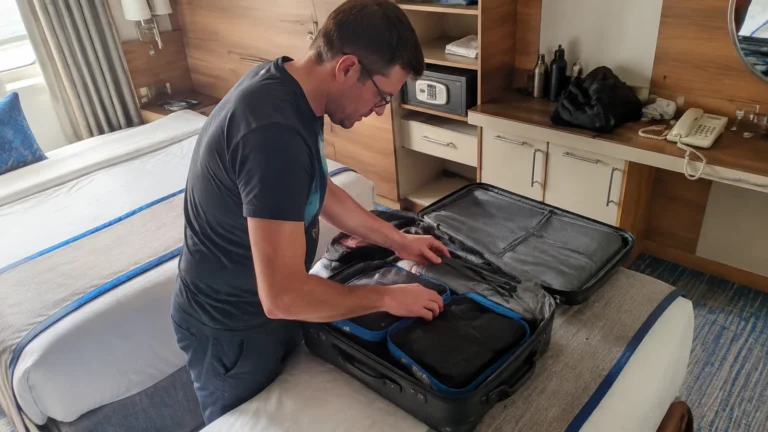
Put required documents in a secure, accessible part of the carry-on. Do not hand them to a porter inside a checked suitcase.
Keep offline copies separately for reference if something is lost. Those copies can help with replacement and emergency calls, but they do not guarantee boarding without the required original.
My cruise packing tips explain how I would separate irreplaceable items from ordinary luggage. The document pouch should remain easy to reach through hotel checkout, the drive, and terminal checks.
Avoid leaving the folder on a security tray or check-in counter after the last scan. Put each item back in the same place before moving on.
The hotel-room check before departure
- Match every traveler to the correct physical document.
- Confirm boarding passes show the right ship and date.
- Check that any required visa or authorization is approved.
- Pack required family or name-change records.
- Save the line’s travel-day contact details.
- Keep the folder separate from bags being checked.
The forgotten cruise items checklist is useful after this step. I would finish the document check first, because a missing charging cable and a missing passport have very different consequences.
Can terminal staff use the passport I uploaded?
Do not rely on that. Uploading details during check-in does not replace presenting the required physical document.
Is a passport enough by itself?
Not always. Visas, validity rules, family-travel records, or residency documents may also apply to your situation.
What if a required document is missing?
Contact the cruise line immediately and ask what accepted alternatives, if any, apply. I would not travel to the pier assuming staff can waive a government or carrier requirement.

The folder I would take
I would carry a valid passport book where possible, the boarding information, and every additional record required for the actual travelers and route. Verify the originals early, keep them with you, and use digital copies as backup rather than the boarding plan.