Connecting Cruise Cabins: Booking Rules and Family Tradeoffs
I would book connecting cruise cabins when two real sleeping spaces and two bathrooms will make the trip easier. Before paying, I would verify the interior connecting door, both room numbers, and the cruise line’s rules for assigning children to each room.
Two cabins next to each other are not necessarily connected, and a balcony divider is a separate question.
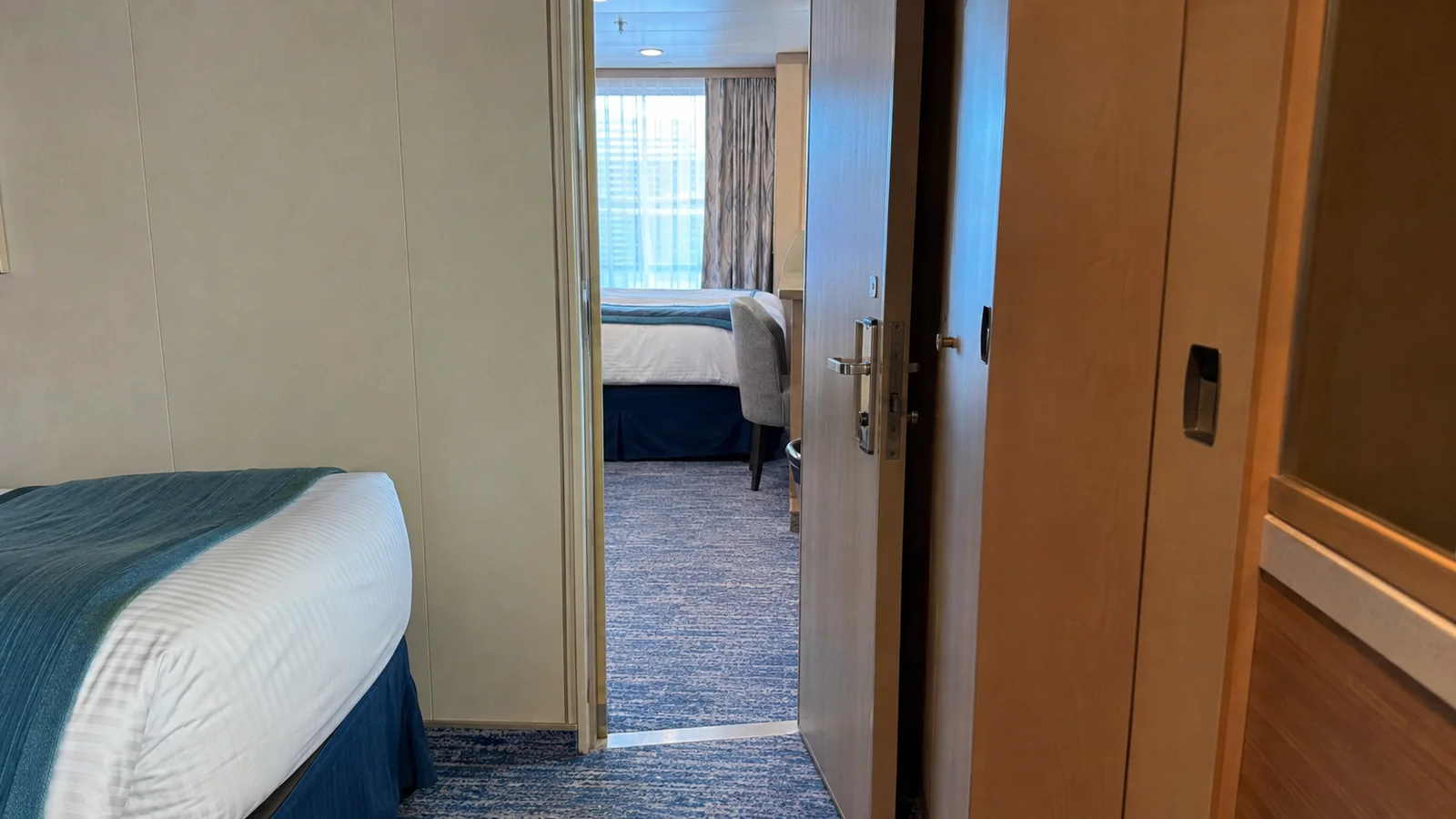
What I would confirm first
- Interior connection: The current deck plan shows a connecting door between the exact two rooms.
- Both cabins secured: The reservation identifies both room numbers, not just a request for nearby rooms.
- Guest assignments approved: Each person’s age and the adults’ relationship to any minors satisfy the line’s policy.
- Suitable sleeping arrangements: Everyone has an approved berth, with a usable path to the bathroom at night.
- Matching access where needed: A connection does not automatically extend suite lounges, restaurants, or other category benefits.
Connecting, adjoining, and adjacent mean different things
A connecting pair has an interior doorway that allows movement between rooms without entering the public hallway. Disney’s connecting-stateroom FAQ uses that clear physical definition.
Adjacent cabins are next to one another, but they may have only a solid wall between them. Adjoining is sometimes used loosely in conversation, so I would ask the seller to confirm an interior connecting door explicitly.
Two neighboring cabin numbers do not prove a connection. Numbering can skip, wrap around a corridor, or place the doors in different positions from what you imagine.
I would find the connecting symbol in the deck-plan legend and check both rooms. My guide to reading cruise floor plans helps turn the map into a practical room comparison.
If the room page and deck plan conflict, I would get written clarification before paying. I would not rely on an onboard request to create a connection that the ship does not physically have.
Why two rooms can beat one larger room
The most useful upgrade is often separation rather than total square footage. Two cabins can let one person sleep while another reads, showers, or gets ready with the lights on.
Two bathrooms can be especially helpful before an early excursion or dinner. I would compare that benefit with a suite that may have a spacious living area but only one bathroom.
For parents with young children, an interior connection can keep the rooms accessible without repeated hallway trips. I would still plan supervision carefully because each cabin normally retains its own corridor entrance.
For teenagers, the extra space can reduce the friction of sharing one compact room. The adults still need an arrangement that complies with the cruise line’s age policy and works for their family’s comfort level.
For two couples, I would ask whether the interior door is actually useful. Ordinary nearby cabins may provide enough convenience without narrowing the available inventory to a connecting pair.

Child-assignment rules are line-specific
I would not apply one cruise line’s minimum-age rule to another. The child’s age, the adult’s age, the departure region, and whether the adult is a parent or legal guardian can change the answer.
For example, Royal Caribbean’s international age policy describes a North American minimum-age rule with exceptions for children traveling with parents or legal guardians in specified nearby arrangements. It includes connecting, adjacent, and qualifying directly-across-the-hall rooms, rather than only interior connections.
That is an example of why I would read the current policy instead of relying on a forum memory. A different line may require a different room relationship or adult assignment.
I would give the reservation agent the exact ages and relationships of everyone traveling. For a child traveling with a friend’s family, I would also ask about required authorization documents rather than assume the parent’s exception applies.
An agent’s ability to enter names into a reservation is not the same as approval for every sleeping arrangement. I would confirm the intended arrangement honestly and keep the written answer with the booking.
If one adult is traveling with several children, this check should happen before choosing a ship. A connecting pair is useful only if the line will accept the actual party under its policy.
Book the pair together and protect both room numbers
Connecting rooms are a limited physical inventory, so I would search for the pair rather than book one attractive cabin and hope the other becomes available. A nearby room already occupied by another passenger cannot be made part of your reservation on request.
I would ask for both cabins to be held while the complete price is confirmed. If separate reservation numbers are required, I would have them linked for travel planning and clearly note the connecting requirement.
Linked reservations help staff see that you are traveling together, but the link itself does not guarantee room proximity. The two assigned room numbers are what establish the physical arrangement.
I would also discuss upgrades before accepting one. Moving only one cabin to a supposedly better category can break the connection and leave the family worse off.
For the same reason, I would be cautious with guarantee fares or upgrade bids. If the interior door is essential, I would keep control of the exact pair instead of accepting an unknown future assignment.
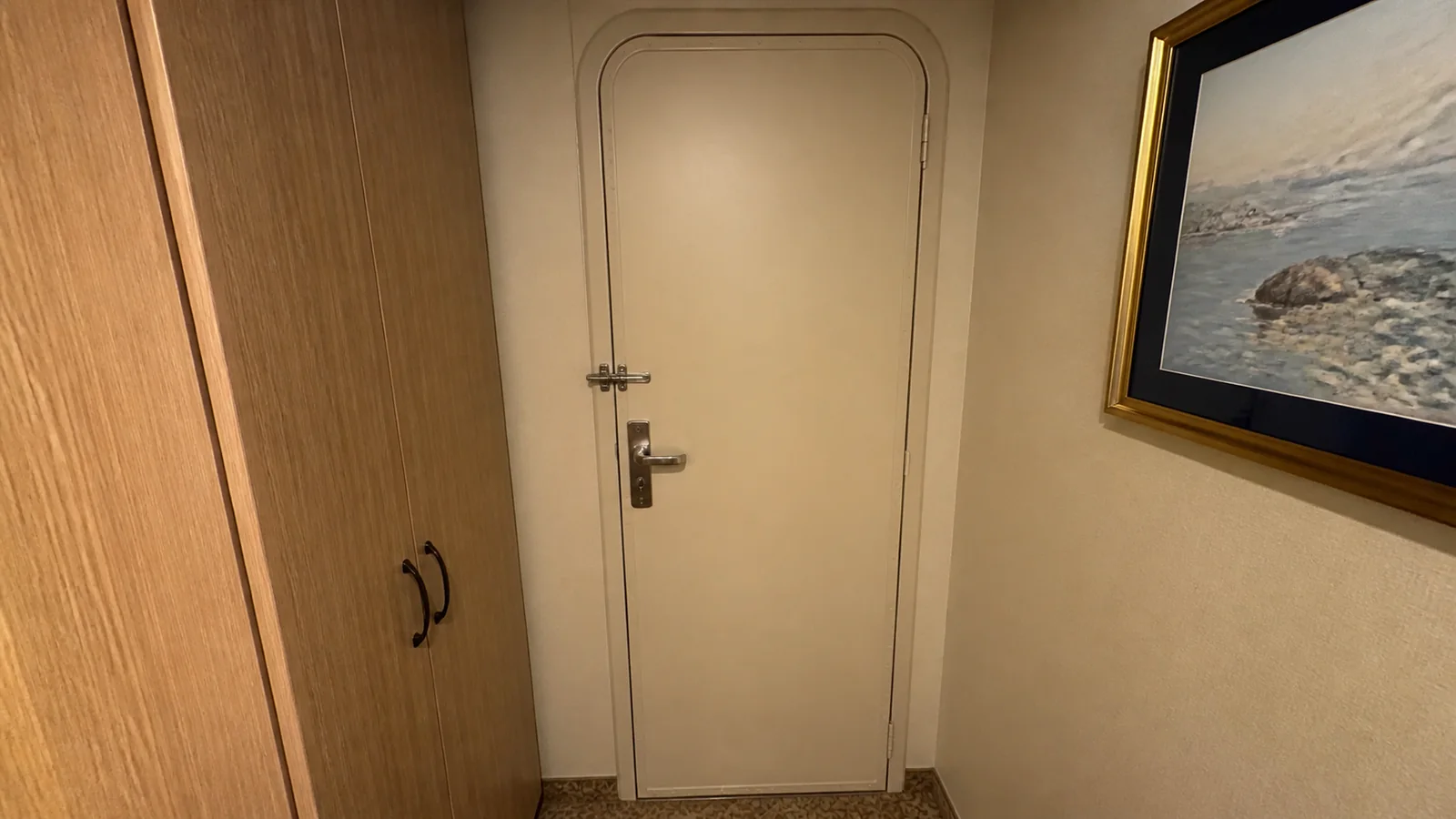
The real cost comparison includes both cabins
I would request a total for the whole party in each alternative: one room, a suite, and a connecting pair. Two cabins can change how many guests pay the first-and-second-passenger rate.
A promotion for discounted third and fourth passengers may make one larger room cheaper. A sale on two standard cabins can reverse the result, so there is no reliable rule that connecting rooms always save money.
I would compare deposits, cancellation dates, taxes, service charges, and package requirements. Two reservation numbers can create separate administrative steps even when the people are traveling together.
Suppose a connecting pair costs a hypothetical $600 more for seven nights than one family room. I would decide whether two bathrooms and separate sleeping spaces are worth roughly $86 per night for the whole group.
That can be money well spent with teenagers or different sleep schedules. I would be less inclined to pay it for two adults and a young child who already sleep comfortably in one room.
A connecting door can affect sound, but it is not automatically noisy
An interior doorway can provide another route for sound between cabins. How much you hear depends on the door assembly, seals, neighboring behavior, and the rest of the construction.
I would not call every connecting cabin a bad room. A quiet connecting neighbor can be less disruptive than a non-connecting room beneath a nightclub.
If I do not need the connection and two rooms are otherwise equal, I would take the non-connecting option. I would not pay a large premium or accept a worse ceiling merely to eliminate the door.
If I book both rooms, the sound issue becomes partly a household decision. I would agree on television volume, lights, and when the connecting doors should stay closed.
I would ask the steward to demonstrate the approved door arrangement. I would not wedge doors with improvised objects, alter locks, or block a route needed for safe movement.
Balcony dividers are a separate request
A pair of connecting balcony rooms may have an interior connection without an opening balcony divider. Conversely, neighboring balconies may have a divider staff can open even when the cabins do not connect indoors.
I would verify each feature separately for the specific ship and rooms. Operational decisions, hardware, and safety considerations can affect whether an outdoor divider is opened.
I would never base nighttime access to a child’s room on walking across the balcony. The interior connection should work independently of weather and outdoor access.
If a larger shared balcony is the main attraction, I would ask how much of the divider opens and whether it affects furniture placement. A narrow passage between two seating areas is different from one uninterrupted terrace.
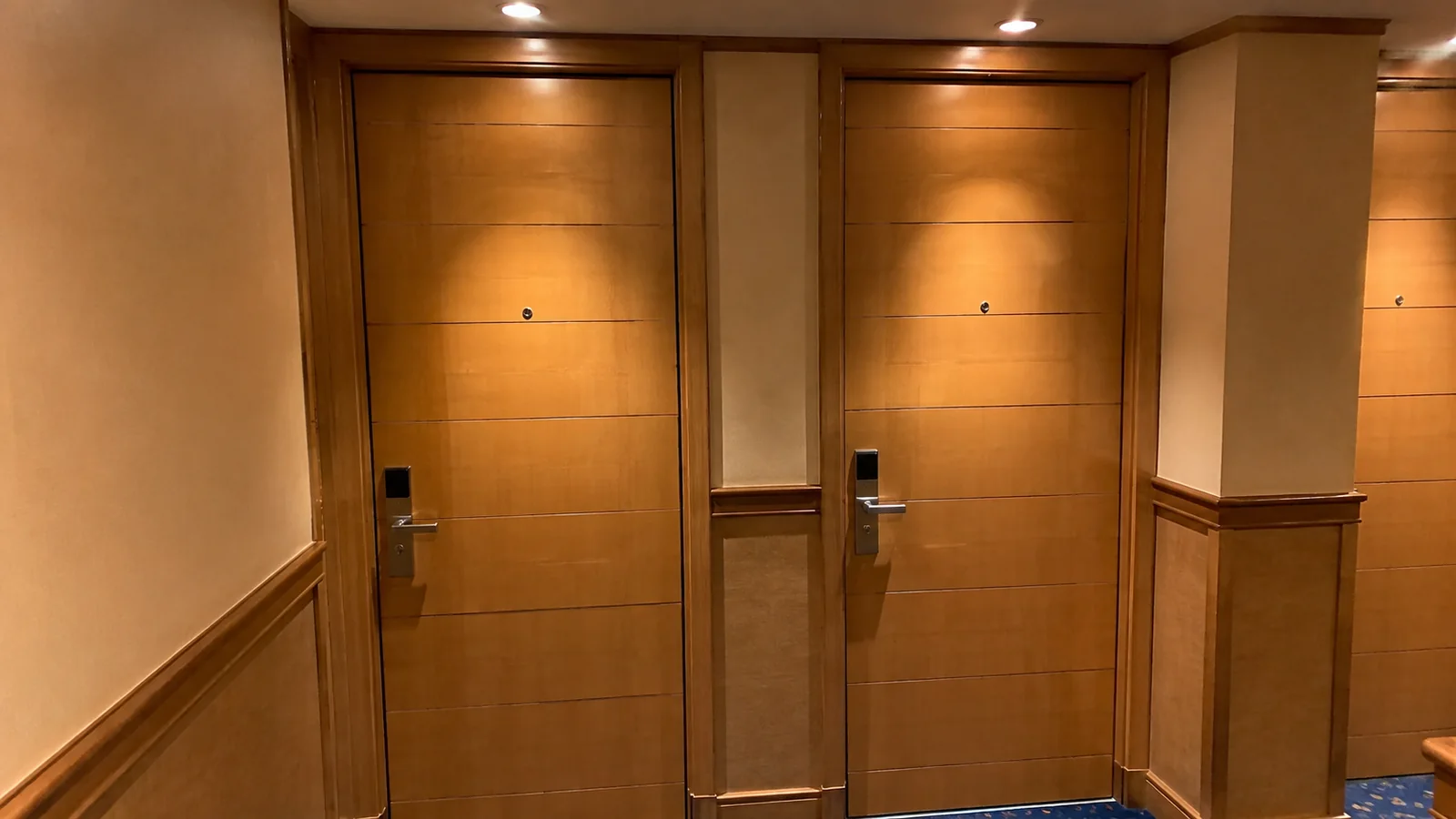
Suite access does not pass through the door
A standard cabin connected to a suite does not necessarily receive the suite’s benefits. The people assigned to each category may have different restaurant, lounge, sundeck, or boarding access.
Celebrity’s Retreat FAQ explicitly says that guests in a stateroom adjoining a suite do not gain Retreat access. I would settle that before planning every family meal in a suite-only restaurant.
I would also verify drink packages, internet allowances, and children’s benefits by guest and reservation. Physical proximity does not combine two bookings into one shared package entitlement.
For a multigenerational group, matching access may matter more than matching room size. I would rather choose categories that allow the intended time together than discover that the premium purchase divides the group.
Check both rooms for location and practical fit
A connecting pair can straddle different room layouts, so I would inspect each cabin separately. One may have a different berth arrangement, balcony shape, or obstruction.
I would check above and below both rooms for entertainment, pool furniture, restaurants, and service spaces. The cruise cabins-to-avoid guide provides a useful location checklist.
If someone is motion-sensitive, I would favor a lower central pair when possible. I would then use the seasickness planning guide to prepare for the trip rather than expect two rooms to solve movement.
For a wheelchair user, an interior connecting door may not provide the same clearance as an accessible cabin entrance. I would confirm the door width and route with the line’s accessibility team before relying on it.
For families still choosing the ship, my family cruise guide can help narrow the options. A well-priced connecting pair is less useful if the ship’s activities do not suit the children’s ages.
My final booking checklist
- Confirm both exact room numbers and the interior connection symbol.
- Get the real ages, relationships, and sleeping arrangements approved.
- Compare the whole-party price with a suite and a single family room.
- Inspect each room’s beds, bathroom, ceiling, view, and corridor entrance.
- Confirm any balcony-divider request separately.
- Verify benefits for every guest and ask that upgrades preserve the pair.
Quick answers
Can I request connecting rooms after boarding?
You can ask whether another arrangement is available, but I would not depend on it. The ship may be full, and only particular rooms physically connect.
Do both rooms have to be the same category?
Not necessarily, because some ships connect different room types. I would check both the physical connection and the separate benefits before booking an unequal pair.
Is a room across the hall equivalent?
It may satisfy a particular age policy, but it does not provide interior access. I would choose it only if hallway trips and the supervision arrangement work for the family.
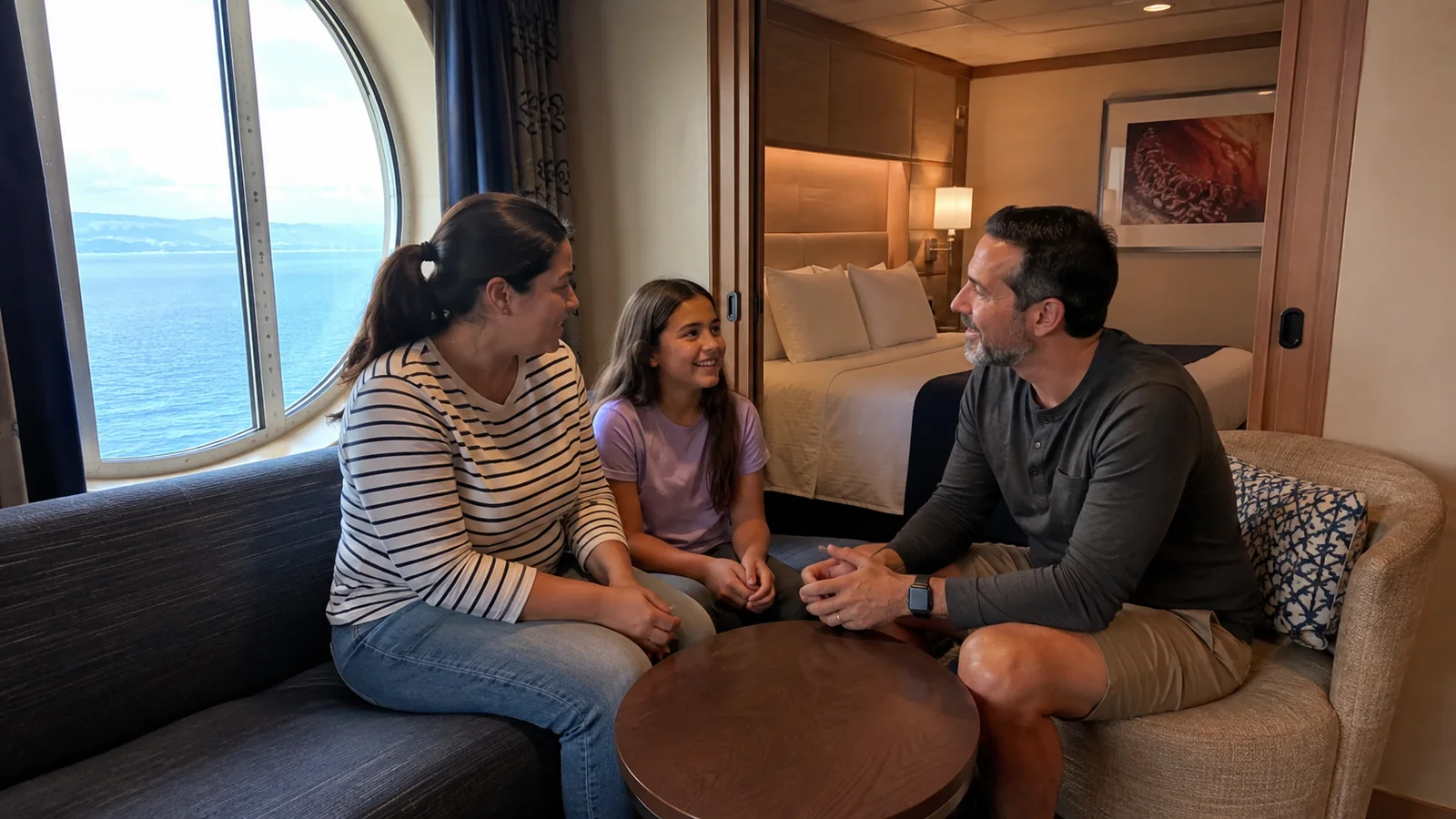
What I would book
I would choose a confirmed connecting pair when two bathrooms and separate sleep spaces justify the cost. I would protect those exact room numbers, get the guest assignments approved, and treat balcony access and premium perks as separate things to verify.