Jersey, Channel Islands: A Tide-Smart Trip Planning Guide
Jersey packs medieval castles, broad beaches, occupation history, cliff paths, and a lively little capital into an island about 9 miles by 5. The scale is friendly, but the tides, narrow roads, seasonal transport, and changing entry rules can undo a casual itinerary.
This guide keeps the romance and fixes the logistics.
Start With the Jersey Most Visitors Misunderstand
Jersey is the largest of the Channel Islands and a self-governing Crown Dependency. It is not part of the United Kingdom, France, or the European Union, although its links with Britain shape currency, transport, immigration, and daily life.
St. Helier is the capital and the most practical base for buses, restaurants, museums, shopping, and arrivals. The island’s prettier resort atmosphere appears in places such as St. Aubin, Gorey, and the west-coast bays, each with a tradeoff in evening transport or distance from the main bus hub.
Three nights are enough for a castle, a coast day, and St. Helier. Four or five nights are better if walking, beaches, Jersey Zoo, occupation history, or a neighboring-island excursion is central to the trip.

Entry Rules to Check
Jersey is part of the Common Travel Area with the United Kingdom, Ireland, Guernsey, and the Isle of Man. Travel-document requirements still depend on nationality, origin, immigration status, and the airline or ferry operator, so “no passport needed” is not a safe blanket promise.
The Government of Jersey entry page says travelers arriving from the UK, Guernsey, or Isle of Man do not routinely pass immigration controls but must carry accepted photo identification. Visitors arriving from outside the Common Travel Area generally need a valid passport and may need a visa or other permission.
From April 23, 2026, many non-visa nationals may need an Electronic Travel Authorization, including visitors from the United States, Canada, Australia, and Europe. Jersey follows the UK ETA system, so check the official nationality tool and apply through the linked government channel, not a look-alike commercial site.
Every traveler who needs an ETA requires one, including children. A valid UK, Guernsey, or Isle of Man ETA covers Jersey, which is useful when the island is part of a wider British itinerary.
When to Visit Jersey
May and June: best for walking
Late spring and early summer bring long daylight, coastal flowers, and generally comfortable walking temperatures. Sea water may still feel cold, and wind or rain can turn an exposed cliff route into a different day than the forecast suggested.
July and August: best for beach time
High summer gives the best odds for swimming, outdoor dining, and a full visitor schedule. It also brings higher room rates, busy roads, and fuller buses to headline beaches and attractions.
September and October: best balance
Early fall can combine milder sea temperatures with fewer peak-season families. Shorter opening hours and a less frequent transport schedule may begin later in the season, so confirm every must-do site.
Winter: for a quiet town break
Winter suits St. Helier dining, stormy coastal views, museums, and short walks between weather systems. It is not a substitute for a summer island holiday because daylight, ferry reliability, attraction hours, and beach appeal all contract.
Jersey’s Tides Control the Day
Jersey has a dramatic tidal range that can expose enormous sweeps of sand, reefs, and causeways at low water. The same water returns quickly, cutting off rocks, offshore forts, and intertidal walkers who planned by appearance instead of time.
Check the official Jersey Met tide table for St. Helier every day, then use attraction instructions or a qualified local guide for the exact site. Never infer a safe return time from the previous day, another beach, or people already out on the sand.
Elizabeth Castle, Seymour Tower walks, La Corbière, St. Aubin’s Fort, and rock-pooling plans are especially tide-sensitive. A guided intertidal walk is the right place for expert timing, not an unnecessary upgrade.
Best Things to Do in Jersey
1. Explore Mont Orgueil Castle and Gorey
Mont Orgueil rises above Gorey Harbor on the east coast, with stairways, towers, rooms, artwork, and broad views toward France. It is Jersey’s best all-around castle because the setting, interior, and village work as one half-day.
Jersey Heritage lists daily 2026 operation, with shorter hours from late October and last entry one hour before closing. The official castle page should still be checked for event closures and accessibility details, since a medieval fortress involves steep, uneven circulation.
Take a direct bus from St. Helier, allow at least two hours inside, then eat or walk around Gorey rather than rushing onward. Castle lovers comparing very different European sites may enjoy this practical Austria landmarks route, where access questions matter just as much as scenery.

2. Visit Elizabeth Castle
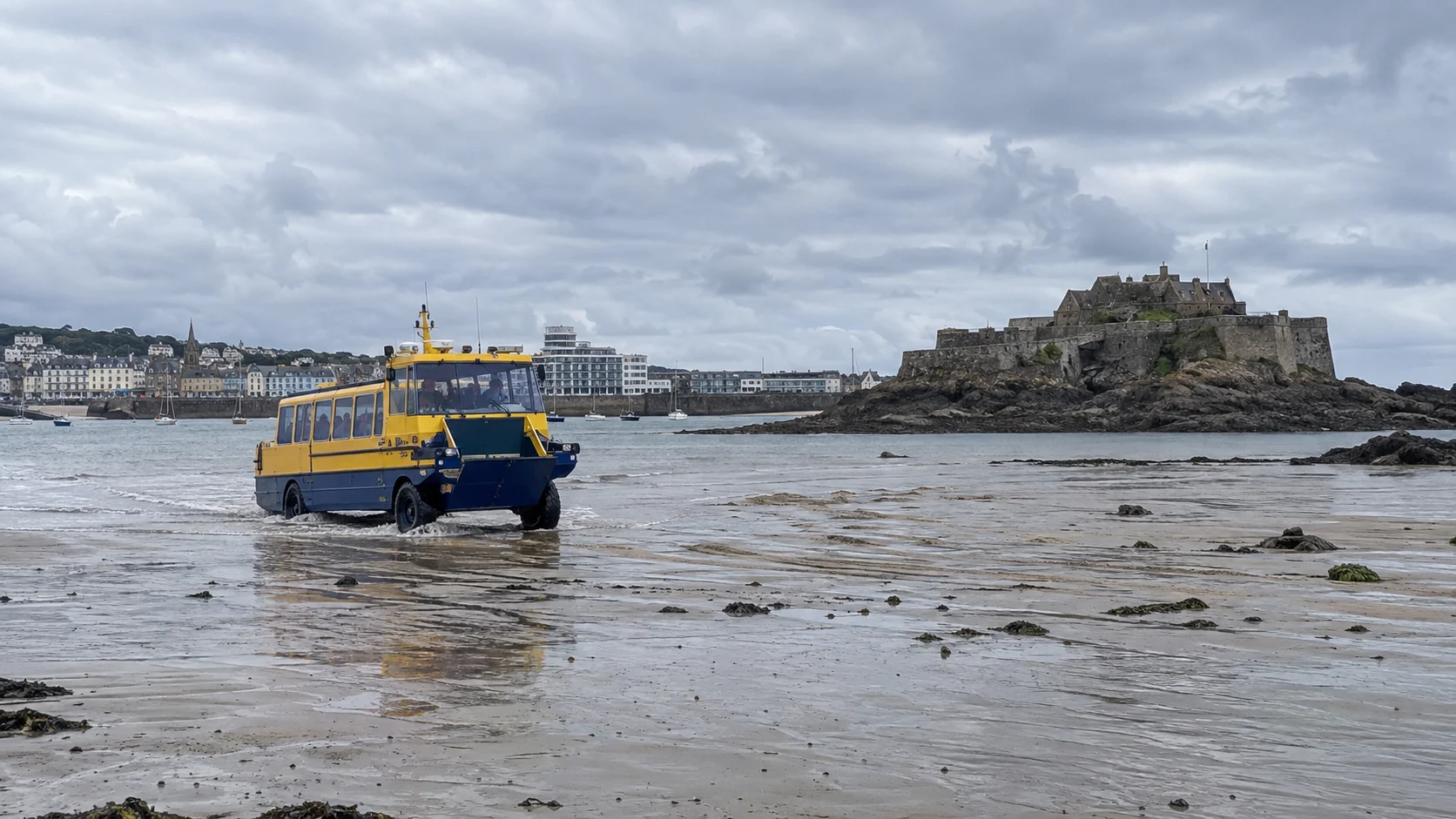
Elizabeth Castle sits offshore from St. Helier and interprets roughly four centuries of defensive history. Depending on the tide and current operation, visitors reach it by causeway or amphibious castle ferry.
Do not build a tight airport or ship-return day around a casual guess at access. Check tide, ferry, opening, and return instructions directly with Jersey Heritage, then reserve enough time for multiple fortified areas rather than only the entrance courtyard.
Between March 23 and November 1, 2026, Jersey Heritage scheduled guided castle tours subject to change. That is a useful bonus, but not something to promise without confirming the exact date.

3. Understand St. Helier
St. Helier is not merely a transport base. The Central Market, Beresford Market, Liberation Square, marina, Royal Square, waterfront, and compact shopping streets make a rewarding half-day on foot.
Jersey Museum, Art Gallery and Victorian House introduces island archaeology, language, social history, and identity. Pair it with the Maritime Museum and Occupation Tapestry if rain makes the coast less appealing.

4. Give the occupation history real time
German forces occupied Jersey from 1940 to 1945, leaving fortifications, tunnels, and difficult human histories across the island. The Jersey War Tunnels use an underground hospital complex to interpret occupation, resistance, forced labor, shortages, and liberation.
This is not a light attraction to squeeze between a zoo and beach. Allow time to read, and balance military structures with accounts of island residents and the laborers brought to the Channel Islands.

5. Visit La Hougue Bie
La Hougue Bie contains a Neolithic passage grave beneath a mound, later chapels, archaeological interpretation, and a German command bunker. It adds thousands of years to a trip that can otherwise lean too heavily on castles and World War II.
The passage chamber, slopes, and individual buildings have different access considerations. Check current opening and mobility information before assuming the whole site is step-free.
6. Choose the right beach
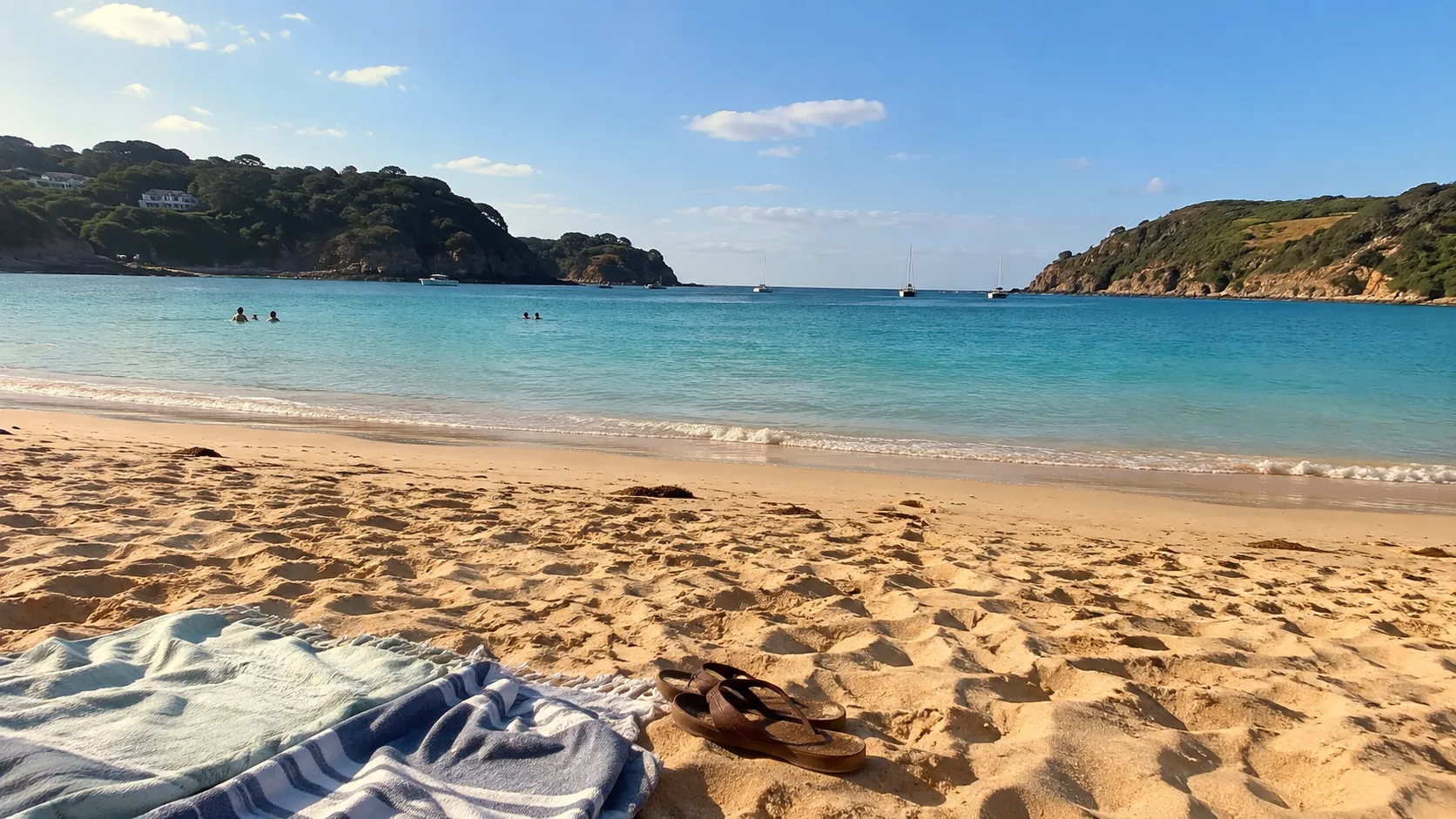
St. Brelade’s Bay is the easiest all-around beach choice, with a broad sandy curve, food nearby, bus access, and a sheltered resort feel. Its convenience also makes it busy in fine summer weather.
St. Ouen’s Bay is the west-coast choice for scale, Atlantic surf, sunsets, and a wilder horizon. Swimming and surfing conditions change quickly, so use lifeguarded areas when operating and follow local warnings.
Grève de Lecq provides a smaller north-coast bay framed by cliffs. It feels more intimate, but bus frequency, tide, and seasonal facilities deserve a check before making it the day’s anchor.
Plémont is dramatic at low tide, with cliffs and caves, yet access involves steps and the usable beach shrinks substantially with rising water. It is a tide-led outing, not an all-day setup you can leave unattended.
For a broader comparison of what actually makes an island trip beautiful, this island guide organized by travel style is more useful than a single scenic ranking.
7. Walk the north coast
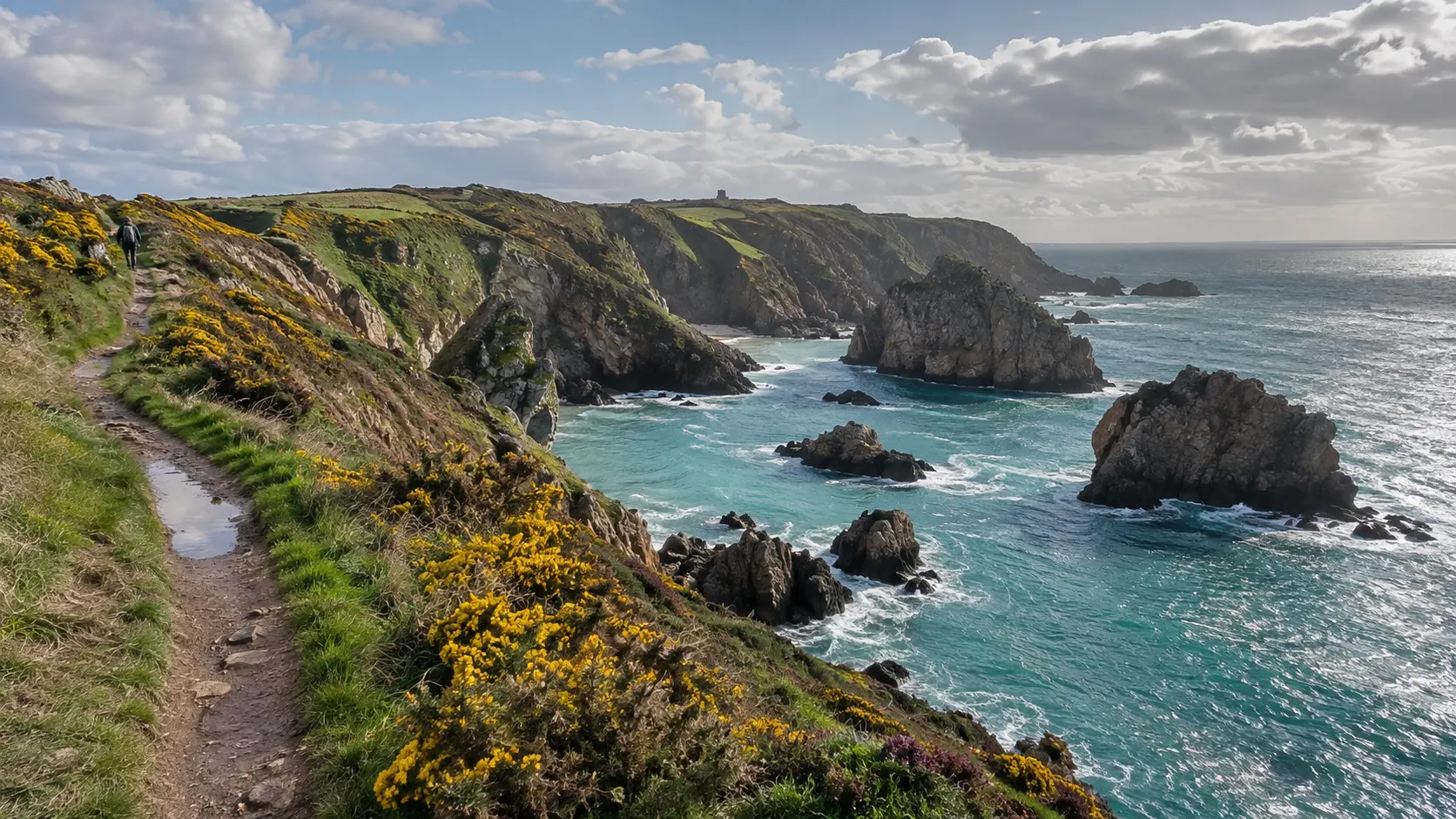
Jersey’s north coast offers steep cliffs, small bays, headlands, and sections that feel surprisingly remote for such a compact island. Short point-to-point walks are often more satisfying than attempting an exhausting coast-wide march.
Use a current route map, check bus options at both ends, and expect hills, mud, wind, and exposed edges. The terrain is a proper coastal hike, and this beautiful hikes collection offers a helpful benchmark for matching ambition to preparation.

8. See La Corbière at the right time
La Corbière lighthouse stands off Jersey’s southwest corner, connected to land by a causeway at lower tide. The viewpoint from shore is worthwhile at any safe water level, while walking the causeway requires strict attention to warnings and return timing.
Sunset can be beautiful, but the last bus and fading light matter. Do not step onto wet rocks for a cleaner photograph, and never continue past warning signals.

9. Make time for Jersey Zoo
Jersey Zoo, founded by conservationist Gerald Durrell, focuses on endangered species and conservation work rather than amusement rides. It deserves at least half a day, especially for families and travelers interested in the institution’s broader mission.
The zoo sits north of St. Helier and is served by bus, but seasonal frequency affects the plan. Check keeper talks, closing time, and the final practical return before settling into a long visit.
10. Slow down in St. Aubin
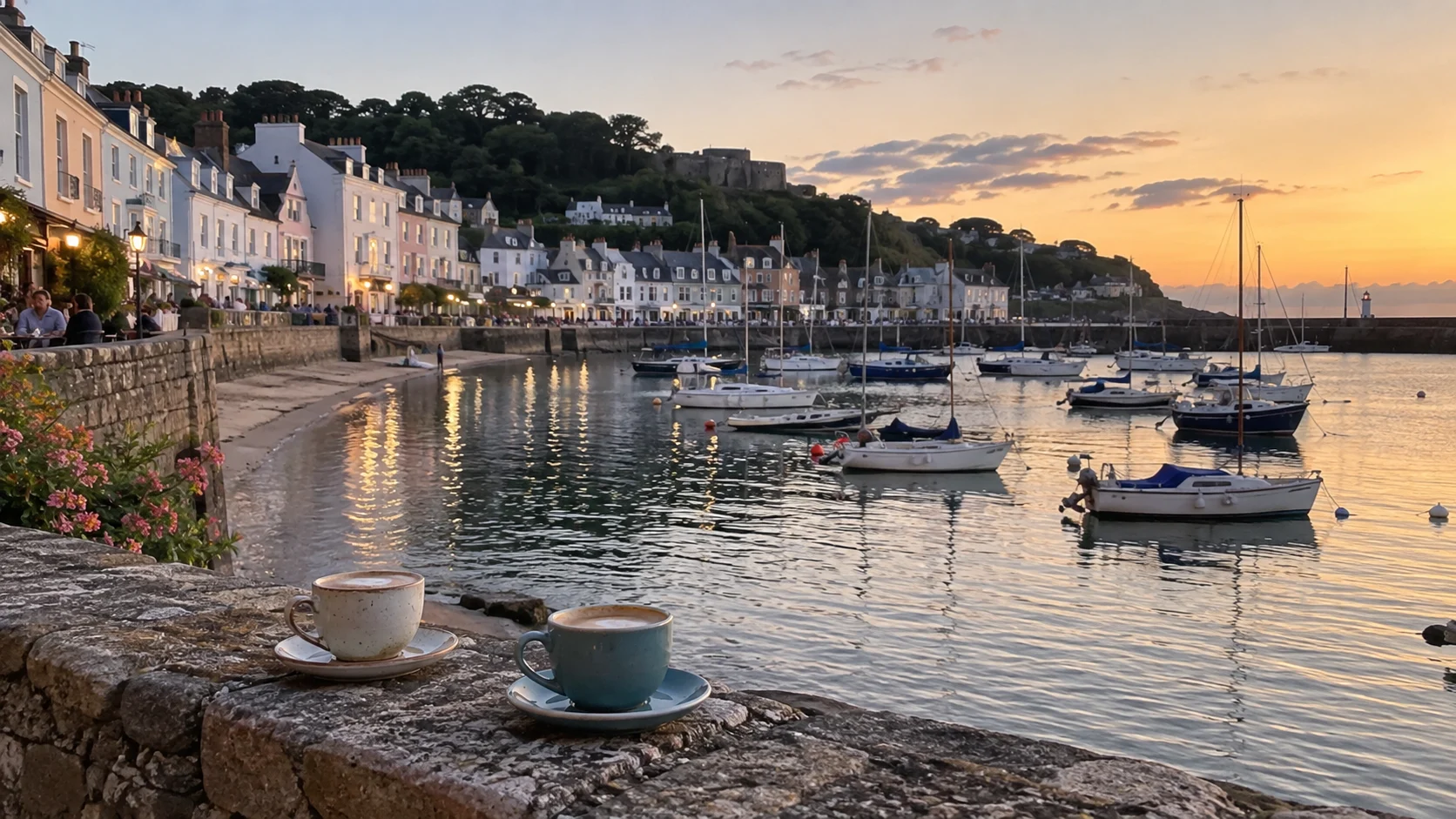
St. Aubin curves around a harbor west of St. Helier, with restaurants, historic buildings, and a pleasant waterfront. It is a strong dinner base for travelers who prefer village atmosphere to the capital’s convenience.
A promenade links the bay toward St. Helier, creating an easy cycling or walking corridor. The offshore fort causeway is tidal, so admire it from town unless official conditions clearly support the crossing.
Can You Explore Jersey Without a Car?
Yes, and many short-stay visitors should. LibertyBus routes radiate from Liberation Station in St. Helier to the airport, Gorey, beaches, Jersey Zoo, and major visitor areas.
Use the official LibertyBus journey planner for the current seasonal timetable, diversions, and visitor passes. A bus map shows possibility, while the departure time and final return determine whether two distant stops belong in one day.
A rental car creates flexibility for remote bays and short walks, but Jersey drives on the left and has narrow lanes, limited parking, cyclists, and distinctive local road rules. Rent the smallest practical vehicle and learn signage before leaving the lot.
Cycling works well for confident riders who accept hills and traffic pinch points. Electric assistance helps with climbs, but it does not solve narrow-road awareness or secure parking.
Three-Day Jersey Itinerary
Day one: St. Helier and Elizabeth Castle
Walk the markets, museum quarter, Liberation Square, and waterfront, then visit Elizabeth Castle when tide and operation align. Keep the evening in St. Helier so a delayed return does not trigger another transport problem.

Day two: Gorey and the east
Take the bus to Mont Orgueil, spend time in Gorey, and add La Hougue Bie only if its hours and the bus connection leave a comfortable margin. One castle explored well is better than two entry gates photographed at speed.

Day three: choose coast or conservation
Pick St. Ouen’s Bay and La Corbière for scenery, a north-coast walk for active travel, or Jersey Zoo for families and wildlife interests. Do not combine all three unless a rushed bus-and-taxi circuit is genuinely your idea of a holiday.
Jersey on a Cruise Day
Cruise arrival arrangements can involve tendering and are vulnerable to wind and sea conditions. Follow the ship’s named landing point and all-aboard time before assuming a normal St. Helier hotel itinerary applies.
A resilient port day stays with St. Helier and Elizabeth Castle, or commits to one booked island loop. Passengers considering ships that reach compact and tender-sensitive ports can compare the tradeoffs in this small-ship cruising overview.
Mont Orgueil by bus is possible on a generous call, but protect the return with an earlier service than strictly necessary. A neighboring-island ferry is not a sensible cruise-day excursion because one marine delay can break the entire plan.
Practical Costs and Booking Order
Jersey uses pound sterling alongside local Jersey notes and coins, and card payment is common. Local currency may be inconvenient to exchange elsewhere, so spend or convert leftover Jersey cash before leaving rather than assuming every UK business will accept it.
Book flights or ferries first, then lodging, car rental if needed, and any limited boat or guided intertidal experience. Castle admissions, bus passes, and ordinary museums can usually follow, although special events change that order.
A Jersey Heritage Pass can be good value for travelers visiting several included sites within seven days. Compare the current inclusion list and remember that the Elizabeth Castle ferry is handled separately, even when a pass provides a discount.
The Bottom Line
Jersey is best for travelers who want history, beaches, coastal walking, and good food without a large-island road trip. Base in St. Helier for transport efficiency or St. Aubin for evening atmosphere, then give each day one geographic focus.
Check entry permission, tide, opening hours, and the last bus in that order. Once those four pieces are secure, this compact island becomes wonderfully easy to enjoy.