Can You Bring Water or Soda on a Cruise? Line Rules
Whether you can bring water or soda on a cruise depends on the line, container, quantity, and reason for carrying it. Carnival and Royal Caribbean allow limited nonalcoholic drinks under different rules, while Norwegian generally prohibits outside beverages apart from specified exceptions.
I would check the policy before shopping, then carry only an amount that is worth managing through the first afternoon.
The biggest differences to check first
| Cruise line | Ordinary nonalcoholic allowance at embarkation | What I would watch |
|---|---|---|
| Carnival, U.S. departures | Up to 12 sealed cans or cartons, each 12 ounces or less, per person, in carry-on luggage. | Ordinary bottled water and soda in plastic or glass bottles do not fit this allowance. |
| Royal Caribbean | Up to 12 containers of 17 ounces or less per stateroom, carried on at boarding. | The allowance is per cabin, and includes cans, bottles, or cartons. |
| Norwegian | Ordinary outside water, soda, and juice are generally prohibited in both checked and carry-on bags. | Specific medical-device and infant-formula water exceptions apply. |
These are different rules, not three versions of a standard 12-pack allowance. I would recheck the current line guidance and any sailing-specific notice before packing.
Carnival: cans and cartons, not ordinary bottles
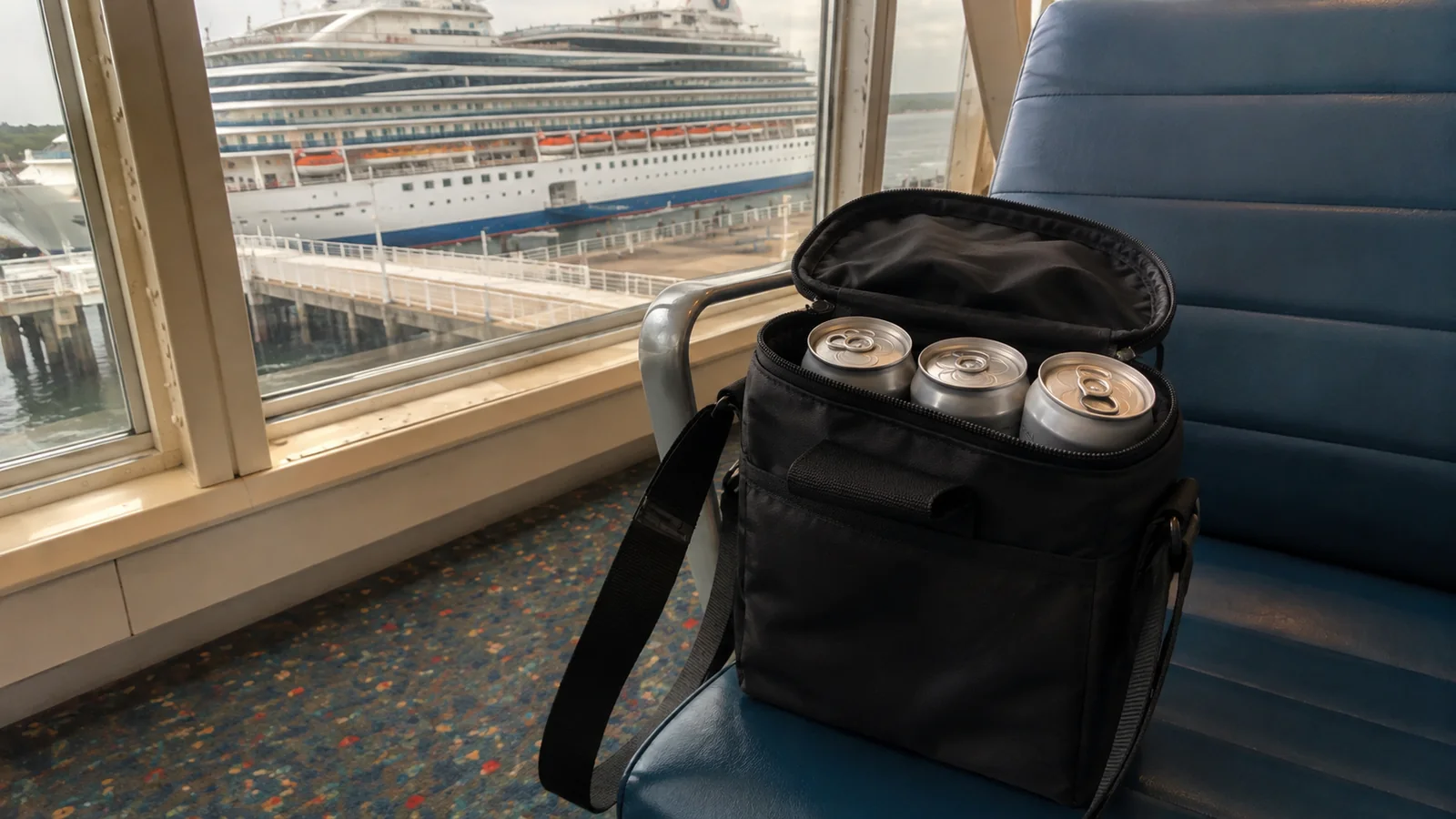
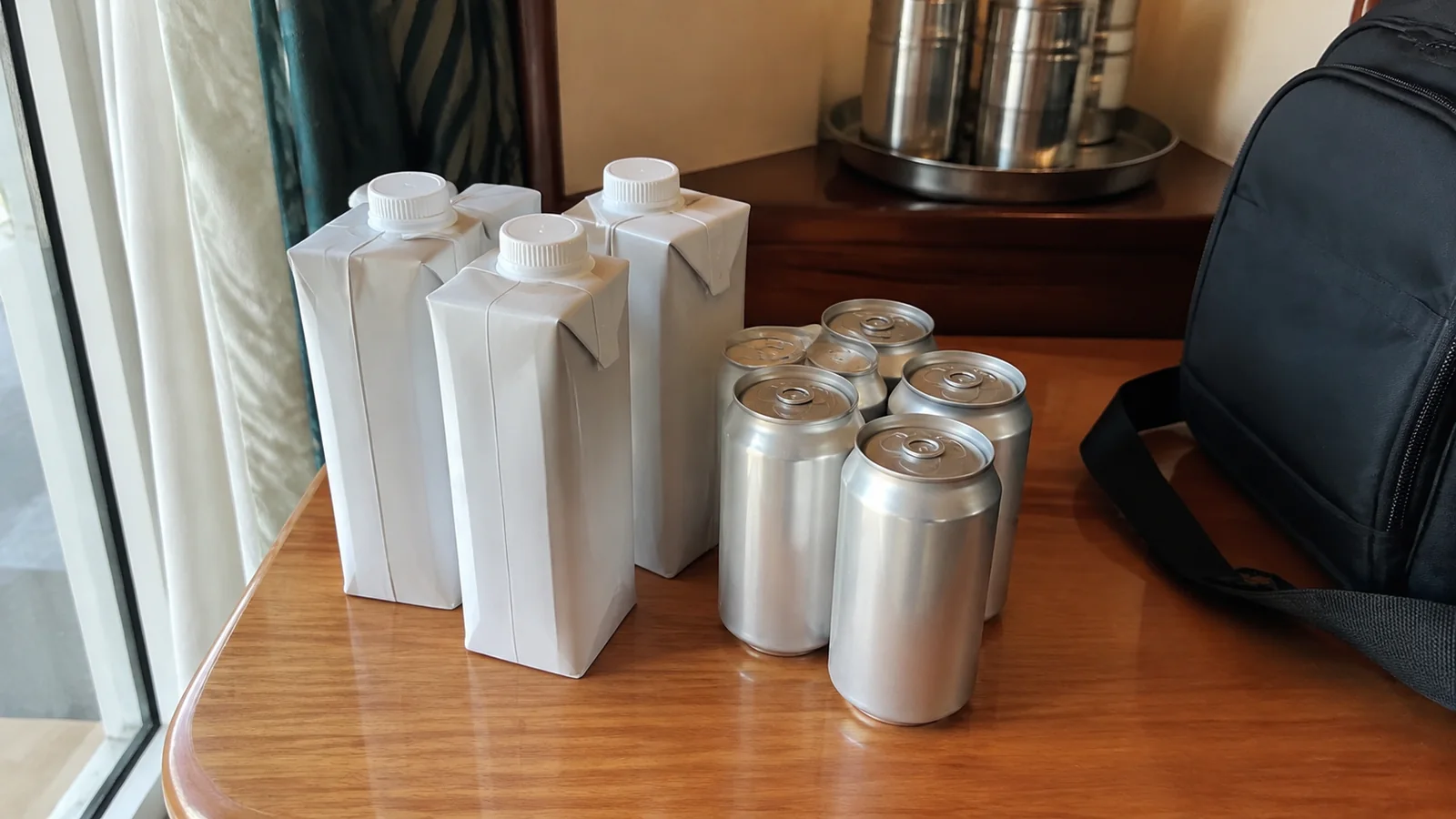
Carnival’s liquor and beverage policy sets the ordinary nonalcoholic allowance for U.S. departures at 12 sealed, unopened cans or cartons of 12 ounces or less per person. The drinks must be in carry-on luggage.
A 12-pack of 12-ounce soda cans fits the quantity and container description. A 12-pack of ordinary plastic water bottles does not, even if the total volume is similar.
Check the size printed on each container. An oversized energy drink can is not brought within the rule merely because you carry fewer than 12.
I would buy the permitted packaging rather than argue that the same drink in a bottle should count. Container type is part of the policy, not a suggestion.
Medical distilled water has its own arrangement, discussed below. Do not apply that exception to an ordinary bottled-water purchase for the whole cabin.
Royal Caribbean: the limit is per stateroom
Royal Caribbean’s food and beverage policy permits up to 12 standard nonalcoholic containers of 17 ounces or less per stateroom as carry-on items on boarding day. Cans, bottles, and cartons are included.
For two adults sharing a cabin, that is one cabin allowance rather than 12 containers for each person. I would count the whole room’s drinks together before leaving the hotel.
A mixed selection can still use the same total allowance. For example, six suitable water bottles and six suitable soda cans total 12 containers.
Do not replace the individual size limit with a total-volume calculation. A large jug is not automatically allowed because its total ounces are less than several smaller bottles combined.
Milk and distilled water for infant, medical, or dietary use are separately addressed in the policy. If you need an unusual quantity or product, ask how it should be documented and carried.
Norwegian: do not bring an ordinary drink supply
Norwegian’s water and soda policy generally prohibits outside beverages, including water, soda, and juice, in both checked and carry-on luggage. A factory seal alone does not make an ordinary beverage permissible.
The stated exceptions include factory-sealed purified or distilled water used with medical devices or to reconstitute infant formula. Those are purpose-specific exceptions, not a general allowance for any bottled water.
I would plan to use the ship’s permitted onboard options for ordinary drinking water and soda. Do not buy a heavy case on the way to the port expecting the same treatment as a Royal Caribbean sailing.
An open drink may need to be consumed or discarded at screening, including when returning from a port. Finish it before the checkpoint instead of expecting to carry it through because it came from a nearby café.
Why per person and per cabin matter
Read the unit of the allowance before calculating what to buy. A family of four in one room gets a very different result under a per-person rule than under a per-stateroom rule.
I would write the permitted count next to the cabin assignment if several rooms are traveling together. The adults carrying the drinks should know which allowance the items belong to.
Do not assume unused capacity can be transferred freely between reservations. If you are consolidating drinks for a group, ask the line how it wants them presented.
Also check whether children are included in the ordinary nonalcoholic rule as written. Avoid borrowing an alcohol-age restriction and applying it to soda, or borrowing a soda allowance and applying it to wine.
Carry-on means you manage the weight
If the policy requires drinks to be carried on, do not give them to a porter in checked luggage. You may need to keep them with you through security, lunch, and the safety briefing.
Twelve 12-ounce drinks contain about nine pounds of liquid before packaging. A larger permitted container size adds more weight, so the allowance is not automatically the amount I would choose to carry.
Consider who will lift the bag onto a screening belt and manage it while the cabin is closed. A savings plan that becomes uncomfortable for the entire first afternoon may not be worth it.
My cruise packing tips prioritize medication, documents, and first-day essentials. Drinks should fit around those needs rather than take over the useful carry-on space.
Medical water and infant feeding
Contact the line in advance when you need water for a medical device or a specific feeding routine. Ask about the permitted type, packaging, quantity, and whether the ship can supply it.
Carnival sells distilled water for CPAP use through its onboard-gift ordering system. Check availability and the arrangement for your sailing instead of assuming a cabin bottle of drinking water serves the same purpose.
Follow your equipment or formula instructions for the required water. I would not substitute another product based on general cruise advice.
Keep any required approval and the related equipment or feeding supplies accessible. A clear explanation of the need helps staff connect the exception to what you are carrying.
For families, my family cruise guide can help compare ships, but infant feeding needs their own plan. Confirm preparation and storage as well as permission to bring the water.
Reusable bottles are a separate choice
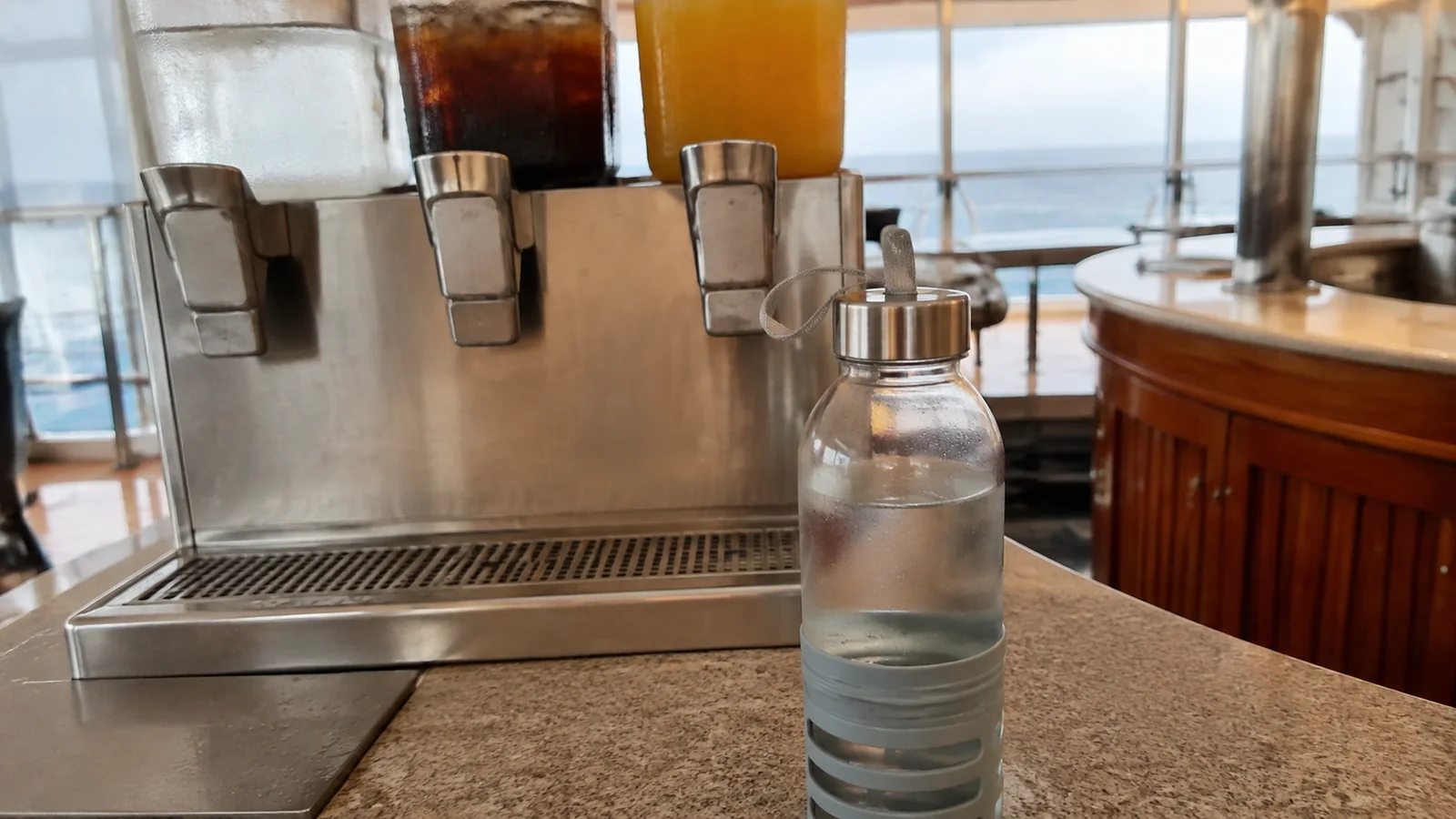
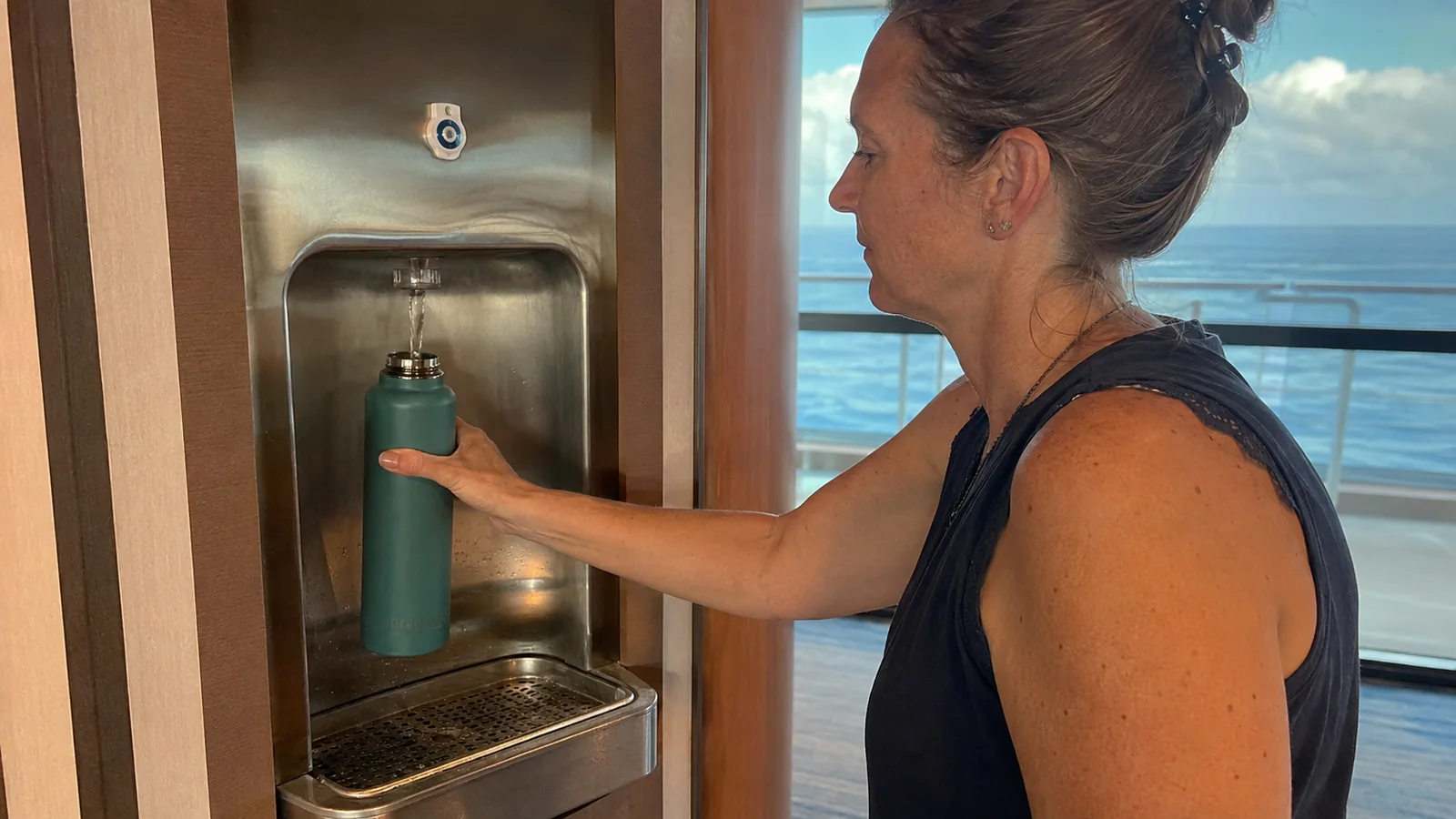
An empty reusable bottle can be useful for carrying water once you are onboard, subject to the line’s rules. I would bring one manageable bottle rather than several bulky insulated cups.
Follow posted instructions at drinking-water and beverage stations. Use a clean cup to transfer water when directed instead of placing a personal bottle against shared dispensing equipment.
Check excursion rules before assuming you can carry the same bottle everywhere. A private destination, tour vehicle, or attraction may have its own container restrictions.
The often-forgotten cruise items checklist is useful for simple daily gear like this. A reusable bottle may solve your practical need without a case of outside beverages.
Drinks purchased in port need another check
Embarkation permission does not automatically apply at every port stop. Read whether the line permits the same drinks on reboarding and whether the quantity or packaging changes.
Carnival’s published policy addresses limited canned or cartoned nonalcoholic drinks in port as well as embarkation. Norwegian’s restrictions also apply when returning through security, so do not copy one line’s approach onto the other.
I would check before purchasing a full supply ashore. A shop accepting your payment is not proof the ship will let the drinks onboard.
Keep alcoholic purchases separate from this question. Wine allowances, corkage charges, and alcohol held until the end of the voyage follow different rules from water and soda.
Decide whether bringing drinks is worth it
Compare the cost of a permitted supply with the onboard options you would actually use. Do not buy a drink package simply because carrying soda is inconvenient without checking what the package includes.
For a rough planning example, suppose carrying a few favorite drinks saves $20 across the trip. I would weigh that saving against the extra bag and effort rather than assume maximizing the allowance is always the smart choice.
A particular brand you cannot get onboard may be more valuable than ordinary water that has a convenient shipboard alternative. Choose based on your real preference rather than a generic cruise packing list.
Check whether bottled water, cans, fountain drinks, and room-service beverages are treated differently in a package. The name of a package alone does not tell you what is included.
Before you buy anything
- Open the current policy for the booked line and departure region.
- Count the allowance using the correct person or cabin basis.
- Check each container’s size and packaging.
- Verify carry-on requirements and port-day rules.
- Arrange medical or infant exceptions separately.
- Decide who will carry the supply until room access.
- Leave drinks out if the savings or preference do not justify the load.
Can I bring a case of bottled water?
Only if the line’s current allowance covers the container type, size, count, and purpose. It does not fit Carnival’s ordinary cans-and-cartons allowance, and Norwegian generally prohibits it for ordinary use.
Can I put soda in checked luggage?
Not when the permission specifically requires carry-on luggage. Follow the bag-location rule as well as the quantity limit.
What about a cruise line not listed here?
Check that line’s current beverage policy and your sailing instructions. I would not apply Carnival, Royal Caribbean, or Norwegian’s limits to Disney, MSC, Princess, or another provider.
What I would carry
I would bring a small permitted supply only if it solves a real preference or need and is easy to manage. For everything else, I would use the ship’s available options and keep the first-day bag lighter.