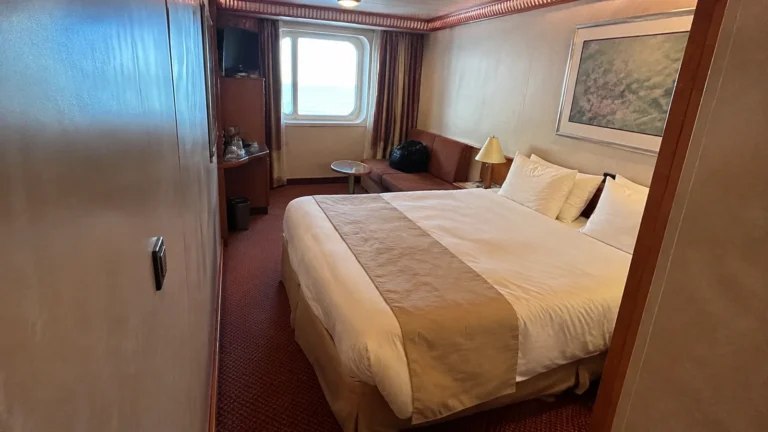
Navigator of the Seas Cabins to Avoid: Specific Rooms & Better Picks
A giant window, a balcony and a screen showing the sea can all look tempting on Navigator of the Seas, but they promise very different mornings.
I would sort out these cabin numbers and permanent room features before letting a tempting upgrade choose my vacation for me.
Navigator of the Seas cabins I would compare first
- 6388, 6390, 6688 and 6690: lower aft balconies with stern structure in the outlook, rather than an uncomplicated view straight down to the water.
- 1660 and 1662: aft-side Deck 10 examples beneath Windjammer, where breakfast preparation deserves consideration.
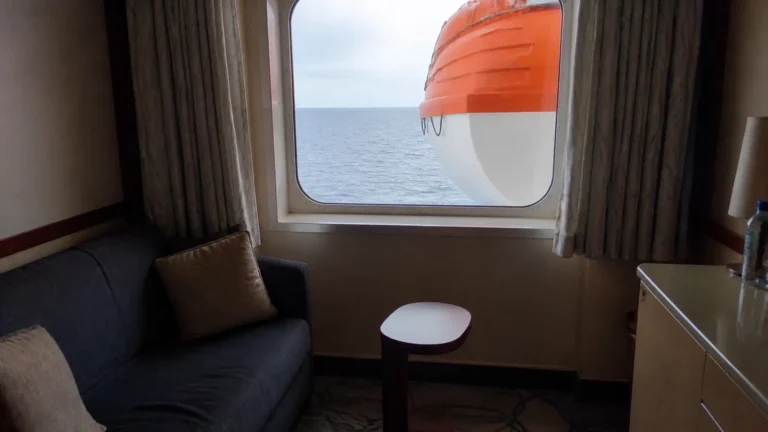
- 8553 and 8555: Deck 8 Promenade View Interiors with inward-facing windows, not oceanview rooms.
- 1814 and 1864: accessible panoramic oceanviews on Deck 12, offering large windows rather than private balconies.
- 1804 and 1854: high forward panoramic suites without balconies, worth comparing against an ordinary balcony when outdoor time is your priority.
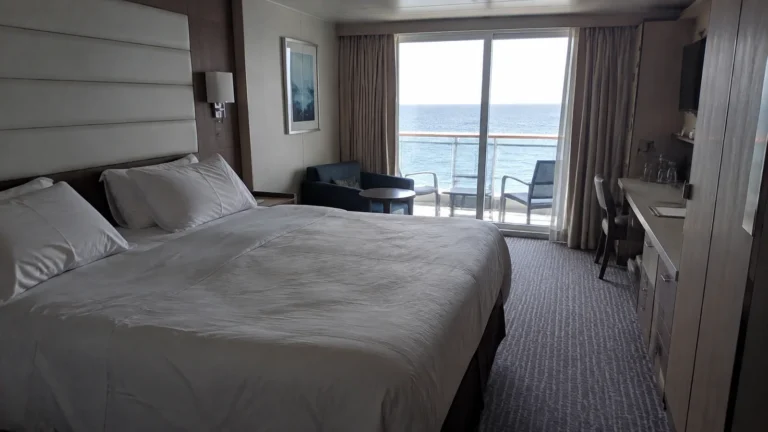
I would start with a midship side-facing balcony on Deck 8 or 9, with cabins above and below. The view and window distinctions are fixed room features; a public-space ceiling identifies possible disturbance, not proof that a cabin is noisy.
Choose your sailing period in the official Navigator plans. Similar-looking Voyager-class ships have different upper-deck layouts, so another ship’s cabin warning is not enough to make this booking.
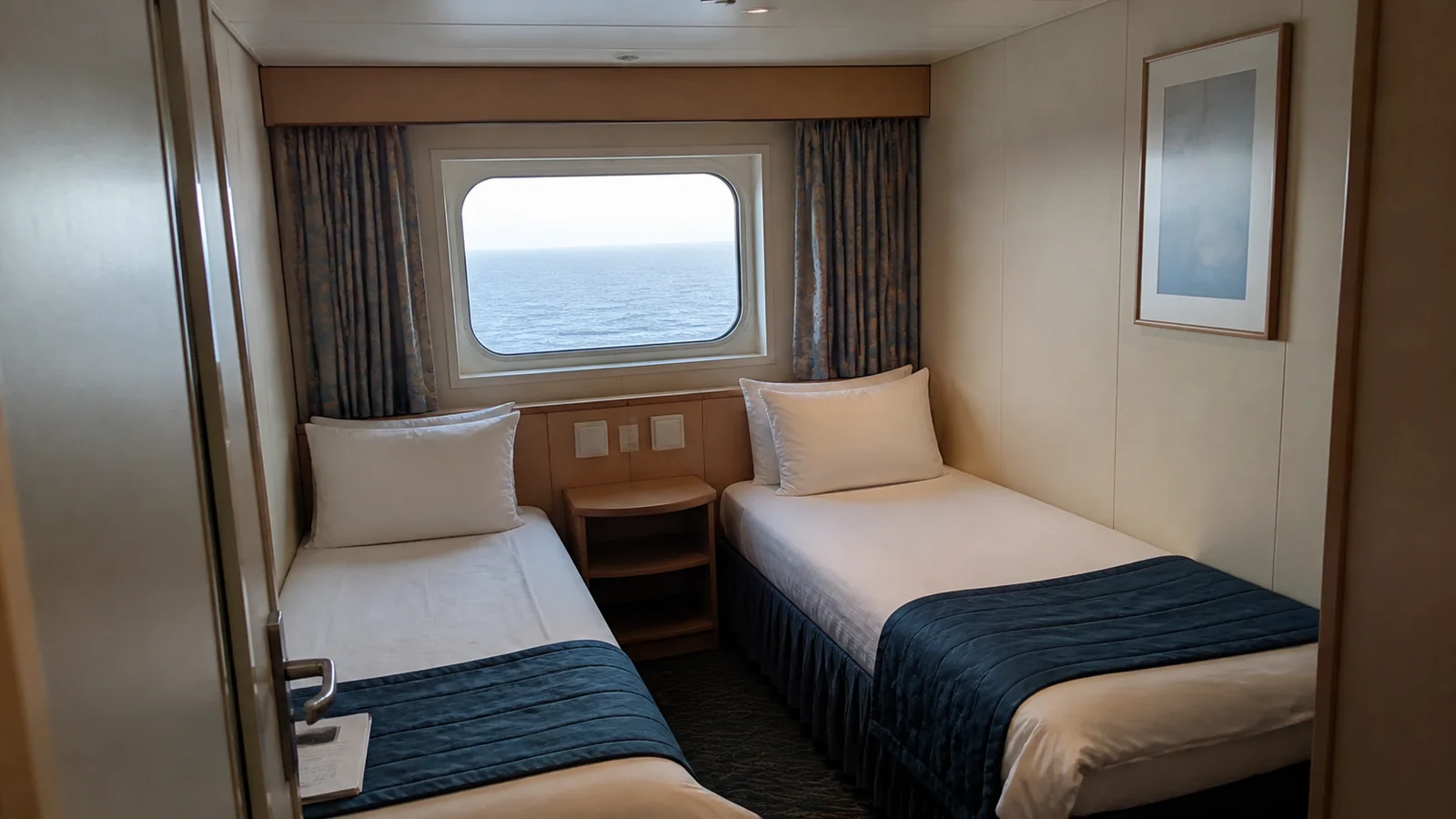
6388, 6390, 6688 and 6690: the lower aft-balcony compromise
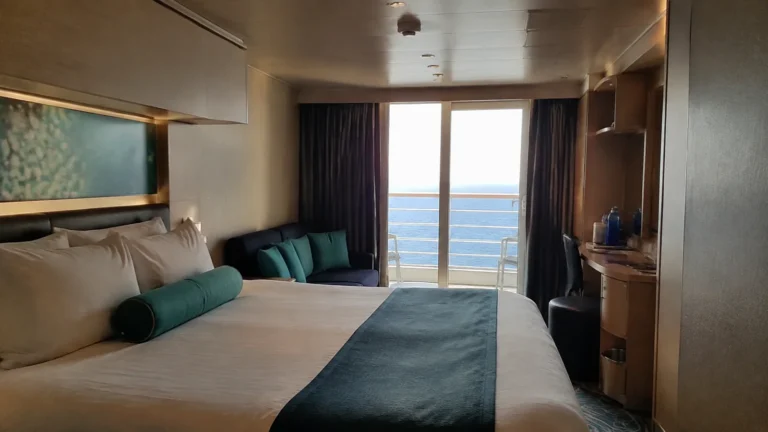
These Deck 6 balconies face aft within Navigator’s stepped stern structure. I would not book one expecting the same immediate open-water setting as a conventional balcony along the side.
The wake may still look lovely beyond the ship, but steelwork and projecting deck areas are part of the foreground. That matters when the plan is to spend hours in a chair looking at the water, rather than step outside briefly for fresh air.
Ask for photographs from the chair and from the doorway, with the railing included. A camera aimed through the clearest gap can make an unusual balcony seem much more conventional than it is.
My alternative: a side-facing Deck 8 or 9 balcony for a straightforward sea outlook. For a trip specifically built around a wake view, compare the actual higher aft room instead of assuming one floor removes all the framing.
I would also compare the corridor walk before paying for a larger aft outdoor area. A roomy balcony is less useful when its location makes every return to the cabin inconvenient for someone in your group.
1660 and 1662: Windjammer is above the bedroom
These aft-side rooms are on Deck 10, beneath the Windjammer area on Deck 11. Their four-digit numbers should not be mistaken for a low-deck assignment.
I would compare a similar balcony on Deck 9 when late mornings are part of the vacation. One accommodation deck above the bed is more appealing to me than saving a short elevator trip to breakfast.
The potential interruptions are meal preparation, dining furniture and clearing, not the same activity as the main pool farther forward. This is a reason to choose carefully, not a claim that both rooms hear every chair being moved.
For an early riser who spends the day around the upper decks, the convenience may be worthwhile. I would keep these rooms on that traveler’s shortlist rather than treat every public-space ceiling as an automatic dealbreaker.
The numbered Navigator diagrams show the change from accommodation to dining overhead. My floor-plan guide explains how to align elevator banks instead of matching the final digits of room numbers.

8553 and 8555: a Promenade window is an indoor view
These Deck 8 Promenade View Interiors face Navigator’s indoor Royal Promenade. I would choose them for people-watching, not to obtain ocean scenery or natural daylight for less.
The rooms can be a fun alternative to a plain interior when the price difference is small and you enjoy the street atmosphere. They are less compelling when you expect to keep the curtains closed and mostly use the cabin for sleeping.
Other cabin windows face across the Promenade, so privacy requires some common sense with the curtains. The window is not an outdoor opening and should not be treated as one-way glass.
My alternative: a conventional interior for a dark retreat, or a real oceanview when daylight is the feature you want. Deck 8 adds distance from the street compared with Deck 6, but does not remove the indoor entertainment setting.
For an early sleeper, I would also think about events and announcements in the shared space below. A higher Promenade room is a change in distance, not a promise that amplified activity will never be noticeable.
1814 and 1864: accessible panoramic oceanviews, not balconies
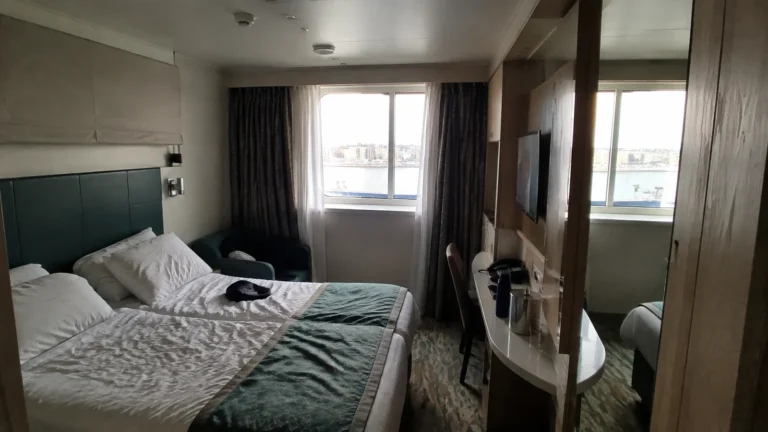
These forward Deck 12 rooms are accessible panoramic oceanviews. Their large windows provide an expansive indoor outlook, but they do not give you a private outdoor terrace.
I would compare them with other suitable accessible accommodation based on the actual features needed. A larger room photograph does not establish the bathroom, turning space or threshold arrangement required by an individual traveler.
The 1814 room information distinguishes this adapted layout from the ordinary panoramic rooms. Confirm the necessary access features with Royal Caribbean before choosing between this window category and an accessible balcony.
My alternative: a suitable accessible balcony when private fresh air is important too, or another accessible oceanview when a lower central position matters more than panoramic glass. Required access should be preserved while comparing optional views and locations.
The high forward position is a separate consideration for movement and walking distance. I would not call either room unsuitable because it is accessible, or assume the dramatic window is worth any location compromise for everyone.

1804 and 1854: suite space without an outdoor door
The two forward Deck 12 panoramic suites also offer windows instead of balconies. I would choose one for its interior layout and view, not assume a suite upgrade preserves the outdoor space of an ordinary balcony cabin.
For a family, confirm the actual beds and separation between sleeping areas before paying. Suite is a broad label, and extra floor area does not necessarily provide the same privacy as two rooms with a connecting door.
My alternative: a conventional balcony lower in the accommodation stack when private outdoor time is the point of the trip. A panoramic suite can win when the group genuinely values the indoor space and accepts being high and forward.
Royal Caribbean’s suite benefits comparison distinguishes panoramic suites without balconies from other accommodation. I would read the actual inclusion list rather than assume every category containing suite grants identical privileges.
Virtual Balcony: a screen can be a feature without being outdoor space
Navigator’s Virtual Balcony is an interior-room screen showing an exterior view, not a door you can open. I would compare its fare and location with other interiors rather than price it as a discounted physical balcony.
It may make the room feel more interesting, especially when a completely windowless space is not your favorite. It does not supply natural daylight, outdoor seating or fresh air from a private terrace.
The Navigator room options distinguish Virtual Balcony, Promenade View and ordinary ocean-facing categories. Choose the view experience first, then compare the location within that type.
The amplified layout changes the upper-deck advice
Navigator has forward accommodation on Deck 11, with the Solarium and main pool surroundings farther back. I would not describe all forward Deck 10 cabins as sitting under the gym simply because that warning fits another Voyager-class ship.
Navigator’s fitness center is aft on Deck 12, while the forward panoramic accommodation needs a separate comparison with the mini-golf area on Deck 13. The exact nearby activity matters more than a copied sister-ship rule.
Under pool seating on Deck 10, furniture handling and foot traffic are the practical concerns. I would move to a checked Deck 9 room for naps or late mornings when its price and layout are otherwise comparable.
For a family constantly returning for dry clothes, the shorter pool route might justify Deck 10 instead. That is a useful convenience decision, not evidence that the highest available cabin is always the best one.
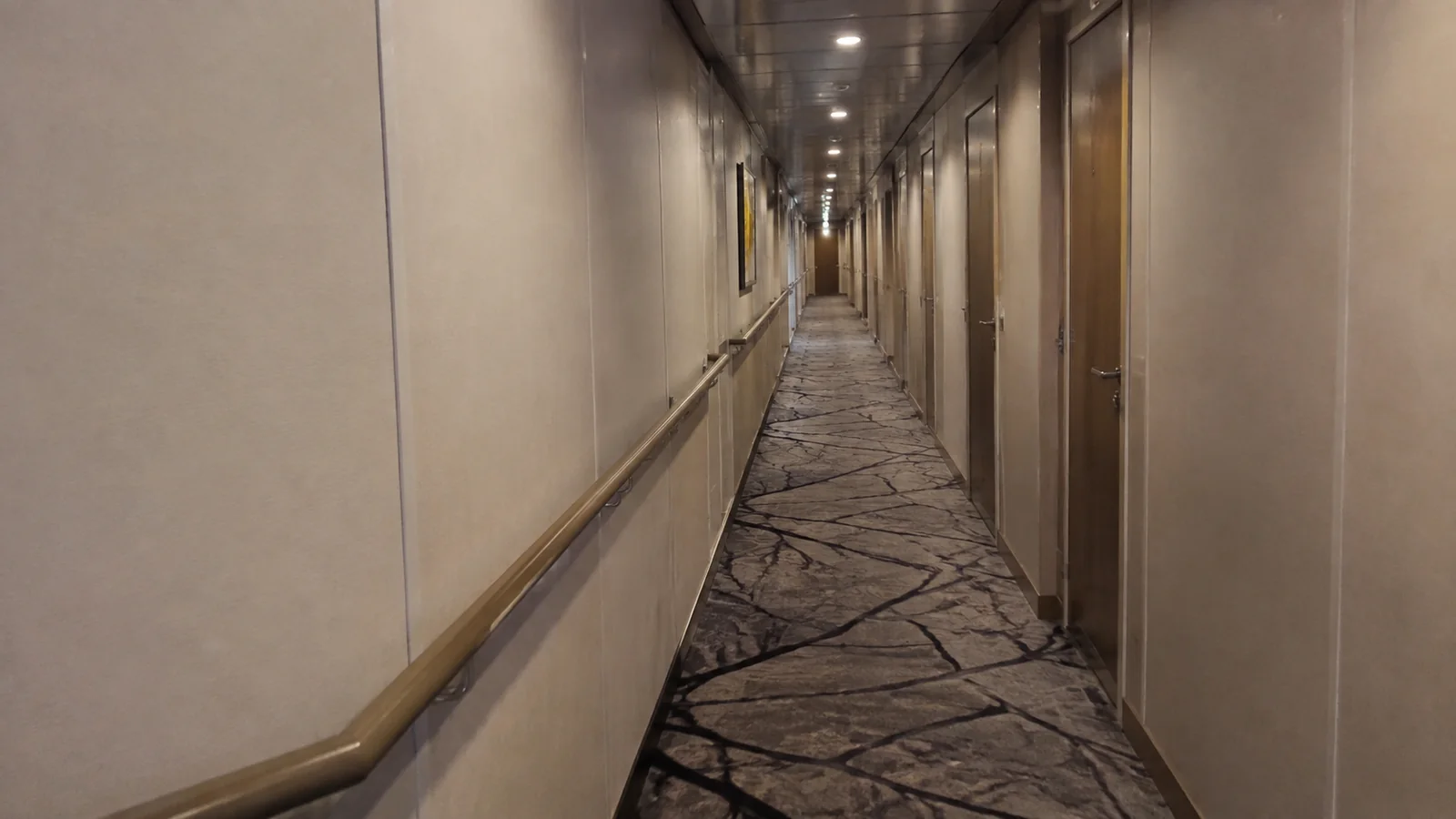
Star Lounge and Studio B need different lower-deck checks
Forward Deck 6 accommodation needs a comparison with Star Lounge on Deck 5. For an early bedtime, I would choose an equivalent Deck 7 room with accommodation beneath it rather than direct overlap with the performance space.
Farther down, Studio B interrupts the otherwise simple-looking lower-deck layout. Rooms near the rink structure or event approaches deserve a boundary and walking-route check, not a blanket claim that every lower cabin has skaters above it.
For a motion-sensitive traveler, a lower central oceanview can still be worth considering. I would weigh its real surroundings against a middle-deck residential location rather than rely on the lowest number as a shortcut.
My seasickness planning guide covers preparation beyond the cabin. A large window or suite does not change how far a room sits from the ship’s center.
Choose the useful elevator bank and sleeping arrangement
Navigator’s youth facilities are aft on Deck 12, so a high forward room is not automatically a convenient family choice. A residential-deck cabin near the aft elevator bank may make the repeated trips easier.
Confirm every required berth for the actual room, then picture the route to the bathroom with extra beds in use. My family cruise guide helps compare a shared room with a verified connecting pair.
I prefer a non-connecting room when I only need one and the other features are equal. I would not give up an essential accessible layout or a manageable elevator walk merely to avoid an additional door or a hypothetical corridor concern.

The Navigator room I would book
I would start with a midship side-facing Deck 8 or 9 balcony, accommodation above and below, and a comfortable route to the elevator I will use most. A conventional interior in the same kind of residential section is my budget alternative.
A guarantee is worthwhile only when every eligible room type and location is acceptable. My cabin-selection checklist keeps the actual view, bed and surroundings ahead of an upgrade label that may not improve your trip.