Best Cruise Luggage: How to Choose Bags That Fit Your Trip
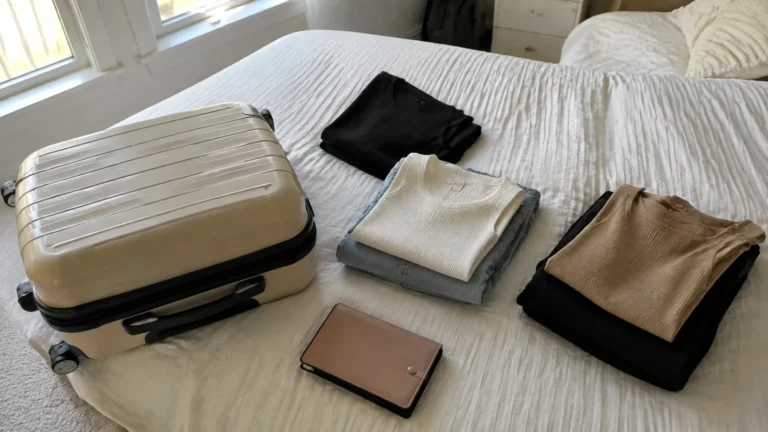
The best cruise luggage is not one magic suitcase. It is the lightest, easiest-to-control set that fits your flight rules, cruise line guidance, cabin storage, and packing style, so this guide helps you choose by real-life scenario instead of handing you a suspiciously convenient shopping list.
The quick answer: which luggage works best for a cruise?
For most travelers, a medium checked suitcase plus a comfortable personal-item backpack or tote is the sweet spot. Couples who pack lightly can often share one checked bag, while families may prefer smaller individual cases that are easier to sort and store.
A carry-on-only setup is excellent for a short warm-weather sailing or anyone handling trains and stairs before embarkation. A large suitcase can make sense for a long, cold, or dressy itinerary, but only if you can lift, roll, and store it without turning the cabin into an obstacle course.
Before buying anything, answer four questions:
- Are you flying, driving, taking a train, or walking between hotels and the port?
- How long is the cruise, and how different are its climates and dress needs?
- Can every traveler safely manage the bag without help?
- Where will the empty case fit inside the cabin?
Those answers matter more than a trendy shell color, celebrity endorsement, or an enormous list of features. Cruise luggage has to survive an entire travel chain, not just look tidy beside a cabin bed.
Three bags I would actually compare
This shortlist is a researched comparison of manufacturer specifications, not a claim that I personally tested every bag. Dimensions below are the published exterior size, including wheels and handles on suitcases; measure your own bag after packing because expansion and stuffed pockets change the fit.
- Model and budget position: Travelpro Maxlite 5 22-inch Carry-On Rollaboard, lower-cost choice
- Exterior size and empty weight: 23 × 14.5 × 9 inches; 5.4 pounds
- How it moves: Two wheels, pulled behind you
- Best trip fit: Driving to the port or a trip where checking the bag is acceptable
- Model and budget position: Osprey Farpoint 40, travel-backpack alternative
- Exterior size and empty weight: 21.7 × 13.8 × 9.1 inches; 3.27 pounds
- How it moves: No wheels; shoulder harness and hip belt
- Best trip fit: Train connections, stairs, and uneven streets before a cruise
- Model and budget position: Briggs & Riley Baseline Essential 22-inch Carry-On Expandable Spinner, premium choice
- Exterior size and empty weight: 22 × 14 × 9 inches compressed, up to 11.5 inches deep expanded; 10 pounds
- How it moves: Four spinner wheels
- Best trip fit: Frequent flights and cruises with dressier clothing
Travelpro: less money and less empty weight
The Maxlite 5 Rollaboard was listed at $160 on September 5, 2026, before tax and any promotion. I would consider it for an occasional cruise because the low empty weight leaves more of your allowance for clothing and makes lifting easier.
Here is the catch: its 23-inch overall height and 14.5-inch width exceed a strict 22 × 14 × 9-inch airline allowance. The product name is not an airline guarantee, so I would check it or buy a smaller model if flying under that exact restriction.
Travelpro provides a Maxlite 5 limited warranty, with exclusions and separate conditions for additional coverage. Save the receipt and complete any required registration promptly, especially if baggage-handler damage is the coverage you care about.
Osprey: my choice for stairs and cobblestones
The current Farpoint 40 specification is useful for travelers combining a cruise with independent overland travel. I would choose it when carrying everything on my back is easier than dragging wheels between a station, a small hotel, and the terminal.
Its 9.1-inch published depth slightly exceeds a strict 9-inch limit, and filling the outer pockets can make that worse. Try the harness with your actual load and compare the packed measurements with every airline, particularly carriers that impose a low cabin-bag weight allowance.
Osprey’s U.S. All Mighty Guarantee provides repair support for damage or defects, subject to the published terms. I would skip a full travel backpack if shoulder or balance limitations make carrying a loaded pack uncomfortable, regardless of how convenient the stairs look.
Briggs & Riley: pay for repeated use
The Baseline Essential Spinner was listed at $729 on September 5, 2026, with a garment carrier and a lifetime repair guarantee that includes airline damage. That is a large jump from Travelpro, so I would reserve it for frequent travelers who will use the organization and repair support over many trips.
At 10 pounds empty, it starts nearly twice as heavy as the Maxlite, which matters when you lift it overhead or face a tight international weight limit. I would choose it for smooth airport transfers and repeated dressy sailings, then keep the expansion compressed for flights.
For a flight-heavy trip with a strict 22 × 14 × 9-inch allowance, the compressed Briggs dimensions are the cleanest match of these three. For a once-a-year drive-to-port vacation, I would spend less and put the savings toward the trip.
Start with the airline, not the cruise ship
If a flight is part of the vacation, its baggage limit is usually the tighter constraint. Airlines set their own dimensions, weights, fees, and fare-specific allowances, so check every operating carrier on the itinerary before choosing a case.
Do not assume a bag marketed as “airline approved” fits every airline or fare. Measure the packed case at its widest points, including wheels, handles, bulging pockets, and anything strapped outside.
Weigh it at home with room for souvenirs. A wonderfully roomy suitcase becomes a terrible bargain when its empty weight eats a large share of the allowance.
Cruise policies vary too. Royal Caribbean allows a reasonable amount of personal luggage and says hand-carried bags must fit through port screening equipment, which is generally similar to airport equipment, according to its official luggage policy.
Carnival publishes more specific planning guidance, including a 50-pound limit and cross-section dimensions for checked and carry-on cases. Read the current Carnival luggage guidance for the exact wording rather than applying it to another line.
Norwegian currently allows up to two pieces of personal luggage per person, each weighing no more than 50 pounds, but also tells flyers to follow their airline restrictions. Its baggage FAQ is a good reminder that “the ship allows it” does not mean the airline will carry it for free.
Pick a size you can actually control
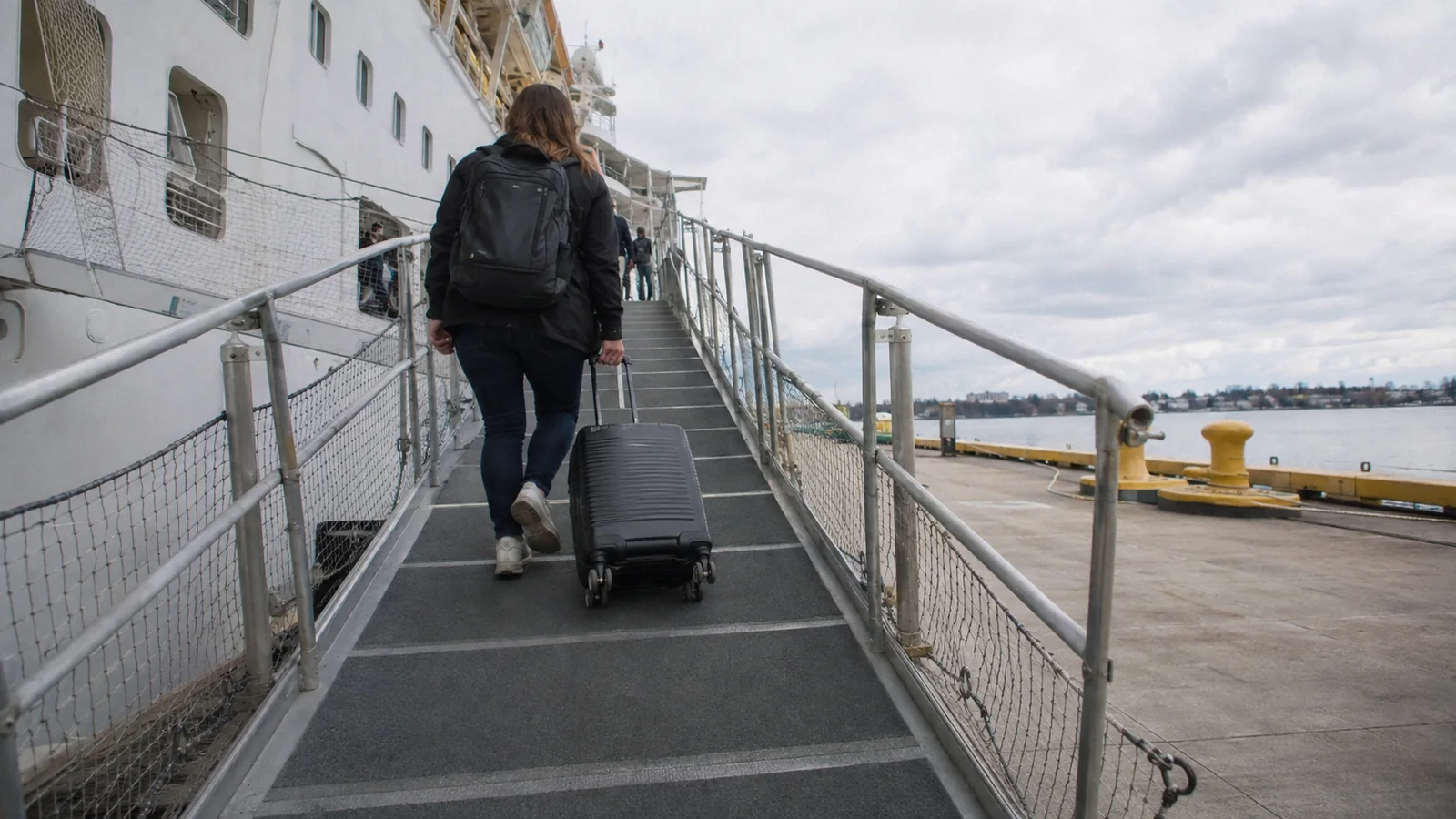
A bag is too large when you cannot lift it over a curb, stand it upright on a shuttle, or maneuver it through a hotel doorway. That point arrives sooner than the zipper’s physical limit.
Personal item
A small backpack, zippered tote, or compact duffel should hold everything that cannot safely disappear into portered luggage. Think documents, medication, valuables, electronics, one change of clothes, and basic embarkation-day supplies.
Choose a shape that sits securely on the suitcase handle or distributes weight comfortably across both shoulders. An open beach tote may be cute later, but a closure is far more reassuring in an airport line and busy terminal.
Carry-on suitcase
A carry-on roller works for minimalist packers, shorter cruises, and travelers who want to keep their belongings close. It is also useful as the smaller half of a two-bag setup, provided someone is willing to manage it until the cabin is available.
Do not confuse airline carry-on rules with cruise embarkation rules. A cruise terminal may screen a larger bag, but that does not make it legal in an airplane overhead bin.
Medium checked suitcase
A medium case is the most forgiving all-purpose choice because it holds a useful amount without inviting quite as much overpacking as the largest sizes. It is usually easier to lift onto a luggage rack and slide beneath a cabin bed once empty.
This size suits a seven-night cruise particularly well when clothes can be mixed, matched, and repeated. Packing cubes can separate categories, but they do not reduce the weight of eight unnecessary outfits.
Large checked suitcase
A large case earns its place for bulky cold-weather layers, a long voyage, specialized gear, or one shared family bag. Check its empty dimensions and weight carefully because some beautiful giant cases start heavy.
It can also be awkward in a compact cabin, rental car, train aisle, or small elevator. If the case only works when another person lifts it, decide whether that help will be available at every transition.
Spinner wheels or two wheels?
Four-wheel spinners glide beside you on smooth airport floors and rotate easily in a terminal queue. They are especially pleasant when the bag must stay close to your body in an elevator or narrow passage.
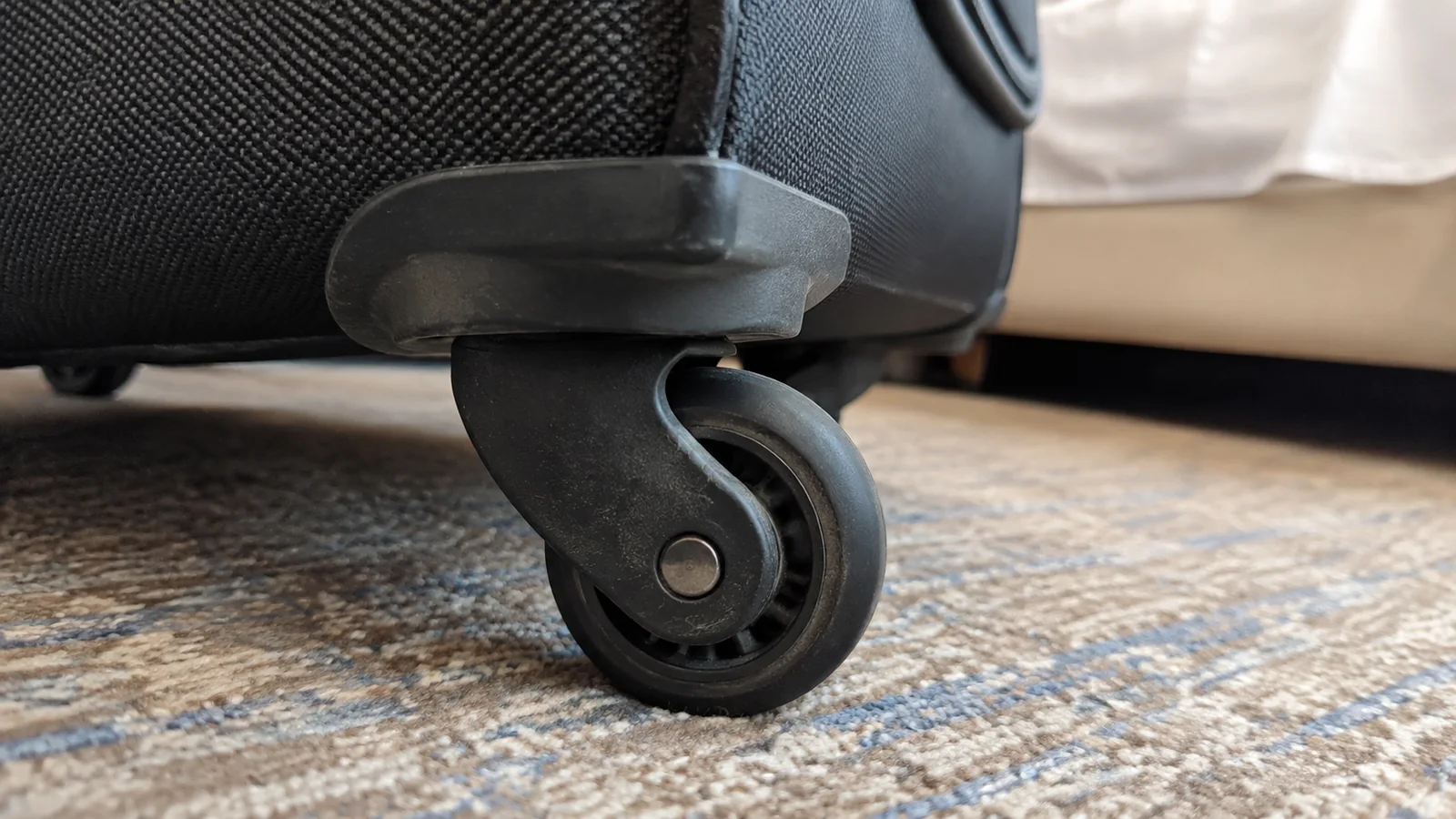
Two-wheel cases generally have larger recessed wheels and track well over rough pavement, curb cuts, and uneven streets. They must be tilted and pulled, which places more load on the arm but can feel steadier on an incline.
Neither design is automatically best for cruising. Choose a spinner for mostly smooth terminals and easy transfers, or consider two wheels if the pre-cruise route includes cobbles, long sidewalks, and frequent curbs.
Test the handle at your normal walking height and pull the loaded case around corners. A wobbly telescoping handle or tiny exposed wheels will annoy you much sooner than a missing cup holder.
Hardside or softside luggage?
Hardside cases resist rain and crushing better than thin fabric, and their smooth shells are easy to wipe. They can also open into two equal halves, which requires floor or bed space during packing.
Softside cases often have useful exterior pockets, flexible edges, and a lid-style opening that is easier to access on a luggage rack. Fabric can absorb moisture and snag, so construction quality matters more than the category name.
No ordinary suitcase is completely waterproof at every zipper, seam, and handle opening. Put documents, medication, and electronics in protective inner pouches even when the shell makes ambitious weather claims.
My practical tie-breaker is the travel before and after the ship. Hardside is appealing for damp ports and checked handling, while softside is lovely when quick-access pockets and a little flexibility solve more problems.
Features worth paying attention to
Good luggage features are quiet little helpers, not a miniature gadget showroom. Look for construction you can inspect and functions you will use on this trip.
- Low empty weight: More of the allowance stays available for clothes and shoes.
- Sturdy wheels: Smooth rolling matters every time the bag leaves the cabin.
- Comfortable handles: Top and side grips make lifting safer and less awkward.
- Stable telescoping handle: It should extend to a useful height without excessive twisting.
- Useful interior compression: Straps or panels keep contents controlled when the case stands upright.
- Repairable parts: Replaceable wheels or accessible hardware may extend the bag’s useful life.
- Distinct appearance: A bright strap or tag makes a common black case easier to identify.
An expander is helpful for flexible packing but dangerous for airline sizing and weight. Treat it as emergency room for the trip home, then measure and weigh the expanded case again.
Built-in USB ports are rarely a reason to choose one bag over another. The power bank still needs proper handling, and the cable system adds parts that can fail or become obsolete.
Keep batteries and valuables in the bag that stays with you
Spare lithium batteries and power banks belong in carry-on baggage, not checked luggage. The TSA power-bank guidance states this clearly, and travelers should also check their airline’s battery limits and international rules.
If a smart suitcase has a removable lithium battery, know how to remove it before check-in. A battery that cannot be removed may create a problem under an airline’s policy even if the suitcase itself is otherwise the right size.
Keep passports, medication, jewelry, cameras, laptops, keys, and irreplaceable items in the personal bag under your control. Portered luggage can arrive later in the day, and checked airline baggage can be delayed before the cruise even begins.
Our complete cruise packing list separates those embarkation essentials from items that can wait in the main suitcase. That division is much more useful than trying to cram everything into one “perfect” bag.
Best cruise luggage setup by travel scenario
For a short warm-weather cruise
A carry-on roller plus a small personal item may be plenty when shoes and clothing stay simple. Choose quick-drying pieces and repeat outfits instead of packing a separate look for every meal.
If you fly, confirm that both pieces fit the booked fare. A cruise being short does not persuade a strict airline gate agent to ignore an oversized roller.
For a seven-night cruise
A medium checked bag and personal item balance capacity with maneuverability for most adults. Couples who coordinate toiletries and chargers may share the checked case, but split a few essentials between carry-ons in case it is delayed.
Our step-by-step cruise packing system helps build outfits around the itinerary rather than around suitcase capacity. The bag should serve the plan, not dare you to fill every corner.
For Alaska or another cool itinerary
Bulky outerwear does not always require a giant suitcase. Wear the heaviest coat and shoes in transit, then pack light layers that create different combinations.
A weather-resistant exterior is useful, but inner dry bags or zippered pouches protect the items that truly cannot get wet. Leave room for gloves, a hat, and excursion gear without hanging loose pieces from the handle.
For a formal or special-event sailing
Choose a case with a broad packing surface and secure compression so structured clothes are not crushed into a tiny corner. A lightweight garment sleeve may help, but a full separate garment bag is only worthwhile if you can manage another piece.
Read the actual dress guidance before building a wardrobe around imagined rules. Our cruise formal-night clothing guide explains how flexible many evenings can be.
For families
Several medium or carry-on-size cases can be easier to sort than one enormous family suitcase. Give each bag a category or traveler, and place one backup outfit for each person in a different case.
Young children can roll a tiny suitcase only if an adult is prepared to take over. Count the stroller, car seat, diaper supplies, and tired hands before assigning everyone their own adorable bag.
For travelers with mobility or strength limitations
Prioritize low weight, stable wheels, comfortable handles, and a size you can position without twisting. A small roller paired with a bag that securely slides over its handle can reduce loose items.
Do not hang a heavy tote from the front of a roller because it can tip unexpectedly. If using mobility equipment, discuss boarding assistance and baggage procedures with the cruise line well before sailing.
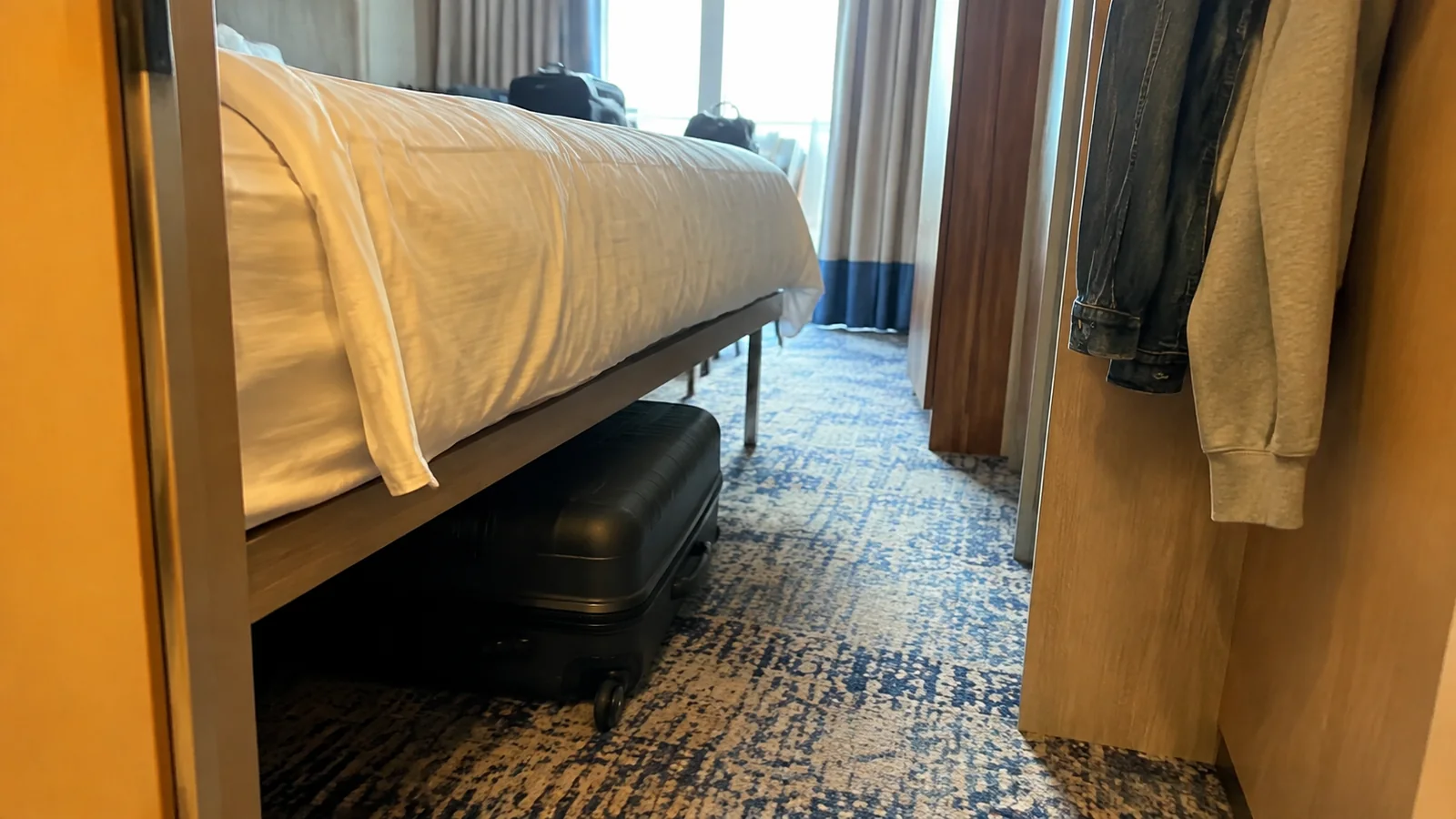
Will the suitcase fit under a cruise cabin bed?
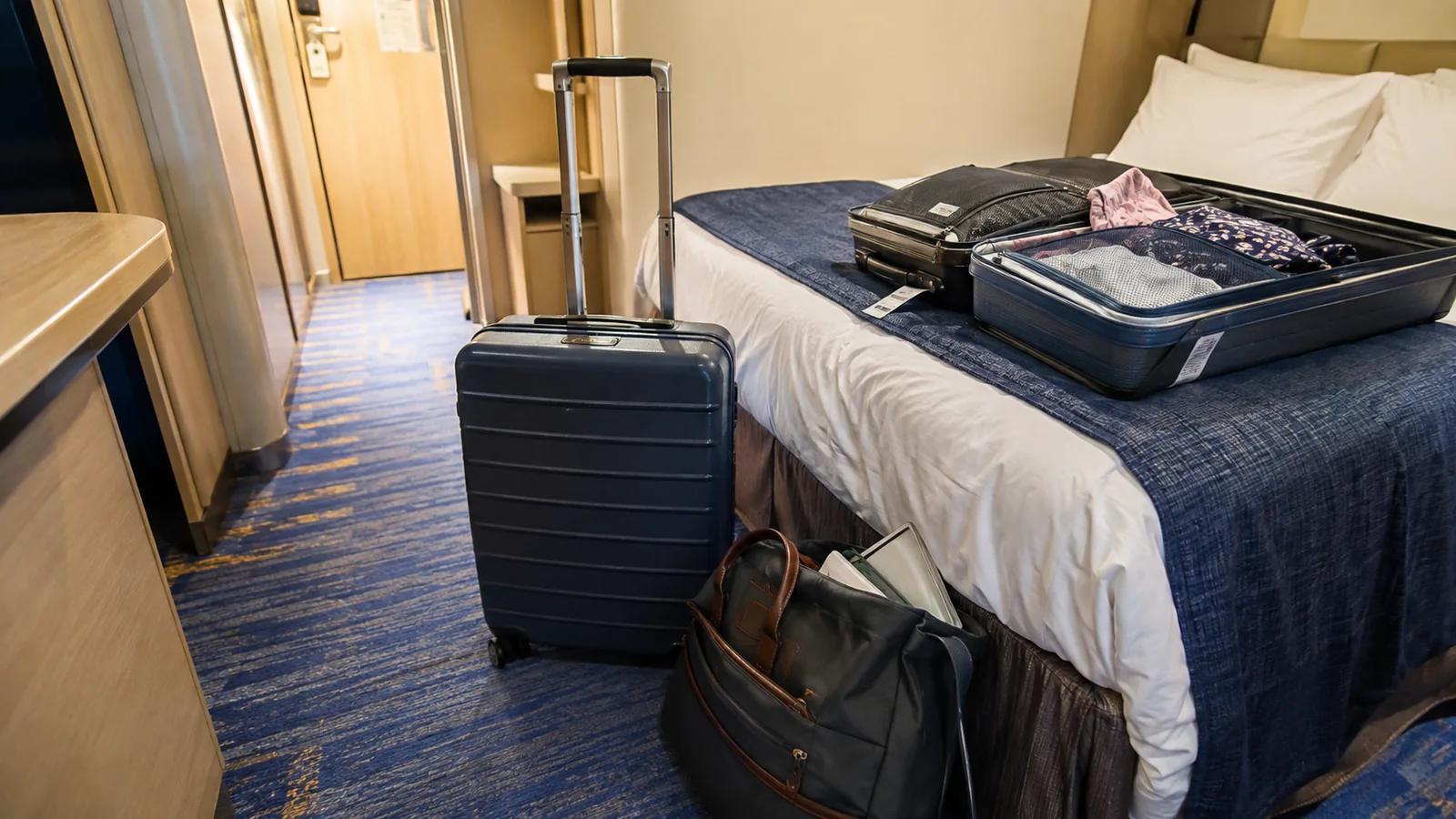
Many empty suitcases fit beneath cruise cabin beds, but clearance varies by ship, cabin, bed configuration, and the bag’s rigid depth. Never buy a case based on a universal under-bed measurement from a stranger online.
A flexible duffel compresses easily, while a hardside case needs its full thickness even when empty. Some nested sets save space because the smaller case fits inside the larger one.
If a case will not slide underneath, ask the cabin steward whether the bed can be adjusted or another approved storage option exists. Keep luggage out of walkways and away from doors rather than creating a nighttime tripping hazard.

Do you need luggage locks and trackers?
A lock discourages casual opening but does not make a soft zipper or suitcase shell secure against determined access. Follow the cruise line’s current instructions because screening procedures and lock guidance differ.
A tracker can help show that a bag is still at an airport or has reached a terminal area, but it cannot retrieve the bag or override carrier procedures. Check airline rules for the device and never use its map as permission to enter a restricted area.
Use a covered luggage tag with your name, phone, and email, plus the cruise line’s routing tag for embarkation. Put contact information inside the case too, and remove old airline and cruise labels that can confuse handling.
What to skip when shopping
Skip any product whose main selling point is “perfect for cruises” without giving dimensions, empty weight, materials, and warranty terms. A nautical print does not improve a wheel bearing.
- An oversized set when you only need one practical case
- A heavy shell that leaves too little payload for flying
- Exposed accessories that can snag during handling
- A ride-on suitcase that creates congestion or is difficult to control
- A nonremovable battery without checking every carrier’s rules
- Cheap locks presented as protection for valuables
- Single-purpose organizers that add bulk without solving a real problem
The same restraint applies inside the suitcase. Our guide to cruise accessories worth considering separates optional convenience items from the essentials you genuinely need.
How to test luggage before the return window closes
Pack the case to a realistic trip weight and roll it over carpet, hard flooring, thresholds, and a safe patch of rough pavement. Turn sharply, stop on a gentle incline, extend the handle repeatedly, and lift it by every grab handle.
Check that zippers move around full corners without forcing, wheels do not wobble, and the case stands without tipping. Try fitting the personal item over the extended handle, then walk as if changing terminals.
Read the warranty exclusions and repair process rather than trusting the word “lifetime” on its own. Damage coverage, normal wear, airline handling, shipping costs, and proof-of-purchase requirements can completely change the value.
A sensible cruise luggage checklist
- Verify cruise line, airline, train, and transfer baggage rules.
- Measure the packed case including wheels, handles, and pockets.
- Weigh it with room for the return trip.
- Confirm you can lift, steer, and stop it safely.
- Pack documents, medication, valuables, and power banks in your personal bag.
- Attach the correct cruise tag shortly before port check-in.
- Add contact details inside and outside without displaying unnecessary personal information.
- Photograph the packed bag and keep baggage receipts.
- Plan where the empty case can sit in the cabin.
- Bring a foldable tote only if it has a clear job on the return journey.
The best bag is the one that makes every transfer easier
The best cruise luggage is usually pleasantly boring: light, sturdy, correctly sized, easy to identify, and comfortable to move. A personal item protects the irreplaceable things, while the main case carries only what the itinerary truly needs.
Choose for the hardest part of the route, whether that is an airline limit, a cobbled walk, a cramped shuttle, or lifting the bag at home. When the luggage quietly follows your plan instead of becoming the plan, you picked well.