Driving vs. Flying: How to Decide What Makes Sense for Your Vacation
A two-hour flight sounds wonderfully efficient until I start adding the airport drive, security line, baggage claim, and trip to the hotel.
I would compare the whole travel day before choosing, because sometimes the car buys more freedom and sometimes the flight buys another afternoon of vacation.
The Quick Rule I Use
If the destination is within roughly five hours by car, I usually lean toward driving unless parking is miserable or I do not need a car once I arrive. Beyond about eight hours, flying becomes increasingly attractive unless several people are sharing the vehicle, the route itself is part of the vacation, or airfare and rental-car costs are unusually high.
The messy middle is where the real comparison matters. A six- or seven-hour drive can beat a short flight surprisingly often once airport time and ground transportation enter the calculation.

Compare Door-to-Door Time, Not Flight Time
For flying, I count the drive to the airport, parking or rideshare, check-in, security, boarding, the flight, deplaning, baggage claim, rental-car pickup or transit, and the final trip to the hotel. That is the actual travel day.
For driving, I count the full road time plus realistic gas, food, and bathroom breaks. My road trip route guide explains why map time is always the starting point rather than the finished estimate.
A Two-Hour Flight Can Easily Be a Five-Hour Trip
Imagine the airport is forty-five minutes from home, you arrive ninety minutes before departure, the flight lasts two hours, and it takes another hour to collect the rental car and reach the hotel. You are already over five hours without a delay.
If driving takes six hours, the flight still may be worth it because you avoid fatigue and mileage. It just is not automatically the enormous time savings the flight duration suggested.
Start With the Total Cost of Flying
The airfare is only one part. I add baggage, seat selection if I care about it, airport parking or rideshare, food during the travel day, rental car or destination transit, and any one-way transportation costs.
The U.S. Department of Transportation advises travelers to compare fare restrictions and optional services such as baggage and advance seat selection when buying a ticket. Its current ticket-buying guidance is useful when a low fare starts accumulating extras.
Then Calculate the Road Trip Cost
For driving, I add fuel, tolls, overnight hotel if the distance requires one, parking at the destination, and a realistic allowance for vehicle wear. If I would need to rent a car after flying anyway, that often moves the math toward driving.
My road trip cost guide has example budgets and the gas formula. It is much easier to compare flying once the road-trip number is more than “gas should be about $100.”
Driving Gets Cheaper Per Person
Four people in one car share most of the same fuel and toll cost, while four airline tickets usually cost roughly four times one ticket. That is why driving can become dramatically more competitive for families and groups.
The car may need to be larger, food costs rise, and parking does not disappear, but the basic transportation economics still favor sharing. This is one reason road trips with friends can make financial sense even when the drive is long.
Flying Gets More Competitive for Solo Travelers
One traveler absorbs the entire gas, toll, parking, and vehicle cost alone. A reasonably priced nonstop flight can beat that quickly, especially when the destination has good transit or you do not need a rental car.
My first solo road trip guide also looks at the nonfinancial side, because driving eight hours alone feels very different from splitting it among three drivers.
The Rental Car Can Flip the Answer
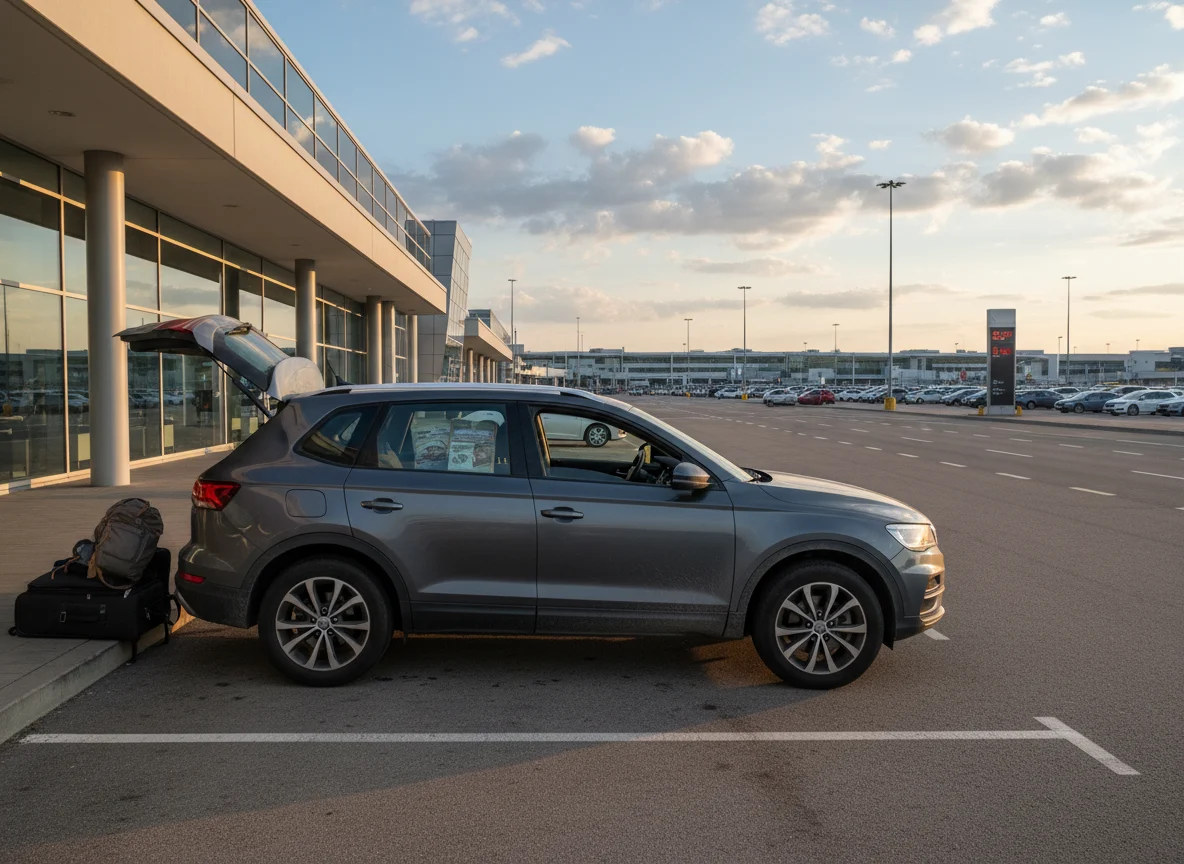
If you fly into Yellowstone, the Canadian Rockies, the Oregon Coast, or another road-trip destination, you may still need a car for most of the vacation. Add that rental before you decide the flight is cheaper.
Rental prices also include more than the advertised daily rate. My rental vs. your own car guide covers fees, toll programs, fuel, coverage, mileage, and one-way charges.
Destination Parking Can Flip It Back
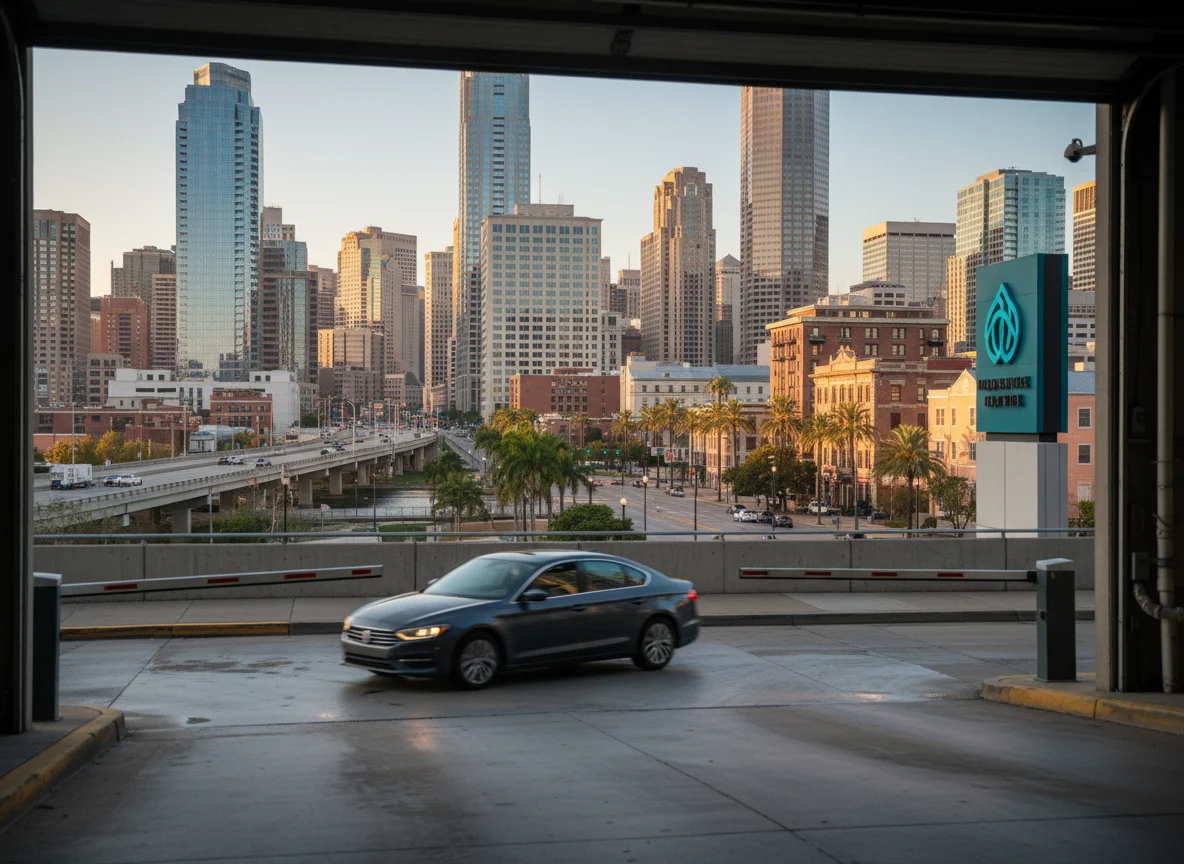
Driving to New York, Boston, Chicago, San Francisco, Charleston, or another walkable city can mean paying hotel parking for a car that spends the vacation sitting still. That is not a very useful road-trip advantage.
If the destination has good public transportation and most sightseeing is walkable, I am much more likely to fly. I want the car to solve a transportation problem, not create a parking problem.
Do You Need the Car Once You Arrive?
This is one of my biggest decision questions. A car is valuable in Door County, national parks, the Florida Keys, rural New England, and the Highlands, while it can be actively annoying in central Lisbon, Edinburgh, Savannah, or downtown Seattle.
Sometimes the best answer is flying and renting only for part of the trip. That can give you a city stay without a car and a road trip afterward.
Road Trips Give You More Luggage Freedom
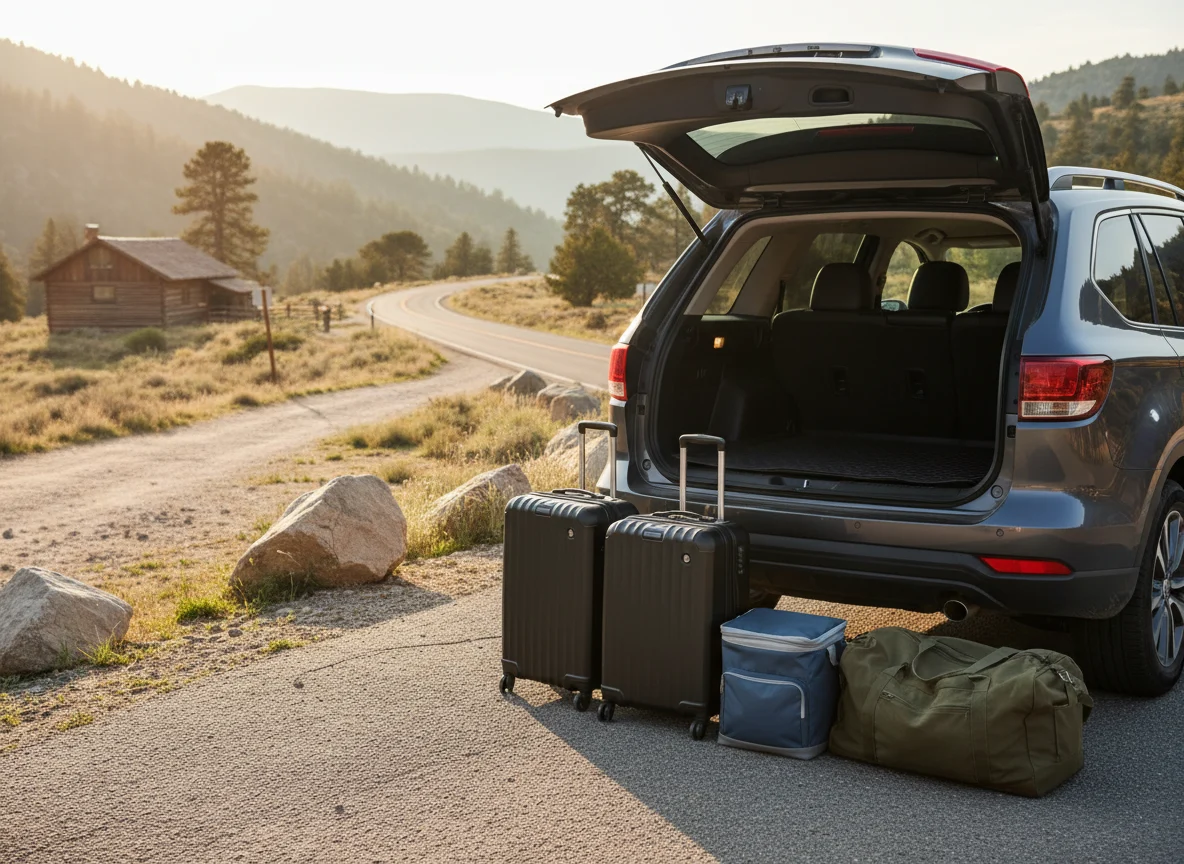
Driving makes it much easier to bring a cooler, hiking poles, beach chairs, dog gear, bulky jackets, several pairs of shoes, or the suspicious number of Wisconsin cheeses you acquired along the way. Airline baggage limits and fees make bulky vacations more complicated.
That does not mean the car should become a moving storage unit. My road trip packing list is designed to keep all that freedom from filling every seat.
Flying Is Often Better for Short Vacation Windows
If I only have four days and the destination is ten hours away, driving consumes too much of the vacation unless the journey itself is the point. A two-hour flight may buy almost two extra destination days.
This is especially true when I can fly after work or early in the morning and still use most of the arrival day. Vacation time has value even when it does not appear on the credit-card statement.

Driving Can Be Better When the Route Is the Vacation
Flying to the end of the Blue Ridge Parkway would completely miss the reason for going. The same is true for the Oregon Coast, Great River Road, Iceland Ring Road, and countless scenic routes.
If the stops between A and B are the trip, I do not compare driving with flying as though they deliver the same experience. They do not.
Weather Risk Works Both Ways
Flights can be delayed or canceled by storms far from your origin, while road trips can be disrupted by snow, wildfire, flooding, hurricanes, landslides, or mountain closures. I compare the actual seasonal risks rather than assuming the car automatically gives me control.
Winter mountain routes are a good example. Flying closer to the destination may reduce driving, but the final rental-car leg can still involve the same pass and traction requirements.
Consider Fatigue Honestly
Driving ten hours is physically possible for many people and still a terrible first day of vacation. If the only way the road trip works is one exhausted driver doing a marathon each way, the cheaper option may not be the better option.
I would rather spend more to arrive alert when the destination matters more than the road. This is especially true before hiking, skiing, a cruise, or an early next-day activity.
Kids Can Change the Math and the Experience
Airfare becomes expensive quickly for a family, which often favors driving. On the other hand, a child who handles a two-hour flight beautifully and hates eight hours in the car can make the flight worth every dollar.
Think about car seats, stroller luggage, airport security, bathroom stops, motion sickness, naps, and how much flexibility the family actually wants. The cheapest transportation is not always the least stressful one.
Dogs Can Change the Answer Too
For many dog trips, driving is dramatically simpler because airline pet policies can be restrictive and stressful. The dog can travel with familiar gear and the route can include frequent breaks.
That only works if the dog is comfortable in the car and your destinations are actually pet-friendly. My road trip with dogs guide covers that planning.
One-Way Trips Are a Special Case
Flying can be extremely useful for a one-way road trip because you can fly into one city, rent a car, and depart from another. The Pacific Coast, Alaska, Portugal, and parts of New England can work beautifully this way.
The catch is one-way rental fees and different airfare. I price the entire transportation package before falling in love with the elegant line on the map.
Do Not Compare a Basic-Economy Fare With a Flexible Road Trip
Cheap airfare can come with strict rules, limited seat selection, baggage charges, or change restrictions. DOT notes that fare classes can differ substantially in restrictions and included services.
If flexibility matters, compare the flight product you would actually buy with the road trip you would actually take. The lowest number on a fare calendar may not be the real alternative.
A Simple Worked Example
Suppose two adults are traveling 650 miles from home for a six-night vacation. Driving means 1,300 round-trip highway miles plus destination driving, while flying means two tickets, airport transportation, baggage, and a six-day rental car.
If flights are $225 each and the rental is $500 after taxes and fees, flying transportation is already near $1,000 before airport parking or bags. Driving a 30-mpg car at an example $3.50 per gallon uses roughly $152 in fuel for the round-trip highway mileage, which leaves a large gap even after tolls and wear.
Now change the trip to one solo traveler visiting a walkable city where no rental car is needed. The same $225 flight suddenly looks far more compelling.
My Decision Checklist
- What is the true door-to-door travel time?
- How many people are traveling?
- Do I need a car at the destination?
- What is the total airfare after optional fees I will actually pay?
- What will the rental car cost if I fly?
- What are fuel, toll, parking, and vehicle-wear costs if I drive?
- How many vacation hours disappear in transit?
- Is the route itself part of the vacation?
- Which option creates less fatigue?
- What seasonal weather risks affect each option?
When I Usually Drive
I lean toward driving for regional trips, family or group travel, pet trips, bulky outdoor vacations, scenic routes, and destinations where a car is essential anyway. I also drive when the road between home and the destination contains places I actually want to visit.
When I Usually Fly
I lean toward flying when the drive consumes a full vacation day each way, I am traveling solo, the destination is walkable, airfare is reasonable, or the trip is short enough that every saved hour matters. I am also happy to fly and then start a road trip from the destination.
Two More Numbers I Check Before Choosing
FuelEconomy.gov helps estimate the real fuel cost of driving, while the TSA screening guidance is a useful reminder that airport time starts before the plane leaves the gate. Those two pieces make the driving-versus-flying comparison much more realistic.
The Better Option Is the One That Preserves the Vacation
I do not need driving to win because I write about road trips. Sometimes the smart road-trip decision is flying 1,500 miles and renting a car where the interesting road begins.
Compare the whole trip, not the headline numbers. The answer gets much clearer once a two-hour flight stops pretending it starts at takeoff and a six-hour drive stops pretending gas is its only cost.