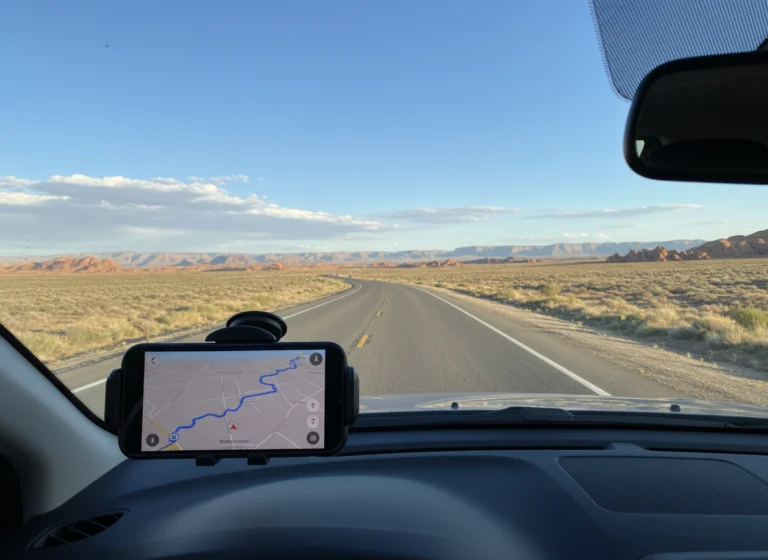
25 Road Trip Tips for Safer, Smoother Driving Days
The best road trip is not the route with the most pins. It is the one where driving days leave room to stop, the vehicle is ready for the conditions, and a closure or tired driver does not collapse the entire itinerary.
These 25 road trip tips cover route design, safety, budgets, lodging, food, and the small systems that keep a long drive enjoyable.
Build a Route You Can Actually Drive
1. Start With Nights, Not Attractions
Place each overnight stop first, then add attractions that fit naturally between them. A map full of saved places is inspiration, not an itinerary.
Count hotel checkout, breakfast, fuel, parking, restrooms, meals, and photo stops as part of the day. Navigation estimates rarely include the pauses that make a road trip worth taking.
2. Limit One-Night Stays
Moving every morning creates repeated packing, check-in, parking, and orientation work. Add two-night bases where a town, park, or city has enough depth to justify them.
One-night stops make sense for a scenic transit day or a necessary break between distant anchors. They should solve the route rather than become the whole route.
3. Use a Personal Driving Limit
Decide how many hours each driver can handle safely and happily, then reduce that number for mountain roads, darkness, storms, towing, winter, or unfamiliar traffic. A legal maximum or ambitious map estimate is not a personal target.
4. Add a Flex Block
Leave one light afternoon, unbooked morning, or extra night in a long itinerary. That margin absorbs weather, maintenance, fatigue, laundry, and the place you unexpectedly want to enjoy longer.
The Canada road trip framework shows how border crossings, ferries, mountain corridors, and large distances change route math. The same principle applies anywhere: geography does not care how much you wanted to fit in.
5. Plan a Loop Only When It Helps
A loop reduces backtracking but may force weak stops simply to complete the shape. An out-and-back can be better when the return route offers different hikes, towns, or weather.
For rental cars, compare one-way drop fees with the time saved by an open-jaw route. Add different airport fares and ground transportation before choosing.
Prepare the Vehicle
6. Schedule Maintenance Before Departure
Check the owner’s manual and address warning lights, overdue service, recalls, leaks, battery concerns, belts, hoses, lights, wipers, fluids, brakes, cooling, and air conditioning. Leave time after service to drive the car locally and catch a new problem.
NHTSA’s road-trip checklist covers tires, coolant, batteries, belts, hoses, recalls, child safety, and emergency supplies. A mechanic should handle anything outside your ability rather than relying on a visual guess.

7. Check Tire Pressure Cold
NHTSA says to use the manufacturer’s recommended pressure from the owner’s manual or driver-door placard, not the maximum printed on the tire. Check when tires are cold, inspect tread and damage, and include the spare.
Know whether the vehicle carries a full spare, temporary spare, sealant kit, or no roadside solution. Confirm that the jack, lug tool, wheel-lock key, and roadside-assistance number are present.
8. Understand the Rental Car
Before leaving the lot, find the fuel door, headlights, hazard lights, parking brake, climate controls, charging ports, spare or repair kit, and driver-assistance settings. Photograph existing damage, mileage, fuel or charge level, and the agreement.
Verify toll handling, border permission, unpaved-road restrictions, additional drivers, roadside service, charging cables, and return requirements. The cheapest daily rate can become expensive when fees and restrictions surface later.
For your own vehicle, confirm what roadside assistance covers, the service radius, towing destination, and whether the membership follows the person or car. In remote regions, assistance may take hours and cellular service may fail, so coverage is useful backup rather than permission to skip preparation.
9. Prepare an Electric-Vehicle Plan
Map reliable charging stops plus backups, then consider temperature, elevation, wind, speed, towing, and charger availability. Do not plan every leg to arrive near zero range.
Confirm connector compatibility, payment apps, hotel charging rules, idle fees, and whether a station is accessible after business hours. A slower charger at a meal stop can be more useful than a faster one requiring a long detour.
Pack for Problems, Not Every Fantasy
10. Build a Vehicle Emergency Kit
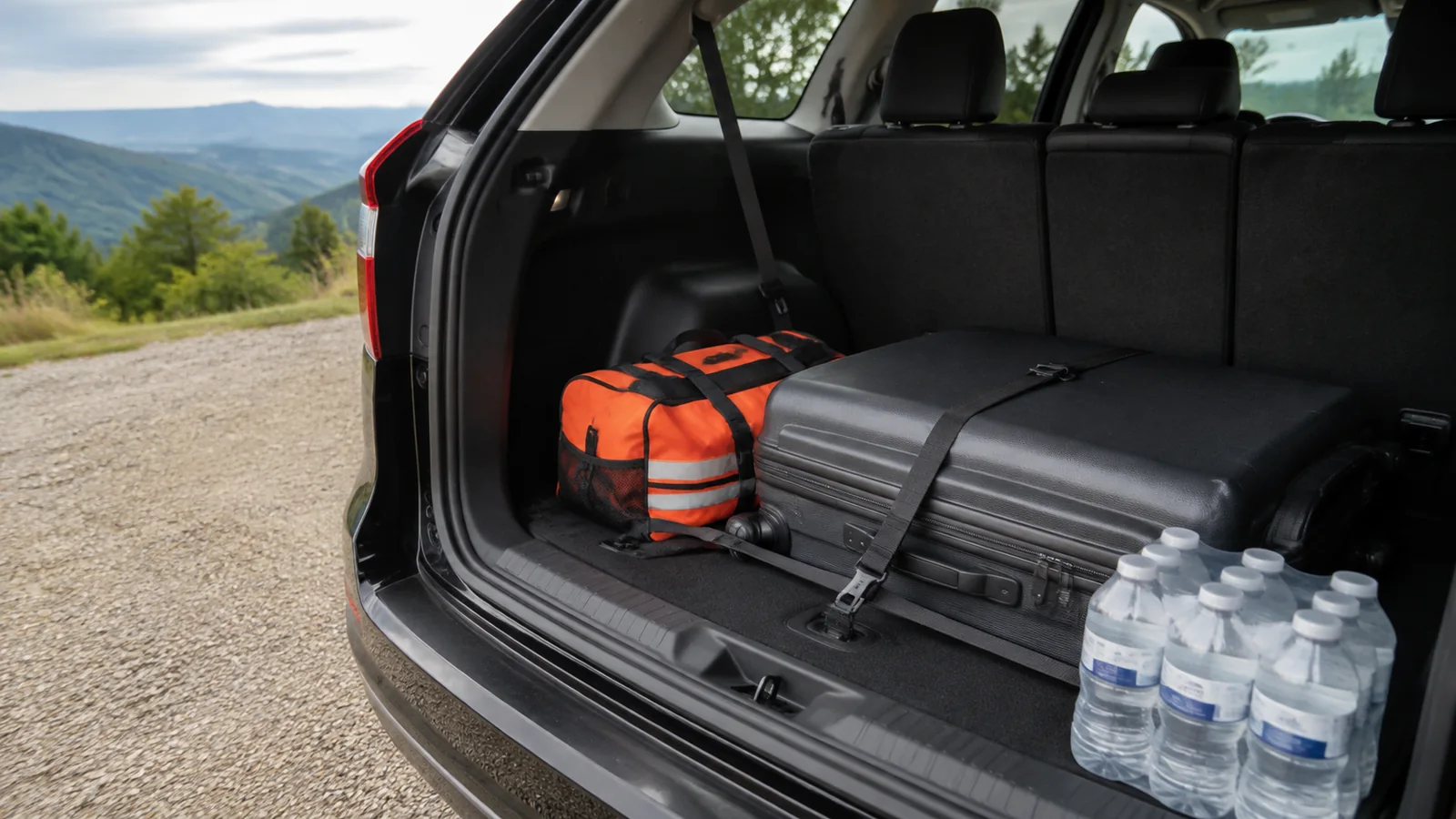
Ready.gov recommends a car kit with items such as jumper cables, reflective warnings, a charger, blanket, map, water, and basic tools. Adapt it for heat, cold, remote travel, children, pets, medical needs, and the time help could take to arrive.
Carry a first-aid kit, flashlight, gloves, and enough food and water for a delay. Learn how the equipment works before standing beside a dark road.
Share the route and expected arrival with someone outside the vehicle, especially before remote roads without reliable service.
11. Keep Critical Items Within Reach
Medication, identification, water, weather layers, charging cables, emergency contacts, and one payment backup should not sit under every suitcase. Organize the cabin so loose objects do not become projectiles during hard braking.
12. Download Offline Maps
Save maps for the full corridor, lodging addresses, trailheads, hospitals, fuel or charging, and alternate routes. Screenshot reservation details and keep a paper overview when remote coverage is expected.
Offline navigation does not know every live closure. Use it as backup after checking current official road information.
Drive Safely
13. Check Official Road Conditions
Use state or provincial transportation agencies, park alerts, weather services, and local emergency notices before departure and each morning. The Federal Highway Administration explains 511 traveler information as a source for current conditions in participating U.S. jurisdictions.
Apps can suggest a route that is seasonally closed, unpaved, unsuitable for trailers, or dangerous in current weather. Obey gates and signs even when navigation insists the road continues.
14. Stop Before Drowsiness Becomes a Fight
A sleepy driver should switch, stop, or sleep, not turn up the music and bargain for another hour. NHTSA advises adequate sleep and a safe stop, noting that coffee plus a short 20-minute nap can improve alertness only temporarily.
Build rest into the schedule so stopping does not feel like failure. A hotel is cheaper than the consequences of forcing an unsafe night drive.
15. Put the Phone Out of the Driving Job
Set navigation, music, and messages before moving, then let a passenger handle changes. A solo driver should pull into a legal parking place before typing, searching, photographing, or reading.
16. Buckle Every Person, Every Time
Seat belts belong on drivers and passengers in every seating position, including short sightseeing hops. Install age-appropriate child restraints according to manufacturer and legal requirements, and check fit after moving a seat between vehicles.
17. Never Drive Through Floodwater
Turn around at flooded roads and barriers rather than estimating depth or current. Water can hide washouts, move vehicles, and strand occupants before the road looks dramatic.
18. Keep Fuel or Charge Margin
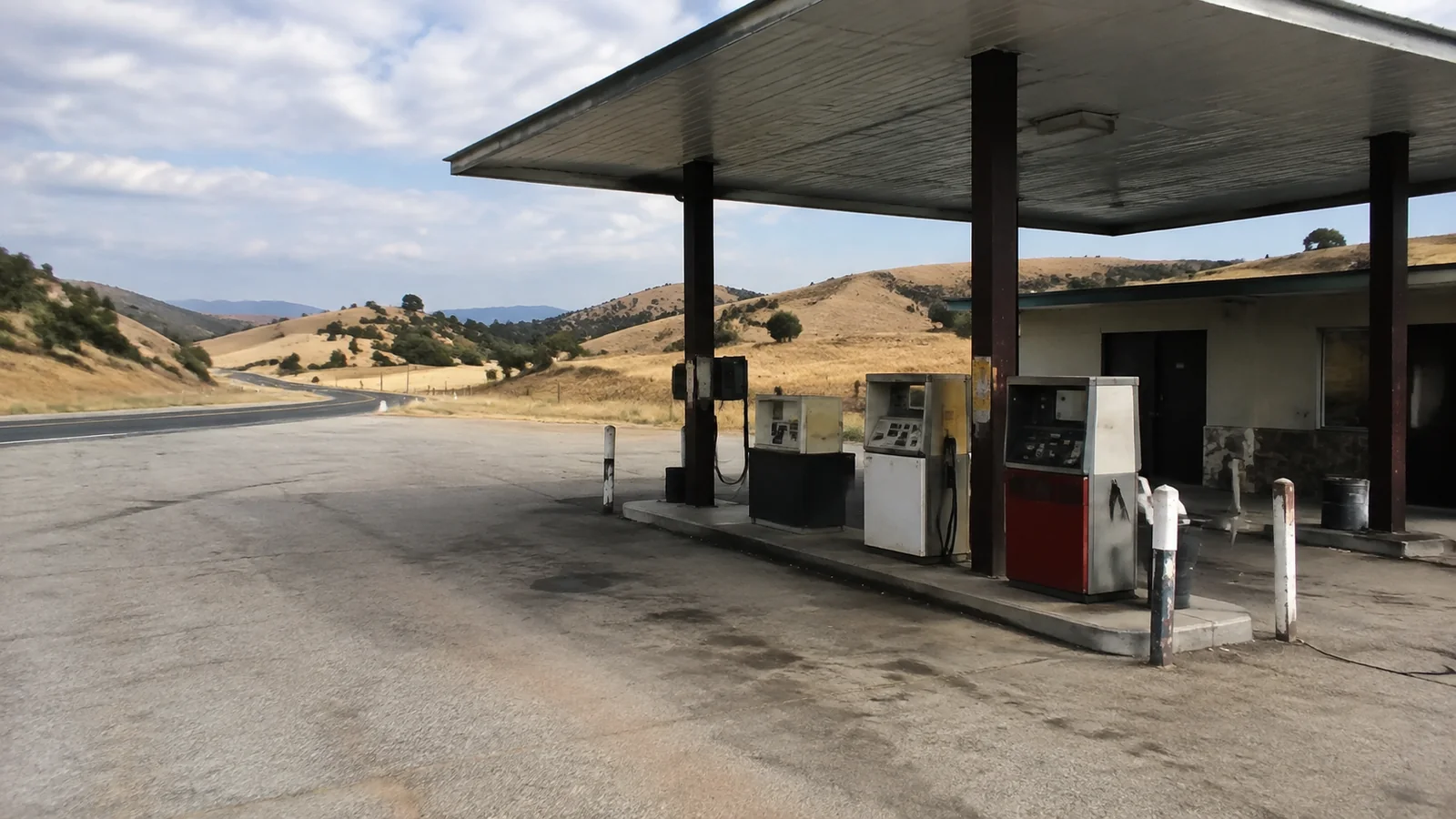
Refuel before remote stretches, after-hours arrivals, storms, or high-elevation routes make the next stop uncertain. Station hours and charger status can change, so one backup is part of the route.
Make Daily Travel Easier
19. Pack One Overnight Bag
For a one-night stop, carry a small cube or bag with clothes, toiletries, medicine, and chargers instead of unloading the whole trunk. Keep valuables and temperature-sensitive items with you.
20. Group Food by Purpose
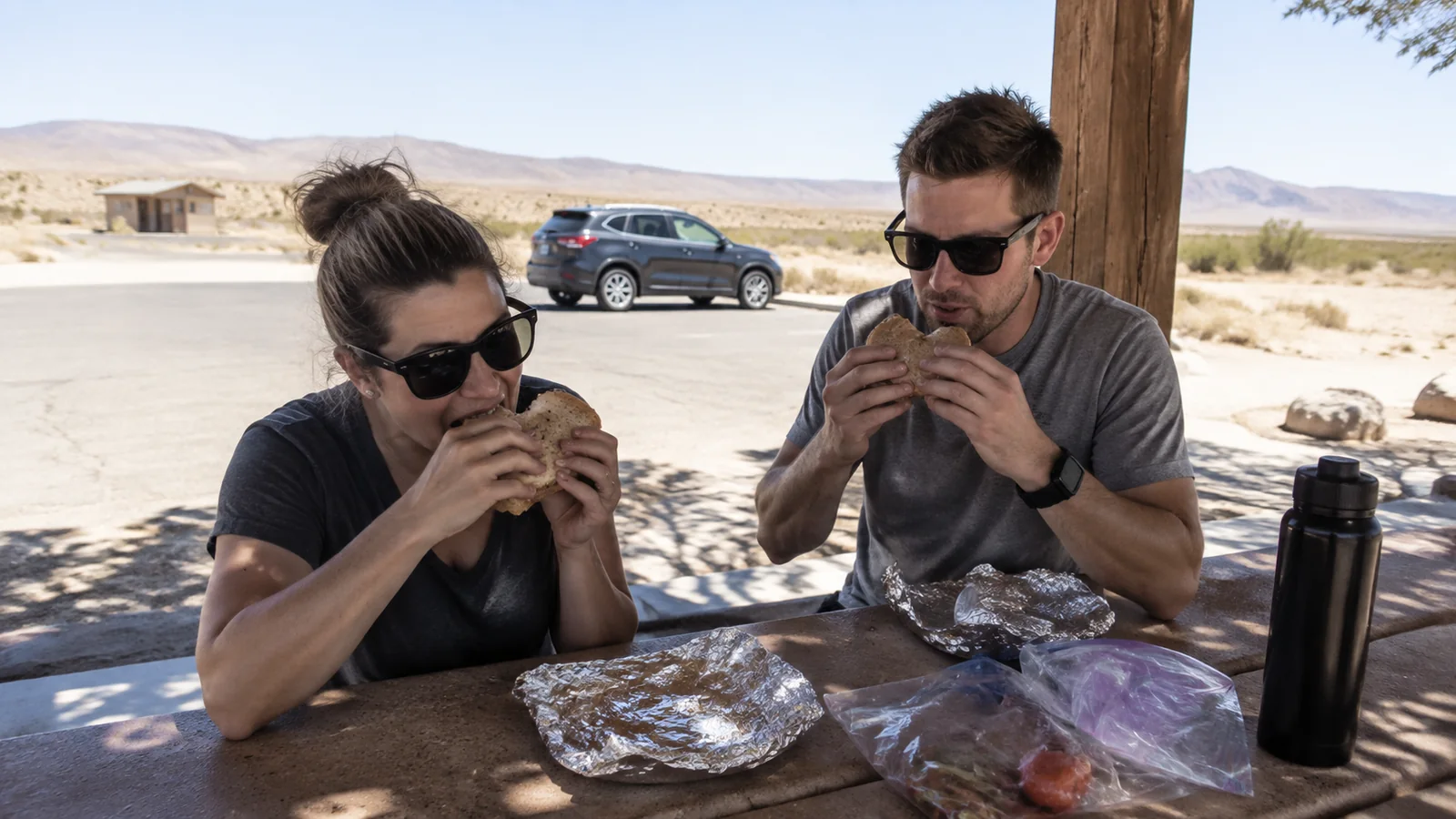
Carry water, emergency food, and ordinary driving snacks as separate categories. A cooler helps only when you manage ice, food safety, drainage, and the space it consumes.
Plan grocery stops near lodging with a refrigerator or kitchen. Buying large packages for two nights can cost more and create waste.
21. Choose Lodging for Arrival Reality
Check parking fees, vehicle height, trailer access, charging, check-in cutoff, elevator access, neighborhood, breakfast, and cancellation terms. A cheaper hotel is not cheaper when it adds a distant garage and a stressful midnight walk.
22. Keep the Car Quiet Enough to Think
Assign places for trash, wet gear, snacks, charging, and tomorrow’s clothes. Reset the cabin and refill water at the end of each day so the morning starts with driving, not excavation.
The Upper Midwest road trip demonstrates how two-night bases and regional loops can reduce constant repacking. Use the route as a model, then scale daily distances to your own drivers and season.
Control the Budget
23. Price the Car Beyond Fuel
Include maintenance, rental taxes, insurance, tolls, parking, charging, fuel, ferries, roadside coverage, and one-way fees. Split costs clearly among travelers before one person becomes the unpaid bank.
The total-trip budget method compares fixed, daily, and optional costs without pretending the lowest room or rental rate wins. Time and cancellation risk belong in the decision too.
24. Book the Scarce Night First
Holiday weekends, national park gateways, festivals, ferries, and remote lodges can control the route. Secure the hardest refundable reservation, then build flexible stops around it.
Respect the Places Along the Road
25. Stop Legally for Wildlife and Views
Use a designated pullout with the entire vehicle outside the travel lane. Never stop traffic, block an emergency route, approach an animal, or send a passenger into the road for a photograph.
National Park Service wildlife guidance notes that distance rules vary by park and that an animal reacting to your presence means you are too close. Check the site-specific minimums, keep food secured, and remain inside the vehicle when directed.
Road Trip Checklist
- Confirm maintenance, tire pressure, spare equipment, and recalls.
- Download routes while checking official closures and weather.
- Carry documents, medication, water, layers, and an emergency kit.
- Set a realistic daily driving limit and backup overnight option.
- Verify tolls, parking, fuel, charging, ferry, and rental rules.
- Share the route and expected arrival with someone outside the car.
Bottom Line
The strongest road trip tips protect the driver’s attention and the itinerary’s breathing room. Maintain the vehicle, shorten ambitious days, check live road conditions, stop when tired, and keep enough margin for weather or a closed route.
A great road trip still contains surprises. Good planning makes them scenic detours and longer lunches instead of roadside emergencies.