14 Most Beautiful Lake Destinations in the World
The most beautiful lakes in the world seem to borrow their color from somewhere unreal. They glow beneath glaciers, mirror entire mountain ranges, curl around volcanic islands, and turn ancient villages into scenes that feel painted rather than built.
These 14 lake destinations are the ones I would choose for pure visual wonder, from the Canadian Rockies to the red-rock canyons of the American Southwest.
1. Moraine Lake and Lake Louise, Canada
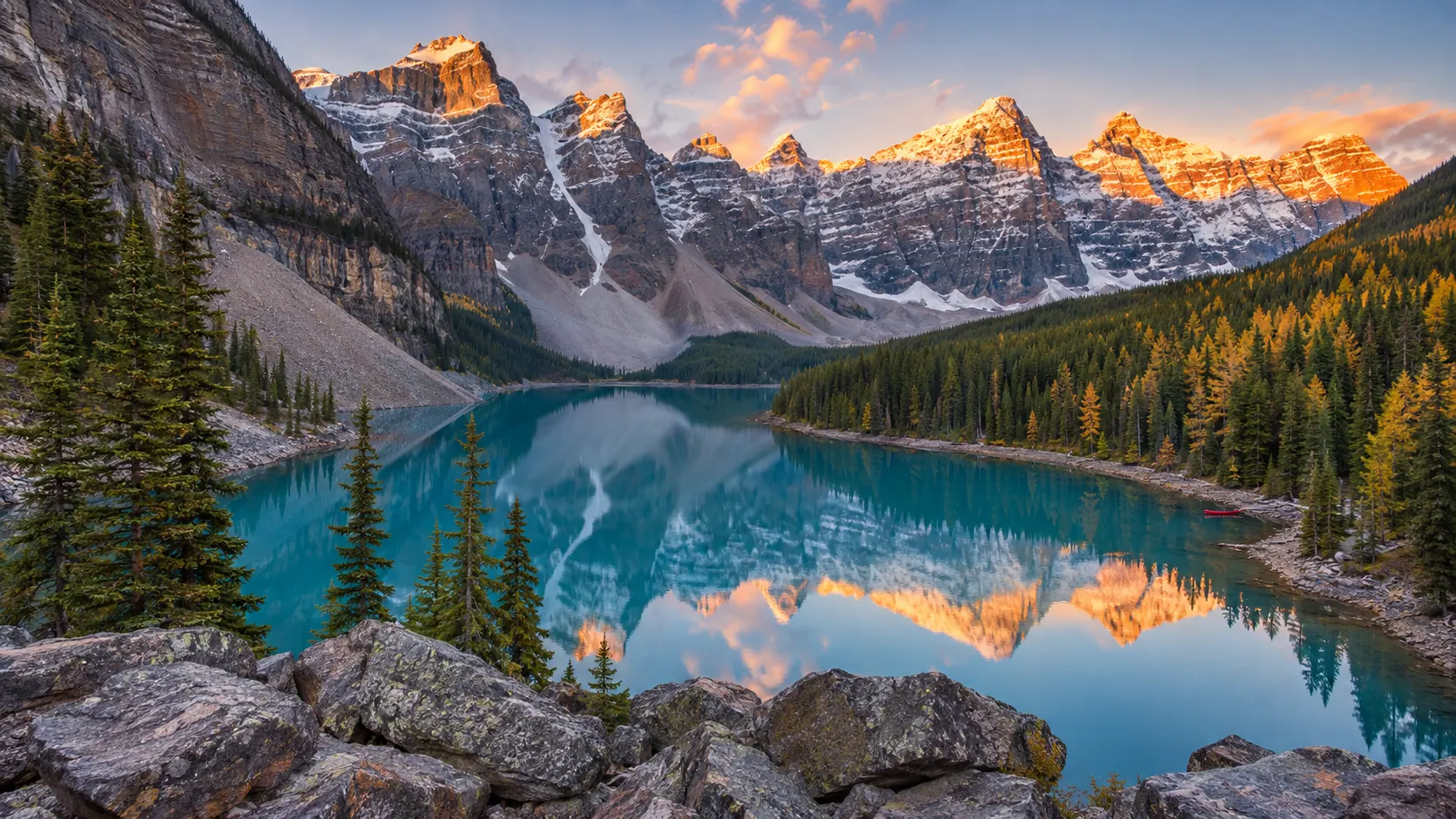
Moraine Lake is the kind of place that makes color look newly invented. Its glacial water shines turquoise beneath the sharp, snow-streaked Valley of the Ten Peaks, with dark evergreens rising around the shore like a frame.
Lake Louise offers a softer version of the Canadian Rockies. The long lake narrows toward Victoria Glacier, while forested slopes and immense gray peaks draw the eye deeper into the valley.
Both lakes change constantly with the light. A cloudy morning can make the water look deep teal, while sunlight brings out the vivid blue created by fine glacial sediment suspended in the water.
Moraine Lake Road is closed to personal vehicles, so visitors use shuttles or licensed transportation described by Parks Canada. Once that small piece is arranged, the experience belongs to the mountains.
The surrounding valleys also lead into some of Canada’s most memorable trails, making these lakes a natural companion to the most beautiful hikes around the world.
2. Crater Lake, Oregon
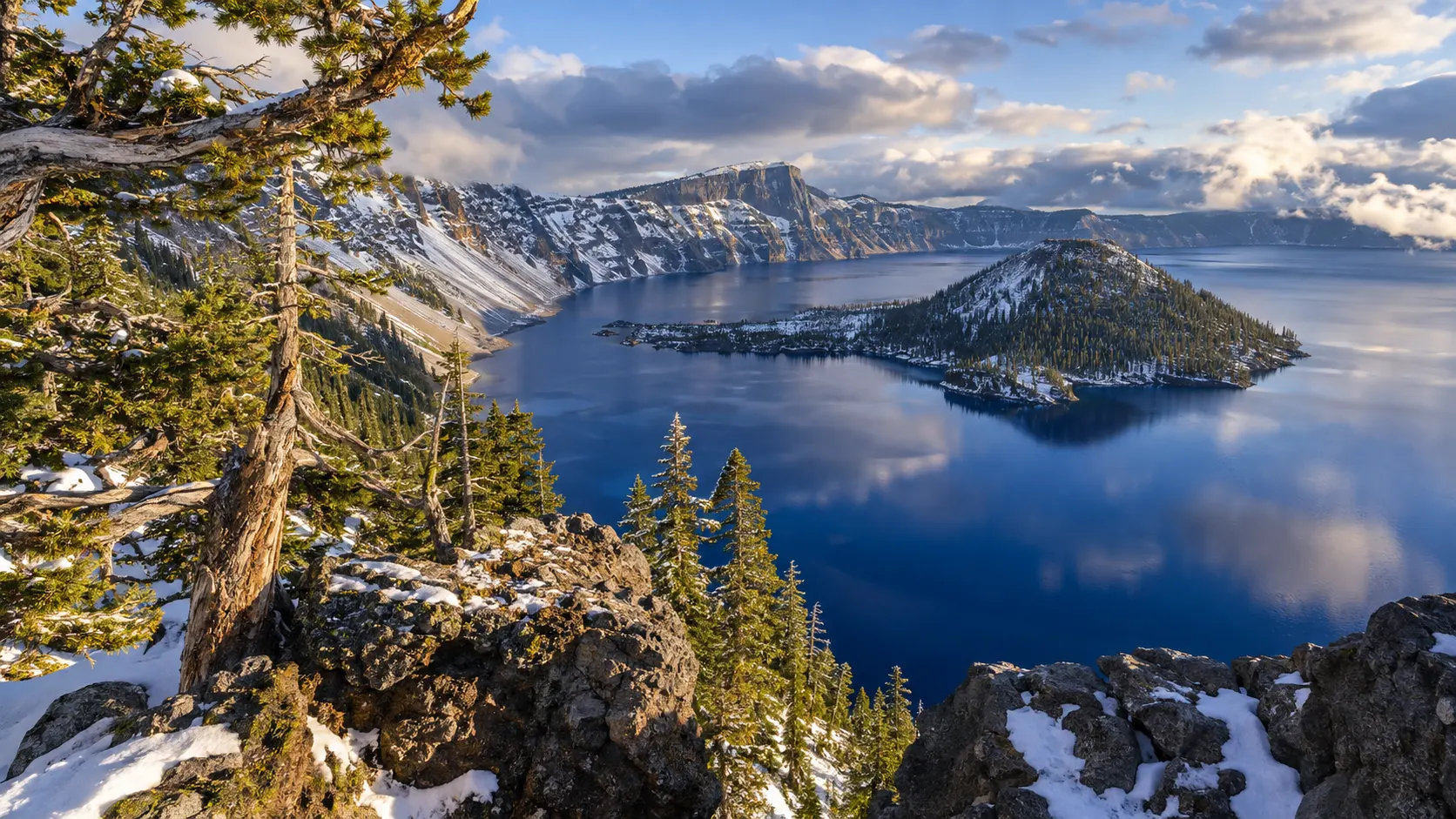
Crater Lake is so intensely blue that the first view from the rim can feel disorienting. The water fills the collapsed caldera of Mount Mazama, surrounded by steep cliffs that hold the lake like an enormous stone bowl.
Rain and snow are the lake’s only sources of water, with no rivers flowing in or out. That remarkable purity helps create its famous color and clarity, while a depth of 1,943 feet makes it the deepest lake in the United States.
Wizard Island rises from the western side like a miniature volcano inside the larger crater. In winter, snow turns the surrounding rim white and makes the blue water look even darker.
The lake is beautiful even when snow limits how much of the rim can be explored. The National Park Service conditions page is the only practical link worth checking before the view takes over.
3. Lake Como, Italy
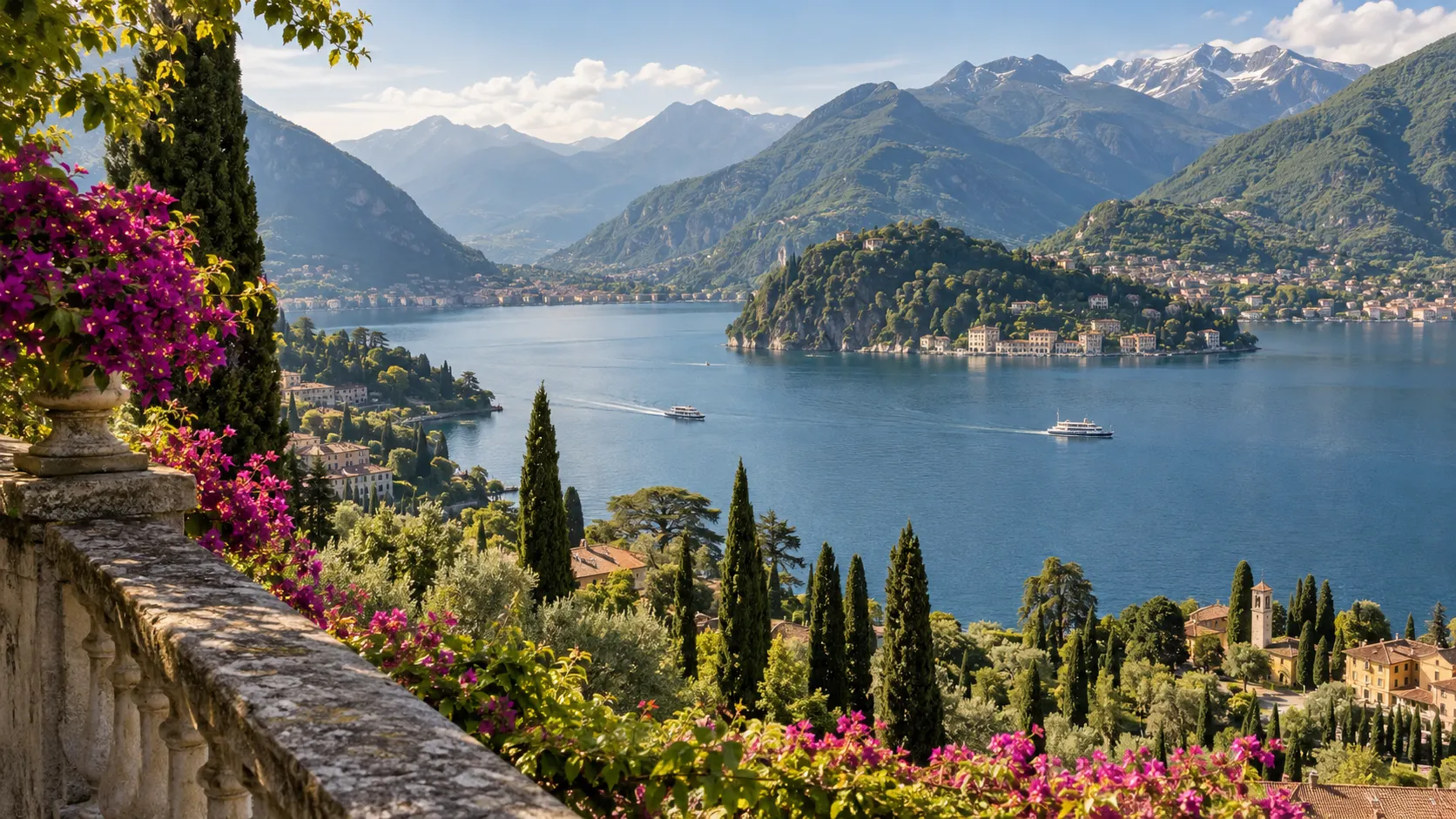
Lake Como combines mountain scenery with an elegance that feels inseparable from the water. Villages climb the lower slopes in layers of warm stone and faded color, while villas, gardens, and slender cypress trees line the shore.
The lake’s branching shape means every ferry ride reveals another composition. Bellagio sits where the water divides, Varenna glows against the eastern shore, and quieter villages appear beneath green mountains that seem to drop directly into the lake.
Morning brings silver water and soft haze. By late afternoon, the western light warms stucco walls and turns balconies, church towers, and lakeside gardens into the romantic version of Italy people hope is real.
Como is at its best when nothing is rushed. The unforgettable moments are often simple ones: a wake spreading behind a ferry, bells carrying across the water, or the mountains fading into blue beyond a café table.
4. Lake Bled, Slovenia
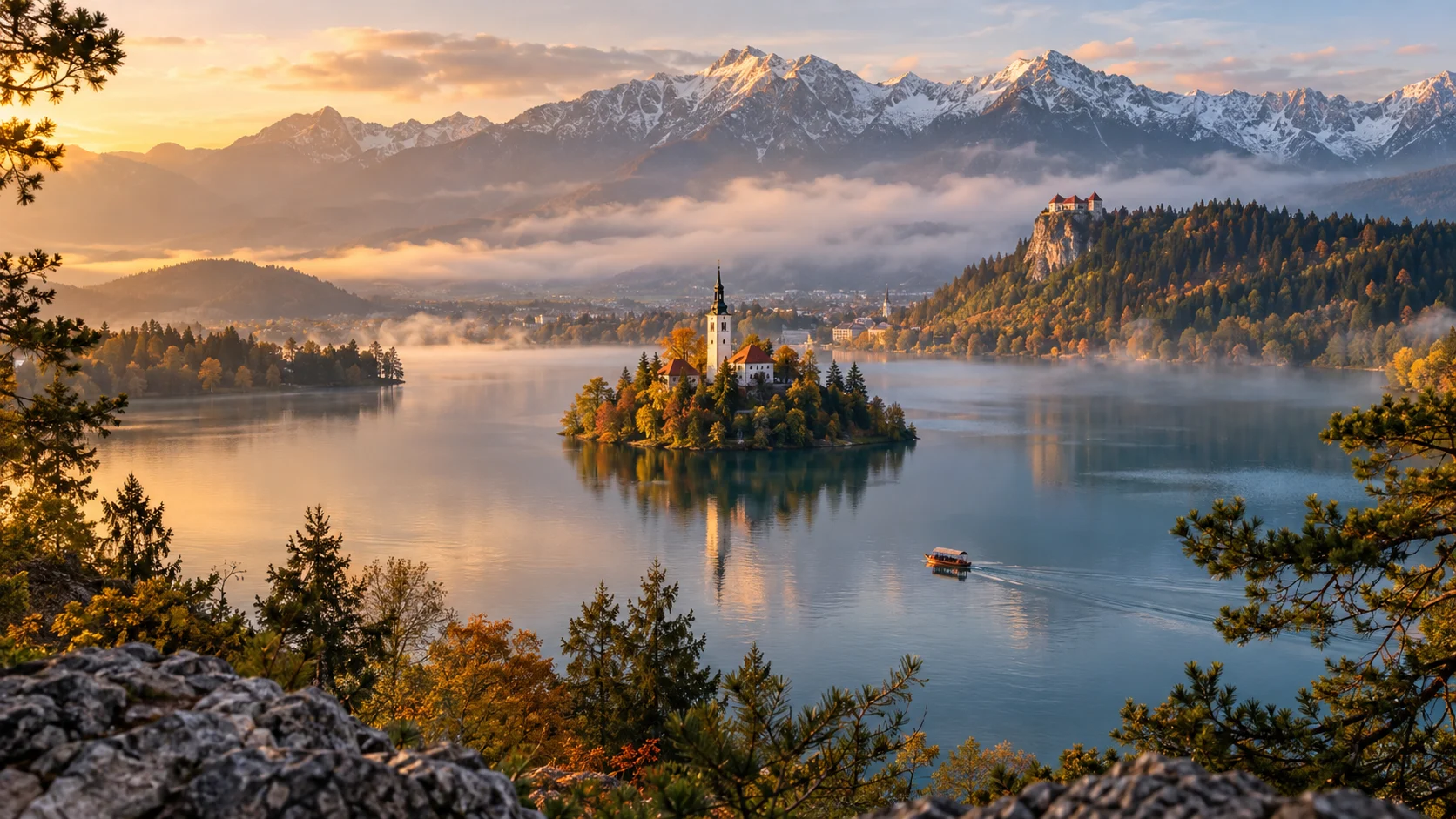
Lake Bled looks as though every storybook detail was placed deliberately. A tiny island holds a white church, a medieval castle clings to a cliff, and the forested foothills of the Julian Alps rise behind the water.
The lake is compact enough for its reflections to feel intimate. Rowboats and traditional wooden pletna boats cross the blue-green surface, while the island bell tower remains visible from nearly every side.
Early light brings the calmest version of Bled, when mist may hover above the water and the church appears suspended between lake and sky. Autumn adds gold and copper around the shoreline, while snow gives the scene an almost impossible quiet.
The famous viewpoint from the hills above gathers the island, castle, lake, and distant mountains into one frame. It is one of those rare views that is instantly recognizable and still more beautiful than expected.
5. Plitvice Lakes, Croatia
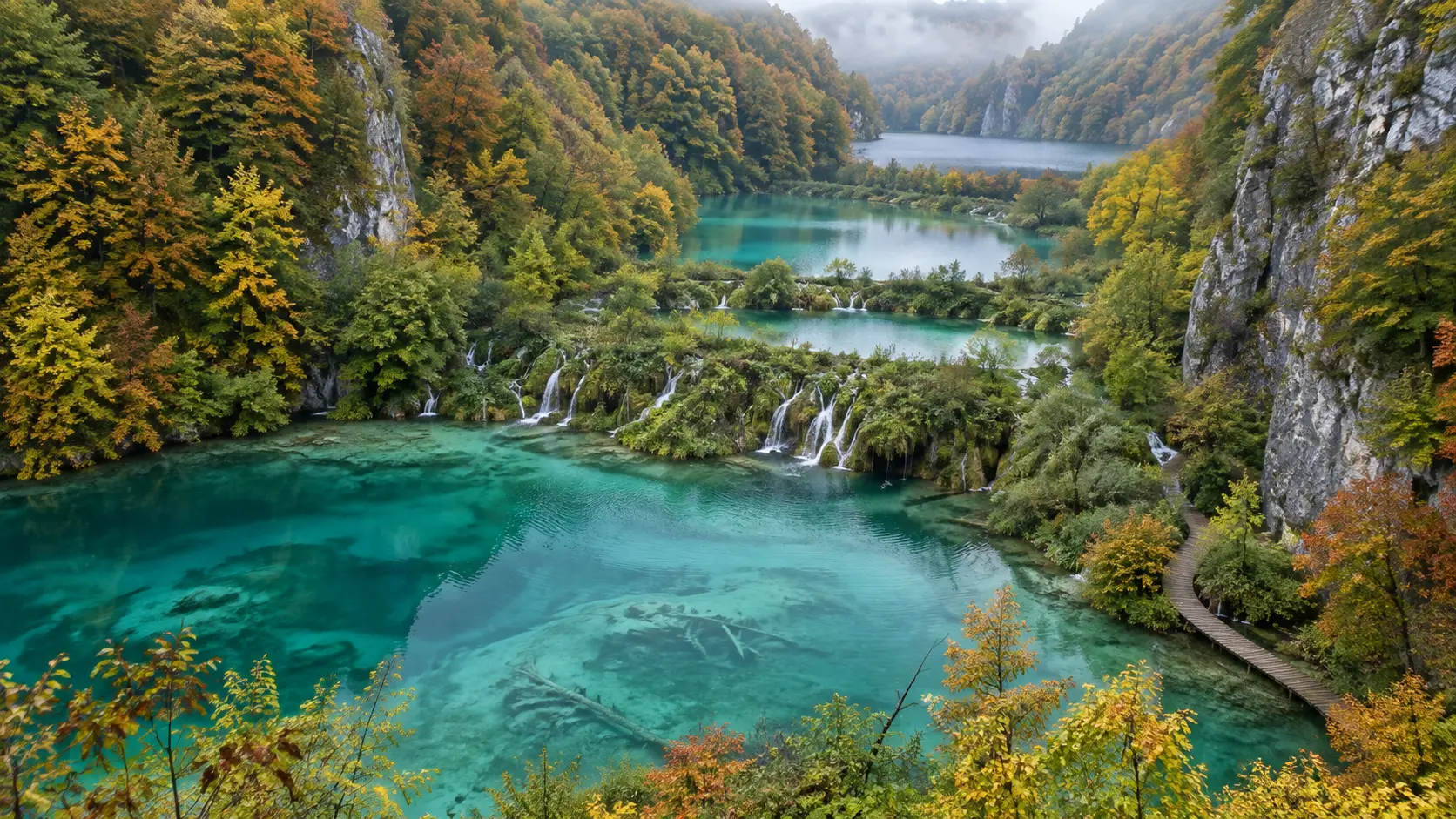
Plitvice is not one perfect lake but a whole forest shaped by water. Lakes step through the landscape in shades of turquoise, jade, blue, and silver, connected by waterfalls that slip over moss and pale travertine.
Wooden boardwalks pass so close to the surface that fish, reflections, and submerged branches become part of the scenery. Around the next bend, the quiet water may suddenly break into dozens of white cascades.
The landscape feels alive because the same geological process that formed it continues today. Water flowing across limestone deposits travertine, gradually building the natural barriers that separate the lakes.
Plitvice can appear fresh and luminous in spring, intensely green in summer, or surrounded by fiery forest in fall. Swimming is prohibited, preserving the clarity and delicate formations explained by the national park’s official guidance.
If the waterfalls are what stay with you most, they continue through my guide to the most beautiful waterfalls in the world.
6. Lake Tekapo and Lake Pukaki, New Zealand
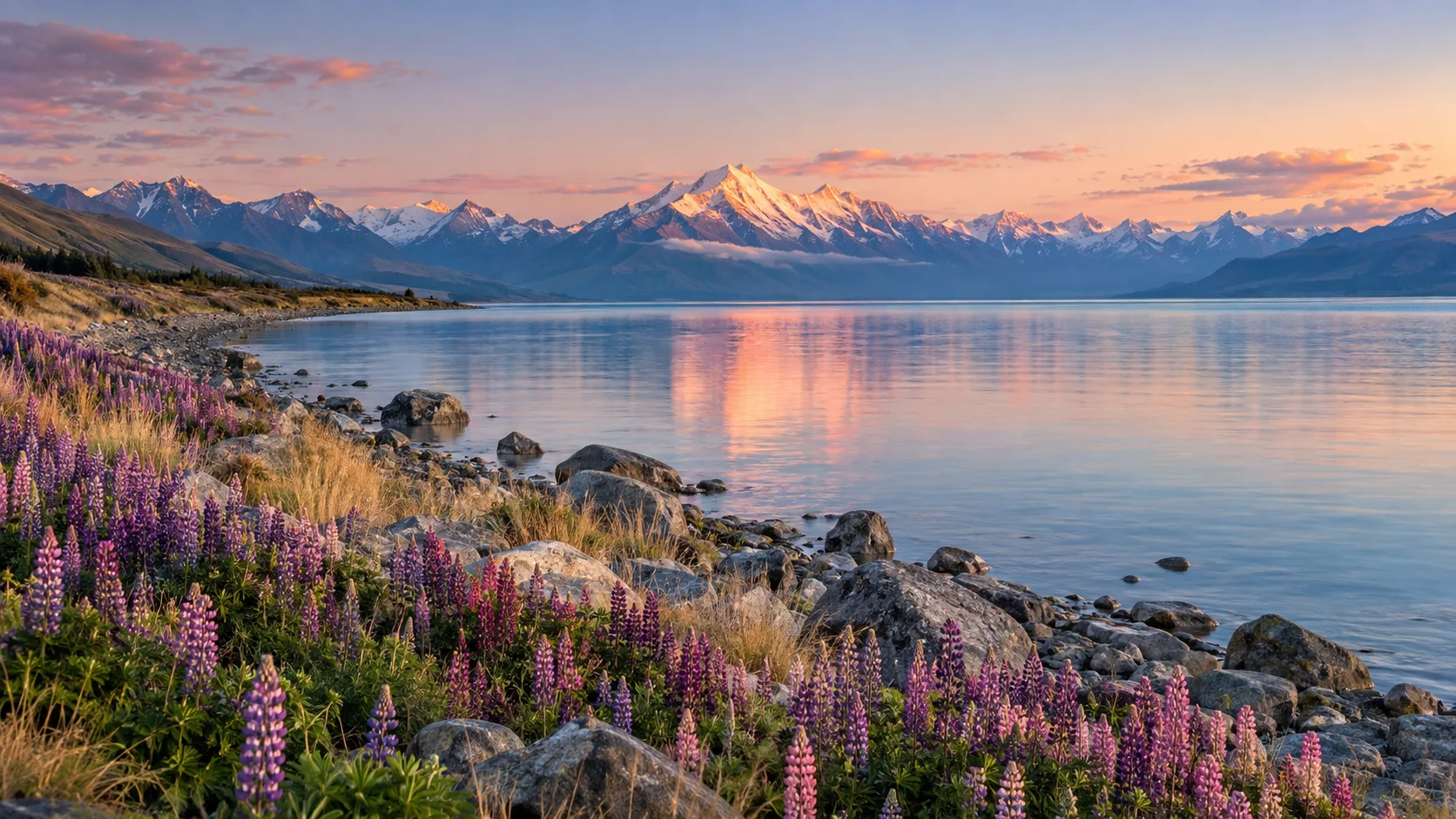
Lake Tekapo and Lake Pukaki make the center of New Zealand’s South Island feel flooded with light. Both lakes carry the milky turquoise color of glacial flour, but each creates a completely different mood.
Tekapo pairs blue water with open golden hills, the stone Church of the Good Shepherd, and one of the clearest night skies imaginable. After sunset, the lake becomes a dark foreground beneath the Milky Way and the dense stars of the Aoraki Mackenzie International Dark Sky Reserve.
Pukaki feels wider, wilder, and more dramatic. On a clear day, Aoraki/Mount Cook rises beyond the far end of the lake, its white summit floating above water that can look almost electric.
Clouds may hide the mountains and then separate without warning, revealing a panorama that was there all along. That unpredictability makes the first clear view feel like a gift.
7. Lake Atitlán, Guatemala
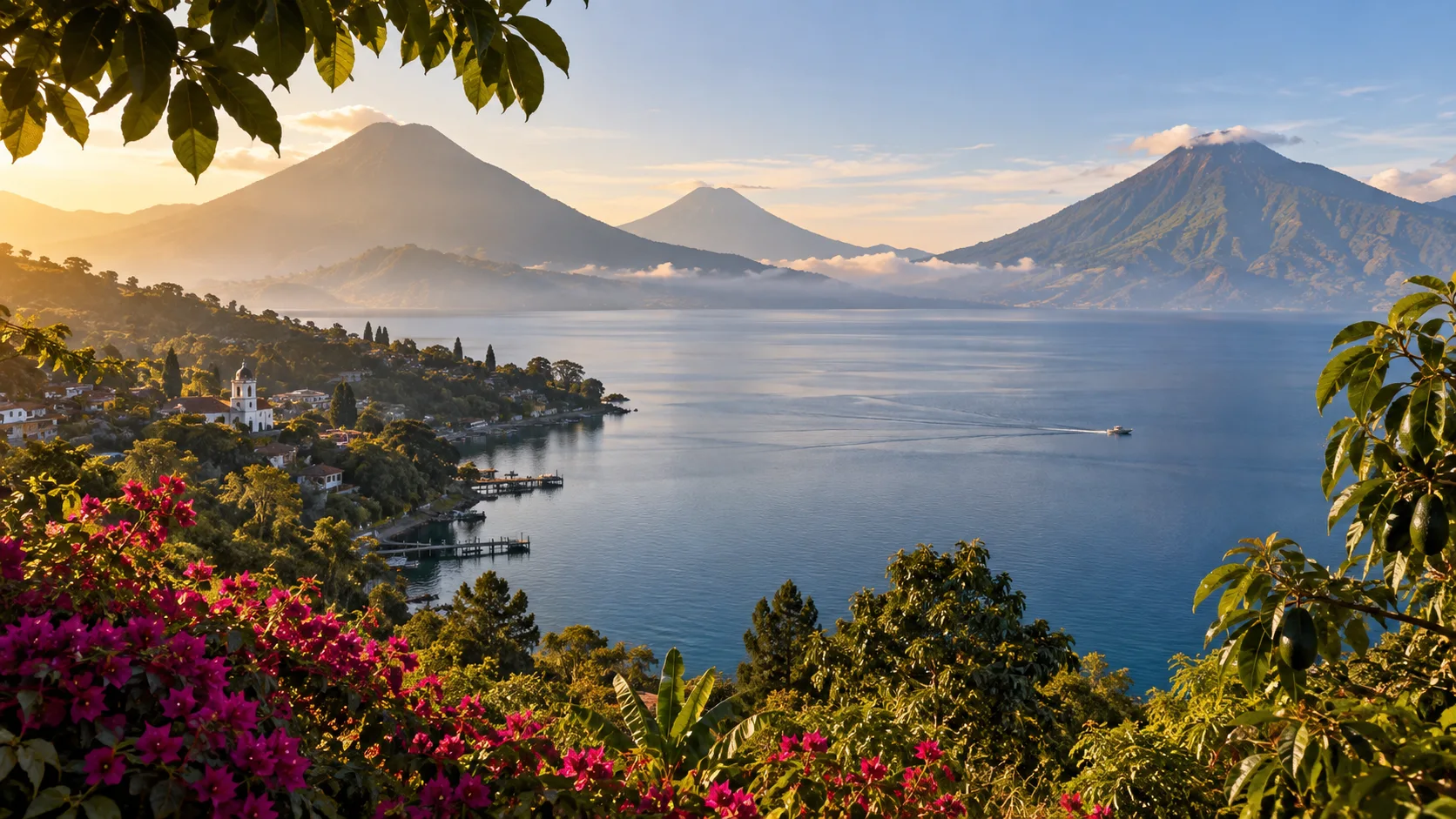
Lake Atitlán fills an immense volcanic basin in Guatemala’s highlands. Three volcanoes rise around the water, their silhouettes stacking behind one another as clouds and afternoon light move across the slopes.
The lake can look cobalt blue in the morning, silver beneath cloud, or almost black during a passing storm. Villages scattered around the shore add color through painted buildings, gardens, textiles, docks, and boats.
What makes Atitlán especially memorable is that the scenery and living Maya culture are inseparable. San Juan La Laguna is known for art and community-led traditions, while other lakeside towns reveal different rhythms, languages, markets, and views.
From the water, the volcanoes seem larger than they do from shore. A boat crossing beneath them turns ordinary transportation into one of the most beautiful moments of the entire lake.
8. Lake Titicaca, Peru and Bolivia
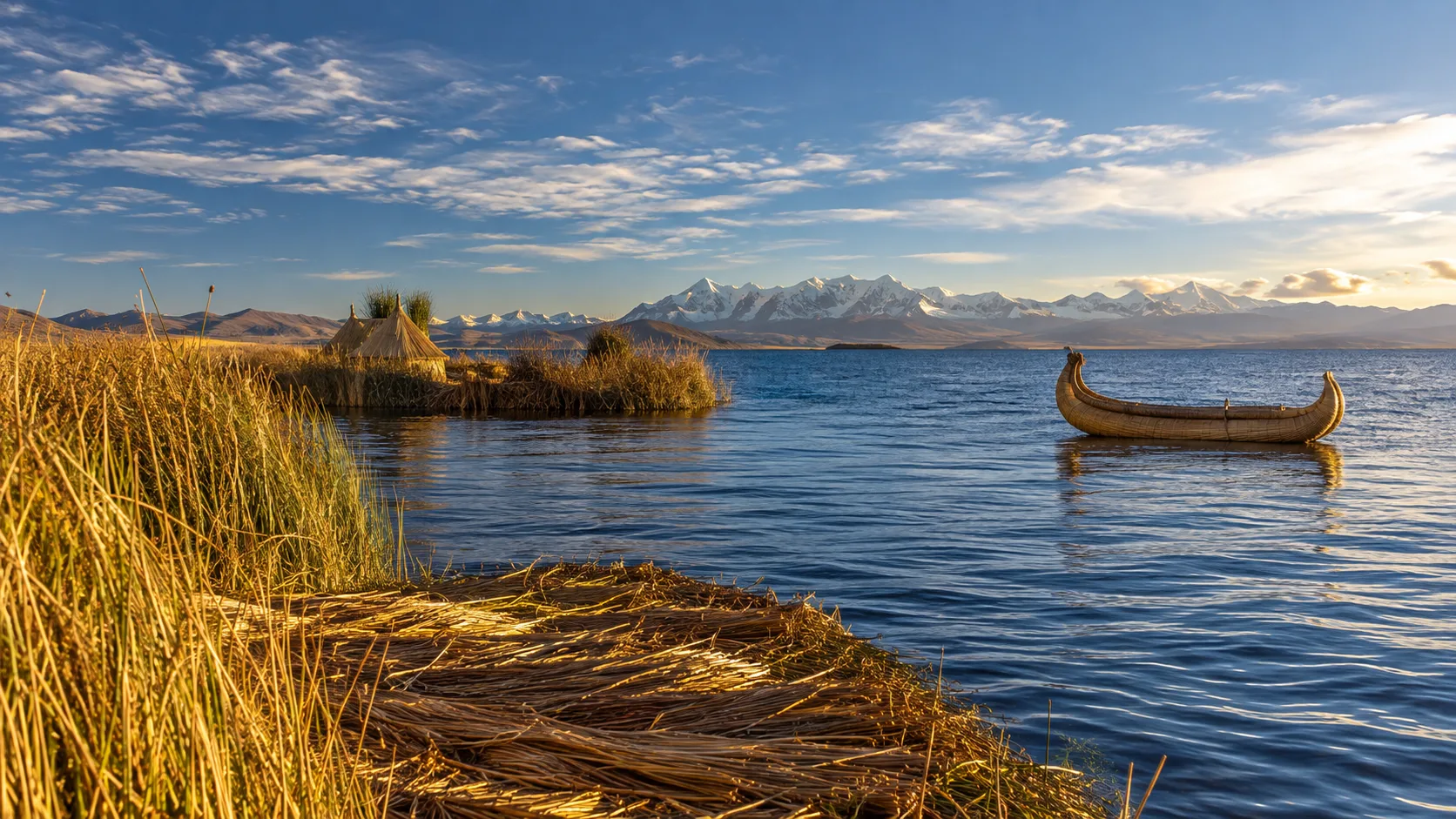
Lake Titicaca spreads across the high Andes beneath a sky that feels unusually close. At roughly 12,500 feet above sea level, its deep blue water lies beyond dry golden hills and distant snowcapped peaks.
The scale can be difficult to understand from one viewpoint. Islands and peninsulas break the horizon, while the lake stretches across the Peru-Bolivia border until it resembles an inland sea.
Centuries of culture give the scenery another layer. Reed islands near Puno, stone terraces on Taquile, and the paths of Isla del Sol connect the water with communities and traditions that long predate modern borders.
The altitude deserves respect, especially for travelers arriving from much lower elevations. Once acclimatized, the combination of enormous sky, brilliant water, and quiet island paths feels unlike anywhere else on this list.
9. Lake Tahoe, California and Nevada
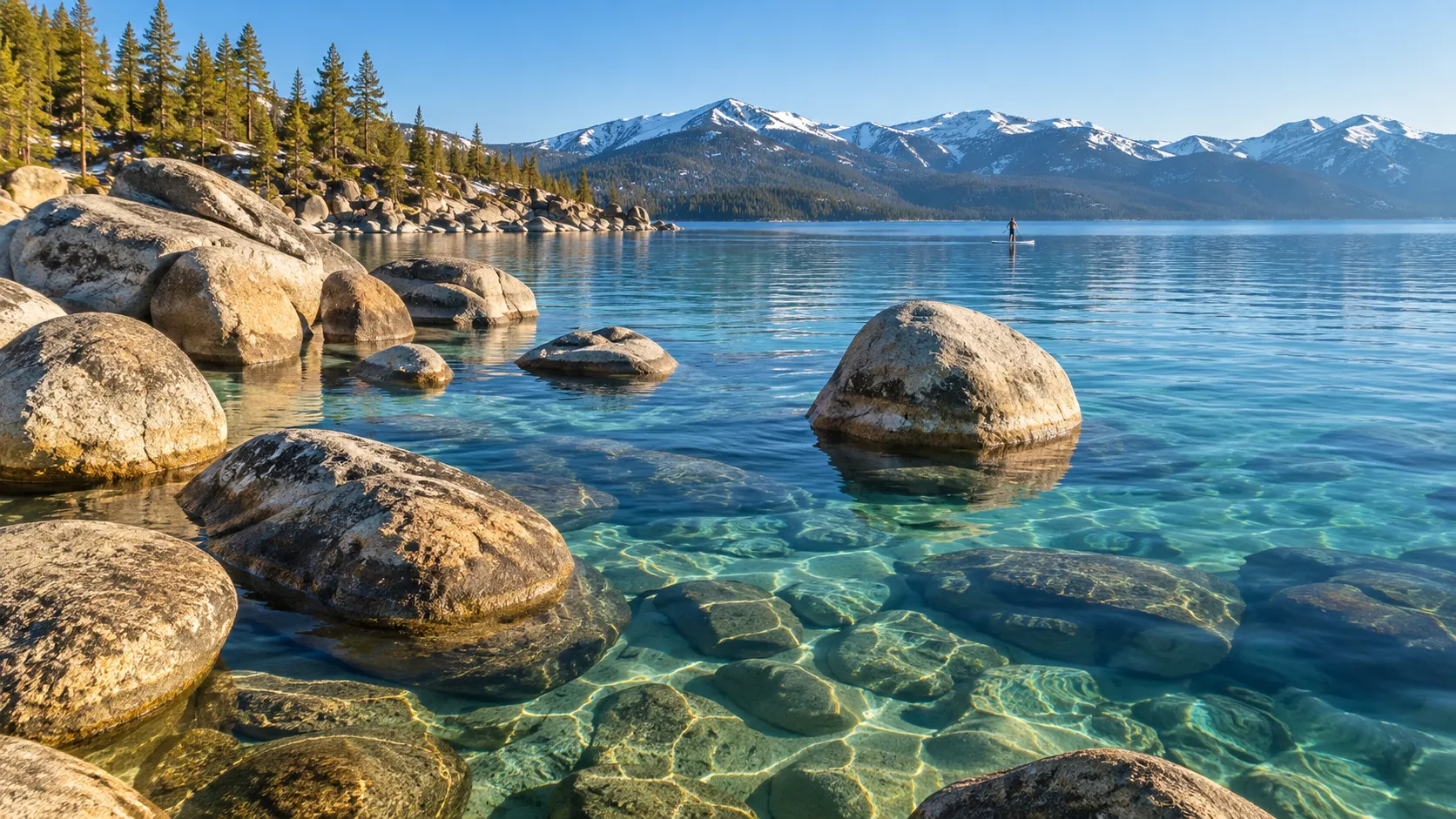
Lake Tahoe brings Caribbean-looking water into the Sierra Nevada. Along the eastern shore, transparent shallows surround rounded granite boulders before deepening into shades of emerald, turquoise, and blue.
Evergreen forest climbs from the coves toward mountain ridges, creating a landscape that changes completely with the season. Summer brings sparkling water and pale beaches, fall sharpens the air, and winter places the same blue lake beneath heavy snow.
Emerald Bay provides the grand panorama, with a curved inlet, forested slopes, and tiny Fannette Island below. Sand Harbor offers a more intimate beauty, where clear water moves between enormous stones close to shore.
Tahoe is polished and popular, but it still has moments that feel wonderfully wild. Cold water and fast-changing mountain weather remain real even on bright days, so admiration should never turn into carelessness.
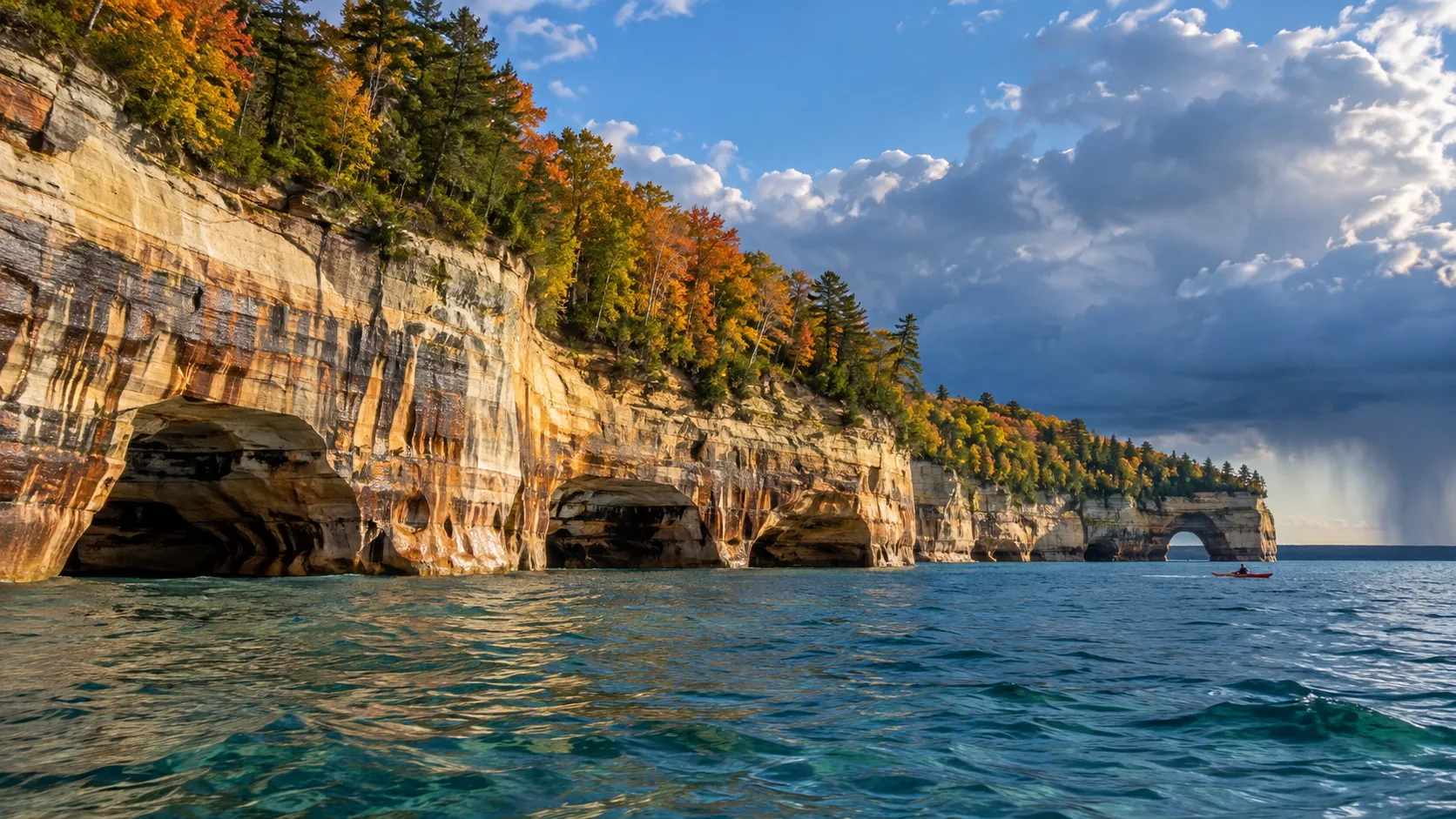
10. Lake Superior, United States and Canada
Lake Superior does not feel like a lake so much as a freshwater ocean. Its horizon disappears, waves break against stone beaches, and storms can turn calm blue water into something dark and formidable.
The shoreline changes across hundreds of miles. Red and gold cliffs rise at Pictured Rocks, sea caves shape the Apostle Islands, waterfalls tumble toward Minnesota’s North Shore, and Ontario’s forests meet long stretches of exposed rock.
Clear nights can bring stars above empty beaches, while fall covers the surrounding forest in color. Even summer water remains startlingly cold, a reminder that Superior’s beauty and power cannot be separated.
The lake rewards choosing one region and noticing its details rather than trying to conquer the whole shoreline. Wisconsin travelers can follow the water inland through this northern Wisconsin waterfall route.
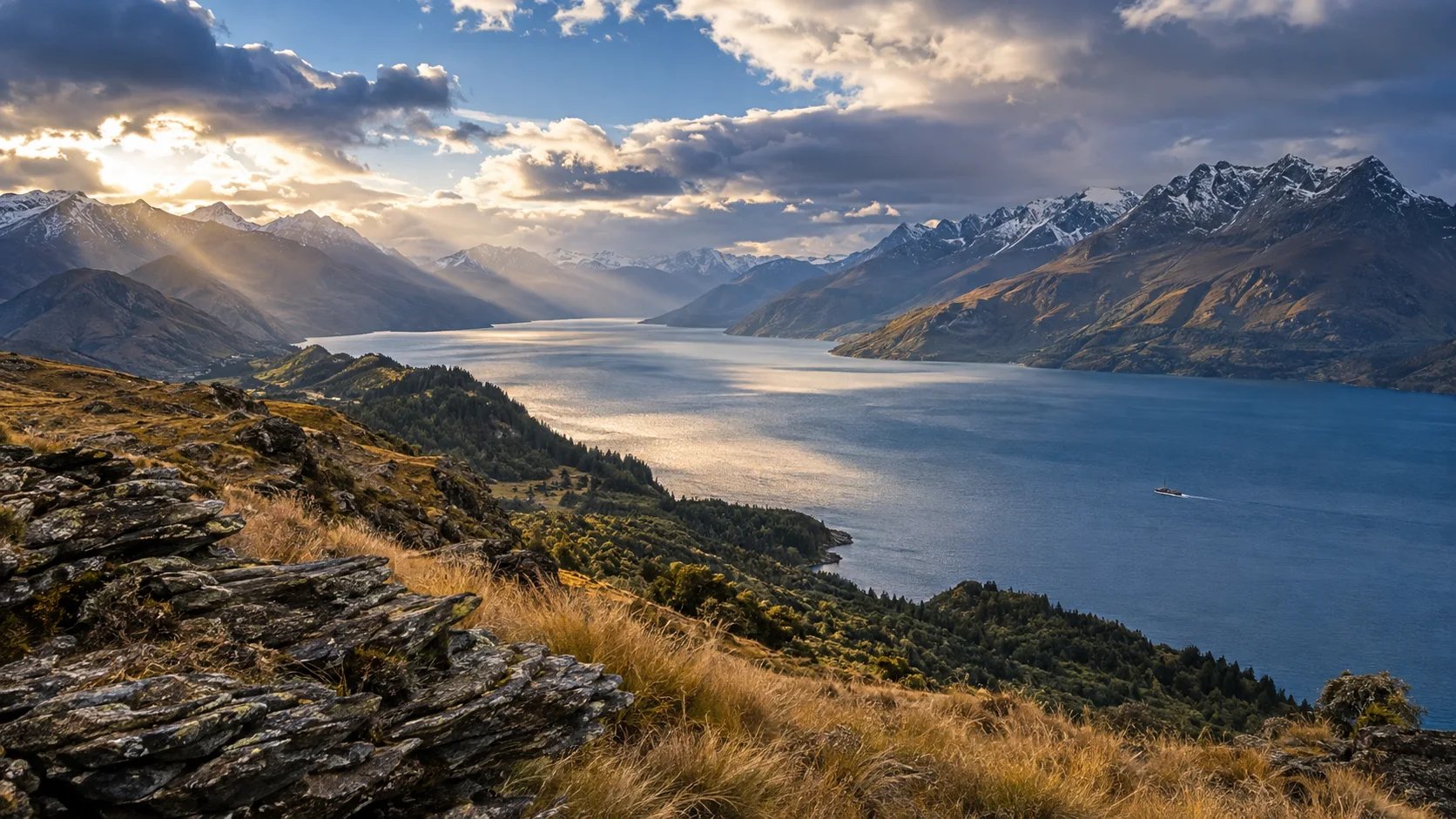
11. Lake Wakatipu, New Zealand
Lake Wakatipu curves through the mountains of New Zealand’s South Island like a long blue ribbon. Queenstown sits on one bend, but the scenery grows wilder toward Glenorchy, where braided rivers and valleys open beneath snowcapped peaks.
The Remarkables rise sharply from the southeastern shore and catch the first and last light. Clouds travel quickly through the ranges, creating shifting bands of sun, shadow, rain, and snow across the water.
A lakeside walk can feel peaceful, while a boat crossing reveals the true scale of the basin. The mountains keep unfolding behind one another until the town looks small and the lake seems to belong entirely to the landscape.
Wakatipu is especially beautiful because adventure and stillness coexist so easily. One moment can be filled with wind and mountain weather, while the next is nothing more than reflections moving across a quiet bay.
The wider Fiordland landscape continues beyond the lake in the waterfalls, forests, and mountain walls featured in my New Zealand scenery guide.
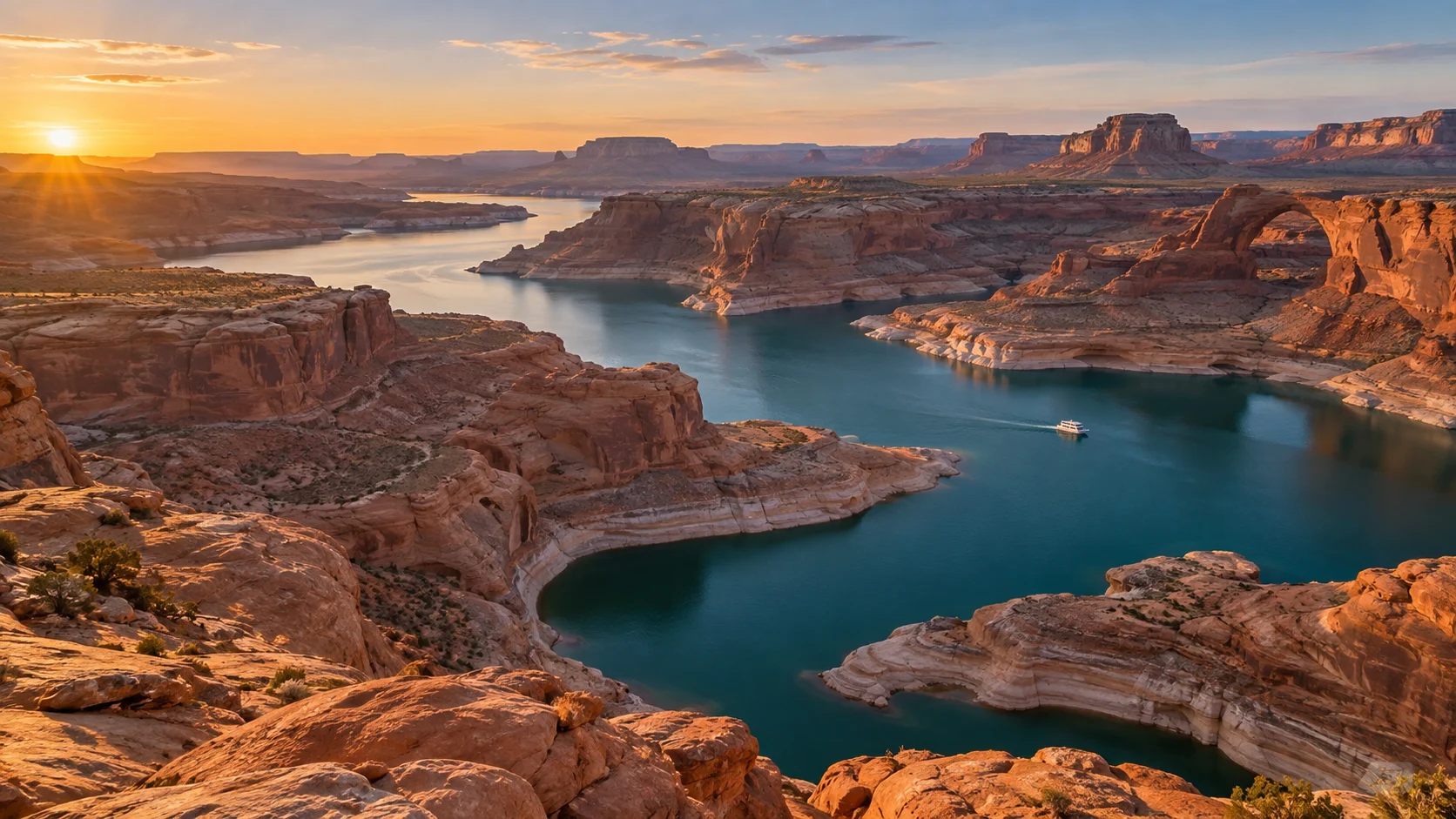
12. Lake Powell, Arizona and Utah
Lake Powell fills the folds of the Colorado Plateau with blue water, creating one of the world’s most dramatic meetings of lake and desert. Rust-colored cliffs rise directly from narrow channels, while pale sandstone curves into arches, alcoves, and hidden coves.
It is a reservoir rather than an untouched natural lake, and changing water levels constantly reshape its appearance. New shorelines emerge, canyon walls reveal pale bands, and familiar routes can look different from one season to the next.
From a high overlook, the contrast is graphic and enormous: blue water threading through bare red rock beneath an equally vast sky. From water level, the canyons close in and reflect warm light onto the surface.
That desert beauty demands caution around heat, wind, changing navigation hazards, and flash floods. Current alerts from the National Park Service matter here, but they should support the experience rather than define it.
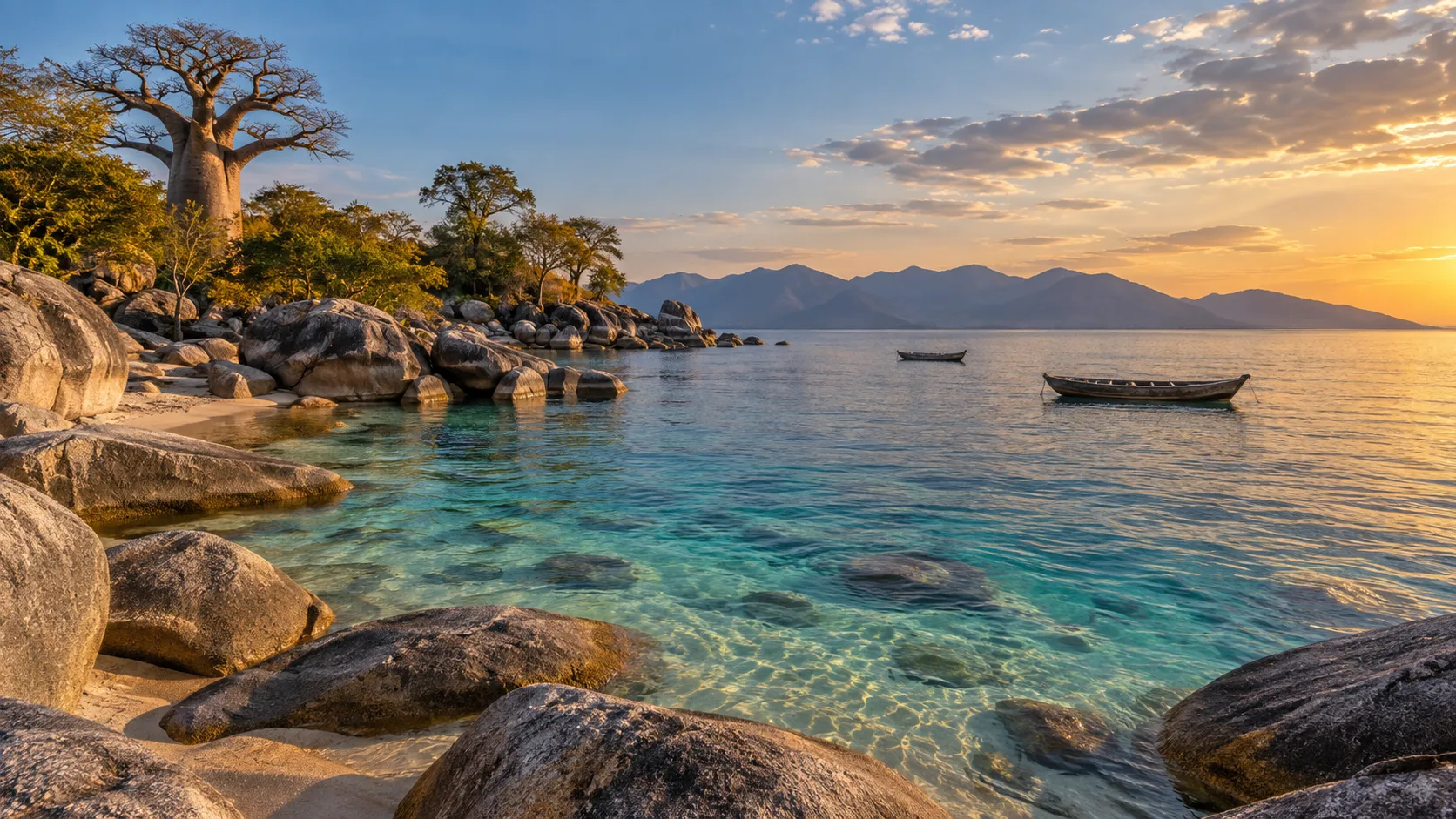
13. Lake Malawi, Malawi
Lake Malawi brings tropical color to the Great Rift Valley. Clear blue water reaches toward distant mountains, while sandy coves, wooded headlands, fishing villages, and rocky islands shape the shoreline.
The lake is enormous enough to create broad horizons and its own moods. Calm mornings can look almost translucent, afternoon wind roughens the surface, and sunset turns the western sky into bands of orange and violet.
Beneath the water lives an extraordinary concentration of colorful cichlid fish, many found nowhere else. That biodiversity makes the lake globally important as well as beautiful.
Lake Malawi also has a documented risk of schistosomiasis, so the CDC recommends avoiding freshwater contact in areas where the disease is present. I would admire this lake from boats, beaches, villages, and viewpoints rather than treating every inviting cove as a swimming spot.
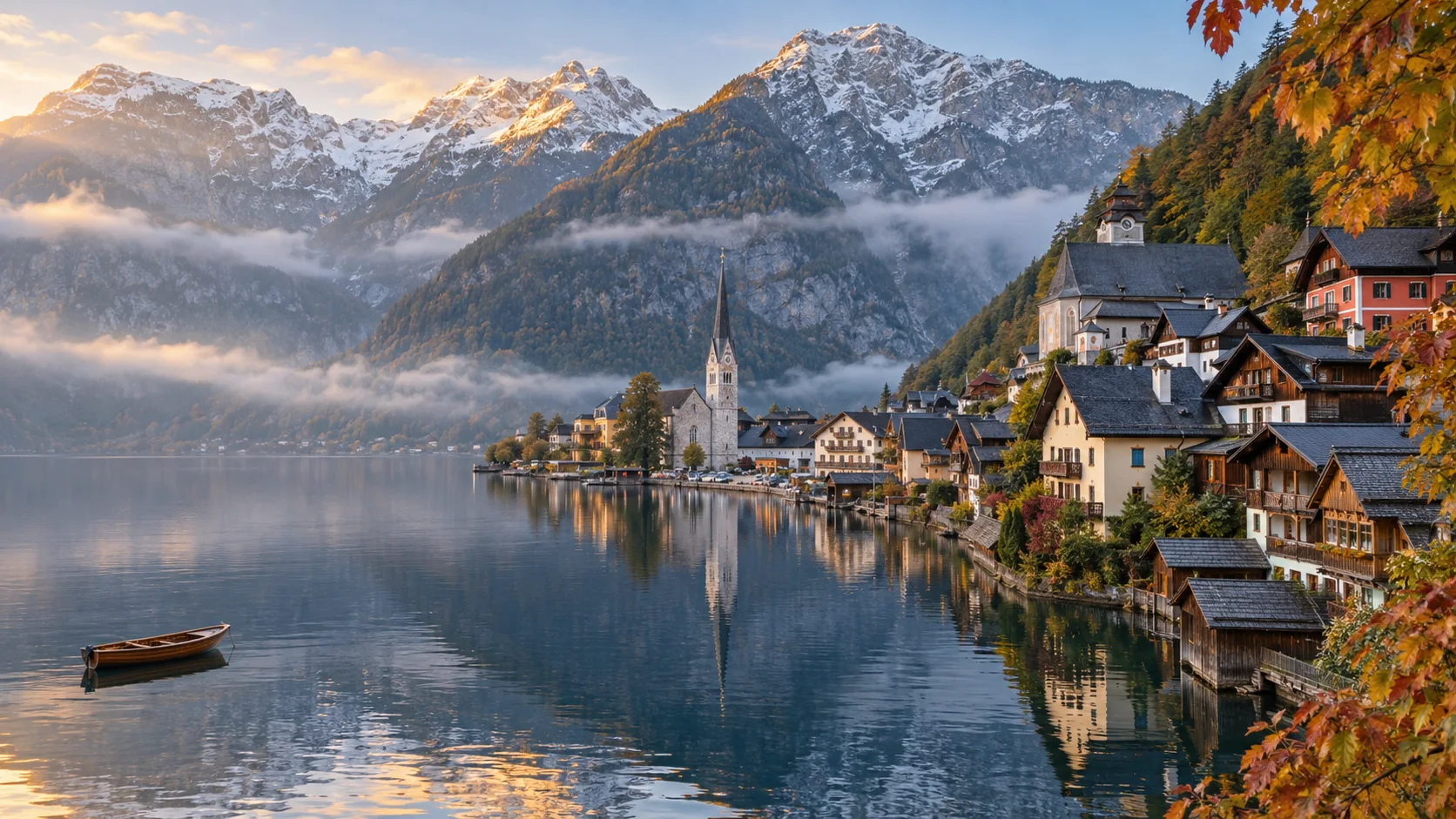
14. Lake Hallstatt, Austria
Lake Hallstatt compresses an entire alpine dream into one narrow stretch of water. A historic village gathers between the lake and steep mountains, with a slender church tower rising above clustered roofs and reflections.
Mist can soften the opposite shore until the mountains almost disappear. When the sky clears, the water reflects forest, cliffs, boats, and pastel buildings with a stillness that makes the village feel suspended.
The classic viewpoint is famous, but the lake itself becomes more impressive from a boat or the quieter shoreline beyond the center. Distance reveals how improbably the village fits against the mountain.
Hallstatt changes beautifully with the seasons. Spring brings fresh green slopes, summer fills the water with light, fall warms the forests, and winter strips the scene down to snow, dark water, and pale sky.
What makes a lake unforgettable?
Color catches the eye first, but setting creates the lasting impression. Moraine Lake needs its peaks, Atitlán needs its volcanoes, Como needs its villages, and Powell needs its red sandstone.
Reflections make lakes especially sensitive to light and weather. A place can feel bright and expansive at noon, then become moody, intimate, or almost monochrome as clouds arrive.
Scale matters in different ways. Superior and Titicaca overwhelm through sheer size, while Bled and Hallstatt are beautiful because every element fits inside one carefully balanced view.
The most memorable lake moments often happen after the first photograph. Stay long enough to see the wind settle, the mountains reappear, or the evening light begin to travel across the opposite shore.
A short note before you go
Lakes can look gentle while hiding cold water, strong wind, sudden depth, poor water quality, or fast-changing mountain weather. Check the responsible local authority before swimming or boating, and treat every posted restriction as part of protecting both visitors and the landscape.
That small amount of preparation is enough for most of this list. The goal is not to turn wonder into a checklist, but to arrive ready to slow down and actually absorb the view.
Frequently asked questions
What is the most beautiful lake in the world?
Moraine Lake is my top individual choice because its turquoise water and the Valley of the Ten Peaks create an almost perfect mountain composition. Lake Louise makes the surrounding area even more extraordinary.
Which lake has the bluest water?
Crater Lake has the deepest and most intense natural blue on this list. Moraine Lake, Lake Louise, Lake Pukaki, and Lake Tahoe offer brighter shades of turquoise created by very different geology.
Which lake has the most dramatic mountain backdrop?
Moraine Lake wins for sharp alpine drama, while Lake Pukaki offers the clearest grand view toward Aoraki/Mount Cook. Lake Wakatipu feels the most expansive because mountains continue along so much of its shoreline.
Which lake feels most like a fairy tale?
Lake Bled is the purest storybook scene because it combines an island church, cliff-top castle, forest, and Alps. Lake Hallstatt comes closest, replacing the island with an entire historic village pressed between mountain and water.
Can you swim in every lake on this list?
No. Swimming can be prohibited, dangerously cold, or medically unwise, and conditions may vary across the same lake.
Plitvice does not allow swimming, Lake Superior remains cold even in summer, and the CDC advises avoiding freshwater exposure where schistosomiasis is present around Lake Malawi. Clear water should never be mistaken for automatically safe water.
The lake destination I would choose first
I would begin with Moraine Lake and Lake Louise. Together they deliver glowing glacial water, immense peaks, forest, reflections, and two distinct moods within the same corner of the Canadian Rockies.
Crater Lake is the answer for pure blue, Lake Como for romance, Plitvice for enchantment, and Atitlán for volcanic scale. The best choice is ultimately the landscape you want surrounding the water when everything goes quiet.