Ice Fishing on Mille Lacs Lake: Safety, Rentals and Rules
Mille Lacs can make a lovely Minnesota winter weekend when you plan around current ice conditions and local support. Start with current fishing regulations and ice conditions, then choose a reputable access, guide, or rental house that fits your experience, mobility, group, and tolerance for cold.
Plan in this order
- Check the current Mille Lacs special regulations.
- Choose guided fishing, a staffed rental, or a fully independent trip.
- Select one shore and one ice-road operator.
- Confirm same-day ice access, vehicle rules, and hazards.
- Pack safety gear before tackle.
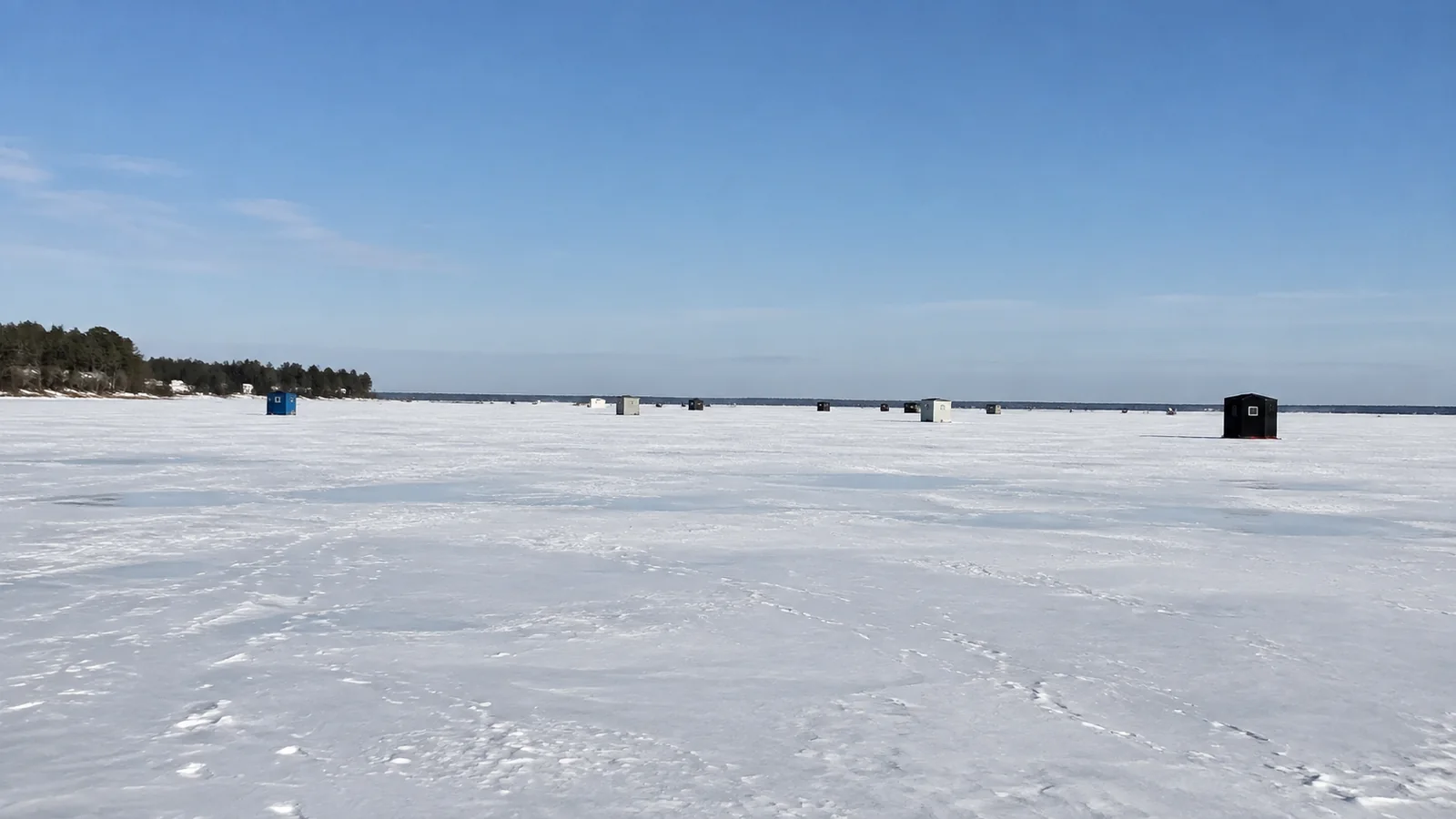
This sequence is less glamorous than debating lure colors, but it prevents expensive mistakes. Mille Lacs is a large, exposed lake, and conditions at one resort road do not certify a route on the opposite shore.
Check the special regulations every trip
Mille Lacs has lake-specific rules that can change by season and management need. The Minnesota DNR says changes will appear on its Mille Lacs regulations page and be posted at public accesses, so check again after arrival.
For the period beginning May 9, 2026, through February 28, 2027, the listed walleye daily and possession limit is three fish longer than 17 inches, with only one longer than 20 inches. That rule belongs to those dates and should not be copied forward into a later winter.
Verify northern pike, perch, tullibee, bass, muskie, bait, spearing, and season rules separately. A legal species may have a different limit, size window, open season, method restriction, or possession calculation than the fish beside it in your bucket.
A valid Minnesota angling license is generally part of the plan, subject to current age, residency, and exemption rules. Fish already at a cabin, in a vehicle, or in a freezer can count toward possession, so count retained fish across the whole trip.
Choose your level of help
Guided day for first-timers
A guide is the best starting point for travelers who do not own cold-weather gear, electronics, an auger, or local ice knowledge. Ask whether the price includes heated shelter, transportation from shore, rods, bait, sonar, fish cleaning, license help, and gratuity.
A guide helps with technique and local decisions, but catches and safe access are never guaranteed. You still need warm clothing, truthful mobility information, personal medication, and the willingness to turn around when conditions deteriorate.
Staffed rental house for comfort
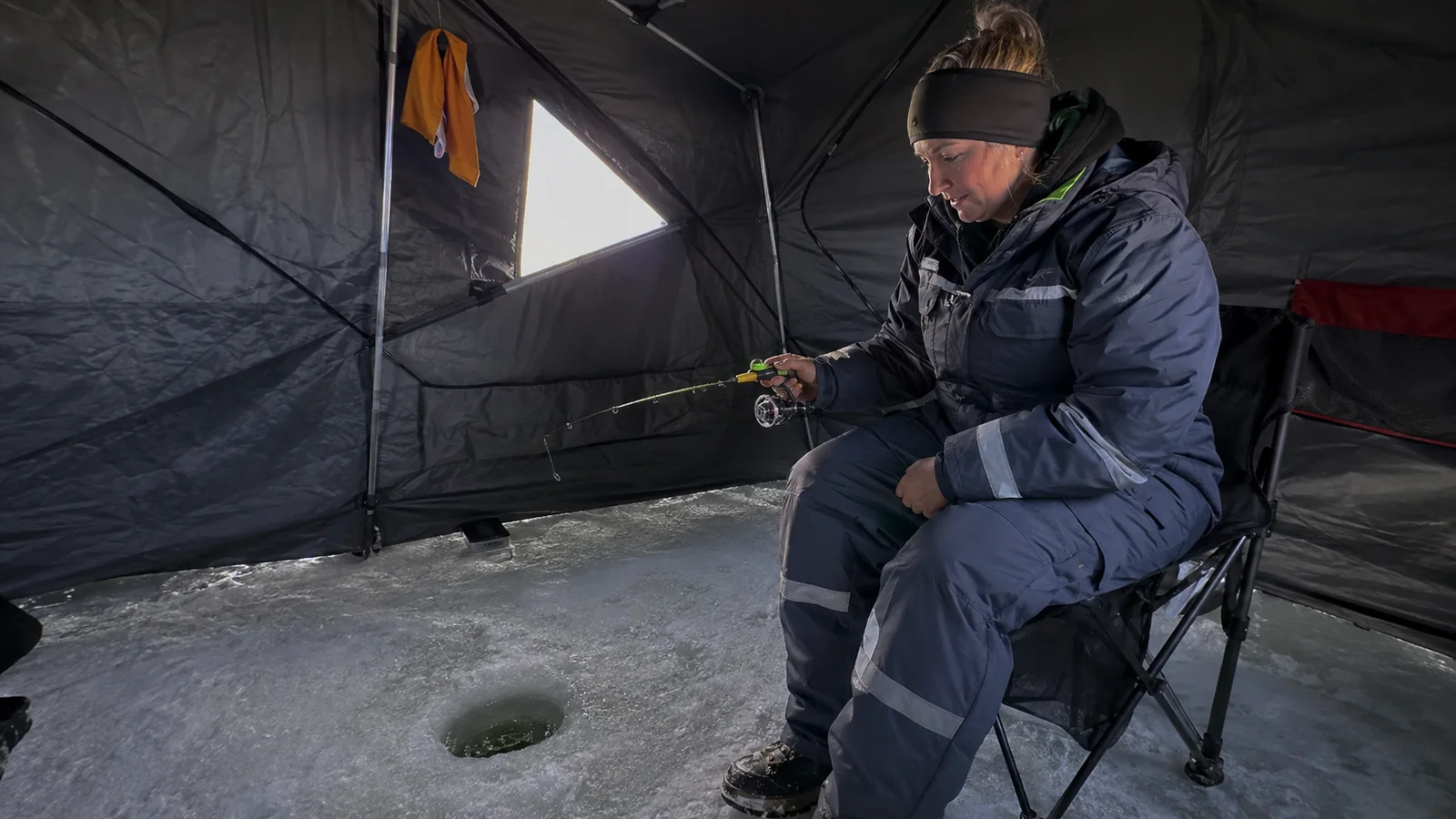
A day house provides heat, drilled holes, seating, and varying amounts of tackle or bait support. A sleeper or wheelhouse adds beds and cooking space, but also introduces heater, ventilation, carbon-monoxide, sanitation, and overnight-emergency questions.
Rental descriptions are not standardized. “Fully equipped” might mean rods and minnows at one operator, then mean only heat and holes at another, so request a written inclusion list before packing.
Independent fishing for experienced groups
Independent anglers must solve access, ice measurement, route, shelter, drilling, electronics, bait, legal compliance, warmth, and rescue planning themselves. Familiarity with another frozen lake does not reveal Mille Lacs pressure ridges, cracks, heaves, current areas, or today’s road changes.
Use a maintained commercial ice road when appropriate and follow its operator’s exact vehicle, speed, spacing, bridge, and closing rules. An open road still requires ongoing attention to changing conditions.
Pick a shore and stay there
Garrison and the west side, Isle and Wahkon on the southeast, the east-side resort corridor, and north-shore operations can each provide lodging, rentals, guides, or road access. Their routes reach different structures and can open or close at different times.
Choose based on the operator’s current services, nearby lodging, drive from home, and the species or depth your guide recommends. Do not drive around the lake chasing a social-media report from two days earlier while daylight and weather disappear.
The official tourism directory lists ice-fishing businesses around Mille Lacs, but inclusion is a starting point rather than a safety endorsement. Call the exact operator on the day of access and ask where to check in before entering the ice.
No ice is guaranteed safe
Minnesota DNR states plainly that it does not measure ice thickness on the state’s lakes and that safety remains the traveler’s responsibility. Its ice-thickness guidance applies to new, clear ice and warns that thickness can change dramatically within yards.
Snow, wind, cracks, currents, springs, pressure ridges, temperature swings, and refrozen areas can weaken a route. White ice is not equivalent to new clear ice, while a plowed road may contain bridges or detours that become unsuitable later in the day.
On foot
DNR’s baseline recommendation is at least 4 inches of solid, clear ice for foot travel, plus frequent measurement. Wear foam flotation or buoyant gear, carry ice picks where both hands can reach them, travel with a partner, and leave a plan with someone on shore.
With an ATV, snowmobile, or vehicle
More weight requires more ice, and parked weight requires a different calculation from moving weight. Use the DNR chart for the loaded machine and consult the access operator, then choose the more conservative answer.
The DNR’s vehicle travel advice recommends staying on plowed roads when possible, keeping doors unlocked and windows down, avoiding pressure ridges and channels, and discussing an escape plan. It also warns not to wear a life jacket inside an enclosed vehicle because it can hinder escape.
Never improvise around a closed road, move a bridge, cross a marked crack, or assume another truck’s tracks prove safety. Vehicle restrictions apply to every guest, regardless of driving experience.
What can you fish for?
Walleye
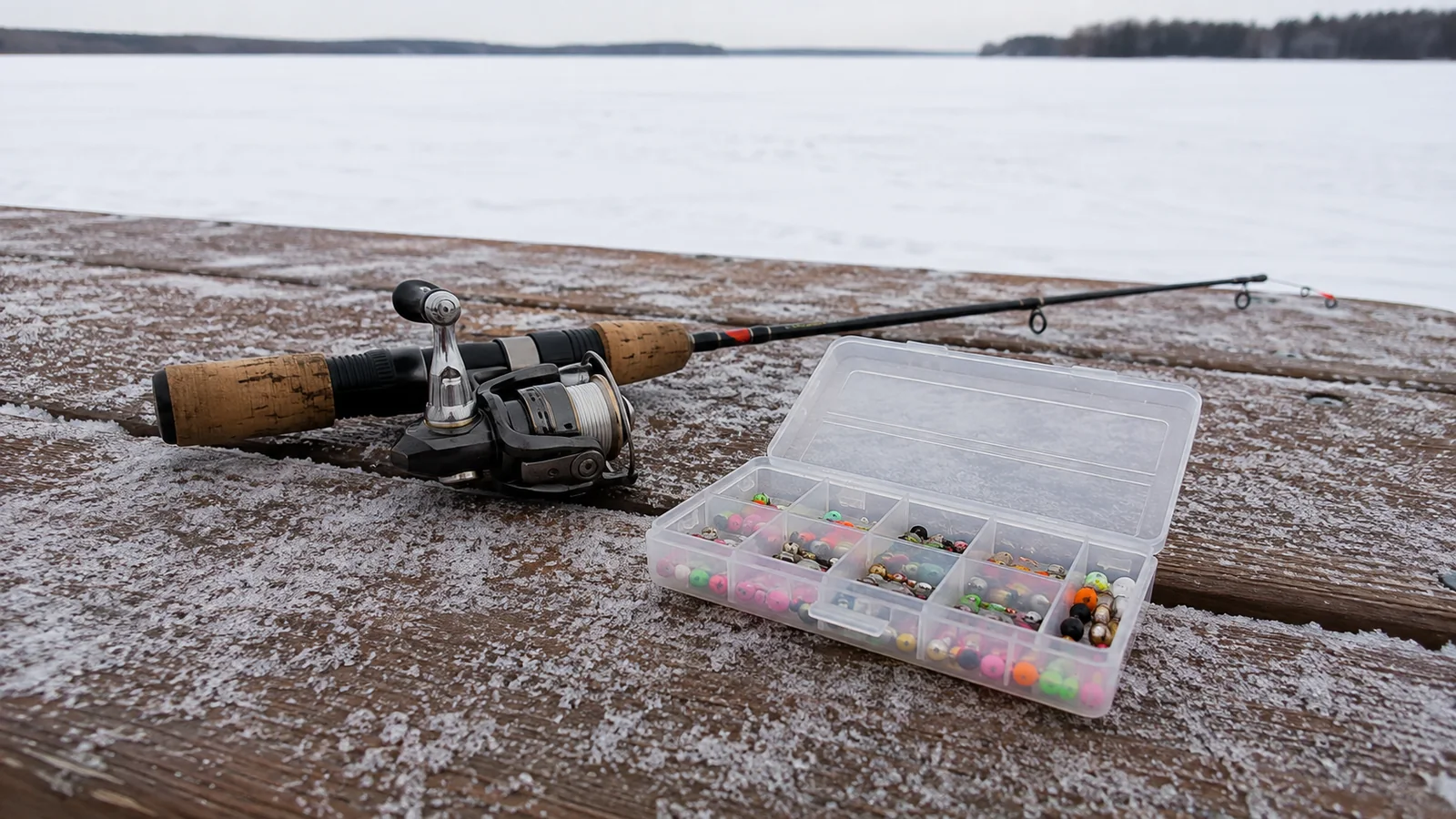
Walleye draw many visitors to Mille Lacs, with low-light periods often shaping guide schedules. Anglers commonly jig one line and use a deadstick or legal set line nearby, but current line, attendance, hook, bait, and device rules control the setup.
Handle fish quickly and measure accurately before deciding whether to keep one. Fish outside a legal slot or beyond the current limit must return immediately, and photography should not delay the release.
Yellow perch
Perch can make a friendly daytime target, particularly for groups willing to move when a hole goes quiet. Small presentations and electronics can help locate fish, but a rental-house guest should ask before drilling extra holes or relocating equipment.
Northern pike
Pike are often pursued with tip-ups or other legal set-line presentations nearer suitable structure. Carry long pliers, know the exact size rule before the strike, and keep fingers away from teeth throughout handling.
Tullibee
Tullibee can provide fast suspended action and are popular with anglers who smoke their catch. They still have current season, limit, possession, and bait considerations, so do not treat them as an unregulated backup species.
Questions to ask a rental or guide
- Which shore access and check-in building do we use?
- How do you communicate a road closure after we arrive?
- What vehicle types are allowed today?
- Is transport from shore included or separately charged?
- What tackle, bait, electronics, and hole service are included?
- Does the house have a working carbon-monoxide detector and extinguisher?
- What toilet and wastewater system is provided?
- Are bedding, cookware, potable water, and generator fuel included?
- What happens if unsafe ice cancels the reservation?
- Who answers an emergency call overnight?
Confirm the sleeper’s maximum occupancy by actual beds, not floor area. Ask whether pets, children, alcohol, extra vehicles, portable heaters, and outside cooking equipment are allowed because operator rules vary.
Heaters and overnight houses require discipline
Use only the installed or operator-approved heater, keep vents and exhaust clear, and test the carbon-monoxide detector. Never use a grill, unvented improvised burner, generator, or idling vehicle to heat the shelter.
Learn both exits before sleeping and keep boots, coat, light, phone, ice picks, and vehicle keys reachable. A house that feels cozy at 10 p.m. can become an evacuation problem when wind shifts snow across the road at 3 a.m.
Shelter, trash, and wastewater rules
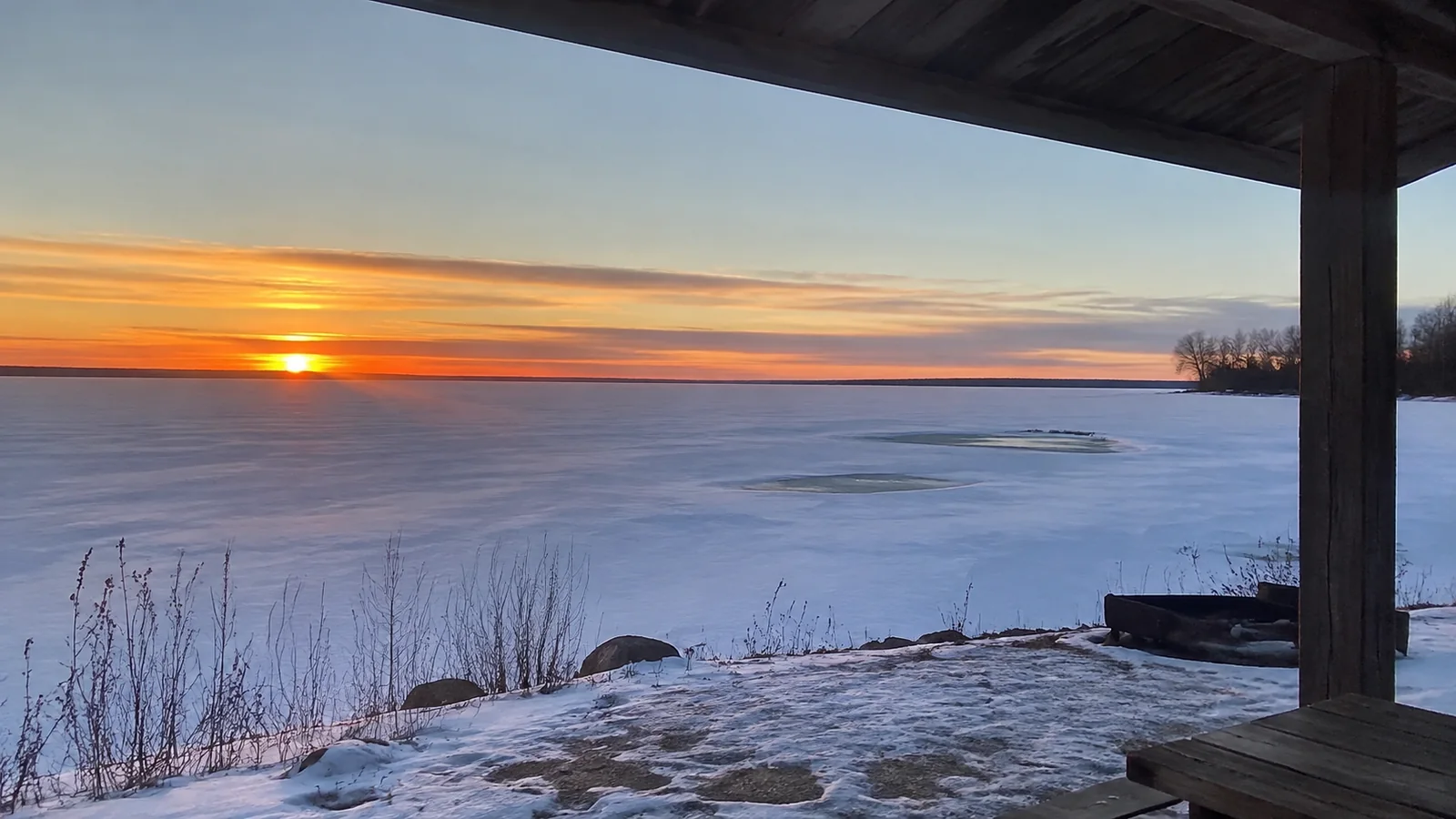
Wheeled fish houses and other nonportable shelters require licensing, while portable-shelter requirements depend partly on whether the shelter is left unattended. The DNR’s ice-shelter page also publishes identification, reflective-material, waste, and removal rules.
Garbage, sewage, and wastewater do not belong on the ice. Secure a waste container to the shelter or vehicle, use approved disposal facilities, and leave the spot cleaner than the snow around it.
Exactly what to pack
- Minnesota license and saved current Mille Lacs regulations
- Moisture-wicking base layers and insulated midlayers
- Windproof outerwear, snow pants, and spare dry socks
- Insulated waterproof boots and traction aids
- Warm hat, face protection, thin gloves, and heavy mittens
- Foam flotation for foot or open-machine travel
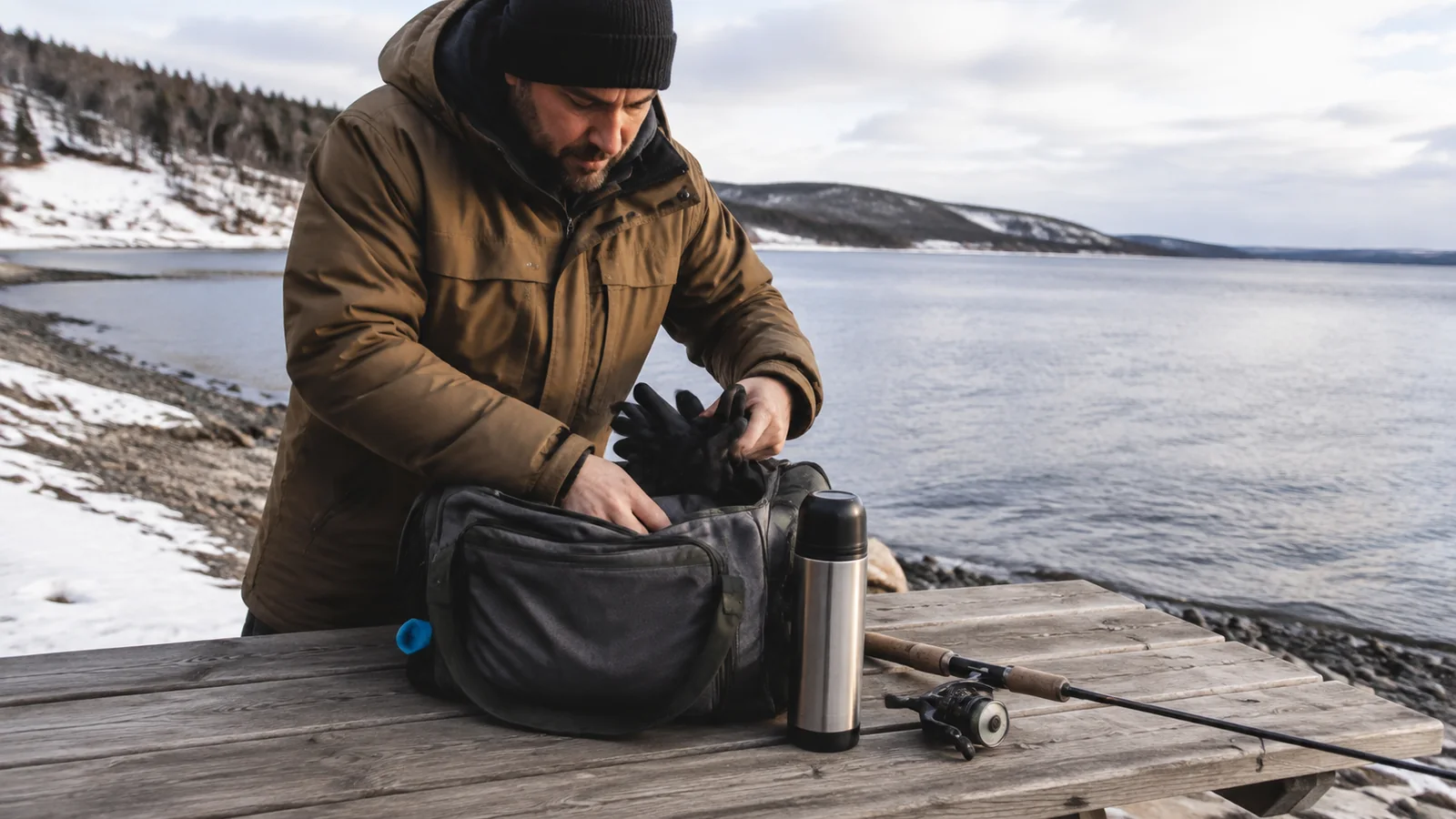
- Ice picks, whistle, throw rope, first-aid kit, and headlamp
- Charged phone, power bank, offline map, and operator number
- Food, drinking water, medication, and a no-cook backup meal
- Measuring board, long pliers, and tackle requested by the guide
Pack for time outside the heated house, including the possibility of a walk or delayed pickup. Choose moisture-wicking layers that stay useful if the walk back is longer than expected.
Make a first family trip easier
Choose a heated day house near a staffed access, book a guide, and keep the session shorter than the adults’ maximum ambition. Children need correctly fitted flotation when appropriate, warm dry spares, frequent snacks, toilet clarity, and constant supervision around open holes.
Pair the lake with an easy Twin Cities stop using these free Minneapolis and St. Paul ideas. A flexible land day protects the trip when ice or weather cancels fishing.
Budget the complete weekend
Compare lodging or sleeper-house rate, road access, guide fee, angling license, shelter license if applicable, bait, propane or generator charges, cleaning, food, and gratuity. Ask whether the deposit moves to new dates or becomes nonrefundable when the operator closes the road.
Mille Lacs fits naturally into a longer Minnesota trip, and this list of Minnesota experiences and traditions adds non-fishing context. If friends are driving in from different states, the group road-trip planner helps settle vehicles, costs, and expectations before the cabin key changes hands.
A practical first-timer schedule
Arrive before dark, check in on shore, review access and emergency instructions, and buy any missing license or bait. Fish the next morning with a guide or staffed rental, warm up before anyone becomes chilled, and finish while the return road and weather are still comfortable.
Use the second day only if conditions and the group remain strong. A safe one-day outing is a complete trip, not a failed two-day trip.
Final verdict
Mille Lacs is excellent for travelers who want a real Minnesota ice-fishing culture with rentals, guides, roads, and multiple shore bases. Beginners should pay for local support, while experienced anglers still need current measurements and operator guidance.
Check the regulation, call the access, carry the rescue gear, and accept a closure without argument. I would book a supported first outing and enjoy whatever the lake offers that day.