Dry Tortugas Weekend Getaway: A Practical Guide
Dry Tortugas National Park is one of Florida’s most spectacular weekend getaways, but it is not spontaneous. The park sits roughly 70 miles west of Key West with no road, hotel, restaurant, or convenience store waiting when you arrive.
First, understand what a Dry Tortugas weekend really is
That remoteness is exactly why the water, wildlife, and enormous brick walls of Fort Jefferson feel so memorable. This guide explains how to choose the ferry, seaplane, or camping experience and build a realistic Key West weekend around it.
Dry Tortugas National Park covers about 100 square miles, yet almost all of that area is water. Most first-time visitors arrive at Garden Key, home to Fort Jefferson, beaches, a primitive campground, and the park’s most accessible snorkeling.
You cannot drive there and there is no bridge. The National Park Service says visitors must arrive by ferry, seaplane, private boat, or a permitted charter, so your transportation reservation is the foundation of the trip.
For most people, the best weekend is two or three nights in Key West with one full day reserved for Dry Tortugas. Camping on Garden Key creates a very different trip and requires much more gear, water, and self-sufficiency.
Is Dry Tortugas possible in a weekend?
Yes, if you treat Key West as the gateway and protect the travel day. A Friday arrival, Saturday park trip, and Sunday departure is possible, although it leaves no weather backup and can make delays expensive.
A three-night stay is more forgiving. Arrive on Thursday or Friday, schedule Dry Tortugas for the middle day, and keep the remaining day flexible for Key West.
Travelers flying through Miami or Fort Lauderdale must also account for the long trip down the Keys or a connecting flight to Key West. Do not pair a late mainland arrival with an early next-morning boat unless every connection has generous padding.
Choose how to reach Dry Tortugas
The ferry, seaplane, and private vessel are not interchangeable versions of the same day. Cost, transit time, motion sensitivity, baggage allowance, and time on Garden Key should decide your choice.
Start with the park’s official transportation overview, which links the authorized ferry, seaplane concession, private-boating information, and permitted guides. Book only after reading the operator’s current cancellation and weather policy.
Ferry: best for value and a full structured day
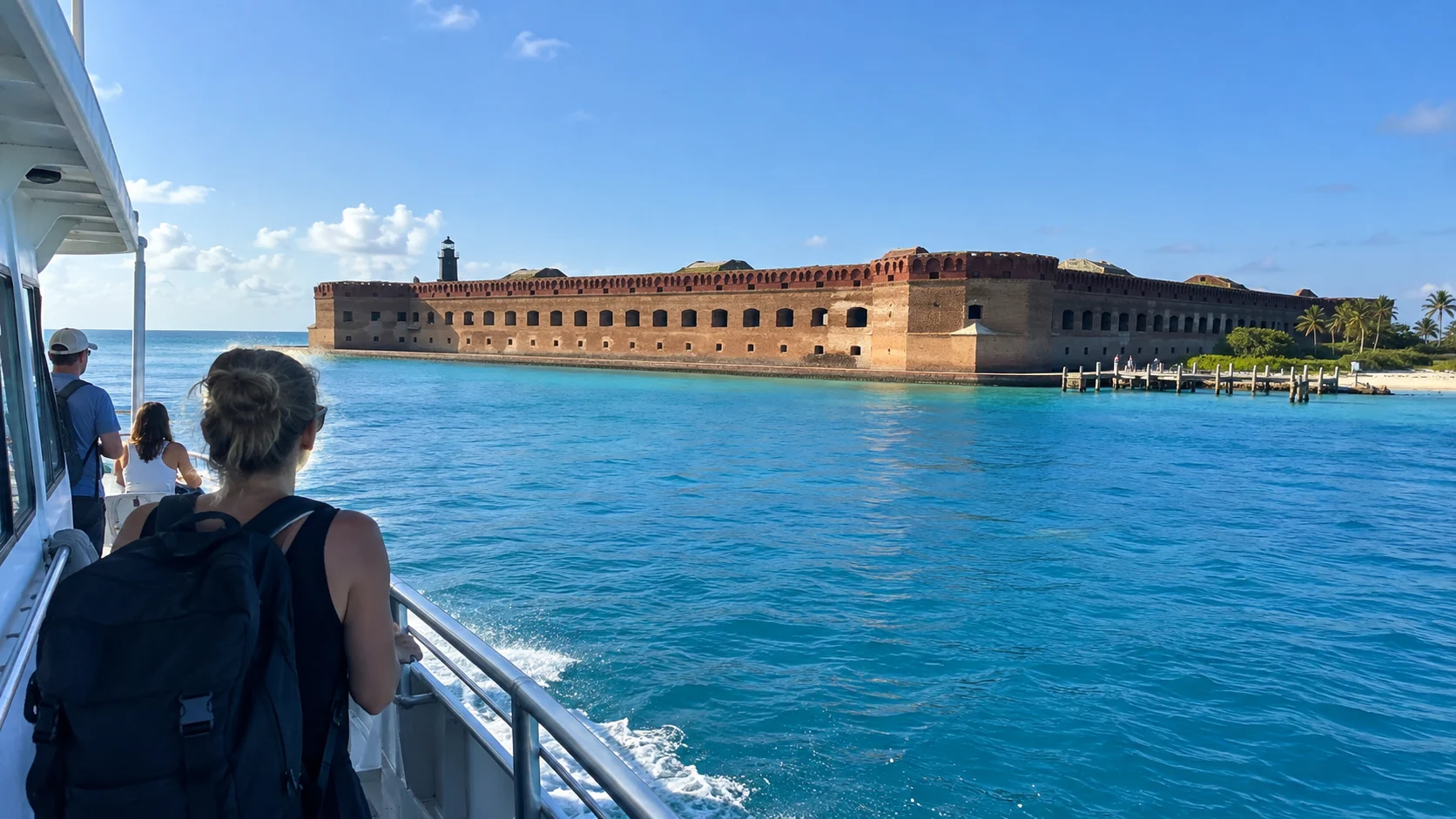
The high-speed ferry leaves from Key West and gives most travelers a straightforward all-day experience. The trip includes significant time on the water in both directions, so the boat ride is part of the commitment rather than a quick transfer.
The ferry commonly bundles park admission, a simple breakfast and lunch, and use of basic snorkel gear, but inclusions can change. Confirm the current list, departure check-in time, parking plan, baggage restrictions, and return time directly with the operator.
This is usually the best fit for travelers who want a predictable schedule and can tolerate a long boat ride. If you are prone to motion sickness, speak with a health care professional before the trip and follow the operator’s safety guidance.
Seaplane: best for limited time and aerial views
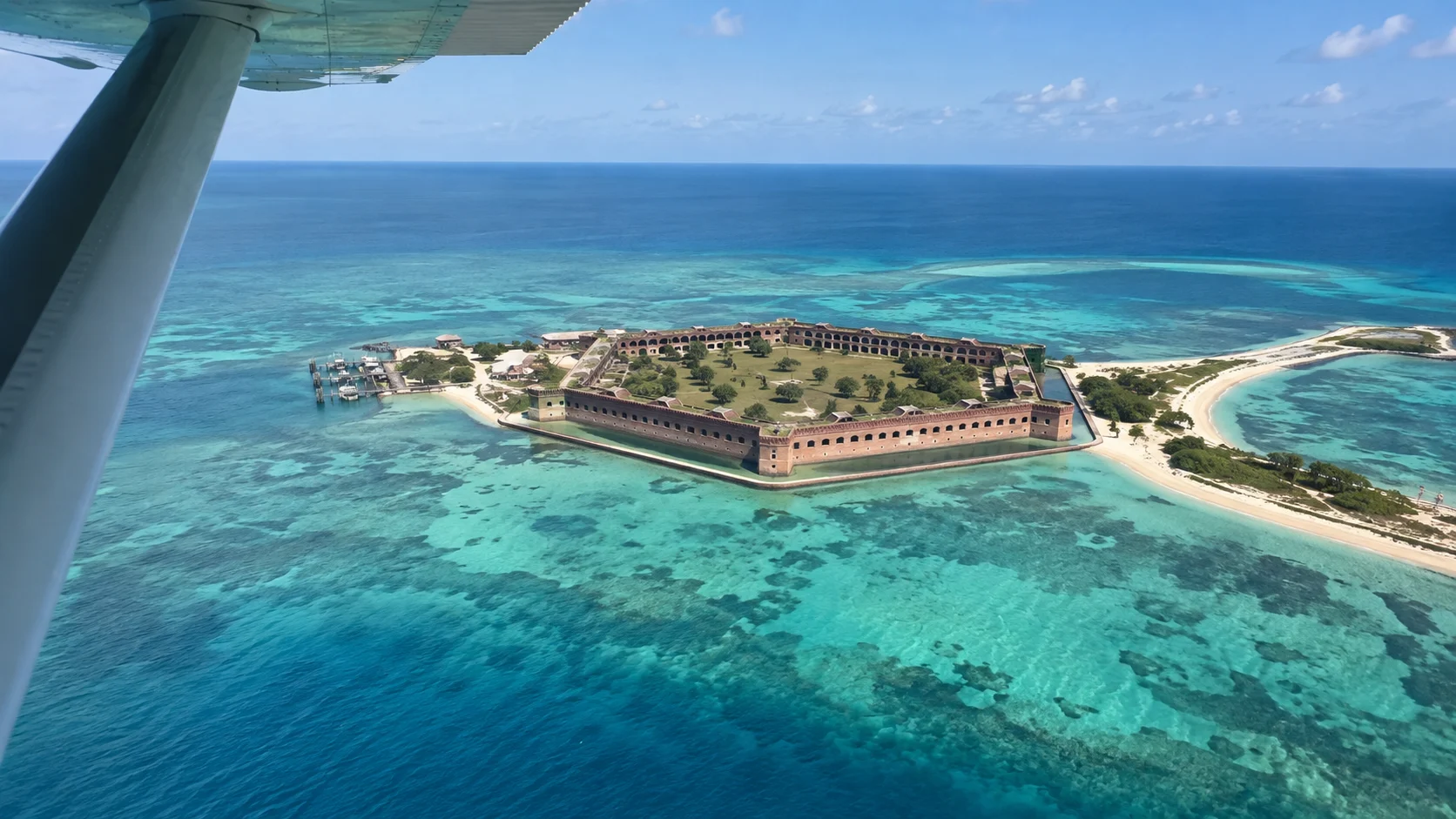
A seaplane costs considerably more but reduces transit time and turns the journey into a scenic experience. Half-day and full-day formats may be available, and the plane arrives at Garden Key.
Weight, baggage, check-in, and weather rules are strict for good reasons. Verify what you may carry, whether snorkel gear is included, and how a cancellation or reschedule works before committing the rest of your weekend.
A half-day flight is useful for a traveler who mainly wants the fort, a swim, and the aerial approach. Choose the full day if unhurried snorkeling and beach time matter more than fitting another Key West activity into the same date.
Ferry and flight comparison
These are published adult fare examples, not held reservations, and Key West lodging and travel to Key West are extra. I would reconfirm the total, required check-in, and cancellation terms for the exact date before paying.
- Authorized option: Yankee Freedom ferry
- Travel and island time: About 2 hours 15 minutes each way; roughly 4.5 hours ashore
- Published adult price and inclusions: From $245, including park entry, breakfast snack, box lunch, snorkel equipment, and a guided fort tour
- Check-in and camping: Key West Ferry Terminal, 100 Grinnell Street; day-trip check-in generally 7 a.m.; reserved camper transport available
- Authorized option: Key West Seaplane Adventures, half day
- Travel and island time: About 40 minutes each way; at least 2.5 hours ashore; just under four hours total
- Published adult price and inclusions: $527, plus applicable park entry; snorkel equipment, water, and soft drinks, but no food
- Check-in and camping: 3471 South Roosevelt Boulevard, Key West; use the booking’s check-in time; no campers
- Authorized option: Key West Seaplane Adventures, full day
- Travel and island time: About 40 minutes each way; at least 6.5 hours ashore; just under eight hours total
- Published adult price and inclusions: $910, plus applicable park entry; bring a packed lunch
- Check-in and camping: Same airport-side check-in location; morning departure; no campers
The park’s entry fee is $15 for visitors age 16 and older unless a qualifying pass applies, so a standard adult half-day flight totals $542 before other expenses. For two adults, the ferry’s advertised starting fare is $490 together, compared with $1,084 for the half-day flight including two standard park entries.
I would choose the ferry for the lower transport budget and included meals, provided a long open-water crossing is comfortable for you. The half-day flight is my time-saving choice, while the full-day flight buys substantially more island time for travelers who want both the fort and an unhurried beach afternoon.
Neither boat nor plane eliminates motion sensitivity or weather disruption, so discuss that tradeoff with the operator and your clinician when relevant. Campers must reserve the ferry’s limited camping allocation, currently advertised from $265 per adult, and pay the separate campsite fee; the ferry advertises a maximum three-night stay and requires all water and camping supplies.
Camper check-in instructions differ between the ferry’s public pages, so use the time on the confirmed camping reservation and verify it directly. The NPS camping guidance confirms that the seaplane does not transport campers, making that an actual booking restriction rather than just a baggage inconvenience.
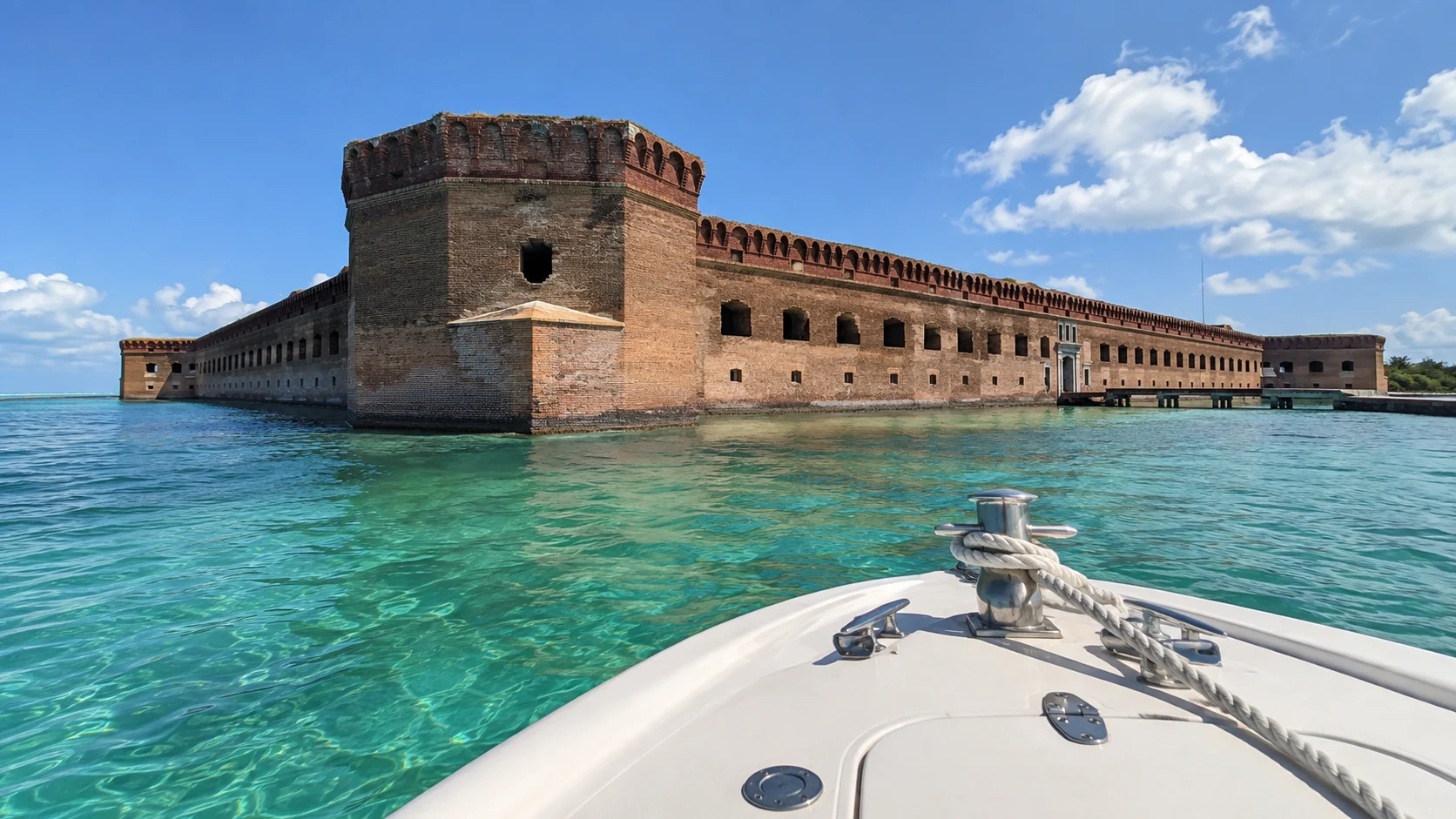
Private boat or charter: best for experienced boaters and custom trips
A private vessel offers access and timing flexibility, but this is remote offshore boating with limited services. Navigation, weather, fuel range, communications, anchoring rules, permits, protected zones, and emergency preparation all matter.
Hiring a permitted captain can suit anglers, divers, or small groups who want an experience beyond the standard Garden Key day. Confirm the operator’s authorization, exact itinerary, equipment, weather policy, and what happens if conditions prevent the planned route.
Do not rent an unfamiliar boat merely because the map looks simple. The trip belongs in the hands of someone with the vessel, local knowledge, and offshore experience to make conservative decisions.
What to do on Garden Key
A ferry day gives you only a few hours on the island, and even a full-day seaplane visit passes quickly. Pick two priorities plus lunch rather than trying to do everything at once.

Tour Fort Jefferson
Fort Jefferson dominates Garden Key and gives the park its remarkable silhouette. Construction began in the nineteenth century to protect a strategically important anchorage, although the massive masonry fort was never fully completed or armed.
The fort later served as a Union military prison, with physician Samuel Mudd among its best-known prisoners. The National Park Service’s Fort Jefferson history gives useful background before the trip and helps the empty rooms make more sense.
Walk slowly on stairs, upper levels, and uneven surfaces. Railings and shade are not present everywhere, and heat can turn a casual loop into a much harder outing than expected.
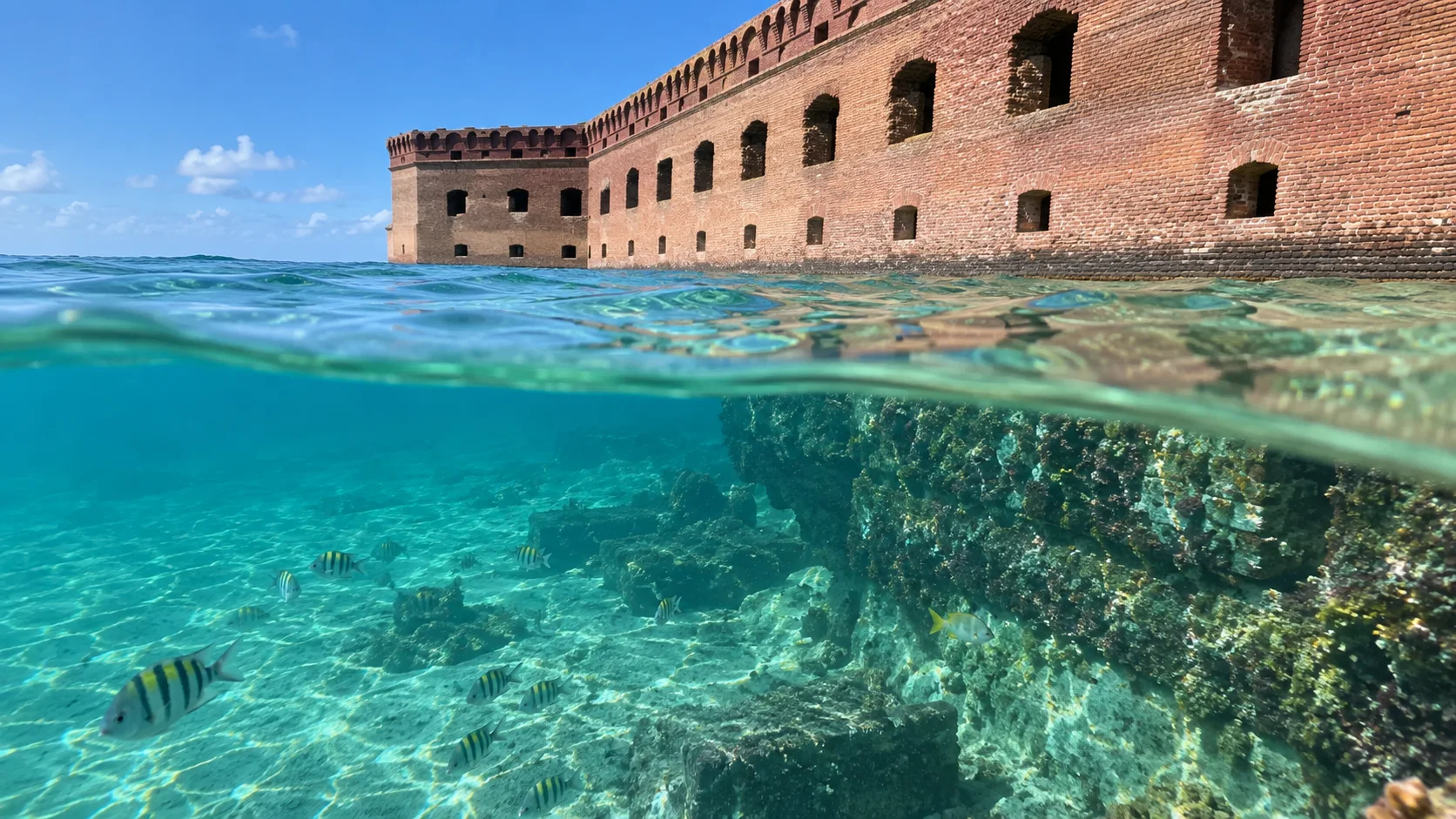
Snorkel outside the moat wall
Snorkeling near Garden Key can reveal fish, seagrass, coral, and historic structures in relatively shallow water. Visibility and marine life vary with weather, waves, tides, and natural conditions, so no tour can guarantee a postcard scene.
There are no lifeguards, and swimming is at your own risk. The park’s current safety guidance says swimming and snorkeling are not permitted inside the moat and explains where dive flags are required.
Use well-fitting gear, stay with a buddy, and turn around while you still feel strong. Never touch coral, stand on underwater features, chase wildlife, or cross a marked closure to improve a photo.
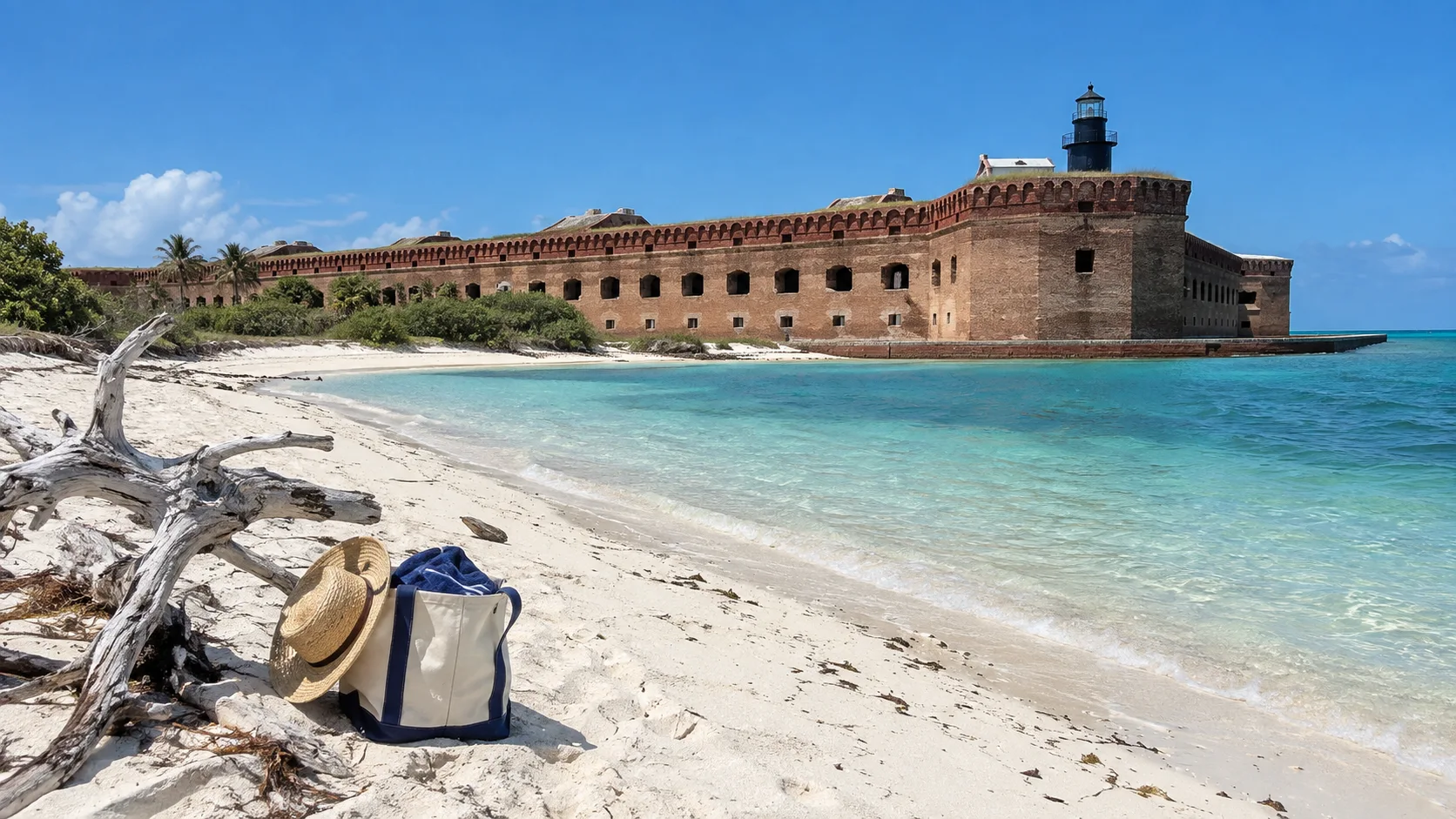
Enjoy the beach
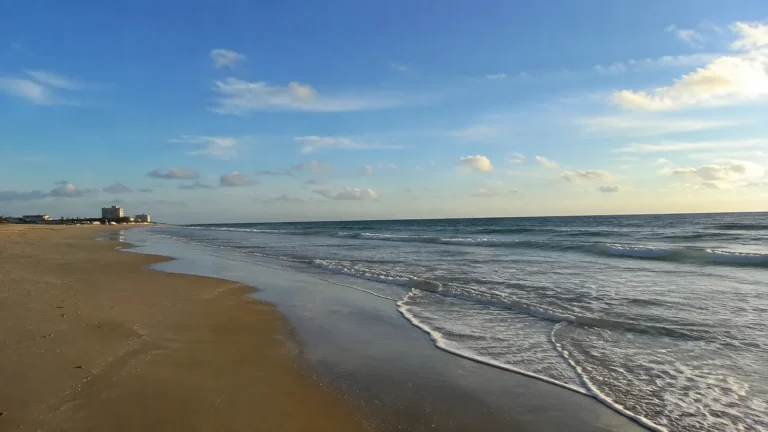
The sand near Fort Jefferson creates an almost surreal combination of turquoise water and red brick. Beach time is the easiest activity to shorten or extend depending on heat, currents, and how much of the fort you want to see.
Shade is limited, and reflected sun adds up quickly. Bring protective clothing, a hat, reef-conscious sun protection, and enough water for the full day.
For easier shore days elsewhere in the state, our guide to beautiful Florida beaches includes options you can reach without an offshore crossing.
Watch birds without disturbing them
The Dry Tortugas are important habitat for migratory and nesting birds. Which species and islands are visible depends on season, closures, weather, and your transportation.
Bring binoculars instead of approaching nests or resting birds. Seasonal closures protect sensitive areas, and a closed island is not an invitation to find a quieter landing spot.
Check current conditions before leaving Key West
Storm damage, preservation work, wildlife nesting, marine conditions, and facility issues can close parts of the park. A decade-old itinerary can be dangerously confident about docks, snorkel routes, or island access.
Open the National Park Service Dry Tortugas current-conditions page the evening before and again in the morning. Follow posted signs and ranger instructions after arrival, even when they conflict with a saved map or social-media video.
Transportation operators make their own safety decisions about sailing or flying. Build emotional and financial room for a weather cancellation because no one can make the open water cooperate with a weekend itinerary.
What to pack for a Dry Tortugas day trip
Pack as though you are visiting a remote outdoor site, because you are. Keep essentials in one manageable day bag and confirm operator restrictions before adding bulky gear.
- Government-issued identification and booking confirmation
- Refillable water bottles with more water than you normally carry
- Extra snacks, even when a ferry meal is included
- Hat, sunglasses, and sun-protective clothing
- Reef-conscious sunscreen and lip protection
- Swimsuit, quick-drying layer, and small towel
- Comfortable shoes for the fort and water shoes if preferred
- Prescription medication and personal motion-sickness supplies
- Dry bag or waterproof pouch for electronics
- Binoculars and a camera with charged batteries
- A small trash bag so everything leaves with you
Do not count on cell service, Wi-Fi, fresh supplies, or a forgotten-item shop. Download maps and confirmations in Key West and tell a trusted person which operator you are using.
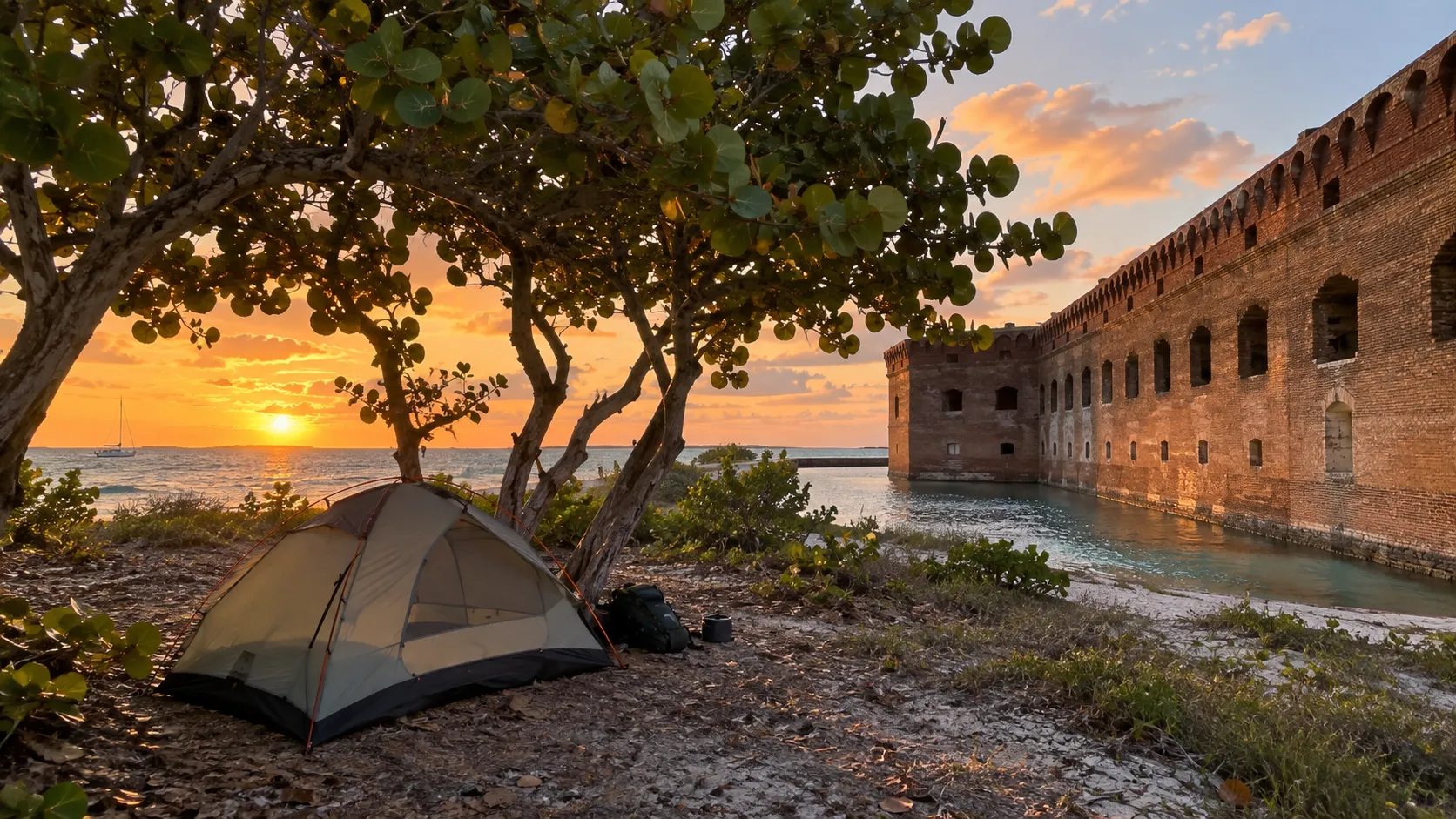
Should you camp at Dry Tortugas?
Camping on Garden Key is for travelers who actively want a primitive, pack-it-in and pack-it-out experience. It is not a cheap substitute for a Key West hotel once transportation, equipment, water, food, and planning are included.
Regular campsites are currently first come, first served after you reach Garden Key, while larger groups require advance coordination. Ferry space for campers is limited and must be booked through the ferry operator, and the seaplane does not transport camping gear.
Read the park’s complete camping instructions before buying transportation. They cover group size, fees, food storage, fuel restrictions, toilets, quiet hours, closures, and the substantial amount of water campers must bring.
The reward is an island after day visitors leave, with dark skies and Fort Jefferson in the evening light. The cost is total responsibility for food, water, shelter, weather, pests, waste, and gear failure.
Where to stay for a Dry Tortugas weekend
Key West is the practical base because commercial ferry and seaplane trips depart there. Stay close enough to reach check-in without betting the entire day on traffic from another island.
Old Town makes restaurants and evening walks easy, while accommodations farther from the center can be calmer or occasionally better value. Compare parking, resort fees, breakfast timing, and transportation rather than choosing by nightly rate alone.
If the trip is for two, the Florida Keys section in our romantic U.S. getaway ideas can help shape the nights around the park day. Just remember that Key West prices can be highest when weekends, festivals, and winter demand overlap.
A three-day Dry Tortugas weekend itinerary
Day 1: Arrive in Key West
Check in, locate the next morning’s departure point, and buy any missing water, sun protection, or motion-sickness supplies. Keep dinner simple and avoid planning a late night before an early check-in.
If you arrive early, choose one gentle Key West activity such as a waterfront walk or a historic-site visit. Save high-energy plans for the day that remains flexible.
Day 2: Visit Dry Tortugas
Arrive before the operator’s required check-in time with identification and essentials ready. On Garden Key, tour the fort first or snorkel first depending on heat, water conditions, and your top priority.
Eat, hydrate, and return to the departure point well before the stated deadline. Missing the only ride back is not a quirky vacation story.
Day 3: Keep Key West flexible
Use the final morning for a slow breakfast, another beach, or a Key West attraction. If weather canceled the park trip and your operator can move you, this day may serve as a backup, but never assume space will exist.
Travelers building a longer nature-focused route can pair the Keys with other ideas from our favorite national park landscapes. Leave enough time between remote adventures for laundry, weather, and a proper meal.
When to visit Dry Tortugas
Winter and spring can bring comfortable air temperatures but also wind and rough crossings. Summer is hotter and wetter, while tropical weather becomes a major planning factor during hurricane season.
There is no month that guarantees calm seas, clear water, wildlife, or uninterrupted access. Choose dates around your heat tolerance and Florida Keys budget, then judge the actual day using current marine forecasts and operator guidance.
Frequently asked questions
Can you stay in a hotel at Dry Tortugas?
No. There is no hotel in the park, and the only land-based overnight option is primitive camping on Garden Key under current park rules.
Can you drive from Key West to Dry Tortugas?
No. There are no roads or bridges to the park, so visitors arrive by ferry, seaplane, private boat, or permitted charter.
Is one day enough for Dry Tortugas?
One day is enough to tour Fort Jefferson, snorkel or swim, eat lunch, and spend a little time on the beach. It is not enough to explore the wider park, and transportation schedules limit how long most visitors have on Garden Key.
Can non-swimmers enjoy the park?
Yes. Fort Jefferson, birding, photography, beach views, and the journey itself make a satisfying day, although accessibility and walking surfaces should be checked for individual needs.
Is Dry Tortugas good for children?
It can be wonderful for children who handle long boat rides, heat, sun, and limited services well. Adults must supervise closely around water, fort edges, stairs, and wildlife, because the setting is remote and there are no lifeguards.
The honest verdict on a Dry Tortugas weekend
Dry Tortugas earns its place among Florida’s best weekend getaways because it feels genuinely far from ordinary life. Fort Jefferson, open water, shallow reefs, and the journey from Key West combine into a day that cannot be duplicated by an easy roadside beach.
Reserve transportation first, sleep in Key West the night before, pack for self-sufficiency, and accept that weather has the final vote. With those expectations in place, the remoteness becomes the magic instead of the problem.