Cruise Dietary Restrictions: Vegan, Gluten-Free and More
I would choose a cruise for dietary restrictions by checking a full day’s meals, not a single promising dinner menu. Vegan, gluten-free, kosher, halal, and medically prescribed diets need different questions, and some arrangements require weeks of notice.
Tell the line exactly what you need, confirm which venues can provide it, and meet the dining team after boarding. A menu label is helpful, but it does not explain preparation or cross-contact.
Start with the requirement, not the diet label
- Explain whether the restriction is medical, religious, ethical, or a personal preference.
- List ingredients and preparation requirements that the kitchen needs to understand.
- Ask what is available for breakfast, lunch, dinner, snacks, and port days.
- Confirm notice deadlines, advance ordering, and any special charges.
- Check the arrangement again if the ship, itinerary, or sailing date changes.
I would be specific without apologizing for the request. “No dairy ingredients, including butter and cream” is much more useful than hoping a server interprets “light meal” the same way you do.
Current cruise-line examples to check
Royal Caribbean’s dietary requirements guidance lists vegetarian options and vegan menus available on request in the main dining room. It also describes advance notice for items such as kosher meals, including longer lead times for some itineraries.
Norwegian’s current dietary requirements page asks guests to contact the Access Desk at least 45 days before sailing. I would use that current accessibility process rather than an older blog post with a shorter deadline.
Disney’s pre-cruise dietary instructions distinguish ordinary special requests from kosher and halal arrangements. They specify at least five weeks for kosher or halal requests and ten weeks for Passover meal requests, with ship-specific offerings also described.
These are examples of why I would contact the line when booking. A minimum deadline is not an ideal starting date for a complicated request, and current instructions for the exact sailing should settle any conflicting information.
Vegan meals: ask about the whole plate
A vegetarian dish can contain dairy or eggs, so it is not automatically vegan. Ask about butter, cheese, cream, egg washes, mayonnaise, stocks, and sauces when the menu does not make the ingredients clear.
I would also check what replaces the removed ingredients. A plate that loses its cheese and sauce may technically meet a request while leaving very little for dinner.
Ask whether the kitchen offers a dedicated vegan menu or can explain suitable dishes in advance. A predictable main-dining-room option can be more useful than guessing among several casual counters each night.
For breakfast, confirm plant-based milk, oatmeal preparation, breads, spreads, and a filling savory choice if that is what you prefer. I would not wait until the first morning to find out that the only familiar option is fruit.
Vegetarian does not always mean the same thing
Tell the dining team whether you eat eggs and dairy, and clarify any ingredients you specifically avoid. Fish sauce, meat stock, gelatin, and animal-derived garnishes may not be obvious from a dish name.
If you follow a more specific tradition, such as avoiding particular vegetables or requiring a particular preparation method, describe that directly. A broad vegetarian label may not cover it.
I would ask about specialty restaurants before paying for a package. A steakhouse may have a workable vegetarian meal, but the number and quality of suitable choices should justify the price for you.
Do not assume a tasting menu can be substantially changed on the evening of the reservation. Request an explanation of the proposed alternative while there is still time to choose another venue.
Gluten-free needs a medical distinction
Tell staff whether you have celiac disease, a wheat allergy, or a nonmedical preference to avoid gluten. Those are different situations, and the kitchen needs the correct information to discuss preparation.
For celiac disease or an allergy, ask about cross-contact from shared toasters, fryers, utensils, pasta water, and preparation areas. A dish made without a particular ingredient is not the same as a verified preparation process.
I would ask the dining manager to identify the venues best equipped for the request. A gluten-free symbol at a buffet does not describe everything that can happen when passengers share serving utensils.
If the server is uncertain, ask for a chef or manager to verify the answer. I would choose a clearly explained alternative over a meal that depends on several guesses.
Dairy-free and lactose-free are different requests
A lactose-free dairy product still contains milk proteins. Someone with a milk allergy therefore needs a different conversation from someone avoiding lactose.
Tell staff which requirement applies and ask about hidden dairy in sauces, potatoes, bread, desserts, and drinks. A plant-based beverage at the coffee bar does not establish that every ingredient or tool meets the same requirement.
For a preference, you can decide how strict you want to be about preparation. For a medical need, use the approach recommended by the clinician managing the condition and explain it accurately to the team.
I would not describe an allergy as a preference to make ordering easier. The correct label helps staff route the request to the people who can answer it.
Kosher meals need more than a menu substitution
Ask whether meals are sealed and certified, who supplies them, how they are stored and heated, and how they are served. The answers need to match your own level of observance.
A kosher meal option does not necessarily mean the ship has a dedicated kosher kitchen. I would confirm the actual arrangement before assuming ordinary restaurant dishes can be prepared to the same standard.
Discuss breakfast, snacks, beverages, utensils, and specialty dining as well as the main meal. A dinner delivery alone may not cover the full day.
For Passover, ask about the specific request process and available meals early. Do not assume a standard kosher reservation automatically includes Passover requirements.
Halal requests also need clear definitions
Ask whether the line provides halal-certified meat, which meals and venues can use it, and what advance notice is necessary. Availability can vary with ship and itinerary.
Discuss ingredients such as alcohol in sauces and the preparation practices relevant to your observance. A dish without pork does not automatically answer every halal requirement.
I would request confirmation of the available arrangement rather than expecting a kitchen to source a particular product after boarding. If the offering does not meet your needs, compare another ship or a workable alternative before paying.
Specially arranged meals may require ordering ahead or dining in designated venues. Build that into the schedule instead of treating it as an unexpected restriction halfway through the cruise.
Medically prescribed diets require precise information
For low-sodium, low-protein, or other therapeutic diets, ask your clinician or dietitian what the kitchen needs to know. Broad labels can hide important differences in limits and preparation.
Send the requirements through the line’s medical or accessibility process and ask what can actually be supported. Do not assume “healthy options” means a kitchen can meet a particular prescribed daily limit.
I would ask how portion information, ingredient details, and meal planning will be handled. If the line cannot provide something essential, that limitation should affect the booking decision.
Carry any necessary medication and supplies separately from the meal request. A dietary arrangement does not replace an individualized medical plan or the need for emergency treatment when appropriate.
The first dining conversation should cover the next day
After boarding, meet the dining contact and review how ordering will work. Ask whether you should select tomorrow’s meals tonight and what to do when you want to eat elsewhere.
Write down the useful instructions, including the name or role to ask for at breakfast. I would rather spend ten minutes establishing the routine than repeat an incomplete explanation at every counter.
For families, make sure children’s portions, youth-program snacks, and earlier mealtimes are included. My family cruise guide can help compare ships, but the dining process deserves its own check.
If the plan is working, keep the communication simple and consistent. If it is not, speak with the manager promptly so there is time to arrange a better alternative.
Pack useful backups without breaking food rules
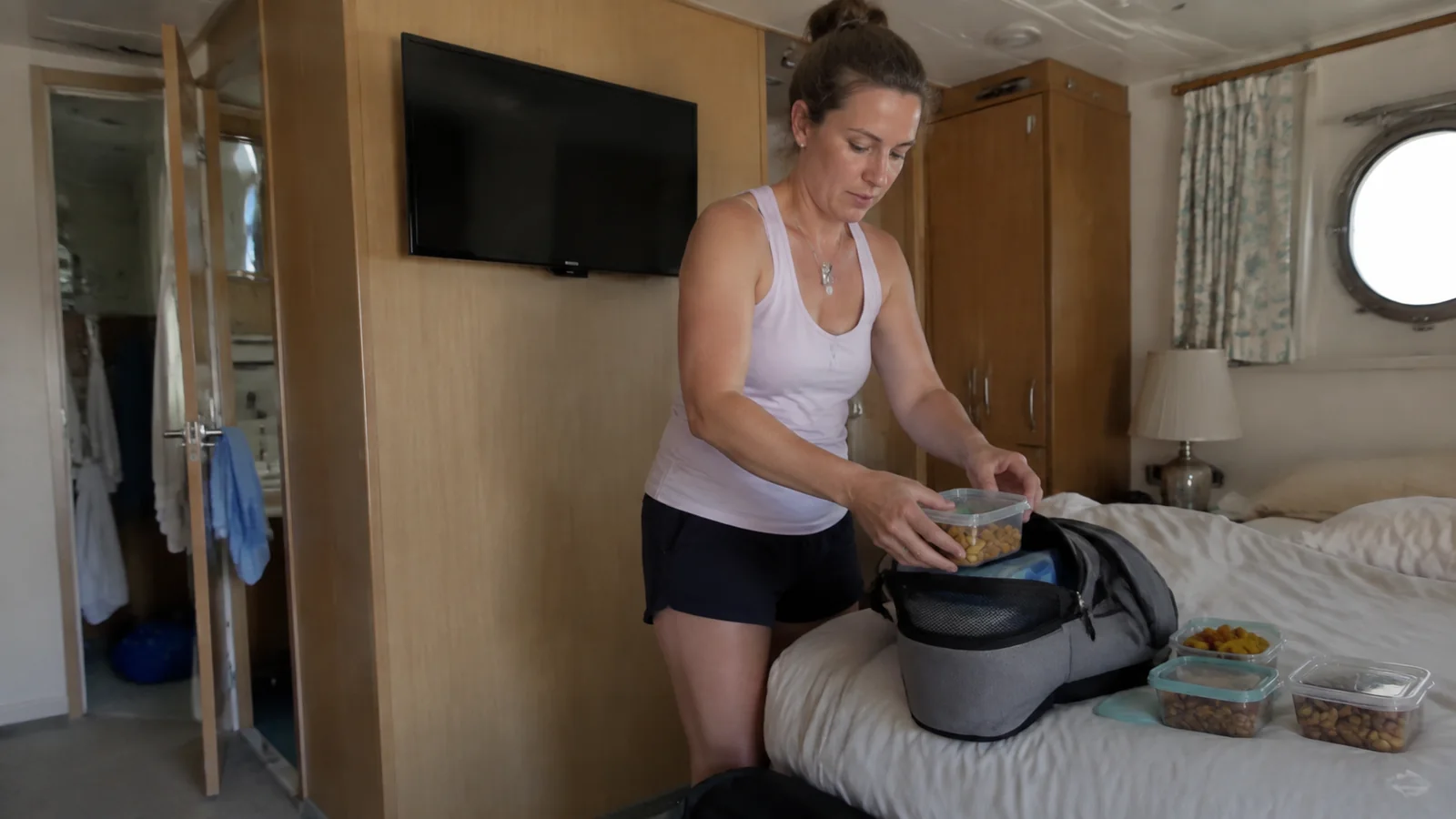
Familiar permitted packaged snacks can help during airport waits, transfers, and late meals. Check the cruise line’s food policy and the import rules for the places where you will carry them.
Do not assume you can take fresh food from the buffet ashore. Destination rules can restrict fruit, meat, dairy, and other products regardless of your dietary reason for carrying them.
My cruise packing list can help organize a small food and medication pouch. I would keep labels intact so ingredients remain easy to verify.
For a port excursion with an included meal, contact the operator before booking. A suitable restaurant near the pier or a shorter outing may be a better choice than an uncertain group lunch.
The dining arrangement I would choose
I would favor a ship that can explain suitable meals throughout the day, with enough variety and a clear request process. My cruise planning tips can help leave time for advance ordering and relaxed meals, which is more useful than squeezing every restaurant into one week.
A good dietary plan should make the trip easier once you board. I would settle the strict requirements early, then choose the meals and venues that make eating feel like part of the vacation.