Cruise Ship Portholes: What They Are and What You’ll See
A cruise ship porthole is more than a charming round frame for the sea. It can mean a compact fixed window, a traditional side scuttle with a protective cover, or even a balcony whose opening happens to be round, so the cabin description matters far more than the nautical nickname.
What is a porthole on a ship?
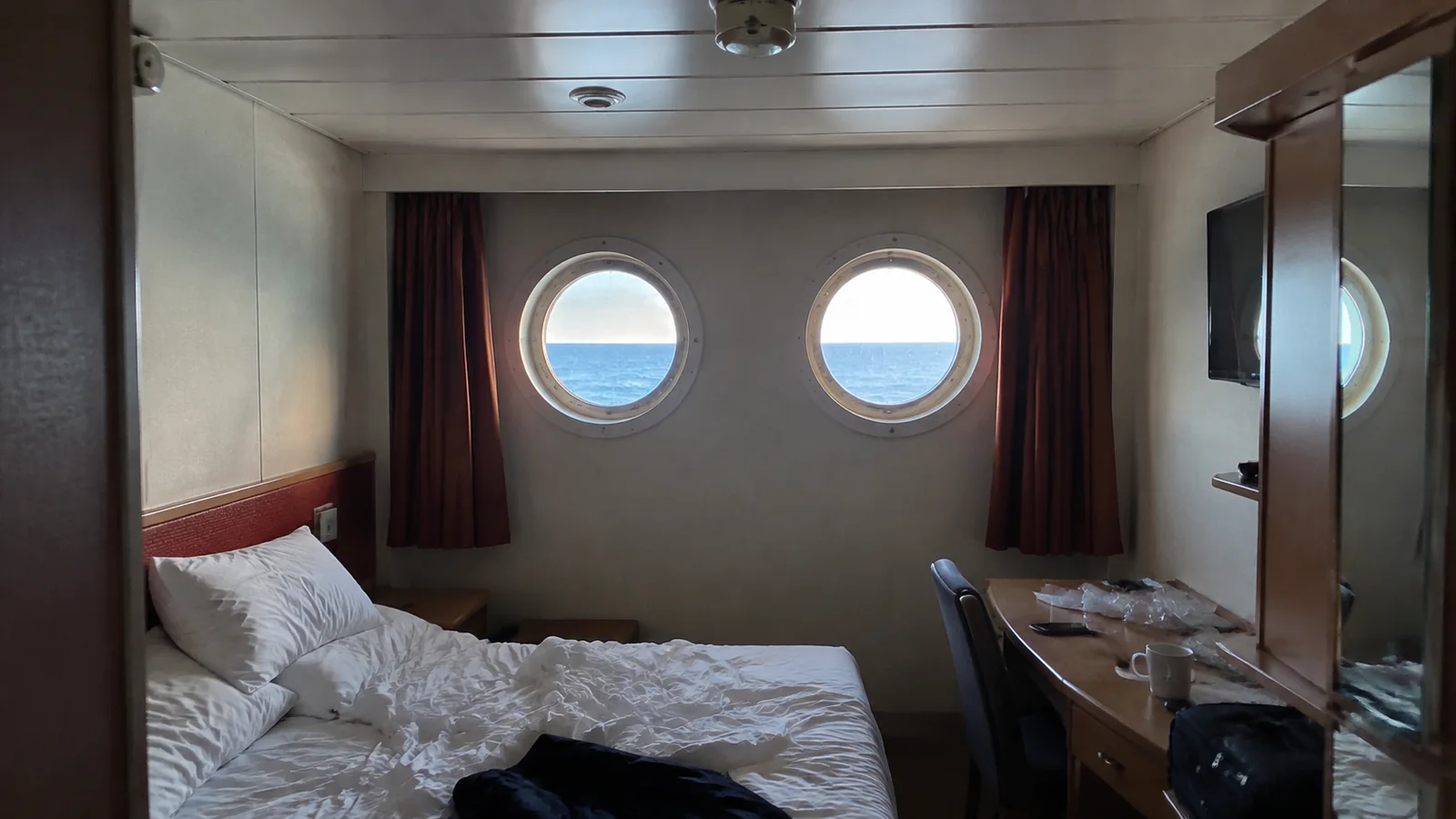
In everyday language, a porthole is a round window set into a ship’s side. Maritime regulations commonly use the more precise term side scuttle, especially when discussing hull openings, glazing, and watertight closures.
A porthole can admit daylight and provide an outside view without the floor space or opening of a balcony. On older vessels it could also provide ventilation, but guests should not assume a modern cruise-cabin window opens.
The “port” in porthole does not mean the window must be on the port, or left, side of the vessel. Portholes can face port or starboard, which saves us from having to say “starboardholes” with a straight face.
How a traditional porthole is built
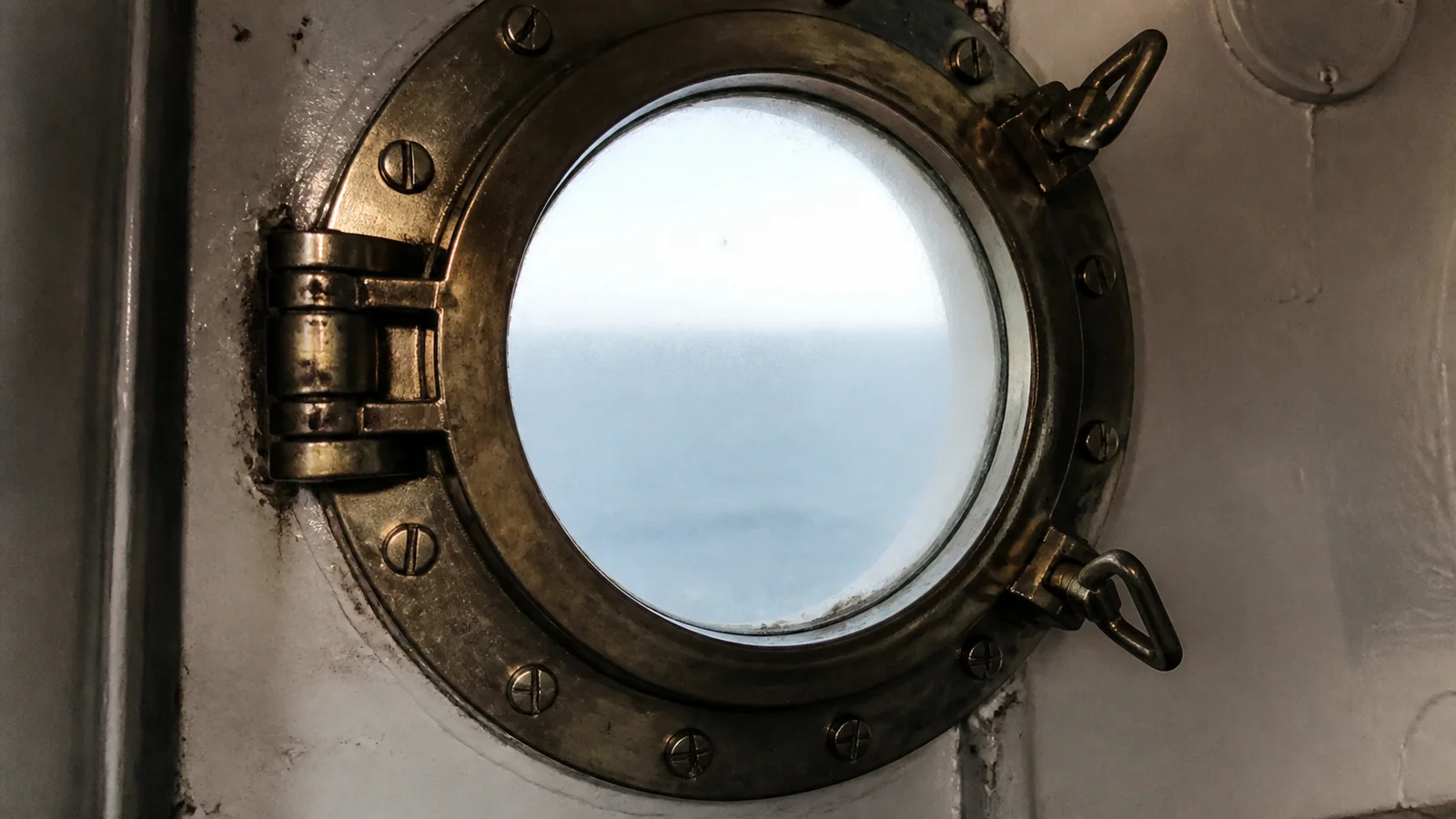
A traditional assembly has thick glazing held in a sturdy metal frame attached to the hull. Gaskets and fastening hardware help the unit resist water, while the circular form avoids the sharp corners that would complicate a heavily loaded hull opening.
Some side scuttles have a hinged inner metal cover called a deadlight, and some windows use a storm cover. The current U.S. Coast Guard regulations in 46 CFR Part 45, for example, require certain side scuttles to have inside deadlights that can be secured watertight.
That rule does not mean every round cruise-cabin window will have a dramatic brass lid beside your pillow. Requirements depend on the opening’s position and vessel design, and newer passenger spaces may use fixed glazing engineered as part of a larger window system.
What a deadlight actually does
A deadlight is a solid cover that can close over a side scuttle or window for protection and watertight integrity. UK Maritime and Coastguard Agency guidance likewise addresses deadlights and storm covers on passenger ships, including when closures need to be fitted and used.
If crew members secure a cover because of sea conditions or operating requirements, your view may disappear temporarily. This is a safety measure, not an unusually committed attempt to hide the sunrise.
Never loosen dogs, handles, covers, or other window hardware unless the cruise line expressly says passengers may use it. Ask your stateroom attendant if something appears open, damaged, or unfamiliar.
Porthole cabin versus ocean-view cabin
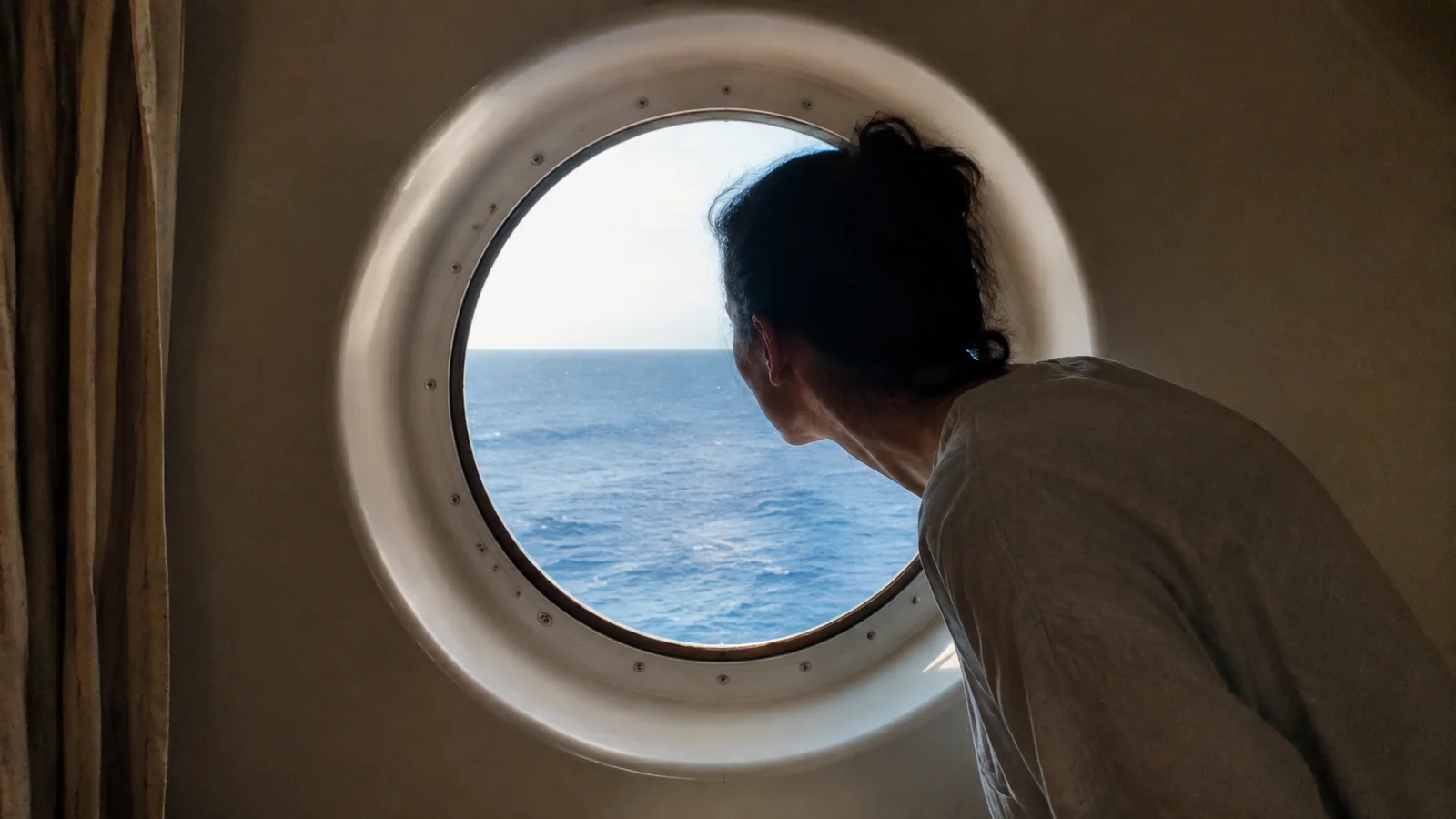
“Ocean view” is a broad booking category, while “porthole” usually describes the window’s shape or a cruise line’s named cabin type. An ocean-view room might have one round porthole, two small round windows, a larger picture window, or floor-to-ceiling fixed glass.
Carnival demonstrates why the label matters: the line’s current Carnival Freedom cabin descriptions list Porthole, Interior with Picture Window, Ocean View, and Ocean View with an obstructed view as distinct choices. A room with natural light can even sit inside the line’s broader interior inventory rather than its ocean-view inventory.
Common cabin terms translated
- Interior: No true exterior window, although the room may have a decorative screen or a camera-fed virtual view.
- Porthole: One or more round exterior windows, generally smaller than a picture window and usually fixed for guests.
- Ocean view: A cabin with exterior glazing but no private outdoor area; the window’s size and shape vary.
- Picture or panoramic window: A larger fixed window intended to provide a wider field of view.
- Obstructed view: A real exterior window whose sightline is partly or substantially blocked by ship structure or equipment.
- Balcony or veranda: A cabin with private outdoor space, normally reached through a door.
- Virtual porthole: A display showing a camera image or animation, not a window through the hull.
Those are useful translations, not universal legal definitions. Cruise lines create their own category codes, and the same friendly word can represent very different hardware on two ships.
A porthole can even lead to a balcony
A round opening does not automatically make a room an ocean-view cabin. Celebrity’s current Deluxe Porthole View with Veranda on Edge Series ships has private outdoor space framed by a large circular opening.
That is structurally and experientially different from a small fixed porthole behind glass. It is also different from Celebrity’s Infinite Veranda design, which uses a powered window to blend part of the room with an open-air space.
Book the category’s function, not the photograph’s shape. If stepping outside matters, verify that the cabin includes an actual veranda and confirm its square footage on the exact ship.
What you can realistically see
A small porthole delivers daylight, a weather check, and a framed slice of sea. It may not let you see directly forward, watch a full sail-in while seated, or photograph scenery without reflections.
Window depth matters too, because the glass may sit at the end of a wide hull recess. From across the cabin, that recess can narrow the viewing angle even when the glass itself is perfectly clear.
Low-deck portholes can produce wonderfully close water views, plus spray and salt streaks. Exterior cleaning schedules, rain, sun angle, condensation, and sea conditions all affect visibility, so pristine glass is never a sensible booking guarantee.
Why the side of the ship still matters
Port and starboard affect sunrise, sunset, and the direction your cabin faces in port, but not whether the opening qualifies as a porthole. A ship can also turn or berth in either orientation, making promised “dock views” rather slippery.
Choose a side for a long scenic route only when the itinerary and local navigation make that choice meaningful. For an ordinary round-trip sailing, public decks are the more dependable place to chase a particular view.
Understanding obstructed views
An obstruction may be a lifeboat, tender, davit, railing, maintenance platform, promenade, or piece of hull structure. It can block a thin lower strip, interrupt the middle of the view, or leave little more than daylight.
“Partial” does not describe one standard percentage across the industry. Use the exact cabin number, current deck plan, category notes, and recent ship-specific images before deciding whether the savings beat the compromise.
A walkway outside a window creates a privacy issue even when it barely blocks the ocean. Keep curtains closed while changing, and check whether the glass is reflective or one-way only under certain lighting conditions.
Structural facts and comfort risks deserve separate treatment. A deck plan can prove that a lifeboat sits outside your window, but it cannot prove that every traveler will dislike the view or hear the same amount of activity.
That same distinction is useful when checking our Celebrity Eclipse cabin cautions or Iona cabin location guide. Adjacency is a fact, while annoyance depends on schedule, sea state, and your own sensitivity.
Do cruise ship portholes open?
Most modern cruise-cabin portholes and ocean-view windows are fixed from the passenger’s perspective. Climate control, hull integrity, spray, and safety all argue against a guest-operated window low on the ship.
A historic ship, small vessel, expedition craft, or unusual cabin may be different. Treat the cruise line’s written description and onboard instructions as definitive for your vessel.
Even a window designed with operable or protective hardware may be controlled only by crew. If fresh air is essential, choose a true balcony category rather than hoping a round pane has a secret hinge.
Why portholes are round
The round form is compact, strong, and practical to seal because it has no corners where stresses and gaskets must change direction abruptly. It also works well with a hinged ring, evenly spaced fasteners, and a circular deadlight.
That does not mean a rectangular ship window is unsafe. Modern naval architecture supports large windows with engineered framing, approved materials, and careful placement high in the superstructure.
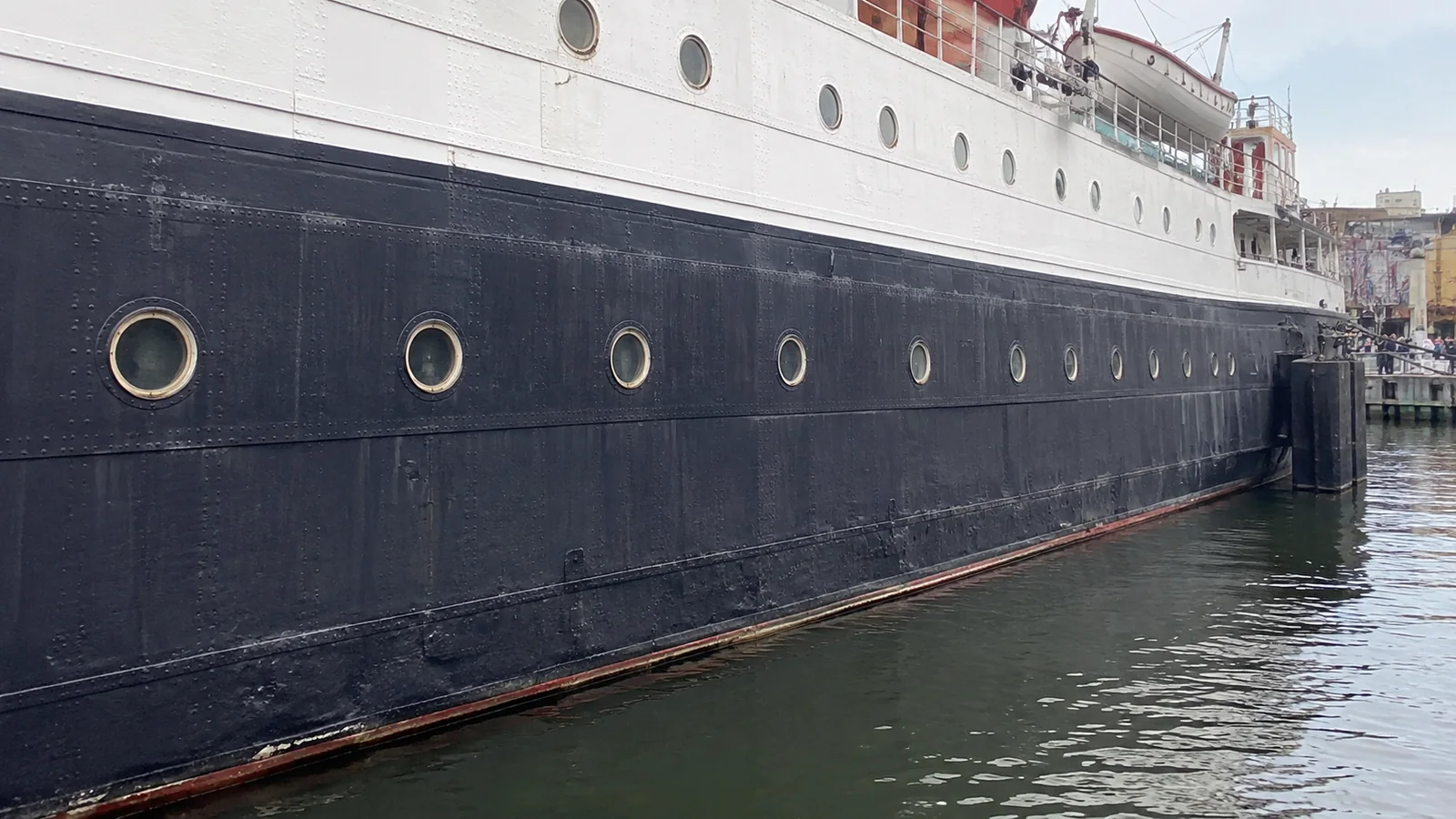
Window size generally grows as you move away from the lower hull and into spaces less exposed to boarding seas. This helps explain why a contemporary cruise ship may have small round openings near the waterline and walls of glass many decks above.
A short history of the ship’s round window
Openings in ship sides are much older than cruising, serving working vessels that needed light, ventilation, or access through thick hulls. The exact origin story is murky, and the popular tale connecting the word to early gun ports is better treated as maritime folklore than settled fact.
What is verifiable is that specialized ship windows were being patented and manufactured during the age of steam. The Smithsonian’s National Museum of American History preserves an 1848 patent model for a ship side light, with another improvement patented in 1853.
As passenger ships gained electric lighting, mechanical ventilation, air conditioning, and tall superstructures, every cabin no longer depended on an opening porthole. Designers could combine small load-bearing hull openings below with large fixed windows and balconies above.
Today the circle survives for engineering, space, branding, and romance. A neatly framed horizon still says “ship” more efficiently than almost any decorative anchor ever embroidered on a throw pillow.
Pros and cons of booking a porthole cabin
Reasons to choose one
- You want natural light without paying automatically for a balcony.
- You like checking weather and arrival conditions from bed.
- A compact framed view feels sufficient for a port-heavy itinerary.
- The particular cabin has a favorable location, layout, and total price.
- You prefer a lower deck and can accept a smaller field of view.
Reasons to choose something else
- You need fresh air or private outdoor space.
- A broad scenic view is central to the trip.
- The window recess or obstruction would make the cabin feel closed in.
- The room sits too far forward for your motion or noise preferences.
- The price difference to a larger ocean-view window is modest.
A porthole room can be excellent value, but category names sometimes disguise unusual bed arrangements or locations. Check occupancy, bed configuration, accessible features, and the full floor plan rather than shopping by window alone.
Location tradeoffs beyond the view
Many traditional porthole rooms sit low and forward because of how the hull and public spaces are arranged. A lower deck may reduce some rolling sensation, while a far-forward position can still feel pitching and may be near anchors, thrusters, or crew areas.
Noise is conditional, not guaranteed. Mooring equipment may be noticeable during an early arrival, but operating schedules, cabin insulation, exact distance, and individual sleep habits all change the experience.
Travelers prone to motion discomfort often prefer lower, more central cabins, regardless of window style. If that describes you, cabin position should outrank the charm of a perfect circle.
Mobility needs deserve the same priority. An accessible ocean-view room with a larger turning area may be a better choice than a standard porthole cabin, and travelers who do not need accessible inventory should leave it available for those who do.
How to evaluate a porthole before booking
- Start with the exact ship. Sister ships may have similar plans but different category labels or refitted spaces.
- Record the cabin number. A category guarantee can leave the cruise line to assign any eligible room.
- Open the current deck plan. Look above, below, outside, and beside the cabin for equipment and public areas.
- Confirm the window type. Ask whether it is fixed, how many panes there are, and whether the view is labeled obstructed.
- Compare total prices. Include taxes, fees, fare conditions, and any perks tied to the category.
- Check the layout. Window shape cannot compensate for an unsuitable bed, capacity, bathroom, or storage plan.
- Save the evidence. Keep the cabin description and deck-plan version with your booking documents.
When calling the cruise line or an advisor, ask specific questions instead of “Is the view good?” A better prompt is, “What physical object is outside cabin 2204, and is the exterior window fixed?”
Deck plans can change after refurbishment or recategorization. Recheck your cabin before final payment and again when a cruise line announces a major ship update.

Living with a porthole during the cruise
Close curtains at night if the cabin is visible from a promenade or dock. When sailing, curtains also help anyone who needs a truly dark room rather than a 5:30 a.m. sunrise audition.
Keep the sill clear of loose objects if the ship is moving, and do not hang organizers from window hardware. Our practical cruise packing list keeps cabin extras focused on items that are useful and allowed.
Report leaks, cracked seals, unexpected moisture, or a loose cover promptly. Ordinary condensation is possible, but diagnosing hull fittings is very firmly a crew job.
For photographs, turn off cabin lights and place the lens near the glass without pressing against it. A dark shirt behind the camera can reduce reflections, which is possibly the most productive job a black T-shirt will have all vacation.
Frequently asked questions
Is a porthole cabin an inside cabin?
Sometimes it is sold within an interior category, but it still has a real exterior window. Category placement is a cruise-line pricing decision, so verify the exact code and description.
Can waves cover a cruise ship porthole?
Spray and water may pass across low exterior windows in rough conditions. The ship’s approved structure, glazing, and closures are designed around exposure, and passengers should follow any crew instruction about covers or cabin access.
Is a porthole view always obstructed?
No, but its recess and small diameter naturally limit the angle compared with a picture window. A separate “obstructed” label usually points to equipment or structure outside the glass.
Does porthole mean the port side?
No. The term describes an opening or window and can appear on either side of a ship.
Is a virtual porthole as good as a real one?
It can make an interior room feel more connected to outside activity, but it does not provide daylight or a direct optical view. Treat it as a screen feature, not an ocean-view cabin.
The bottom line
A porthole offers daylight and genuine sea views in a compact, ship-shaped package, but the word alone tells you surprisingly little. Confirm the exact cabin, opening type, obstruction, location, and current deck plan before paying.
If you want fresh air, choose verified outdoor space; if you want a broad panorama, compare picture-window categories. If you simply want to wake up, glance at the horizon, and know the ocean is still exactly where everyone left it, a porthole may be just right.