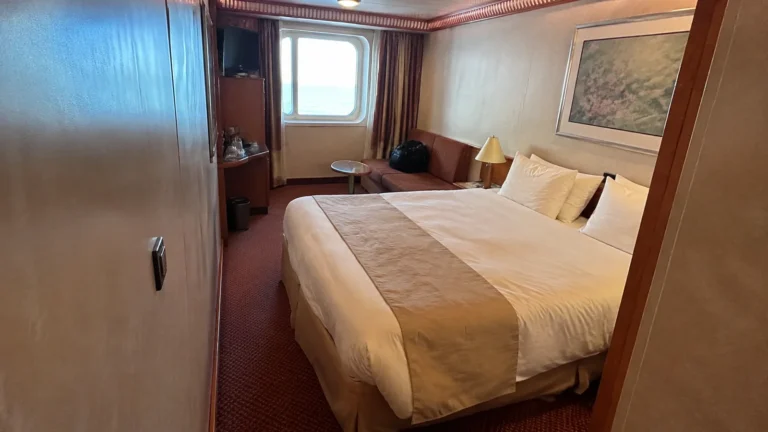
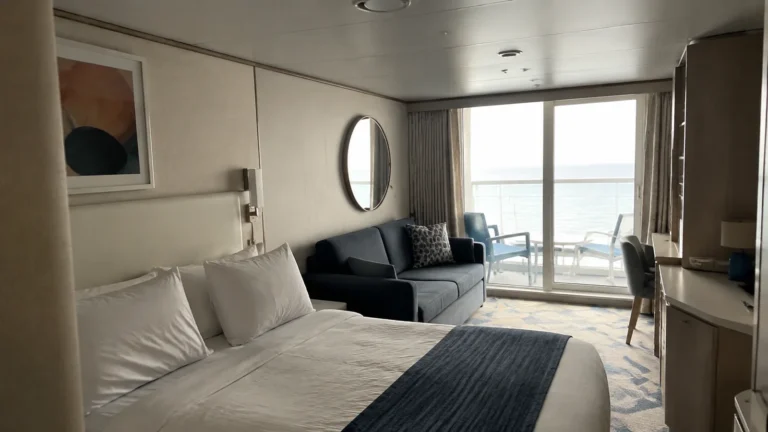
Carnival Liberty Cabins to Avoid, Plus Quiet Options
The Carnival Liberty cabins to examine most carefully are above Promenade nightlife, below Lido activity, under public rooms, or in officially obstructed categories. None comes with a guaranteed bad night, but the deck plan reveals enough structural tradeoffs to make a much smarter match.
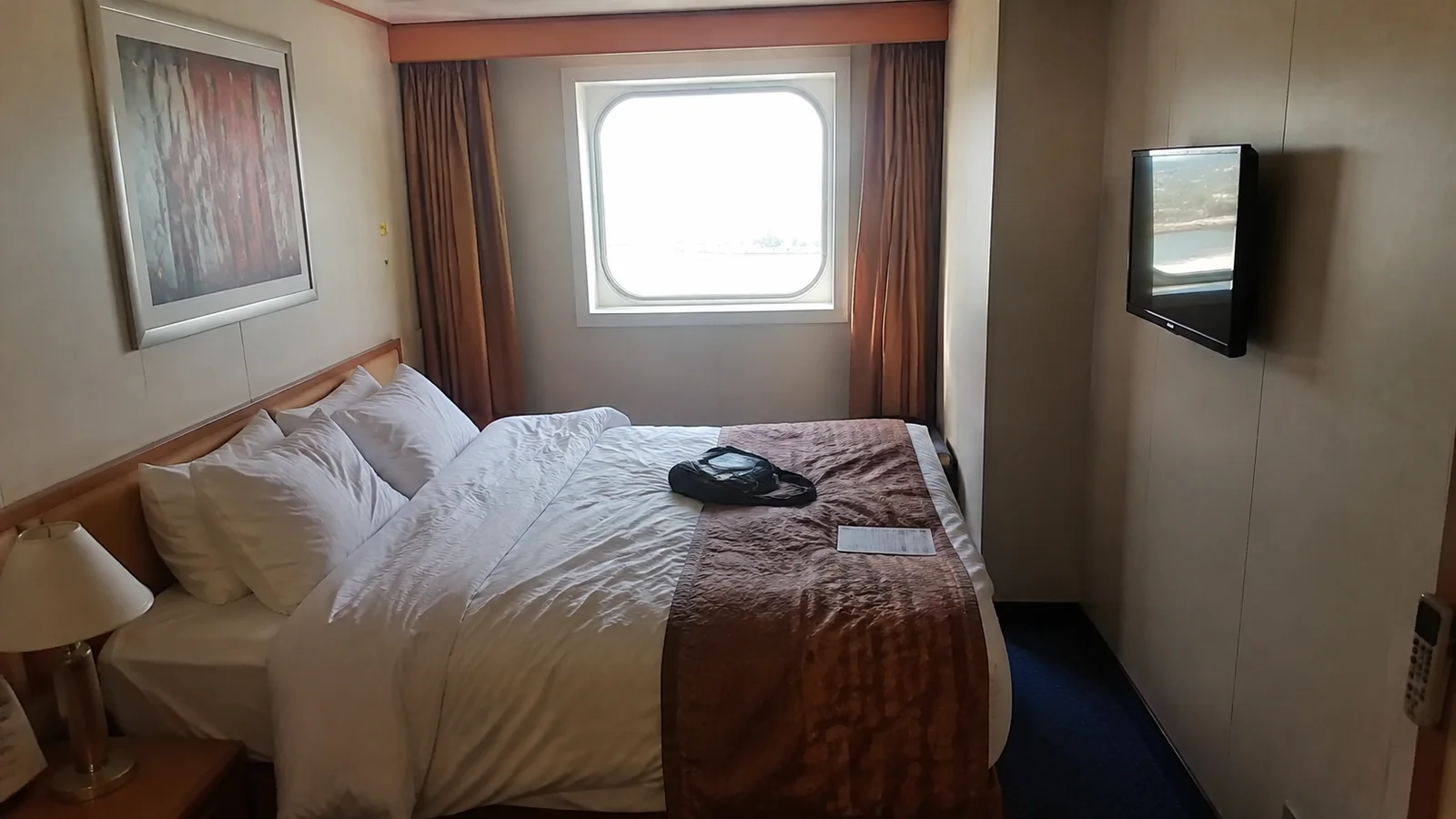
Use the exact Carnival Liberty deck plan
This guide was checked against Carnival’s standard and accessible plans. Reopen the current PDF from the official Carnival Liberty page before final payment because categories, venue names, and accessible markings may change.
Liberty’s public rooms are concentrated on Lobby Deck 3, Atlantic Deck 4, Promenade Deck 5, and Lido Deck 9. Cabins occupy Decks 1, 2, 6, 7, 8, and forward portions of several higher decks.
Structural facts are the useful part of any “cabins to avoid” conversation. Noise, vibration, sleep quality, and whether a view feels disappointing are personal and conditional.
The quick list of cabins to check twice
- Deck 6 rooms above the theater, atrium, casino, bars, lounges, and nightclub.
- Deck 8 rooms below the pool deck, buffet, restaurants, and outdoor seating.
- Deck 2 rooms below the theater, dining rooms, or galley footprint.
- Ocean-view cabins 2446 and 2449, which Carnival officially marks obstructed.
- Category 4J walkway-view rooms if privacy or a broad view matters.
- High forward spa-area rooms or far-end cabins for motion-sensitive travelers.
- Connecting rooms when you do not need the shared door.
These are review zones rather than a blacklist. A room beside your favorite venue may be more useful than a theoretically quiet cabin reached by a daily hike.
Deck 6 cabins above Promenade
Upper Deck 6 sits directly above Promenade Deck 5, Liberty’s busiest evening deck. The plan shows the theater, atrium, shops, casino, Promenade, Cabinet cigar bar, Hot and Cool Nightclub, lounges, and other public circulation below.
Forward Deck 6
The forward Deck 6 block aligns above the Venetian Palace Main Lounge and nearby stage and lobby space. Shows, rehearsals, music, doors, and departing crowds may be audible, although the exact result depends on position and insulation.
These rooms also sit at the bow, where pitching can be more noticeable in rough seas. A night owl who attends the last show may find the location wonderfully efficient.
Midship Deck 6
Midship cabins run above the atrium, shops, casino, bars, and Promenade areas. Speaker placement, event times, and the room’s alignment matter more than the broad phrase “above Deck 5.”
Look for stages, open atrium space, and late operating hours below the exact cabin. Deck 7 offers a similar central position with cabins on both sides vertically across much of the deck.
Aft Deck 6
The aft block is above the nightclub, lounges, and entertainment spaces near the stern. Music and guest movement are plausible risks at night, but no deck plan can establish cabin-level volume.
Light sleepers who want the aft half should compare Deck 7. A central Deck 7 room removes the direct nightclub-below relationship while keeping elevators and dining reasonably accessible.
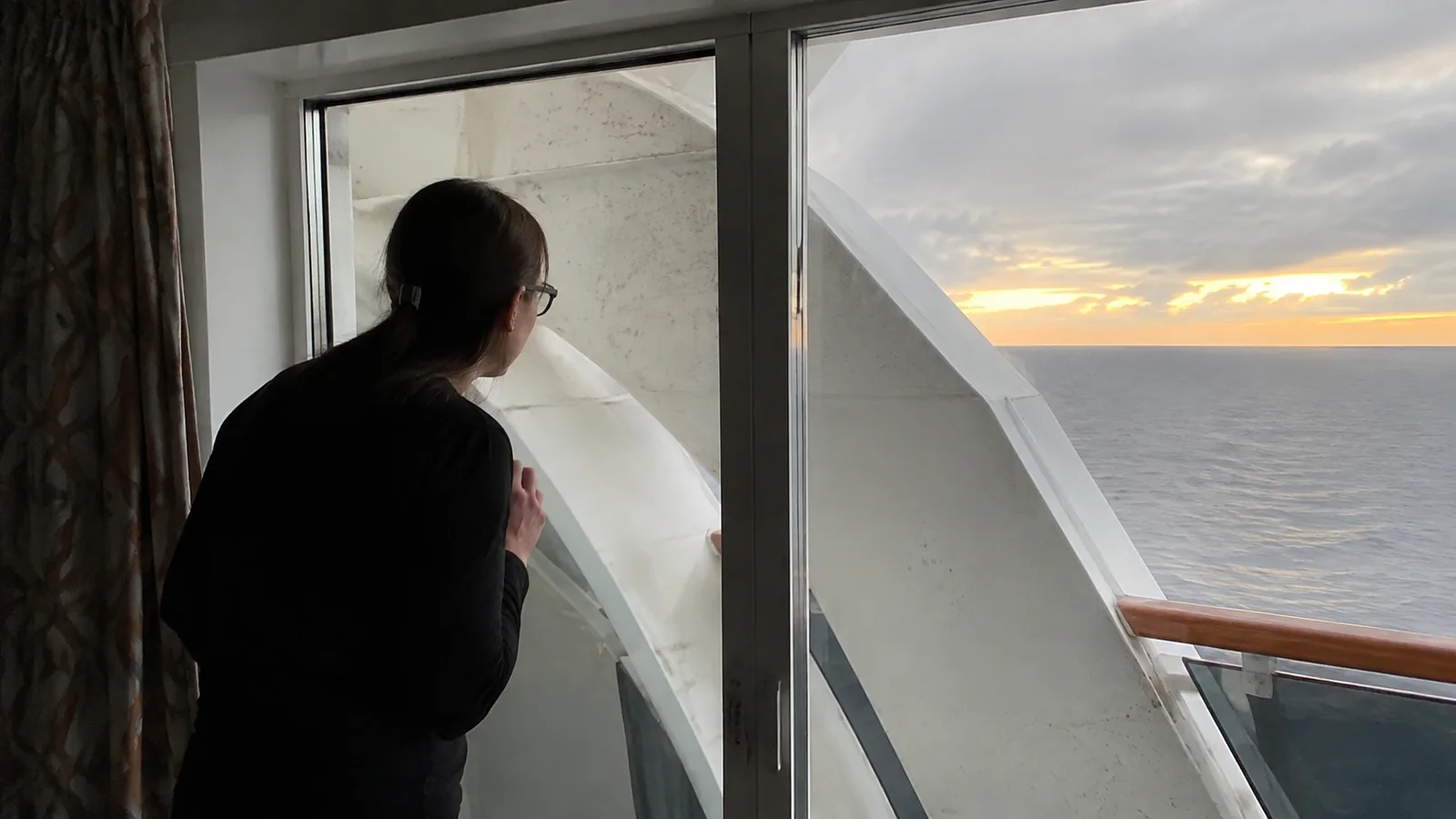
Deck 8 cabins below Lido
Verandah Deck 8 sits immediately beneath Lido Deck 9. The overhead footprint changes from forward cabins to the Tivoli Pool, pool bars, buffet and dining areas, then the aft pool and open seating.
Possible sounds include deck chairs, carts, footsteps, music, setup, and cleaning. They will not affect every room equally or occur continuously.
Forward Deck 8
Forward Deck 8 rooms beneath the Deck 9 stateroom block have cabins overhead, which is a useful buffer for sleep. The pool-related caution begins farther aft, where Deck 9 changes from cabins and the atrium area to the Tivoli Pool, BlueIguana Tequila Bar, and RedFrog Rum Bar.
On the side-by-side official plan, align the aft end of the Deck 9 cabin block with Deck 8 using the forward elevator bank and atrium as landmarks. I would choose the cabin-buffered forward section over a room below Tivoli seating for early nights, while still weighing the extra bow movement.
Midship and aft Deck 8
The middle Deck 8 section transitions beneath Tivoli Pool and its bars, then buffet and dining areas farther aft, while rear rooms extend below the aft pool and surrounding deck. Meal setup, cleaning, furniture, and outdoor activity are conditional concerns.
Central Deck 7 is the uncomplicated quieter alternative. Passenger cabins above and below provide a useful buffer from the largest public spaces.
Deck 2 cabins below Lobby Deck
Main Deck 2 sits beneath public and service areas on Lobby Deck 3. The forward section aligns below the Venetian Palace theater, the middle below dining and the large galley footprint, and the aft below the Silver Olympian Restaurant.
Theater activity may matter in the forward block, while carts, preparation, and cleanup may matter near dining or galley alignments. Those are operating possibilities, not promises of disturbance.
Deck 1 has cabins above it across much of the ship, creating a better overhead buffer. Low midship Deck 1 is a sensible option for travelers who prioritize motion control and do not mind being farther from Lido.
Exact obstructed cabins 2446 and 2449
The current Carnival Liberty deck-plan PDF explicitly identifies category 6B cabins 2446 and 2449 as having obstructed views. That is the most defensible exact cabin warning on the plan.
Carnival does not translate the obstruction note into a universal percentage in the PDF. Ask what object blocks the sightline and compare the total fare with another ocean-view room.
These cabins may still supply useful daylight and suit a budget-minded traveler. They are a weaker choice when watching arrivals or enjoying an open horizon from bed is a central reason for buying ocean view.
Interior with picture window, category 4J
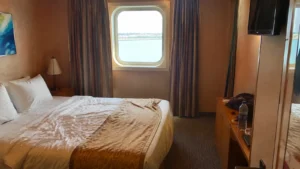
Category 4J is officially an Interior with Picture Window and an obstructed view. Its windows face an exterior observation walkway rather than offering the private, clean sightline many shoppers imagine from “picture window.”
The walkway can introduce passing guests and a privacy concern, especially after dark when cabin lights are brighter than outside. Close the curtains whenever privacy matters, regardless of reflective glass.
For some travelers, a 4J is an excellent way to gain daylight near the bow at an interior-style price. For others, a standard ocean-view cabin is worth more because the view feels private and direct.
Porthole cabins
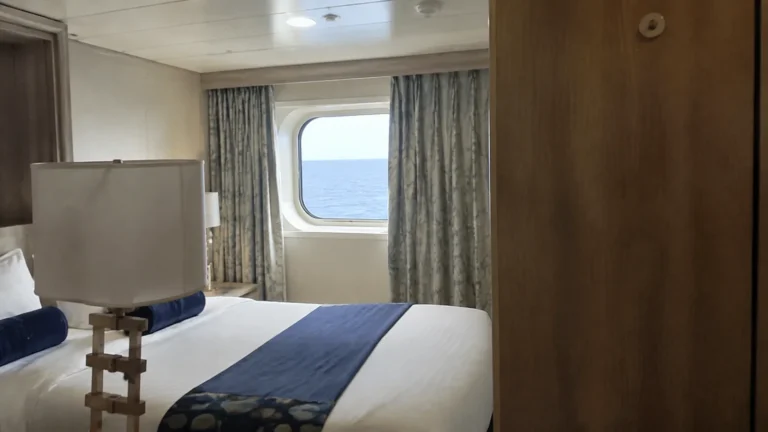
Carnival Liberty’s plan includes PT porthole cabins and a symbol for rooms with two porthole windows. These are real exterior views, but the smaller round openings provide less viewing angle than a picture window.
Porthole rooms are typically in low forward positions, so motion and nearby ship operations deserve a check. Our explanation of cruise ship portholes separates window shape, category, and obstruction without assuming they are all the same thing.
High forward rooms near spa spaces
Liberty has forward cabins on Panorama Deck 10 and Spa Deck 11, with fitness, spa, and open recreational spaces in the surrounding vertical stack. The location is convenient for wellness facilities and high enough to feel more motion than low midship in the same sea.
Daytime foot traffic, equipment, and deck activity are more plausible concerns than late-night nightclub sound. Check the exact room above and below rather than labeling every spa-area room identical.
Choose these rooms because their location or current benefits suit you. If motion is the deciding factor, move lower and closer to midship.
Aft-view cabins and premium balconies
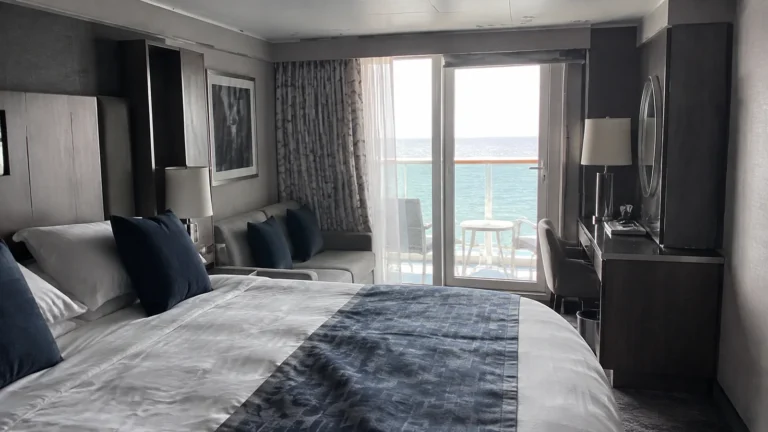
Aft-view extended balconies and corner Premium Vista balconies trade a central position for wake views and extra outdoor geometry. Some travelers may notice vibration, turning sensation, wind, sun, or occasional soot more than in a side-facing midship room.
Those are conditional outcomes, and dedicated aft fans often consider the same location a prize. The better question is whether the wake and balcony shape compensate for a less central ride for you.
A standard side balcony on Deck 7 offers a more neutral quiet-and-motion compromise. It gives up the wraparound spectacle but removes several special-location variables.
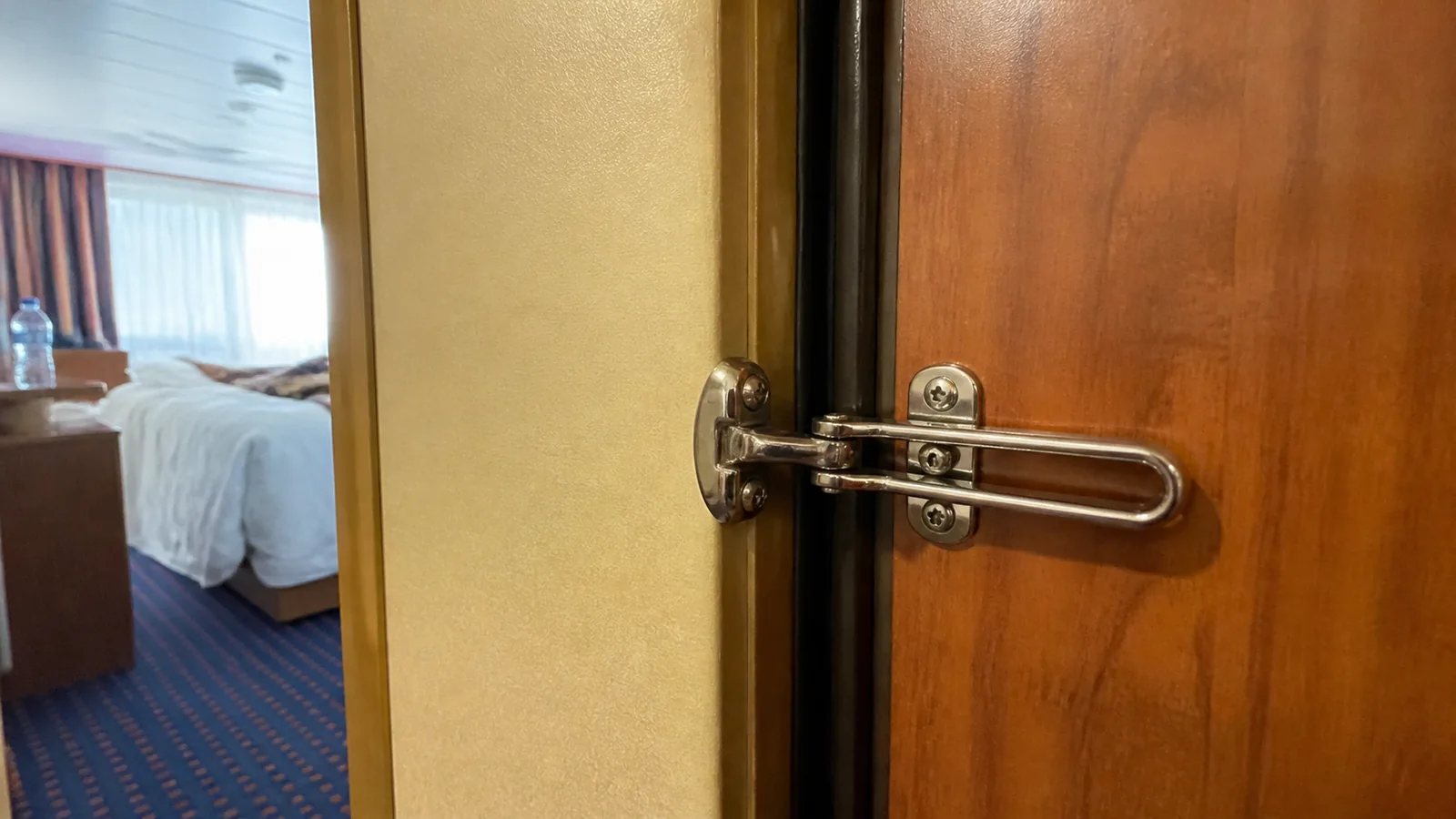
Connecting cabins
Liberty’s plan marks connecting pairs across multiple cabin decks. They are extremely useful for families and groups, while the connecting door may provide less acoustic separation than a continuous wall.
This does not guarantee that voices will pass through. If you do not need the door and are sound-sensitive, a non-connecting cabin simply avoids one preventable uncertainty.
Elevators, stairs, and blank spaces
Elevator proximity is not proof of noise, and it can be valuable for limited stamina or a port-heavy cruise. Conversations in the lobby and traffic around corridor turns are the more realistic possibilities.
Large blank spaces may contain crew access, storage, machinery, ducts, or structural voids. Ask Carnival to identify the space rather than accepting a forum guess as shipbuilding documentation.
A few doors of separation from a major elevator lobby can provide a useful balance. If mobility is the higher priority, choose the shortest accessible route instead of chasing theoretical silence.
Accessibility requires the right cabin class
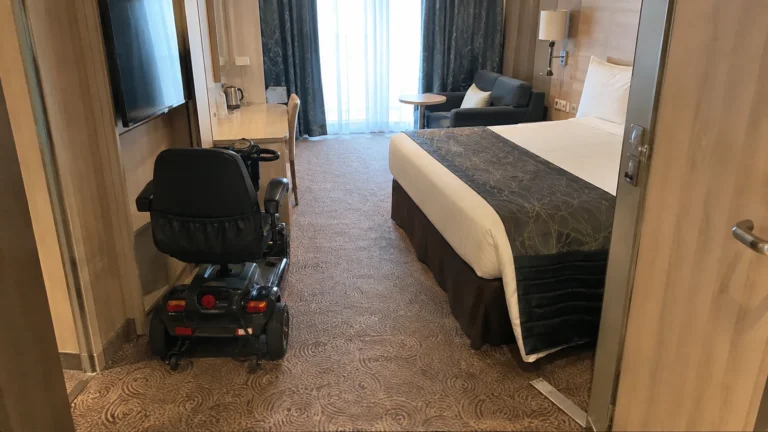
Carnival uses distinct Fully Accessible Cabin, Fully Accessible Cabin with Single Side Approach, and Ambulatory Accessible Cabin markings. These layouts are designed for different needs and cannot be chosen accurately from a standard room photo.
The line’s accessibility information says FAC rooms include turning space, accessible routes, a wider door, and an accessible bathroom. FAC-SSA provides clear space on only one side of the bed in the relevant configuration, while AAC is intended for mobility limitations that do not require regular wheelchair or scooter use.
Carnival says a guest who does not need accessible features may be moved to accommodate a disabled guest. Contact Guest Access Services, check doorway and bathroom measurements, confirm the bed arrangement, and leave accessible inventory for travelers who need it.
Quieter Carnival Liberty alternatives
- Central Deck 7: the cleanest broad cabin-above and cabin-below pattern.
- Low midship Deck 1: useful for motion-sensitive travelers who accept longer elevator trips.
- Side-facing midship balcony: a more neutral location than the extreme bow or stern.
- Non-connecting cabin: removes the shared-door variable.
- Unobstructed ocean view: the safer choice when scenery matters more than a small savings.
“Quieter” describes the visible structure, not a warranty. Neighbors, hallway traffic, maintenance, and weather retain their longstanding refusal to consult cabin guides.
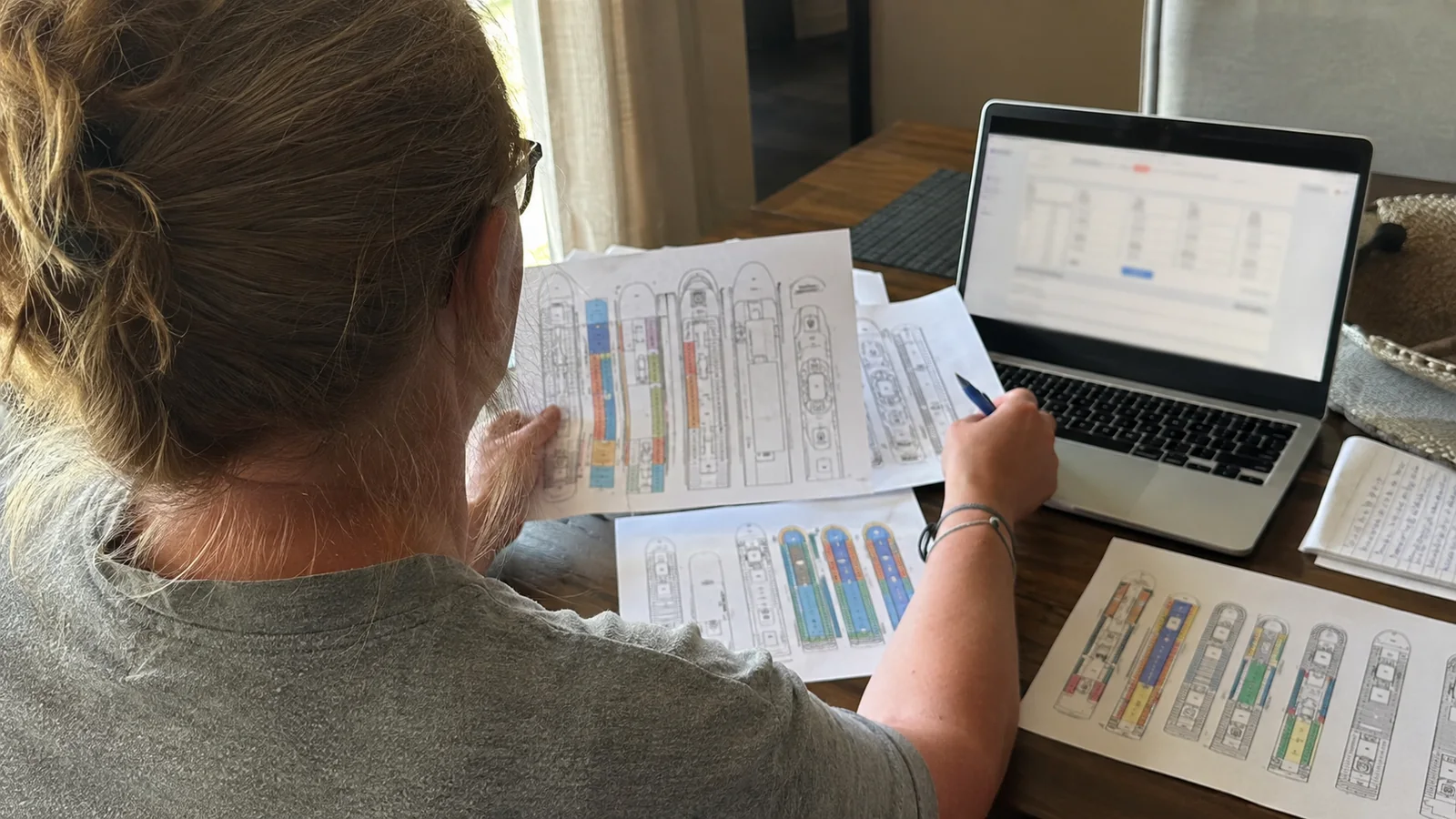
How to check your cabin before booking
- Open the newest Carnival Liberty plan, not a Conquest-class sister-ship copy.
- Find the exact number, category color, and bed symbols.
- Align the room with the decks directly above and below.
- Note stages, kitchens, pools, open deck, elevators, and service areas.
- Confirm whether the room connects and whether Carnival labels the view obstructed.
- Use the accessible deck plan and Guest Access Services when appropriate.
- Save the description and recheck it before final payment.
The choice belongs inside the broader booking decision, including fare rules and assignment type. Our cruise booking options explain what direct reservations, advisors, and online deal sites each do well.
Once the room is fixed, the cruise packing list can help you bring what fits without packing gadgets for every imaginable cabin problem. The cabin walls will appreciate the restraint.
Frequently asked questions
What is the quietest deck on Carnival Liberty?
Central Deck 7 offers the best overall pattern of passenger cabins above and below. Exact connections and corridor position still deserve a check.
Should I avoid all Deck 6 cabins?
No. Deck 6 is convenient, and the venue below changes along the corridor; early sleepers should simply examine their exact position.
Are cabins 2446 and 2449 bad?
They are officially obstructed ocean-view cabins, not officially bad cabins. They can be good value if daylight matters more than a clear panorama.
Is Deck 8 always noisy?
No. It has a structural risk from Lido above, but exact overhead use, schedule, insulation, and guest sensitivity determine the experience.
The bottom line
Review Deck 6 for Promenade venues below, Deck 8 for Lido activity above, Deck 2 for Lobby Deck alignment, and cabins 2446 and 2449 for verified obstruction. Then weigh those facts against price, view, access, and convenience.
For the simplest quiet-first choice, start near midship on Deck 7 with cabins above and below. Carnival Liberty has many workable rooms, and a careful match beats a dramatic blacklist every time.