Mobility Scooters on Cruises: Cabins, Tenders and Ports
Book a cruise with a mobility scooter only after checking the exact cabin doorway, storage space, and route ashore. A ship can accommodate the scooter while a tender boat or excursion vehicle cannot.
Start with the traveler’s transfer needs and the scooter’s measurements, then choose the cabin and itinerary around them. A nearby elevator and a usable bathroom matter more than an impressive view that comes with an exhausting daily route.
What to check before booking
- Scooter width, length, weight, battery type, and any detachable parts.
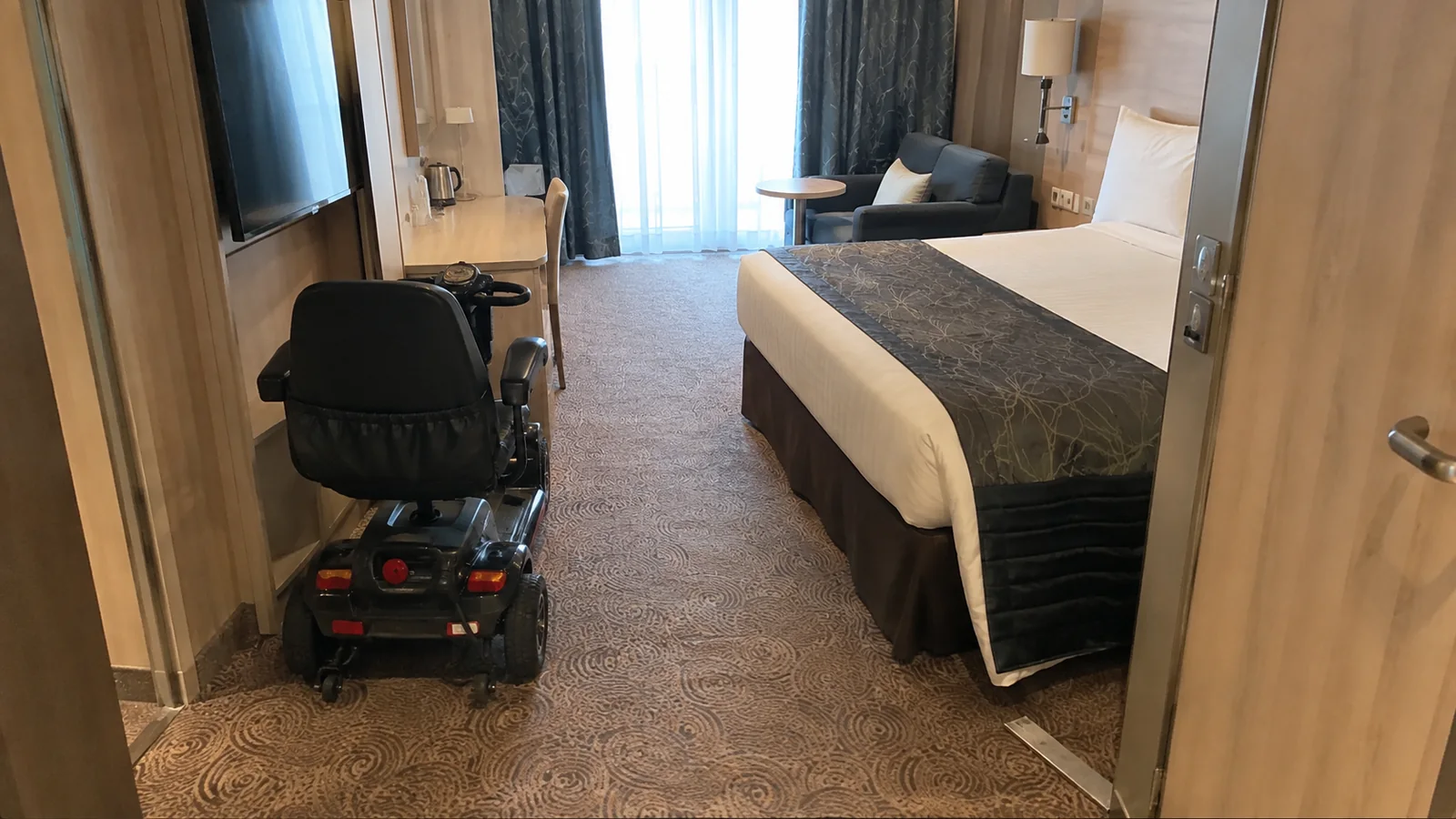
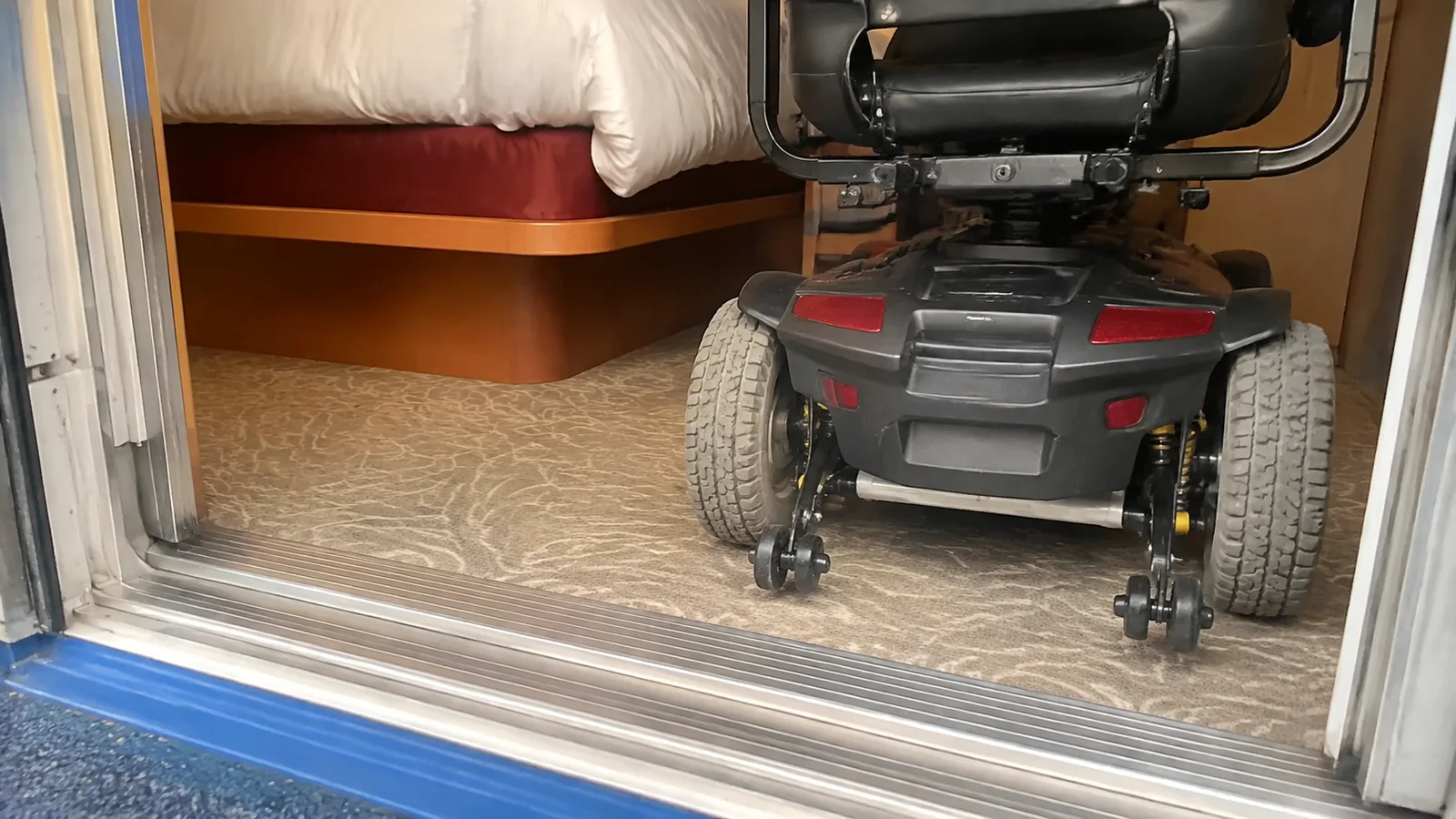
- The cabin’s clear doorway, turning space, and safe parking and charging location.
- Whether the traveler needs an accessible bathroom or other specific features.
- Docked versus tendered ports and the transfer requirements at each stop.
- Accessible transportation from the airport through the final trip home.
- Who provides personal assistance and what crew can actually help with.
Get these answers before the fare becomes difficult to change. A last-minute cabin swap depends on availability, and suitable accessible rooms can be limited.
Measure the scooter as you use it
Use the manufacturer’s specifications, then check the widest real point with any fitted accessories. Armrests, baskets, controls, and bags can affect whether a scooter passes through a doorway or turns inside a cabin.
Record the full length, width, weight, and battery details in one note. If the device folds or separates, include the size and weight of the pieces that actually need to be handled.
Do not describe a scooter simply as “small” or “travel size.” Those labels do not tell a cruise accessibility team whether it will fit a specific door or a vehicle lift.
Send the model and measurements with the booking request. If a rental company changes the model, check the replacement before accepting it rather than assuming all compact scooters are equivalent.
A standard cabin is not always enough
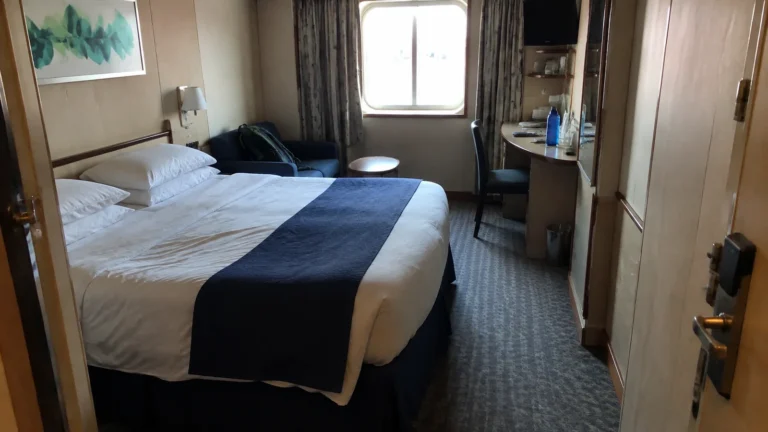
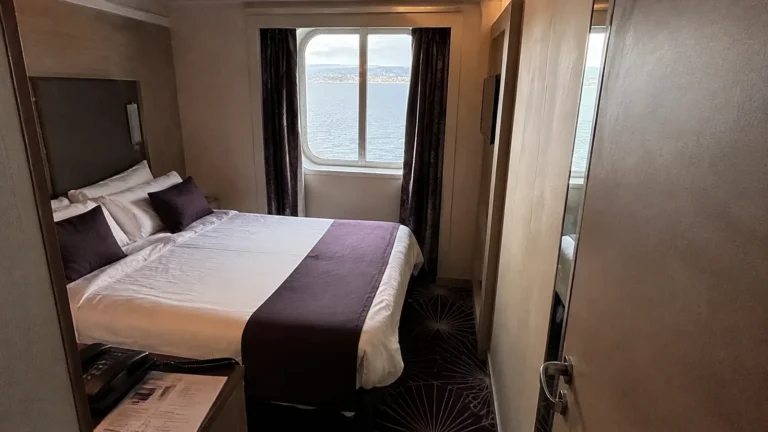
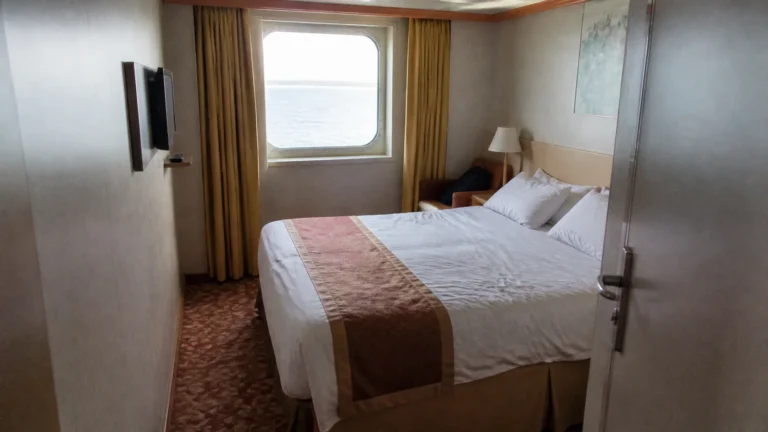
Royal Caribbean’s special-needs form states that scooters must fit through the cabin door and be stored and charged inside. It lists minimum standard door widths of 23 inches and accessible doors of 32 inches, but I’d still confirm the clear opening for the exact cabin.
Door width is only the first measurement. The scooter also needs a workable route past furniture and a parking position that does not block the exit or bathroom.
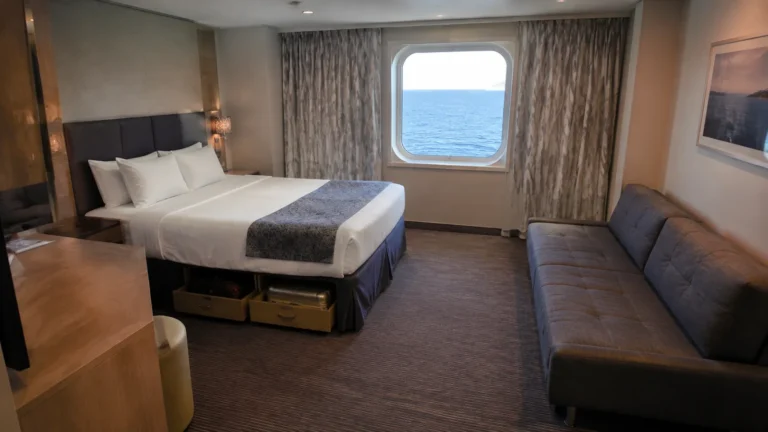
Ask how the room changes when the sofa bed or additional berths are in use. A family layout that works during the day may leave much less turning space at night.
Use my cruise floor-plan guide to compare layouts, then obtain measurements from the line. A drawing without dimensions cannot establish that a mobility device will fit.
Choose accessible features because you need them
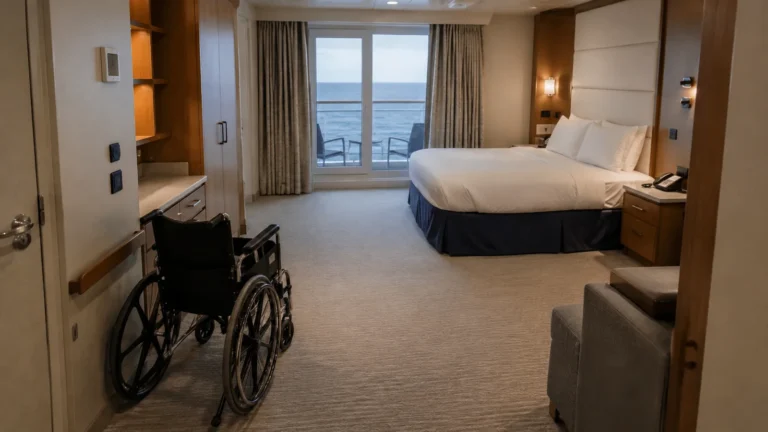
An accessible cabin may provide a wider entrance, more maneuvering space, and bathroom features such as a roll-in shower or grab bars. The exact configuration still needs to match the traveler’s needs.
Ask about bed height, toilet transfer space, shower seating, thresholds, and access to storage. If a particular side of the bed or toilet must remain clear, say that directly.
Book an accessible room when its features are needed, including when a device cannot safely fit a standard room. Not treat those rooms as an upgrade for extra space without an accessibility need.
A balcony deserves its own threshold and doorway check. Paying for outdoor space that the traveler cannot comfortably reach is an avoidable disappointment.
Near an elevator can be the better choice
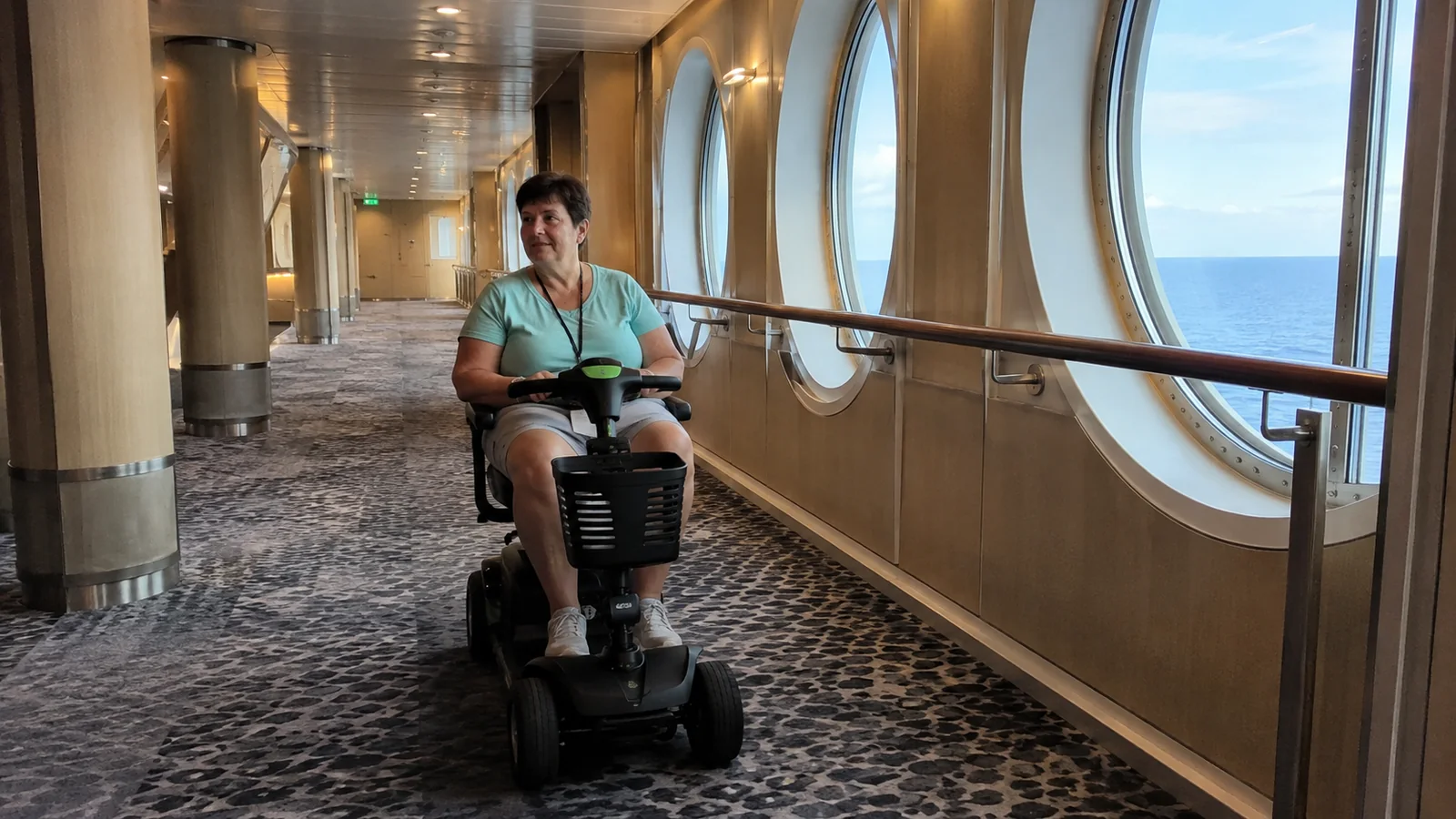
Often choose a cabin around the corner from an elevator if it reduces repeated travel to meals and public spaces. A theoretical hallway-noise concern should not outweigh a route that preserves the traveler’s energy.
Look at the elevator bank that actually serves the places you expect to use. The nearest elevator is less helpful if reaching dinner still requires a long detour on another deck.
My cabin-selection guide can help identify noise tradeoffs without rejecting every room near a lobby. For this trip, I’d rank functional access first and then compare otherwise suitable locations.
Ask whether any useful venues require a separate lift or an alternative route. A ship can be broadly accessible while individual spaces have different access arrangements.
Corridors are not scooter parking areas
Plan to keep and charge the scooter where the cruise line permits, normally inside the cabin. Do not rely on leaving it in a public hallway, stairwell, or elevator lobby overnight.
A parked device can obstruct evacuation and ordinary access for other travelers. Confirm the indoor parking space before booking rather than asking the steward to solve it after embarkation.
Use the appropriate charger and follow the cruise line’s electrical rules. Ask for help if the cord route crosses the cabin doorway or the path to the bathroom.
Keep the key, charger, and any necessary release instructions together. If more than one companion may help move the scooter, they should understand the manufacturer’s approved handling procedure.
Tender ports are the biggest uncertainty
A tender transfers passengers between an anchored ship and shore using a smaller boat. Steps, moving platforms, space limits, and sea conditions can make that transfer very different from rolling down a docked gangway.
Norwegian’s mobility guidance explains that access and assistance depend on the circumstances and the traveler’s needs. Ask the line about each tendered stop rather than accepting a general statement that the ship welcomes scooters.
Ask whether the traveler must transfer out of the scooter, what steps or gaps are involved, and whether the device itself can be transported. Those are separate questions, and permission for a manual wheelchair does not necessarily cover a scooter.
Crew assistance has limits and can be affected by conditions on the day. Do not plan around being carried, having a heavy device lifted, or making a transfer the traveler cannot safely perform.
If going ashore is essential, I’d favor an itinerary with suitable docked ports. Even then, understand that operational changes can occasionally alter the boarding arrangement.
A docked ship still has a gangway
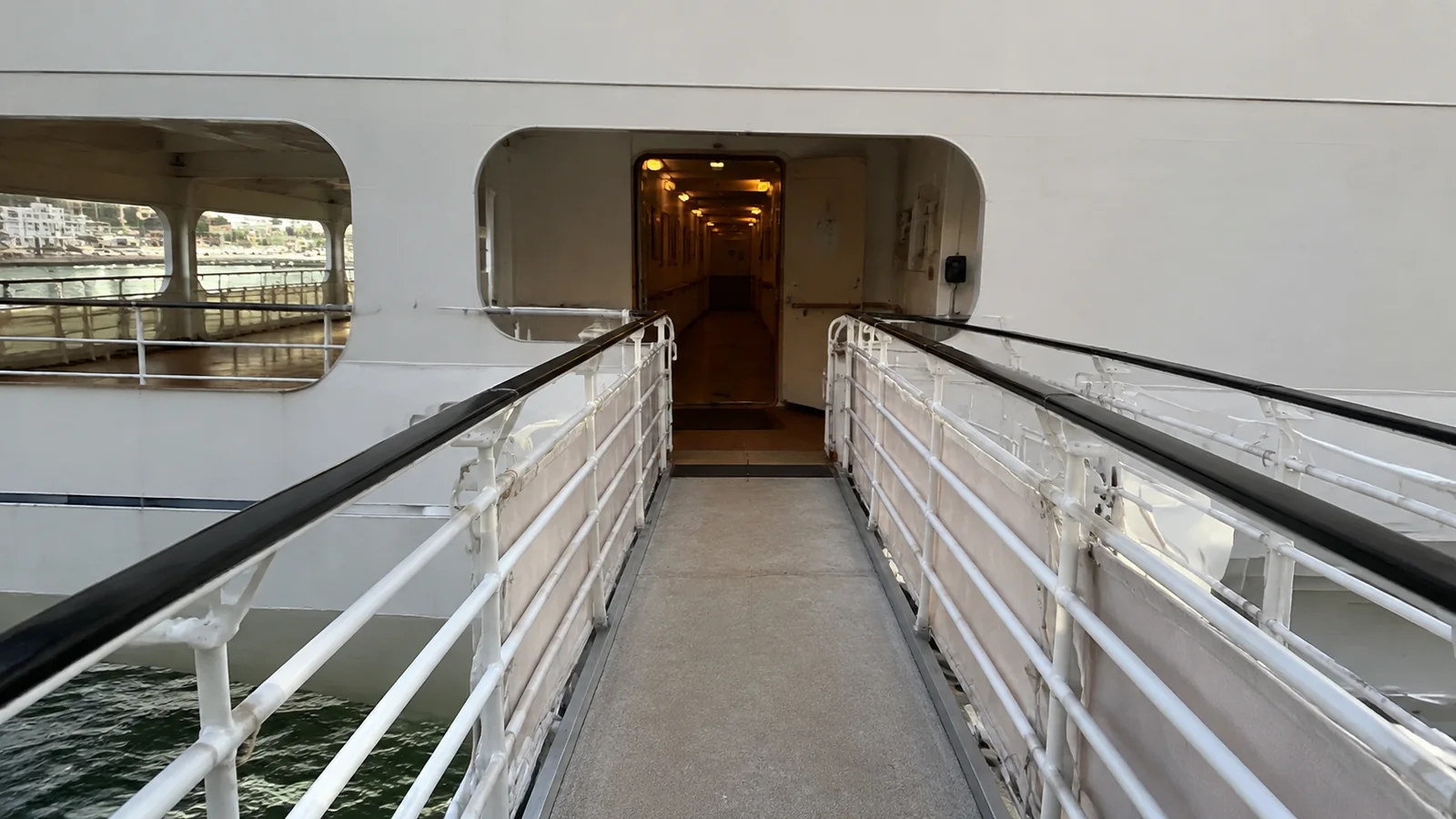
Gangway slope can vary with the tide and port setup. A route that looks easy in a photograph may feel very different when steep, crowded, wet, or connected by an awkward threshold.
Ask how staff will direct scooter users and whether the traveler must transfer at any stage. Follow the crew’s instructions rather than trying a difficult ramp independently because another passenger managed it.
Allow extra time to disembark and return, especially before a scheduled tour. The trip should not depend on rushing through a queue or attempting a transfer under time pressure.
Have an enjoyable onboard option for a port that becomes unsuitable. Missing one stop is preferable to turning a doubtful transfer into the defining event of the cruise.
Shore transport needs exact specifications
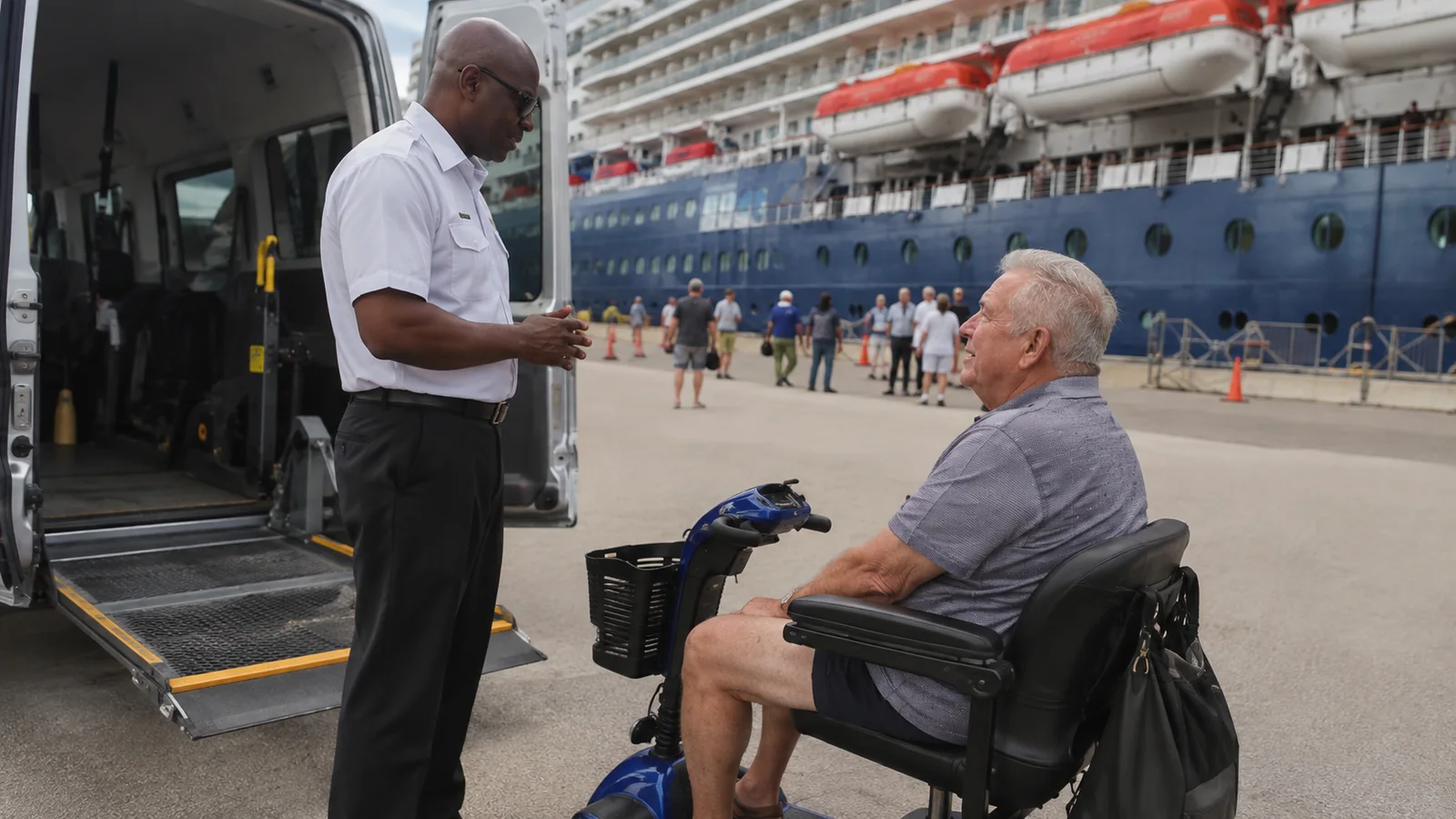
An “accessible tour” description is a starting point, not proof that every vehicle can carry your device. Ask for lift or ramp dimensions, weight capacity, securement arrangements, and whether the traveler remains seated in the scooter.
Royal Caribbean’s accessible excursion guidance requires device information and notes that vehicles, ramps, and lifts vary by port. Submit measurements early because suitable tour places can be limited.
If a tour requires transfer to a vehicle seat, confirm how that transfer works and who assists. Also ask where the scooter travels after it is folded or dismantled.
Do not assume a taxi described as a van has a wheelchair lift. Request a photo or written equipment description before paying a private operator.
Check the destination beyond the vehicle
Ask about curb cuts, steps, slopes, cobblestones, restroom access, and the distance between drop-off and the attraction. A suitable vehicle does not make an inaccessible old town or beach usable.
For a museum or restaurant, confirm the entrance actually used by the tour. An accessible side entrance is helpful only if it is open and the guide knows where it is.
Battery range also deserves a realistic plan. Hills, surface conditions, load, and stop-start travel can make a long port day different from the scooter’s advertised range.
Choose a shorter outing with a known return arrangement over a packed schedule with several uncertain transfers. Leave enough reserve to get back through the terminal and ship, not merely to the pier.
Renting versus bringing your own
A familiar scooter has the advantage of known controls and fit. A rental can simplify transport, but only if its size, condition, and delivery arrangement meet the traveler’s needs.
Ask whether delivery is to the terminal or cabin, when the equipment becomes available, and what covers the gap beforehand. A cabin delivery does not solve a long airport walk or terminal queue.
Check the supplier’s support process, charger provision, return instructions, and what happens if the equipment fails. Test a delivered scooter before the ship leaves whenever possible.
For flights with your own device, contact the airline about battery and handling requirements. Cruise approval does not replace airline approval, and detachable batteries may need specific arrangements.
First-day checks to make
Test the cabin doorway, parking position, bathroom access, and route to the bed before unpacking. Report a mismatch promptly while the accessibility and cabin teams can assess the options.
Learn the practical routes to dining, the gangway, and the assigned safety meeting point. Ask how evacuation assistance is arranged for the traveler’s specific needs.
Keep essential medication, the charger, and support contacts in the carry-on. My cruise packing list can help with the rest, but the equipment plan should remain easy to find.
My preferred booking
Choose a cabin that comfortably fits both the traveler and scooter, near the useful elevator bank, on an itinerary with workable shore access. Pay more for confirmed transport and a functional bathroom before spending extra on a larger balcony or a tour full of uncertain transfers.