Carnival Vista Cabins to Avoid, Plus Quieter Picks
The Carnival Vista cabins to check most carefully sit above busy Promenade venues, below Lido activity, beside family or nightlife hubs, or in officially obstructed categories. That does not make them bad rooms, but it does make them poor matches for some travelers, which is the distinction that matters.
How this Carnival Vista cabin guide was checked
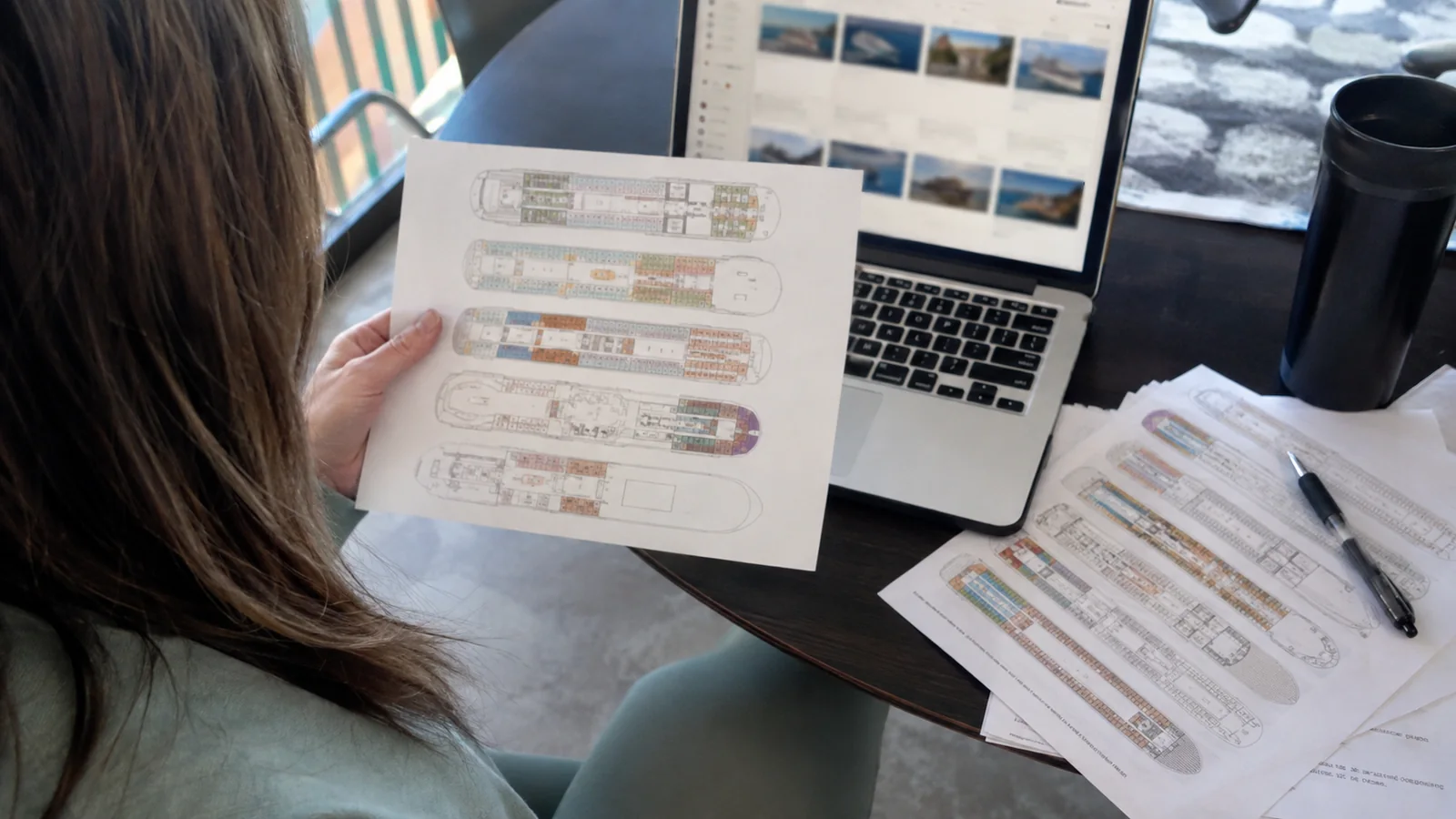
The structural details here come from Carnival’s standard and accessible plans. Always open the latest PDF from the official Carnival Vista page before paying because categories, venues, and plan versions can change.
Vista has a more layered layout than a simple hotel tower. Public spaces occupy much of Decks 3 through 5 and Deck 10, but Decks 3 and 10 also have forward cabin blocks that matter when checking the room overhead.
A plan can verify a pool overhead, a lounge below, a connecting door, or an obstructed category. It cannot verify that every guest will hear the same sound or dislike the same location.
Carnival Vista cabins to check twice
- Deck 6 rooms above the Liquid Lounge, Deck 5 bars and restaurants, and Ocean Plaza.
- Deck 9 rooms below pools, buffet seating, outdoor dining, and open deck.
- Deck 2 cabins below Lobby Deck public and service areas.
- Officially obstructed cabins 9205, 9206, and the twelve listed category 6B rooms.
- Interior picture-window cabins facing public walkways if privacy matters.
- High forward spa cabins or far-end rooms if motion is a concern.
- Connecting rooms when you do not need the shared door.
This list is a filter, not an eviction notice. Location can be a wonderful convenience for one person and a sleep compromise for another.
Deck 6 cabins above Promenade Deck
Deck 6 is the most obvious lower-neighbor risk because Deck 5 is packed with public spaces. Its footprint includes the Liquid Lounge upper level, shops, Piano Bar 88, Fahrenheit 555, Bonsai Sushi, Ocean Plaza, and circulation areas.
Forward Deck 6
The forward Deck 6 block aligns above the Liquid Lounge and nearby public spaces. Production shows, rehearsals, music, doors, and guest movement can create sound at scheduled times, but the experience varies by room and event.
Forward location also adds a potential motion tradeoff. The same room may suit someone who stays out late and values theater access, while frustrating someone who sleeps at 9 p.m.
Midship Deck 6
Midship rooms sit over a shifting mix of shops, atrium space, bars, and dining on Deck 5. Bass and crowd movement are possible around active venues, while a retail area may be comparatively calm after closing.
Do not treat the whole deck as acoustically identical. Line up the cabin’s walls with Deck 5 and identify the venue, stage, kitchen, and corridor below.
Aft Deck 6
The aft half transitions from Ocean Plaza and dining areas to Havana cabins, the Havana Bar, and its outdoor area on Deck 5. Evening programming and service activity may matter to early sleepers, but exact exposure depends on the cabin’s footprint.
Vista Casino and Limelight Lounge are on Deck 4, so neither is the immediate downstairs neighbor of a Deck 6 room.
For a quieter structural starting point at a similar height, compare central Deck 7 or 8. Both are primarily buffered by other cabins across substantial portions.
Deck 9 cabins below Lido Deck
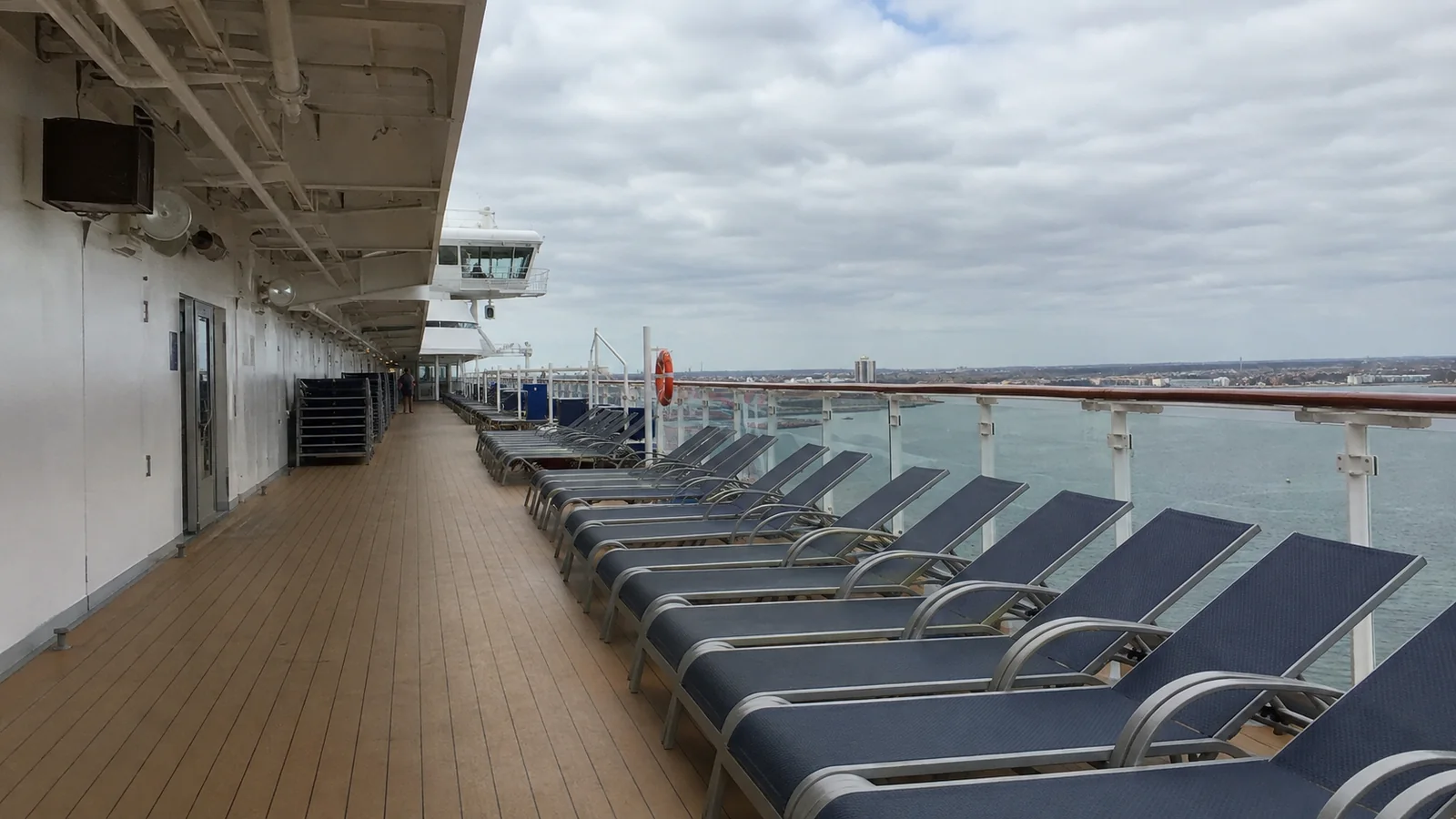
Deck 9 sits directly beneath Deck 10, home to the Beach Pool, Lido Marketplace, outdoor dining, bars, the Tides Pool, and open seating. Potential overhead sounds include chairs, carts, setup, cleaning, music, and ordinary foot traffic.
That risk is not evenly distributed. A room below a carpeted interior section has a different neighbor from one below a pool deck or a busy serving station.
Forward and midship Deck 9
The forward Deck 10 cabin block buffers the forward Deck 9 rooms; the Beach Pool starts farther aft, beyond that cabin block. Moving toward the stern, the overhead use changes to the pool and surrounding seating, then Lido Marketplace, so I would trace those transitions before paying for a pool-adjacent location.
Cabins 9205 and 9206 require an additional view check. Carnival’s current plan explicitly lists both Junior Suites as having obstructed views.
Aft Deck 9
Aft rooms align below dining, bars, the Tides Pool, and open deck. They can suit travelers who want a quick route to food and the aft pool, with possible tradeoffs from setup and guest activity.
Central Deck 8 is the simplest quiet-first alternative. It keeps cabins above and below while avoiding the ship’s highest and lowest motion extremes.
Deck 2 below Lobby Deck
Deck 2 includes a long run of regular and Family Harbor cabins, with Lobby Deck 3 directly above. Deck 3 has cabins forward, atrium and lobby areas, Reflections Restaurant midship, a large galley/service zone, and Horizons Restaurant aft.
Forward Deck 2 rooms beneath the Deck 3 cabin block have a cabin buffer, with the Liquid Lounge farther up on Decks 4 and 5. For central and aft Deck 2 rooms, I would instead check the actual Deck 3 restaurant or galley footprint for possible cart movement, preparation, and cleanup.
Deck 1 offers cabins below Deck 2 staterooms over much of its length, which can improve the overhead pattern. It is lower and still includes far-forward and far-aft positions, so motion and operational preferences remain relevant.
Family Harbor cabins and the lounge tradeoff
Family Harbor occupies a dedicated Deck 2 area near its private lounge. Carnival’s current ship page lists lounge access, breakfast and snacks, games, family movies, and other perks for eligible guests.
Being close to the lounge is extremely useful with children and may bring more family traffic in the corridor. That is a fit question, not evidence that children or the rooms are inherently noisy.
A family who wants the perks should choose the easiest workable location. A couple seeking a hushed corridor may prefer a standard cabin zone on Deck 7 or 8 instead.
Exact obstructed-view cabins on the current plan
The official Carnival Vista deck-plan PDF identifies two exact obstruction groups. These are facts printed by Carnival, not guesses from passenger photos.
- Junior Suites 9205 and 9206: officially listed as obstructed view.
- Category 6B rooms 3219, 3221, 3225, 3229, 3233, and 3237: officially listed as obstructed view.
- Category 6B rooms 3222, 3226, 3230, 3234, 3238, and 3242: officially listed as obstructed view.
The plan does not turn “obstructed” into a universal percentage. Ask Carnival what object affects the view and compare the price with a room whose sightline better matches your expectations.
Interior rooms with picture windows and walkway views
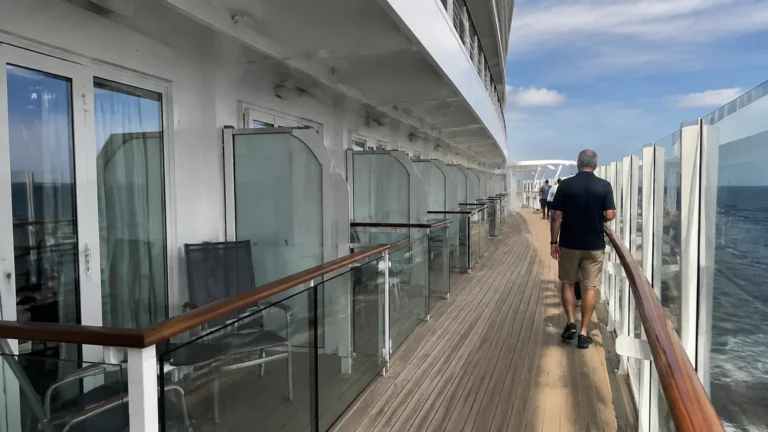
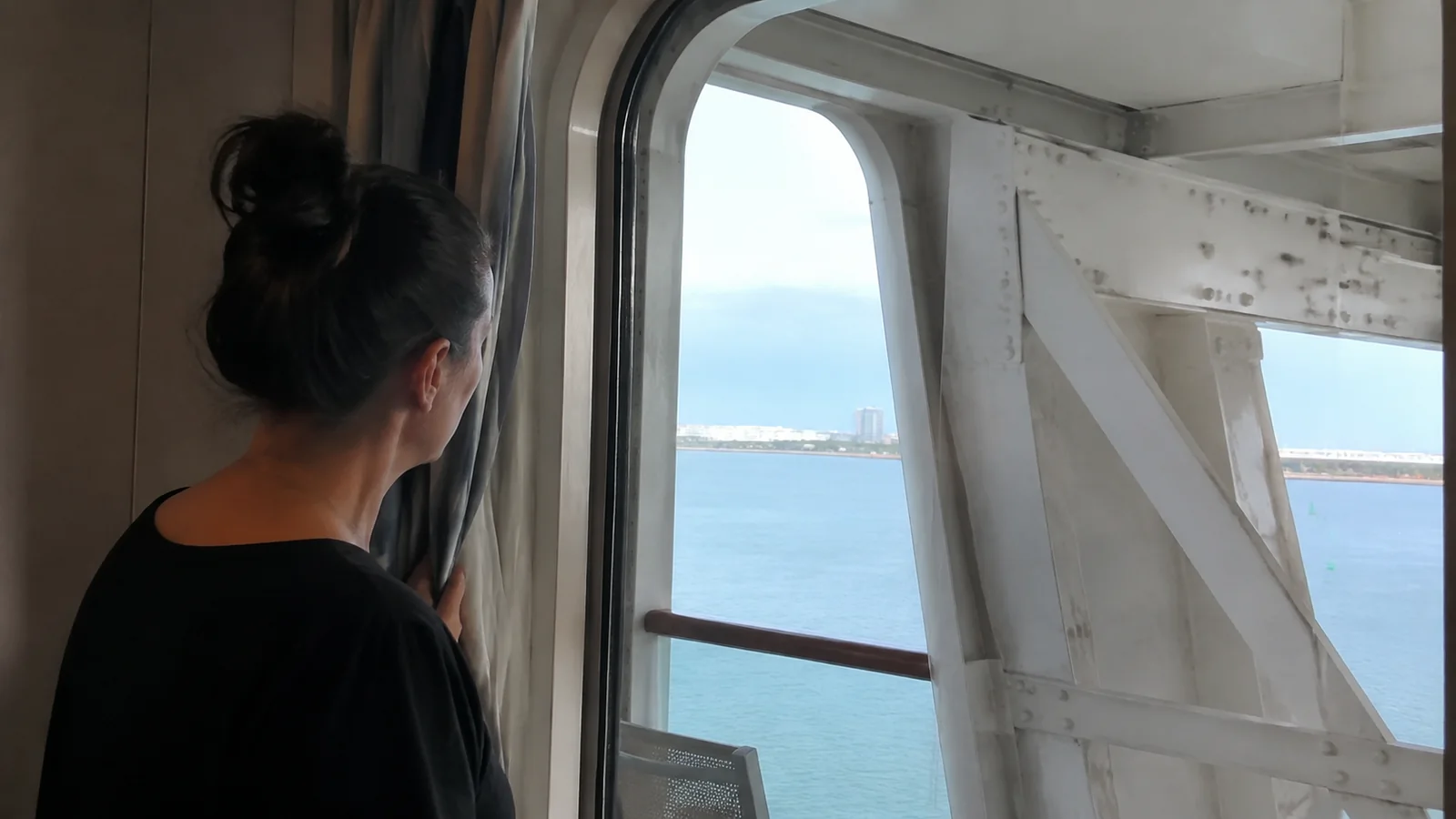
Category 4J is an Interior with Picture Window and obstructed walkway view. It provides natural light, but the public observation space outside can limit the ocean angle and create a privacy concern.
Reflective glazing should never be treated as a permanent invisibility cloak, particularly after dark when cabin lights are on. Close the curtain while changing or whenever passersby could see in.
These rooms can still be smart value for travelers who want daylight more than a panorama. A conventional ocean-view cabin is safer when a clear private sightline is central to the trip.
Cove balconies on Deck 2
Cove balconies sit low, close to the water, and partly sheltered within the hull. Their position also places them below lifeboat and tender structures visible on the plan.
Some cruisers love the sheltered, close-to-the-sea feeling, while others prefer a brighter and more open balcony higher up. In certain weather or operational conditions, crew may restrict balcony use or secure openings, so follow all onboard instructions.
Choose a standard balcony on a middle cabin deck if you want a more conventional elevation and sightline. Choose a cove because its specific character appeals to you, not because a category ladder says it must be “better.”
Havana cabins near their social hub
Havana accommodations occupy the aft section around Deck 5 and other designated locations, with category-specific access and rules. Carnival currently states that Havana stateroom guests must be at least 12 years old.
The convenient link to the Havana pool and bar is the main attraction, and proximity can also mean more activity near the area. Verify current access hours, guest age rules, and the precise room position before booking.
If exclusive access is not valuable to you, compare the total fare with a regular balcony on Deck 7 or 8. Paying for a perk you will not use is just a very elegant way to buy an expensive hallway.
High forward spa cabins
Vista places spa-category cabins high and forward on Decks 11, 12, and 14. These locations are convenient for Cloud 9 Spa and can feel more ship movement than a lower midship room in the same conditions.
Deck 12 also borders WaterWorks and sports areas, while some cabins sit near spa circulation. Daytime activity and the open-deck environment may matter more than late-night nightlife.
Book these rooms for the location and current spa benefits, not simply for the word “spa.” Confirm what is included on your sailing, since amenities can change.
Forward, aft, and guarantee-cabin risks
Far-forward rooms may feel more pitching, while aft rooms may transmit more vibration or turning sensation. Weather, course, speed, machinery, and individual sensitivity control the outcome.
A guarantee fare can be cheaper but allows Carnival to assign an eligible cabin. If location, view, connection, or accessibility is important, choosing an exact room is usually the more predictable purchase.
Our cruise booking comparison helps weigh direct booking, a travel advisor, and online deal paths. Whichever route you choose, save the cabin number and category description.
Connecting cabins and corridor position
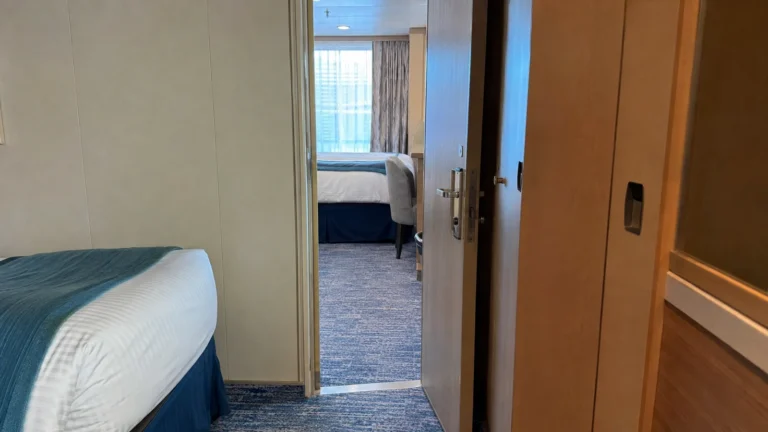
The official plan marks many connecting pairs, a practical feature for families and groups. The connecting door may offer less sound separation than a solid wall, although disturbance is never guaranteed.
Elevator proximity is also not automatically bad. A cabin beside a busy elevator lobby or corridor corner may hear more passing conversation, while a room a few doors away can combine convenience with separation.
Blank white plan areas can represent crew, machinery, storage, or structural spaces. Ask what is there instead of assuming blank means quiet.
Accessibility is not one cabin feature
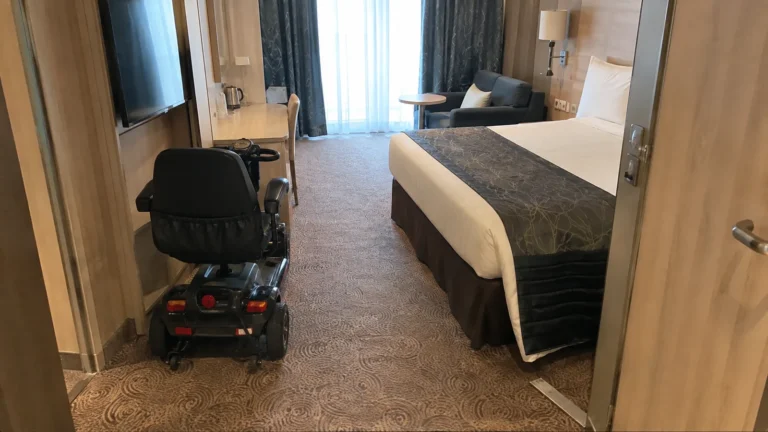
Carnival distinguishes Fully Accessible Cabins, Fully Accessible Cabins with Single Side Approach, and Ambulatory Accessible Cabins. Each serves different mobility needs, and the accessible plan marks routes, restrooms, lifts, and applicable rooms.
The Carnival accessibility page says FAC rooms include turning space, accessible routes, a wider doorway, and an accessible bathroom. FAC-SSA layouts provide clear floor space on only one side of the bed in the applicable configuration, while AAC rooms suit guests who do not regularly need a wheelchair or scooter.
Guests who do not need an accessible cabin may be moved so Carnival can accommodate a guest with a disability. Work with Guest Access Services, confirm doorway and bathroom measurements, and never substitute a generic cabin photo for exact specifications.
Quieter Carnival Vista cabins to consider
- Central Deck 7: mostly surrounded by cabins and removed from the highest decks.
- Central Deck 8: cabins above and below provide a useful public-space buffer.
- Midship over the far ends: a conventional choice for motion-sensitive travelers.
- Non-connecting room: removes one optional acoustic weak point.
- Unobstructed category: the safer purchase when view matters more than the lowest fare.
No room can be certified silent. Neighbors, hallway conversations, maintenance, weather, and an oddly determined suitcase wheel can happen anywhere.
Seven checks before final payment
- Open the current plan for Carnival Vista, not a sister ship.
- Confirm the exact cabin number, category code, and bed symbols.
- Compare the same position one deck above and below.
- Look for official obstruction notes, public walkways, and lifeboats.
- Check connections, elevator lobbies, and unidentified service areas.
- Verify current benefits and age rules for Family Harbor, Havana, or spa categories.
- Use the accessible plan and Guest Access Services when relevant.
Our first-time cruise tips place that cabin choice in the larger embarkation and onboard plan. Once you have chosen, a modular cruise packing list keeps the room functional without packing half a home-improvement store.
Frequently asked questions
What are the quietest decks on Carnival Vista?
Central sections of Decks 7 and 8 offer the cleanest broad pattern of cabins above and below. Exact connections, corridor position, and neighboring occupancy still matter.
Should I avoid every Deck 6 cabin?
No. Deck 6 is convenient and exposure varies by the venue below, but early sleepers should map the exact room carefully.
Are cabins 9205 and 9206 bad?
Carnival verifies that their Junior Suite views are obstructed, which is a fact rather than a quality verdict. They may suit a traveler who accepts the sightline for the suite layout and price.
Is a Family Harbor cabin quieter?
Not necessarily, because it is designed around convenient family access rather than a promise of silence. Choose it for its space, lounge, and benefits.
The bottom line
Check Deck 6 for venues below, Deck 9 for Lido activity above, Deck 2 for Lobby Deck alignment, and every officially obstructed cabin before booking Carnival Vista. Then decide whether convenience, price, view, or quiet deserves first place.
For the simplest quiet-first option, begin near midship on Deck 7 or 8 with cabins above and below. The best room is not the one a list declares perfect, but the one whose known tradeoffs match how you actually travel.