Amed Attractions: Beaches, Reefs, Temples, and Honest Logistics
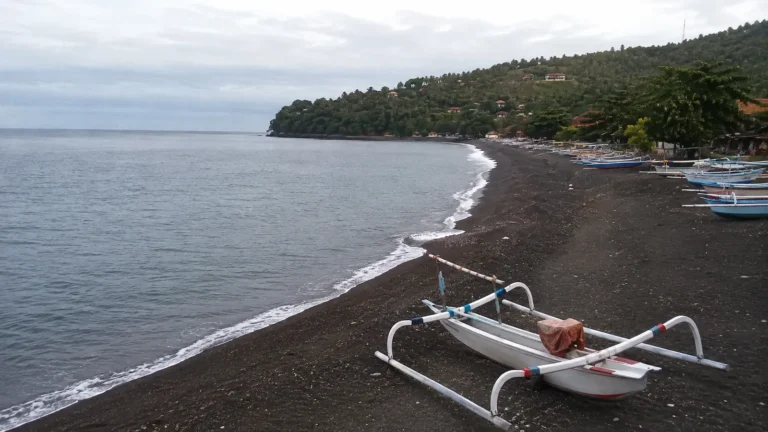
Amed is not one beach town with 27 tidy attractions. It is a string of fishing villages and bays on Bali’s dry eastern coast, where the best day depends on sea conditions, Mount Agung visibility, road traffic, and how much time you want to spend underwater.
Is Amed worth adding to a Bali trip?
Amed earns three or four nights if you want shore snorkeling, diving, quiet evenings, black-sand and pebble beaches, and sunrise views. It is a poor one-night detour because the road journey from south Bali can consume much of both travel days.
There is no airport or railway in Amed. Depending on traffic, a private-car trip from Ngurah Rai International Airport often takes about 2.5 to 4 hours, while central Ubud usually takes 2 to 3 hours.
Those are planning ranges, not transfer promises. Temple ceremonies, construction, crashes, rain, and congestion can add substantial time on narrow east-Bali roads.
1. Jemeluk Bay for the easiest first snorkel
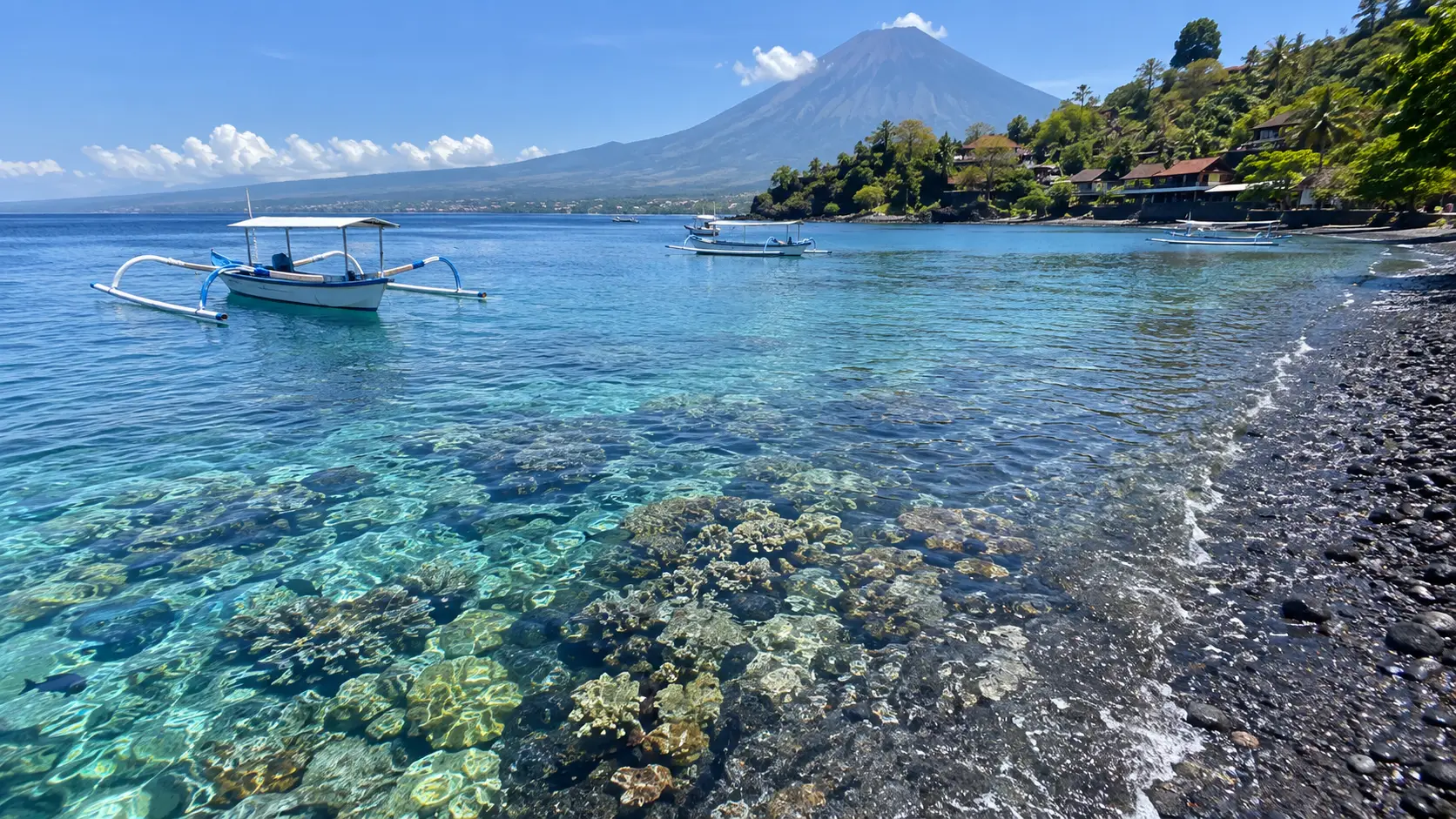
Jemeluk is the best introduction because lodging, equipment rental, small restaurants, and shore access sit close together. The coral garden and underwater features attract snorkelers and divers, but visibility and current still change daily.
Enter only where local operators recommend and keep clear of fishing boats, dive groups, and mooring lines. Wear reef-safe sun protection, use a flotation aid if confidence is limited, and never stand on coral.
Expect a small local parking or access charge and a separate rental fee for mask, snorkel, fins, or a guide. Cash prices vary, so inspect equipment and agree on the complete amount before entering the water.
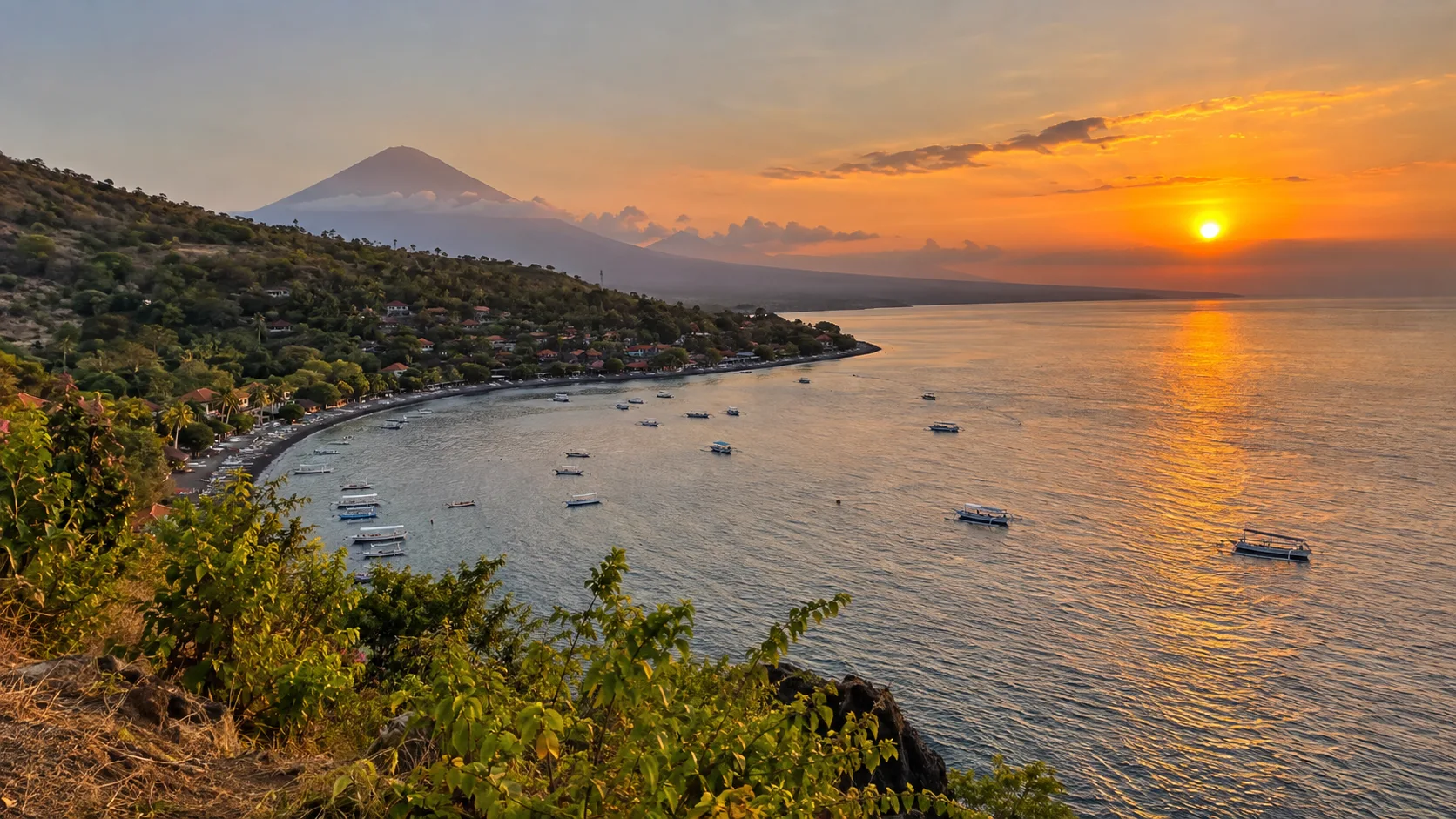
2. Jemeluk viewpoint for sunset
The roadside viewpoint above Jemeluk frames the curved bay, outriggers, and Mount Agung when clouds cooperate. Arrive before sunset because parking is limited and the road edge becomes busy.
Buy a drink if you use a café’s terrace rather than treating a business as a free observation deck. The return walk or scooter ride is dark, so carry a light and avoid driving after drinking.
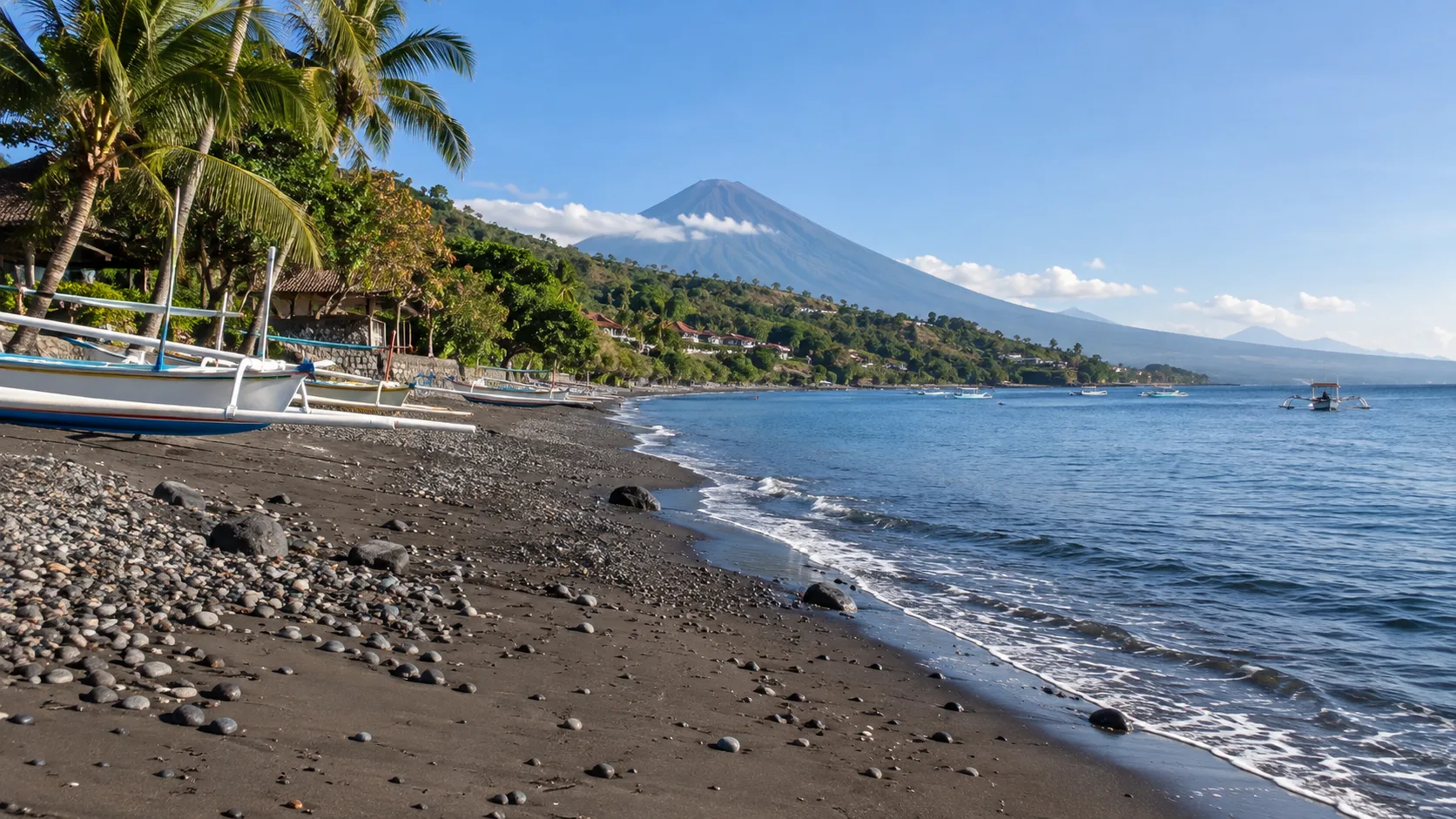
3. Lipah Beach for a slower beach day
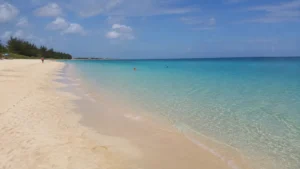
Lipah has shore snorkeling, local warungs, rentals, and a quieter rhythm than central Amed. It works well for couples or families who want lunch and water time without a boat excursion.
The beach can be pebbly, hot, and awkward underfoot, while small waves complicate entry. Water shoes help, but they do not make walking on reef acceptable.
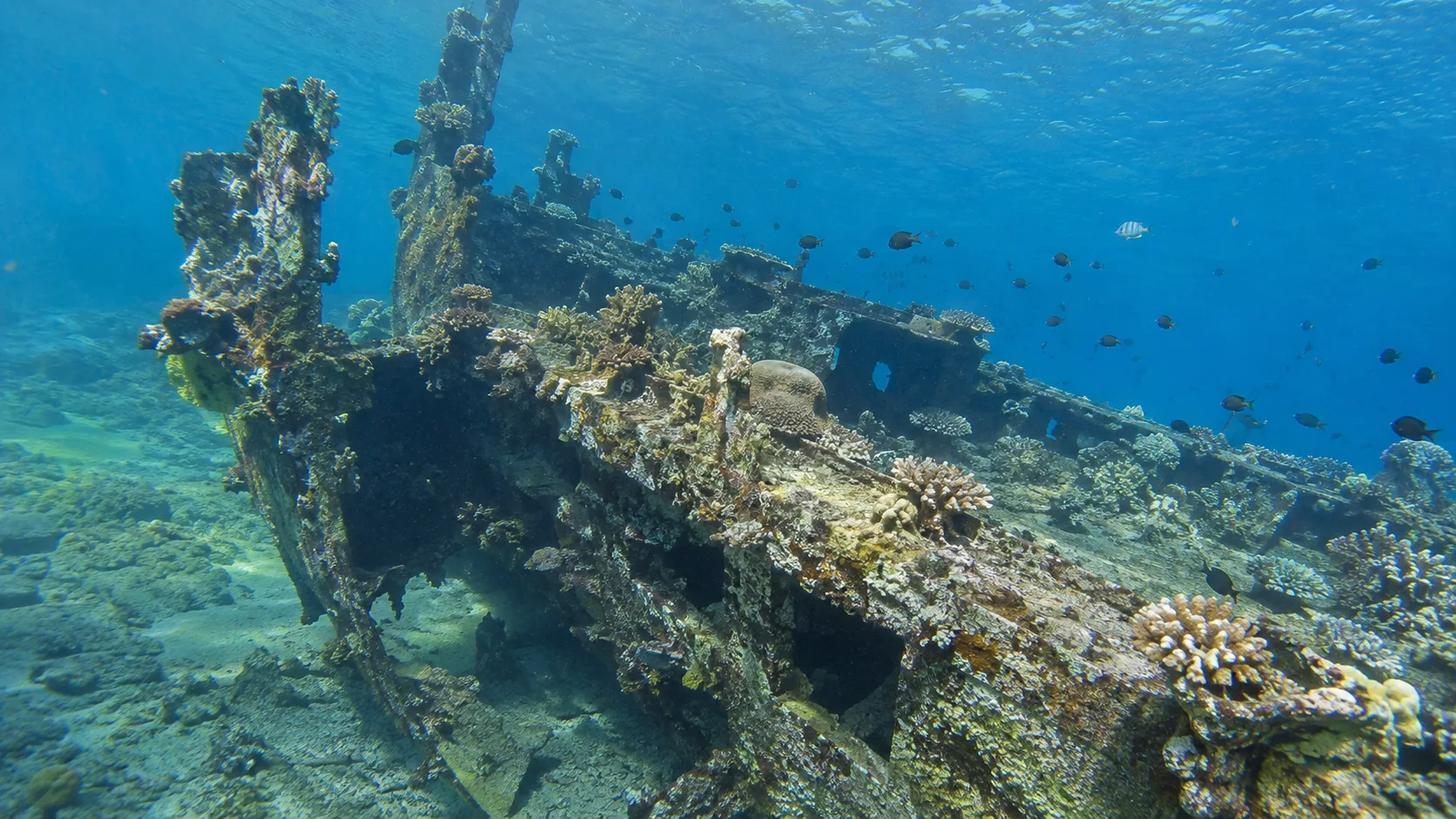
4. The Japanese wreck near Banyuning
A small wreck close to shore near Banyuning is commonly called the Japanese shipwreck. Its identity and history are not documented as neatly as the nickname suggests, so appreciate it as a marine site rather than repeating an elaborate origin story as fact.
The entry can involve rocks, surf, current, and a steep shoreline. Go with a local guide when conditions or your ability are uncertain, and keep hands, fins, and anchors off the wreck and surrounding growth.
Divers Alert Network recommends scouting shore entries and exits, watching waves, carrying appropriate signaling gear, and being willing to cancel. Its shore-diving safety advice is far more useful than a promise that the site is always easy.
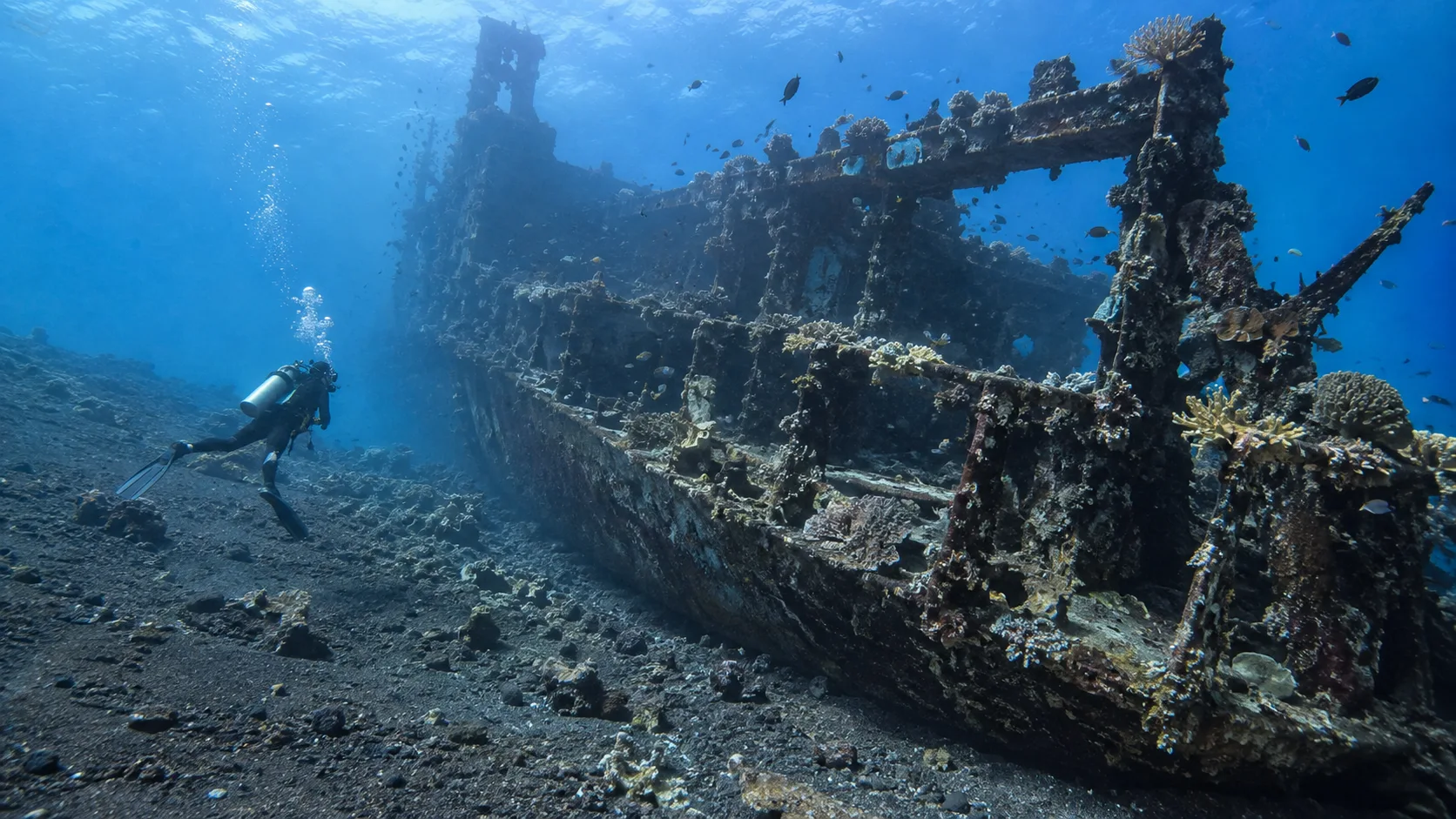
5. USAT Liberty at Tulamben
The USAT Liberty wreck lies at Tulamben, roughly 25 to 40 minutes northwest of central Amed by road, not in Amed itself. It is the region’s essential dive, with shore access that can suit a range of certified experience levels when conditions are appropriate.
Snorkelers may see the upper structure in good visibility, but depth and conditions determine how rewarding that is. Divers should use a reputable operator, disclose experience honestly, complete a site briefing, and follow no-decompression and post-dive flying guidance.
Early morning can reduce crowds, yet no operator can guarantee empty water or a particular animal. Porters who carry tanks over the rocky beach provide a real service and should be paid or tipped according to the operator’s current practice.
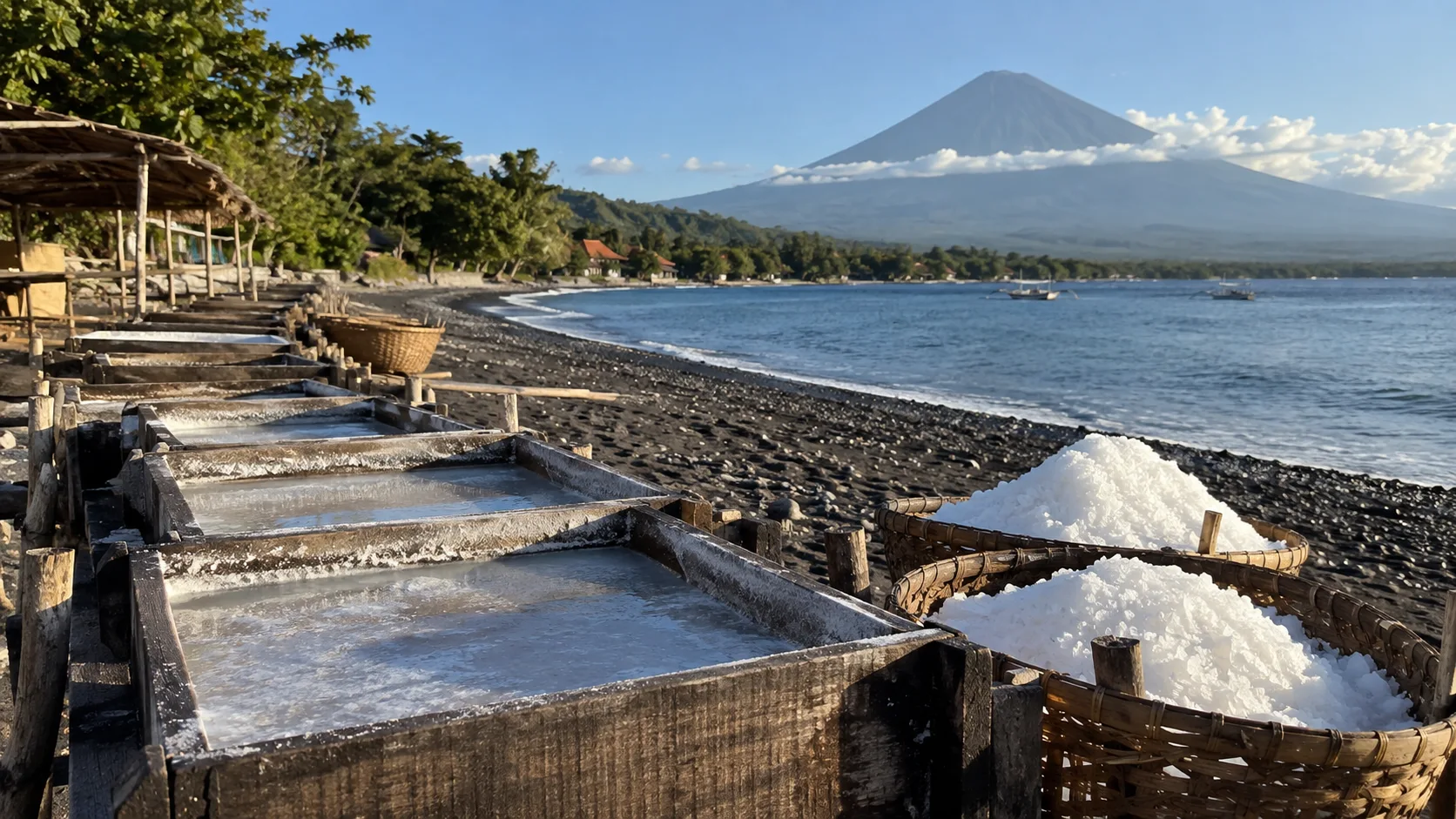
6. Amed’s traditional salt work
Salt production connects the coast to a livelihood older than its dive tourism. Production is seasonal and weather-dependent, so you may see active evaporation work, stored equipment, or very little happening.
Ask before entering work areas or photographing people, and buy labeled local salt directly when available. This is a short cultural stop, not a staged attraction that should be expected to perform on demand.
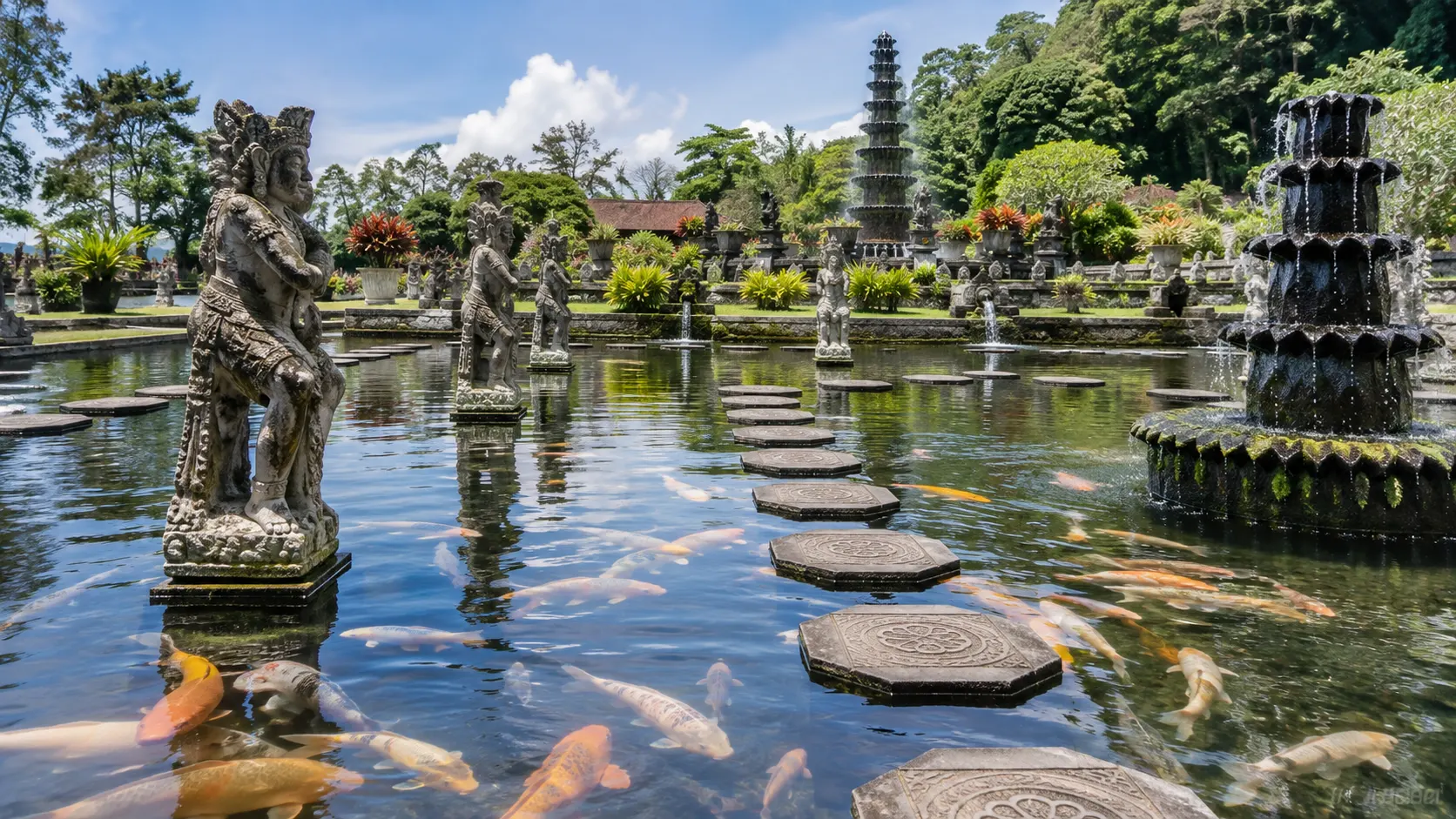
7. Tirta Gangga water palace
Tirta Gangga sits inland in Karangasem, often 35 to 55 minutes from central Amed depending on the starting village. Pools, fountains, sculpture, gardens, and stepping stones make it the easiest cultural half-day pairing.
Go early for cooler paths and fewer tour groups, then combine it with a meal or countryside stop rather than racing to three distant temples. Admission and parking change, so carry rupiah and check the posted ticket rather than trusting an old screenshot.
Dress respectfully even though the famous garden area feels less formal than an active temple. Do not climb structures or turn worship and local ceremonies into photo props.
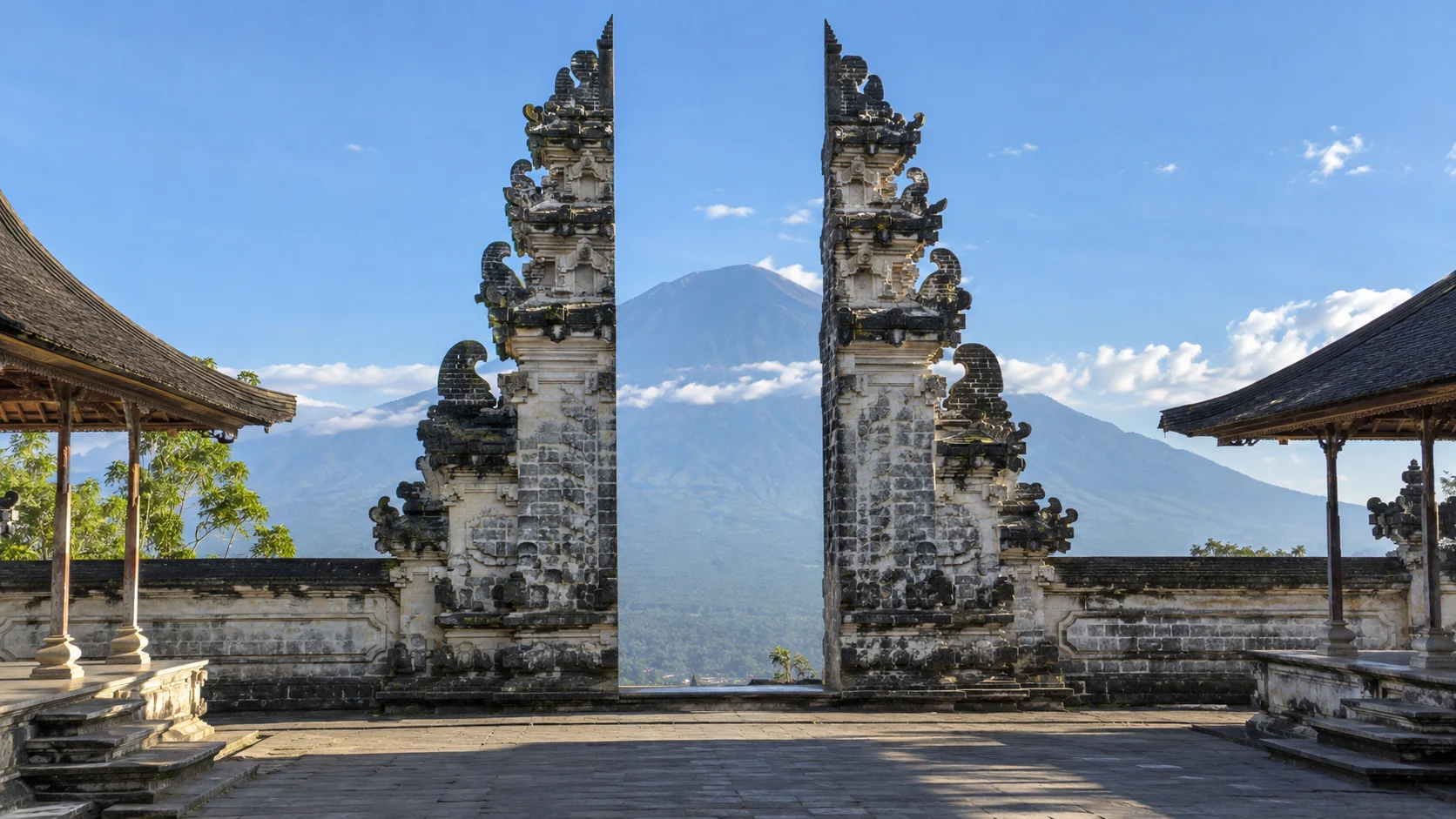
8. Lempuyang temple complex
Pura Lempuyang is a living Hindu temple complex, not merely the “Gates of Heaven” photo queue. Reaching the visitor system from Amed can take roughly 40 to 70 minutes, followed by local transport, entry procedures, dress requirements, and waits.
The famous gate photograph uses perspective and often a reflective trick, while clouds can hide Mount Agung completely. Visit for the temple landscape and cultural context, then treat the image as a bonus.
Wear a sarong as directed, follow restricted-area rules, and do not pose disrespectfully. Bali’s 2026 visitor guidance emphasizes cultural respect and environmental responsibility through the official Love Bali portal.
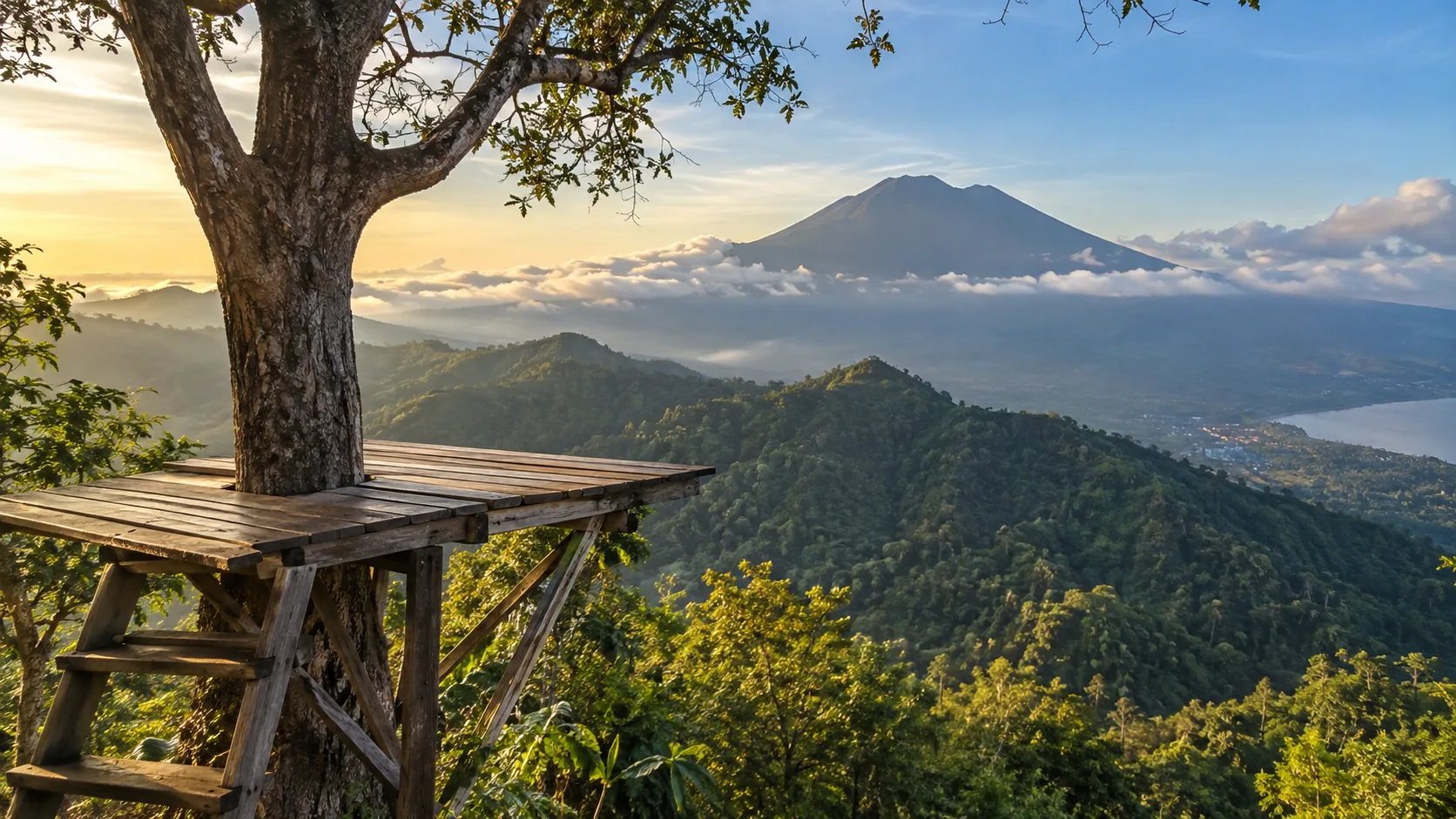
9. Lahangan Sweet viewpoint
Lahangan Sweet offers a high view toward Mount Agung and the coast, but final access may involve a rough, steep road and locally managed shuttle. Conditions, vehicle rules, and fees can change quickly.
Sunrise rewards clear weather, not optimism alone. Ask your driver whether the approach is currently suitable, wear shoes with grip, and skip exposed platforms during strong wind or thunderstorms.
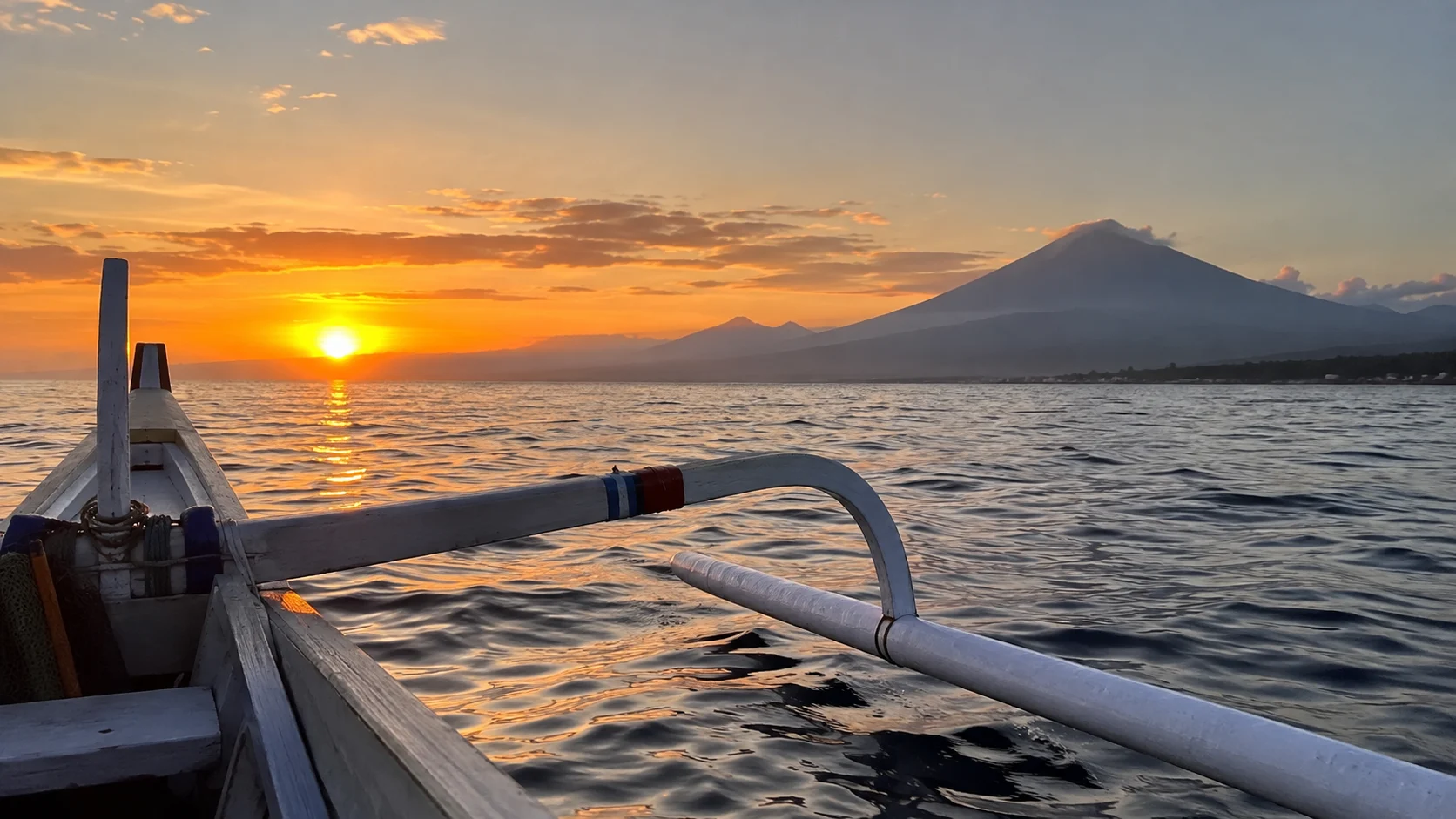
10. A local fishing or sunrise boat trip
Traditional outrigger boats can provide a beautiful sunrise view and a direct way to support a local operator. Agree on duration, destination, life jackets, price, and weather cancellation terms before departure.
A pretty boat is not automatically equipped for every passenger or sea state. If the operator dismisses a life-jacket request or conditions look wrong, do not board.
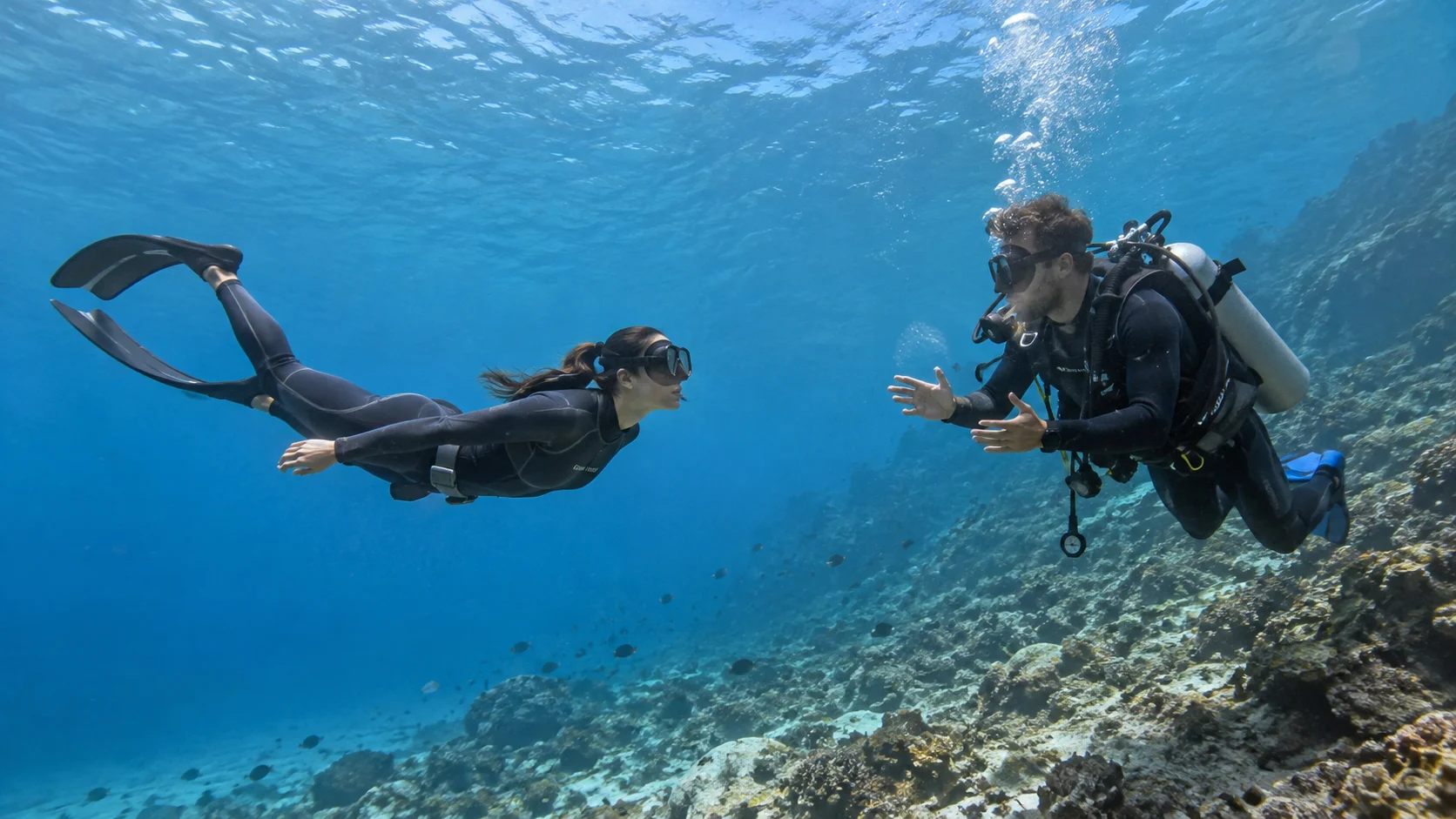
11. Freediving and scuba training
Amed has a strong freediving and dive-school scene because deep water lies close to shore. Training belongs with a recognized instructor, a buddy system, emergency planning, and insurance that covers the exact activity.
Never practice breath-hold diving alone or hyperventilate before a dive. Scuba students should compare group size, instructor language, equipment condition, oxygen availability, transport, and what certification fees include.
Our scuba equipment checklist helps separate personal fit items from heavy gear that is easier to rent. Ask whether the shop stocks your size before leaving home.
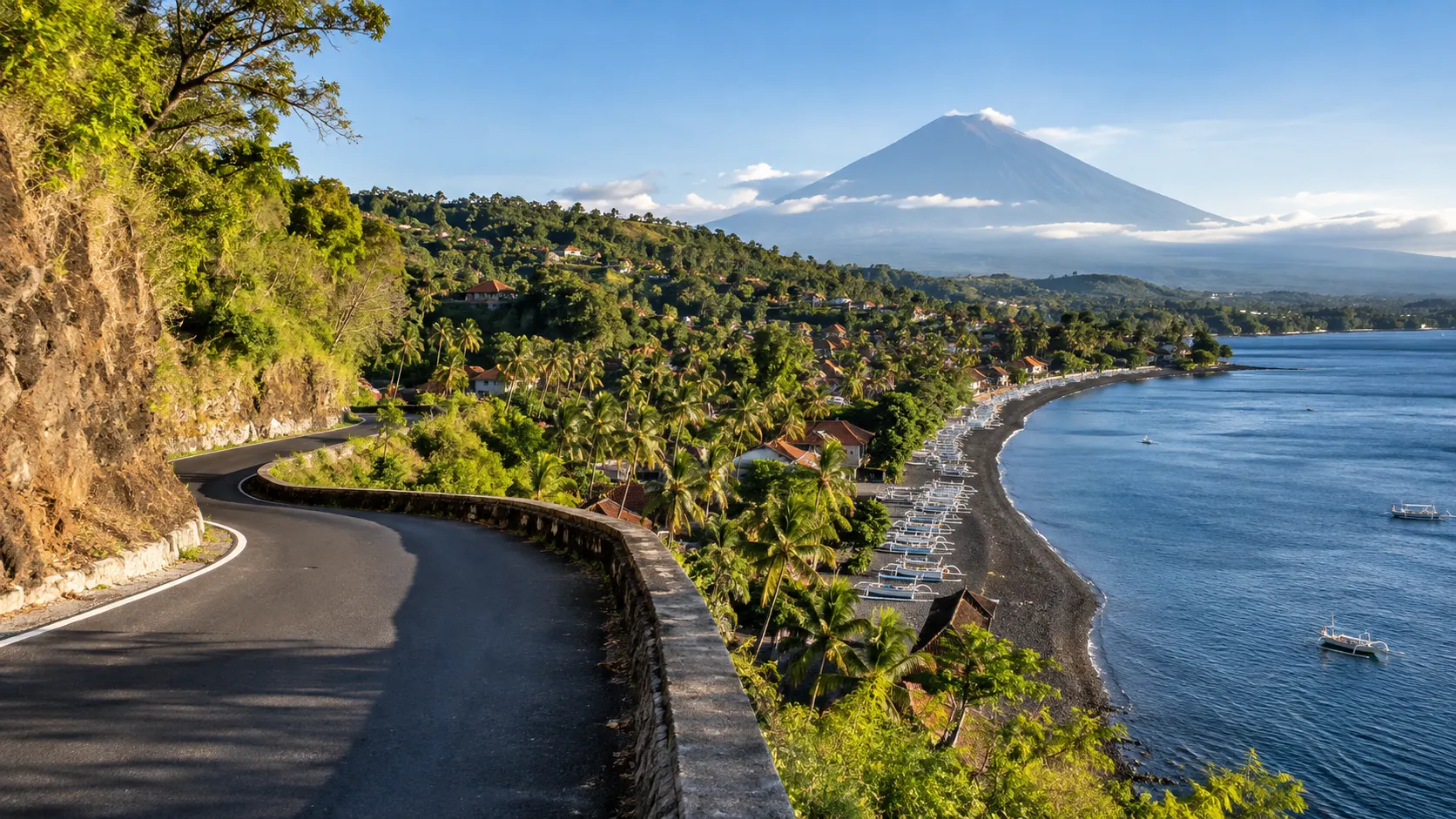
12. A coast-road day without a checklist
The bays from Amed through Bunutan, Lipah, Lean, and Aas reward a slow ride or hired-driver day. Stop for a beach, lunch, and one viewpoint rather than spending the entire afternoon mounting and dismounting a scooter.
Scooters are inexpensive but only good value for licensed, insured, experienced riders wearing proper helmets. Narrow roads, dogs, gravel, rain, trucks, and night visibility make Amed a bad classroom for first-time riders.
Mount Agung and road disruption
Mount Agung is an active volcano, and its status can change after an article is published. Check Indonesia’s official MAGMA volcano reports before hiking, visiting slope temples, or relying on an airport transfer.
Obey exclusion zones and local emergency instructions even when the summit looks calm. Ash can affect roads, air quality, and flights far beyond the immediate mountain area.
Do not book a Mount Agung climb casually through an unverified social account. Confirm current permission, route status, guide credentials, pickup, fitness expectations, weather policy, and insurance coverage.
Best time to visit Amed
East Bali is generally drier from about May through October, with the wettest conditions more likely from November through March. Seasonal boundaries shift, and even dry months can bring rough water or rain.
July and August tend to bring stronger demand, higher room prices, and busier dive sites. May, June, September, and October can offer a useful balance, but marine visibility and wind are never guaranteed.
Use Indonesia’s official BMKG forecasts for the road journey and coast, then ask a dive operator about site-specific current and swell. A generic phone icon for “sunny” is not a dive briefing.
How much to budget
Amed can be good value, but transport and diving determine the total. As a flexible 2026 planning range, simple rooms may run about $20 to $60 nightly, comfortable small hotels about $60 to $150, and upscale villas substantially more.
Expect roughly $40 to $80 for a private one-way transfer from south Bali or Ubud, depending on origin, vehicle, fuel, and late pickup. A car with driver for a regional day often starts around $45 to $75 before distant routing, overtime, entrance tickets, and gratuity.
Two guided dives with equipment commonly land around $70 to $120, while snorkeling rentals cost only a few dollars. These are editorial planning bands from current operator spot checks, not fixed local tariffs.
Our destination cost guide explains why a low room price should never stand in for a complete Bali budget.
Entry, levy, and health
Visa eligibility depends on passport and purpose. Use Indonesia Immigration’s official eVisa portal to check the current visa-on-arrival or advance-visa option, passport validity, stay length, fee, and extension rules.
Foreign visitors to Bali are also subject to a provincial tourism levy of IDR 150,000 per person unless exempt. Pay through the official Love Bali system and keep the voucher available.
The CDC Indonesia page covers routine vaccines, mosquito-borne illness, food and water precautions, and rabies. September 2026 guidance is especially worth checking because CDC reported Zika cases in returning Bali travelers in August.
Avoid contact with dogs and monkeys, and seek urgent medical care after any bite or scratch. Bring prescription medication, mosquito repellent, oral rehydration supplies, and insurance that covers diving and evacuation.
A realistic four-night Amed itinerary
Use arrival day for the long transfer, check-in, and a sunset viewpoint. Do not plan a prepaid dive after a flight and cross-island drive.
Snorkel Jemeluk and relax at Lipah on day two, then dive Tulamben or take a guided local dive on day three. Pair Tirta Gangga with either Lempuyang or Lahangan Sweet on day four, not all three.
Leave day five after breakfast with a generous road buffer. If your next step is an international flight, a final night near the airport is calmer than betting the ticket on Bali traffic.
For broader context beyond Bali, our Indonesia landmarks overview helps position Amed within a much larger island itinerary.
My honest Amed verdict
Amed is best when water time anchors the trip and the attractions stay selective. Jemeluk, Tulamben, one cultural site, and one viewpoint create a richer visit than chasing every label on a map.
Stay long enough to wait for safe conditions, hire local expertise where it matters, and leave space for ceremonies and weather. East Bali rewards patience far more reliably than speed.