Cruise Babysitting and Nurseries: What I Would Book and Check
I would confirm cruise childcare before booking an evening that depends on it. Nurseries, late-night group care, and ordinary kids clubs have different ages, fees, hours, and reservation rules.
For a baby or toddler, I would choose the exact ship for its available care first, then plan dinner or adult time around a confirmed session.
The childcare options are not interchangeable
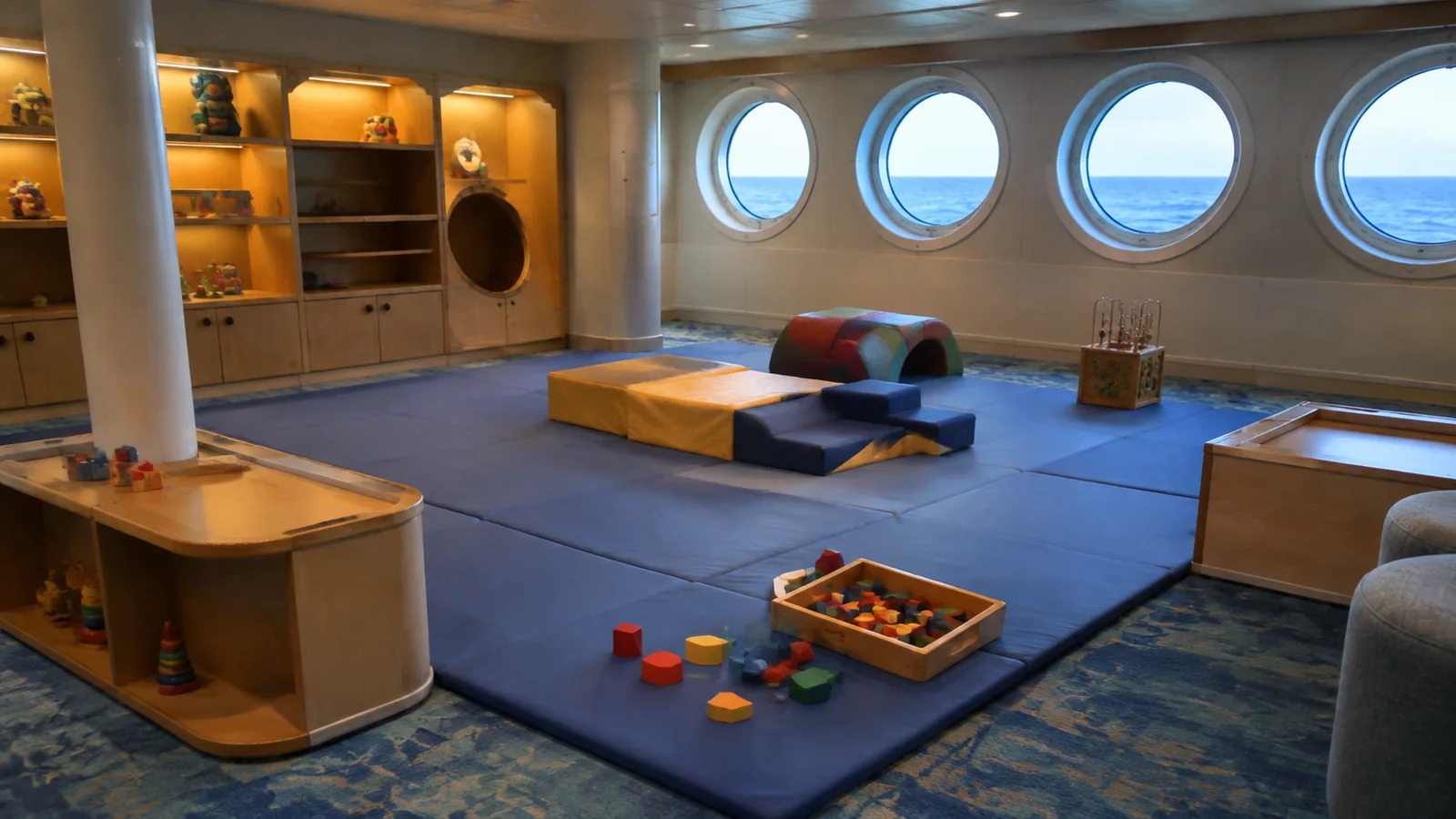
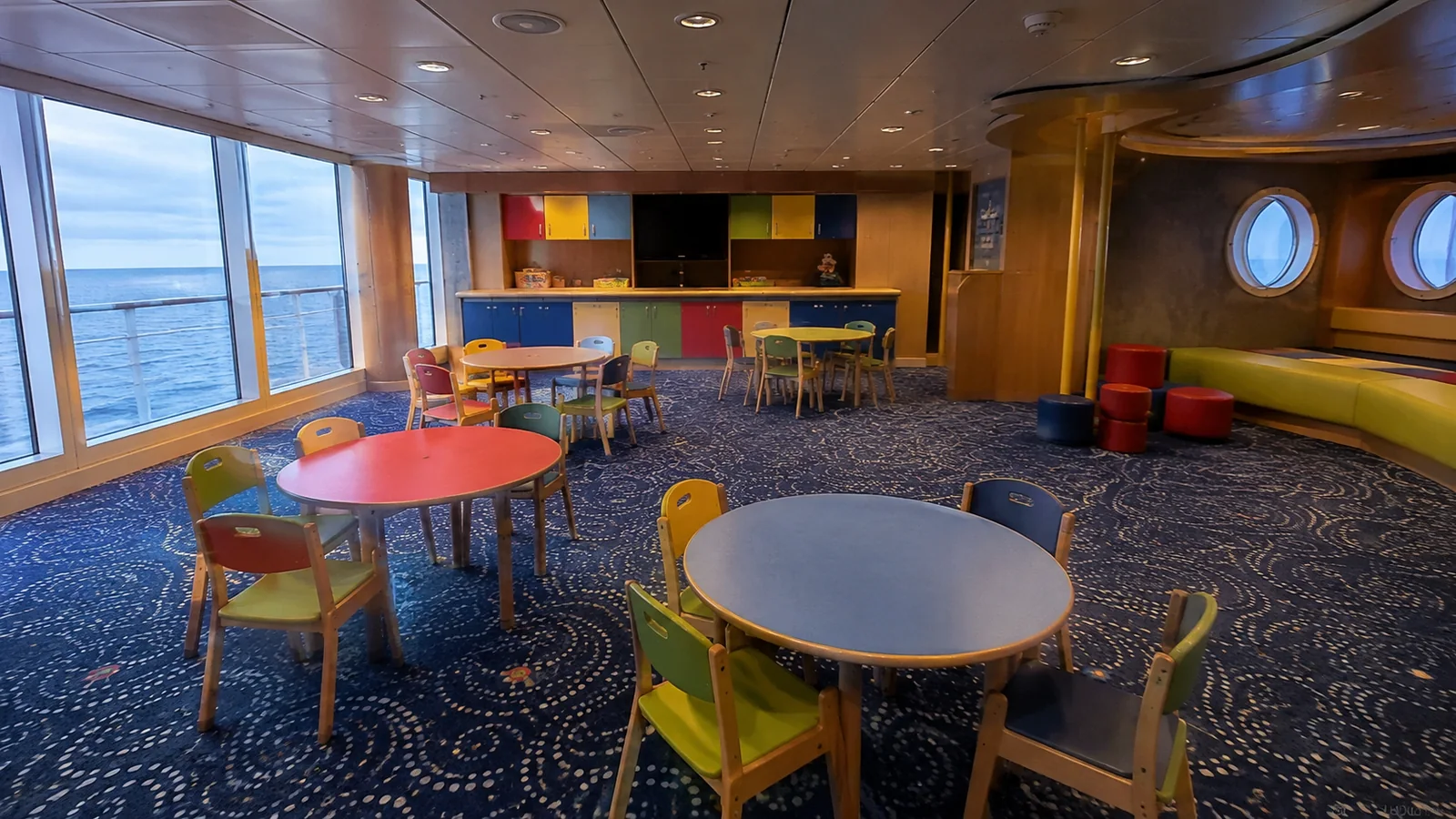
A nursery is generally designed for younger eligible children and may include play and rest areas. I would check the ages, staff support, feeding arrangements, and booking process for the specific service.
A late-night group program usually serves a defined age range in a children’s facility. It does not mean a sitter will come to the cabin or stay with one child throughout the night.
An included kids club is another category, with its own sessions and participation requirements. I would not assume it covers every hour a parent wants to be away.
Parent-attended play is useful family time, but it is not drop-off care. That distinction matters most for travelers comparing ships with children under three.
My family cruise guide helps compare the broader experience. I would use the actual childcare rules to narrow the list before buying the fare.
A starting comparison for three popular lines
| Line | Service to investigate | What I would confirm |
|---|---|---|
| Disney | It’s a Small World nursery for eligible younger children | Age for the itinerary, available reservations, fees, and care instructions |
| Royal Caribbean | Royal Babies and Tots nursery on ships that offer it | Exact ship availability, ages 6–36 months, session times, and current rates |
| Carnival | Night Owls for ages 6 months–11 years | Age-specific availability, evening schedule, registration, and total charges |
I would treat this as a shortlist, not a reservation. The service must exist on the selected vessel and have space at the time the family needs.
Disney: reserve the nursery around the actual plan
Disney’s It’s a Small World nursery information emphasizes limited capacity and advance planning. I would look at the booking window as soon as the reservation allows it.
The nursery generally serves eligible children from six months through age three, with higher minimum ages applying to some itineraries. I would confirm the sailing’s requirement rather than assume a baby old enough for one route qualifies for every route.
I would reserve enough time for drop-off, the adult activity, and pickup. A dinner booking that ends at the exact nursery pickup time leaves no room for a slow course or a walk across the ship.
I would also check the cancellation terms before reserving several speculative sessions. A useful reservation is one that fits the child’s routine and the adults’ actual plan.
For a child close to three, I would ask which program is appropriate and what participation requirements apply. Being the right age does not automatically make every children’s space the right fit.
Royal Caribbean: confirm the nursery on the exact ship
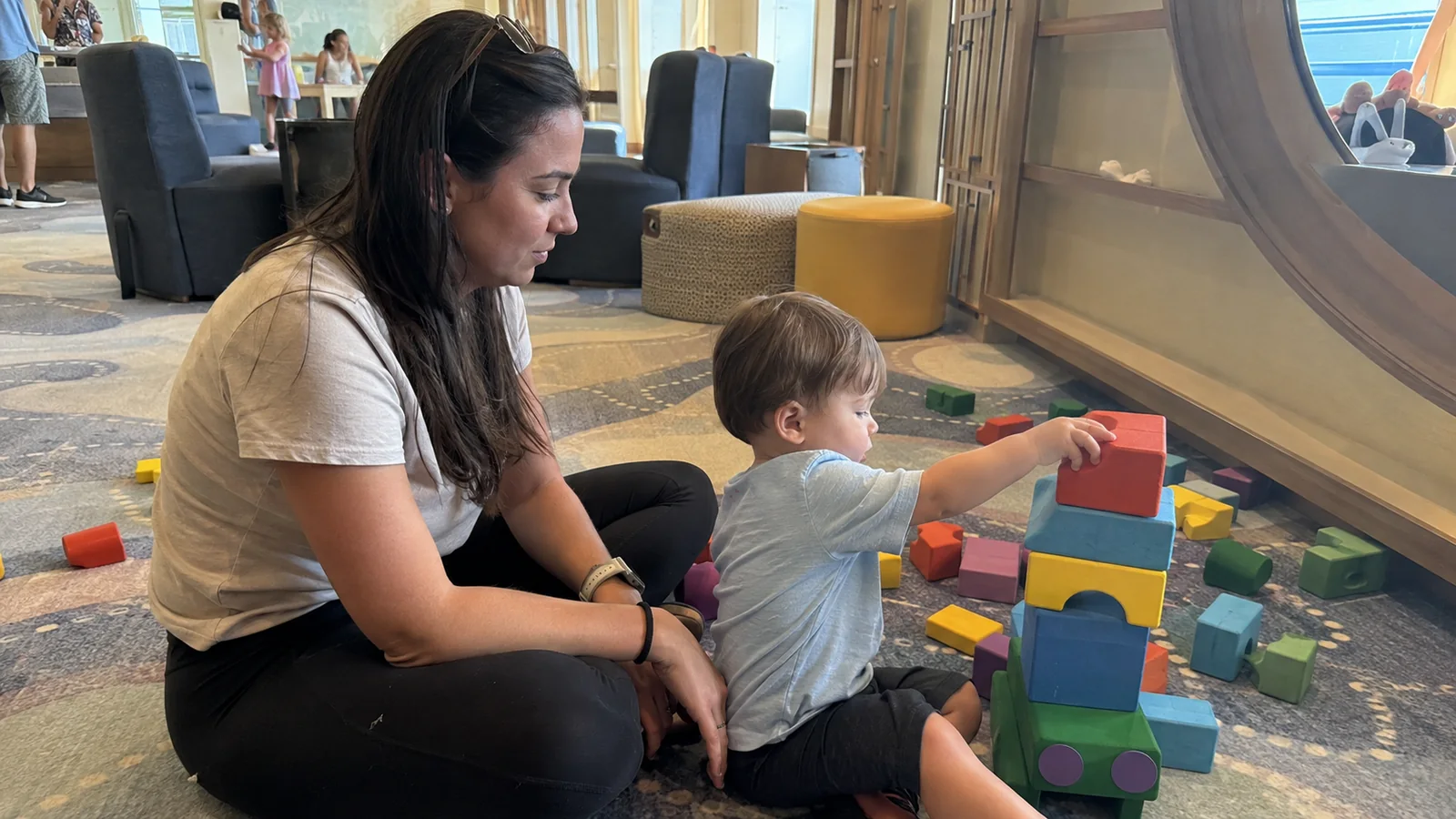
Royal Caribbean advertises Royal Babies and Tots programs for ages 6–36 months, with nursery drop-off on selected ships. I would verify the vessel before paying a fare based on that feature.
A broad itinerary page may list fleet amenities that are not a reliable room-by-room description of the ship. I would ask specifically whether the selected vessel has a staffed drop-off nursery.
I would confirm how reservations are made, whether hours are allocated, and when additional time becomes available. I would not promise unlimited care because the facility is listed on the deck plan.
I would also distinguish a hosted parent-and-child session from a paid nursery session. Both may appear in family activity information, but only one lets the parent leave.
If the ship lacks the service I need, I would choose a different vessel or plan to keep the child with an adult. I would not rely on arranging informal crew babysitting after boarding.
Carnival: Night Owls is a group evening program
Carnival’s Night Owls page lists ages six months through eleven years and describes paid supervised activities that can run as late as 1 a.m. I would confirm the exact evening’s hours and any age-specific arrangements with the youth team.
That is useful for parents who want some time after the regular children’s activities. It is not a private sitter or a guarantee that a baby will follow the same schedule as an older child.
For a child under two, I would ask about the applicable infant program and available sessions. I would not apply ordinary Camp Ocean hours to a younger child without confirmation.
I would check the total charge, including any service charge, and the late-pickup policy. Published rates can change, so I would use the amount provided for the actual sailing.
I would also ask what to bring and how the staff handle feeding, diapers, and a child who cannot settle. The answer should be specific enough that I know when the parent may need to return.
Price the full time, not just dinner
I would calculate childcare from drop-off to pickup, including travel around the ship. A two-hour dinner can require more than two hours of care if the venue is far from the nursery.
As a hypothetical example, care priced at $12 an hour for two children over three hours would cost $72 before any additional charges. I would use that calculation with the line’s actual rates, not assume $12 is a current published price.
I would then decide whether the evening is worth the combined cost of care and the adult activity. One relaxed dinner may be better value than paying for a session every night.
A short first visit can also help establish whether the arrangement suits the child. I would not make a nonrefundable, lengthy event the first test of an unfamiliar setting.
Ask about naps, feeding, and comfort items
I would tell the nursery team about the child’s normal sleep and feeding routine. Then I would ask what can realistically be followed in a shared childcare environment.
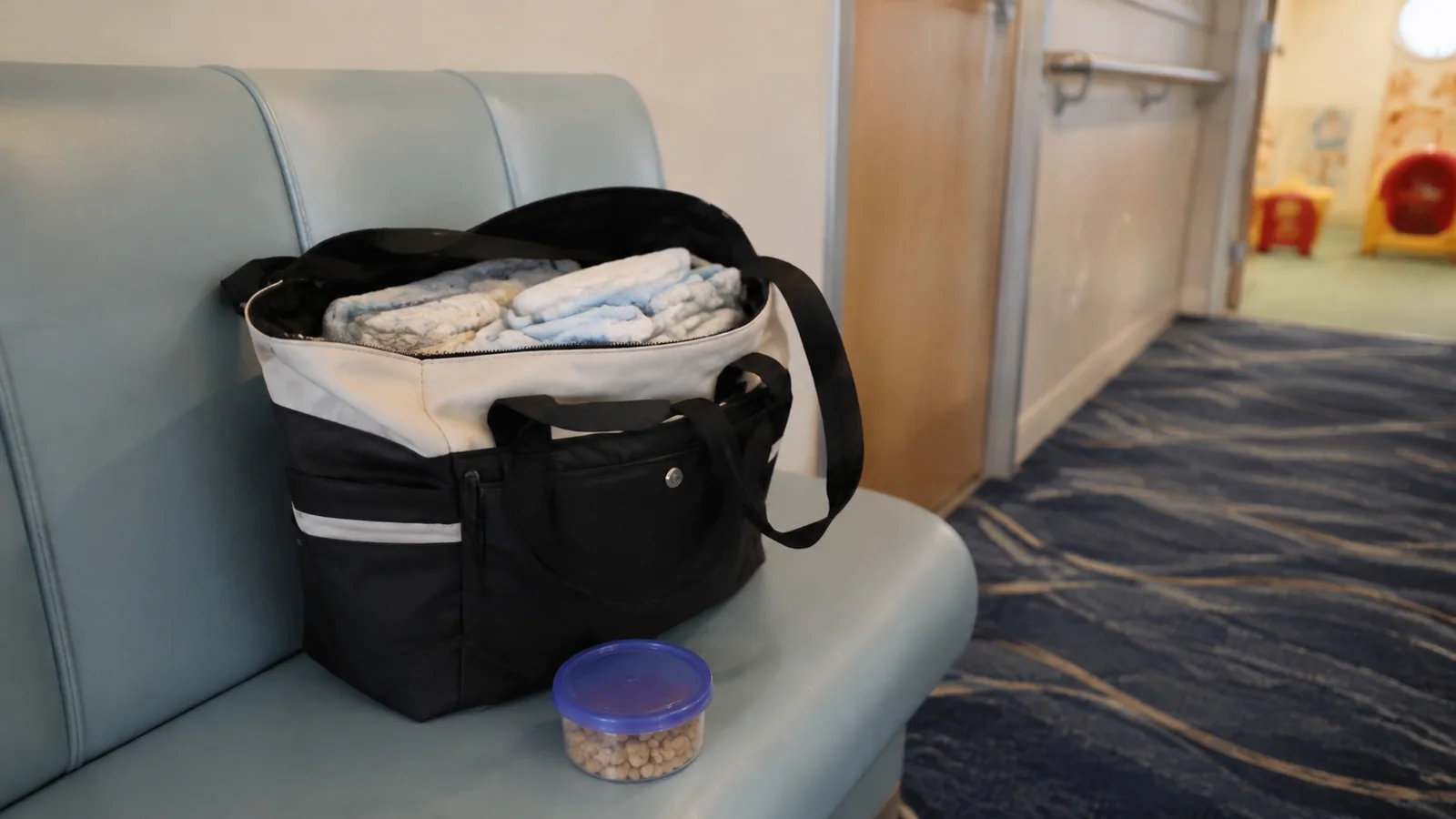
I would confirm whether bottles, food, diapers, wipes, spare clothes, and comfort items must be supplied. Everything that needs a label would be labeled before drop-off.
For prepared food or milk, I would ask about storage and handling rules rather than assume the nursery can accommodate any container or preparation method. I would follow the staff’s instructions for the service.
A favorite comfort item may help if it is permitted, but I would avoid sending something irreplaceable without understanding where it will be kept. I would also pack a change of clothing suited to the session.
My cruise packing list is a useful place to keep the nursery supplies separate from the larger suitcase list.
Confirm how parents will be contacted
I would ask whether the program uses a ship-issued device, an app, or another method. Then I would test it and keep the device accessible.
A normal cell phone plan is not automatically the nursery’s contact system. I would not assume staff can reach me through an ordinary text message while at sea.
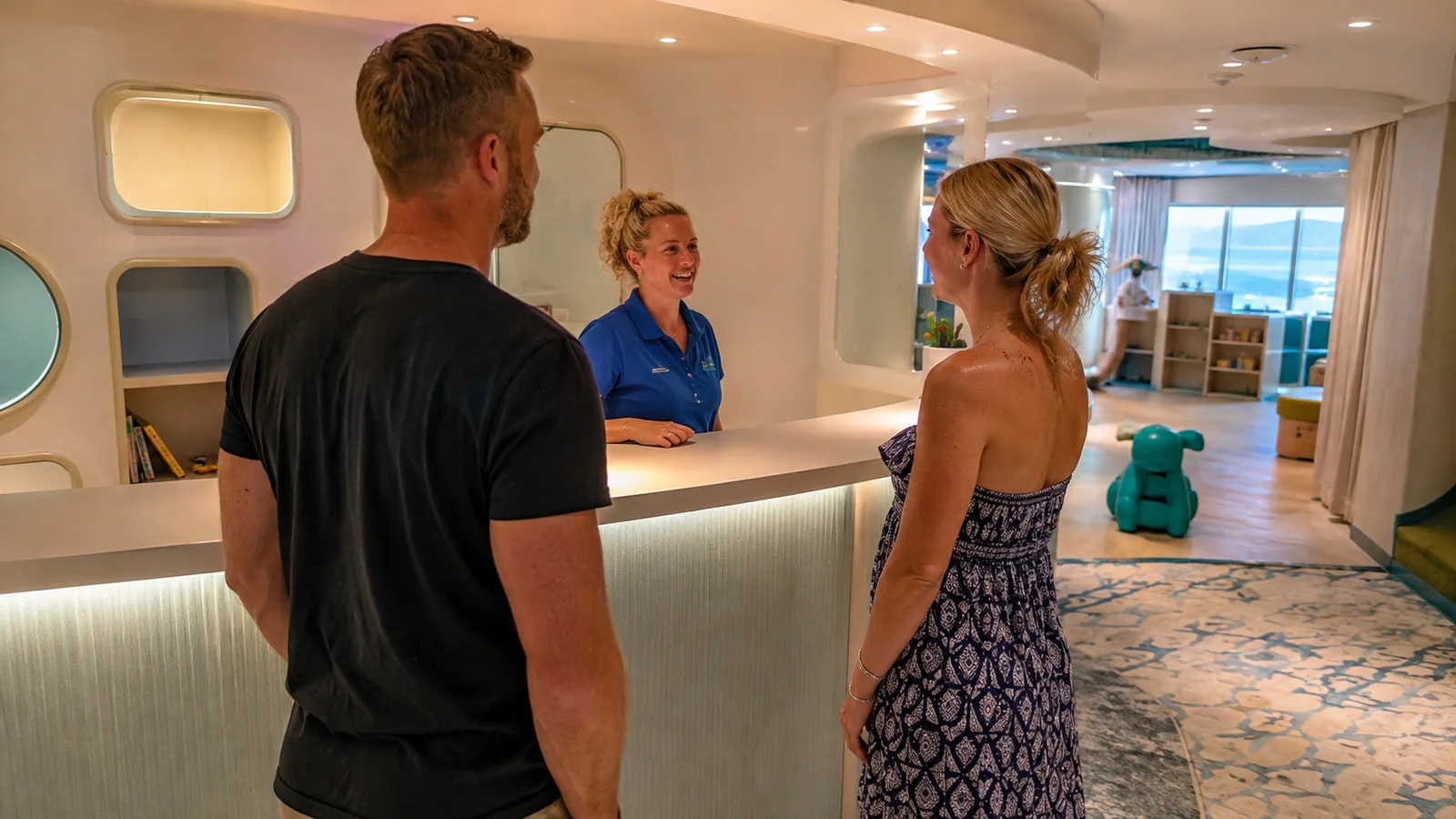
I would provide clear pickup authorization and bring whatever identification or ship credential the program requires. If another adult will collect the child, I would add them through the approved process.
I would also ask when parents must return, such as for a distressed child or assistance outside staff responsibilities. That tells me whether the planned activity is compatible with the care arrangement.
Port-day care needs its own confirmation
I would check port-day availability separately from sea-day hours. A service that opens every evening may not provide the same daytime support while the ship is docked.
If the program permits parents to go ashore, I would still think carefully about distance, communication, and the ability to return. Permission alone does not make a remote excursion a comfortable choice for every family.
I would ask how the staff would contact us away from the ship and what happens if the child needs pickup. I would also confirm which adult is responsible if relatives split into different tours.
For a first nursery experience, I would favor an adult activity aboard the ship. That keeps the return simpler if the child needs a shorter session than expected.
Support and medical needs require an advance conversation
If a child needs help beyond ordinary group care, I would contact the line’s accessibility team before booking. I would describe the practical support required, including communication, toileting, feeding, mobility, or a medical plan.
I would not assume nursery staff can administer medication or provide one-to-one support. Those questions need explicit answers from the line.
After boarding, I would review the confirmed arrangements with the team providing the care. A note in the reservation is useful, but I would want the people on duty to understand the plan.
If the service cannot meet the child’s needs, I would change the adult schedule. I would not push the staff into promising care outside their capabilities.
Build one backup evening that still feels like a vacation
A child may be tired, unsettled, or unwell when the reserved session arrives. I would have an alternative that does not depend on persuading them to stay.
That could be an earlier family meal, taking turns attending an event, or choosing a different evening. I would check cancellation terms for the dining or activity as well as the nursery.
I would not assume grandparents or another relative will step in automatically. If they are willing to help, I would agree on the time and expectations before the cruise.
For a family that expects several adults-only evenings, nearby or connecting cabins may be useful when appropriately booked. My deck-plan guide can help compare routes between the room and childcare facilities.
My childcare booking checklist
- Confirm the exact service, ship, and child’s eligibility.
- Ask when and how sessions can be reserved.
- Price the full time and any extra charges.
- Check feeding, supplies, support, and parent-contact arrangements.
- Confirm pickup authorization, cancellation rules, and late fees.
- Keep a family plan for an unavailable or unsuitable session.
I would add those tasks to my cruise planner before booking adult activities around them.
Is babysitting included in the cruise fare?
I would not assume nursery or late-night care is included. Regular children’s clubs and paid childcare are different services.
Can a babysitter come to the cabin?
I would not plan on it without a current, explicit service offered by the line. Group childcare in a youth facility is much more common than private in-cabin care.
What would I choose for a first cruise with a toddler?
I would favor a ship with confirmed age-appropriate care, manageable reservations, and plenty of family activities. Then I would book one short session before building the whole vacation around childcare.