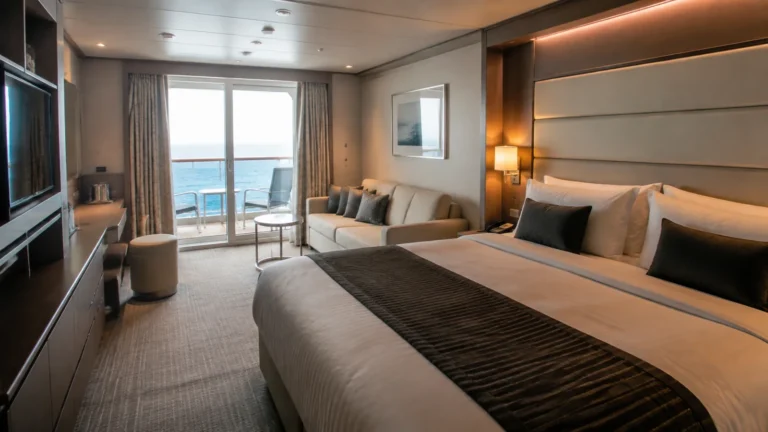
Rotterdam Cabins to Avoid: Exact Rooms & Better Picks
I am happy to spend a Rotterdam evening listening to live music, but I would like the option to leave it behind when I head to bed.
These are the cabin numbers, balcony fronts and bathroom details I would settle before paying for a room that is lovely on paper but wrong for the way I travel.
Rotterdam cabins I would compare first
- 4048 and 4050: Deck 4 VH verandahs with partially obstructed views, not clear-view balconies at a bargain price.
- 4002 and 4004: forward verandahs with solid-steel railings, a separate issue for someone watching the sea from a chair.
- 1102 and 1106: Main Deck oceanviews beneath the B.B. King’s Blues Club area, worth passing over for a similarly suitable room when you turn in early.
- 8050 and 8052 versus 8120 and 8122: Deck 8 examples beneath pool surroundings and Lido Market, respectively, with different upstairs routines.
- 1125 versus 1121, 1123 and 1134: a roll-in shower in the first room, transfer showers in the other three, despite all appearing in the fully accessible inventory.
My starting point: a non-connecting midship verandah on Deck 5 or 6, with accommodation above and below. The venue recommendations identify potential sound exposure, not rooms proven noisy on every sailing.
This guide covers the Pinnacle Class Rotterdam shown in the official Rotterdam plan. In labels such as VH4048 or C1125, the letters identify the category and the digits identify the room.
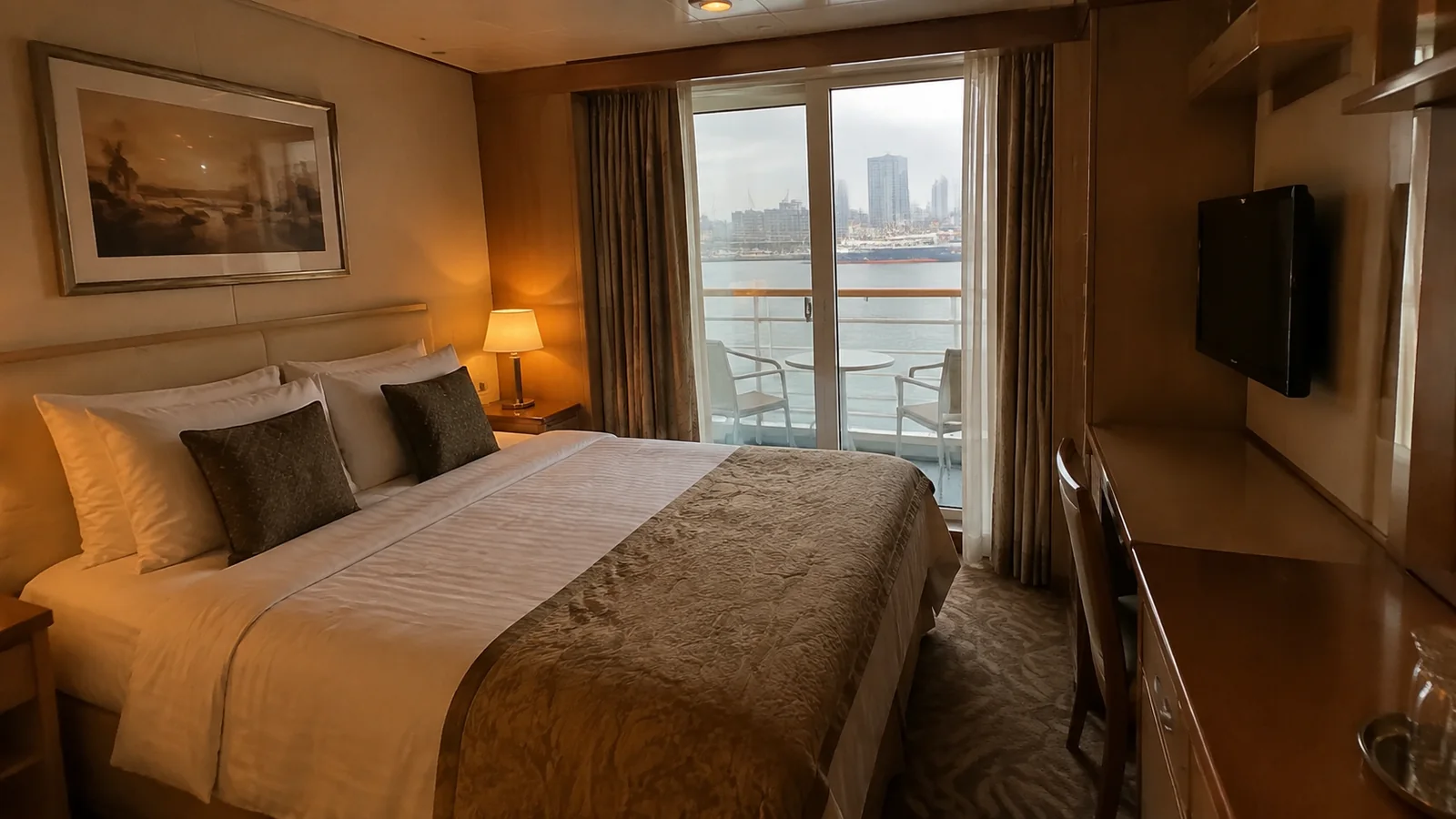
4048 and 4050: buy the actual partial view
These Deck 4 verandahs are in category VH, which carries a partial-view restriction. I would take them off a scenery-first shortlist unless the actual balcony outlook and the saving made the compromise worthwhile.
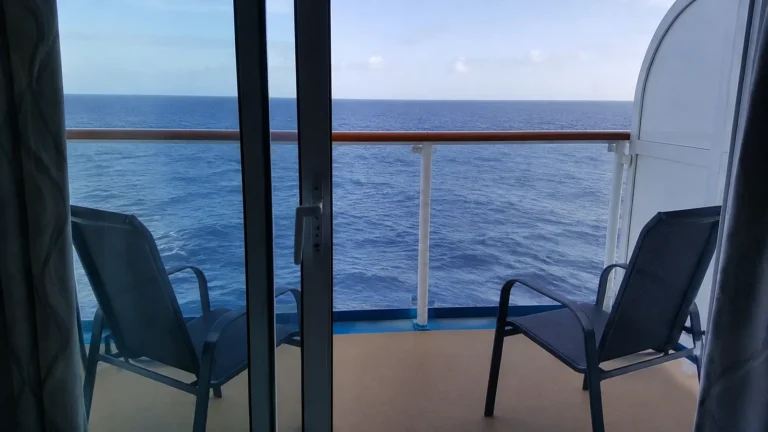
The practical distinction is between having outdoor access and enjoying an uninterrupted view while seated. You can value the first benefit without pretending the second is included.
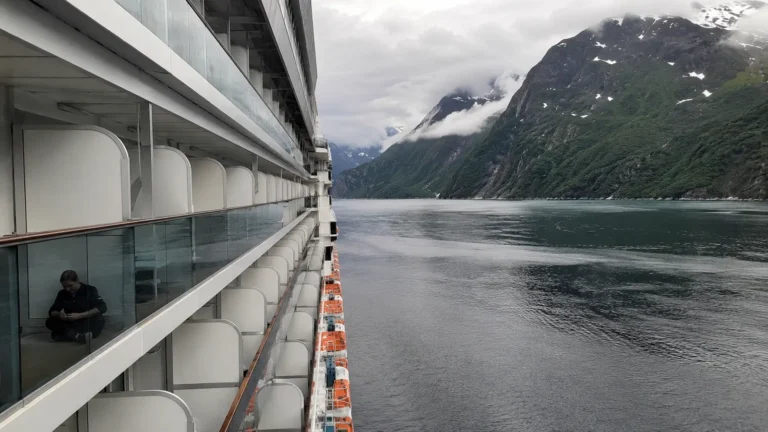
I would ask to see the view from the chair and along both sides of the balcony. Equipment near a gap between boats can still occupy the direction you most often look, even when one standing photograph shows open water.
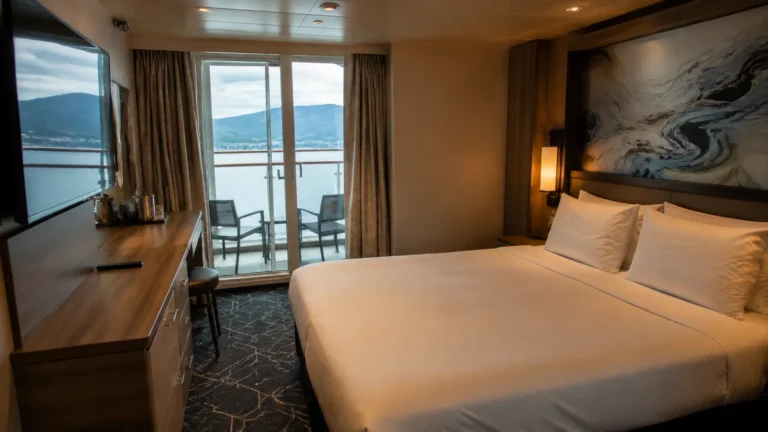
Better pick: a clear-view verandah on Deck 5 or 6 with the same required bedding. For long scenic days, I would pay a modest whole-cruise difference for that improvement before paying simply to move higher.
For occasional fresh air on a busy itinerary, a disclosed VH compromise can be reasonable value. These two numbers are examples, not the only rooms covered by the category’s restriction.
4002 and 4004: a solid balcony front changes the seated outlook
These forward Deck 4 VF verandahs have the solid-steel railing symbol. That is different from a lifeboat outside the balcony and should be checked separately from a partial-view category.
I would reconsider them when my ideal afternoon involves sitting low in a chair and watching the water. An attractive horizon when standing does not explain how much sea remains visible from the furniture.
The forward location introduces its own choices about movement and the theater footprint below. A balcony upgrade is less appealing when it creates two compromises you already know you would rather avoid.
Better pick: an unmarked side-facing verandah farther along the residential decks, with its view confirmed. I would keep a steel-front room for someone who likes the sheltered setting and accepts the view from the actual sitting position.
1102 and 1106: music above a low oceanview
These Main Deck rooms align with the B.B. King’s Blues Club area on Deck 2. I would not choose either solely because a lower oceanview seems like an obvious quiet-room bargain.
The possible disturbance is amplified music transmitted through the ship’s structure. A cabin can have a calm corridor and a perfectly useful window while still sitting beneath an evening venue.
Better pick: another suitable oceanview outside that entertainment footprint, or a Deck 5 or 6 interior when sleep matters more than daylight. I would price the interior before paying extra for a window with an upstairs routine I dislike.
For someone who intends to enjoy the music until the evening winds down, the same location may work well. The recommendation changes with your bedtime rather than with an assumption that every guest hears the same sound.
Billboard Onboard and Rolling Stone Lounge occupy different positions farther forward on Deck 2. I would not stretch the B.B. King’s warning across every Main Deck room or call them all nightclub cabins.
8050 and 8052 versus 8120 and 8122: pool activity or breakfast overhead?
Rooms 8050 and 8052 are Deck 8 examples beneath the Lido Pool surroundings on Deck 9. Here, the ceiling consideration is furniture movement, footsteps and preparation around the public deck.
Farther aft, 8120 and 8122 align with Lido Market. Dining chairs, setting up service and clearing meals are the more relevant possible interruptions there.
Better pick: a comparable Deck 7 room with Deck 8 accommodation above. You can retain a manageable trip to Lido without placing its public floor directly over your bed.
An early riser who frequently returns to the cabin between swims may value the higher location. For someone looking forward to late mornings, I would spend first on the residential ceiling.
The forward fitness and spa section needs a separate comparison, rather than the same pool warning. My floor-plan guide explains how to follow the room across three decks using the elevators and hull shape.
1125 and the transfer-shower rooms: the accessibility symbol is not the whole description
Rotterdam’s accessible oceanview 1125 has a roll-in shower, while 1121, 1123 and 1134 have transfer showers. I would settle that distinction before comparing views, room size or the shortest elevator route.
The right choice depends on the traveler’s equipment and transfer method. These are not rooms to avoid because they are accessible; they are rooms to match carefully to the access features actually needed.
Holland America’s accessibility team should confirm the configuration and suitability for the specific guest. A photograph of the same number on a related ship does not establish the shower provided on Rotterdam.
I would ask for another suitable adapted room when the shower type is wrong, rather than move to a standard cabin for a preferred view. Required bathroom access comes before the optional features that make an upgrade attractive.
Ambulatory-accessible rooms are another separate group and may retain steps and standard door widths. Do not use that designation as shorthand for a fully wheelchair-accessible layout.
Family Oceanview: two washing spaces do not mean two toilets
Rotterdam’s Family Oceanview categories combine additional beds with two bathing areas. One has the toilet, while the other provides a shower and sink.
That can be genuinely useful when several people need to get ready at once. I would not buy the room expecting two entirely independent bathrooms with two toilets.
Compare the exact sleeping arrangement with every extra bed open, then price two connecting rooms when separate bedrooms are important. My family cruise guide helps keep that daily routine ahead of a category’s maximum advertised capacity.
The best family alternative preserves the beds and bathroom features you will actually use. A larger balcony is not compensation for losing the extra washing space that made the original room work.
Club Orange and suites: protect the location you already like
A category upgrade through Club Orange still deserves an exact-room comparison. I would not exchange a well-placed midship verandah for an unwanted ceiling merely because the replacement has a higher grade.
First identify the available replacement number and the specific benefits that matter to you. A better cabin code can change the room’s position without supplying the improvement you actually hoped to buy.
A Vista Suite and Neptune Suite also are not interchangeable in layout or access benefits. I would compare the actual room type before assuming that every suite includes the same lounge privileges or bathroom features.
For a wake-facing suite, the view can be a good reason to accept the stern and its longer walking routes. I would buy it for that experience, not as a universal promise of quieter or smoother sailing.
Choose the useful elevator, not the longest hallway
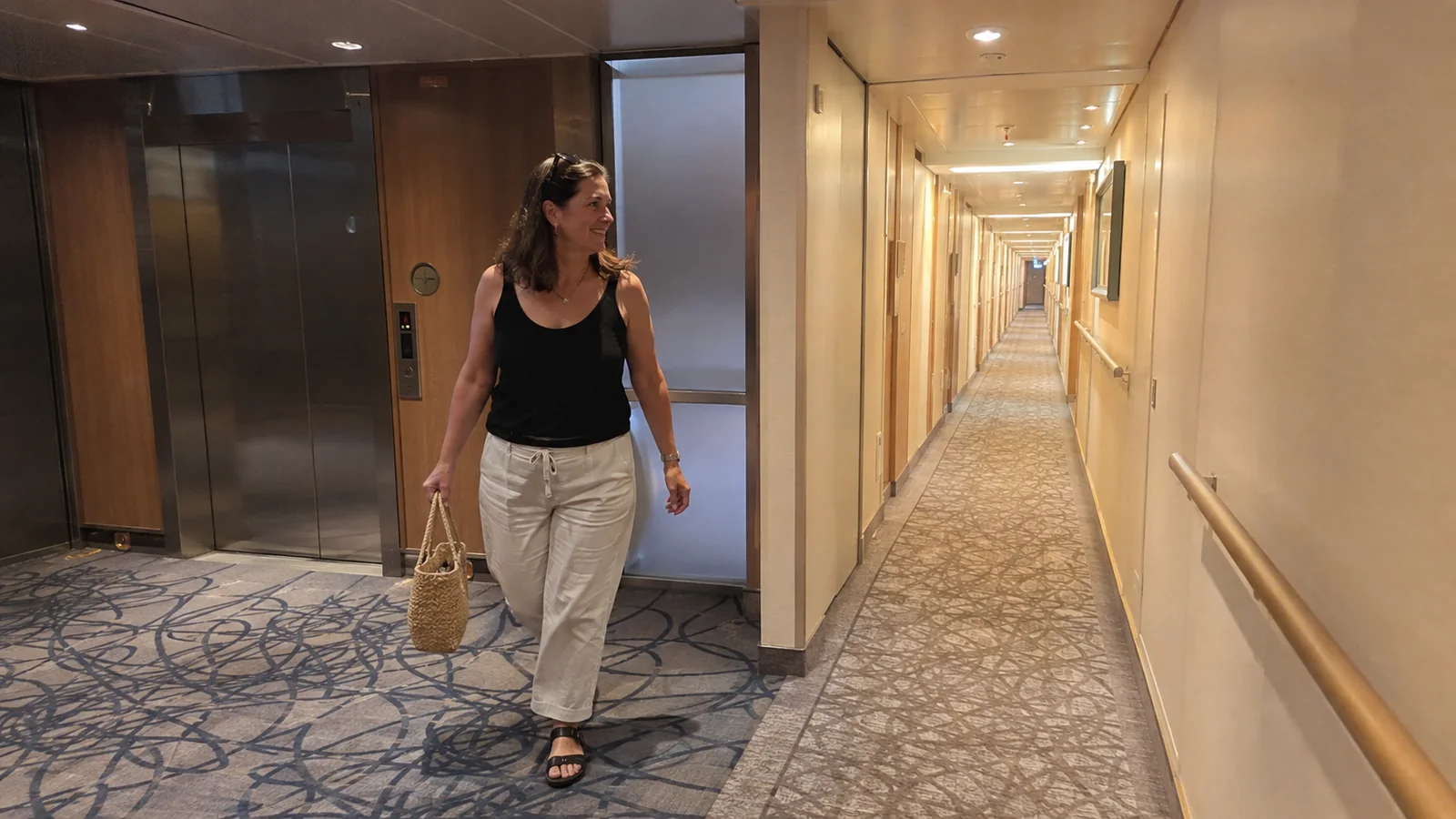
I prefer a room a short turn from the elevators over a remote cabin chosen solely to avoid a lift icon. The meaningful detail is whether the door opens toward the waiting area or sits around the corridor corner.
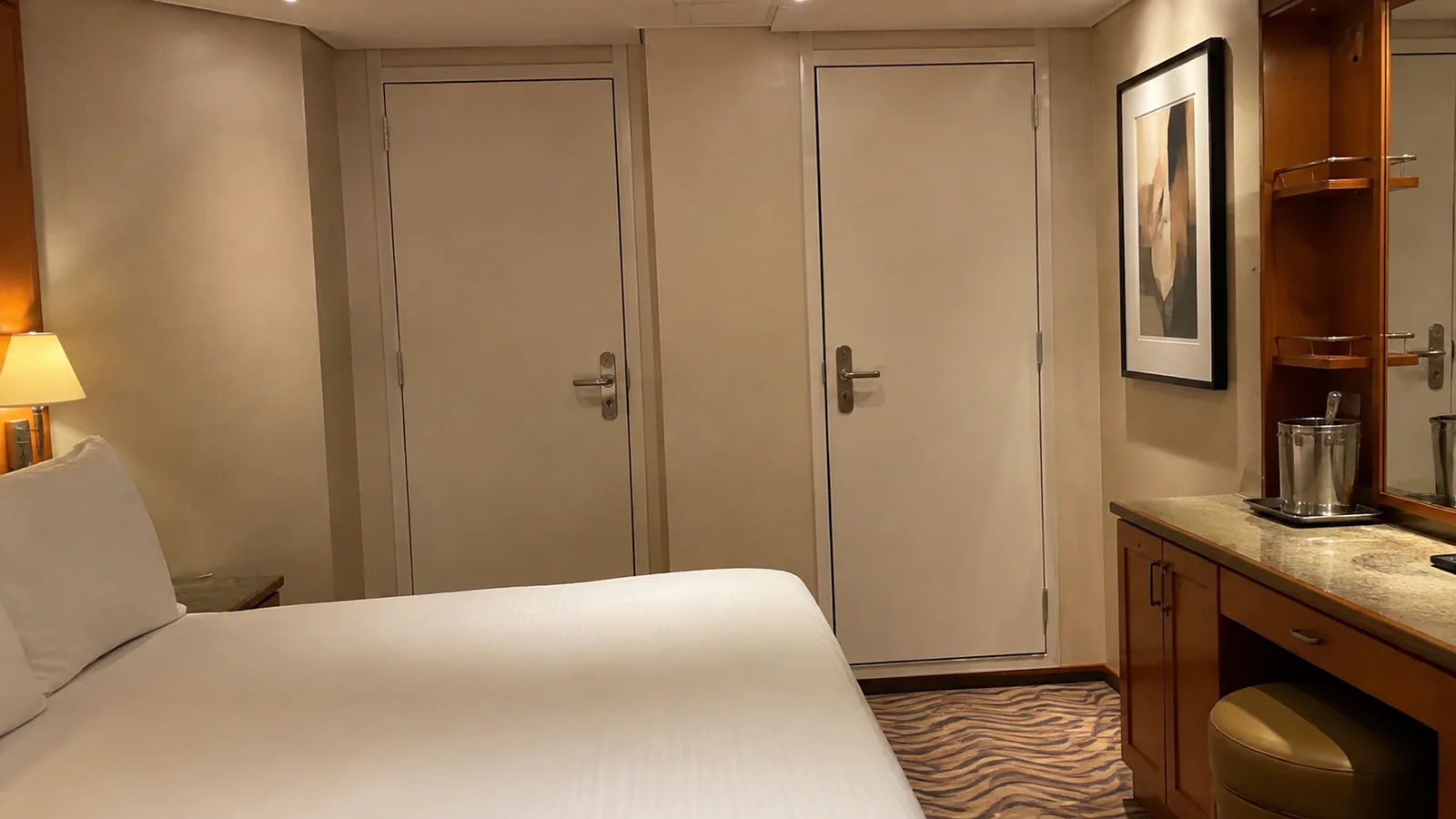
For two rooms, verify the actual connection instead of assuming consecutive numbers share a doorway. For a single room, an otherwise equal non-connecting cabin is a reasonable tie-breaker rather than a reason to accept a worse location.
High forward spa-category rooms should also be priced for their actual location and inclusions. I would not assume the spa name promises thermal-suite access or makes the cabin a better match for motion sensitivity.
My seasickness planning guide covers the wider preparation beyond cabin selection. A more central room addresses a location preference without guaranteeing a motion-free sailing.
The Rotterdam cabin I would choose
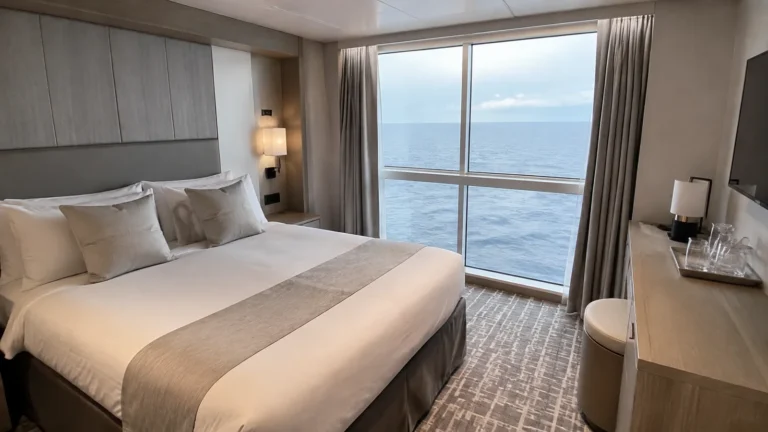
I would start with a non-connecting midship Deck 5 or 6 verandah, a clear seated outlook and accommodation above and below. A similarly placed interior is my budget comparison before paying for an obstructed view or public-space ceiling I do not want.
A guarantee works only when every permitted room meets your real requirements, including the shower type when that matters. My cabin-selection checklist keeps those essentials attached to the fare before a promising upgrade changes the assignment.