Mini Cruises: Are 2- to 5-Night Cruises Worth It?
A mini cruise packs the ship, a port or two, and a proper change of scenery into roughly two to five nights. It can be a smart first cruise or long-weekend escape, provided you count travel days, compare the full cost, and accept that “mini” refers to the calendar, not necessarily the ship.
What is a mini cruise?
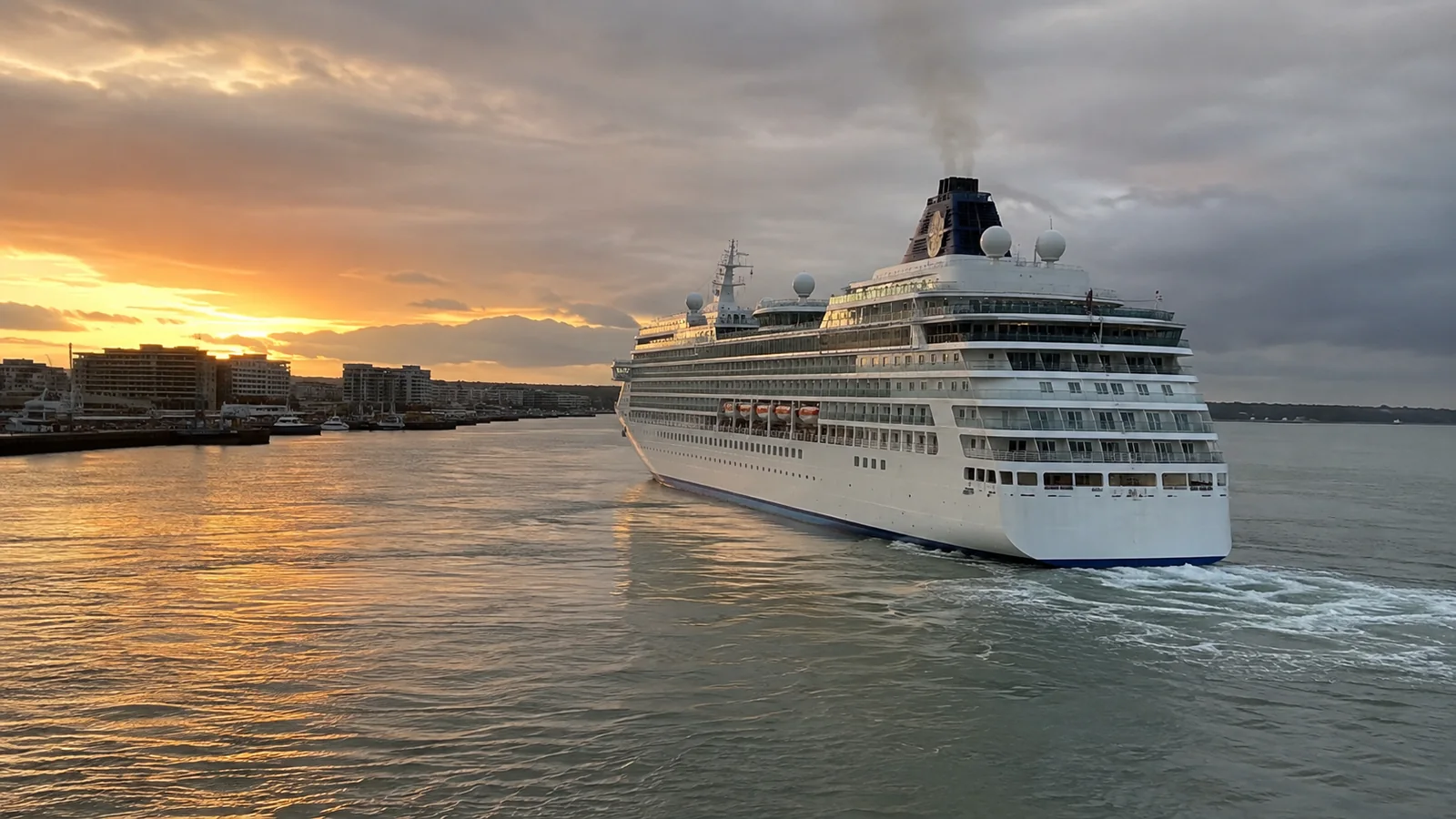
Mini cruise is an informal term for a short leisure sailing, usually two to five nights. Cruise lines in the United States more often call these short cruises, weekend cruises, or getaways, while the term is especially familiar in the United Kingdom and Europe.
A mini cruise is different from an overnight ferry crossing, even when a ferry has cabins, restaurants, and entertainment. The cruise itself is the vacation product, while a ferry primarily transports passengers and vehicles between points.
There is no universal cutoff. This guide uses two to five nights because those trips share the same planning challenge: embarkation and disembarkation consume a larger portion of a very short break.
Where short cruises go
From Florida, the most common quick itineraries visit The Bahamas, private-island destinations, or a nearby Caribbean port. Royal Caribbean’s current weekend-cruise page highlights three-night departures from Miami, Fort Lauderdale, Port Canaveral, and Los Angeles, with routes to The Bahamas or Mexico.
MSC advertises three- and four-night Caribbean sailings from Miami and Port Canaveral on selected Seaside Class ships. Carnival’s live cruise search likewise shows short Bahamas trips from Florida and Baja Mexico itineraries from Long Beach, among changing departures.
Other possibilities include four- or five-night western Caribbean trips from Gulf Coast ports, short Bermuda sailings when schedules align, coastal samplers, and brief European or Australian cruises. Repositioning segments occasionally create unusual options, but one-way airfare and awkward dates can erase the apparent bargain.
All route examples were checked on September 4, 2026. Ships and seasons rotate, so search by duration and departure port rather than assuming last year’s weekend pattern still exists.
Two, three, four, or five nights?
Two nights: a ship sampler
A two-night sailing gives you one full day between boarding and leaving. It works best when you live near the port and mainly want to test the cabin, dining, motion, and onboard routine.
Flying for two nights creates a questionable vacation-to-airport ratio. Add a pre-cruise hotel and the trip may involve three travel days for one unrushed day.
Three nights: the classic long weekend
Three nights commonly run Friday to Monday or follow a similar weekend-friendly pattern. You may get one or two port calls, but there is little slack for weather changes, late flights, or recovering from a heroic first evening.
This length is appealing for first-timers who are unsure about seasickness or cruise style. It is less useful for travelers who need several days to relax before remembering what relaxing is.
Four nights: a better balance
Four nights can add a sea day or another port without requiring a full week away. The extra day makes dining, entertainment, and pool time easier to enjoy without scheduling your vacation like a product launch.
Weekday departures may be less convenient for school and work calendars, yet they can shift the atmosphere and pricing. Compare the total days away from home, not just the number printed beside the cabin fare.
Five nights: almost a full vacation
Five-night itineraries allow more geographic reach and usually give the ship experience room to breathe. They can also cost close to a seven-night cruise after flights and fixed fees, so price both lengths before deciding.

Why take a mini cruise?
- Limited vacation time: A weekend pattern may use only one or two workdays.
- Drive-to convenience: Living near a port can remove airfare and reduce disruption risk.
- First-cruise test: You can learn whether you enjoy ship life without committing a week.
- Group simplicity: Friends can choose their own activities while sharing meals and ports.
- Ship-focused escape: A large resort ship may be the main attraction, even on a compact route.
A short cruise can also turn a milestone into an event without coordinating a long itinerary. It is especially effective when everyone agrees whether the goal is beaches, nightlife, family time, or a quiet balcony and the temporary disappearance of household chores.
The tradeoffs people underestimate
Embarkation safety steps, unpacking, account setup, and learning the ship still take time. Disembarkation usually begins early on the final morning, so a “three-night, four-day” trip does not provide four full vacation days.
Short routes necessarily offer limited destination depth. A weather-related cancellation may remove half the port experience, and there may be no spare day to substitute another call.
The daily pace can feel lively because guests want to fit in dining, shows, pools, nightlife, and excursions. That energy is fun for some travelers and exhausting for others, neither of whom is using the buffet incorrectly.
Finally, the cruise fare may be inexpensive while fixed trip costs remain stubbornly adult-sized. Transportation, parking, a pre-cruise hotel, insurance, gratuities, drinks, specialty meals, and port activities do not shrink in proportion to the itinerary.

How to calculate the real price per vacation day
Start with the final cruise checkout total for your cabin, including taxes and required charges. Add transportation, parking, hotel, insurance, expected onboard purchases, gratuities not already included, and realistic shore spending.
Divide that trip total by the number of useful vacation days, not the number of nights alone. If the first day begins after a cross-country flight and the last ends at an airport security line, count honestly.
- Cruise fare for everyone in the cabin
- Port taxes, government fees, and mandatory charges
- Airfare, fuel, tolls, parking, or transfers
- Pre-cruise lodging and meals
- Automatic gratuities or service charges
- Drinks, Wi-Fi, specialty dining, and activities
- Excursions and independent port costs
- Travel insurance appropriate to the trip
A longer cruise can offer a lower cost per day because airfare and hotel costs spread across more nights. A mini cruise can still win on total cash outlay and fewer days off, which may be the comparison that matters in real life.
Choose the ship as carefully as the itinerary
Two short cruises to Nassau can feel entirely different on a giant activity-packed ship and an older, smaller vessel. Check the current deck plan, refurbishment history, cabin type, included dining, pool areas, entertainment, and age-specific facilities.
Newer or more elaborate ships are not automatically better. A smaller ship may be easier to learn in three nights, while a huge ship may offer enough variety that the port becomes optional.
Match the hardware to your goal. Families may prioritize splash areas and youth programming, friends may value late-night venues, and couples may care more about an adults-only deck and specialty restaurants.
Also check what operates on a short itinerary. Show schedules, restaurant hours, kids-club sessions, and attraction reservations can differ from longer sailings, and no general ship page promises every feature at every moment.
Three actual ships and routes to start with
For a Florida activity break: Royal Caribbean’s three-night Utopia of the Seas itinerary runs Port Canaveral, Nassau, CocoCay, and back to Port Canaveral. I would choose it when the ship and beach day are the main attraction and getting to Florida is easy.
For a Southern California weekend: Carnival Radiance’s three-night Baja route pairs Long Beach with a sea day and Ensenada before returning to Long Beach. I would choose this over a Florida flight for a West Coast traveler who wants a brief, casual getaway.
For one more usable day: Carnival’s four-night Carnival Firenze route adds Catalina Island alongside Ensenada and a sea day from Long Beach. I would investigate it when one extra night creates a noticeably better mix of ship time and places to explore.
These are operator-published itinerary examples checked September 5, 2026, not guaranteed availability for a particular week. Verify your chosen date’s ship, port order, and tender arrangements before deciding which one gives you the best break.
An illustrative three-night versus five-night budget
The following is a hypothetical budget for two adults driving to a nearby port, not a fare quote for the ships above. It keeps fixed travel costs visible and assumes two full usable days between boarding and departure on the three-night cruise, versus four on the five-night cruise.
- Cost for two people: Cruise fare including taxes and required fees
- Three nights: $700
- Five nights: $1,050
- Cost for two people: Fuel and other fixed travel costs
- Three nights: $100
- Five nights: $100
- Cost for two people: Port parking, illustrative allowance
- Three nights: $80
- Five nights: $120
- Cost for two people: Gratuity allowance
- Three nights: $120
- Five nights: $200
- Cost for two people: Drinks, meals ashore, and activities
- Three nights: $200
- Five nights: $350
- Cost for two people: Total
- Three nights: $1,200
- Five nights: $1,820
- Cost for two people: Total per full usable day for the couple
- Three nights: $600
- Five nights: $455
The longer trip costs $620 more but adds two full days, an incremental $310 per extra day for the couple. I would choose it if those days are available and the extra spending fits, while the three-night trip still wins on total cash and time away.
Partial embarkation afternoons and final evenings can be enjoyable, but counting every calendar date as a full vacation day makes the comparison misleading. If both options also need $800 in flights and a $200 hotel, the totals become $2,200 and $2,820, or $1,100 versus $705 per full usable day.
Use your actual gratuity rules, parking billing, insurance, optional purchases, and transport quotes in place of these allowances. The purpose is to see what the extra nights buy before letting a low headline fare decide the trip.
Will a mini cruise feel like a party cruise?
Some weekend sailings attract celebrations and groups because the time commitment is low. That does not make every short cruise a floating bachelor party, but departure day, ship design, price, season, and itinerary can influence the atmosphere.
A midweek four- or five-night trip may feel different from a Friday three-night sailing. For a calmer experience, consider a ship with multiple quiet areas, choose a cabin away from nightlife, and avoid relying on a single crowded pool deck.
If nightlife is the point, verify venue hours and age restrictions rather than assuming. Short does not mean sleep is prohibited, although your hallway neighbors may require a gentle reminder.
Do you need a passport?
The answer depends on citizenship, residency, route, ports, and how the cruise begins and ends. U.S. Customs and Border Protection says eligible U.S. citizens on certain closed-loop cruises may return with proof of citizenship and government-issued photo identification under the Western Hemisphere Travel Initiative.
That exception is not a universal cruise rule, and cruise lines or destinations may require more. A valid passport book is the most flexible document if you must fly home unexpectedly from a foreign port, while a birth certificate cannot board an international rescue flight simply through force of personality.
Children, lawful permanent residents, non-U.S. citizens, one-way cruises, and routes outside the qualifying area have different requirements. Check CBP, every destination, and the cruise line for your exact travelers and sailing before final payment.

Flights and embarkation timing
Arrive in the port city at least one day before departure when flying, especially when the cruise is short. The ship will not wait for an independently delayed flight, and missing one night of a three-night cruise is a dramatic percentage.
Choose a return flight with enough time for clearance, disembarkation, ground transportation, airport lines, and disruption. Cruise-line suggested minimum flight times are a starting point, not a promise that traffic will behave.
Driving removes airline risk but adds parking, traffic, and possible holiday congestion. Reserve port parking or a hotel package only after confirming cancellation terms and the actual terminal.
How to pack for a short cruise
Pack a compact core wardrobe around repeatable layers and shoes that serve more than one purpose. A swimsuit, cover-up, casual daytime clothes, evening outfit, light layer, rain protection, toiletries, chargers, and destination-appropriate walking shoes cover most warm-weather mini cruises.
Keep identification, medication, valuables, sunscreen, and first-night necessities in your embarkation bag because checked luggage may reach the cabin later. The core-plus-modules approach in this cruise packing list prevents a three-night getaway from acquiring twelve nights of shoes.
Read the cruise line’s prohibited-items list shortly before packing. Rules for alcohol, power strips, steamers, appliances, and recreational equipment differ by line and can change.
How to plan three nights without sprinting
Embarkation day
Complete online check-in, reserve essential activities when booking opens, and board with a short priority list. Learn your muster requirements, confirm dining, find the main venues, and let the rest of the ship remain a delightful mystery for at least an hour.
Port day
Choose one anchor activity plus a flexible meal, beach, or walk. Verify ship time, local time, transportation, cancellation policies, and all-aboard time, then allow a generous return buffer.
Sea or private-destination day
Pick one popular attraction or reservation and leave room for spontaneous downtime. A short cruise is not a competitive exam in which points are awarded for touching every deck.
Final evening
Review the account, understand luggage instructions, and pack everything except morning essentials. Decide whether self-assist departure is realistic based on your luggage and mobility rather than its theoretical speed.

Who should skip the mini cruise?
Skip it if you need a slow adjustment period, want deep destination time, or must fly an expensive long distance for only a few nights. Travelers who dislike packing, embarkation procedures, or tightly sequenced days may find a nearby resort easier.
A mini cruise is also a poor trial if the selected ship or itinerary does not resemble the cruise you ultimately want. Testing a lively three-night Bahamas sailing will not tell you exactly how a small-ship Alaska voyage or European river cruise feels.
For a first sailing, focus on the fundamentals in these first-time cruise tips. A short cruise lowers the commitment, but it does not cancel document rules, medical preparation, or common sense.
How to book the right short cruise
- Set the maximum total days away, including travel and a pre-cruise night.
- Search departure ports you can reach reliably and affordably.
- Compare two through five nights, not only the advertised weekend option.
- Review the exact ship, cabin, ports, and time in port.
- Build the complete trip price before adding packages.
- Read deposit, final-payment, cancellation, and change rules.
- Verify travel documents for every passenger.
Compare booking direct with using a qualified cruise advisor, especially for a group or several cabins. The decision framework in the best way to book a cruise helps weigh price, support, perks, and control without pretending one sales channel always wins.
Frequently asked questions
Is a three-night cruise worth it?
It can be when the port is easy to reach, the ship fits your style, and you value a quick escape more than cost per day. It is less compelling when airfare, hotels, and transfers dominate the budget.
Are mini cruises cheaper?
They often cost less in total than longer cruises, but not always per night or per useful vacation day. Compare the complete trip, including transportation and packages.
Can children go on a mini cruise?
Usually, subject to the line’s current minimum-age, documentation, cabin-occupancy, and youth-program rules. Verify the exact ship and sailing because facilities and opening schedules vary.
How early should I book?
Book when the right cabin, price, and cancellation terms align, particularly for holidays, connecting rooms, accessible cabins, or larger groups. Last-minute offers exist, but they are inventory events rather than a dependable strategy.
The bottom line
A mini cruise works best when convenience is genuinely convenient. Choose a reachable port, a ship you would enjoy even if one call changes, and a length that leaves at least one day feeling like vacation rather than processing.
Count the full cost and protect the schedule with sensible arrival timing. Then enjoy the appealing absurdity of unpacking once, visiting another country, and being home before the neglected produce in your refrigerator files a complaint.