How Much Does a Cruise Cost? A Realistic Budget
A cruise can cost less than a hotel weekend or more than a new car, which is why the tiny price in an ad tells you almost nothing. The useful answer comes from adding the checkout total, transportation, onboard charges, port days, and a sensible emergency cushion before you fall in love with the ship.

The short answer: what should you budget for a cruise?
For a mainstream cruise, a practical starting budget for two adults is often around $2,000 to $5,000 for a seven-night trip, including the cruise, basic travel costs, gratuities, and a few extras. That is a planning range, not a market average or a live quote.
A short drive-to cruise with an inside cabin can land below that range. A balcony in Alaska, a holiday sailing with flights, or a trip loaded with excursions can move well beyond it.
Premium lines, suites, luxury ships, river cruises, and expedition voyages occupy different price worlds. The only accurate comparison is the total for your dates, party, cabin, transportation, and preferred vacation style.
If you remember one formula, use this:
True cruise cost = checkout total + transportation and hotel + daily gratuities + onboard extras + port spending + insurance and documents + buffer.
Why the advertised cruise fare is not the final cost
Cruise ads often spotlight a per-person fare based on two guests sharing the least expensive eligible cabin. Availability may be limited, and the promotion can depend on dates, ship, resident status, loyalty offers, or a nonrefundable deposit.
Your checkout total may include or separately display government taxes, fees, and port expenses, depending on the line and sales channel. Royal Caribbean’s official pricing explanation says these charges vary by sailing and directs guests to the current booking total.
Then come costs that are not usually part of the basic fare: transportation to the port, a pre-cruise hotel, daily service gratuities, drinks, specialty restaurants, internet, shore excursions, and travel protection.
A low fare can still be a terrific deal. It simply needs to survive the checkout page and your personal vacation habits before earning that title.
What the basic cruise fare usually includes
Most mainstream fares include a cabin, regular housekeeping, many meals, selected nonalcoholic drinks, pools, fitness facilities, youth programming, and much of the entertainment. The exact list varies by cruise line and ship.
Royal Caribbean’s current fare inclusions page, for example, lists accommodations, complimentary dining across selected venues, entertainment, and activities. That does not mean every restaurant, event, attraction, beverage, or room-service order is included.
Luxury and premium fares may bundle more, such as drinks, internet, gratuities, specialty dining, or excursions. A higher fare with genuinely useful inclusions can cost less overall than a bargain fare covered in add-ons you were always going to buy.
Read the fare terms at the cabin-selection and final-payment stages. A promotional label is not a substitute for a written inclusion list.
The 12 costs to add before booking
1. Cruise fare for every passenger
Start with the total for the entire cabin, not the eye-catching per-person number. Include every adult and child because “kids sail free” offers can still leave taxes, fees, gratuities, and transportation costs.
Solo travelers should check the single supplement and compare solo cabins where available. A solo room is not automatically cheaper than paying a supplement on a discounted double-occupancy cabin.
2. Taxes, fees, and port expenses
These depend on the itinerary and may change the apparent value of two similar fares. Compare the final checkout totals on the same day rather than one line’s base fare with another line’s total.
Save a screenshot or PDF of the price breakdown and promotion terms. It makes later questions about repricing, credits, or cancellations much easier to untangle.
3. Daily gratuities or service charges
Mainstream lines commonly add a per-person, per-day service gratuity unless it was prepaid or genuinely included. Suite guests may have a higher rate, and age exceptions differ.
As a concrete September 2026 example, Royal Caribbean’s official gratuity policy lists $18.50 per guest per day for standard accommodations and $21 for suites. It also describes separate percentage gratuities on purchases such as beverages, specialty dining, and spa services.
Those figures can change, so use your own line’s policy when budgeting. Multiply the current daily rate by the number of chargeable guests and cruise nights.
Prepaying does not necessarily save money, but it moves a predictable charge out of the onboard account. Check whether a package’s advertised price includes its service charge or adds it at checkout.
4. Flights or driving
Airfare can easily rival the cruise fare for a family, especially around school breaks. Add checked bags, seat selection, airport transfers, and meals during travel rather than using the first search result as the flight total.
Drivers should include fuel, tolls, port parking, and possibly a hotel that bundles parking. Compare the hotel package with official port parking and an independent lot on cancellation terms, security, shuttle frequency, and total cost.
5. A pre-cruise hotel
Flying in at least one day early is a cost, but it protects the much larger cruise purchase from a routine delay. The hotel budget also needs taxes, transport from the airport, dinner, breakfast, and the ride to the terminal.
A cheap room far from both airport and port can create two expensive transfers. Price the whole overnight chain before booking.
6. Drinks
Basic water, drip coffee, tea, and selected dispenser drinks are often included, but policies vary. Bottled water, espresso drinks, soda, alcohol, and smoothies may cost extra.
A beverage package only saves money if your normal, policy-compliant use exceeds its full cost after required gratuity. Account for port days, package restrictions, drink limits, excluded brands, and whether every adult in the cabin must purchase.
Do not buy a package because the daily number feels small. Multiply it by every required person and every cruise day, then compare that total with an honest pay-as-you-go estimate.
7. Specialty dining
The included dining room, buffet, and casual venues can provide plenty of variety. Specialty restaurants are an optional experience, not a requirement for eating well.
Check whether a price is a cover charge, à la carte, a dining package credit, or a reduced menu. Add automatic gratuity when it is not already included.
8. Internet
Ship internet may be sold by day, voyage, guest, or device, and the rule for switching devices differs by line. Video calls, work access, and streaming can require a higher tier than messaging.
Buy only what solves a real need. Download entertainment, maps, confirmations, and books before sailing, then consider one shared device plan if the terms allow devices to take turns.
9. Shore excursions and port transportation
Excursions range from a low-cost walking tour to a flightseeing day that costs hundreds of dollars per person. Price each port separately rather than creating one vague “activities” number.
Independent sightseeing may cost less, but transport, admission, cancellation protection, mobility, and return-to-ship risk belong in the comparison. A free beach can still require an expensive round-trip taxi.
10. Onboard activities and shopping
Arcades, casinos, bingo, classes, spa treatments, photo packages, cabanas, childcare at some hours, and premium attractions can add up quietly. Decide which category gets a fixed allowance and which gets zero.
Casino charges are entertainment spending, not a vacation investment. Set the limit before boarding and never chase losses with the emergency fund.
11. Travel documents and medical preparation
Passport applications, visas, photographs, vaccinations, medication supplies, and required testing can become real trip costs. Check requirements before the deposit becomes nonrefundable.
The U.S. State Department’s cruise travel guidance strongly recommends that cruise passengers carry a passport book because an emergency flight home cannot be made with a passport card. Your cruise line and every destination may impose additional rules.
12. Travel insurance and an emergency cushion
Travel protection is not one universal product. Trip cancellation, interruption, delay, medical care, evacuation, preexisting-condition waivers, and cruise-line coverage can have different limits and exclusions.
The State Department’s travel insurance overview notes that trip-cancellation insurance usually does not cover medical costs abroad. Read the certificate, not merely the plan name.
Keep a separate cushion for an airport hotel, missed connection, medical expense, replacement medication, or unexpected transport. If spending that reserve on cocktails would leave you stranded, it is not a cocktail budget.

A realistic seven-night cruise budget for two
Here is a hypothetical example for two adults driving to a mainstream seven-night cruise in a standard cabin. These are round planning numbers, not a quote or statement of average prices.
- Cruise checkout total for the cabin: $1,900
- Daily service gratuities: $260
- Fuel, parking, and one hotel night: $450
- Excursions and port transportation: $400
- Drinks, one specialty meal, and Wi-Fi: $350
- Travel protection: $180
- Emergency cushion: $300
The planned outlay before the untouched cushion is $3,540, or $1,770 per person. Including the cushion, the travelers need access to $3,840.
Change the $1,900 checkout total to a holiday balcony fare, add four flights and excursions for a family, and the same cruise length looks entirely different. This is why a nightly base fare cannot answer the question alone.
How cabin choice changes the price
Inside cabins usually offer the lowest entry price, while ocean-view, balcony, suite, and premium-location rooms cost more. The gap changes with inventory, itinerary, and demand, so a balcony is sometimes a modest upgrade and sometimes a budget wrecking ball.
Compare the full price difference for the cabin, not the daily upgrade number. Ask whether natural light, private outdoor space, extra room, or suite benefits will materially improve this particular trip.
Families should compare one larger cabin with two connecting cabins, including every fare and fee. Our cruise cabin selection guide can help you avoid paying more for a location that clashes with your sleep or mobility needs.
A guarantee cabin can reduce the fare by letting the line assign the final location. It is a poor gamble if an obstructed view, connecting door, far-forward position, or deck adjacency would spoil the vacation.
What makes one cruise much more expensive than another?
School holidays, Christmas, New Year’s, spring break, and limited regional seasons often attract stronger demand. New ships and highly promoted itineraries can also carry a premium.
Alaska can bring costly flights, transfers, hotels, and excursions even when the cruise fare looks reasonable. Expedition routes require specialized vessels and operations, while river cruises often bundle items that ocean lines sell separately.
Departure port matters more than people expect. A slightly higher fare from a drivable port may beat a cheaper cruise that requires flights, bags, two transfers, and a hotel.
The line’s business model matters too. Our cruise line comparison explains traveler fit and inclusions, which is more useful than ranking every brand by its cheapest advertised cabin.
How to find the real price before paying a deposit
Search for your exact party, including children’s ages, and move through the booking path until taxes and fees appear. Select a real cabin category rather than relying on “from” pricing.
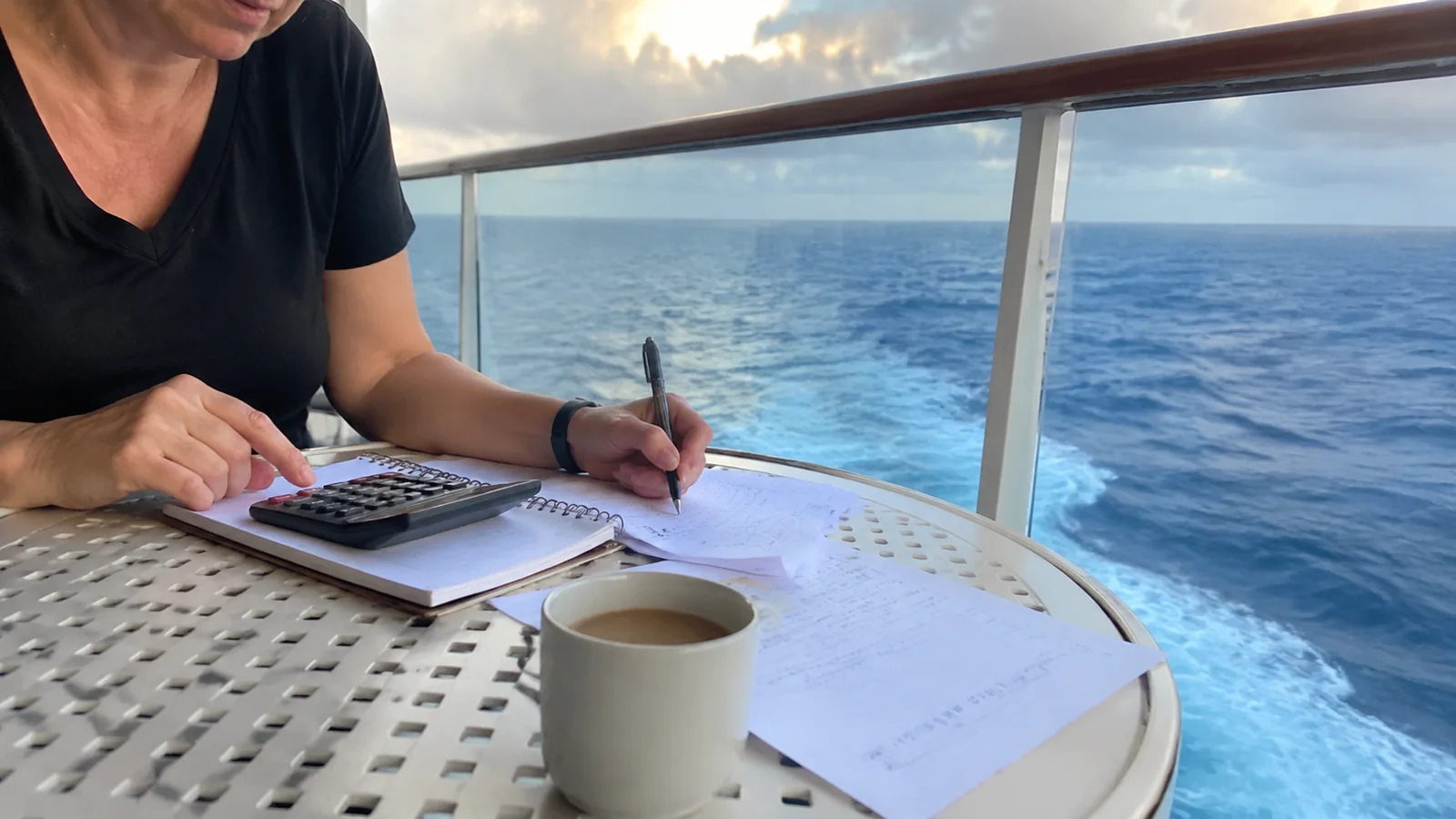
Then create a simple written budget with these lines:
- Cabin checkout total
- Gratuities or service charges
- Transportation and hotel
- Drinks and dining
- Internet
- Port days
- Insurance and documents
- Shopping and entertainment
- Emergency cushion
Compare refundable and nonrefundable deposits, final-payment dates, cancellation penalties, and what happens to promotional perks after a change. Our guide to the best way to book a cruise walks through the decision between booking direct and using a travel advisor.
Check the price again before final payment only if you understand the repricing rules. A lower fare may remove onboard credit, included perks, or a better deposit term.
How to cruise for less without making it miserable
Choose a nearby departure port, sail outside peak school weeks, and compare older ships with the newest launch. An older vessel can be a wonderful value when its layout and entertainment match what you actually enjoy.
Book an inside cabin if you will use it mainly to sleep, but do not accept a random location when noise or motion is a major concern. Value disappears when poor rest ruins every day.
Use included dining, bring permitted drinks within the line’s policy, download entertainment, and plan self-guided port walks where distance and safety make sense. Never save money by cutting the return-to-ship buffer.
Pack necessities instead of buying them onboard at convenience prices. Our complete cruise packing list covers documents, medications, embarkation-day items, and cabin basics.
Prebook extras only when the cancellation terms are acceptable and the price is genuinely better. A package purchased “on sale” is still wasted money if you would not otherwise use it.

How much spending money should you bring?
For a mostly included cruise, $25 to $50 per person per day can cover modest extras, but it will not fund multiple excursions, premium drinks, casino play, and shopping. Build the amount from planned purchases rather than treating that range as a rule.
Most onboard spending is cashless and charged to the cabin account. Monitor the account in the app or on the cabin television and resolve errors before the final morning.
Carry small cash for tips or vendors ashore where appropriate, plus a separate payment method. Tell card issuers about travel if required and know the foreign-transaction terms.
Are cruises all-inclusive?
Most mainstream cruises are better described as highly inclusive, not all-inclusive. Accommodations, many meals, and much entertainment are covered, while gratuities and a long menu of optional purchases remain.
Some luxury, river, or expedition fares bundle more, but even those can exclude spa services, premium bottles, private excursions, airfare, or certain transfers. “All-inclusive” deserves the same careful reading as “free.”

Is a cruise worth the cost?
A cruise can deliver excellent value when you enjoy the included dining, entertainment, transportation between ports, and ship itself. It looks less appealing when every must-have experience carries an extra charge or when flights dominate the budget.
Do not compare the cruise fare only with a hotel room. Compare the true cruise total with lodging, meals, transportation, activities, and convenience on the land trip you would realistically book.
The smartest budget is not the lowest possible number. It is the number that pays for the vacation you want, protects the nonrefundable investment, and lets you come home without being frightened of the credit-card statement.