What Does an Upside-Down Pineapple Mean on a Cruise?
An upside-down pineapple is widely understood online as a signal that adults may be interested in consensual partner swapping or a similar social lifestyle. On a cruise, though, it is not an official code, invitation, or promise, and a pineapple might be nothing more than a tropical decoration, joke, or accidental orientation.
The meaning and its limits
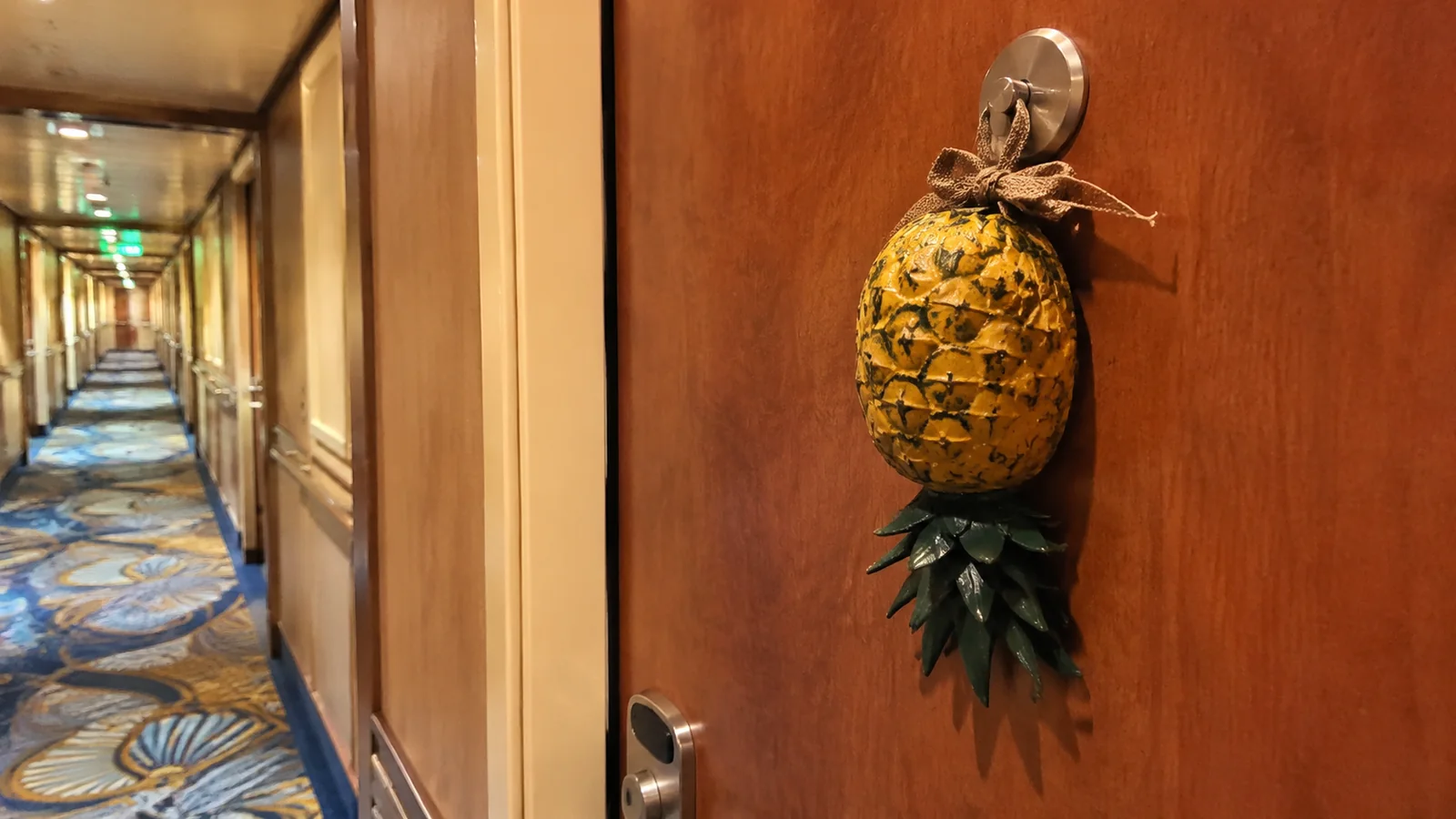
In some adult social circles, an upside-down pineapple is used to suggest openness to meeting other like-minded adults. The meaning spread through popular culture and cruise conversations, but no cruise line assigns or verifies the symbol.
That last point matters. Seeing one never gives anyone permission to approach sexually, touch another person, enter a cabin, photograph guests, or ignore a polite refusal.
The considerate response is the same as it would be anywhere else: treat people normally and let clear, voluntary conversation establish interest. Symbols can start confusion, while words and boundaries prevent it.
The older hospitality meaning
An upright pineapple has a long decorative association with welcome, generosity, and hospitality. It appears on architecture, linens, housewares, resort decor, clothing, luggage, and plenty of cheerful vacation merchandise.
The Smithsonian Libraries and Archives describes the pineapple’s evolution into an 18th-century hospitality symbol. That history explains why ordinary pineapple patterns are everywhere in travel settings without carrying an adult message.
Turning the fruit upside down has developed a separate modern interpretation in some communities. There is no central authority, official dictionary, or standardized display rule, so context and intent remain essential.
Is the pineapple an official cruise symbol?
No major cruise line publishes an upside-down pineapple as an official passenger code. It does not unlock an event, identify a ship-sponsored group, change cabin access, or override any guest-conduct rule.
Cruise lines do host private groups and full-ship charters, including adult-oriented themes, but those are booked programs with their own organizers and rules. A regular public sailing is not converted into a themed cruise because a few guests use the same decoration.
Our practical guide to adult lifestyle cruises explains the difference between a full-ship charter, a private group aboard a public cruise, and an ordinary sailing. That distinction is much more reliable than decoding cabin doors.
Where might you see an upside-down pineapple?
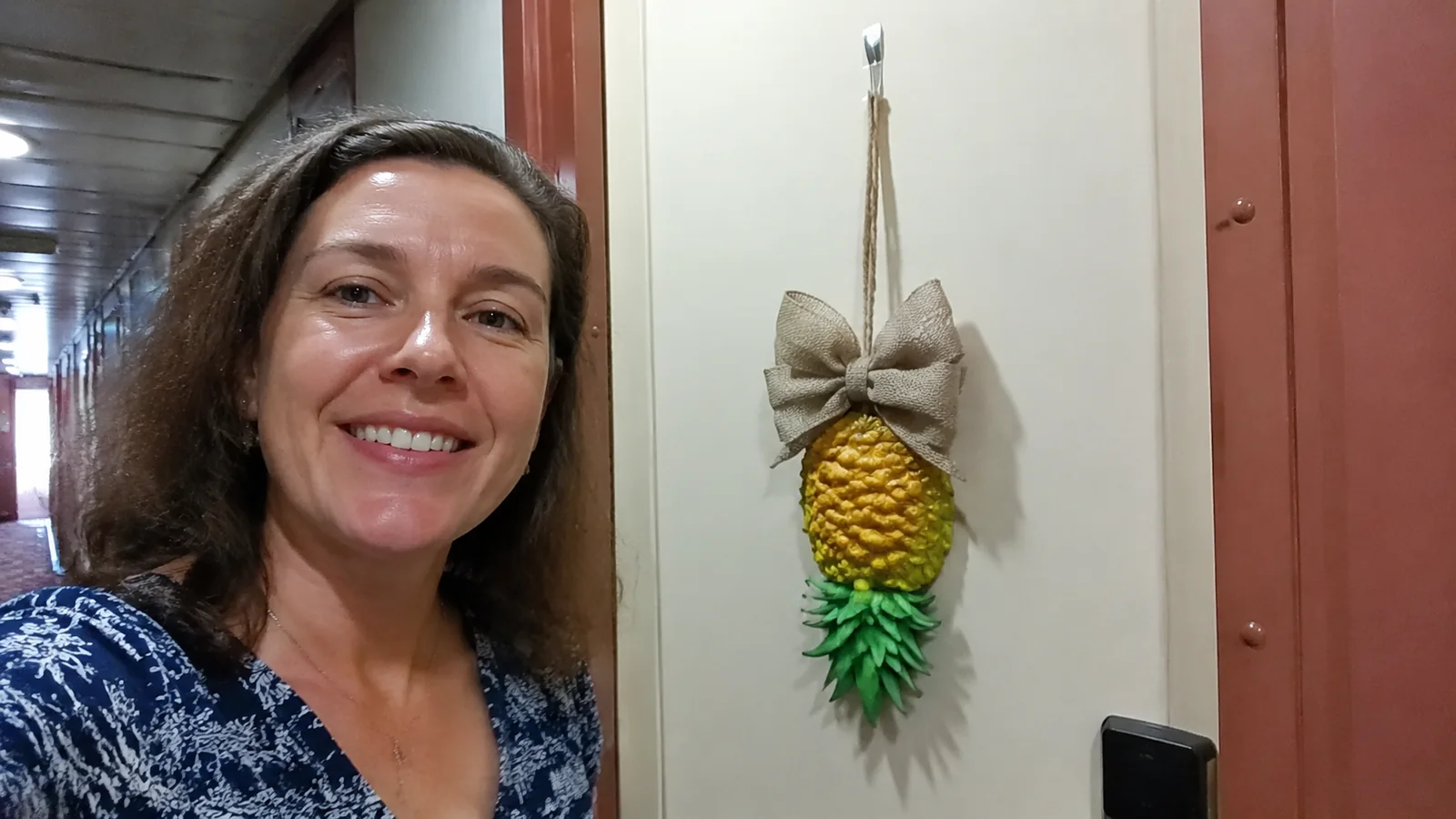
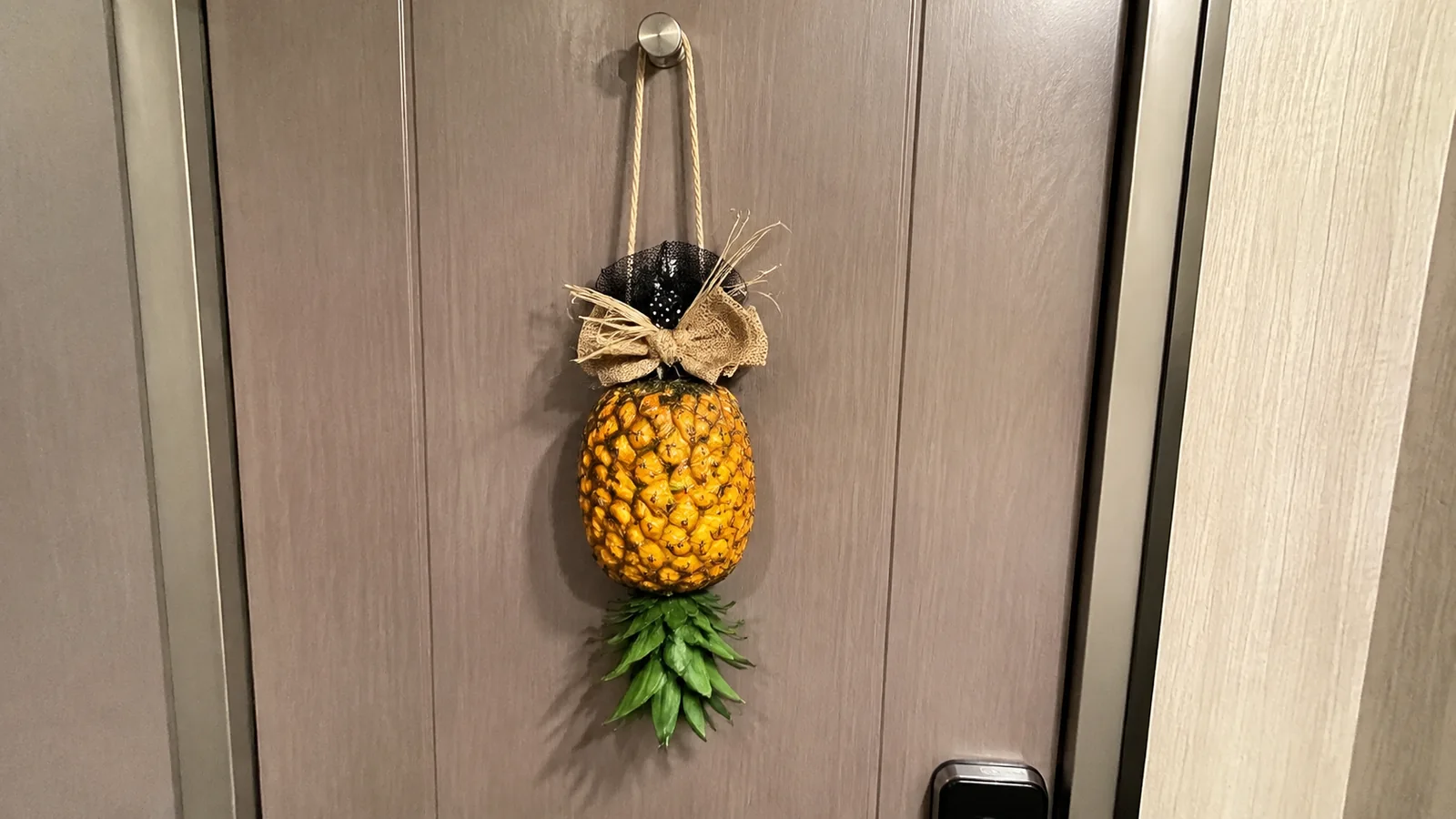
Online stories most often mention cabin-door magnets, shirts, pins, jewelry, drink cups, and profile images. None of these placements has a universally agreed meaning, and some items can rotate without their owner noticing.
A pineapple on a cruise drink is usually just a garnish. A pineapple in the ship’s design is usually tropical decor, while one on a crew uniform or venue logo should never be read as a personal message.
A door decoration may be more deliberate than a fruit slice, but it is still not an invitation to knock. Hallways are shared spaces and cabins are private accommodations.
How cruise-line policies actually apply
Cruise policies focus on conduct, safety, and the effect behavior has on other guests and crew. They generally do not provide a catalog of secret symbols.
Royal Caribbean’s current Guest Health, Safety, and Conduct Policy prohibits uninvited physical contact, solicitation, harassment, and other inappropriate or offensive conduct. It also says interior or exterior signs and decorations may be restricted when placed without permission or considered inappropriate by ship management.
Norwegian Cruise Line’s Guest Conduct Policy likewise prohibits uninvited physical contact, solicitation, harassment, and offensive conduct. Carnival’s current ticket terms prohibit lewd, indecent, obscene, offensive, or disruptive behavior and allow serious consequences for violations.
These rules apply regardless of what anyone wears or displays. A symbol cannot excuse behavior that makes another passenger uncomfortable or breaks the line’s policy.
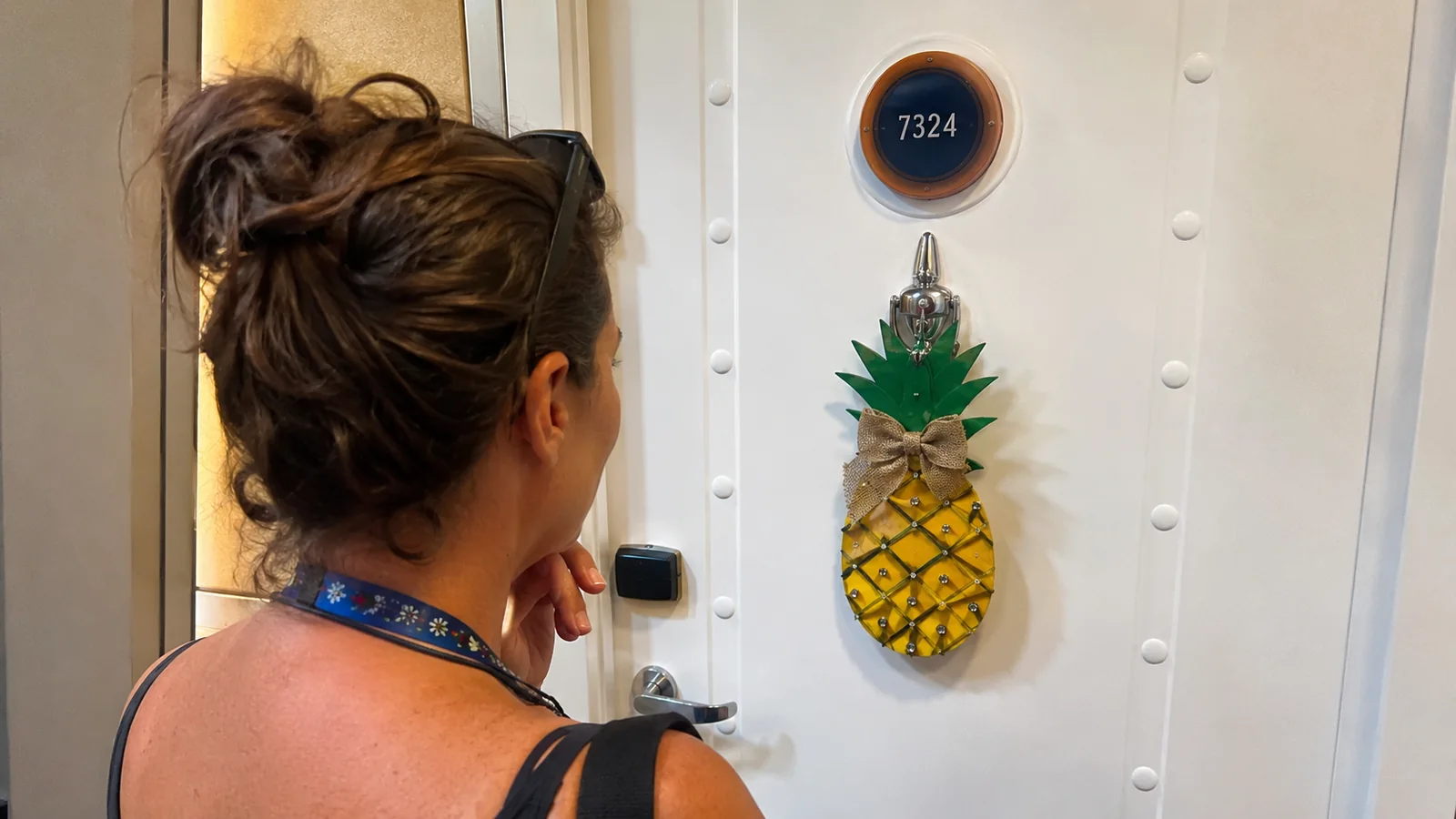
Is an upside-down pineapple allowed on a cabin door?
There is no useful fleetwide yes-or-no answer because door-decoration policies vary by line and can change. Some lines permit limited decorations with restrictions, while ship management can remove items considered unsafe, damaging, or inappropriate.
Check your cruise line’s current written rule before packing magnets, tape, adhesives, lights, or signs. Never cover a cabin number, safety notice, peephole, door handle, sprinkler, detector, or corridor sign.
If the goal is simply to identify your room, choose a neutral reusable magnet and keep it small. Avoid sexually suggestive text in a family hallway even if every adult in your cabin finds it funny.
Royal Caribbean expressly reserves authority over materials placed around the ship, and Carnival’s current conduct terms restrict clothing and accessories with nudity, profanity, or sexual suggestions. The safest standard is suitable-for-public-space, not “technically not forbidden in an FAQ.”
Etiquette, boundaries, and privacy
Usually, do nothing. Other guests’ decor, relationships, and private lives do not require investigation.
If you are interested in getting to know someone, start with the same respectful social conversation you would use at dinner or a bar. Do not lead with assumptions about their relationship or ask explicit questions in front of children, relatives, or strangers.
If the other person does not engage, changes the subject, steps away, or says no, that is the end of the conversation. Interest must be mutual, current, specific, and freely expressed.
If someone approaches you
You do not owe anyone an explanation, even if you displayed the symbol intentionally. “No, thank you” or “That is not what it means to us” is enough.
If you accidentally used the design and now find the attention annoying, turn it around or remove it. You did nothing wrong by owning a pineapple item, and you are not responsible for someone else’s assumptions.
When an interaction becomes persistent, threatening, or physical, move to a staffed public area and contact ship security or guest services. Note the time, place, cabin number if relevant, and a factual description rather than trying to handle escalating behavior alone.
Clear agreement and privacy
Consent is an active agreement between people, not a conclusion drawn from a symbol. It can be declined or withdrawn at any time, and agreement to one conversation or activity is not agreement to anything else.
Alcohol can make communication less reliable and judgment worse. Do not pressure anyone who is intoxicated, separated from friends, uncertain, or unable to communicate a clear choice.
- Ask plainly: Use respectful words instead of trying to decode hints.
- Accept no immediately: Do not negotiate, tease, or ask for a reason.
- Protect privacy: Never share names, cabin numbers, messages, or photos without permission.
- Keep public areas public: Follow dress, behavior, and venue rules around other passengers.
- Include everyone affected: Never assume one partner speaks for another person’s boundaries.
MSC Cruises’ published Guest Conduct Policy also lists uninvited physical contact, solicitation, and harassment as inappropriate behavior. The wording across several lines makes the practical expectation quite clear.
Regular cruise or adult-themed charter?
A regular cruise sells cabins to the general public and follows the cruise line’s normal entertainment and conduct framework. Adults may meet socially, but the ship is not organizing an adult lifestyle experience.
A private group may reserve a block of cabins and hold events in contracted venues. Other guests can still be aboard, so group participants remain responsible for respecting shared spaces and the line’s rules.
A full-ship charter is booked by an organizer that controls sales and may create an adults-only themed program. The underlying maritime safety requirements, crew authority, local laws, and charter rules still apply.
This also differs from ordinary adults-only cruises, which may be child-free without being sexually themed. “Adults only” describes age eligibility, not guest interests.
Can you use the symbol as a prank?
Putting an upside-down pineapple on someone else’s door is not a harmless joke when it invites assumptions about their private life. It may also violate rules against tampering with or decorating another guest’s space.
Do not rotate a magnet, attach a note, publish the cabin number, or photograph people beside the door for social media. A prank stops being funny when the target loses privacy or has to manage unwanted attention.
What should parents tell kids?
Most children will see a fruit and nothing more, which is a perfectly complete interpretation. There is no need to turn an ordinary tropical design into an adult conversation unless a child asks a specific question.
An age-appropriate answer can be as simple as, “Some adults use that design as a private social signal, but pineapples usually just mean welcome or vacation fun.” Then move on.
Adults should keep mature conversations and jokes out of youth spaces. Families choosing a ship can focus on activities and supervision details in our cruise guide for kids.
Other pineapple myths worth clearing up
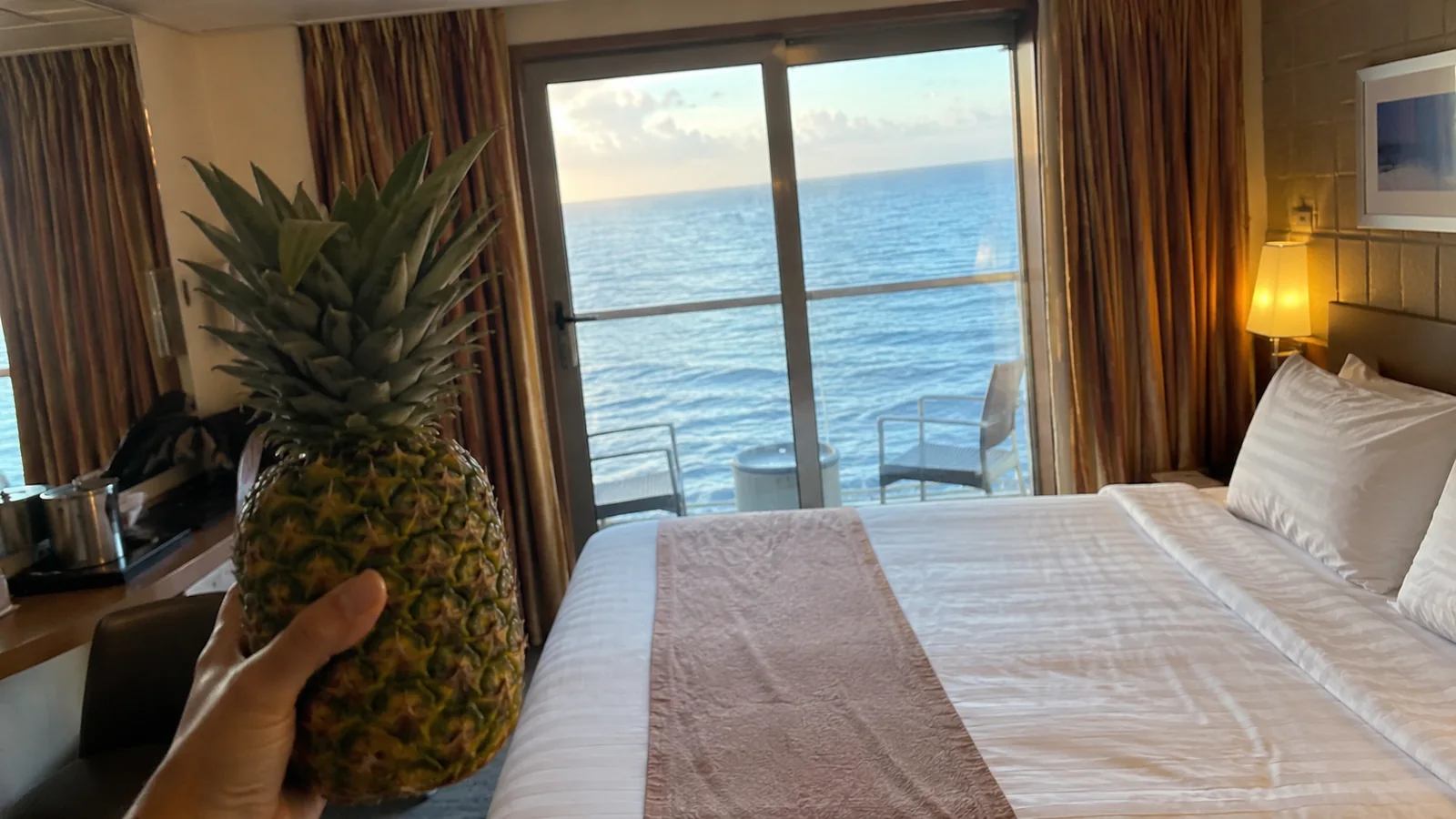
An upright pineapple does not automatically carry the same adult association as an upside-down one. It remains a common symbol of welcome, tropical travel, food, and summer style.
There is no dependable rule that a pineapple in a shopping cart, on a hotel door, or in a front yard communicates one universal message. Internet lore often takes a small community convention and presents it as a secret code used everywhere.
There is also no special ship deck, bar, or hour when the symbol becomes official. Private charter organizers may publish event-specific instructions, but those apply only to their booked guests and their event.