The World Residences at Sea: Ownership, Costs and Life
The World is not a cruise ship you book for a week. It is a privately owned residential vessel with 165 homes, a continuous global itinerary, and a purchase process whose public details are far narrower than the internet’s favorite estimates.

What The World is, in plain English
The World’s official ship profile describes a 644-foot vessel that launched in 2002 and contains 165 private residences. The residents collectively own the ship, which makes this fundamentally different from reserving a suite on a commercial cruise.
Owners join and leave as their schedules allow while the ship follows its long-term route. There are no publicly sold seven-night cabins, no standard passenger booking engine, and no menu of cruise dates for casual vacationers.
Think of it as a traveling residential community supported by a professional maritime and hospitality operation. The distinction matters because buying a home aboard creates ongoing financial, legal, practical, and community obligations that a cruise fare does not.
The verified facts and the unanswered questions
The company’s current public materials support several useful facts:
- There are 165 residences, from studios to three-bedroom homes.
- Residents collectively own the ship.
- The ship launched in 2002 and undergoes a major dry dock every three years.
- A limited number of residences become available through resale rather than a permanent inventory of new homes.
- The public resale range is currently stated as $3.5 million to $15 million, plus annual ownership costs.
- Annual costs are based on residence square footage.
- Residents vote on itineraries, which are planned roughly three years ahead.
Several figures commonly repeated online are not disclosed on the current public website. These include a complete annual-fee schedule, the exact net-worth threshold, closing costs, financing terms, individual owners’ purchase prices, and each household’s total yearly spending.
That is not a cue to fill the gaps with arithmetic borrowed from an old magazine profile. It is a cue to ask the sales team for dated documents, then have independent advisers check them.
How ownership works
Buyers are purchasing a private residence within a resident-owned ship community, not prepaying a stack of cruises. The company says only a small selection of homes is offered for resale each year and that prospective owners must satisfy a financial qualification.
The exact legal interest, governance rights, transfer process, and obligations should come from the current offering and ownership documents. Do not assume the structure matches a Florida condominium, a vacation club, a co-op, or a land-based homeowners association because the words sound familiar.
The current residence overview also mentions a limited number of 50 percent Partnership opportunities. A partnership may lower the share of capital and time aboard, but buyers need to understand scheduling rights, expenses, decision-making, exit terms, and what happens when the partners disagree about renovations or resale.
The company offers limited, invitation-only stays to qualified prospective residents. That is a sensible way to test the rhythm of the community, but it is not a public sampler cruise and should never be promised as part of an inquiry.

Residence choices and usable space
Current categories include Ocean Studios, one-bedroom and two-bedroom Ocean Studio residences, two-bedroom homes, and three-bedroom homes. Published sizes vary by category, from compact studios to three-bedroom residences measuring as much as 3,242 square feet.
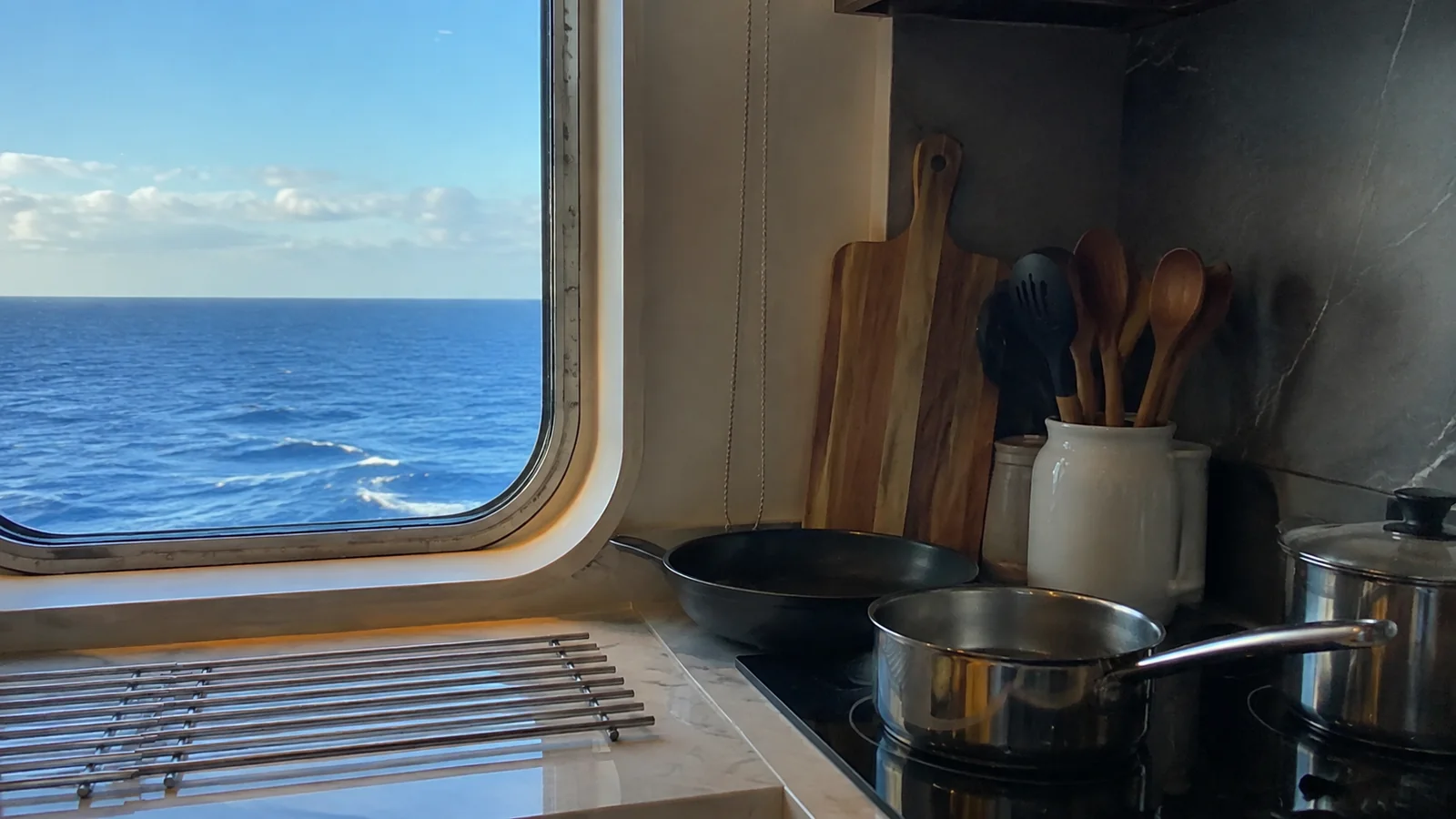
Floor plan deserves more attention than the bedroom label. Storage, laundry, kitchen design, outdoor space, work areas, guest privacy, natural light, motion sensitivity, and distance to elevators can matter every ordinary Tuesday, not only when the photographer arrives.
Ask what furnishings and art are included in a resale, which modifications require approval, and who performs renovation work. A gorgeous custom interior can still be the wrong home if the sleeping setup or circulation does not fit your household.
If your goal is simply more room during a long vacation, compare the commitment with conventional cruises with suites. A large commercial-ship suite provides space and service without tying your future travel to one vessel.
What does a residence on The World cost?
The company’s public range says that the very limited residences offered for resale are priced from $3.5 million to $15 million. That is a current marketing range, not an appraisal, a promise of availability, or evidence that every home would sell within those limits.
The purchase price is only the front door. The company states that annual ownership costs are based on square footage and help cover ship preservation, operations, and crew compensation, but it does not publish a current dollar schedule on that page.
Request the actual fee history and current budget for the residence under consideration. Also ask about reserve funding, insurance, planned capital work, special assessments, currency exposure, taxes, legal fees, travel to and from the ship, shore programs, dining or services charged separately, and personal medical or evacuation coverage.
A neat “cost per night” estimate is especially slippery because owners choose how much time to spend aboard. The company says the average resident stays for a combined three to four months each year, but your cost and use could look completely different.
Questions to put in writing before making an offer
- What exactly transfers with the residence, and which approvals are required?
- What were annual fees and special assessments for the past five years?
- What does the current reserve study or equivalent financial planning show?
- Which services and onboard purchases sit outside the annual charge?
- What restrictions apply to guests, sharing, partnerships, inheritance, and resale?
- How are major refits, unexpected repairs, and insurance losses funded?
- What happens if the ship cannot follow its itinerary for an extended period?
Use an independent attorney familiar with the applicable ownership and maritime documents, plus a tax professional who understands your residence and citizenship. The salesperson can explain the product, but should not be the only person interpreting your obligations.
Who decides where the ship goes?
Residents do not each steer the ship toward a preferred lunch reservation. The company says residents and the captains develop the annual itinerary, followed by a community-wide vote, with routes determined about three years in advance.
The schedule favors longer stays than a typical cruise, with the company reporting an average of three days in port and nearly twice as many days in port as at sea. Those are portfolio-wide company figures, not guarantees for every destination.
As a current example, the published 2026 Journey covers 90 destinations in 20 countries across six continents. It demonstrates the scale of the route, but it is not a public cruise itinerary that nonowners can book by segment.
Owners still arrange flights when joining or leaving, comply with passports and visas, and adapt when weather, security, port availability, or maritime operations change the plan. A traveling home removes repeated packing; it does not negotiate with fog.
Travelers who want a defined start, finish, and contract price should compare a traditional world voyage or one of the site’s month-long cruise itineraries. Those options trade ownership and community influence for a much simpler exit at the gangway.
What daily life looks like
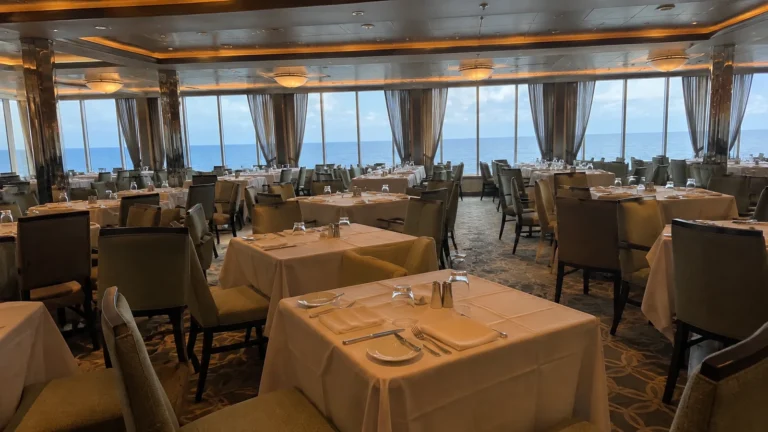
The onboard environment combines private homes with shared restaurants, lounges, pools, fitness facilities, a spa, library, cinema, sports areas, enrichment, and destination programming. The ship materials list six restaurants, plus golf facilities and a full-size tennis court among the amenities.
The company reports average occupancy of roughly 150 to 200 residents and guests, supported by approximately 300 crew members. Those numbers suggest a service-intensive setting, but they remain company-published averages rather than a promise about any day aboard.
Life in a home at sea will include quiet routines as well as polished events. Grocery preferences, laundry, exercise, maintenance access, time zones, mail, prescription supply, internet performance, and relationships with neighbors may matter more than how many forks appear at dinner.
Anyone working remotely should test connectivity and ask about coverage, redundancy, support, and realistic speeds on the intended route. Satellite service can improve, but geography and ship movement remain less predictable than fiber to a city apartment.
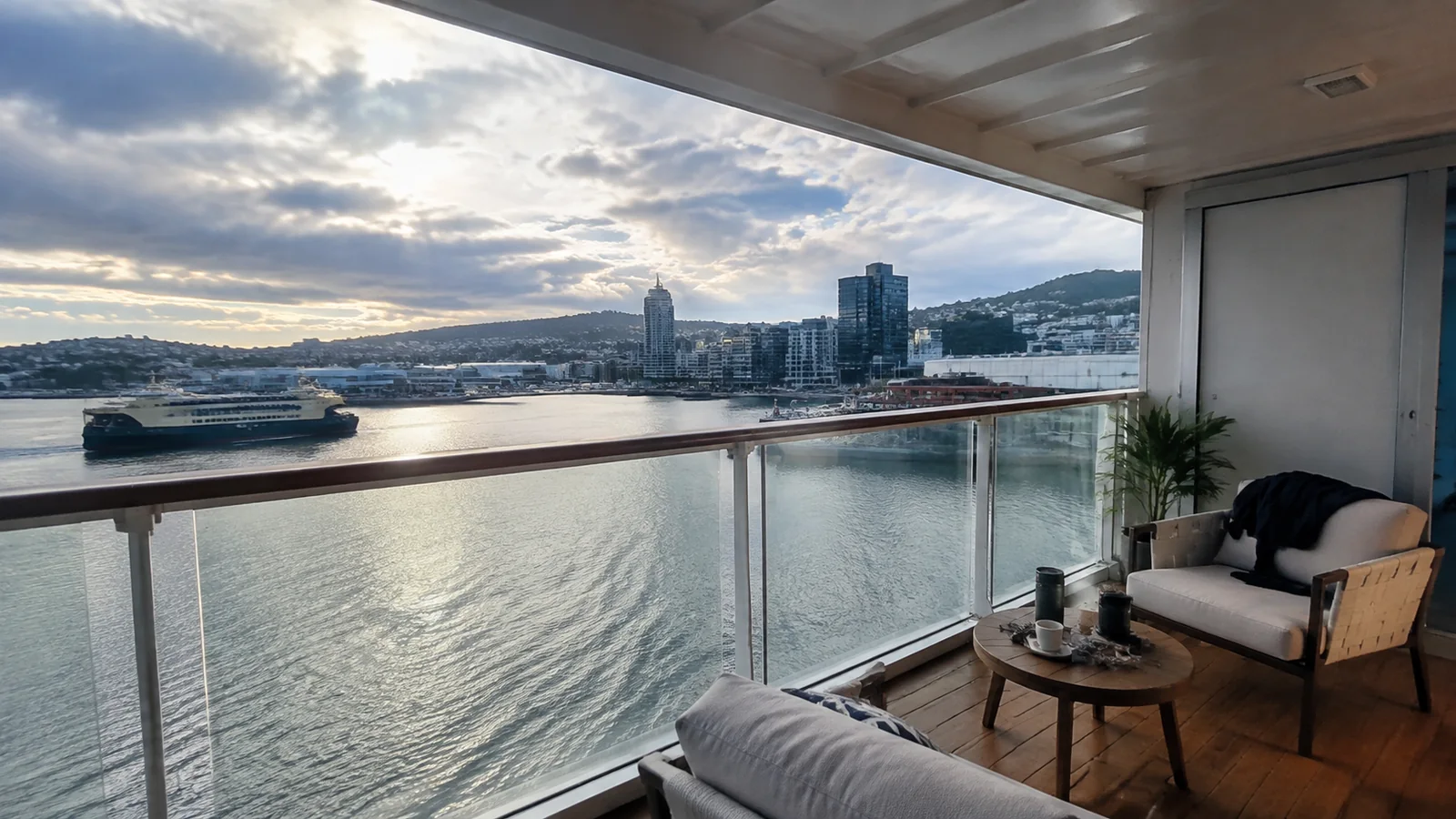
The tradeoffs glossy photos cannot settle
Community is part of the purchase
The residents come from about 20 countries and share a small moving environment for years. That can foster rich friendships, but buyers should assess the governance culture, social expectations, privacy, conflict procedures, and whether the community actually feels comfortable.
The route is global, not personally customized
Voting provides influence, not private-yacht control. You may adore the long-range journey and still skip sections that repeat places, conflict with family plans, or require climates you would rather admire from a postcard.
Access changes from port to port
Mobility needs must be tested across the whole journey: residence, public rooms, gangway, tender, dock, vehicle, and destination. Ask for exact measurements and procedures, since “accessible ship” cannot promise an accessible ancient harbor or expedition landing.
Medical care has limits
Confirm the onboard medical team’s scope, medication support, emergency procedures, evacuation planning, and payment requirements for your conditions. A medical center at sea is valuable, but it is not a reason to assume hospital-level care follows the ship everywhere.
Travel obligations do not disappear
Owners may face changing visas, vaccination rules, customs requirements, insurance exclusions, and tax or residency questions. The official life aboard overview explains the residential concept, while government sources and independent advisers must answer the rules for each person and port.
The World versus three realistic alternatives
A conventional world cruise
Choose a world cruise when you want months of global travel with one fare, one defined itinerary, and no resale problem afterward. You receive less residential permanence and itinerary influence, but far fewer long-term responsibilities.
A series of long cruises
Choose separate voyages when you value changing ships, regions, and travel styles. The planning burden is higher, yet a month-long cruise is an excellent test of sea-day tolerance before considering a home that keeps moving.
A land home plus extensive travel
Choose a fixed home base when healthcare networks, family access, pets, familiar services, and control over location outrank the romance of waking beside a new coast. You can still travel lavishly without making one ship your central platform.
Frequently asked questions
Can anyone book a vacation on The World?
No public vacation booking program is offered. Access is for residents and their guests, with limited invitation-only stays for qualified prospective buyers.
How much do The World residences cost?
The official site currently states that limited resale residences are priced from $3.5 million to $15 million, plus annual ownership costs. Availability and asking prices can change, and the public figure is not a valuation of a particular home.
Can residents live aboard all year?
The ship is designed as a continuous residential community, and owners decide when to join or leave. Prospective buyers should ask about maximum occupancy, guests, dry-dock periods, immigration limits, and any operational rules rather than assuming uninterrupted access everywhere.
Is everything included in the annual fee?
The public materials describe annual costs supporting operations, preservation, and crew compensation, but do not publish a complete current inclusion list. Request an itemized schedule for the exact residence before comparing it with an all-inclusive cruise or private yacht.
Is The World a good investment?
Public materials do not establish future appreciation, rental yield, resale timing, or liquidity. Treat the purchase as a lifestyle decision that requires independent financial, legal, and tax review, not as a guaranteed investment return wearing a captain’s hat.

Is The World right for you?
The World best fits financially qualified buyers who want a long-term global community, enjoy substantial time at sea, accept collective decisions, and can absorb both the purchase and uncertain future costs. It fits poorly when you want a bookable vacation, full control of the route, predictable annual spending, or an easy-to-price exit.
Begin with verified public facts, request the current private documents, experience the ship if invited, and compare the arrangement with simpler alternatives. A moving home can be extraordinary, but the wisest decision is the one that still makes sense after the sunset photo closes.