Hopewell Rocks Guide: Tides, Tickets, and the Best Visit Plan
Hopewell Rocks is not a place to visit whenever your road trip happens to arrive. Time it for low tide to walk the ocean floor, return near high tide to understand the scale, and let the park’s operating hours and staff decisions control when you enter the shoreline.
Hopewell Rocks at a glance
- Best first view: low tide, when the ocean floor and bases of the sea stacks are exposed
- Best complete experience: low and high tide on the same day or two consecutive days
- 2026 operating season: May 15 through October 25
- Time needed: about 2 to 3 hours for one tide, or most of a day to see both
- Footwear: closed, sturdy shoes that can handle mud, wet gravel, and slippery rock
- Location: 131 Discovery Road in Hopewell Cape, New Brunswick
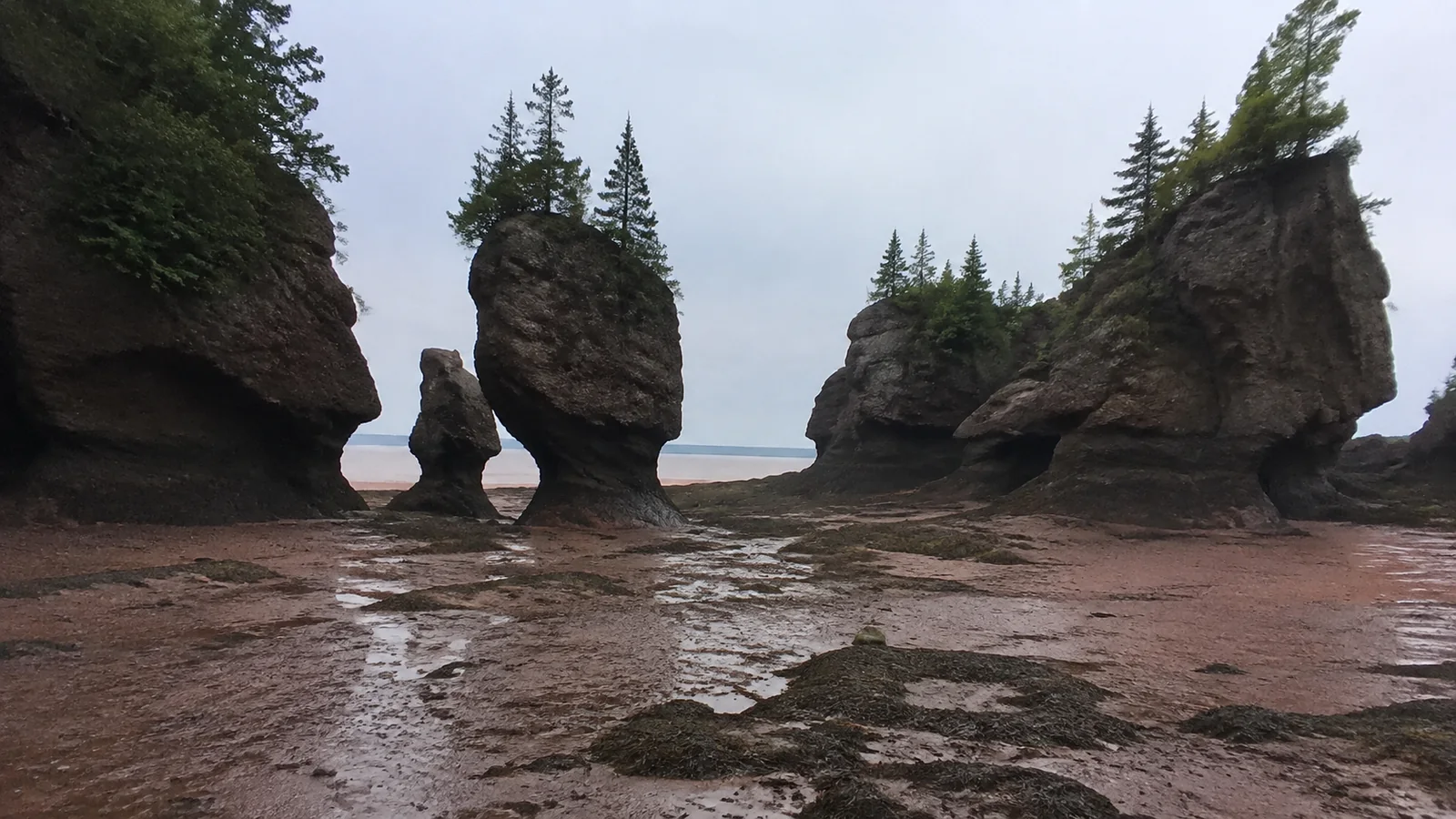
If you have only one window, plan around low tide because that is when you can descend and walk among the formations. High tide is visually dramatic from above, but it does not provide ocean-floor access.
How the Hopewell Rocks tides shape your day
The Bay of Fundy tide cycle takes roughly six hours to move between high and low water. That does not mean the beach remains safely open until the exact minute printed as high tide.
Use the park’s official tide table to select a date and a practical ocean-floor window. Times are displayed in Atlantic Time, and the page explicitly says actual floor access can vary at park staff’s discretion.
Arrive before your preferred low tide rather than at the printed minute. That gives you time to park, enter, walk about half a mile from the main building toward the primary access, and listen to staff instructions.
When staff announce that the shoreline is closing, begin the climb immediately. Do not turn the final warning into a last-photo countdown or walk into another cove.
Should you see low tide or high tide first?
Low tide first
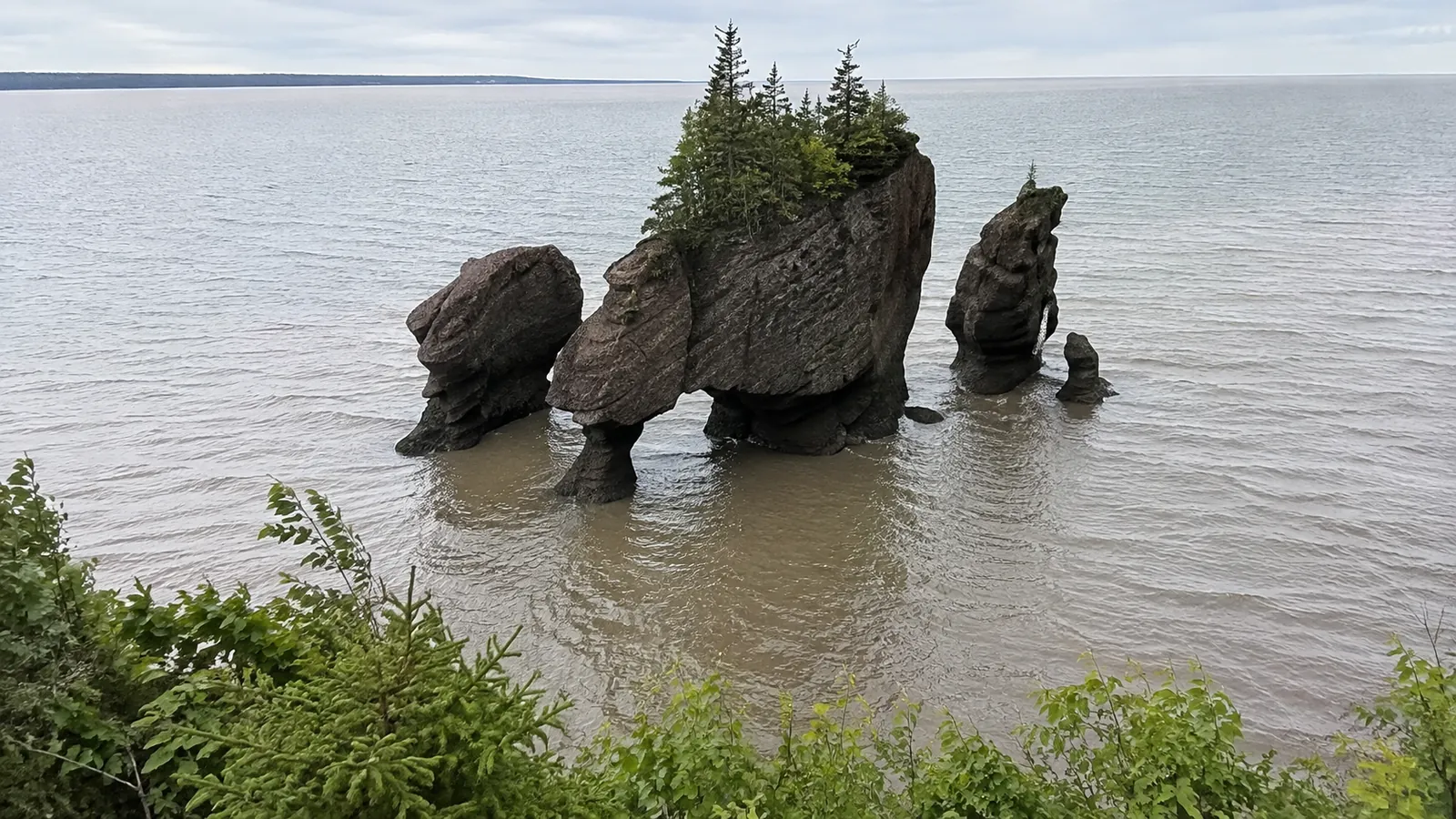
Choose low tide first if walking the ocean floor is nonnegotiable. You will see the eroded bases, muddy seabed, coves, and towering scale of the flowerpot-shaped sea stacks from below.
High tide first
High tide first works when your arrival time cannot catch the morning floor window. View the formations from decks and overlooks, then return about six hours later when park staff reopen the floor.
Both tides on separate days
Two shorter visits are often easier for families, older travelers, and anyone continuing along the coast. Admission is valid for two consecutive days, so you can see one tide in the afternoon and the other the next morning without waiting at the park all day.
Keep the validated ticket and confirm reentry instructions before leaving. Two-day validity does not allow entry outside normal operating hours.

Opening dates and hours
Hopewell Rocks Provincial Park is open during a defined season, not year-round. The official 2026 dates and rates list these hours:
- May 15 to June 20: 9 a.m. to 5 p.m.
- June 21 to August 29: 8 a.m. to 8 p.m.
- August 30 to September 26: 8 a.m. to 6 p.m.
- September 27 to October 25: 9 a.m. to 5 p.m.
Access outside those operational dates and times is strictly prohibited. The park warns that facilities and staff are absent when closed, safety barriers may be removed, tides rise quickly, winter weather is severe, and rockfall danger increases in winter and spring.
A sunrise low tide before the gate opens is not a clever workaround. Select another date, use the next tide during open hours, or enjoy a legal coastal viewpoint elsewhere.
Tickets and what admission includes
As checked for 2026, adult admission was C$18.15, senior and adult-student admission C$15.56, children ages 5 through 18 C$10.37, and children age 4 and younger free. A family ticket for two parents and their children age 18 or younger was C$45.37.
Prices are subject to 15 percent sales tax and can change without notice. Purchase through the official park channel, then compare the family rate against individual tickets for your exact group.
Your entrance fee is valid for two consecutive days, which is one of the most valuable features of the ticket. It protects the plan when the most useful high and low tides fall on opposite sides of a night’s sleep.
The shuttle between the upper and lower site carried a nominal additional fee of C$1.74 in the checked 2026 tariff. It reduces the connecting walk but does not replace the stairs or make the muddy ocean floor wheelchair accessible.
What the visit is actually like
From admission to the Main Deck
After the main entrance, follow a well-groomed gravel trail toward the primary viewing and shoreline access. The official park description measures the Ocean Floor Access Trail at about 0.5 mile one way.
The walk is easy for many visitors, but allow more time if you stop at overlooks or travel with a stroller. The paid shuttle is useful when stamina matters more than walking the connecting trail.
Main staircase
The Main Deck overlooks the formations and leads to the seabed by a metal staircase. The park counts 99 steps down and 101 steps back up, so a shoreline walk ends with a real climb.
Pause on the viewing platform if stairs are not comfortable. You can still understand much of the landscape from above, especially when comparing two tide levels.
North Beach ramp
A ramp farther toward North Beach provides another route to sea level and includes benches on the incline. The ramp is suitable for wheelchairs, but the park cautions that many visitors find the ocean floor itself too difficult to navigate on wheels.
That distinction is important when planning for mobility. An accessible trail and ramp do not make slick mud, rocks, ledges, and changing shoreline conditions universally accessible.
Demoiselle Beach
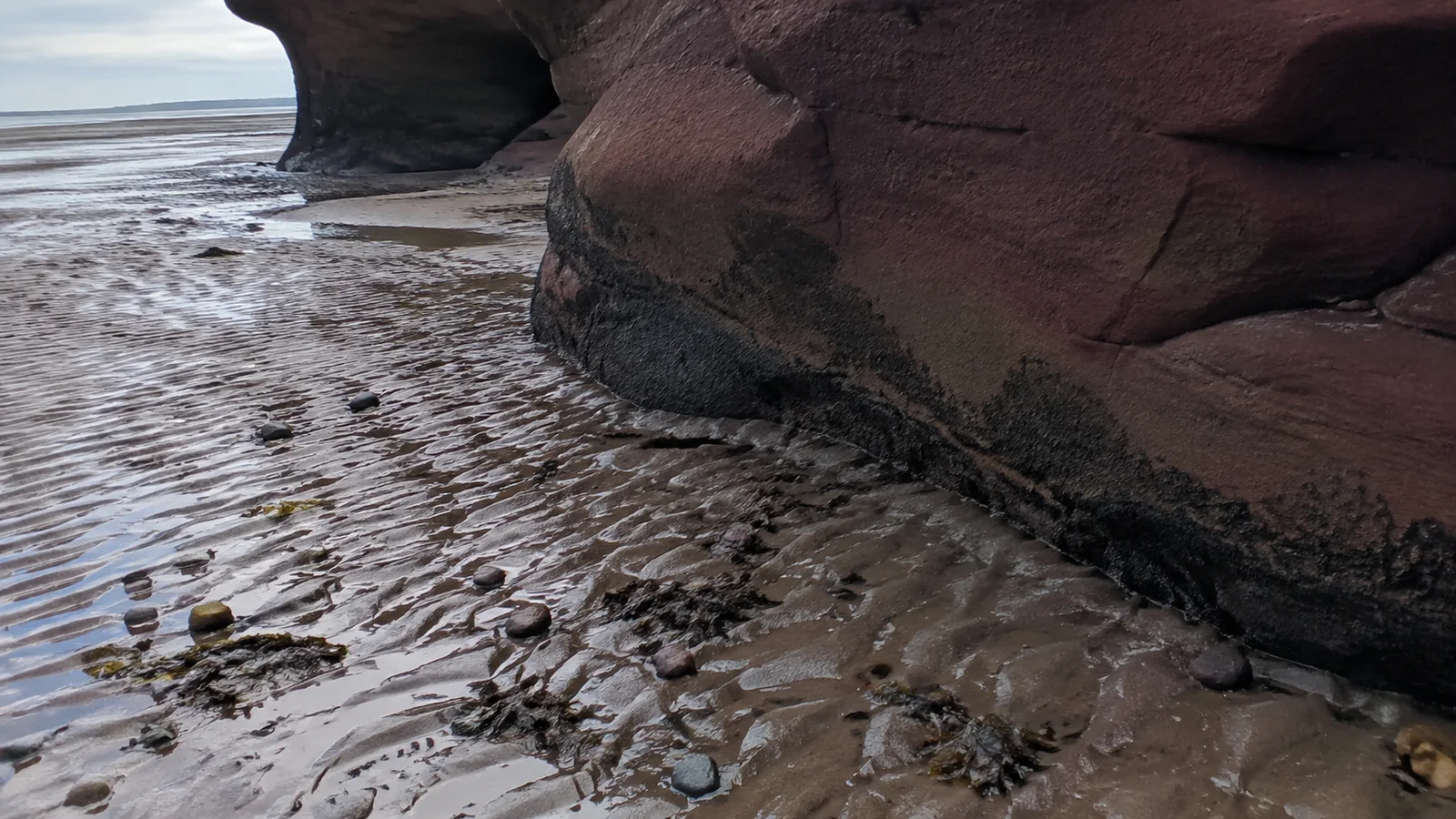
The Demoiselle Beach Trail descends gently south from behind the Interpretive Centre and offers another shore perspective. The official listing puts the wooded dirt-road trail at about 0.4 mile one way.
Choose it for extra walking or a quieter view, not as a shortcut around closure instructions. Every ocean-floor entry point remains governed by tide and staff direction.
Ocean-floor safety
The seabed can be muddy enough to swallow a clean white sneaker and slick enough to demand attention. Closed-toe shoes with grip are a better choice than flip-flops, smooth sandals, or footwear you need for dinner that night.
Stay away from cliff faces because erosion and falling material continue to shape the formations. Do not climb the sea stacks, enter a closed cove, or linger below an overhang for a photograph.
The ledges can be slippery and loose underfoot. Turn around before them if balance, footwear, or the remaining floor-access time makes scrambling a bad idea.
Children need close supervision near mud, rocks, stairs, and incoming water. A carrier is usually more practical than a stroller on the ocean floor, even though the upper trail network is more accessible.
Check the forecast as well as the tide. Fog, thunderstorms, heavy rain, and strong wind can change visibility and comfort even when the water prediction looks perfect.
Why the official tide source matters
A generic “Bay of Fundy tide” search can return Saint John, Alma, or another station with different times. Use Hopewell Rocks’ own table or the Canadian Hydrographic Service’s Hopewell Cape station 00170.
Hydrographic predictions are estimates, and weather can affect observed water levels. The park’s live operational decision always outranks a screenshot or third-party itinerary.
When is the best time to visit?
Late May and June
Late spring offers a quieter feel and fresh coastal scenery, but cool wind, rain, and mud are realistic. Rockfall risk is one reason the park prohibits off-season access rather than opening whenever snow disappears.
July and August
Summer brings the longest operating hours and the easiest chance to fit both tides into one legal park day. It also brings the largest crowds, so arrive early for parking and give busy stair landings space.
September and October
Early fall can pair comfortable hiking weather with changing leaves, but hours shorten as the season advances. By late September, a low tide outside 9 a.m. to 5 p.m. may make a same-day two-tide plan impossible.
The park closes after October 25 in 2026. Build any late-season trip around the posted calendar, not the assumption that a provincial park remains accessible after its visitor center closes.
How to get to Hopewell Rocks
Hopewell Rocks is in Hopewell Cape on Route 114, roughly 30 miles south of Moncton by road. A car gives you the most dependable control over tide timing and makes it easier to combine the park with Alma or Fundy National Park.
There is no simple all-day city transit connection that lets visitors come and go around both tides. If you are car-free, reserve a shuttle or tour only after confirming its exact park duration and whether it actually targets low tide.
Allow extra driving time for coastal weather, road work, and slow vehicles. Tide timing is not an excuse to speed, and arriving a little late is safer than creating a road emergency.
What to combine with Hopewell Rocks
Fundy National Park and Alma
Alma and Fundy National Park make the most natural next base for trails, coast, and another perspective on the tides. Treat them as a separate half day or overnight rather than squeezing a major hike into the six-hour wait.
This Fundy Coastal Drive plan separates Hopewell Rocks, Fundy National Park, Fundy Trail Provincial Park, and Saint Andrews into practical route modules. That structure keeps the trip from becoming one long sequence of coastal parking lots.
Moncton
Moncton is the easiest city base for airport access, lodging choice, and an early drive to the rocks. It works especially well when your ideal low tide is in the morning and you do not want to relocate hotels first.
A broader New Brunswick trip plan can connect Moncton with the Fundy coast and an Acadian coastal section. Keep drive times and tide appointments visible rather than counting every day as interchangeable.
A realistic one-day plan
- Arrive 60 to 90 minutes before the low-tide time shown for Hopewell Rocks.
- Walk the ocean floor as soon as staff permit, then climb out before closure calls.
- Eat lunch and explore upper trails, overlooks, and the interpretive area.
- Use the middle hours for a rest or a short nearby outing, not a distant hike.
- Return to the decks near high tide and compare the transformed formations.
If the two useful tide windows do not both fit park hours, split this plan across consecutive days. That is exactly what the admission policy allows you to do.
What to bring
- Sturdy closed-toe shoes with grip
- A light rain shell and warm layer
- Water and a snack
- A small towel or bag for muddy shoes
- The current tide screenshot, with Atlantic Time confirmed
- Your validated ticket for next-day reentry
Keep both hands available on wet stairs instead of carrying loose drinks or several bags. A small backpack is easier than a tote on the shoreline.
Travelers comparing costs across the region can use the total-trip method in this North America budget guide. The ticket is only one piece once lodging, car rental, fuel, and an extra coastal night are included.

The bottom line
See Hopewell Rocks at low tide if you have one chance, and use the two-consecutive-day ticket to add high tide without forcing a six-hour wait. Check the park’s operating calendar first, then the Hopewell Cape tide table, then the day’s staff instructions.
Those three checks matter more than any generic best-time recommendation. The landscape is spectacular because it changes quickly, and the safest, most rewarding visit respects that change.