Cedar Dunes Provincial Park: Beach and Camping Guide
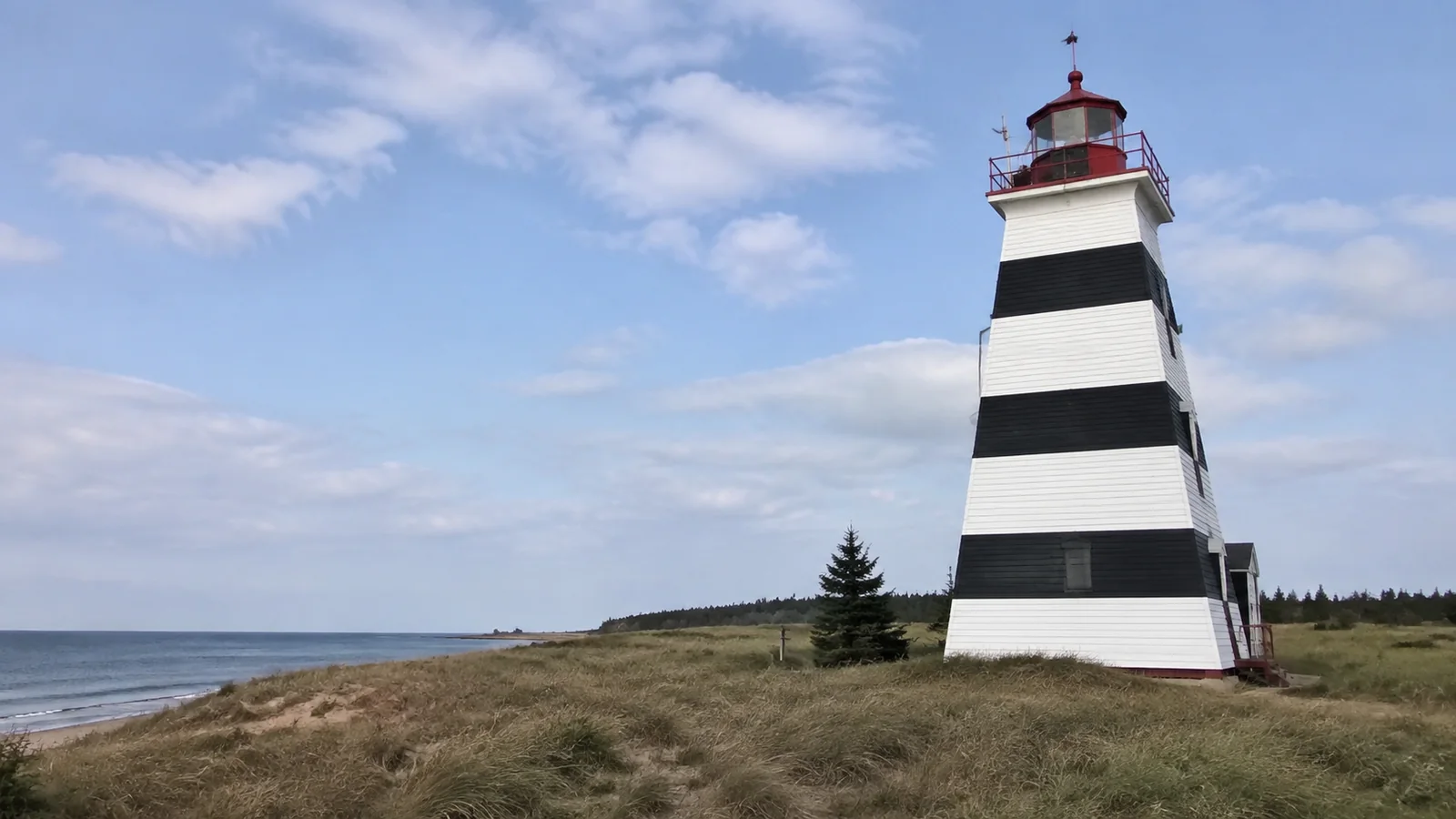
Cedar Dunes Provincial Park is a quiet oceanfront campground and beach in western Prince Edward Island, not a busy attraction complex. Come for Northumberland Strait sunsets, long shoreline walks, and the striped West Point Lighthouse, but plan around seasonal services, changing water conditions, and the drive to groceries.
This guide separates the provincial park from the neighboring lighthouse business and shows exactly who will enjoy staying overnight.
Cedar Dunes at a Glance
- Best for: Campers, beach walkers, lighthouse fans, families, and slow western PEI road trips
- Park type: Seasonal provincial campground with public beach access
- Location: West Point on PEI’s North Cape Coastal Drive
- Swimming: Lifeguard service is seasonal and schedule-dependent
- Pets: Permitted on leash under the current park listing
- Time needed: Two to four hours for a day visit or two nights for a relaxed camping base
The official park page currently describes Cedar Dunes as an oceanfront campground overlooking the Northumberland Strait, with a supervised beach, Wi-Fi, and on-leash pets. “Supervised” does not mean a lifeguard is present every hour or throughout the entire camping season.
What Cedar Dunes Provincial Park Actually Is
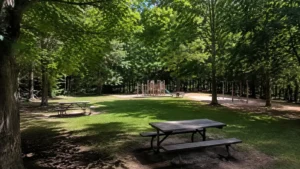
Tourism PEI’s Cedar Dunes listing identifies the property as a campground rather than a day-use-only park. It combines campsites, a broad coastal setting, a nature trail, playground, kitchen shelter, laundry, showers, and beach access.
The park is in West Point, about 15 miles south of O’Leary by the official listing’s distance. This is western PEI, far from the concentration of attractions around Charlottetown and Cavendish, which is precisely why the pace feels different.
Cedar Dunes became protected provincial land in 1962, and its name reflects a rare stand of cedar noted when the park was developed. The present landscape is a dynamic coast, so old photos and memories may not match today’s shoreline.
Is Cedar Dunes Worth Visiting?
Yes, if a spacious beach, a lighthouse silhouette, and an uncrowded corner of PEI are enough to make your day. It is not the best choice when you want a boardwalk of shops, a tightly scheduled attraction list, or a full-service resort.
The park is especially worthwhile at the start or finish of a North Cape Coastal Drive loop. A rushed detour from central PEI can turn a peaceful place into a lot of driving for one photograph.
Best Reasons to Go
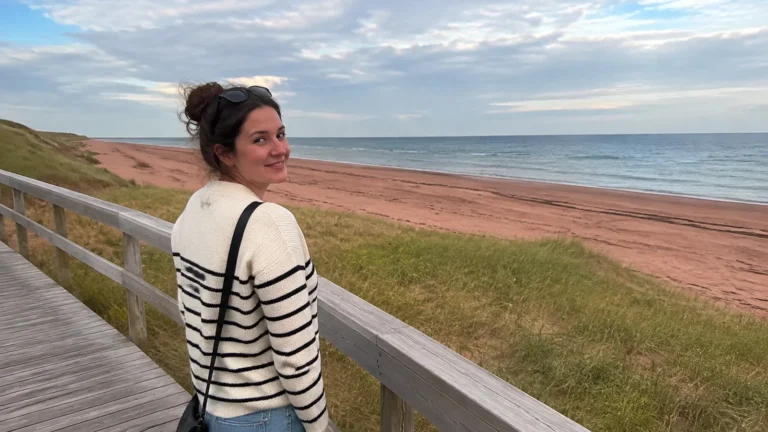
- Walk the beach with wide views across the Northumberland Strait.
- Camp within easy reach of the shoreline.
- Photograph West Point Lighthouse from different angles and in changing light.
- Give children room to play without building the entire day around ticketed attractions.
- Use the park as a base for the quieter communities of western PEI.
Reasons to Choose Somewhere Else
Skip Cedar Dunes if your priority is the north-shore dunes and Parks Canada infrastructure around Cavendish. The detailed Cavendish Beach planning guide explains that very different national-park experience.
Travelers who need restaurants, shopping, and multiple rainy-day attractions within a short walk should also choose another base. West Point has seasonal businesses, but it does not function like a resort town.

The Beach and Swimming Safety
The beach is the park’s main draw, yet the most important detail is easy to miss: lifeguard days and hours vary. Tourism PEI tells visitors to use the current beach report, which lists whether a lifeguard is on duty along with recent water and surf information.
For 2026, the province scheduled lifeguard service at select provincial beaches from June 26 through September 7. That overall window does not promise daily Cedar Dunes coverage, and swimming is at your own risk whenever the beach is unsupervised.
Check conditions the same day, then look for flags and instructions after arriving. Wind, waves, water temperature, and visibility can change faster than a vacation itinerary.
Keep children within arm’s reach near the water and do not use an inflatable toy as safety equipment. If conditions look uncomfortable, switch to beachcombing, kite flying, or lighthouse photos instead of forcing a swim.
Protect the Shore
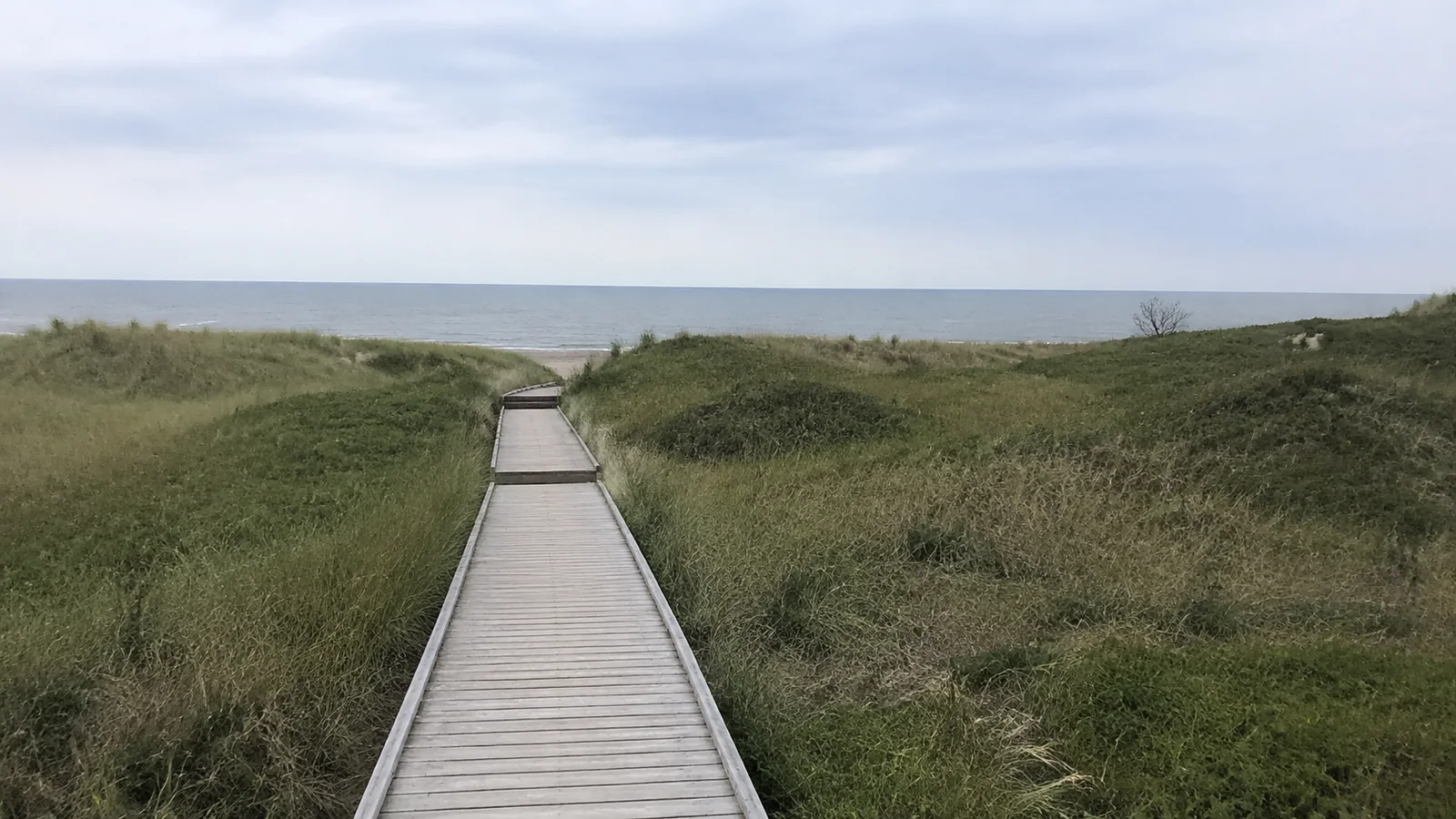
Use established access routes and keep off fragile dune vegetation or closed sections. PEI’s coast changes through erosion and storms, and a shortcut that looks harmless can widen quickly under repeated foot traffic.
Pack out litter and leave shells, plants, and wildlife where they belong. Beach fires, collecting, drones, and other activities may have specific rules, so check park notices rather than assuming an open stretch of sand is unrestricted.
Camping at Cedar Dunes
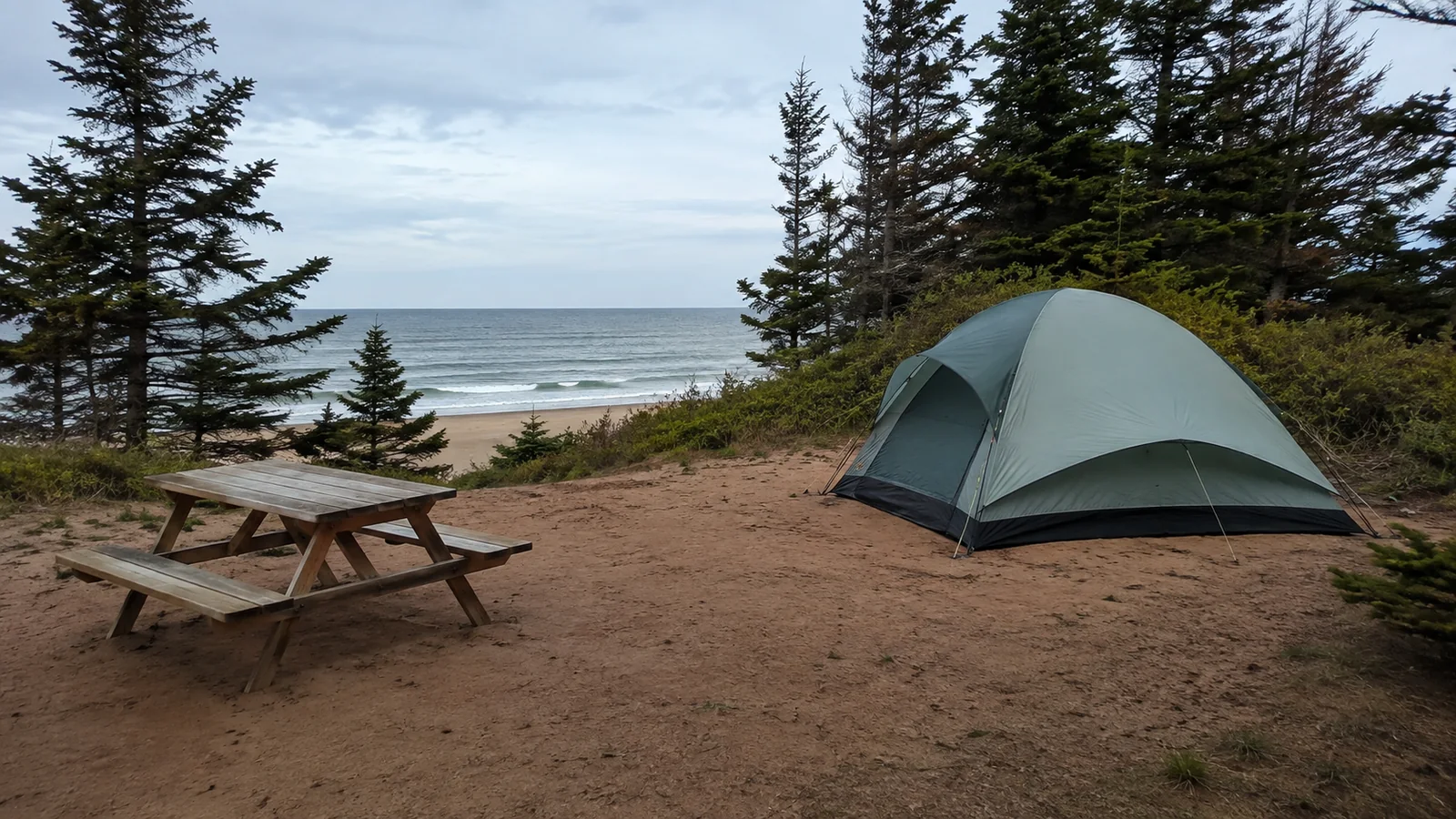
The campground offers unserviced, two-way, and three-way sites, so tent campers and RV travelers both have options. The 2026 campground listing gives an operating period of June 5 through September 27, while warning that dates can vary.
Do not choose a site by the word “oceanfront” alone. Ask about site length, electrical service, water and sewer connections, shade, exposure to wind, leveling, generator rules, and walking distance to the washroom or beach.
Tent Campers
A low-profile tent, reliable stakes, and extra guy lines are smart on an exposed coast. Keep bedding in waterproof bags until the tent is fully secure, since a pretty forecast can still produce wind and damp evening air.
The kitchen shelter is useful, but it does not replace your own weather-safe meal plan. Bring a stove permitted under current fire rules, simple food, and a backup dinner that needs little preparation.
RV Campers
Verify the exact service combination instead of assuming “serviced” means full hookups. The park lists a dumping station, yet its location and hours may matter if your site lacks sewer service.
Measure your full rig, including tow vehicle and slides, before booking. A site that technically accepts the trailer length may still feel tight once you account for parking, awnings, and uneven ground.
Facilities and Supplies
Current amenities include restrooms with showers, a laundromat, playground, kitchen shelter, Wi-Fi, and recreational programming. Treat Wi-Fi as a convenience rather than a promise that every site can support video calls.
Buy groceries, fuel, medications, and specialized RV supplies before settling in. O’Leary is the practical service stop, but store hours and seasonal availability deserve a live check.
West Point Lighthouse Is a Separate Operation
The black-and-white West Point Lighthouse gives the park its signature view, but the inn and museum have their own operation, hours, admission, rooms, and contact details. A campsite reservation does not include a lighthouse room or guarantee that the museum is open.
The official West Point Lighthouse site lists a 2026 season from May 30 through October 4 and daily museum hours during that period. Always recheck before driving because private seasonal schedules can change.
The museum climb involves 72 stairs according to Tourism PEI, making it a poor assumption for anyone who needs a step-free attraction. The adjacent inn does list wheelchair-accessible seaside rooms, but those rooms are different from climbing the historic tower.
Photographers do not need to climb to enjoy the building. The lighthouse, harbor, beach, and changing sky create plenty of ground-level compositions, especially when you leave time to move rather than stopping for one roadside frame.
Accessibility at Cedar Dunes
Tourism PEI’s current accessibility matrix lists Cedar Dunes with a mobility mat and buoyant beach wheelchair, and it says provincial park locations have partially accessible washrooms. Equipment availability, placement, staffing, and weather limitations can still vary by day.
Call the park before visiting if any feature determines whether the trip works. Ask where accessible parking is located, how far the mat reaches, how the beach chair is borrowed, and whether the route to your chosen campsite is firm and level.
Sand, wind, wet boardwalks, and changing shore profiles remain real barriers even when adaptive equipment is offered. A specific conversation with park staff is more useful than treating “partially accessible” as a complete description.
Pets at the Park
The provincial listing currently permits pets on leash. That permission does not remove the need to control barking, collect waste, protect wildlife, and keep animals away from other campers’ food and sites.
Confirm whether pets may use the swimming area, enter buildings, or join programmed activities. Rules can differ within the same property, and signs at the exact location take priority.
Bring fresh water, shade, a towel, and a secure restraint that works on sand. Never leave a pet in a warm vehicle or unattended at a campsite.
A Simple Cedar Dunes Day Plan
Arrive in late morning after checking the beach report, and begin with a shoreline walk while everyone is fresh. Use the water only if conditions and supervision match your group’s ability.
Eat a packed lunch in the park, give children time at the playground, and save the lighthouse area for later light. If the museum is important, reverse the order around its confirmed hours.
A sunset visit is tempting, but coastal temperatures can drop quickly and the drive afterward is dark and rural. Carry a warm layer, keep fuel above empty, and know your route before phone service becomes inconvenient.
A Relaxed Two-Night Camping Plan
On arrival day, set up camp before exploring so wind or rain does not catch you after dark. Walk only the nearest beach section, cook an easy dinner, and learn the layout of washrooms and shelters.
Use the full middle day for the lighthouse, a long beach walk, and a short drive into western PEI. Keep one block unscheduled because water conditions or rain may move your plans around.
On departure morning, dry gear as much as possible and inspect the site for stakes, cord, food scraps, and trash. A slow pack is better than dragging wet sand and forgotten hardware to the next campground.
How Cedar Dunes Compares With Other PEI Beaches
Cedar Dunes is a southwest-coast campground beach with a lighthouse next door, while PEI’s shorelines vary significantly in management, facilities, exposure, and pet rules. Start with the PEI beaches comparison if you have not chosen a coast yet.
Jacques Cartier Provincial Park is another western option, but its current facilities and lifeguard status need separate checks. Do not assume every provincial beach offers the same accessibility equipment or supervised hours.
North-shore beaches can bring a different wave pattern, park system, and red-cliff landscape. The best PEI beach is the one whose conditions and services suit your actual day, not the one with the most dramatic old photo.
What to Pack
- Wind-resistant layers and a compact rain jacket
- Sun protection, insect repellent, and refillable water bottles
- Sturdy walking shoes plus sandals or water shoes
- A beach towel, dry bag, and change of clothes
- Downloaded maps and a charged power bank
- Groceries and prescribed medication before arriving in West Point
Campers need a fuller list based on their site and forecast, including secure food storage and weather-ready sleep systems. Do not count on a small seasonal shop to replace forgotten technical gear.

Bottom Line
Cedar Dunes Provincial Park is best for travelers who value beach space, camping, lighthouse views, and a quieter western PEI base. It asks for more self-sufficiency than a resort area, and that is part of its appeal.
Check the same-day beach report, reserve the exact campsite service you need, and confirm lighthouse hours separately. With those details settled, the park becomes an easy place to slow down instead of another attraction to race through.